
Contemporary Painting Museum · Barcelona, Spain
Museo Can Framis Barcelona
Industrial Art Museum
Display Cases
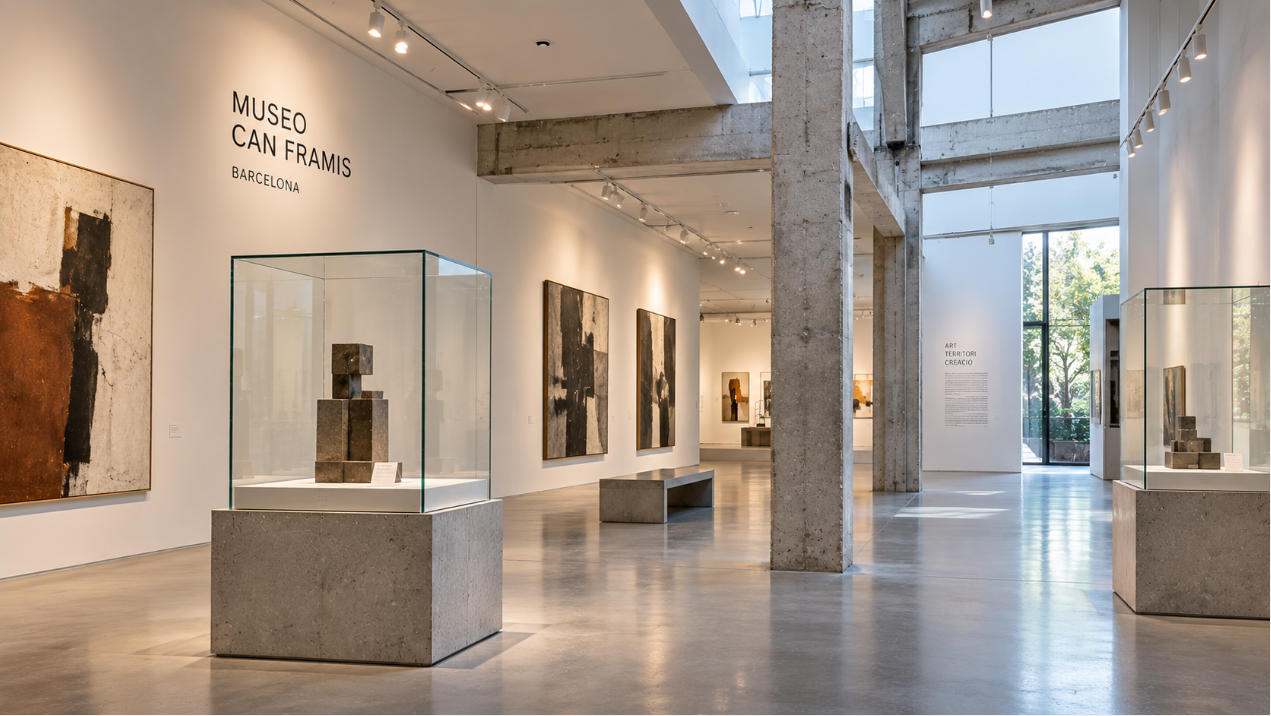
Museo Can Framis integrates industrial art museum display cases into a converted architectural setting where contemporary painting, exposed material character and minimalist white galleries define the visitor experience. Concrete, white steel, ultra-clear glass and controlled cool lighting allow the display system to remain visually precise without competing with the artwork.
Project
Museo Can Framis
Location
Barcelona, Spain
Museum Type
Small Art Museum
Collection
Contemporary Painting · Art
Area
Approx. 1,700 m²
Character
Industrial · Minimal · Contemporary
An industrial building transformed into a restrained contemporary art environment.
Museo Can Framis develops an approximately 1,700 m² exhibition experience around contemporary painting within a converted industrial building in Barcelona. Existing architectural character is balanced with minimalist white gallery spaces, creating a setting where the contrast between old structure and new exhibition surfaces becomes part of the museum identity.
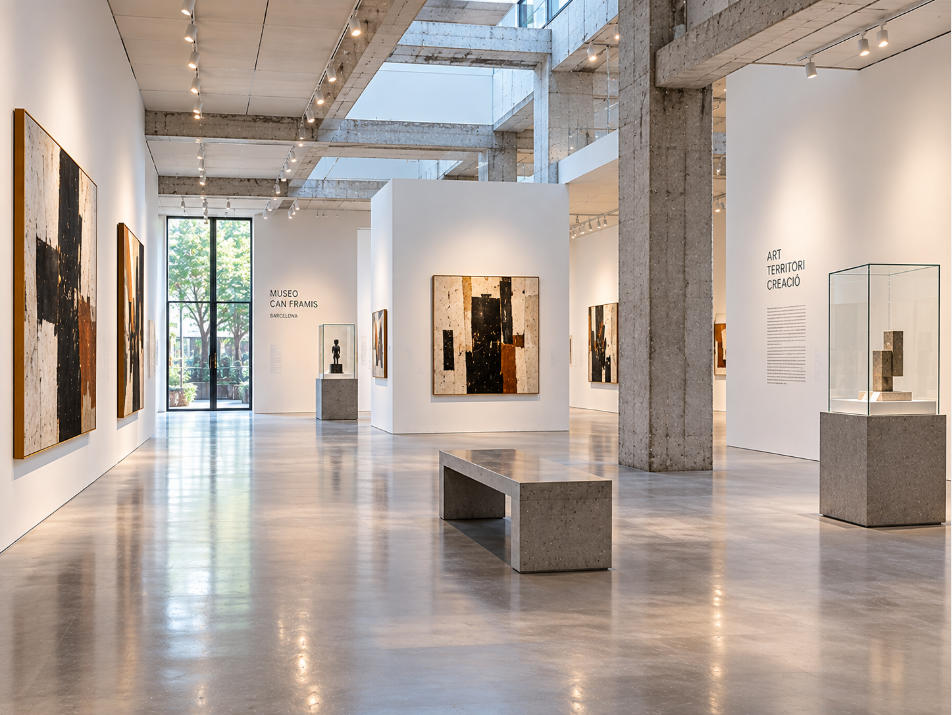
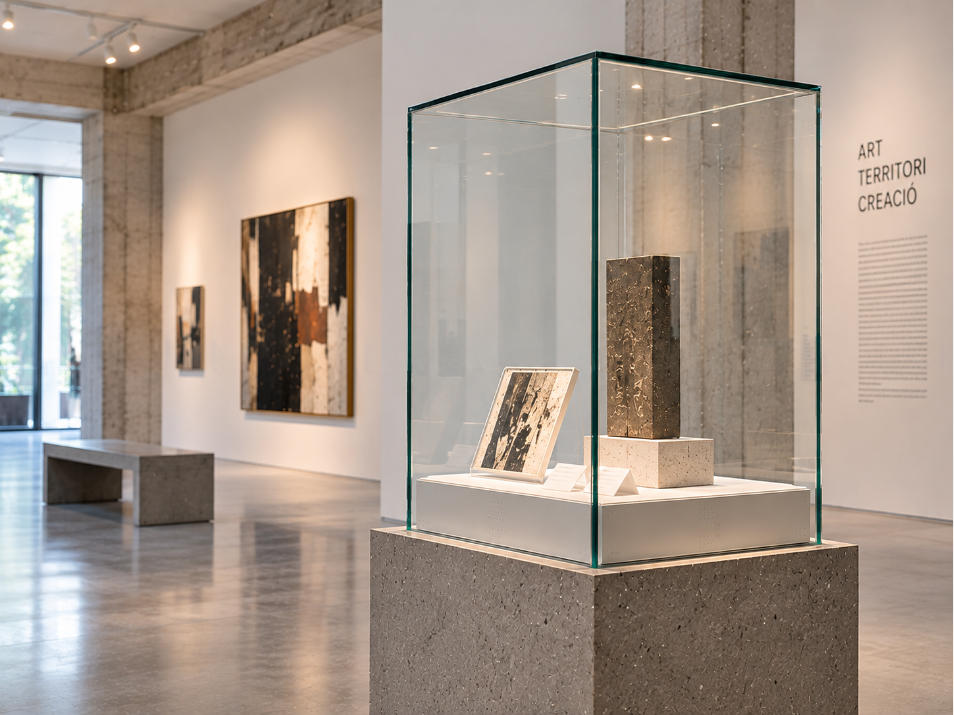
The industrial art museum display cases follow the same restrained language. Concrete bases, white metal details and transparent glazing allow selected objects and supporting material to be protected without introducing decorative furniture into the galleries.
A carefully developed custom showcase system must therefore respond to both the architectural strength of the converted building and the visual neutrality required by contemporary art display.
Design Direction
The display system becomes part of the architectural conversion — using concrete, white steel and transparent glass to connect industrial character with the visual discipline of a white-box gallery.
02 / Space
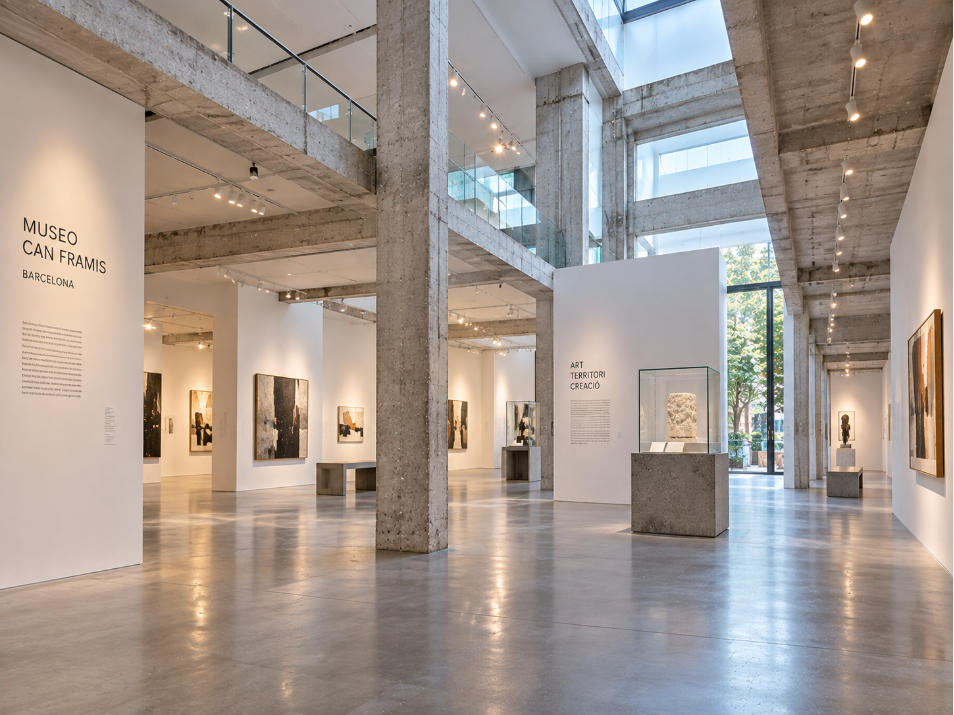
Open circulation allows architecture and contemporary painting to be read together.
The museum moves between the texture of the converted industrial structure and cleaner white exhibition rooms. Rather than hiding the architectural history of the building, the design allows old and new surfaces to remain visible together.
Open circulation gives visitors long views between paintings and adjoining spaces, while quieter rooms create more concentrated moments around individual works.
Natural daylight contributes to the spatial atmosphere, while artificial gallery lighting provides the consistency required for works positioned deeper within the exhibition.
A coordinated display case design process helps determine where transparent enclosures can be introduced without interrupting these long views or weakening the simplicity of the white-box galleries.
03 / Display
Minimal vitrines support the exhibition without competing with large contemporary paintings.
The primary collection is painting-led, so enclosed display is introduced selectively rather than continuously throughout the museum.
Small artworks, documents, models or supporting collection material can be presented inside ultra-clear glass cases positioned against concrete or pale architectural bases.
White steel details reduce contrast against the gallery walls, while transparent glazing keeps the visual mass of the cases low. This allows paintings and architecture to remain the dominant elements within the visitor’s field of view.
For projects of this type, experienced museum display case manufacturers need to maintain precise glazing and structural quality without adding unnecessary visual weight to the exhibition.
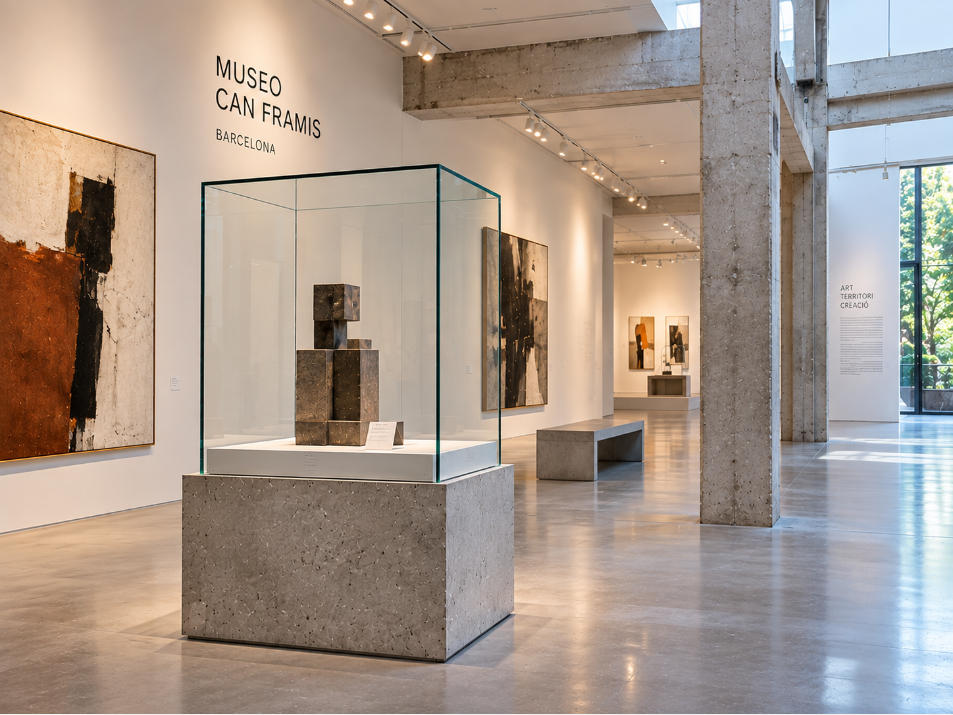
Concrete, white steel and ultra-clear glass connect the cases to the architecture.
The material system is deliberately limited so the display furniture reinforces the industrial-minimal character of the building without creating another decorative layer.
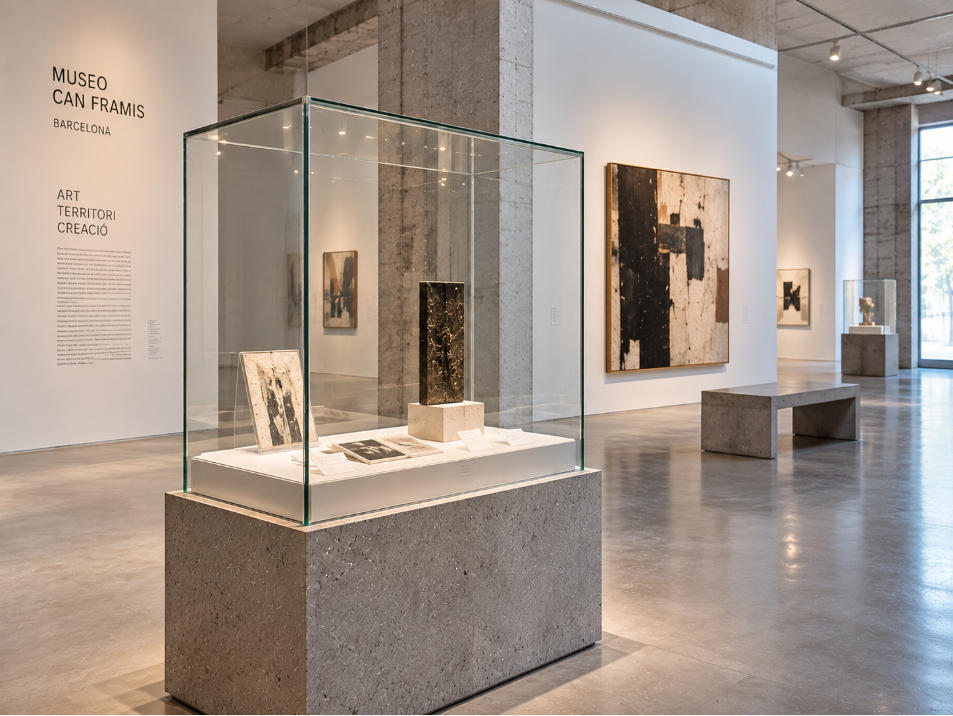
Contemporary Painting · Industrial Architecture · Minimal Display
04 / Art Presentation
Open painting galleries and selective enclosed displays create a clear exhibition hierarchy.
Contemporary Painting
Large paintings remain visually open against white gallery walls so scale, color and composition can be experienced without surrounding display furniture.
Supporting Collections
Smaller artworks, documents and contextual material can be protected inside low-profile transparent cases without competing with the primary collection.
Industrial Architecture
Concrete and retained architectural elements remain visible as part of the museum identity, creating contrast with cleaner white exhibition surfaces.
Open Sightlines
Minimal case structures preserve visual connections between artworks, architecture and adjoining galleries throughout the visitor route.
Natural daylight and controlled track lighting establish a flexible contemporary gallery environment.
Natural light gives the converted building a changing architectural character, while track lighting allows individual paintings and enclosed objects to receive more precise emphasis.
Cool white illumination reinforces the clean gallery surfaces and keeps the overall atmosphere contemporary rather than decorative.
Lighting positions around transparent cases must also be controlled carefully to limit distracting reflections while maintaining clear visibility through the glazing.
Industrial simplicity depends on accurate fabrication and controlled finishing.
Minimalist cases contain fewer decorative elements, which makes the quality of glass alignment, steel profiles, concrete interfaces and hardware more visible.
A specialized museum showcase factory can coordinate glazing, metal fabrication, structural components and base construction across different case sizes while maintaining a common visual language.
Consistent showcase manufacturing also helps preserve the precise relationship between white steel, transparent glass and architectural bases throughout the completed exhibition.
The aim is a finished system that appears simple because the complexity of fabrication has been resolved before the cases reach the gallery.
Related contemporary museum projects explore different relationships between minimal architecture and art display.
Museo Carlo Bilotti Rome uses contemporary art museum display cases within an intimate Italian private museum where sculpture, painting, stone and natural daylight share a restrained architectural setting.
Le Stanze del Vetro Venice develops glass art museum display cases inside a bright minimalist gallery, using ultra-clear glazing and light structures to support sculptural glass collections.
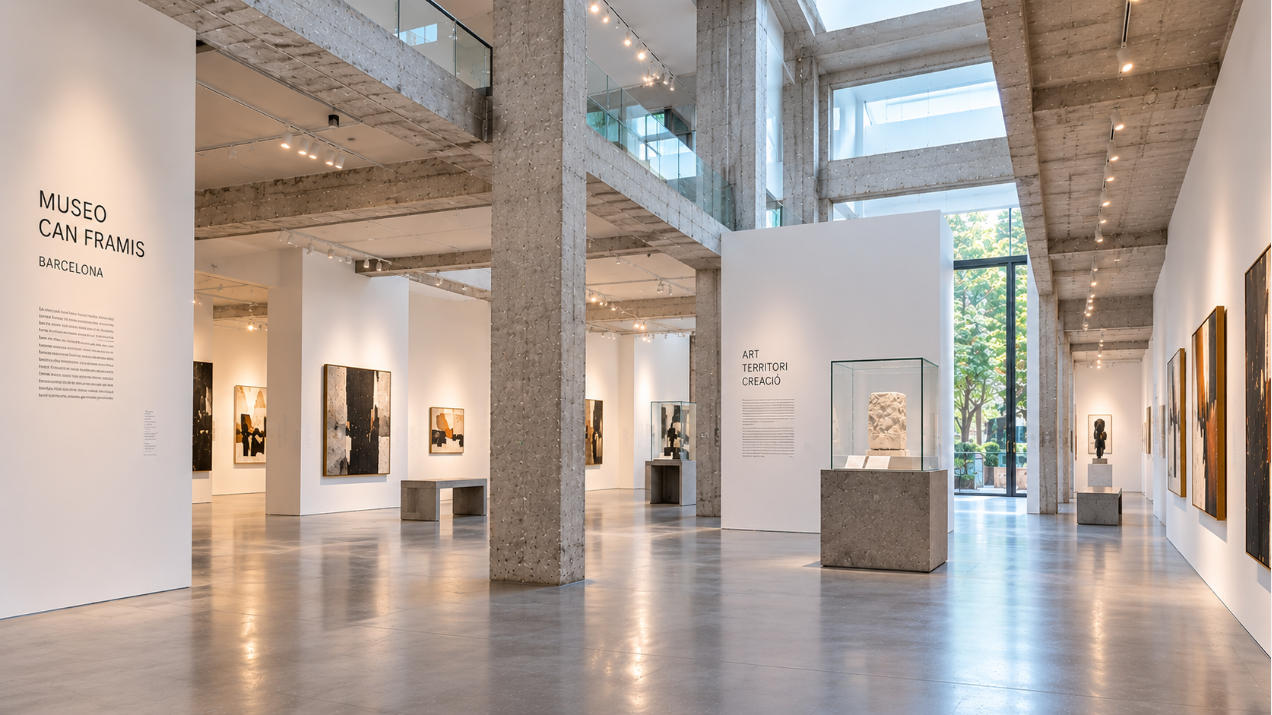
Industrial art museum display cases designed around architecture, painting and visual restraint.
Museo Can Framis demonstrates how industrial art museum display cases can support a contemporary painting museum without weakening the openness and simplicity of a converted industrial gallery.
Concrete connects the display system to the architecture, white steel reduces visual contrast and ultra-clear glass maintains transparency around smaller protected objects.
Together with open circulation, natural daylight and controlled track lighting, these elements create a museum environment where display furniture remains secondary to contemporary art and space.

