
Glass Art Museum Display Cases · Venice
Le Stanze del Vetro Venice
Glass Art Museum
Display Cases
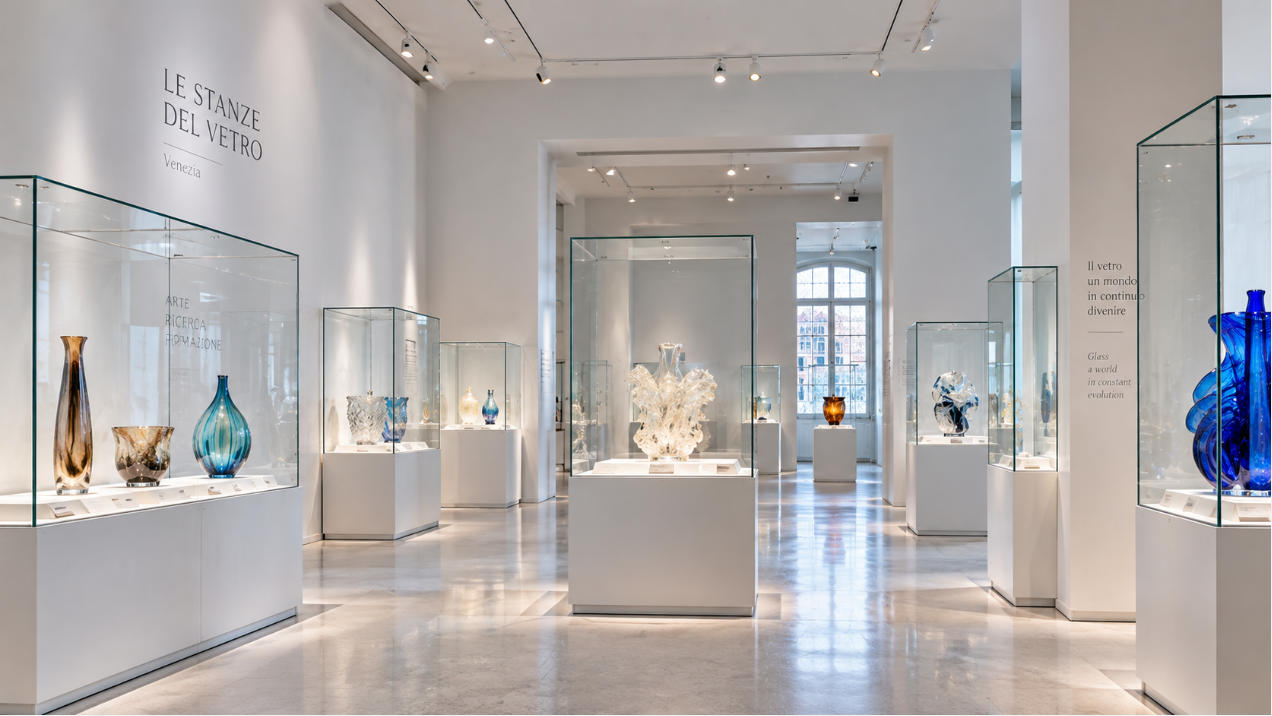
Le Stanze del Vetro presents glass art museum display cases within a highly controlled white gallery environment dedicated to transparency, light and contemporary glass art. Ultra-clear glazing, white steel and acrylic minimize visual interference, while cool white and focused illumination allow sculptural glass objects to remain the dominant element throughout the exhibition.
Project
Le Stanze del Vetro
Location
Venice, Italy
Collection
Glass Art
Area
Approx. 1,000 m²
Character
Minimal · Contemporary Art · Transparent
Museum display cases designed around transparency and contemporary glass art.
Le Stanze del Vetro develops an approximately 1,000 m² exhibition environment dedicated to glass art within a highly restrained architectural setting. White galleries, controlled circulation and transparent display elements create a quiet backdrop where material, color and form remain visually dominant.
The glass art museum display cases are designed to reduce the perceived boundary between artwork and visitor. Ultra-clear glazing, white structural elements and acrylic components keep the display system visually light while supporting delicate and sculptural glass collections.
For exhibitions where dimensions, glazing geometry, lighting and internal support systems need to respond closely to individual artworks, a custom museum showcase allows each case to be developed around the collection and exhibition concept rather than treated as a standardized enclosure.
Design Direction
When the artwork itself is transparent, the showcase must become even quieter — structure, glass and light are reduced until the boundary between object and exhibition space almost disappears.
02 / Space
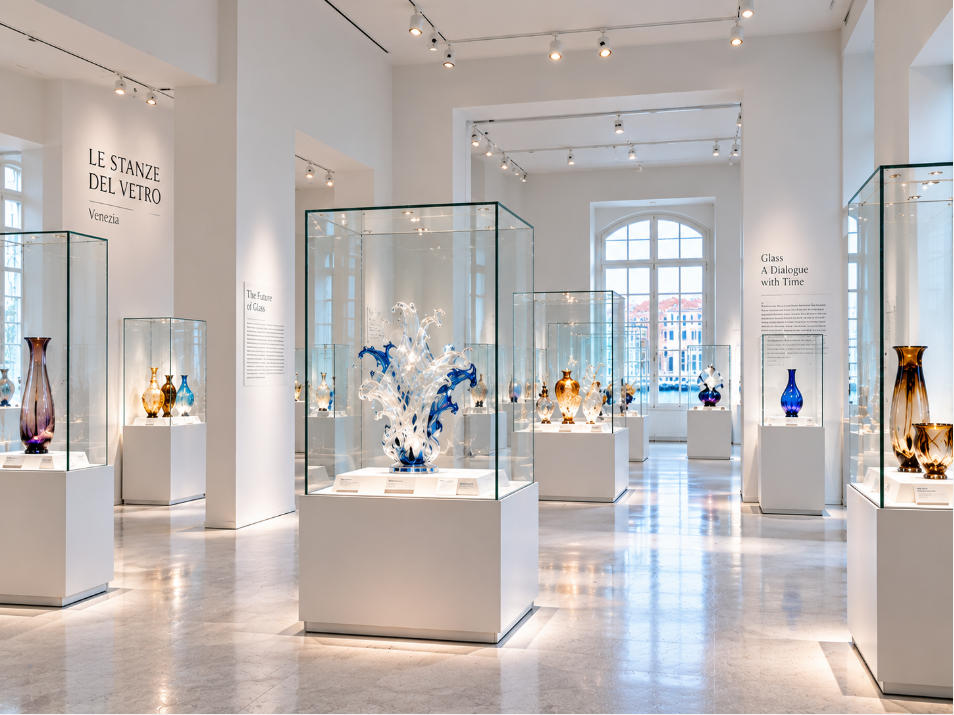
A pure white gallery sequence designed for focused art viewing.
The museum uses a refined exhibition route rather than an open multi-purpose hall. Visitors move through a sequence of carefully proportioned galleries where each room can establish a different relationship between object, light and viewing distance.
White architectural surfaces suppress unnecessary visual noise and create a neutral field around colored, transparent and reflective glass artworks.
The exhibition strategy depends heavily on proportion and placement. Thoughtful showcase design helps coordinate display height, viewing angles, object spacing and lighting positions so that the cases remain integrated into the wider gallery composition.
This controlled circulation also allows individual artworks to appear as visual landmarks without requiring excessive decorative intervention.
03 / Display
Ultra-clear museum cases that visually recede around glass artworks.
Transparency is the central display principle. Because many artworks already depend on transmitted light, reflection and optical depth, the enclosure must interfere as little as possible with the visual experience.
Ultra-clear glazing reduces green tint and maintains more accurate perception of colored and transparent glass objects. Selected museum display cases use minimal structural framing so the case reads as a protective volume rather than a dominant object.
White steel supports the architecture of the case while remaining visually consistent with the gallery environment. Acrylic components provide additional flexibility for risers, object supports and secondary presentation elements.
Cool white ambient lighting combines with focused illumination to define individual sculptures while preserving the clean, contemporary character of the exhibition.
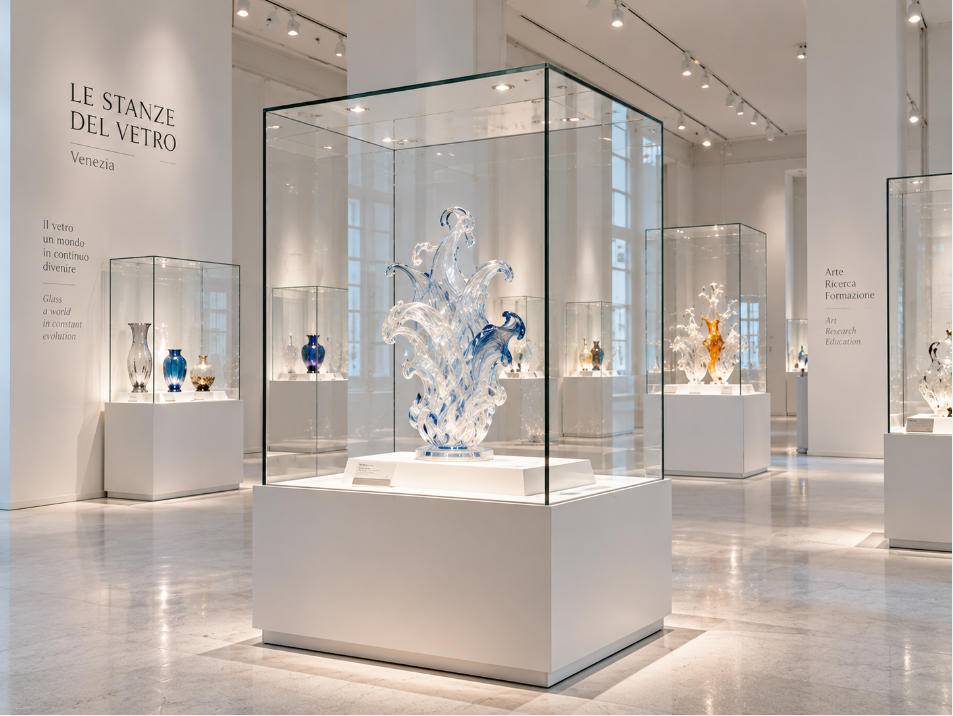
A minimal material system developed to preserve optical clarity.
Ultra-clear glass, white steel and acrylic create a technically precise but visually restrained display language, allowing glass artworks to control the color, transparency and reflection within the gallery.
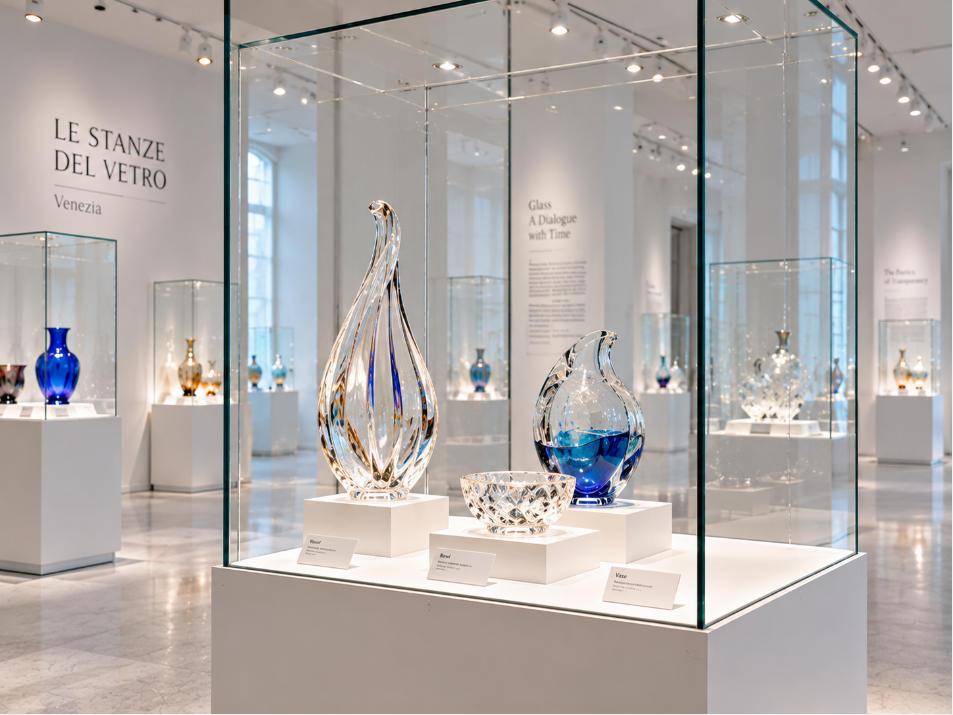
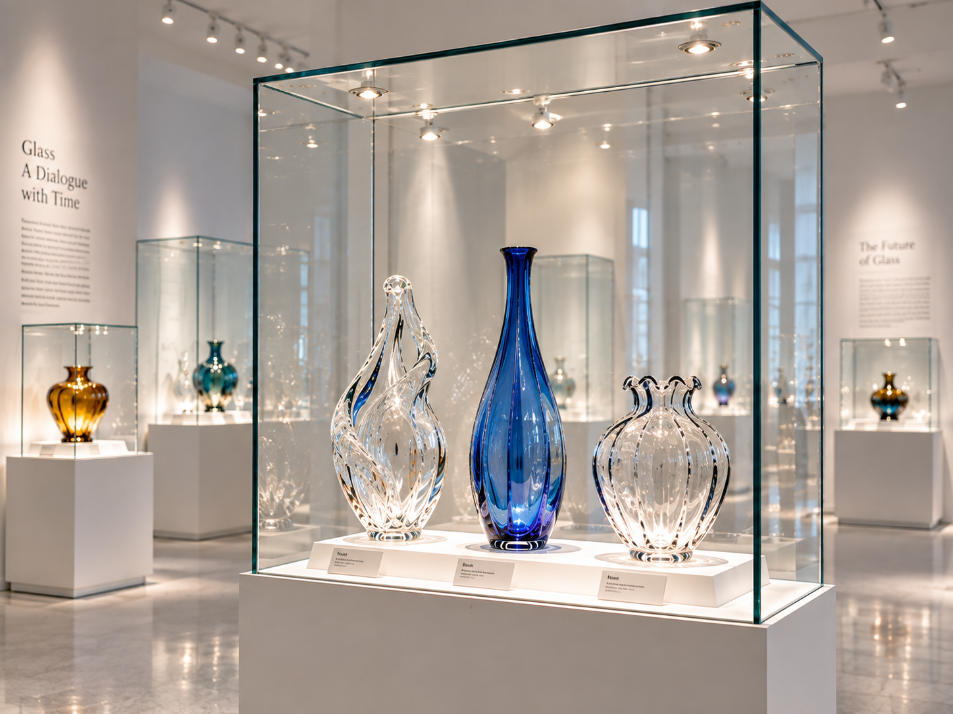
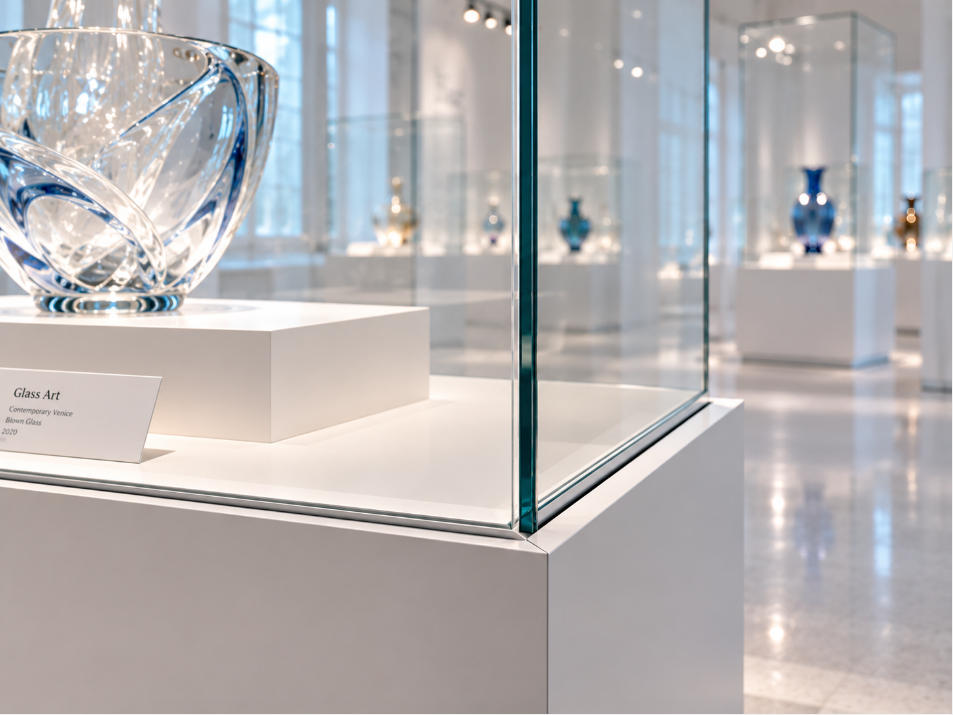
Glass Art · Focused Lighting · Transparent Display
04 / Art Presentation
Different glass artworks require different relationships between enclosure, light and viewing distance.
Transparent Sculpture
Ultra-clear cases reduce visual interference around transparent artworks and allow reflected and transmitted light to remain part of the viewing experience.
Colored Glass
Neutral white surroundings help saturated glass colors remain visually accurate without competing against decorative backgrounds or strong material textures.
Single-Object Display
Focused display positions isolate important works and give visitors sufficient viewing distance to understand form, transparency and internal optical effects.
Curated Exhibition Flow
A controlled sequence of galleries creates a measured rhythm between individual works, grouped displays and visual pauses across the exhibition.
Minimal cases demand precise engineering because every joint remains visible.
The simpler a showcase appears, the more clearly inaccuracies can be seen. Glass alignment, steel joints, door gaps, lighting integration and internal supports all need to remain carefully controlled.
Experienced museum showcase manufacturers can coordinate glazing, structural frames, access systems, internal supports and lighting so that technically complex museum cases maintain a visually minimal appearance.
Accurate display case engineering is especially important for glass art, where weight distribution, object support, glazing dimensions and access requirements need to be resolved without compromising the transparent exhibition concept.
For a museum containing multiple case dimensions and artwork types, controlled showcase manufacturing helps preserve consistent detailing across the complete exhibition system.
A flexible museum display system built around different scales of glass art.
Not every artwork requires the same enclosure. Individual sculptures, grouped collections and smaller glass objects can each use different case proportions while remaining connected through the same transparent material language.
For larger museum programs where fabrication consistency and multiple case types need to be coordinated together, a museum showcase factory provides the production framework required for repeated precision across the project.
The restrained design allows each enclosure to respond to the artwork while maintaining a coherent relationship with the white gallery architecture.
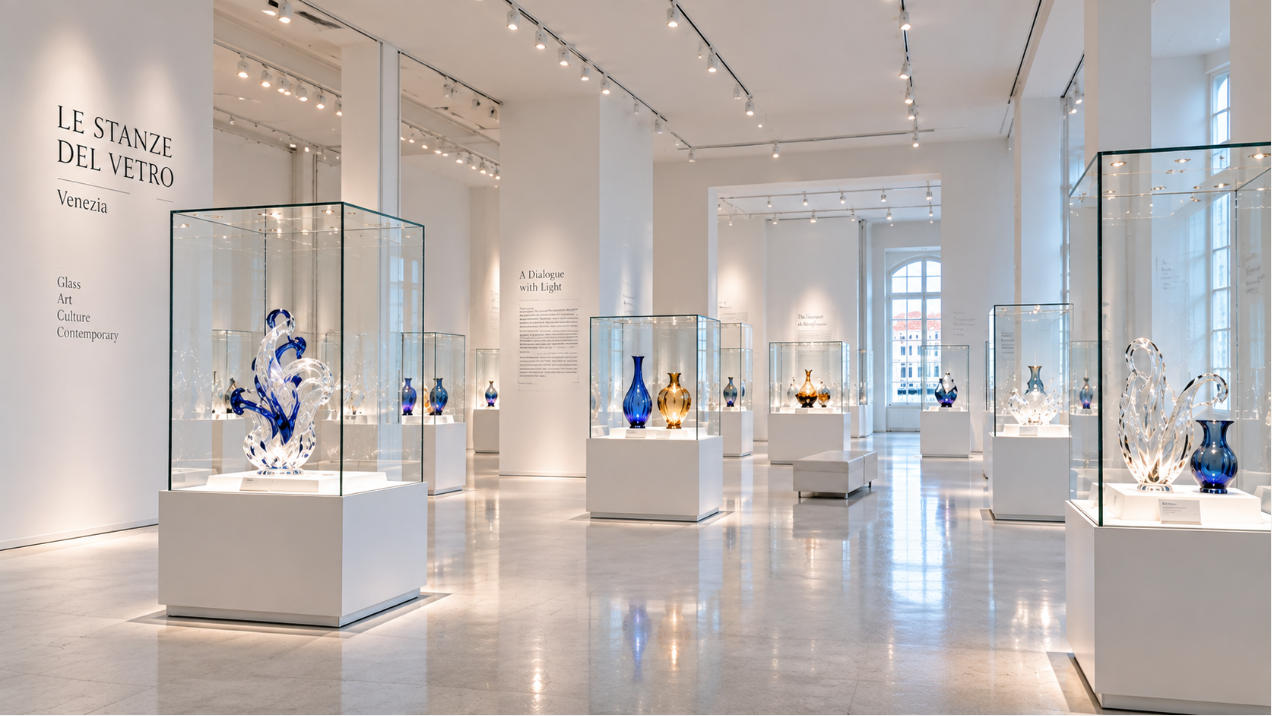
Glass art museum display cases designed to disappear into the gallery.
Le Stanze del Vetro demonstrates how glass art museum display cases can provide protection and technical structure while remaining visually secondary to the transparency, color and sculptural qualities of the artworks.
Ultra-clear glazing reduces visual obstruction, white steel integrates with the gallery architecture and acrylic supports flexible object presentation, while cool and focused lighting strengthens the optical qualities of the glass collection.
The result is a museum environment in which display furniture, architecture and lighting operate quietly around the artwork rather than competing with it.

