
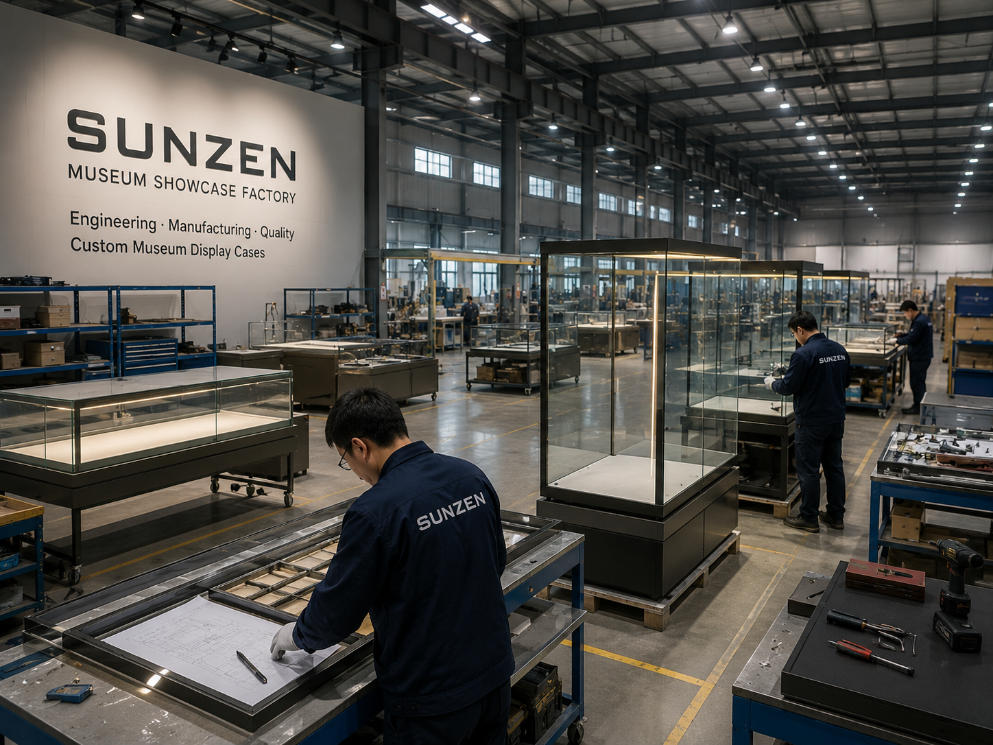
Museum Showcase Factory for Custom Exhibition Display Cases
SUNZEN is a museum showcase factory providing custom display case manufacturing for museums, galleries, cultural institutions and exhibition projects.
Our manufacturing scope connects technical drawings, glass, metal structures, interior display surfaces, access systems, integrated lighting and project-specific functional requirements into a coordinated showcase production process.
From an individual museum vitrine to multiple showcase families for a complete exhibition, production can be developed around approved project drawings and specifications.
For collection-specific customization and showcase configuration, explore our custom museum showcase solutions.
Turn Approved Museum Showcase Engineering Into Physical Production
Museum showcase manufacturing requires more than assembling glass panels around a cabinet base.
Each display case brings together multiple materials, tolerances and functional systems. Glass dimensions must correspond with structural frames, opening systems need to operate correctly, interior display surfaces must fit the curatorial layout and technical components need to remain integrated without distracting from the collection.
A coordinated factory process helps translate approved design and engineering information into a finished museum showcase while maintaining the intended dimensions, appearance and function.
What Does a Museum Showcase Factory Manufacture?
Freestanding Showcases
Floor-standing vitrines developed for central gallery areas and multi-directional viewing.
Wall Showcases
Large perimeter display cases developed for front-facing artifact presentation and coordinated gallery layouts.
Wall-Mounted Showcases
Elevated display cases for smaller artifacts, documents and collections where floor clearance supports the exhibition concept.
Tabletop Showcases
Horizontal or angled vitrines suited to manuscripts, medals, documents and objects intended for downward viewing.
Pedestal Showcases
Focused display cases manufactured for individual artifacts or smaller collections requiring stronger visual emphasis.
Architectural Showcases
Project-specific display cases coordinated with exhibition walls, niches and other architectural elements.
Explore different formats in our museum display cases collection.
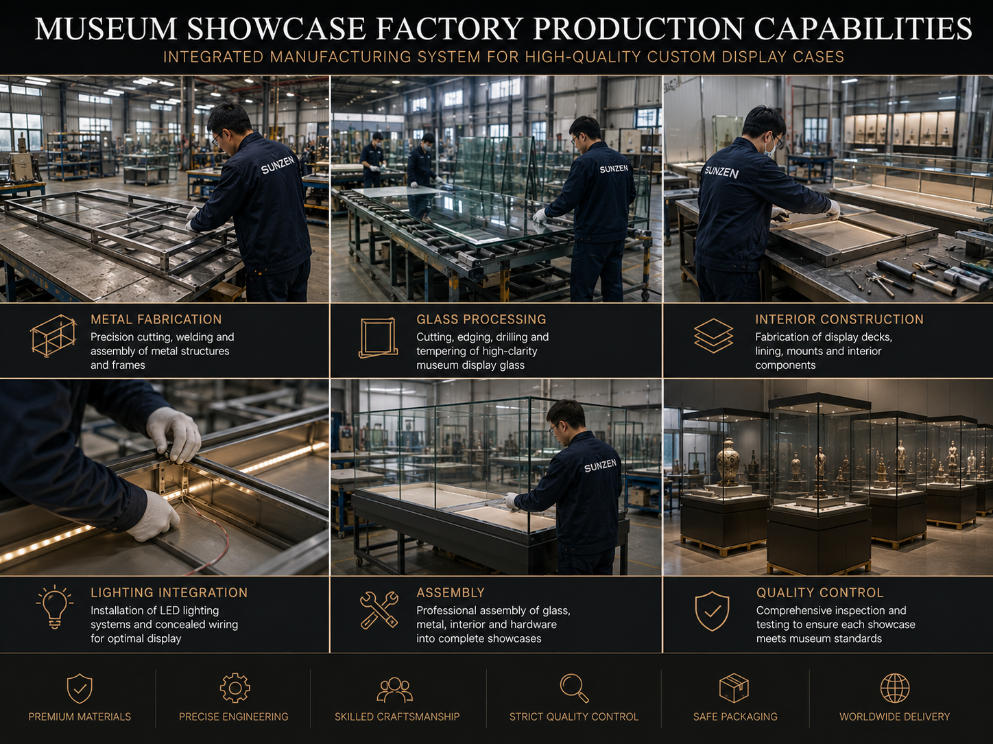
Coordinate Multiple Manufacturing Processes in One Showcase
A museum display case may combine structural metalwork, large glass panels, cabinetry, interior surfaces, lighting, hardware and specialized access components.
These elements need to be coordinated around the approved technical drawings rather than produced as unrelated components.
Production Starts With Approved Engineering
Technical Review
Review dimensions, showcase structure, glass, access, lighting and relevant technical requirements before production begins.
Production Drawings
Translate the approved showcase into technical information that can guide fabrication and assembly.
Material Confirmation
Confirm relevant glass, metal finishes, interior surfaces, hardware and other project materials before production.
Component Fabrication
Produce structural, glass, interior and supporting components according to the approved engineering.
Assembly & Integration
Bring glazing, structures, display surfaces, access systems and technical components together into the completed showcase.
Inspection
Review the finished showcase against the relevant drawings and project requirements before packing.
Resolve Critical Details Before They Reach the Production Floor
One of the most important stages of custom museum showcase manufacturing happens before physical fabrication begins.
Production drawings help establish how glass, frames, doors, display decks, lighting and technical components relate to one another. Resolving these relationships before fabrication can reduce unnecessary adjustments during final assembly.
Dimensions & Geometry
Confirm overall dimensions, internal clearances and important relationships between adjoining components.
Glass & Structure
Coordinate glazing with frames, supports, openings and other structural elements.
Access Engineering
Define opening direction, clearances, hardware positions and operating relationships before fabrication.
Display Interior
Coordinate decks, plinths, linings and object positions with the internal showcase dimensions.
Lighting Integration
Resolve light positions, channels, wiring routes and service access within the structure.
Assembly Relationships
Consider how individual components will be fabricated, transported and brought together during final assembly.
Control the Materials That Visitors Actually See
Material quality is important, but consistency between different materials is equally important in a museum showcase.
Glass, metal, interior linings and display surfaces meet within a relatively small visual field. Differences in alignment, finish or detailing can therefore become highly visible under exhibition lighting.
Manufacture the Showcase as One System
The final display case should read as one precise exhibition element rather than a collection of independently manufactured components.
Prepare Museum Display Glass for Accurate Assembly and Clear Viewing
Glass is one of the most visible components of a museum showcase, so its dimensions, edges and relationships with adjoining structures need to be controlled carefully during production.
The glazing specification itself is defined by the project, while factory processing focuses on translating that specification into accurately prepared panels ready for assembly.
Accuracy Matters at the Interface
Even small dimensional differences can become visually obvious where glass panels meet metal frames, doors and adjoining showcase components.
Build the Structural and Display Components Around the Approved Engineering
Structural Frames
Frames and supporting metal components are fabricated according to the approved dimensions and structural relationships.
Cabinet & Service Structure
Lower cabinets, bases and concealed service areas can be manufactured around the technical requirements of the showcase.
Display Decks & Plinths
Internal decks, platforms and plinths are produced according to the approved object layout and viewing height.
Interior Surfaces
Object-facing surfaces are finished according to the confirmed material and curatorial specification.
Functional Components
Hinges, slides, locks and other access components are installed according to the engineered opening system.
Visible Surface Control
Metal and cabinet finishes are reviewed against approved project references before final assembly.
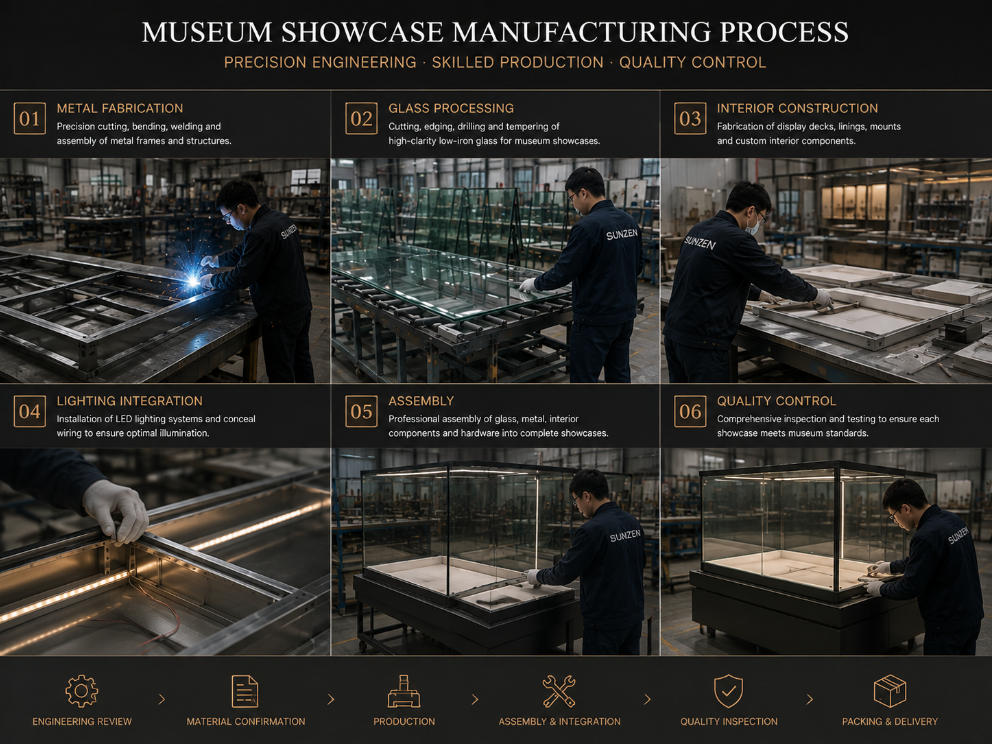
Bring Multiple Production Processes Together in One Museum Showcase
A museum display case is typically the result of several manufacturing disciplines working around one approved technical system.
The sequence needs to remain coordinated so structural components, glass, interior display surfaces, lighting and access mechanisms fit correctly during final assembly.
Install Exhibition Lighting as Part of the Showcase Structure
Approved Positioning
Light sources are installed according to the technical layout and intended object presentation.
Concealed Wiring
Wiring and technical components are routed within the structure where practical to maintain a clean display environment.
Driver Integration
Electrical components can be located in designated service areas according to the engineered showcase layout.
Reflection Review
Installed lighting can be reviewed together with the glass and display interior before packing.
Service Access
Lighting components should remain accessible for maintenance according to the agreed showcase design.
Functional Testing
The installed lighting system is tested as part of the final factory inspection where included in the project scope.
Manufacture Opening Systems Around Curatorial Operation
Access systems can vary significantly between museum showcases. The factory therefore needs to manufacture and adjust each opening method according to the approved design rather than treating every case as a standard door cabinet.
Hinged Doors
Hinged access systems are aligned and adjusted for controlled opening and closing.
Sliding Doors
Tracks, panels and related components are coordinated to support smooth lateral access.
Lift-Up Systems
Assisted or project-specific lifting systems require careful alignment between hardware, glass and structural components.
Removable Panels
Selected showcases can use removable access panels where full opening is required for installation or maintenance.
Locking Hardware
Locks and controlled-access components are installed according to the agreed security and operational requirements.
Opening Clearance
The finished access system is reviewed to ensure the required physical clearance is available during operation.
Assemble the Showcase as One Complete Exhibition Product
Final assembly is where the separate manufacturing processes become one museum display case. Structural frames, glass, interior surfaces, hardware, access systems and technical components need to work together without visible conflict.
Frame Alignment
Review the structural geometry before adjoining components are fully secured.
Glass Installation
Install prepared glass panels and check relationships with frames, joints and openings.
Interior Integration
Fit display decks, plinths and interior surfaces according to the approved internal layout.
Hardware Adjustment
Adjust doors, slides, hinges, locks and other moving components.
Technical Systems
Complete relevant lighting and other technical installations according to the project scope.
Visible Detailing
Inspect joints, alignments and finish transitions before the showcase moves to QC.
Inspect the Finished Museum Showcase Before Packing
Quality control needs to consider both the technical performance and the visitor-facing appearance of the finished display case.
Inspection can be carried out against the relevant approved drawings, finish references and project requirements.
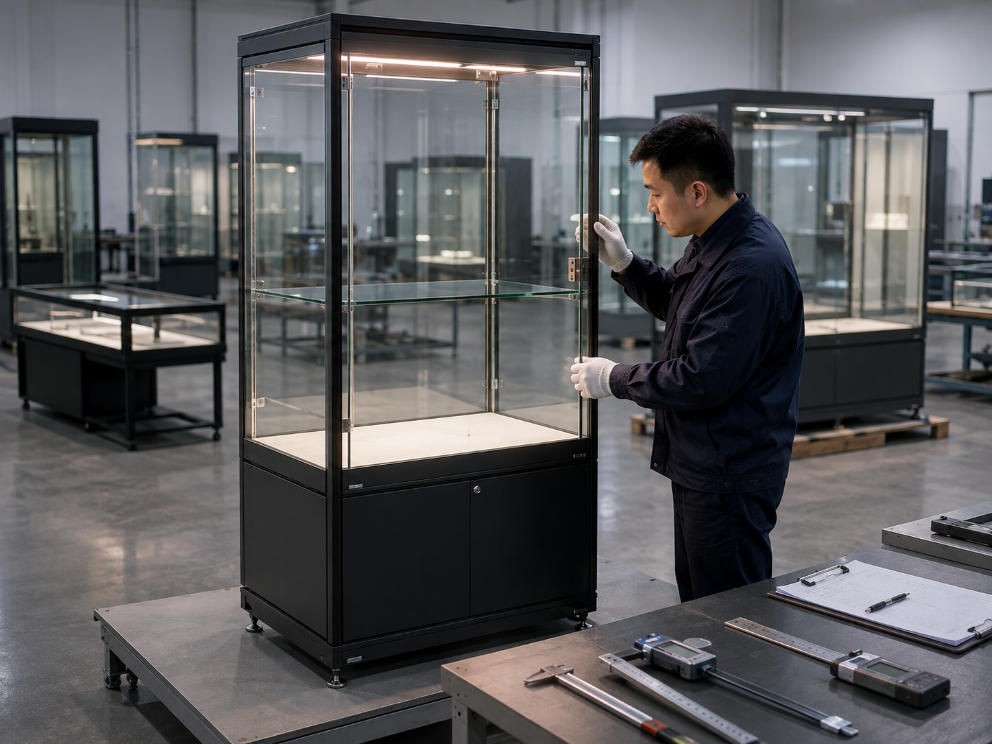
What Should Be Checked Before a Museum Showcase Leaves the Factory?
Dimensions & Geometry
Review overall size, alignment and key engineering relationships.
Glazing Installation
Inspect panels, joints, visible edges and relationships with the supporting structure.
Display Surfaces
Review decks, plinths, linings and internal details against the approved display configuration.
Access Systems
Test relevant opening mechanisms, locks and moving components.
Installed Systems
Verify lighting and other relevant technical components according to the agreed project scope.
Final Appearance
Review the completed showcase under normal viewing conditions before packing.
Review Multiple Museum Showcases Together When the Project Requires It
For larger museum projects, evaluating showcases only as individual units may not reveal inconsistencies across the complete exhibition package.
Where project scope and logistics allow, related showcases can be reviewed together before packing to compare dimensions, finishes and technical details.
Finish Comparison
Compare visible metal and interior finishes across related showcase families.
System Consistency
Review repeated lighting, access and construction details across multiple units.
Module Identification
Organize showcase units and components for packing, shipment and installation coordination.
Manufacture Multiple Showcase Types as One Coordinated Exhibition Package
A museum project may require several showcase families rather than one repeated display case. Freestanding vitrines, wall showcases, tabletop cases, pedestal displays and integrated units can each perform different curatorial functions within the same exhibition.
Factory coordination becomes especially important at this scale. Different showcase types may need to share the same visible finishes, glass detailing, lighting principles, hardware standards and construction language while maintaining their individual dimensions and functions.
Shared Material Language
Approved finish references can help maintain visual consistency across different showcase families.
Project-Wide Coordination
Individual showcases can be reviewed against the wider exhibition drawings before production and assembly.
Multiple Showcase Types
Different display formats can move through coordinated production while retaining their specific functional requirements.
Module Organization
Showcases and related components can be identified to support packing, delivery and site coordination.
Cross-Project Review
Related showcase families can be compared for finish, detailing and technical consistency before shipment.
Project Preparation
Completed units can be organized around the agreed packing, transportation and installation sequence.
From One Museum Display Case to a Complete Showcase Package
Individual Museum Showcase
A single custom showcase can be manufactured around one collection, artifact group or architectural location.
Factory priority: accurate execution of the approved dimensions, materials, glass, access and technical requirements.
Complete Exhibition Package
A larger museum project may combine several showcase types distributed across multiple exhibition zones.
Factory priority: maintain consistency across different showcase families while coordinating production, identification, QC, packing and delivery.
Protect the Finished Showcase Beyond the Factory Floor
Factory responsibility does not end with final assembly. Museum showcases contain large glass surfaces, finished metal components, interior display materials and technical elements that need appropriate protection during handling and transportation.
For multi-unit projects, clear identification and organized packing can also help the site team understand which showcase and components belong to each exhibition area.
Plan Beyond Manufacturing
Considering transportation and site requirements during engineering can reduce avoidable complications after the showcases leave the factory.
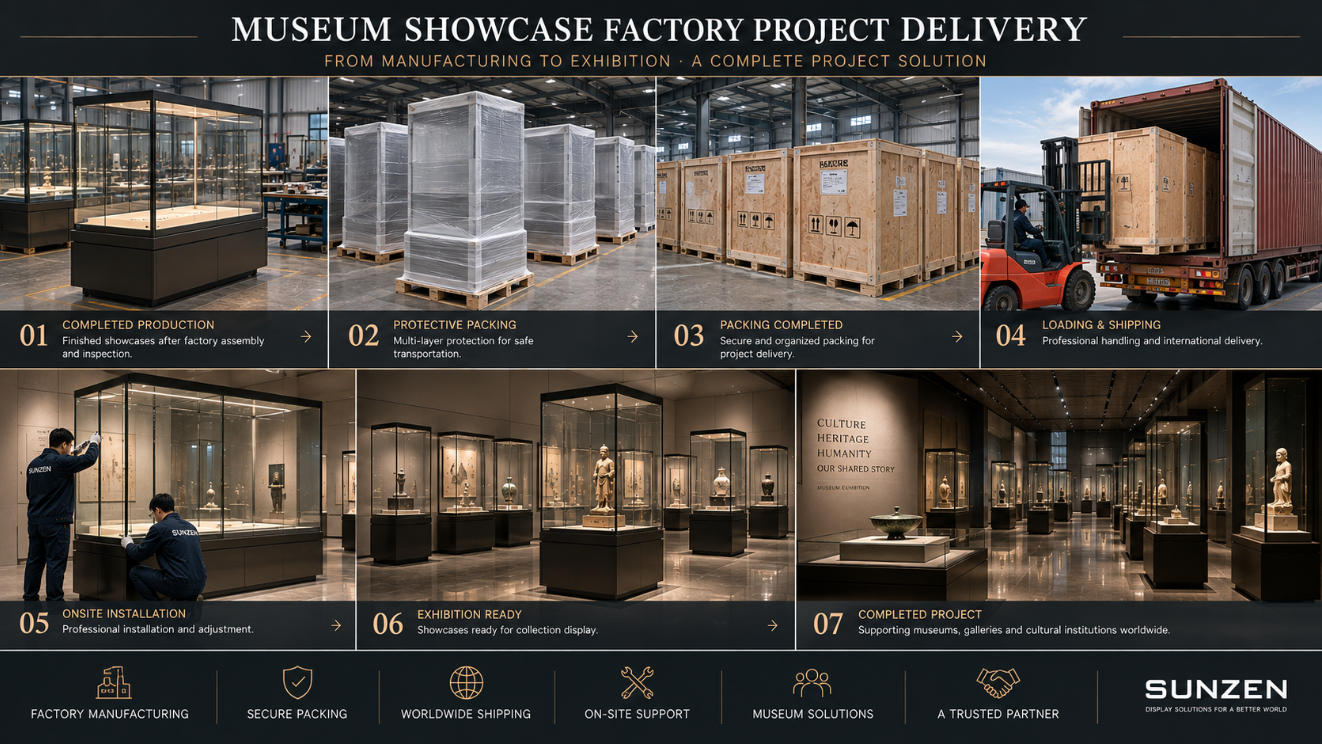
Connect Museum Showcase Engineering With Factory Manufacturing
Project Understanding
Production begins by understanding the showcase format, collection requirements and wider exhibition context.
Technical Engineering
Approved concepts can be translated into production drawings covering dimensions, structures, glazing, access and technical relationships.
Material Coordination
Glass, metal, interior surfaces, hardware and other components can be reviewed as one coordinated showcase system.
Custom Manufacturing
Different fabrication and assembly processes are coordinated around the approved engineering information.
Pre-Delivery Inspection
Finished showcases can be reviewed for dimensions, visible quality and relevant functional requirements before packing.
Single & Multi-Unit Scope
Manufacturing can support individual custom cases as well as coordinated showcase packages for larger exhibitions.
What Should You Send to a Museum Showcase Factory?
The more clearly the project requirements are defined, the more accurately engineering and manufacturing can be coordinated.
A project does not need to begin with complete production drawings. Initial information can be reviewed first and developed further during the technical stage.
From Technical Information to Finished Museum Showcase
Explore SUNZEN Museum Display Solutions
Custom Museum Showcase
Explore collection-oriented customization including dimensions, showcase formats, glazing, lighting, access and project-specific technical requirements.
Museum Display Cases
Browse different museum display case formats for artifacts, documents, sculptures and cultural collections.
Museum Showcase Manufacturer
Explore the broader design, engineering, manufacturing and project capabilities behind custom museum showcases.
Showcase Manufacturer
Explore SUNZEN’s broader custom showcase manufacturing capabilities for retail and exhibition applications.
Manufacturing Precision Matters Because the Showcase Becomes Part of the Exhibition
A museum showcase is ultimately experienced by visitors as one finished exhibition element. They do not see the separate glass-processing, metal-fabrication, interior-construction and assembly operations behind it.
This is why factory coordination matters. The dimensions, glass, structural components, interior display surfaces, lighting, access hardware and visible finishes need to come together accurately in the completed case.
For individual vitrines, manufacturing can focus closely on one project-specific display requirement. For larger exhibitions, the same production principles can be extended across multiple showcase families while maintaining a coordinated visual and technical standard.
SUNZEN provides custom museum showcase manufacturing from technical engineering and material coordination through fabrication, assembly, factory inspection and project delivery preparation.
Museum Showcase Factory FAQs
What does a museum showcase factory manufacture?
A museum showcase factory manufactures display cases for museums, galleries and exhibition projects. Depending on the project, these can include freestanding showcases, wall cases, wall-mounted vitrines, tabletop cases, pedestal showcases and architecturally integrated displays.
Can SUNZEN manufacture custom museum display cases from project drawings?
Yes. Approved concepts, CAD drawings and technical specifications can be reviewed and translated into coordinated production covering structures, glass, interior display components, access systems, lighting and other relevant project requirements.
Can museum showcase dimensions and materials be customized?
Yes. Dimensions, geometry, glass, metal finishes, interior display surfaces, access systems and other relevant components can be developed according to approved project requirements.
What types of access systems can be manufactured for museum showcases?
Depending on the approved showcase design, access can include hinged doors, sliding systems, lift-up mechanisms, removable panels and other project-specific opening solutions. Hardware and clearances are coordinated during engineering and assembly.
Can lighting be integrated during museum showcase manufacturing?
Yes. Where required by the project, lighting, wiring and related technical components can be integrated into the showcase according to the approved engineering layout and tested before delivery.
How are museum showcases inspected before delivery?
Factory inspection can include dimensions, glass installation, visible finishes, interior display surfaces, access systems, locks, lighting and overall presentation according to the agreed project scope and approved information.
Can SUNZEN manufacture a complete museum showcase package?
Yes. Manufacturing scope can range from one custom museum display case to multiple showcase families for a complete exhibition. Related units can be coordinated around common materials, finishes, engineering standards and project requirements.
Can museum showcases be prepared for international delivery?
Yes. Depending on the agreed project scope, completed showcases can be inspected, protected, identified and packed according to the showcase structure and project logistics requirements for international delivery.
What information should I send to a museum showcase factory for a quotation?
Useful information includes showcase quantities, dimensions, collection information, exhibition drawings, existing showcase designs or CAD files, material requirements, technical specifications, project location and expected schedule.
How long does museum showcase manufacturing take?
Manufacturing lead time depends on showcase quantity, dimensions, engineering complexity, materials, access systems, technical requirements, approval process and overall project scope. The production schedule should therefore be confirmed for each project.

