
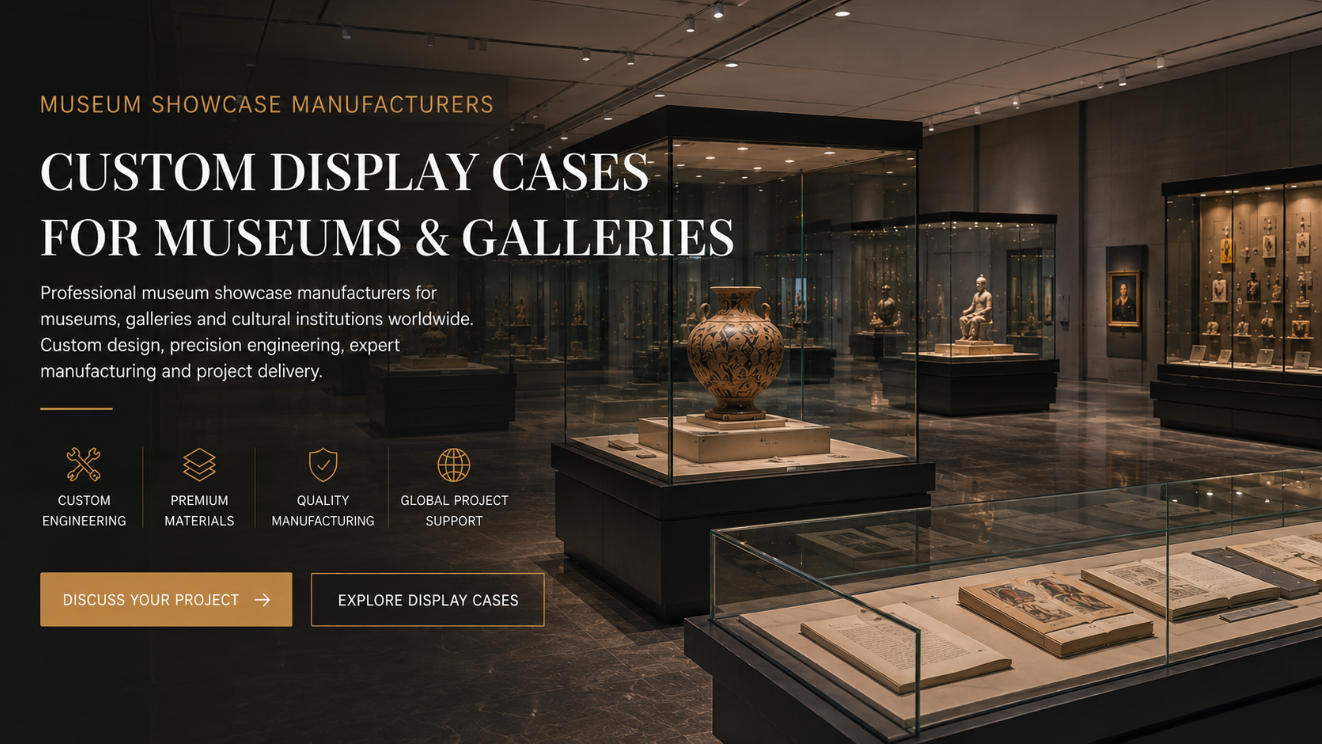
Museum Showcase Manufacturers for Custom Museum & Gallery Projects
Choosing the right museum showcase manufacturers is not simply a matter of comparing cabinet prices. The supplier must be able to translate curatorial, architectural and technical requirements into accurately engineered display cases that can be manufactured, inspected and delivered as part of the exhibition.
SUNZEN develops custom museum display cases for museums, galleries, cultural institutions, exhibition contractors and professional project teams.
For collection-specific customization, explore our custom museum showcase solutions.
What Defines a Qualified Museum Showcase Manufacturer?
A museum showcase may look visually simple when completed, but producing it can require coordination between glazing, structural fabrication, interior display construction, access hardware, lighting and project-specific technical systems.
For B2B museum projects, a qualified manufacturer should therefore be evaluated by more than appearance alone.
Engineering capability, material knowledge, customization, manufacturing, quality control and delivery coordination all influence whether the supplier can successfully execute the project.
Six Capabilities to Evaluate Before Selecting a Supplier
Engineering Capability
Can the manufacturer interpret architectural drawings, showcase concepts and technical specifications and develop them into production-ready information?
Material Knowledge
Can glass, metal, interior surfaces, hardware and other materials be specified and coordinated around the actual project?
Custom Manufacturing
Can the supplier manufacture different showcase geometries instead of forcing the project into a limited catalogue of standard cabinets?
Functional Integration
Can access systems, lighting and relevant technical requirements be integrated without compromising the exhibition appearance?
Quality Control
Does the manufacturer inspect the finished showcase against approved drawings and project requirements before packing?
Project Delivery
Can multiple units be identified, protected and coordinated for delivery as part of a professional exhibition project?
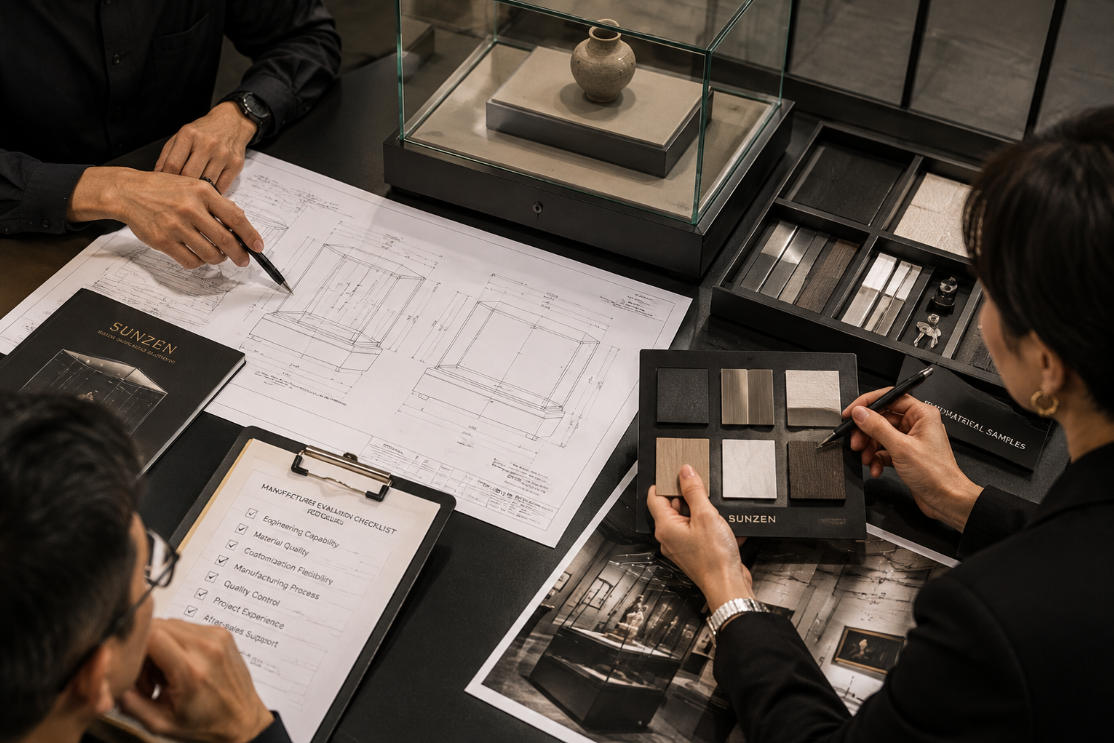
Evaluate the Manufacturer Behind the Showcase
A quotation can tell you the proposed price, but it does not necessarily show whether the supplier can successfully manufacture the project.
Before selecting a museum display case manufacturer, buyers should examine how the company approaches engineering, materials, manufacturing and inspection.
A Manufacturer Should Adapt to the Exhibition — Not the Other Way Around
Different collections and gallery layouts require different showcase formats. A capable manufacturer should be able to develop a coordinated family of cases rather than forcing every object into one construction type.
Freestanding Showcases
Independent vitrines for central gallery areas and multi-directional viewing.
Wall Showcases
Perimeter display systems for front-facing collections and architectural integration.
Tabletop Showcases
Horizontal displays for manuscripts, documents, medals and smaller objects.
Pedestal Showcases
Focused vitrines for individual artifacts and visually important objects.
Wall-Mounted Showcases
Elevated display solutions for selected artifacts and wall-oriented exhibition layouts.
Integrated Showcases
Project-specific cases coordinated with exhibition architecture, niches and built environments.
Museum Showcase Manufacturer vs General Display Supplier
| Evaluation Area | Museum Showcase Manufacturer | General Display Supplier |
|---|---|---|
| Project Input | Can work from museum briefs, drawings and exhibition requirements. | Often optimized around standard commercial cabinet requirements. |
| Customization | Dimensions and systems developed around the exhibition. | May rely more heavily on existing cabinet formats. |
| Engineering | Coordinates glass, structure, access, interior and technical components. | Engineering depth varies significantly between suppliers. |
| Collection Context | Considers viewing, curatorial access and collection-specific requirements. | Usually focused primarily on general display and merchandising. |
| Project Scale | Can coordinate multiple showcase families across an exhibition. | May be better suited to repetitive standard fixtures. |
| Factory Review | Inspection can be aligned with project-specific drawings and requirements. | Often follows general commercial fixture QC procedures. |
Can the Manufacturer Turn Your Design Into Something That Can Actually Be Built?
This is one of the most important questions in custom museum showcase procurement.
Architectural renderings and exhibition concepts communicate design intent, but manufacturing requires another level of resolution.
Dimensions, glass interfaces, frames, opening clearances, internal display surfaces, lighting positions and service access need to be coordinated before fabrication begins.
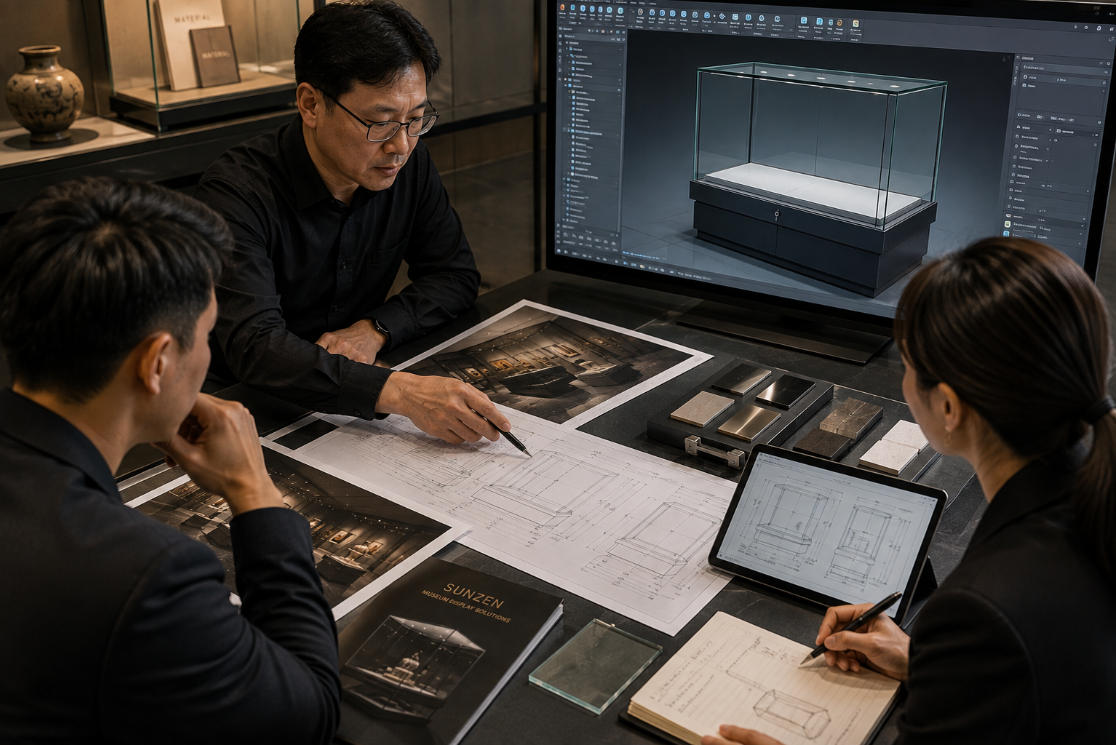
Compare Museum Showcase Manufacturers at the Specification Level
Two showcases can appear similar in a rendering while being very different in construction, operation and technical execution.
Glass & Glazing
Define required glazing according to visibility, safety, reflection and project-specific protection requirements.
Structure & Geometry
Confirm how the showcase structure supports the required dimensions, glass configuration and architectural appearance.
Interior Display System
Review decks, plinths, linings and object-supporting elements that establish the immediate display environment around the collection.
Access System
The opening method should respond to curatorial access, showcase geometry and available operating space.
Lighting Integration
Where required, lighting should be coordinated with the structure, glazing, object presentation and future service access.
Project-Specific Systems
Security, sealing, monitoring or environmental provisions should be defined according to the project specification rather than assumed to be identical for every showcase.
Ask How the Systems Work Together — Not Only What Components Are Included
Glass
Glass selection affects visibility, construction details, access relationships and the visitor’s view of the collection.
Access
A technically impressive showcase can still be difficult to operate if access was not developed around curatorial use.
Lighting
Integrated lighting needs to be considered together with object position, glass reflections, wiring and service access.
Interior
The display deck, lining, plinths and supports form the immediate visual environment around the artifact.
Use Samples and Technical Review to Reduce Uncertainty
A professional procurement process should create clear approval points before full manufacturing begins. The exact review process depends on project scale and complexity, but the objective is consistent: confirm important decisions while changes can still be made efficiently.
What Should Buyers Verify About the Manufacturer’s Production Capability?
Drawing-to-Production Control
How are approved drawings communicated to fabrication, assembly and inspection teams?
Component Coordination
How are glass, metal, interior construction, hardware and technical components coordinated before final assembly?
Finish Consistency
How are approved finish references maintained across multiple showcases or exhibition zones?
Assembly Capability
Can the manufacturer assemble and review the showcase as a complete exhibition product before packing?
Functional Adjustment
Can doors, slides, locks, lift systems and other moving components be tested and adjusted before delivery?
Multi-Unit Coordination
Can the supplier manage identification, consistency and production sequencing for a complete exhibition package?
For a deeper look at production, visit the SUNZEN museum showcase factory.
A Finished Showcase Should Be Inspected as Both a Technical Product and an Exhibition Element
Dimensions
Check critical finished dimensions, geometry and alignment against approved information.
Glass
Inspect visible condition, installation, joints, edges and relationships with adjoining components.
Finishes
Compare visible metal and interior surfaces with approved project references.
Access
Test applicable doors, slides, locks, lifting mechanisms and other moving systems.
Technical Systems
Verify relevant lighting and other installed systems according to the agreed project scope.
Visual Review
Evaluate the completed case from normal visitor viewing positions before packing.
10 Questions to Ask Museum Showcase Manufacturers Before You Order
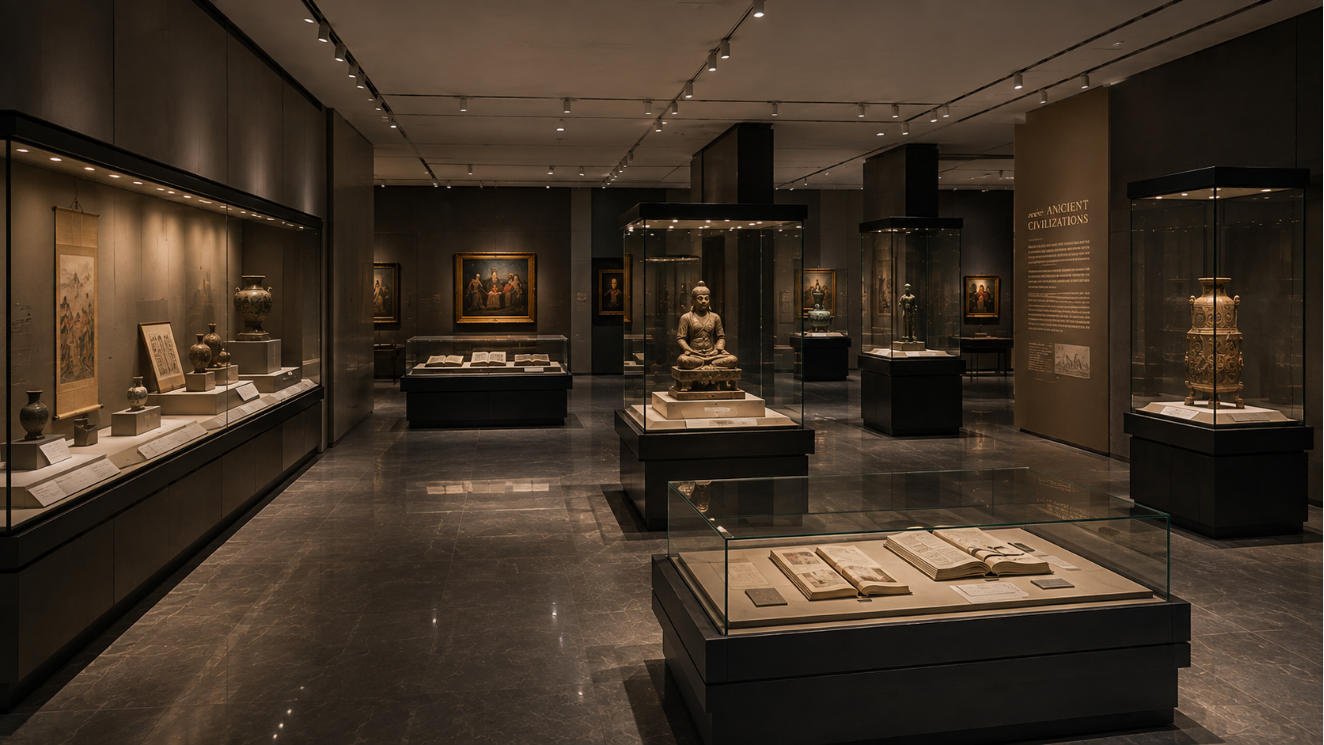
Judge the Manufacturer by the Complete Exhibition — Not Only One Showcase
A single display case can demonstrate workmanship. A coordinated museum project reveals whether a manufacturer can maintain design intent, material consistency and technical execution across different showcase types.
Different Showcase Formats
Demonstrates the ability to handle different exhibition functions.
Shared Material Language
Shows whether visible finishes remain coordinated across multiple units.
Coordinated Engineering
Demonstrates consistent construction and technical detailing across the project.
Project-Wide QC
Shows whether the manufacturer can manage quality beyond one individual showcase.
Do Not Select on Price Alone
Price matters in every B2B project, but a meaningful comparison should be made against the actual scope being offered.
A lower quotation may reflect a different glass specification, simpler access hardware, reduced engineering scope, different interior materials, fewer technical systems or a different level of pre-delivery inspection.
Before comparing final numbers, normalize the technical scope so each manufacturer is being evaluated against the same project requirements.
Dimensions
Are all suppliers quoting the same showcase sizes and quantities?
Glass
Is the proposed glazing specification genuinely equivalent?
Materials
Are structural, interior and visible finish specifications comparable?
Access
Are the same opening systems, hardware and locks included?
Technical Scope
Are lighting and other required systems included on the same basis?
Engineering
Does the quotation include the required technical development and approval process?
QC
What factory inspection and testing are included before delivery?
Logistics
Are packing, identification and delivery terms comparable?
Work With a Museum Showcase Manufacturer Across the Complete Project Chain
Museum Showcase Manufacturing for Professional Project Teams
Museums & Cultural Institutions
For institutions procuring custom showcases around specific collections, galleries or exhibition programs.
Museum Designers
For exhibition designers requiring visual concepts to be translated into manufacturable showcase systems.
Architects
For architectural teams coordinating showcases with walls, floors, niches, services and gallery environments.
Exhibition Contractors
For contractors integrating showcase supply into a larger museum or cultural exhibition package.
Procurement Companies
For professional buyers comparing museum showcase manufacturers against technical and commercial requirements.
Gallery & Exhibition Developers
For cultural and exhibition projects requiring custom display cases across different object and space types.
Prepare a Better RFQ and Receive a More Meaningful Manufacturer Proposal
What SUNZEN Brings to a Museum Showcase Project
Custom Project Development
Showcases can be developed around actual dimensions, exhibition layouts and project requirements.
Technical Engineering
Design information can be developed into production-oriented drawings and coordinated construction details.
Multi-Material Coordination
Glass, metal structures, interior surfaces, hardware and technical components can be coordinated as one system.
Custom Manufacturing
Different museum showcase formats can be manufactured according to approved project information.
Factory Quality Control
Finished showcases can be reviewed against relevant drawings, finishes and functional requirements before packing.
Complete Exhibition Capability
Multiple showcase types can be coordinated as one project where a complete exhibition display package is required.
Continue Your Museum Showcase Research
Museum Display Cases
Explore different museum showcase formats for artifacts, documents, sculptures and cultural collections.
Custom Museum Showcase
Understand how dimensions, glazing, access, lighting and other systems can be developed around the collection.
Museum Showcase Factory
Explore production, assembly, quality control and factory manufacturing processes.
Museum Showcase Manufacturer
Learn more about SUNZEN’s broader museum showcase design, engineering and manufacturing capabilities.
Looking for a Museum Showcase Manufacturer for Your Next Project?
Send SUNZEN your showcase schedule, drawings, specifications or available project information. We can review the requirements and discuss the appropriate next stage for engineering and manufacturing.
Choose Manufacturing Capability That Matches the Complexity of the Exhibition
Comparing museum showcase manufacturers requires more than reviewing finished display case photographs. Buyers should examine how each supplier handles engineering, materials, customization, access systems, lighting integration, manufacturing, quality control and project delivery.
The appropriate manufacturer should also match the scale of the project. An individual custom vitrine may require highly focused technical development, while a complete museum exhibition can involve several showcase families that need coordinated dimensions, finishes, construction details and production standards.
SUNZEN provides custom museum showcase development and manufacturing for museums, galleries, cultural institutions, exhibition designers, architects, contractors and professional procurement teams.
Museum Showcase Manufacturers FAQs
How should I compare museum showcase manufacturers?
Compare manufacturers by engineering capability, customization, material specifications, manufacturing processes, access and lighting integration, quality control, relevant project experience and ability to manage the required project scale. Quotations should also be normalized so that suppliers are compared against an equivalent technical scope.
What information should I send to a museum showcase manufacturer for a quotation?
Useful information includes showcase types and quantities, dimensions, exhibition drawings, collection information, material specifications, access requirements, lighting or other technical requirements, project location and expected schedule. If complete technical drawings are not yet available, concept information can still provide a starting point for discussion.
Can museum showcase manufacturers work from architects or exhibition designers’ drawings?
A capable custom manufacturer should be able to review professional project information such as plans, elevations, sections, renderings and specifications and develop the required production information according to the agreed project scope.
What types of museum display cases can SUNZEN manufacture?
SUNZEN can develop custom museum showcase formats including freestanding showcases, wall showcases, wall-mounted cases, tabletop vitrines, pedestal showcases and project-specific integrated display cases according to approved project requirements.
Can museum showcases be customized in size and materials?
Yes. Showcase dimensions, geometry, glazing, structural materials, interior display surfaces, finishes, access systems and relevant technical components can be developed according to the project requirements and approved design.
Should I request samples before museum showcase production?
For projects where material appearance and finish consistency are important, relevant samples or approved references can help confirm expectations before production. The appropriate approval process depends on the project scope, materials and technical requirements.
How should museum showcase quality control be evaluated?
Quality control can include review of critical dimensions, glass installation, visible finishes, interior display surfaces, access systems, locks, lighting and other relevant functional requirements. The inspection scope should correspond with the approved drawings and project specifications.
Can one manufacturer supply different showcase types for a complete museum exhibition?
Yes. A custom museum showcase manufacturer can coordinate multiple display formats within one exhibition, including freestanding, wall, tabletop, pedestal and other project-specific showcases. Shared materials, finishes and technical standards can be coordinated across the project.
Is the lowest museum showcase quotation always the best option?
Not necessarily. Quotations can differ because suppliers may be offering different glass, materials, access hardware, technical systems, engineering scope, quality control or logistics. Buyers should first compare quotations against the same technical scope before making a commercial decision.
How long does a custom museum showcase project take?
Project lead time depends on showcase quantity, dimensions, engineering complexity, materials, technical systems, drawing and material approvals, manufacturing requirements and logistics. The schedule should therefore be evaluated according to the specific exhibition project.

