
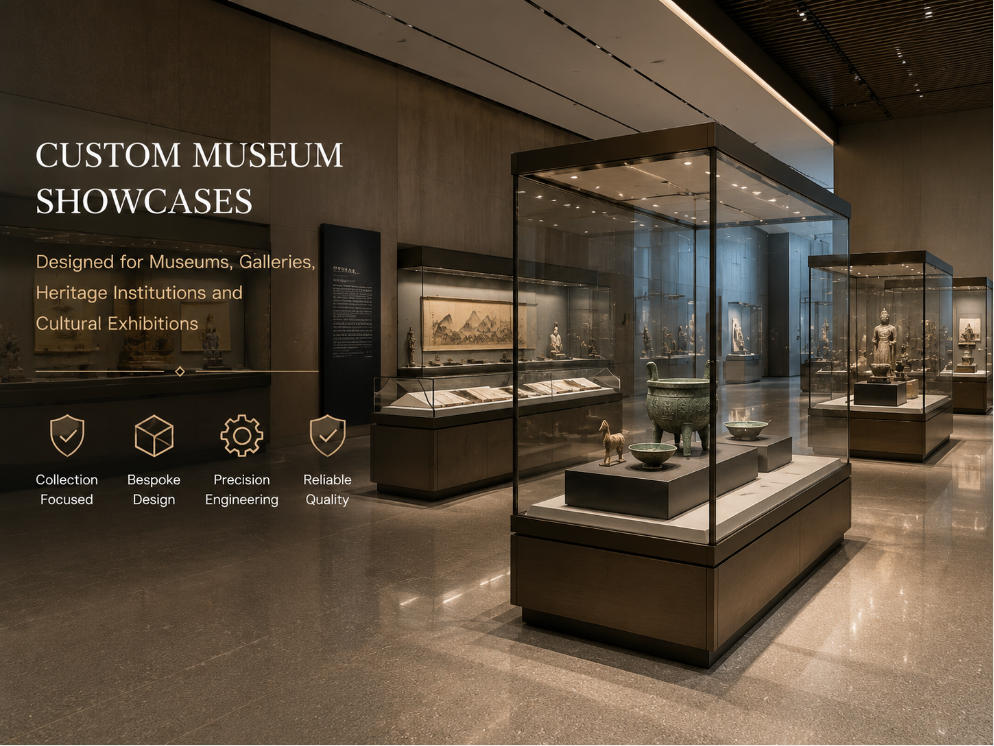
Custom Museum Showcases Engineered Around Collections & Exhibition Spaces
SUNZEN develops custom museum showcases for museums, art galleries, heritage institutions and cultural exhibition projects where the display case must respond to both the collection and the surrounding architecture.
Rather than adapting artifacts to standard cabinet dimensions, each showcase can be developed around object size, viewing requirements, access, glass, lighting, internal presentation and project-specific protection requirements.
Our scope can extend from an individual bespoke museum display case to a coordinated family of freestanding, wall, tabletop, pedestal and integrated showcases for a complete exhibition.
Browse our museum display cases for different exhibition formats and applications.
Why Should a Museum Showcase Be Developed Around the Collection?
The object being displayed should influence the showcase—not the other way around.
Collections differ in scale, material, sensitivity, viewing requirements and curatorial intent. A manuscript, textile, sculpture and archaeological object may therefore require very different display conditions.
Custom development allows the dimensions, internal presentation, glazing, access and technical systems to be coordinated around the actual exhibition requirement.
Custom Museum Showcase vs Standard Display Cabinet
Standard Display Cabinet
Uses predetermined dimensions, structures and internal configurations.
Best suited to: general display requirements where the objects and exhibition environment can adapt to an existing cabinet format.
Limitations: less flexibility for unusual object dimensions, architectural integration, specialized access or project-specific technical requirements.
Custom Museum Showcase
Developed specifically around the collection, exhibition concept and physical environment.
Best suited to: museums, galleries, heritage projects and exhibitions requiring coordinated presentation and technical development.
Advantages: dimensions, glazing, lighting, access, interior presentation and selected functional systems can be developed as one integrated solution.
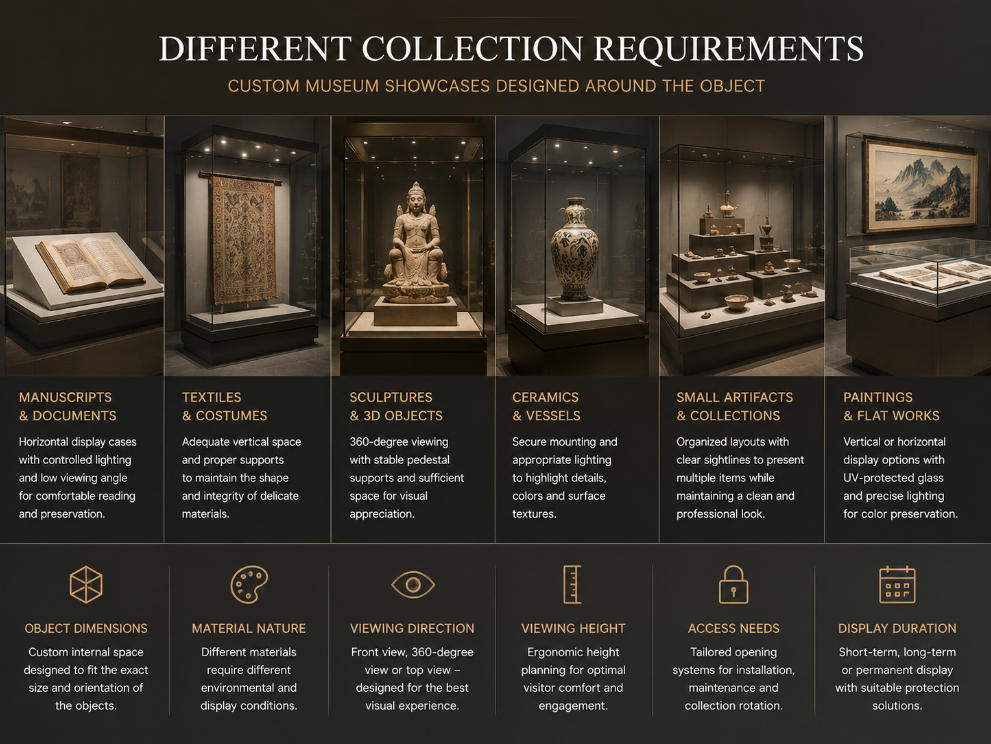
Start With the Object Before Designing the Showcase
The first stage of a custom museum showcase project is understanding what will be displayed and how visitors are expected to experience it.
What Can Be Customized on a Museum Showcase?
A bespoke museum showcase can be developed as a coordinated system rather than a standard glass cabinet with optional accessories.
Size & Geometry
Width, depth, height, viewing level and overall geometry can be developed around the collection and exhibition architecture.
Display Glazing
Glass specifications can be selected according to visibility, safety, reflection and project-specific protection requirements.
Display Surfaces
Decks, plinths, supports and interior linings can be coordinated with the collection and curatorial presentation.
Exhibition Lighting
Integrated lighting can be developed according to object type, viewing direction and exhibition lighting strategy.
Opening Systems
Doors, sliding systems, removable panels or project-specific opening mechanisms can be developed around curatorial access.
Technical Requirements
Security, sealing and environmental-control provisions can be evaluated according to the collection and project specification.
Choose the Display Format Around the Exhibition Layout
Freestanding Showcases
Independent floor-standing vitrines that can provide multi-directional viewing within central exhibition areas.
Wall Showcases
Perimeter display cases for objects that benefit from front-facing presentation and efficient use of gallery space.
Wall-Mounted Showcases
Elevated displays suited to smaller objects, documents and collections where floor clearance supports the exhibition design.
Tabletop Showcases
Low-profile horizontal vitrines suitable for manuscripts, medals, documents and objects intended for downward viewing.
Pedestal Showcases
Focused vitrines that give an individual artifact or small collection a strong visual presence within the gallery.
Integrated Showcases
Project-specific display cases coordinated with architectural walls, niches or exhibition structures.
Different Collections Require Different Display Relationships
Manuscripts & Works on Paper
Horizontal or angled presentation can support comfortable downward viewing while keeping the display visually controlled.
Sculptures & Three-Dimensional Objects
Freestanding or pedestal formats can provide broader viewing angles around objects intended to be understood in three dimensions.
Cultural & Historical Objects
Showcase format can be selected according to object scale, viewing importance, support requirements and exhibition hierarchy.
Textiles & Costume
Internal dimensions and support systems can be developed around the size, orientation and intended presentation of the textile.
Ceramics & Decorative Arts
Pedestal, upright or freestanding displays can provide controlled presentation for individual pieces or grouped collections.
Multi-Object Exhibitions
A coordinated showcase family can establish consistency while allowing different collection groups to use appropriate display formats.
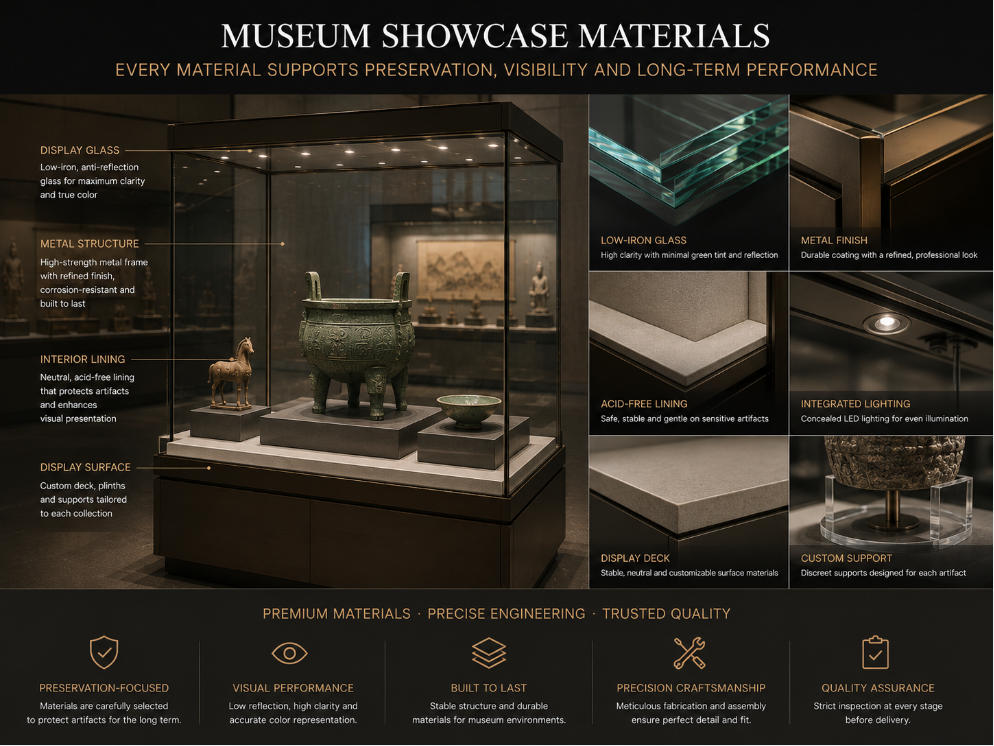
Coordinate Materials With the Collection and Exhibition Environment
Material selection should consider both visual presentation and the technical requirements established for the project.
The glass enclosure, structural frame, interior deck and object-facing materials should be reviewed together because each forms part of the immediate display environment.
Protection Requirements Should Be Defined by the Project
Museum collections do not all require the same environmental or security configuration. Protection requirements should therefore be established according to the collection, exhibition duration, venue conditions and curatorial specification.
Physical Protection
The enclosure and structural system help create a controlled physical boundary between visitors and the displayed object.
Light Management
Glass and exhibition lighting can be coordinated with the sensitivity and presentation requirements of the collection.
Dust Management
Joints, doors and enclosure details can be developed according to the required level of protection from the surrounding gallery environment.
Access Control
Opening mechanisms and locks can be selected according to curatorial access and security requirements.
Internal Environment
Where required by the project, provisions for environmental monitoring or microclimate-related systems can be incorporated into the showcase design.
Collection-Specific Engineering
Technical requirements should be confirmed according to the actual object rather than applied universally to every showcase.
Integrate Lighting Around the Collection and Viewing Experience
Museum showcase lighting should be developed in relation to the object, the glazing and the surrounding gallery environment.
The objective is not simply to make the case brighter. Light position, intensity, reflection and viewing direction all influence how visitors perceive the collection.
Support the Object, Not the Showcase
Lighting should reinforce object visibility and exhibition intent without becoming the dominant visual element inside the case.
Manage Reflections
The relationship between light sources, glass surfaces and visitor viewing angles should be reviewed during design development.
Define Performance by Collection
Lighting specifications should be established according to the actual collection and exhibition requirements rather than applied universally.
Design Curatorial Access Without Compromising the Display
Hinged Doors
Suitable where the case geometry and gallery conditions allow conventional controlled access.
Sliding Systems
Can support access where swing clearance is limited or where the display format benefits from lateral opening.
Lift-Up Systems
Project-specific lifting or assisted opening systems can be considered for selected showcase geometries.
Removable Panels
Useful for cases requiring occasional full access during object installation, maintenance or exhibition changeover.
Locking Systems
Mechanical or project-specific security hardware can be coordinated according to access and protection requirements.
Staff Operation
Access direction, opening sequence and internal working space should support safe curatorial handling.
Define Environmental Control According to the Collection
Not every museum showcase requires the same internal environmental system. The appropriate strategy depends on the collection, exhibition duration, venue conditions and conservation specification.
Enclosure Performance
Door, joint and panel details can be developed according to the required level of enclosure and dust protection.
Environmental Provisions
Where required, the showcase can be engineered to accommodate project-specific microclimate or conditioning provisions.
Sensor Integration
Space for monitoring equipment or environmental sensors can be considered during technical development where required.
Interior Material Selection
Object-facing surfaces should be selected according to the conservation and curatorial requirements established for the project.
Opening Frequency
The required level of sealing and environmental control should also consider how often the showcase needs to be opened.
Gallery Conditions
The showcase specification should respond to the actual museum environment rather than being developed in isolation.
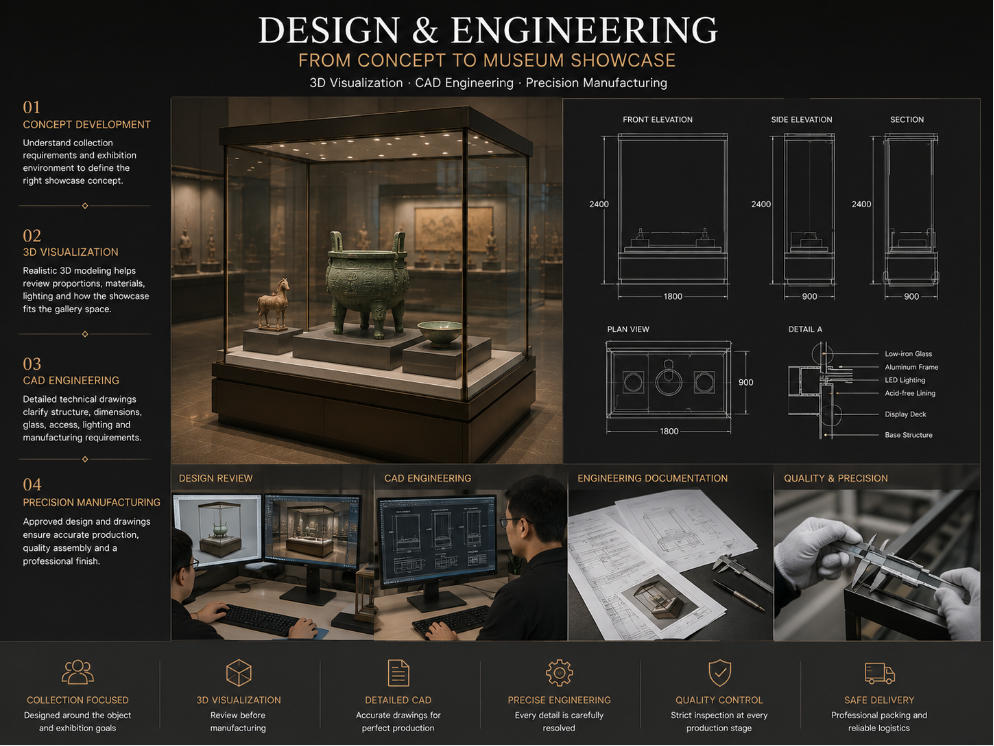
Translate Curatorial Requirements Into Production-Ready Drawings
Once the collection, exhibition intent and technical requirements are understood, the showcase concept can be developed into a manufacturable system.
3D visualization helps review appearance and proportions, while CAD engineering resolves dimensions, structure, glazing, access, lighting and other technical relationships before production.
From Collection Requirement to Approved Museum Showcase
Manufacture the Showcase as a Coordinated Technical System
After the design and engineering are approved, individual components move into production. The objective is to maintain the confirmed dimensions, finishes and technical relationships throughout manufacturing and final assembly.
Structural Fabrication
Frames, bases and supporting elements are produced according to the approved engineering information.
Glass Preparation
Glazing is prepared according to the dimensions, joints, openings and required showcase configuration.
Interior Construction
Display decks, plinths, linings and support elements are manufactured around the approved curatorial presentation.
Lighting Integration
Where required, lighting components are incorporated according to the approved technical layout.
Access & Hardware
Doors, slides, locks and opening systems are installed and adjusted according to the required operation.
Final Assembly
Glass, structure, interior display elements and technical components are brought together into the completed showcase.
Inspect the Showcase Before It Enters the Exhibition
Dimensions
Review finished size, geometry and important alignment points against approved drawings.
Glass
Inspect visible condition, installation, joints and relationships with adjoining components.
Interior Finishes
Review display surfaces, linings and visible internal details according to the confirmed specification.
Access Systems
Test doors, slides, lifting systems, locks and other moving components where applicable.
Lighting & Technical Systems
Verify installed technical components according to the project scope before packing.
Overall Presentation
Evaluate the completed showcase as a visitor-facing exhibition element before delivery.
Coordinate Multiple Showcases Across the Exhibition
A museum exhibition may require several showcase types within the same gallery. Freestanding cases, wall showcases, tabletop displays and pedestal vitrines can each perform different curatorial roles while sharing a consistent architectural language.
For complete exhibition projects, dimensions, materials, finishes, lighting and technical details can be coordinated across the showcase family before manufacturing.
Shared Design Language
Different showcase types can use coordinated proportions, materials and visible detailing throughout the exhibition.
Project-Wide Engineering
Individual display cases can be reviewed against the complete exhibition layout before production.
Consistent Visitor Experience
A coordinated showcase system can support a clearer visual rhythm across different collection zones.
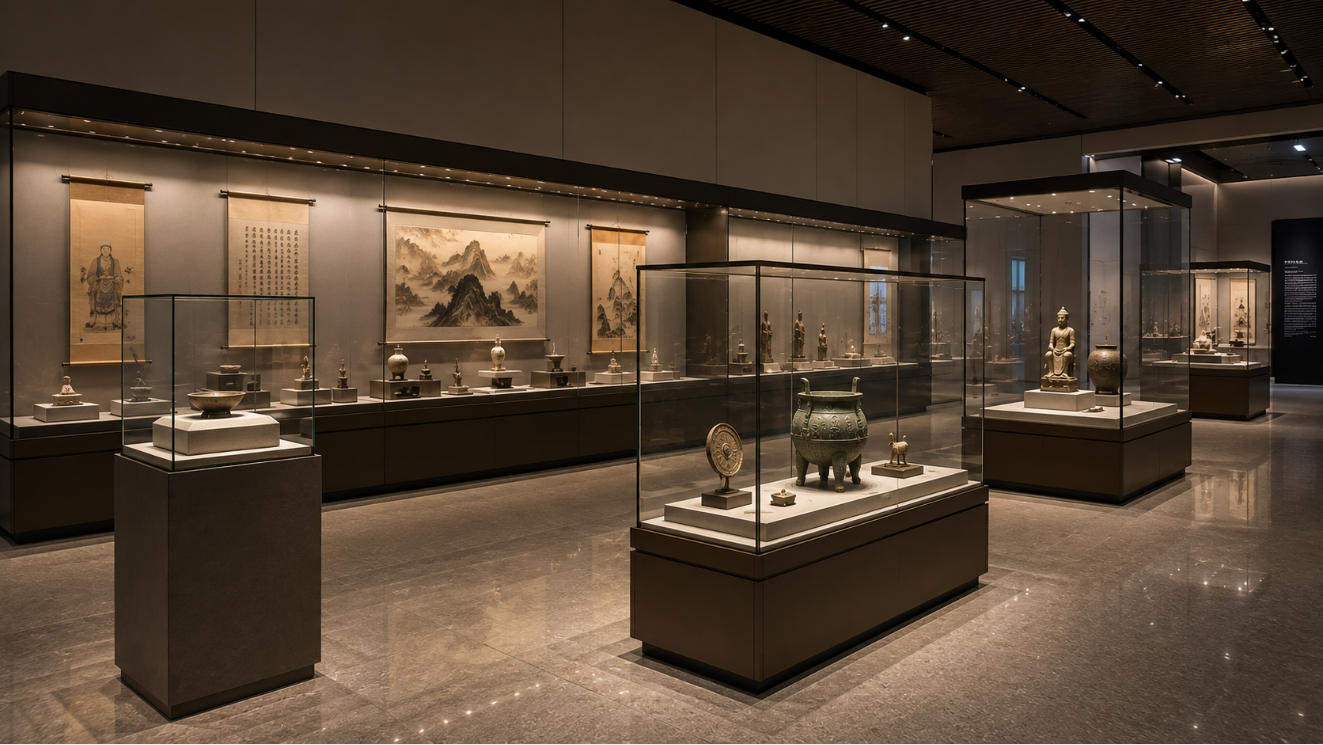
Individual Museum Showcase or Complete Exhibition Package?
The right scope depends on whether the project is focused on one collection display or a broader gallery environment.
Individual Custom Showcase
A single display case can be engineered closely around one object, collection group or architectural position.
Priority: collection-specific presentation, dimensions, access and technical requirements.
Complete Exhibition Showcase Package
Several showcase families may need to share common materials, details and engineering standards across the gallery.
Priority: consistency and coordination across the complete exhibition environment.
Custom Museum Showcase Development From Collection Analysis to Delivery
Collection-Oriented Development
Showcase dimensions, viewing relationships and internal presentation can be developed around the actual objects and exhibition goals.
3D Visualization
Visual development helps review showcase proportions, finishes and the relationship between the display case and gallery environment.
Technical Engineering
Production drawings define dimensions, structure, glazing, access, lighting and other project-specific technical relationships.
Coordinated Specification
Glass, structural materials, interior surfaces and technical components can be reviewed as one museum display system.
Custom Production
Approved design and engineering information is translated into physical showcase fabrication, assembly and technical integration.
Pre-Delivery Inspection
Finished showcases can be reviewed for dimensions, glass, finishes, access systems and other project-specific requirements before delivery.
What Information Helps Develop the Right Museum Showcase?
A clear curatorial and technical brief helps the showcase respond more accurately to the collection and exhibition environment.
How to Start a Custom Museum Showcase Project
Define the Technical Scope Before Production Begins
Object & Collection
Confirm what will be displayed, its dimensions, material characteristics and relevant curatorial requirements.
Gallery Environment
Review the architectural space, visitor circulation and physical relationship between showcases and surrounding exhibition elements.
Viewing Strategy
Determine sightlines, object orientation, visitor approach and intended viewing distance.
Access Strategy
Confirm how objects will be installed, removed, inspected and maintained during the exhibition period.
Protection Strategy
Establish project-specific requirements for glazing, security, sealing, light management and internal environment.
Installation Strategy
Consider transport, site access, module dimensions and installation conditions before manufacturing is finalized.
Explore SUNZEN Museum Showcase Solutions by Project Requirement
Museum Display Cases
Explore different museum showcase formats for artifacts, documents, sculptures and cultural collections.
Museum Showcase Manufacturer
Learn more about SUNZEN’s museum showcase manufacturing, engineering and project capabilities.
Museum Showcase Factory
Explore a more detailed view of production, materials, assembly and quality control for museum display cases.
Museum Showcase Projects
See how different showcase types are applied across real museum, gallery and exhibition environments.
Showcase Manufacturer
Explore SUNZEN’s broader custom showcase capability across retail and exhibition applications.
Custom Display Fixture Solutions
See broader custom display manufacturing capabilities for projects requiring multiple display and fixture formats.
Develop the Display Case Around the Collection From the Beginning
A custom museum showcase should be considered as part of the exhibition system rather than as an isolated glass cabinet.
The object, viewing relationship, gallery architecture, glazing, access, lighting, internal presentation and project-specific protection requirements all influence the final display solution.
By resolving these factors together during design and engineering, the showcase can be manufactured around the actual collection and exhibition requirements instead of forcing the exhibition to adapt to a predetermined cabinet.
For larger museum projects, the same methodology can be extended across multiple showcase types to create a coordinated exhibition environment with consistent materials, proportions and technical standards.
Custom Museum Showcase FAQs
What is a custom museum showcase?
A custom museum showcase is a display case developed around a specific collection, exhibition environment and project requirements rather than a predetermined standard cabinet size. Dimensions, glazing, lighting, access, interior presentation and selected technical systems can be coordinated according to the project.
What types of museum showcases can be customized?
Custom museum showcase formats can include freestanding cases, wall showcases, wall-mounted cases, tabletop vitrines, pedestal showcases and architecturally integrated display cases. The appropriate format depends on the collection, gallery layout and viewing requirements.
Can SUNZEN customize museum showcases around specific artifacts?
Yes. Showcase dimensions, internal presentation, display supports, glazing, access and other relevant details can be developed around the size, material, orientation and curatorial requirements of the displayed objects.
What glass can be used for custom museum display cases?
The glazing specification depends on the visibility, safety, reflection and protection requirements of the project. Appropriate glass options can be reviewed during technical development according to the collection and exhibition requirements.
Can lighting be integrated into a museum showcase?
Yes. Integrated lighting can be developed according to the displayed objects, viewing direction and exhibition lighting strategy. Light position, reflection, technical integration and maintenance access can be coordinated during the design and engineering stage.
Can museum showcases include environmental-control provisions?
Where required by the project, custom showcases can be engineered to accommodate project-specific sealing, monitoring or microclimate-related provisions. The appropriate solution should be determined according to the collection, venue conditions and conservation requirements.
Does SUNZEN provide CAD drawings before museum showcase manufacturing?
Yes. Approved concepts can be developed into technical drawings defining dimensions, structures, glazing, access systems, lighting and other relevant production details before manufacturing begins.
Can SUNZEN manufacture a complete museum showcase package?
Yes. Project scope can range from one bespoke museum showcase to a coordinated exhibition package containing freestanding, wall, tabletop, pedestal and other showcase formats developed around the overall gallery design.
How long does a custom museum showcase project take?
Lead time depends on showcase quantity, dimensions, engineering complexity, materials, technical systems, approval requirements and the overall project scope. The production and delivery schedule should therefore be confirmed according to the specific museum project.
What information should I provide for a custom museum showcase quotation?
Useful information includes collection type, object dimensions, exhibition drawings, preferred showcase format, viewing requirements, technical specifications, design references, material requirements, project location and expected schedule.

