
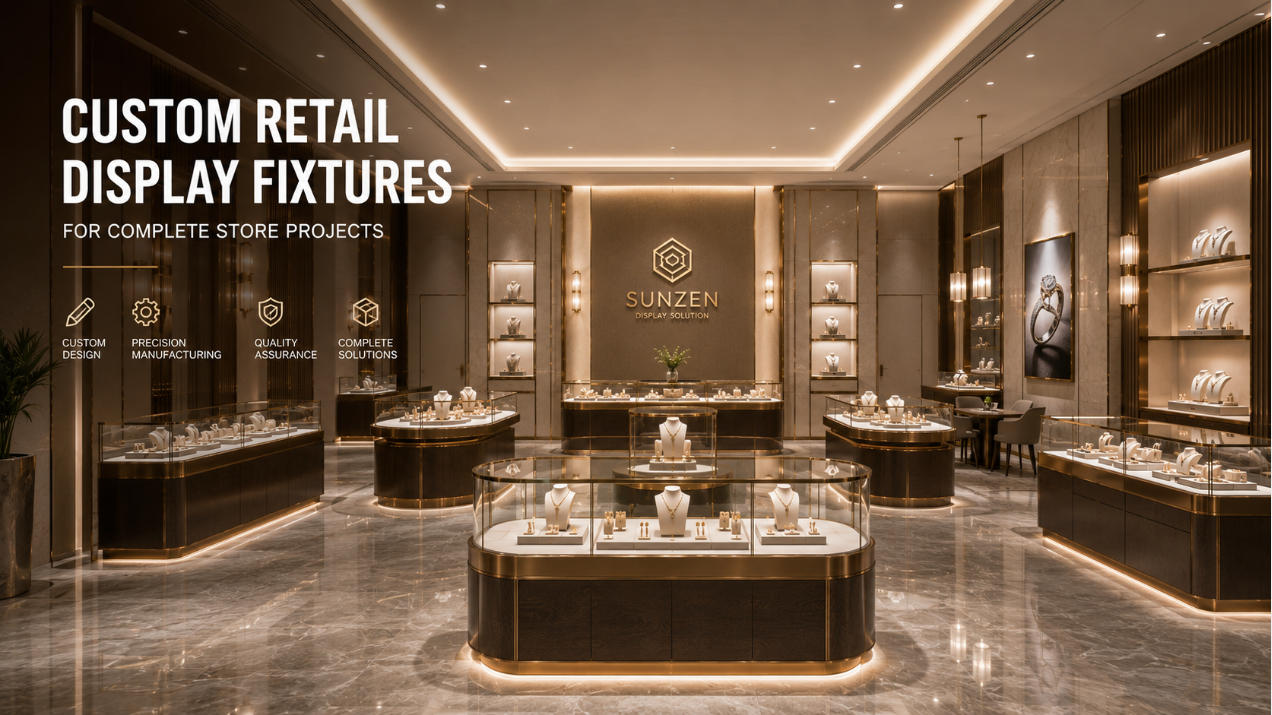
Custom Retail Display Fixtures for Complete Store Projects
SUNZEN develops custom retail display fixtures for jewelry stores, watch boutiques, beauty stores, optical retailers and other branded retail environments.
Every retail space has different products, dimensions, customer journeys and brand requirements. Instead of adapting a store around standard furniture, custom fixtures can be developed around the actual floor plan, merchandise and retail experience.
From wall displays and island fixtures to counters, glass showcases and kiosks, SUNZEN coordinates fixture design, engineering, materials, lighting, manufacturing and quality control for individual displays and complete store projects.
Explore our custom display fixtures for additional product and fixture applications.
What Is a Custom Retail Display Fixture?
A custom retail display fixture is a store-specific display developed around the merchandise, brand identity, available space and operational requirements of a retail project.
Merchandise-Specific
Fixture dimensions, display heights, access and presentation details can respond to the products being displayed.
Store-Specific
Dimensions and geometry can be developed around walls, columns, circulation, entrances and other architectural conditions.
Brand-Specific
Materials, finishes, proportions and visual details can reflect the identity and positioning of the retail brand.
Presentation-Specific
Lighting, glass, shelving and display surfaces can be developed according to merchandise presentation requirements.
Function-Specific
Storage, doors, drawers and staff access can be integrated according to daily retail operations.
Project-Specific
Individual fixtures can be coordinated as part of a complete store rather than treated as unrelated furniture.
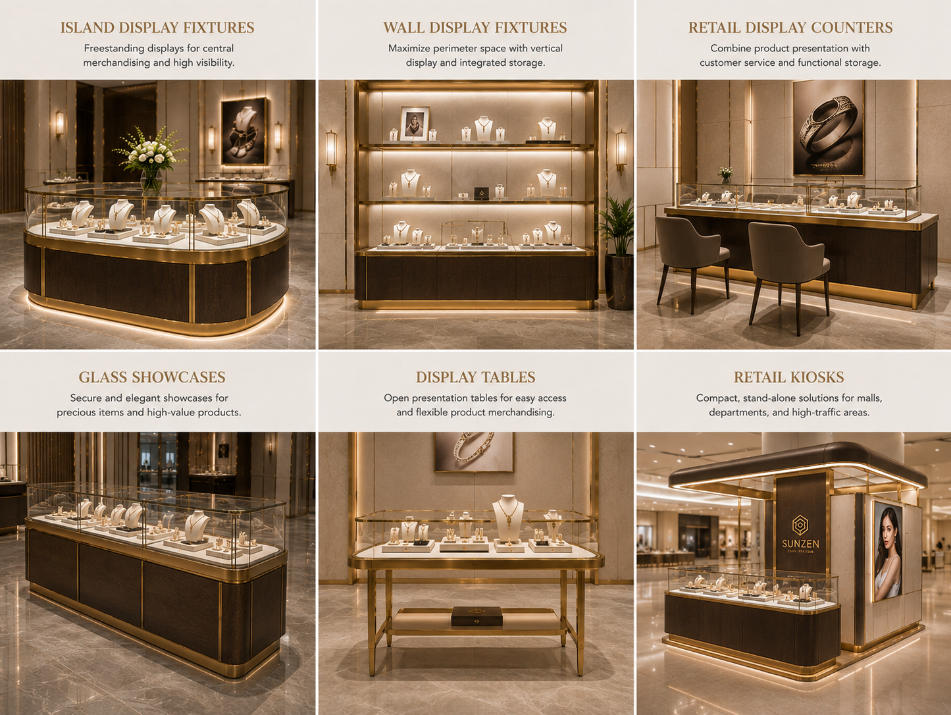
Custom Retail Display Fixtures for Different Store Zones
A complete retail environment normally requires several types of display fixtures, each serving a different merchandising or operational purpose.
Island displays can organize central merchandising zones. Wall fixtures maximize perimeter display space. Counters support customer service, while glass showcases provide protected presentation for higher-value merchandise.
Rather than designing these fixtures independently, their proportions, materials, finishes and details can be coordinated across the entire store.
Choose the Right Display Fixture for Each Retail Function
Island Display Fixtures
Freestanding fixtures for central merchandising zones with product visibility from multiple directions.
Wall Display Fixtures
Vertical merchandising systems combining product presentation, shelving, lighting and optional storage.
Glass Display Showcases
Enclosed display fixtures for jewelry, watches and other merchandise requiring controlled access.
Retail Display Counters
Customer-facing fixtures combining product display with staff operation and functional storage.
Display Tables
Accessible merchandising fixtures for products requiring direct customer interaction and flexible presentation.
Retail Kiosks
Compact custom retail systems for malls, commercial centers and other high-traffic locations.
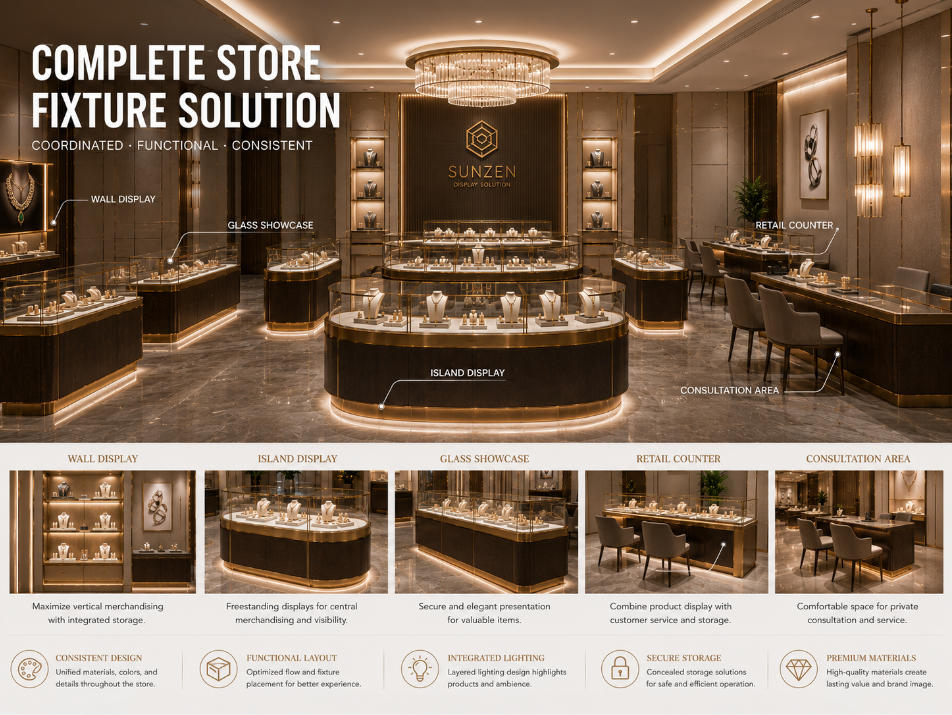
Coordinate Multiple Custom Fixtures Within One Store
A retail store may contain wall displays, islands, counters, glass showcases, consultation furniture and storage fixtures within the same environment.
When these elements are developed as one fixture system, materials, metal finishes, proportions, lighting and construction details can remain consistent throughout the project.
This helps create a stronger relationship between the physical displays, merchandise and overall retail identity.
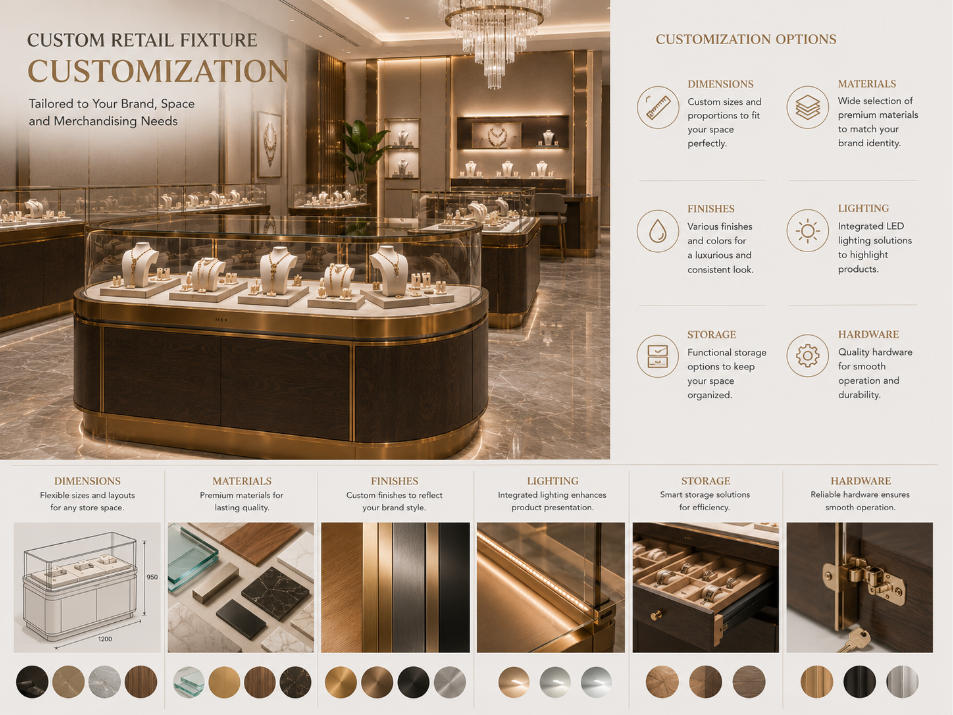
What Can Be Customized in a Retail Display Fixture?
Custom retail fixtures can be developed around both visual design and practical store requirements.
Dimensions & Geometry
Customize width, depth, height, radius, proportions and overall geometry according to the floor plan.
Materials
Combine glass, metal, wood, stone-effect surfaces and interior display materials according to the project.
Colors & Finishes
Coordinate metal tones, cabinetry finishes and decorative surfaces with the approved store concept.
Lighting
Integrate product-focused lighting according to fixture geometry and merchandise presentation requirements.
Storage
Build drawers, cabinets and concealed stock storage into the fixture where operationally required.
Access & Hardware
Configure doors, drawers, hinges, slides and staff access around the intended retail function.
Develop Fixtures Around the Actual Retail Environment
The same merchandise category can require very different display fixtures depending on store size, product quantity, customer interaction and brand positioning.
A compact store may prioritize efficient wall merchandising and concealed storage, while a flagship environment may require larger feature displays, central islands and consultation areas.
Project-specific customization allows the fixture system to respond to these differences without losing visual consistency.
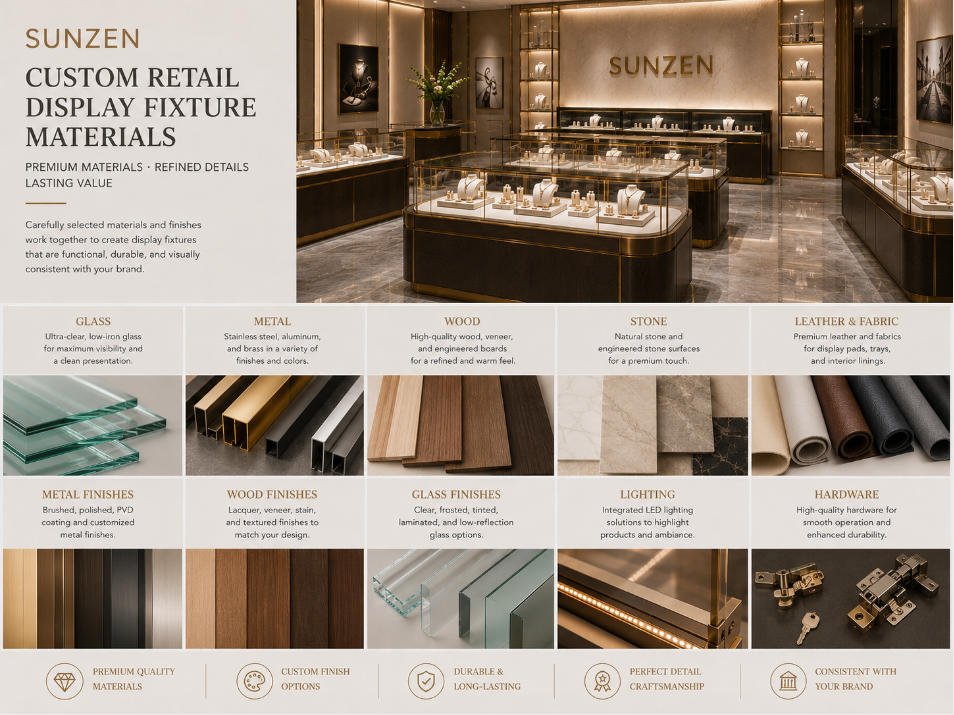
Combine Materials to Create the Right Retail Display Experience
Glass
Use clear display surfaces to maintain merchandise visibility and support enclosed product presentation.
Metal
Use metal for structural frames, decorative trims, hardware and premium visible details.
Wood & Cabinetry
Create fixture bodies, drawers, storage and decorative surfaces with project-specific finishes.
Stone & Decorative Surfaces
Introduce texture and material contrast into counters, bases and architectural display elements.
Leather & Textile
Use softer presentation materials within selected premium product display areas.
Integrated Lighting
Coordinate lighting channels and illumination with the materials and geometry of the display fixture.
Build a Consistent Material Language Across Different Fixtures
Custom retail display fixtures often combine several materials within a single product.
Glass, metal, cabinetry, decorative surfaces and lighting should not be selected independently. Their color, texture, reflectivity and construction details need to work together.
For complete store projects, approved material references can also help maintain consistency across different fixture families.
Review the Custom Retail Fixtures Before Manufacturing
Design development helps connect the retail concept with the physical fixtures that will eventually be manufactured.
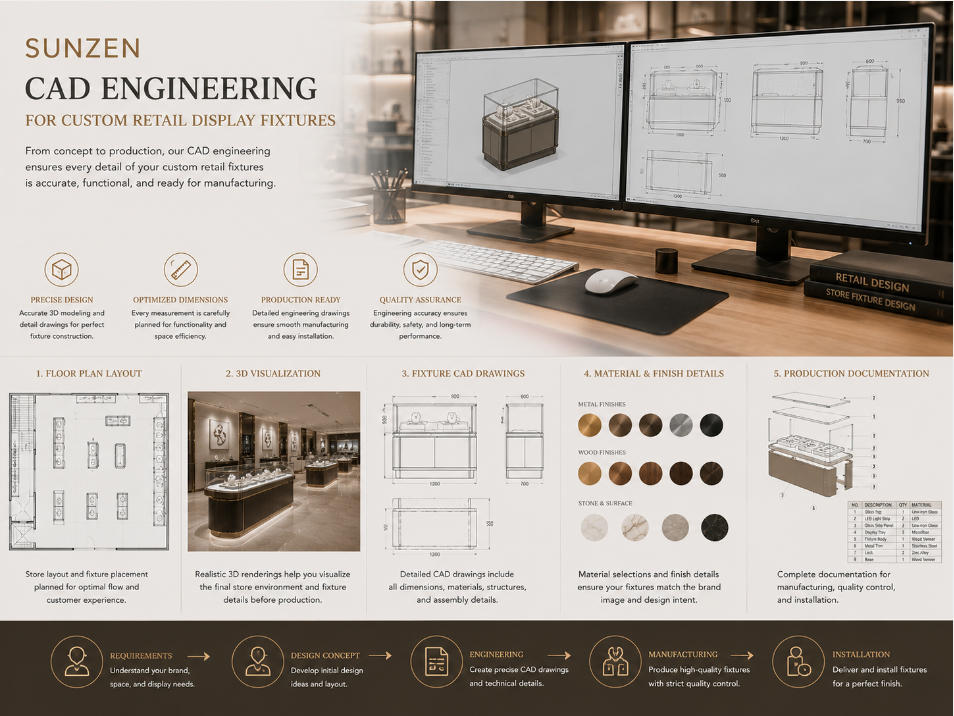
Floor Plan
Coordinate fixture positions with entrances, walls, columns, circulation and functional store zones.
Fixture Concept
Develop fixture proportions, display functions, material direction and visual relationships.
3D Visualization
Review the fixtures within the complete store environment before moving into technical development.
Turn the Approved Fixture Design into Production Details
A visual concept establishes the appearance of the fixture, but production requires technical information that defines how the product will actually be built.
Dimensions, internal structures, glass, doors, drawers, hardware, lighting channels, wiring routes and assembly relationships can be resolved before fabrication.
This engineering stage connects the approved retail design with manufacturing and helps reduce uncertainty during workshop production.
Engineer the Functional Details Inside Each Display Fixture
Structure
Develop internal support according to fixture dimensions, materials and intended retail use.
Glass Integration
Coordinate glass panels, frames, joints and access systems with surrounding fixture components.
Doors & Drawers
Plan moving components and clearances around staff access and daily operation.
Lighting
Define lighting channels, wiring routes, drivers and maintenance access before assembly.
Storage
Use internal fixture volume efficiently for stock, packaging and operational storage.
Installation
Consider assembly, leveling and site connection requirements during technical development.
Manufacture Custom Retail Display Fixtures from Approved Drawings
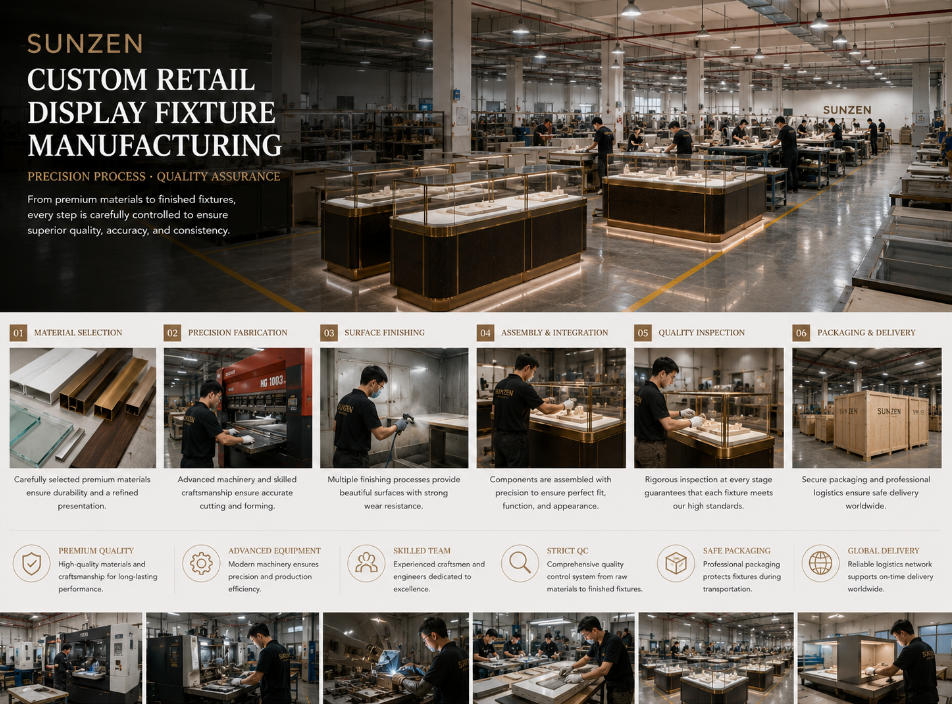
Once the fixture design, engineering details and materials are approved, production can move through the required fabrication processes.
Metalwork, cabinetry, glass, decorative finishes, lighting and hardware need to follow the same project information so the completed fixture reflects the approved design.
For complete store projects, manufacturing also needs to maintain consistent dimensions, finishes and visual details across multiple fixture types.
Coordinate Multiple Manufacturing Processes
Material Preparation
Prepare project materials according to approved technical and finish requirements.
Metal & Cabinetry
Fabricate structural, decorative and storage components for the fixture.
Surface Finishing
Apply approved decorative finishes and review visible surface consistency.
Glass & Lighting
Integrate display glazing, illumination and related electrical components.
Assembly
Assemble the fixture and adjust doors, drawers, hardware and visible component alignment.
Quality Control
Inspect the completed fixture before packing and project delivery.
Custom Retail Fixtures for Different Product Categories
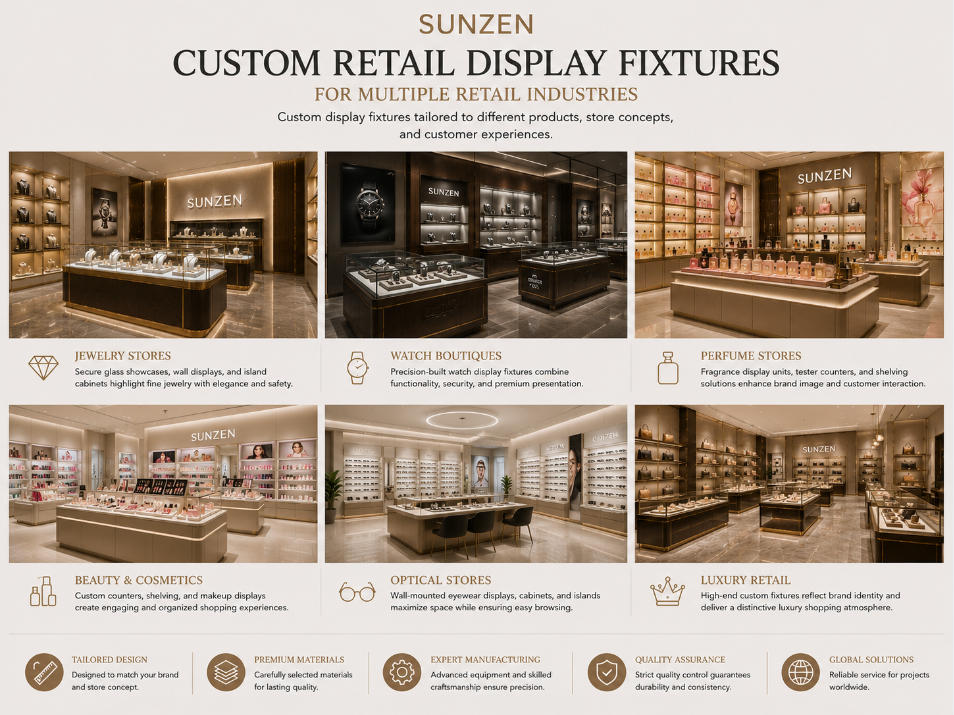
Fixture design should respond to how customers interact with the merchandise.
Jewelry and watches often require secure glass presentation. Perfume and beauty retail may need tester areas and accessible shelving. Optical stores require efficient high-density merchandising, while luxury boutiques may prioritize stronger architectural integration and premium material details.
The fixture strategy can therefore be adapted according to merchandise, store format and customer experience.
Custom Display Fixtures for Different Retail Environments
Jewelry Stores
Glass showcases, islands, counters, wall displays and consultation fixtures for jewelry retail environments.
Watch Boutiques
Custom fixtures developed around watch presentation, lighting, storage and controlled access.
Perfume Stores
Wall displays, tester counters, shelving and promotional fixtures for fragrance retail.
Beauty & Cosmetics
Product-focused display systems supporting testers, shelving, storage and promotional presentation.
Optical Stores
Wall merchandising, display islands and storage fixtures for eyewear retail environments.
Luxury Retail
Coordinated fixture packages for boutiques and premium retail environments.
Why Choose Custom Retail Display Fixtures?
Predetermined Product
Standard fixtures normally use fixed dimensions, materials and configurations designed for general retail applications.
Best suited for: projects where speed and standardization are more important than store-specific integration.
Project-Specific Display
Custom fixtures can respond to the actual store dimensions, merchandise, materials, storage, lighting and brand requirements.
Best suited for: branded stores, boutiques, flagship environments and complete retail projects.
From Store Requirements to Finished Display Fixtures
Project Brief
Review the floor plan, merchandise, brand direction, fixture requirements and project schedule.
Layout & Concept
Develop fixture positions, functions, proportions and the overall display direction.
Design & Engineering
Confirm fixture details, materials, structures, glass, lighting, hardware and technical drawings.
Manufacturing
Coordinate fabrication, finishing, glass, lighting, hardware and fixture assembly.
Quality Control
Inspect dimensions, appearance and functional components before packing.
Project Delivery
Prepare completed fixtures for packing, logistics and installation-stage requirements.
What Information Helps Start a Custom Retail Display Fixture Project?
Floor Plan
Store dimensions and architectural information help determine fixture positions and available space.
Product Categories
Merchandise information helps determine display format, accessibility and presentation requirements.
Fixture Requirements
Identify required wall displays, islands, counters, showcases, kiosks or other fixture types.
Brand References
Provide visual identity, store references or preferred design direction where available.
Material Preferences
Share preferred colors, metal finishes, wood tones, stone surfaces or other material references.
Project Schedule
Target milestones help coordinate design, engineering, manufacturing and delivery stages.
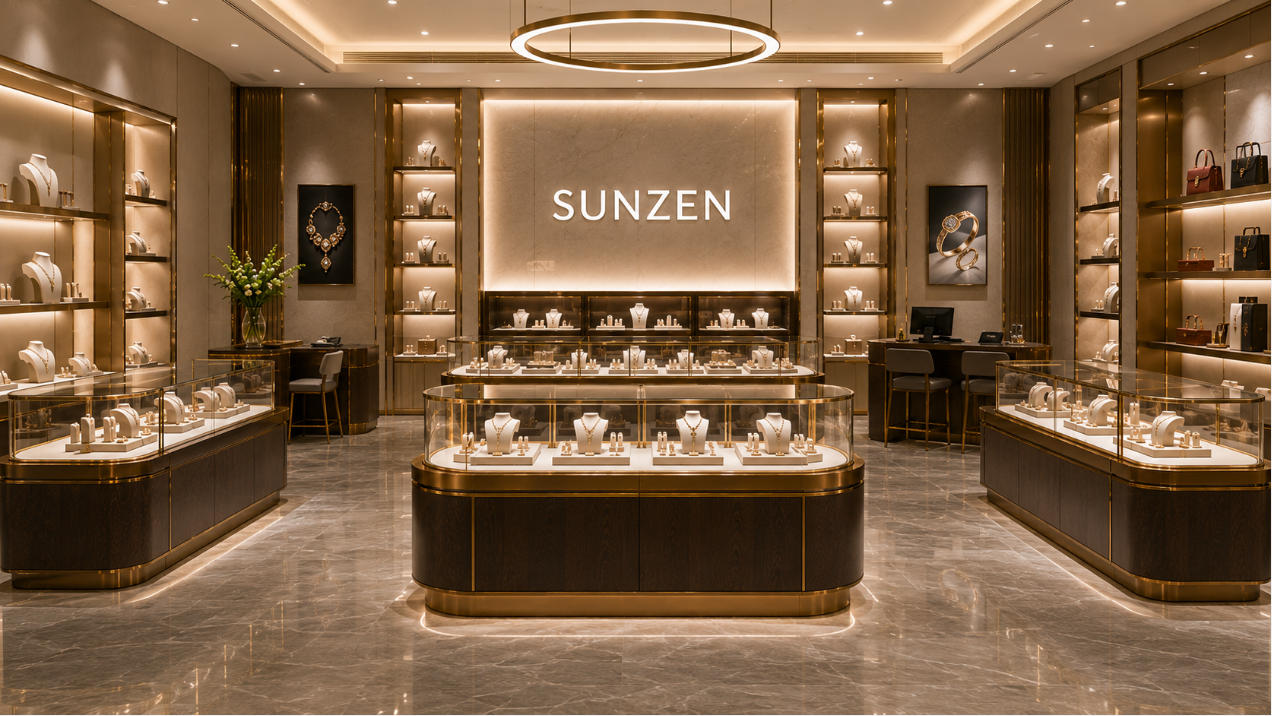
Turn Individual Custom Fixtures into One Coordinated Store
The value of a complete custom fixture system becomes most visible when different display types are installed together within the finished retail environment.
Wall displays, islands, counters, showcases and service furniture can perform different functions while sharing consistent materials, proportions and design details.
Explore our completed projects for additional retail display applications.
Explore More Retail Display Solutions
Custom Display Fixtures
Explore additional fixture types and custom display applications for retail projects.
Luxury Retail Store Design
Explore store planning, customer circulation, interior concept and fixture coordination for premium retail environments.
Jewelry Display Cases
Explore custom glass display cases and showcase formats developed for jewelry retail environments.
Custom Retail Display Fixture FAQs
What is a custom retail display fixture?
A custom retail display fixture is a store-specific display developed around the merchandise, floor plan, brand identity and operational requirements of a retail project. It can include wall displays, islands, counters, glass showcases, display tables and kiosks.
What types of custom retail display fixtures can be produced?
Custom retail display fixtures can include wall displays, island fixtures, retail counters, glass showcases, display tables, kiosks, storage units and other project-specific store fixtures.
Can retail display fixtures be customized to a store floor plan?
Yes. Dimensions, geometry, fixture positions, storage and access can be developed according to the actual store plan, architectural conditions and customer circulation.
What materials can be used for custom retail fixtures?
Depending on the project, custom retail fixtures can combine glass, metal, engineered wood, veneer, lacquer, stone-effect surfaces, leather or textile finishes, integrated lighting and project-specific hardware.
Can lighting be integrated into custom display fixtures?
Yes. Lighting channels, LED systems, wiring routes and related components can be integrated into the fixture according to its geometry and merchandise presentation requirements.
Can different fixture types be coordinated for one complete store?
Yes. Wall displays, islands, counters, showcases and other fixtures can share coordinated materials, finishes, proportions and design details within a complete retail project.
Which retail industries use custom display fixtures?
Custom retail display fixtures can be developed for jewelry, watch, perfume, beauty, optical, fashion, lifestyle, luxury retail and other commercial store environments.
What information is needed to start a custom retail fixture project?
Useful starting information includes the store floor plan, dimensions, product categories, required fixture types, brand references, preferred materials and target project schedule.
Need Custom Retail Display Fixtures for Your Store?
Share your floor plan, store dimensions, product categories, fixture requirements, material references or project schedule with SUNZEN. Our team can develop custom retail fixtures from concept and engineering through manufacturing and quality control.

