
Luxury Retail Store Design for Premium Brand Environments
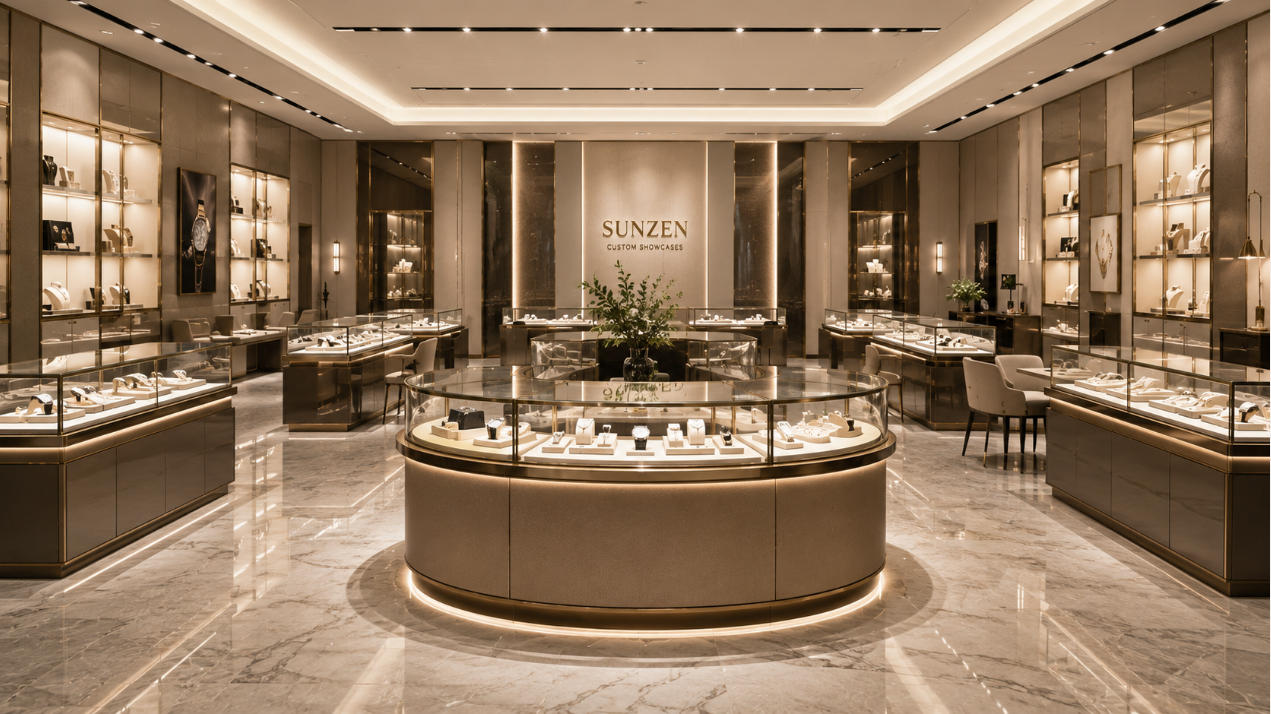
Effective luxury retail store design connects architecture, customer movement, product presentation, materials, lighting and custom fixtures into one carefully controlled brand environment.
SUNZEN develops high-end retail spaces for jewelry, watch, perfume, beauty, optical, fashion and other premium retail concepts. Rather than treating the interior and display furniture as separate elements, we coordinate luxury retail interior design, spatial planning and custom fixture development from the beginning of the project.
This integrated approach helps brands create stores that feel visually consistent while supporting merchandising, consultation, staff operation and the complete customer journey. For broader planning principles, explore our retail store design solutions.
What Defines a High-End Retail Store?
Design Around Brand Positioning
A premium retail environment should communicate the brand before a customer interacts with the merchandise. Proportion, color, materials, lighting and display density all contribute to perceived value.
Plan How Customers See and Move
Entrance views, circulation routes, feature displays, product discovery, consultation and service zones should form a deliberate sequence rather than a collection of unrelated areas.
Connect Fixtures with the Interior
Wall displays, islands, counters and feature showcases should respond to the architecture, material language and lighting strategy of the complete store.
Luxury Retail Space Planning Begins with the Customer Journey
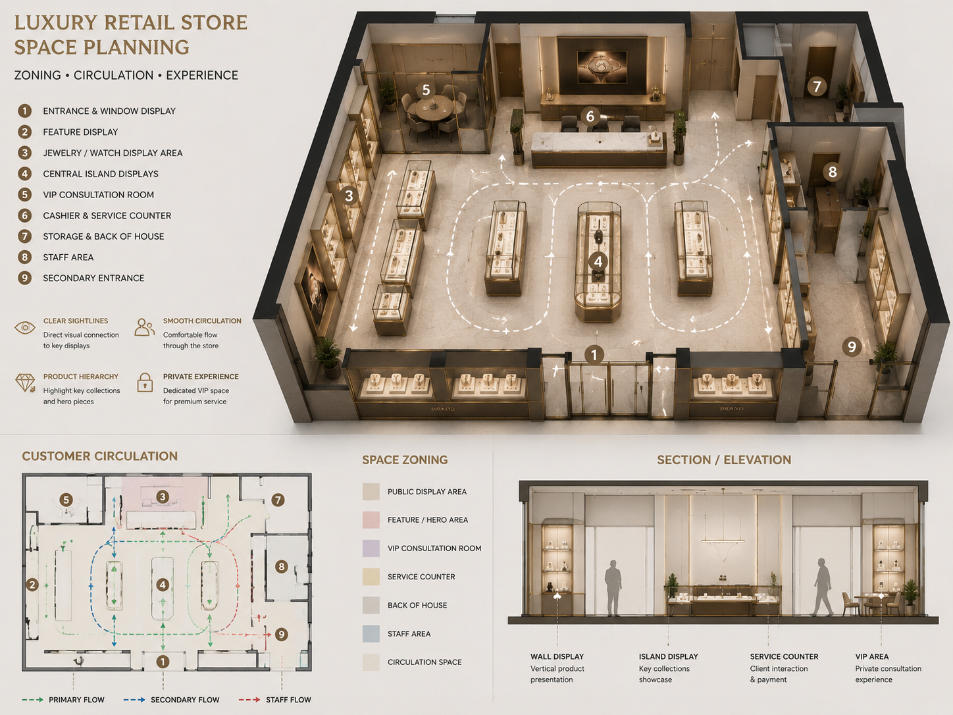
Good luxury retail space planning starts before individual fixtures are designed. The floor plan needs to establish how customers enter, where their attention is directed and how they move between product, consultation and service zones.
Entrance & Sightlines: Create clear visual direction toward hero products and important brand moments.
Customer Circulation: Maintain comfortable movement around display islands, counters and consultation areas.
Merchandise Zoning: Organize collections by hierarchy, category, value or customer journey.
Consultation Areas: Provide quieter spaces for premium service, product presentation and client interaction.
Staff Operation: Integrate storage, service access and working clearances without disrupting the customer-facing environment.
Build One Visual Language Across the Retail Interior
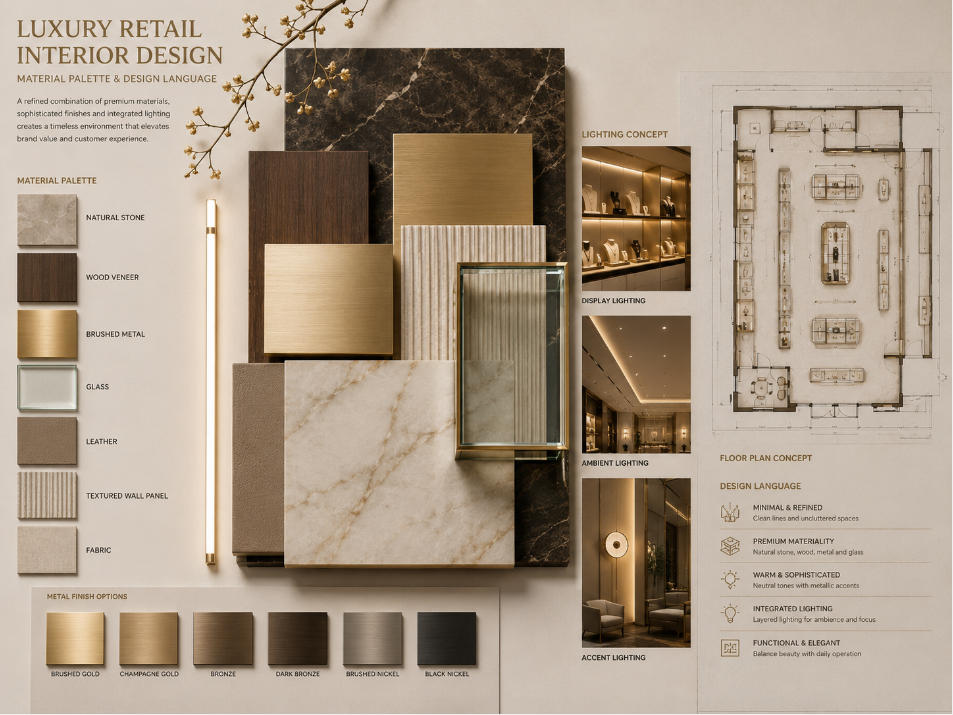
Successful luxury retail interior design is usually defined by consistency rather than decoration alone. Materials, metal tones, wall finishes, ceilings, floors, integrated lighting and display fixtures should feel like parts of one system.
High-end environments often rely on disciplined material palettes and carefully controlled details. Stone, wood veneer, metal, glass, leather, textured panels and illuminated surfaces can create different brand personalities without overloading the space.
The goal is not simply to make the store look expensive. The environment should make products easier to understand, compare and appreciate while giving customers enough visual and physical space to engage comfortably.
Design Store Fixtures as Part of the Architecture
In a premium retail environment, showcases and furniture should not appear to have been selected after the interior was completed. Fixture proportions, materials, integrated lighting and details should reinforce the same visual language as the surrounding space.
Wall Display Systems
Integrated wall displays can combine product presentation, lighting, branding and concealed storage while maintaining a clean architectural appearance.
Island & Feature Displays
Central fixtures create focal points, guide circulation and establish product hierarchy within larger retail environments.
Consultation & Service Fixtures
Client tables, service counters, cashier areas and storage furniture should support daily operation without breaking the visual consistency of the store.
For individual showcase development, explore our showcase design process.
Use Lighting to Create Hierarchy, Not Just Brightness
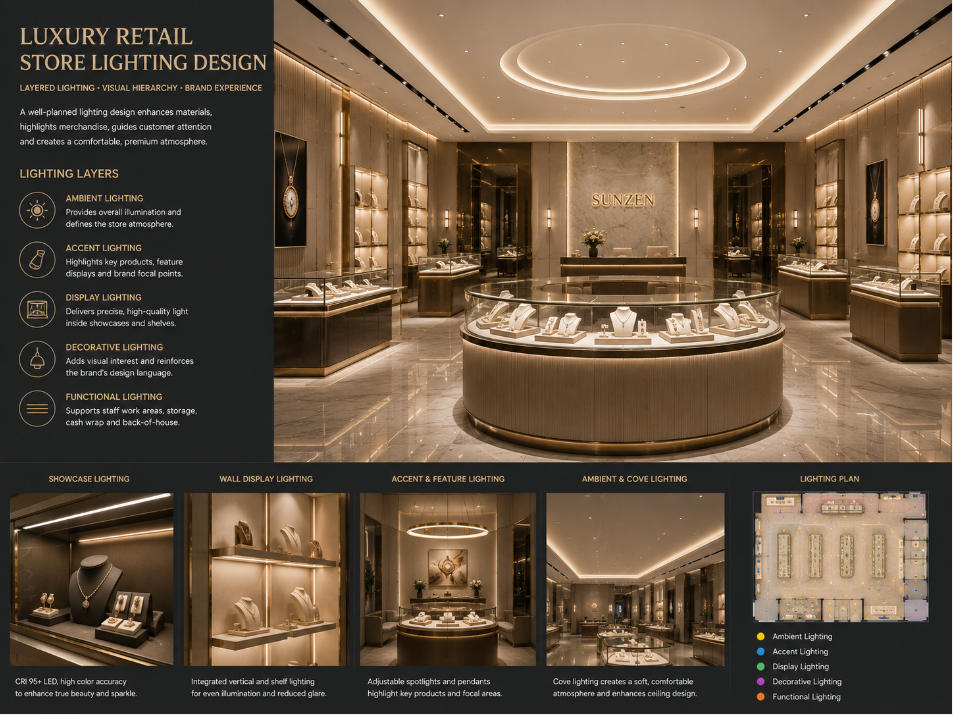
Lighting influences how materials, products and the overall store atmosphere are perceived. Ambient architectural light and integrated display lighting should therefore be designed as related systems.
General lighting establishes comfort and spatial character, while focused display illumination helps direct attention toward merchandise. Different product categories may require different intensity, beam control and color temperature strategies.
Fixture lighting should also be considered early enough to coordinate channels, wiring, power supplies, access and heat management during showcase engineering.
How a Luxury Retail Store Moves from Idea to Production
Project Brief
Define brand positioning, store size, merchandise, functional requirements, schedule and project objectives.
Space Planning
Develop zoning, customer circulation, product hierarchy, service areas and fixture positions.
Interior Concept
Establish materials, finishes, lighting atmosphere and the overall visual language of the environment.
Fixture Design
Coordinate display forms, dimensions, presentation, storage, lighting and operational requirements.
Engineering
Translate approved designs into construction details, materials, hardware, glass and production-ready drawings.
Manufacturing & Delivery
Produce approved fixtures through controlled fabrication, assembly, quality inspection and project delivery.
Store Design and Fixture Manufacturing Serve Different Roles
Plan the Complete Retail Environment
Luxury retail store design determines spatial organization, circulation, interior character, display zoning, customer experience and the relationship between architecture and merchandise.
Turn Approved Designs into Physical Fixtures
Fixture manufacturing focuses on technical development, materials, fabrication, finishing, lighting integration, assembly and production quality.
For this stage, explore our luxury retail fixture manufacturing capabilities.
Luxury Retail Store Design for Different Premium Environments
Luxury Boutiques
Brand-led retail environments requiring custom spatial planning, premium materials and integrated displays.
Flagship Stores
Larger brand environments where architecture, customer experience and complete fixture families must operate as one coherent system.
High-End Mall Stores
Premium stores requiring efficient space use, strong storefront visibility and coordinated merchandising within defined commercial footprints.
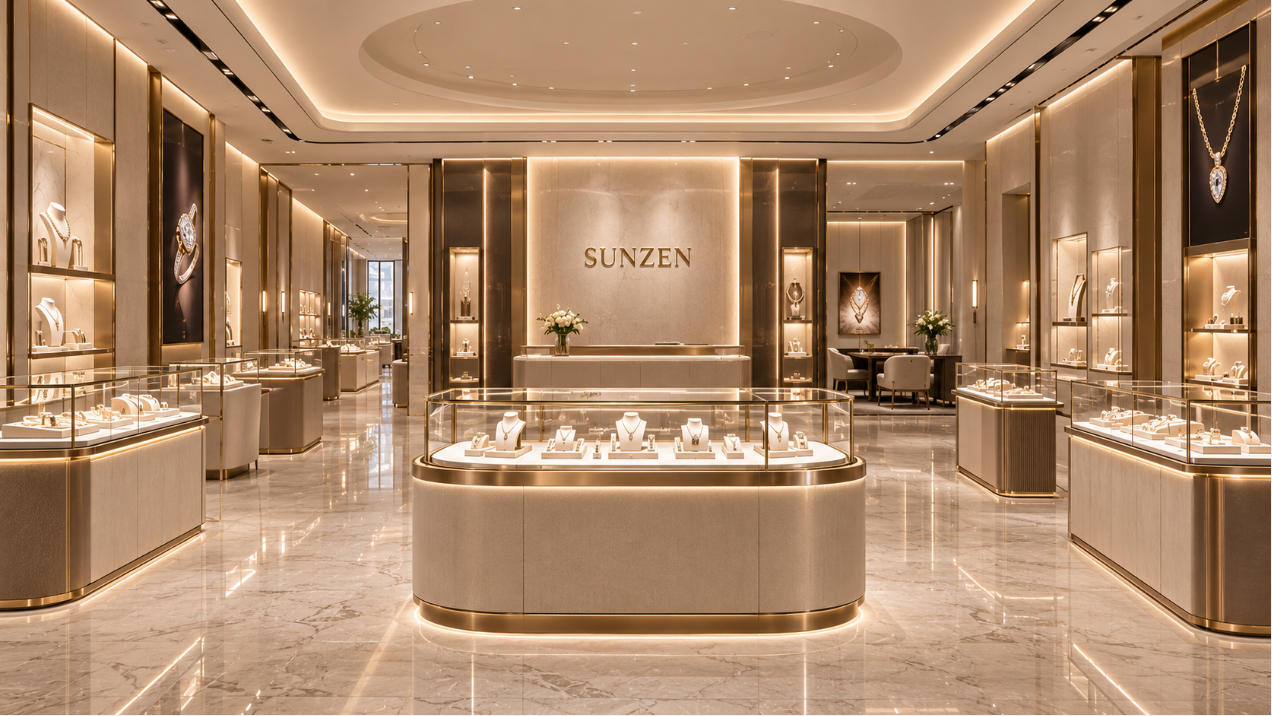
Design the Store as One Connected System
The strongest luxury retail environments are created when layout, interior architecture, displays, materials, lighting and manufacturing are considered together rather than developed as isolated decisions.
SUNZEN connects store planning with showcase design, showcase engineering, showcase manufacturing and project delivery to support premium retail projects from initial concept through physical implementation.
Luxury Retail Store Design FAQs
What is luxury retail store design?
Luxury retail store design is the coordinated planning of space, customer circulation, interior architecture, materials, lighting and display fixtures to create a premium brand environment while supporting merchandise presentation and daily store operation.
What should be considered when planning a luxury retail store?
Key considerations include customer flow, product hierarchy, sightlines, consultation areas, staff access, storage, material consistency, lighting, fixture placement and how the complete environment communicates the brand.
How should customer flow be planned in a luxury retail store?
Customer flow should create clear entrance visibility, comfortable circulation, strong sightlines to feature displays and natural transitions between browsing, consultation, service and purchase areas.
How are custom fixtures integrated into luxury retail store design?
Custom fixtures should be planned together with the store layout and interior concept so their proportions, materials, lighting, storage and functional details support the same architectural and brand language.
What is the difference between luxury retail store design and showcase design?
Luxury retail store design focuses on the complete environment, including layout, circulation, zoning, interior character and customer experience. Showcase design focuses on individual display cases, counters, wall displays and other custom fixtures within that environment.
What materials are commonly used in luxury retail interiors?
Luxury retail interiors commonly combine natural stone, wood veneer, metal, glass, leather, textured panels and other premium finishes. The final palette should support the brand identity, merchandise and desired customer experience.
How should lighting be coordinated with luxury retail displays?
Ambient, accent and integrated showcase lighting should be planned together so products receive focused illumination while the surrounding interior maintains comfortable brightness, visual hierarchy and controlled reflections.
Can SUNZEN support a luxury retail project from design through manufacturing?
Yes. SUNZEN connects retail store planning with showcase design, technical engineering, custom manufacturing, quality control and project delivery, helping approved retail concepts progress from design development toward physical implementation.
Planning a Luxury Retail Store?
Share your floor plan, brand direction, merchandise categories and project requirements with SUNZEN. We can help develop a coordinated retail environment from initial planning and custom displays through engineering, manufacturing and delivery.

