
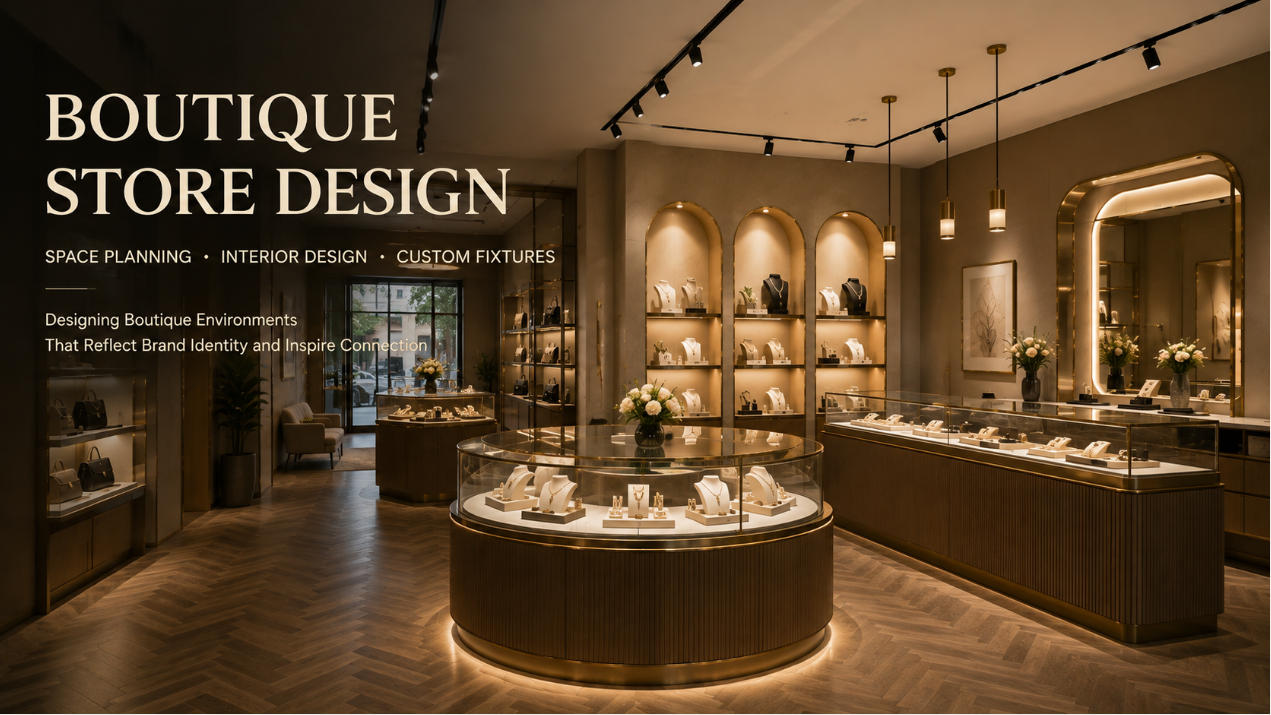
Boutique Store Design for Distinctive Retail Environments
Effective boutique store design turns a limited retail footprint into a clear brand experience by coordinating layout, customer circulation, product presentation, interior materials, lighting and custom fixtures.
SUNZEN develops boutique environments for jewelry, watch, perfume, beauty, optical, fashion and other specialty retail concepts. Our approach connects boutique interior design with practical merchandising and store operation so the space works visually and commercially as one complete environment.
Rather than selecting individual fixtures after the layout is established, display systems are considered as part of the store from the beginning. For our broader approach to complete retail environments, explore retail store design.
What Makes Boutique Store Design Different?
Make Every Area Work Harder
Boutiques often operate within compact or irregular footprints. Layout, storage and display density therefore need to be carefully balanced without making the customer environment feel crowded.
Create a Recognizable Store Character
Materials, colors, lighting, fixture forms and architectural details should work together to create an environment customers can associate with the brand.
Give Merchandise Clear Hierarchy
Feature products, core collections and supporting merchandise should occupy different visual positions so customers can understand the assortment naturally as they move through the store.
Plan the Boutique Around Space, Products and Customer Flow
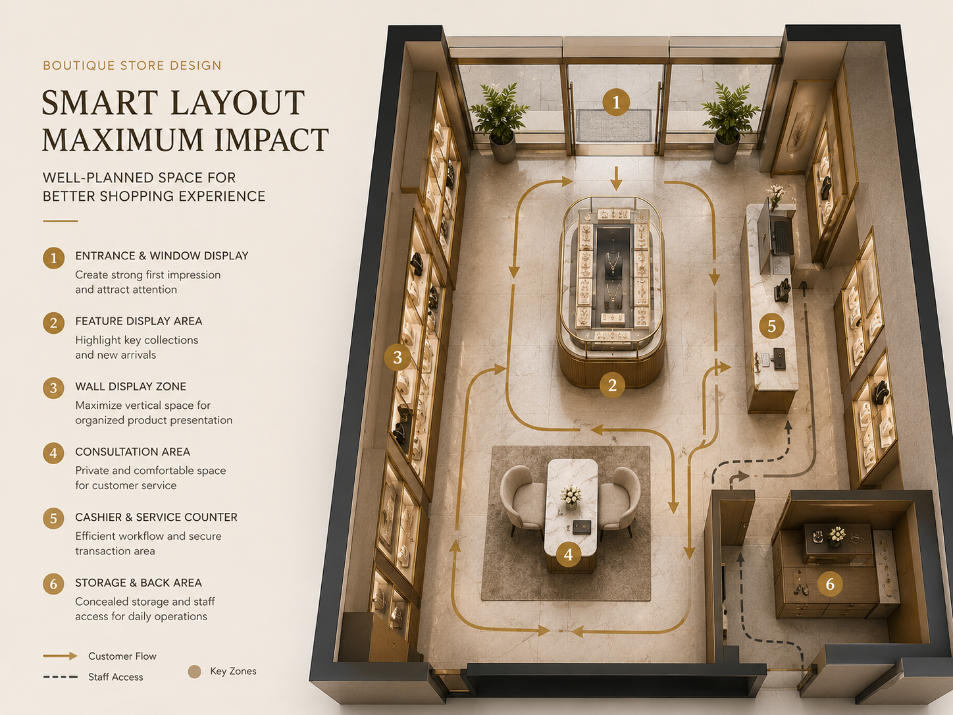
A successful boutique layout design starts by identifying what customers should see first, how they should move through the space and where different merchandise categories should be presented.
Entrance Zone: Establish an immediate visual connection with the brand and key merchandise.
Primary Circulation: Create comfortable paths between wall displays, islands, counters and service areas.
Product Zoning: Organize merchandise according to category, collection, value or customer journey.
Feature Displays: Reserve stronger visual positions for new collections, signature products and campaign merchandise.
Service & Storage: Integrate staff functions and inventory access without interrupting the customer-facing environment.
Build a Boutique Interior Around the Brand
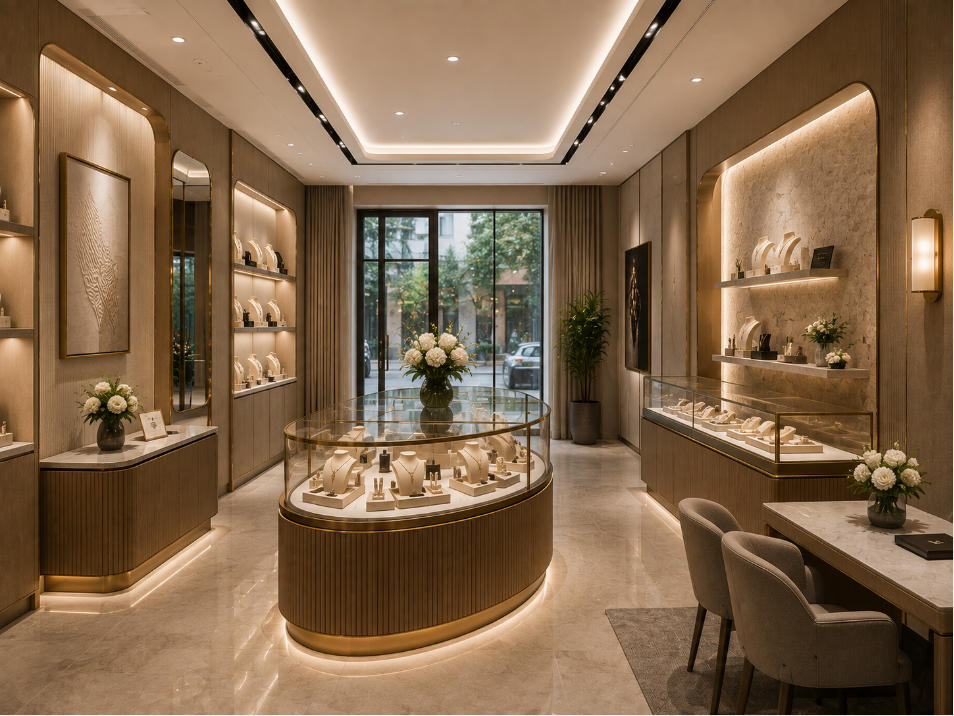
Boutique interior design should translate brand identity into a physical environment rather than simply follow a decorative style. Floor and wall finishes, ceiling details, metals, wood, stone, glass, textiles and lighting all contribute to how the brand is perceived.
Material selection also needs to respond to store scale. A compact boutique can become visually heavy when too many finishes compete for attention, while a controlled palette can make the same footprint feel calmer, more spacious and more premium.
The interior should also provide a consistent background for merchandise. Display furniture, architectural finishes and product lighting should support the products rather than compete with them.
Integrate Custom Fixtures into the Boutique Architecture
Custom fixtures allow the display system to respond directly to the boutique rather than forcing the store to accommodate standard furniture. Dimensions, proportions, materials, lighting, storage and access can all be developed around the actual floor plan and merchandise.
Wall Displays
Use perimeter space efficiently while combining merchandising, integrated lighting, brand presentation and concealed storage.
Island & Feature Displays
Create central focal points that improve product visibility and help guide customer circulation through the boutique.
Counters & Service Furniture
Coordinate consultation, checkout, customer interaction and staff storage with the visual language of the complete store.
For detailed development of individual display systems, explore our showcase design capability.
Use Display Hierarchy to Direct Customer Attention
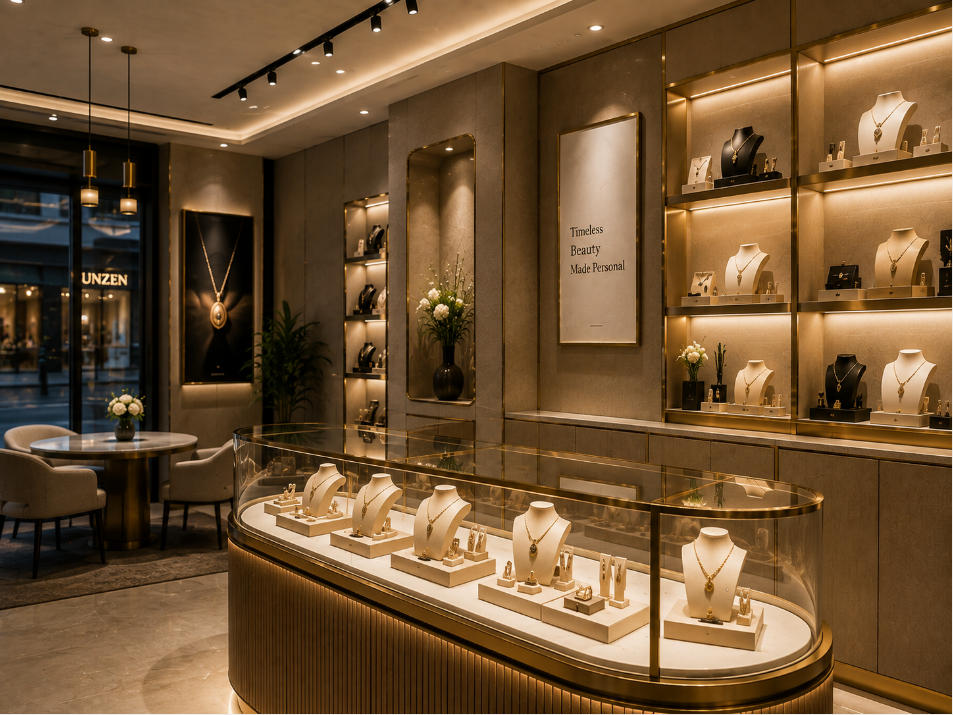
A boutique should not give every product the same visual importance. Display density, fixture height, lighting and position can establish a hierarchy between hero merchandise, primary collections and supporting products.
Feature areas can create strong first impressions, while wall systems and central displays provide the rhythm needed for product discovery. More focused presentation can also help premium merchandise feel intentional rather than crowded.
Lighting should reinforce this hierarchy. Architectural illumination establishes the overall atmosphere, while integrated fixture lighting directs attention to products and needs to be coordinated technically during showcase engineering.
Boutique Design for Different Product Categories
Jewelry & Watch Boutiques
Protected display, controlled product lighting, consultation areas, secure storage and premium customer interaction become central parts of the layout.
Perfume & Beauty Boutiques
Product discovery, tester interaction, wall merchandising, campaign displays and flexible collection presentation influence fixture planning.
Optical & Fashion Boutiques
Higher product quantities, browsing behavior, fitting or consultation functions and accessible storage require a different balance between open and controlled display.
How a Boutique Store Design Moves from Concept to Production
Project Brief
Review the floor plan, merchandise, brand direction, functional requirements and project objectives.
Layout Planning
Develop customer circulation, merchandise zones, fixture positions, consultation areas and operational spaces.
Interior Concept
Define the visual direction through materials, finishes, lighting, architecture and brand-related details.
Fixture Development
Design wall systems, islands, counters, showcases and storage around the approved boutique concept.
Engineering
Translate approved designs into dimensions, structures, glass, hardware, lighting and production-ready information.
Manufacturing & Delivery
Produce coordinated fixture families, inspect finished components and prepare the project for delivery and installation.
Boutique Store Design and Luxury Retail Design Are Related, but Not Identical
Focus on a Distinctive Specialty Retail Environment
Boutique design places strong emphasis on efficient use of a defined retail footprint, brand individuality, curated merchandising and coordinated custom fixtures. The store may be premium, contemporary, accessible or highly specialized depending on its market position.
Focus on Premium Brand Experience
Luxury retail design places additional emphasis on exclusivity, material refinement, spatial generosity, high-touch customer service and premium presentation standards.
For this more specialized design intent, explore our luxury retail store design solutions.
Connect Boutique Design with Production from the Beginning
A boutique concept becomes more practical when fixture engineering and manufacturing requirements are considered before the design is finalized.
One Visual Direction
Coordinate layout, materials, fixtures and lighting around one approved boutique concept.
Production-Ready Development
Resolve dimensions, structures, glass, hardware, lighting, storage and assembly requirements before production.
Coordinated Fixture Production
Produce different fixture families with controlled materials, finishes and detailing across the complete store package.
SUNZEN connects boutique planning with showcase design, showcase engineering, showcase manufacturing and project delivery.
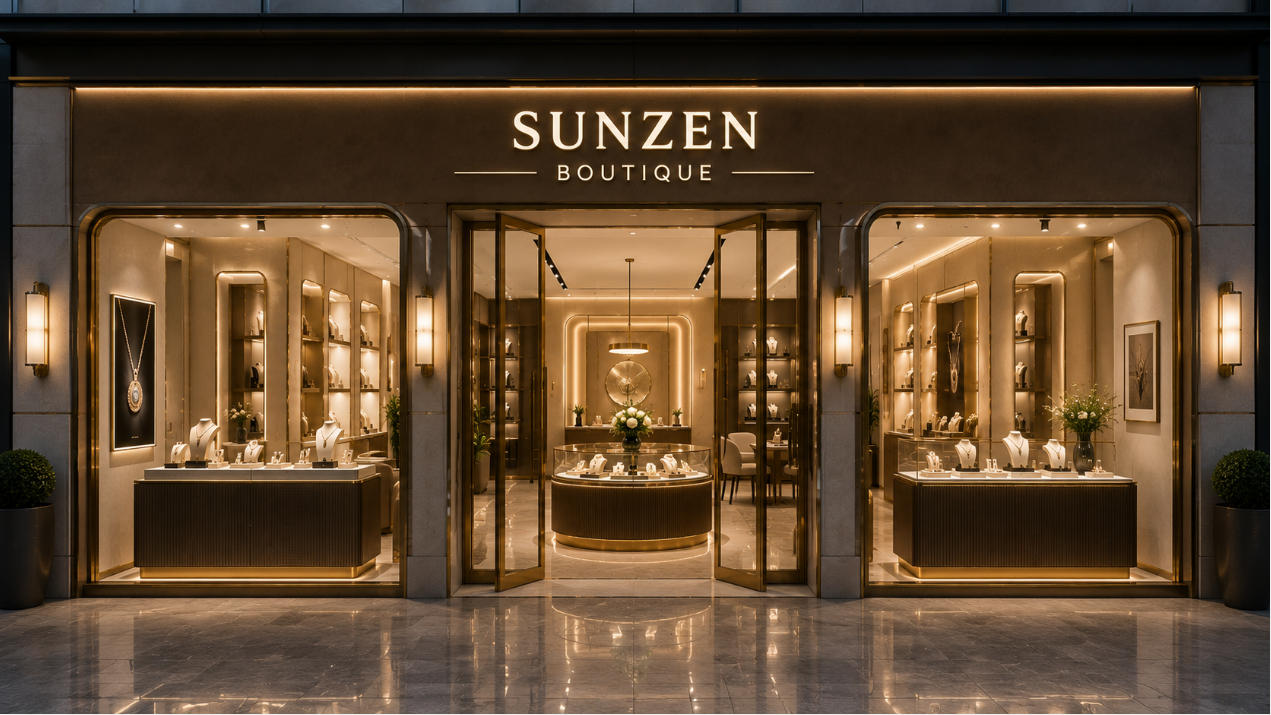
Design the Boutique as One Connected Retail System
Layout, interior architecture, display fixtures, lighting, storage and merchandise presentation work best when they are developed as parts of the same retail environment.
SUNZEN supports custom boutique projects from initial store planning through fixture development and production. Depending on project requirements, the scope can range from individual custom displays to coordinated full-store fixture packages for branded retail environments.
Explore completed retail display projects to see how store planning, custom fixtures and manufacturing are translated into physical retail environments.
Boutique Store Design FAQs
What is boutique store design?
Boutique store design is the coordinated planning of layout, customer circulation, interior materials, lighting, merchandising and custom fixtures for a specialty retail environment. The goal is to create a distinctive brand experience while using the available store space efficiently.
How should a small boutique store be laid out?
A small boutique should prioritize clear circulation, strong entrance sightlines, efficient wall merchandising, carefully positioned central displays and integrated storage. Display density should be controlled so the store remains comfortable and visually organized.
What should be included in a boutique store design plan?
A boutique store design plan should consider customer flow, merchandise zoning, fixture positions, feature displays, service areas, storage, lighting, materials, brand elements and the operational requirements of staff.
How are custom display fixtures integrated into boutique design?
Custom fixtures are developed around the actual floor plan, merchandise and interior concept so their dimensions, materials, lighting, storage and functions support the complete boutique rather than appearing as unrelated furniture.
What is the difference between boutique store design and luxury retail store design?
Boutique store design focuses on creating a distinctive specialty retail environment and making efficient use of a defined store footprint. Luxury retail store design places additional emphasis on exclusivity, premium materials, high-touch service and elevated product presentation. A boutique can also be a luxury retail environment when both requirements apply.
How does lighting affect boutique store design?
Lighting establishes atmosphere, creates product hierarchy and influences how merchandise and materials are perceived. Ambient architectural lighting and integrated fixture lighting should be coordinated so products receive focused illumination without disrupting the overall store environment.
Can one boutique design concept be adapted to multiple store locations?
Yes. A core design language can be translated into repeatable fixture families, material specifications and layout principles while individual store plans are adjusted for different dimensions, entrances and local site conditions.
Can SUNZEN support boutique design through fixture manufacturing?
Yes. SUNZEN connects store planning and showcase design with technical engineering, custom fixture manufacturing, quality control and project delivery for coordinated boutique retail projects.
Planning a New Boutique Store?
Share your floor plan, product categories, brand direction and project requirements with SUNZEN. We can help develop a coordinated boutique environment from layout planning and custom display design through engineering, manufacturing and project delivery.

