
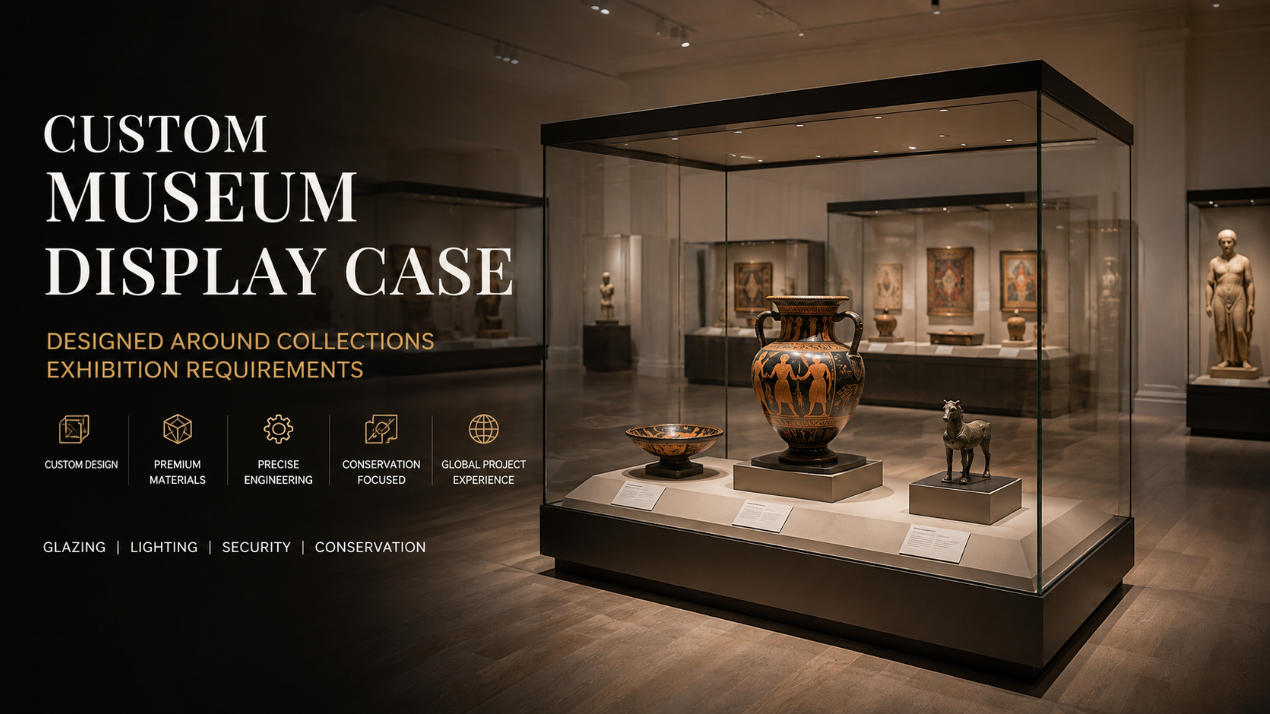
Custom Museum Display Cases Designed Around Your Collection
SUNZEN develops each custom museum display case around the collection, exhibition environment and project-specific technical requirements. Instead of adapting artifacts to predetermined cabinet dimensions, the display case can be developed around object size, viewing direction, curatorial access and the surrounding gallery architecture.
Dimensions, glazing, interior presentation, lighting, access systems, security, sealing and selected environmental-control provisions can be coordinated as one integrated display case solution.
If you are comparing different product formats, browse our museum display cases. For broader exhibition-level customization involving multiple showcase types, explore our custom museum showcase solutions.
Why Customize a Museum Display Case Around the Collection?
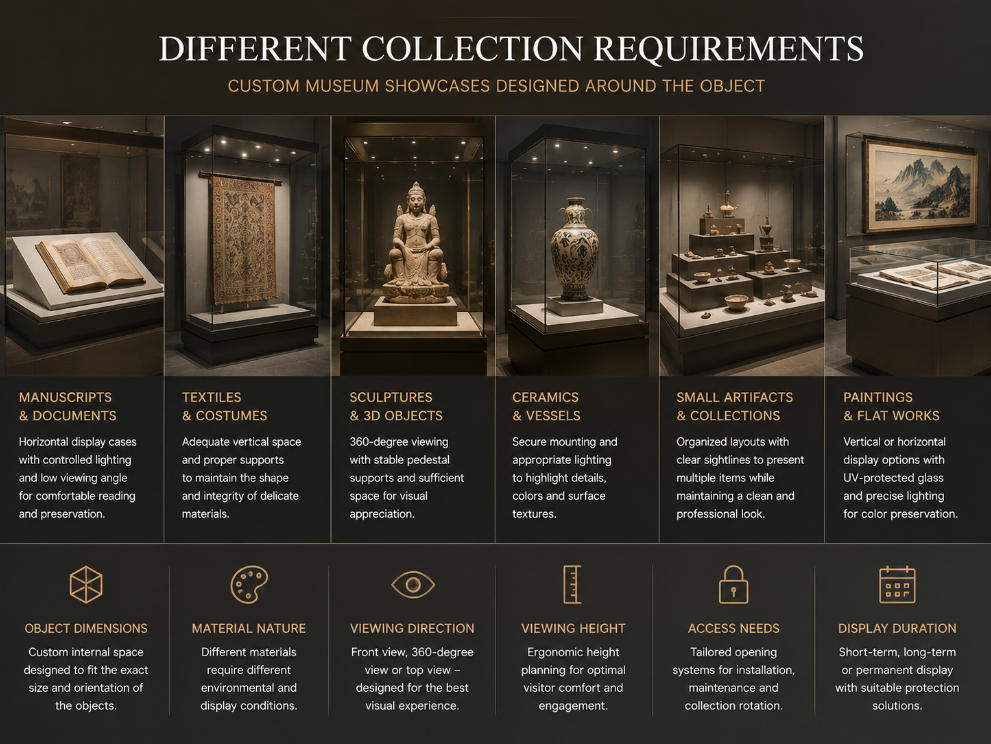
Museum collections differ in dimensions, materials, sensitivity, viewing requirements and curatorial intent. The display enclosure should therefore respond to the object rather than forcing every collection into the same standard cabinet.
Collection Dimensions
Develop the internal display volume around the physical dimensions, orientation and presentation requirements of the object.
Visitor Sightlines
Coordinate viewing height, glazing and object position for front, multi-side, 360-degree or downward viewing.
Curatorial Operation
Plan doors, removable panels or other opening systems around installation, maintenance and collection rotation.
Collection Requirements
Evaluate glazing, enclosure, security and other protective requirements according to the object and exhibition specification.
Artifact Presentation
Develop decks, plinths, supports and interior surfaces around the scale and orientation of the collection.
Gallery Integration
Coordinate the display case with exhibition architecture, visitor circulation and surrounding display elements.
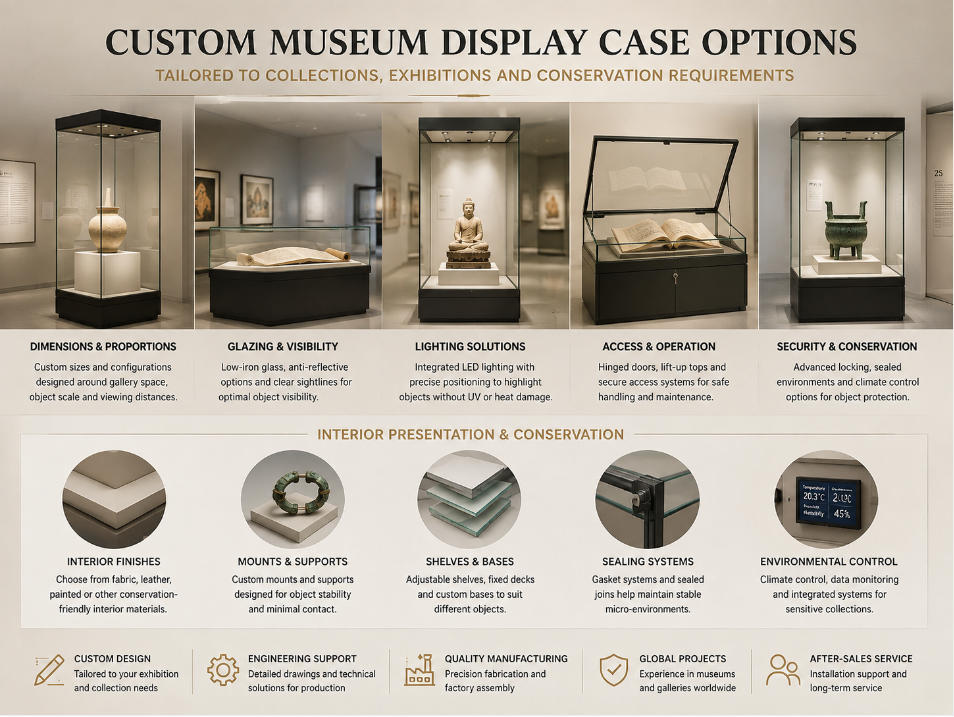
What Can Be Customized in a Museum Display Case?
The geometry and technical configuration of the display case can be developed around the collection rather than selected from a fixed catalogue.
Custom options can include dimensions, glass specifications, viewing height, internal display surfaces, lighting, access mechanisms, locks, sealing details and provisions for project-specific monitoring or environmental systems.
These elements should be coordinated during design and engineering so the completed display case functions as one integrated exhibition system.
Configure the Display Case for the Exhibition Requirement
Dimensions & Geometry
Customize width, depth, height, viewing level and overall geometry around the object and gallery environment.
Display Glazing
Select glazing according to visibility, reflection characteristics, safety and project-specific requirements.
Display Surfaces
Coordinate decks, plinths, supports and interior linings with the collection and curatorial presentation.
Exhibition Lighting
Develop integrated lighting according to object type, viewing direction and the wider exhibition lighting strategy.
Opening Systems
Configure hinged, sliding, removable or project-specific access systems around curatorial operation.
Technical Requirements
Evaluate security, sealing, monitoring and environmental-control provisions according to the project specification.
Custom Museum Display Case vs. Standard Display Cabinet
Predetermined Configuration
Standard cabinets typically use fixed dimensions, structures, glazing and internal configurations.
They can suit general exhibition requirements where the collection and gallery environment can adapt to an existing cabinet format.
Developed Around the Collection
A custom display case can respond directly to the object, exhibition concept, architectural position and technical specification.
Dimensions, glazing, interior presentation, lighting, access and protective systems can be coordinated as one project-specific solution.
Define the Object Requirements Before Designing the Case
The collection provides the starting point for a successful museum display case. Object dimensions establish the required internal volume, while material characteristics and curatorial intent influence presentation and technical requirements.
Viewing direction, installation method, access frequency and exhibition duration should also be reviewed before the display case configuration is finalized.
This collection-first approach helps avoid adapting the artifact to a cabinet that was designed without understanding the exhibition requirement.
Coordinate Visibility, Access and Collection Protection
A museum display case needs to balance clear visitor viewing with the technical requirements established for the collection and exhibition.
Physical Protection
Develop the enclosure and structural system as a controlled physical boundary between visitors and the collection.
Light Management
Coordinate glazing and exhibition lighting with the sensitivity and presentation requirements of the displayed object.
Dust Management
Develop joints, doors and enclosure details according to the required protection from the surrounding gallery environment.
Access Control
Select opening mechanisms and locks around security requirements and the required frequency of curatorial access.
Environmental Provisions
Where required, allow for project-specific monitoring, conditioning or microclimate-related systems during technical development.
Interior Materials
Select object-facing surfaces according to the curatorial and conservation requirements established for the project.
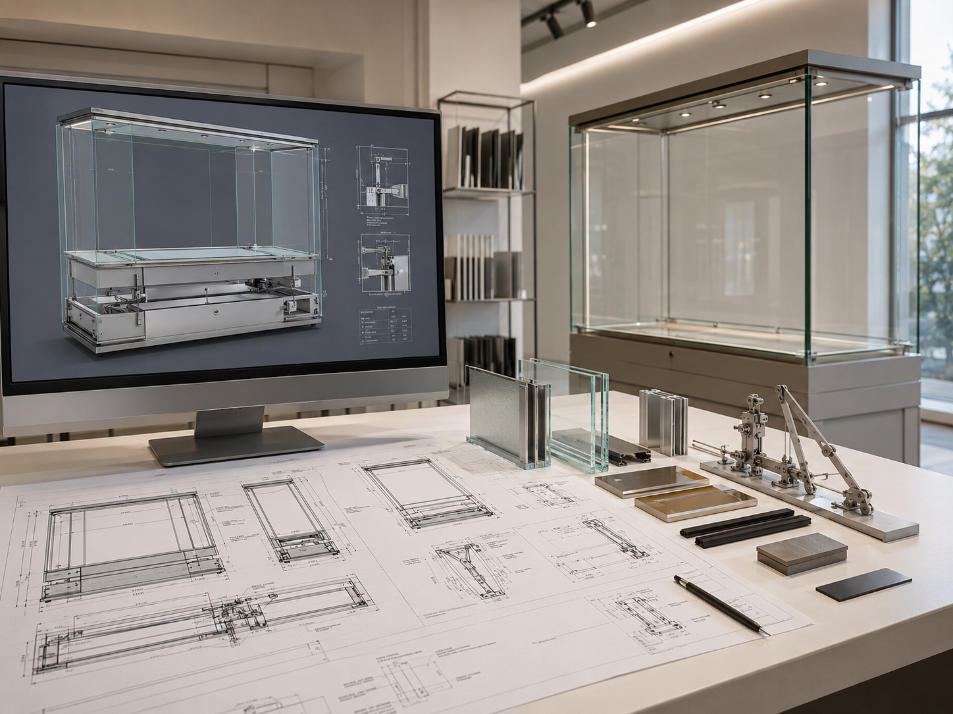
Translate Exhibition Requirements into Production-Ready Details
Once the collection, display concept and technical requirements are understood, the custom case can move into detailed development.
3D visualization can review proportions and gallery relationships, while CAD engineering resolves dimensions, structure, glazing, access, lighting, interior presentation and other technical relationships before manufacturing.
For broader technical development capabilities, explore our showcase design services.
Choose the Display Format Around the Exhibition Layout
Freestanding Display Cases
Independent floor-standing vitrines for central exhibition areas and multi-directional viewing.
Wall Display Cases
Perimeter cases for front-facing presentation and efficient use of gallery wall space.
Wall-Mounted Cases
Elevated displays for smaller objects, documents and collections requiring clear floor space.
Tabletop Display Cases
Horizontal vitrines for manuscripts, documents, medals and objects intended for downward viewing.
Pedestal Display Cases
Focused vitrines that give individual artifacts or small collections a strong gallery presence.
Integrated Display Cases
Project-specific cases coordinated with architectural walls, niches and exhibition structures.
Browse our museum display cases to compare different product formats and exhibition applications.
Manufacture the Approved Display Case as One Coordinated System
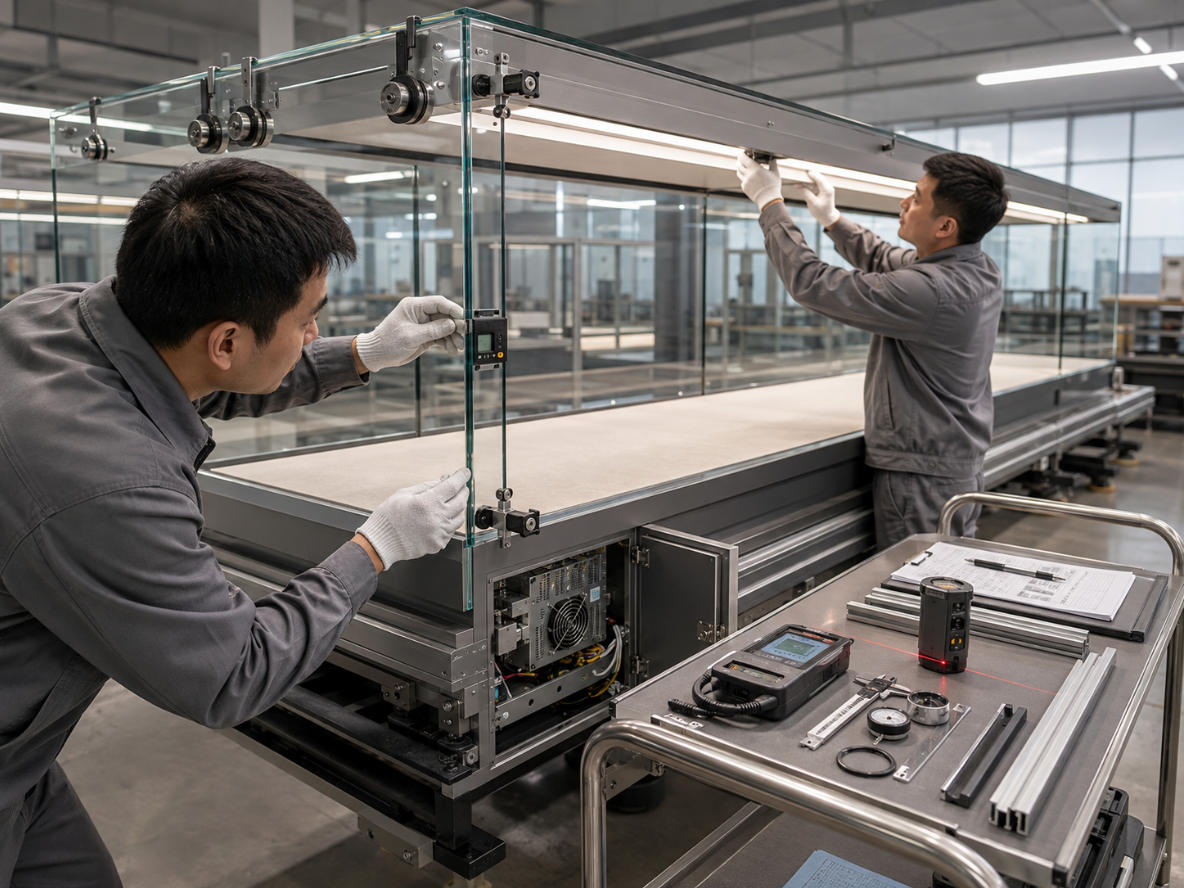
After design and engineering are approved, glass, structural components, interior display elements, lighting and access hardware move into production according to the confirmed specification.
Final assembly brings these components together so dimensions, finishes and technical relationships can be reviewed before packing and delivery.
For buyers evaluating production partners, explore our museum display case manufacturers capabilities. For a closer look at fabrication, assembly and quality control, visit our museum display case factory page.
From Collection Requirements to a Finished Museum Display Case
Collection Brief
Review object dimensions, materials, viewing requirements and relevant curatorial information.
Exhibition Requirements
Define showcase location, gallery relationships, access and technical requirements.
Custom Development
Establish dimensions, glazing, interior presentation, lighting and opening systems.
Engineering
Resolve structure, glass, access and technical relationships before production.
Manufacturing
Produce, integrate and assemble components according to the approved information.
Quality Control
Inspect dimensions, glazing, finishes and functional systems before delivery.
Individual Custom Display Case or Complete Showcase Package?
Collection-Specific Development
A single custom museum display case can be engineered closely around one artifact, collection group or architectural position.
The priority is the relationship between the object, enclosure, viewing, access and project-specific technical requirements.
Coordinated Showcase System
Larger exhibitions may require several display case formats sharing common materials, proportions and technical standards.
For this broader scope, explore our custom museum showcase solutions for coordinated exhibition environments.
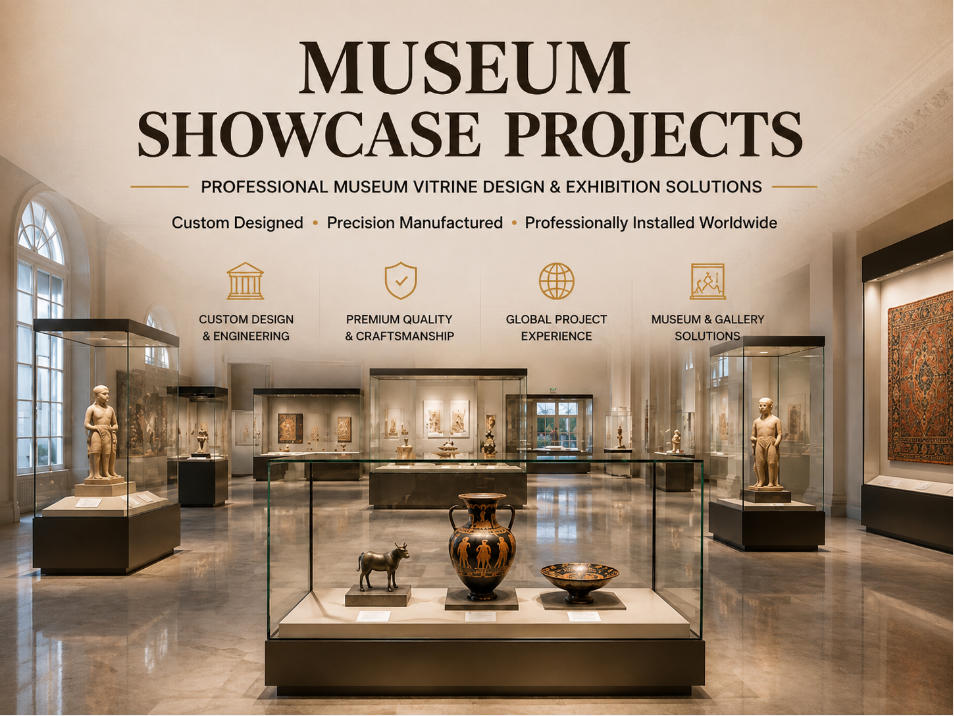
See Custom Display Cases in Completed Museum Projects
Different collections and gallery environments require different relationships between the object, showcase and surrounding exhibition space.
Explore our museum showcase projects to see freestanding vitrines, pedestal cases, wall displays and coordinated showcase systems in cultural exhibition environments.
Explore Related Museum Display Solutions
Museum Display Cases
Browse museum display case formats for artifacts, artworks, documents and cultural collections.
Custom Museum Showcase
Explore broader exhibition-level customization across multiple showcase types and gallery environments.
Museum Display Case Manufacturers
Evaluate engineering, material coordination, manufacturing and quality-control capability for custom museum display case projects.
Museum Display Case Factory
Explore fabrication, glass integration, assembly and factory quality-control processes.
Museum Showcase Projects
See different museum showcase formats applied across completed cultural exhibition projects.
Showcase Manufacturing
Explore the broader manufacturing process behind custom showcase production and project coordination.
Custom Museum Display Case FAQs
What is a custom museum display case?
A custom museum display case is developed around a specific collection and exhibition environment rather than predetermined cabinet specifications. Dimensions, glazing, interior presentation, lighting, access, security and selected technical systems can be tailored to the project.
What can be customized in a museum display case?
Custom options can include dimensions, geometry, glazing, viewing height, interior decks and supports, lighting, access mechanisms, locks, sealing details, monitoring provisions and project-specific environmental systems.
How do you determine the right size for a custom museum display case?
The case dimensions should be developed around the object size, orientation, viewing relationship, required internal space, curatorial access and the architectural position within the exhibition.
Can lighting and security be integrated into a custom museum display case?
Yes. Lighting, access systems, locks and related technical components can be coordinated during design and engineering according to the project specification.
Can custom museum display cases include environmental-control provisions?
Where required by the collection and project specification, the display case can be engineered to accommodate sealing, monitoring or project-specific microclimate and environmental-control provisions.
What information should I provide for a custom museum display case project?
Useful information includes object dimensions and materials, exhibition plans, viewing requirements, preferred showcase type, access requirements, glazing specifications, lighting, security, conservation requirements and the target project schedule.
Start Your Custom Museum Display Case Project
Share your collection information, exhibition plans, target dimensions, design references and technical requirements with SUNZEN. Our team can develop your custom museum display case from initial configuration and engineering through manufacturing and quality control.

