
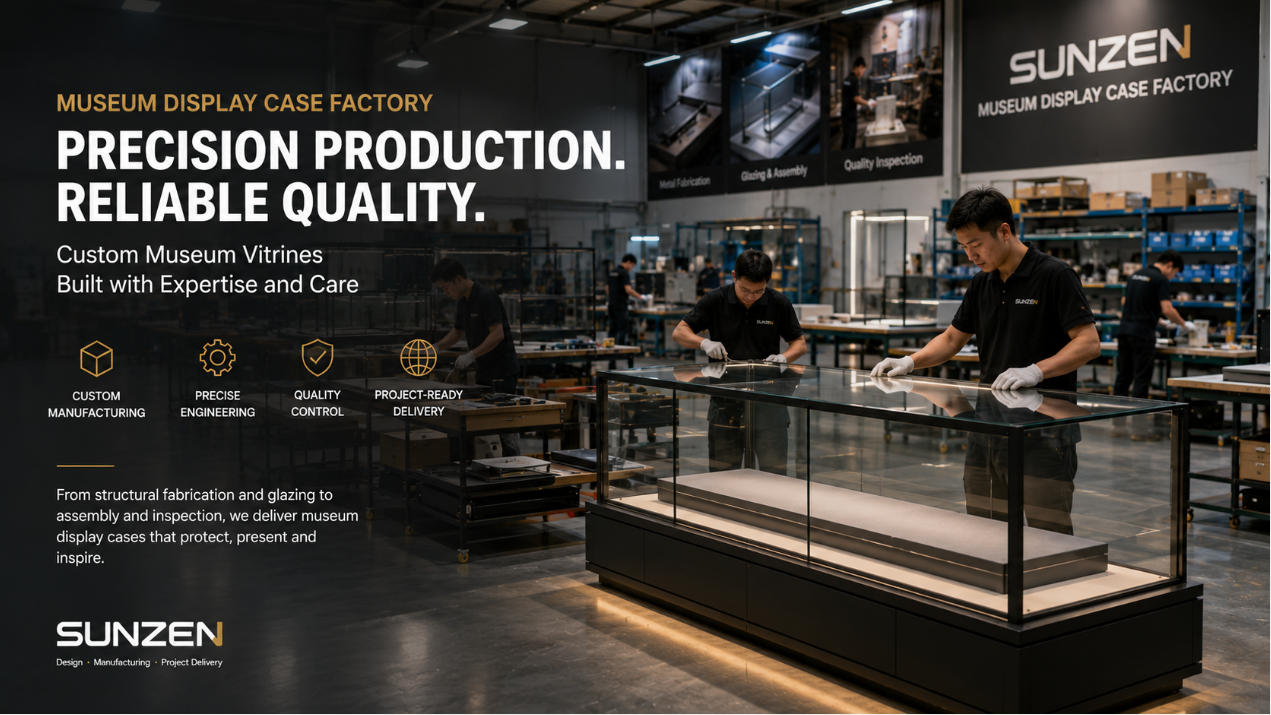
Museum Display Case Factory for Custom Vitrine Production
SUNZEN operates as a professional museum display case factory producing custom vitrines for museums, galleries, cultural institutions and exhibition projects. Factory production coordinates structural fabrication, glazing, cabinetry, interior finishing, lighting integration, access systems, assembly, inspection and project-ready packing.
Museum vitrines cannot be treated as standard furniture products. Different collections and exhibition environments require different case dimensions, glazing configurations, structural systems, display surfaces, lighting arrangements, access methods and technical details.
Our production process translates approved drawings and project requirements into finished museum display cases while maintaining coordination between materials, fabrication, assembly and quality control.
Manufacturing Museum Display Cases as Integrated Systems
A museum vitrine brings several production disciplines together. Glass, metal structures, cabinetry, interior surfaces, lighting, hardware and access systems must align accurately within one finished display case.
Produce the Structural Components
Metal frames, cabinet structures, support components and fabricated parts are manufactured according to approved dimensions and production drawings.
Combine Multiple Display Systems
Glazing, interiors, lighting, hardware, locks, access mechanisms and service components are coordinated with the physical case construction.
Check the Completed Vitrine
Assembly, dimensions, finishes, glass alignment and operational systems are inspected before the finished case progresses to packing and delivery preparation.
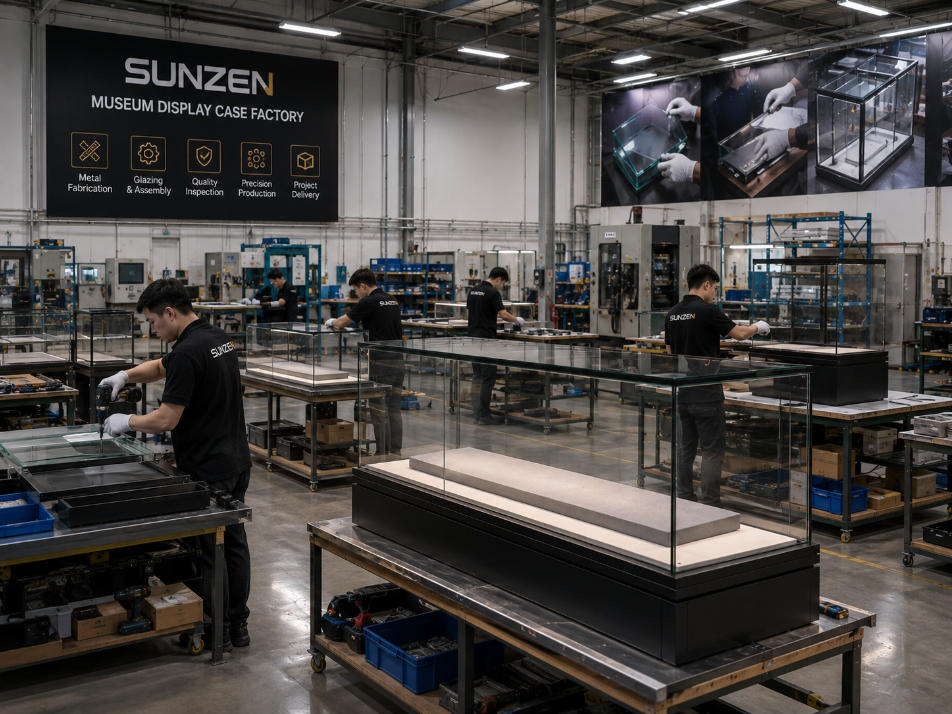
Move Approved Museum Display Case Designs into Production
Factory production begins after the important dimensions, structures, materials, glazing, finishes and functional requirements have been defined.
Production Drawings: Review dimensions, construction relationships and project-specific component information before fabrication.
Material Coordination: Prepare the specified glass, metal, cabinet materials, interior surfaces, hardware and lighting components.
Production Sequencing: Organize fabrication and assembly so related components arrive at the correct production stage.
Project Batches: Coordinate multiple vitrines with different sizes and configurations while maintaining consistent production standards across the exhibition package.
For case-specific customization before production, review our custom museum display case capability.
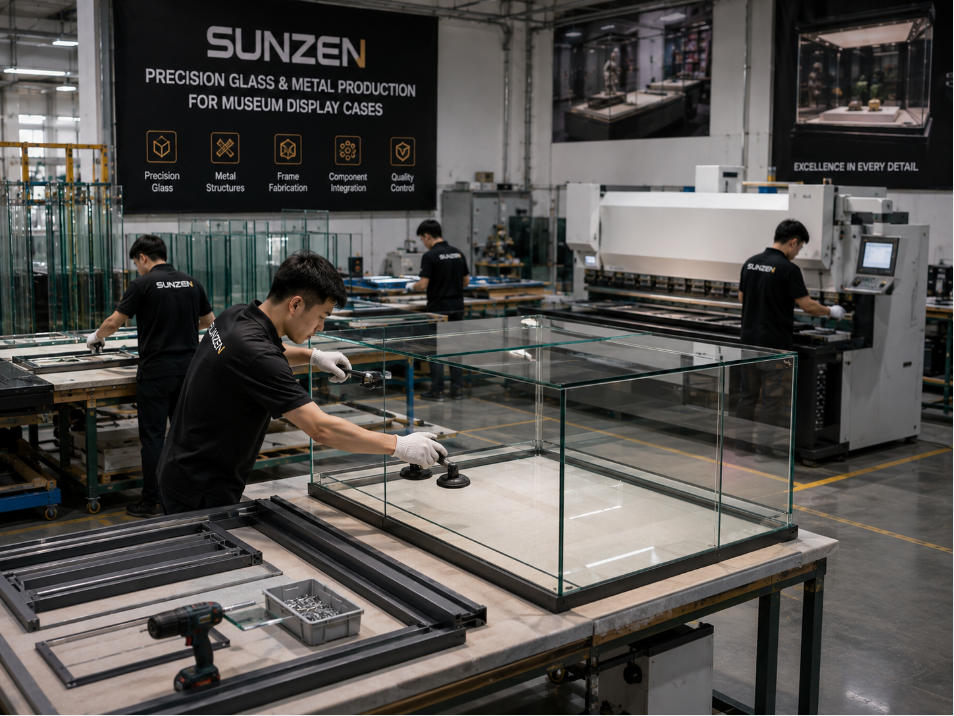
Coordinate Precision Glazing and Structural Fabrication
Glass and structural components define much of the physical accuracy and visual quality of a museum display case. Their dimensions and interfaces therefore need to be controlled as part of the same production system.
Depending on the project, museum vitrine production may incorporate low-iron glass, laminated glazing, low-reflection configurations, aluminum profiles, steel supports and precision-machined structural components.
Glass dimensions must correspond accurately with frames, base structures, access panels and sealing interfaces. Structural components also need sufficient manufacturing accuracy so the case can be assembled without introducing inconsistent gaps or alignment problems.
Where detailed technical development is required before fabrication, our display case engineering process connects design requirements with production-ready information.
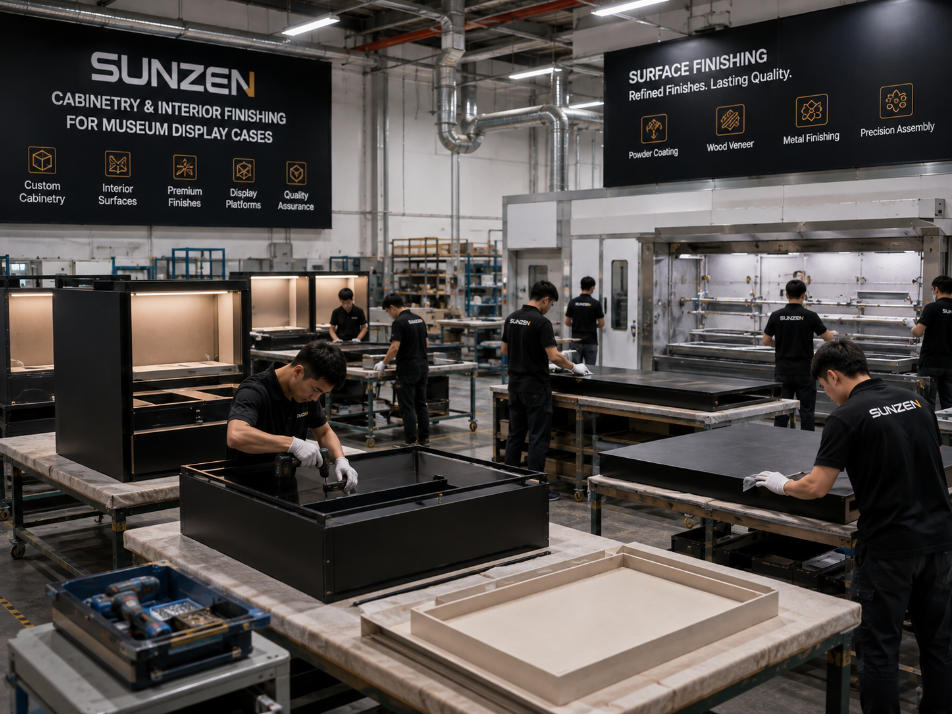
Manufacture the Base, Interior and Visible Finished Surfaces
The solid portions of a museum vitrine need to accommodate structure, access hardware, electrical equipment and exhibition presentation requirements while maintaining the intended visual character.
Factory production can include fabricated base cabinets, support structures, removable service panels, display platforms, internal supports, plinths and project-specific presentation surfaces.
Visible metal and cabinet finishes are coordinated with the approved exhibition design so multiple display cases can maintain consistent appearance throughout the project.
Interior surfaces may also be produced around museum presentation and conservation requirements, including neutral display platforms and project-specified lining materials.
Integrate Lighting, Access, Hardware and Security During Production
A completed museum display case is more than its enclosure. Operational systems need to be incorporated into the manufactured structure without compromising the visual simplicity of the finished vitrine.
Integrated Display Lighting
LED lighting, concealed channels, wiring routes, drivers and service access can be coordinated with the structure and intended display presentation.
Opening & Access Systems
Sliding, hinged, removable and project-specific access arrangements are fitted and adjusted according to operational and structural requirements.
Locks & Precision Hardware
Locks, hinges, guides, fittings and other hardware components are installed as part of the complete case and checked during final assembly.
Enclosure Details
Where required, sealing interfaces and enclosed construction details can be incorporated around the glazing and access systems.
Display Platforms
Interior decks, risers and presentation components are fitted in coordination with the approved artifact display arrangement.
Maintenance Access
Electrical components and technical systems can be positioned so required maintenance access is considered within the overall case construction.
Bring Glazing, Structures and Components Together
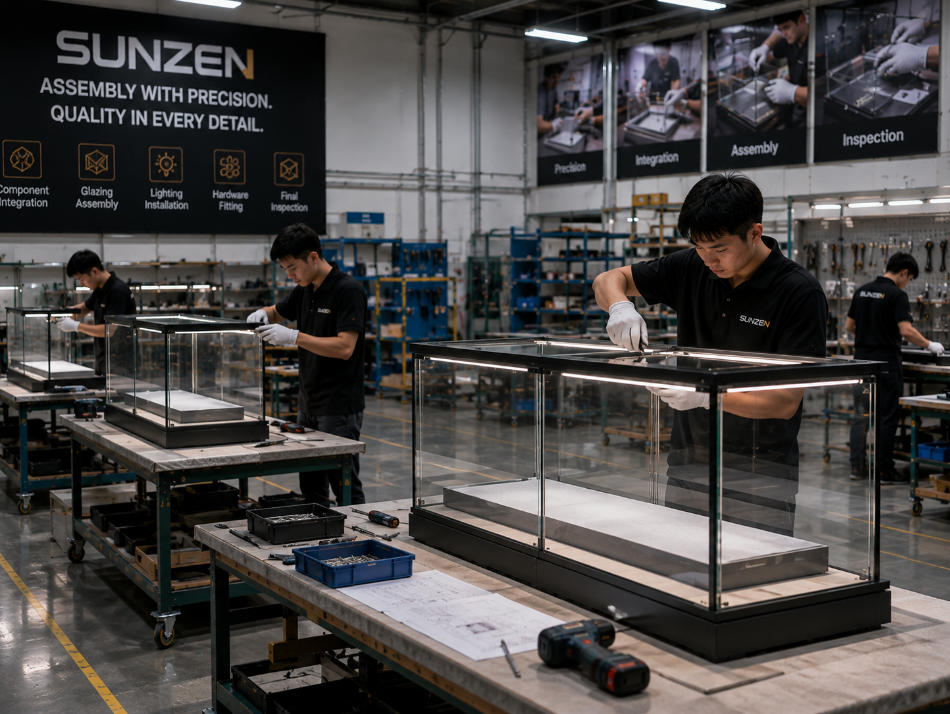
Final assembly is the stage where individual factory-produced components become a complete museum vitrine.
Frames, cabinet structures, glazing, interior platforms, lighting, access hardware and locks need to align as one coordinated system. Assembly provides an opportunity to check how the physical parts interact rather than evaluating each component separately.
Panel gaps, glass positioning, opening movement and component alignment can be reviewed and adjusted before the completed case enters final quality inspection.
Our broader showcase manufacturing capability supports coordinated fabrication and assembly across different types of custom display projects.
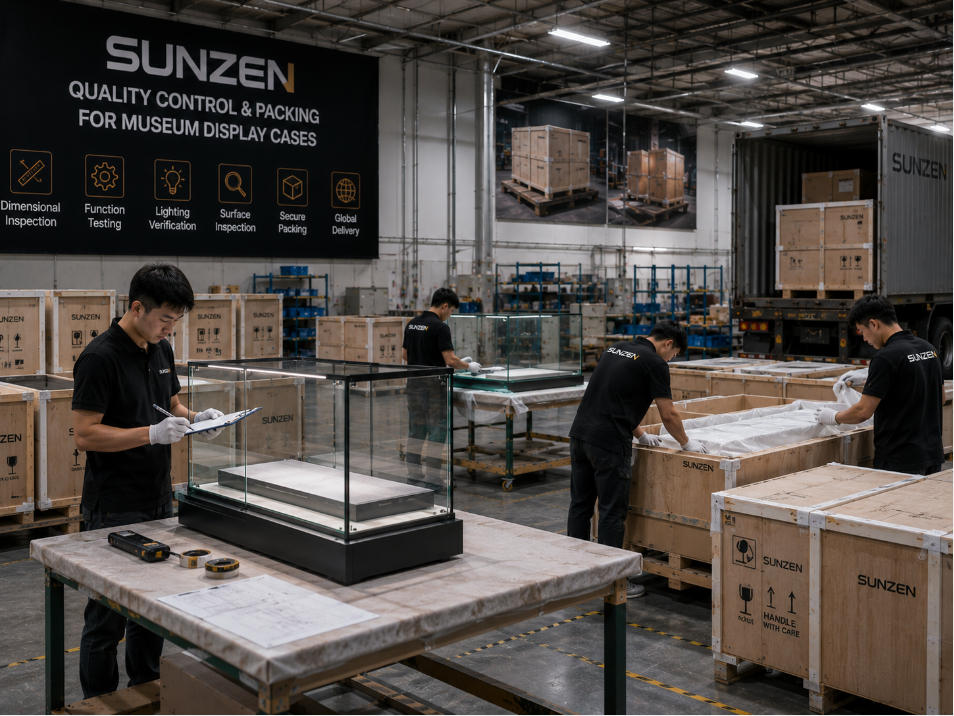
Inspect the Museum Display Case Before It Leaves the Factory
Dimension Check
Review important case dimensions, geometry and component relationships against approved production information.
Glass & Alignment
Inspect visible glazing relationships, panel positioning and structural alignment after assembly.
Access Testing
Operate doors, sliding panels, locks and applicable access mechanisms to confirm normal movement and closing.
Lighting Verification
Check installed lighting and relevant electrical components before the case progresses to packing.
Finish Inspection
Review visible metal, cabinet and interior surfaces for consistency across the completed display case.
Release for Packing
Move the completed vitrine into packing preparation after the required production checks have been completed.
Prepare Completed Museum Vitrines for Project Delivery
Factory production does not finish when the case has been assembled. The completed vitrine also needs to be protected for transportation and organized around the next project stage.
Glass surfaces, finished panels, hardware and removable components require appropriate protective treatment during packing. Components can also be identified according to case numbers or project installation sequences.
For international museum projects, packing and shipment preparation can be coordinated with broader project delivery requirements.
This factory-focused process differs from evaluating a supplier at the company level. For SUNZEN’s broader design, engineering and manufacturing capability, visit our museum display case manufacturers page.
How a Museum Display Case Moves Through Factory Production
Production Review
Confirm approved dimensions, materials, glazing, finishes, lighting and access requirements before fabrication begins.
Structural Fabrication
Produce metal structures, base cabinets and supporting components according to the technical information.
Glazing Preparation
Coordinate glass panels and their interfaces with the fabricated structures and access configuration.
System Integration
Install lighting, hardware, locks, interior elements and other project-specific components.
Assembly & QC
Assemble the complete vitrine and inspect dimensions, alignment, finishes and operational systems.
Packing & Release
Protect and organize completed display cases for transportation and project delivery.
Understand the Role of Factory Production Within a Museum Display Project
Define the Individual Vitrine
Dimensions, glazing, interiors, lighting, access and technical requirements are developed around a specific display case application.
Explore custom museum display case development.
Evaluate the Manufacturing Partner
Manufacturer intent covers the broader supplier capability including design coordination, engineering, materials, production, quality control and project support.
Explore museum display case manufacturers.
Manufacture Individual Vitrines or Coordinated Exhibition Packages
Freestanding Display Cases
Floor-standing glass vitrines can be manufactured in different dimensions and structural configurations according to the exhibition plan.
Pedestal Display Cases
Compact pedestal vitrines can combine transparent viewing areas with custom bases, lighting, access and artifact presentation platforms.
Wall Display Cases
Wall-based and integrated exhibition displays can be coordinated with architectural openings, panels and surrounding exhibition finishes.
For wider project-level customization across multiple showcase types, review our custom museum showcase solution.
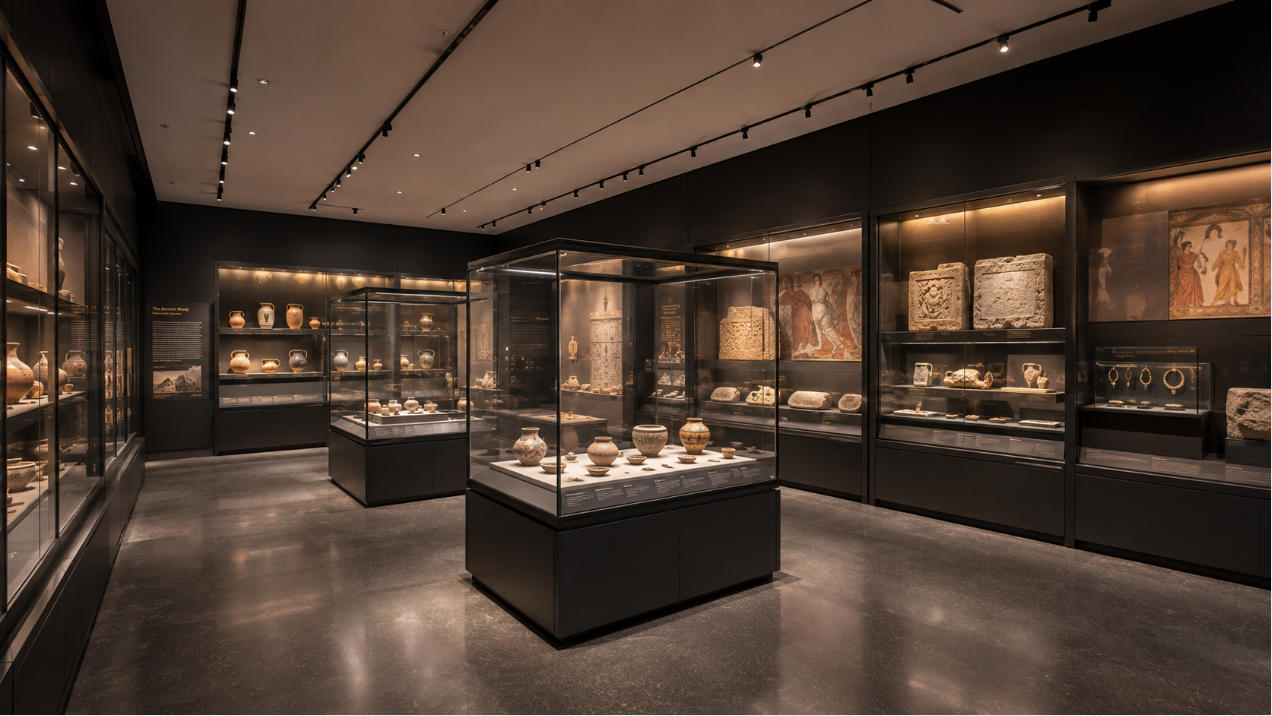
See Museum Display Case Production in the Finished Exhibition Environment
The purpose of a museum display case factory is not simply to manufacture isolated cabinets. The production process needs to deliver finished vitrines that can become part of a coordinated exhibition environment.
A museum project may combine freestanding vitrines, pedestal displays, wall cases and integrated exhibition systems. Although these cases perform different functions, consistent manufacturing standards help maintain common relationships between glass, structures, finishes and presentation details.
Explore completed applications through our museum showcase projects.
Museum Display Case Factory FAQs
What does a museum display case factory produce?
A museum display case factory produces custom vitrines and coordinates structural fabrication, glazing, cabinetry, interior surfaces, lighting, access hardware, assembly, quality control and packing according to project requirements.
Can SUNZEN manufacture museum display cases from approved project drawings?
Yes. SUNZEN can manufacture museum display cases from approved production information covering dimensions, structures, glazing, materials, finishes, lighting, access systems and other required technical details.
What production processes are involved in museum display case manufacturing?
Typical production processes include drawing and specification review, structural fabrication, cabinet production, glazing preparation, surface finishing, lighting and hardware integration, final assembly, inspection and packing.
What glass can be used for museum display case production?
The glazing specification depends on the project and may include low-iron glass, laminated configurations, low-reflection glazing and other project-specific glass requirements developed during technical planning.
Can different museum display case types be manufactured for one exhibition?
Yes. One exhibition project can include freestanding vitrines, pedestal cases, wall displays and integrated cases with different dimensions and configurations while following coordinated manufacturing standards.
How are museum display cases checked before packing?
Completed display cases can be inspected for dimensions, structural alignment, glazing relationships, visible finishes, lighting, locks, access mechanisms and overall assembly before packing.
Can SUNZEN manufacture custom museum display cases for international projects?
Yes. Factory production can be coordinated with protective packing, shipment preparation and project delivery requirements for museums, galleries and cultural exhibition projects in international markets.
What is the difference between a museum display case factory and a museum display case manufacturer?
Factory intent focuses primarily on physical production, fabrication, assembly, quality control and packing. Manufacturer intent is broader and includes the overall supplier capability across design coordination, engineering, manufacturing and project support.
Need Museum Display Cases Manufactured for Your Project?
Share your museum display case schedule, dimensions, drawings, glazing requirements, materials, finishes, lighting requirements and expected quantities with SUNZEN. We can review the production requirements and connect the approved case specification with factory manufacturing, quality control, packing and project delivery.

