
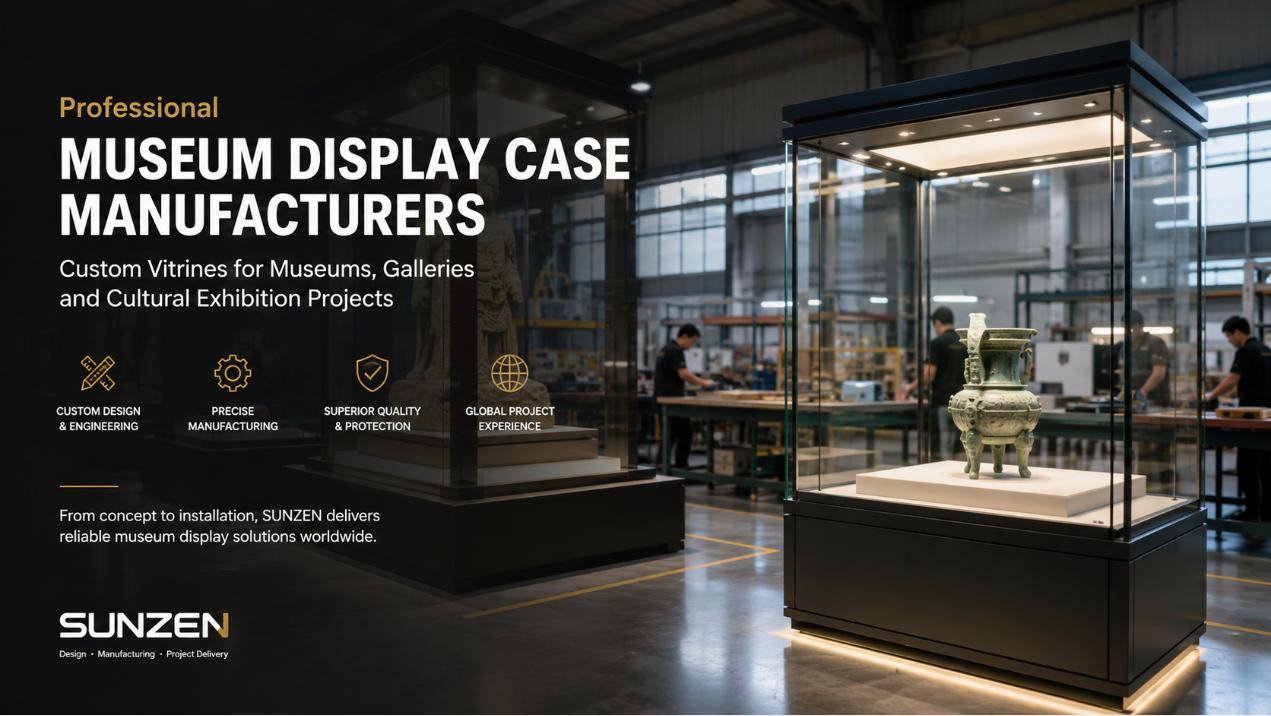
Museum Display Case Manufacturers for Custom Exhibition Projects
SUNZEN is one of the professional museum display case manufacturers supporting museums, galleries, cultural institutions, exhibition designers and project contractors with custom display cases developed around specific collections and exhibition requirements.
Instead of relying only on standard vitrine dimensions, museum display cases can be developed around artifact size, viewing relationships, gallery architecture, glazing, access, lighting, security, interior presentation and other project-specific requirements.
For product formats and display case types, explore our museum display cases. If your priority is case-specific customization, visit our custom museum display case solutions.
What Should Professional Museum Display Case Manufacturers Provide?
A qualified manufacturer should be able to connect technical development, materials, fabrication, functional systems and quality control within one finished museum display case.
Project-Specific Display Cases
Develop dimensions, geometry and display configurations around the object, exhibition layout and architectural environment.
Production-Ready Development
Translate approved concepts and project drawings into coordinated technical information for manufacturing.
Museum Display Glass
Coordinate glass dimensions, joints, openings and viewing relationships with the structural display system.
Case Construction
Integrate metal structures, bases, interior display surfaces and concealed technical compartments where required.
Access, Lighting & Security
Coordinate doors, locks, lighting and applicable technical systems during engineering and manufacturing.
Factory Inspection
Inspect dimensions, glazing, visible finishes and functional systems before packing and project delivery.
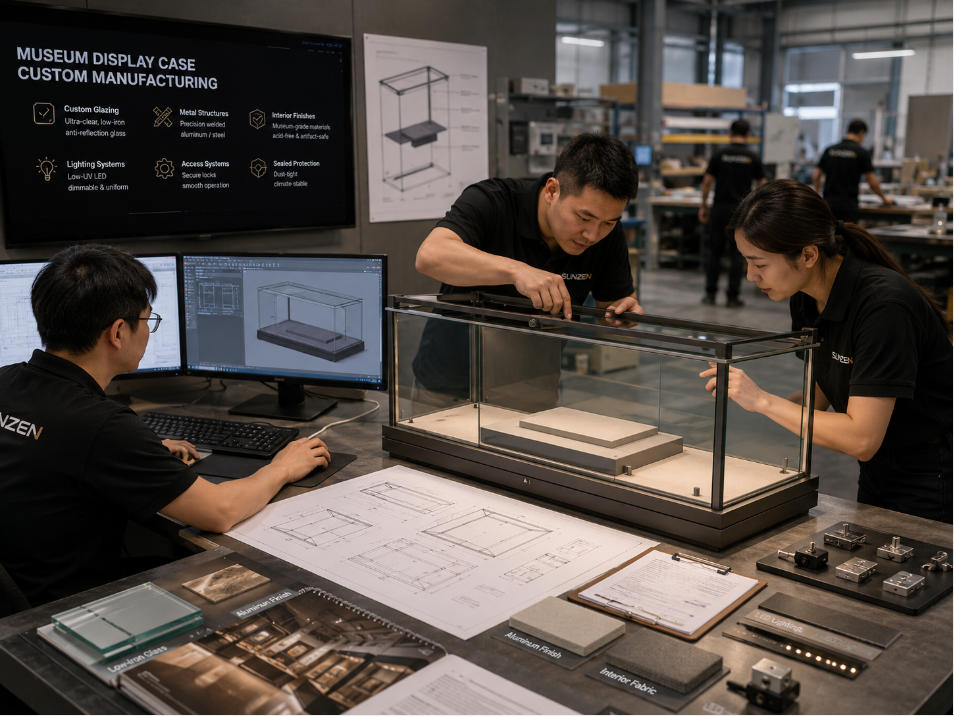
Manufacture the Display Case as One Coordinated Exhibition System
A museum display case may combine large glass panels, structural metalwork, interior display surfaces, access hardware, lighting and concealed technical components within one accurately assembled fixture.
These elements need to follow the same approved drawings and specifications so dimensions, visible joints, opening systems and finishes work together in the completed case.
SUNZEN coordinates these processes from technical development through fabrication, integration and final assembly. For a broader view of production stages, explore our showcase manufacturing capabilities.
Develop Display Cases Around the Collection and Exhibition Space
A professional museum display case manufacturer should be able to adapt the case to actual curatorial, architectural and technical requirements rather than forcing the exhibition to use predetermined cabinet specifications.
Dimensions & Geometry
Develop case width, depth, height, internal clearances and proportions around the objects and exhibition layout.
Glazing Configuration
Coordinate glass panels, joints, doors and access areas around visibility, structure and curatorial requirements.
Materials & Finishes
Coordinate structural materials, metal finishes and interior display surfaces with the exhibition design.
Lighting
Integrate lighting positions and concealed technical components according to the approved exhibition requirements.
Access & Security
Develop opening systems, locks and curatorial access around object installation and future maintenance requirements.
Interior Presentation
Customize decks, plinths, back panels and other internal presentation elements around the displayed collection.
For a deeper view of case-level customization, explore our custom museum display case solutions. For broader exhibition-level customization across several showcase families, visit custom museum showcase.
Translate Exhibition Requirements into Production-Ready Details
Museum display case manufacturing should begin with clear technical information. Approved architectural drawings, exhibition layouts, renderings and specifications can provide the basis for production development.
Engineering needs to resolve dimensions, structure, glazing, access, interior components, hardware, lighting positions and assembly relationships before fabrication begins.
This helps reduce uncertainty during production and allows the manufacturer to evaluate the case as a complete technical system rather than a collection of separate parts.
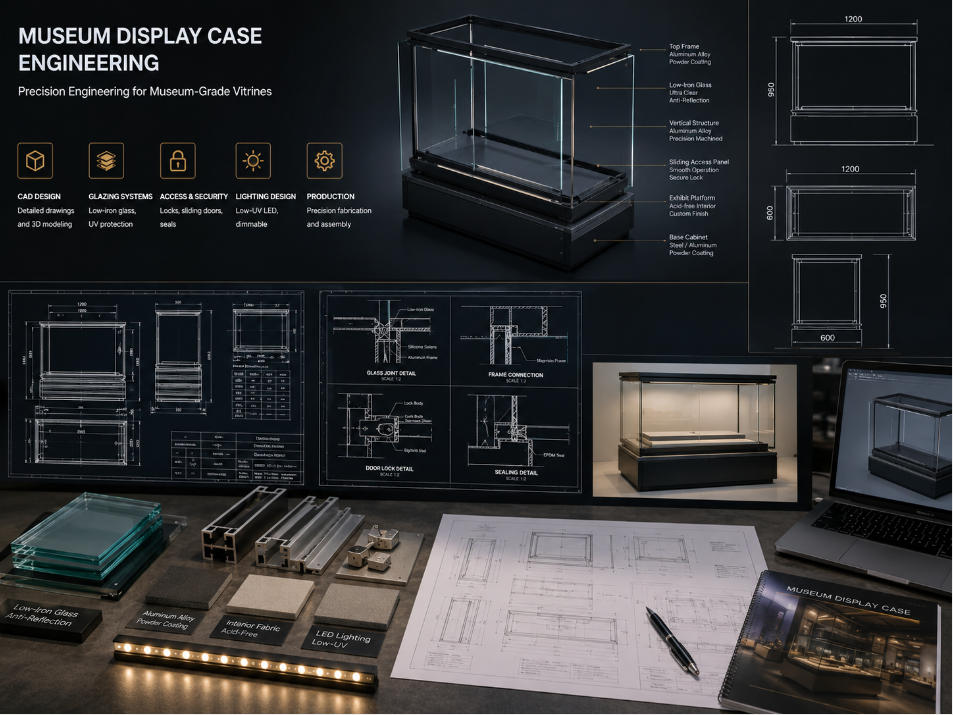
Manufacturing Display Cases for Different Exhibition Applications
Experienced museum display case manufacturers should be able to adapt production to different showcase structures instead of relying on one standard case format.
Freestanding Vitrines
Independent display cases for collections requiring multi-directional viewing within open gallery spaces.
Pedestal Display Cases
Focused vitrines for individual artifacts and smaller collections requiring strong visual emphasis.
Wall Display Cases
Perimeter display systems coordinated with exhibition walls and architectural gallery elements.
Wall-Mounted Cases
Compact display cases developed for elevated or space-efficient object presentation.
Tabletop Vitrines
Horizontal viewing cases for manuscripts, documents, coins and smaller cultural objects.
Architectural Display Cases
Project-specific cases integrated into niches, walls and other exhibition architecture.
Browse our museum display cases collection to explore product formats for different exhibition applications.
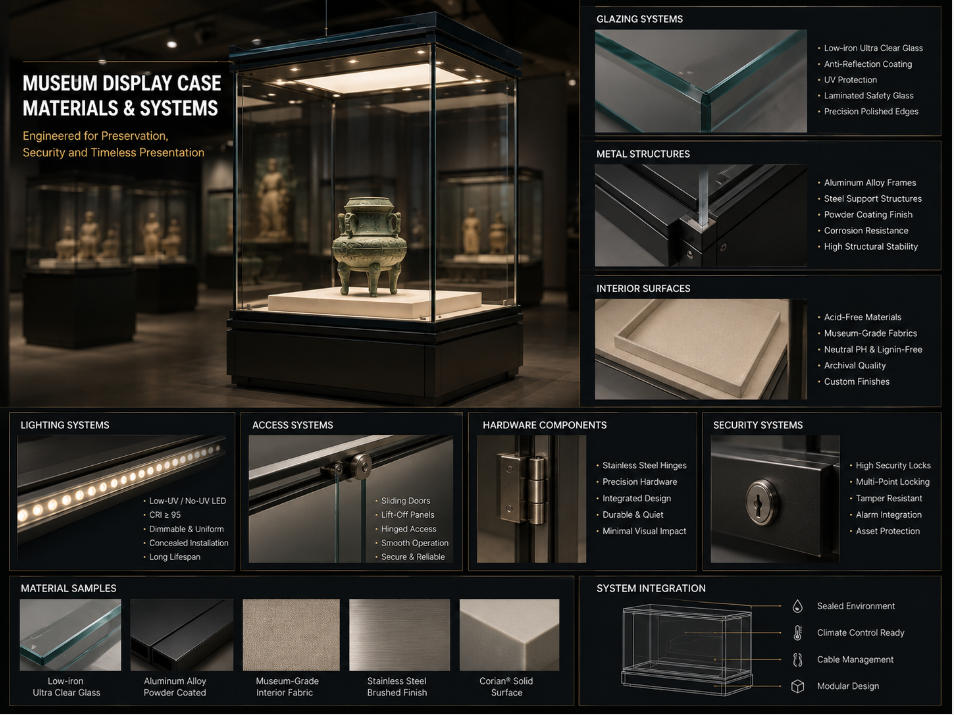
Coordinate Glazing, Structure and Technical Components
Museum vitrines often appear visually simple, but the finished presentation depends on accurate relationships between glazing, structural components, interior surfaces and functional systems.
Glass must coordinate with surrounding structures and access openings. Interior surfaces need to support the display concept, while hardware and lighting must fit within the engineered case without distracting from the collection.
A manufacturer capable of coordinating these relationships can develop the display case as one integrated exhibition component.
Inspect the Completed Display Case Before Packing
Quality control should evaluate both the visible presentation of the finished vitrine and the performance of applicable functional systems.
Assembly & Alignment
Review critical dimensions, geometry, joints, glass relationships and overall case alignment.
Visual Inspection
Check glass, structural components and interior display surfaces against approved project references.
Operational Testing
Test applicable access systems, locks, lighting and other installed functional components before delivery.
From Exhibition Requirements to Finished Museum Display Cases
Project Information
Review showcase schedules, drawings, object information, specifications and project requirements.
Technical Development
Resolve dimensions, structure, glazing, access and other relevant technical relationships.
Approval
Confirm drawings, specifications, materials and finishes before manufacturing begins.
Component Production
Produce glazing, structures, interior elements and relevant technical components.
Assembly
Integrate the different components into the complete museum display case.
Quality Control
Inspect visible presentation and functional requirements before packing and delivery.
What Should Buyers Compare Between Museum Display Case Manufacturers?
For professional cultural projects, comparing manufacturers should go beyond cabinet price and finished-product photographs.
Customization Capability
Can the cases be developed around actual collections, layouts, dimensions and technical requirements?
Engineering Support
Can project information be translated into coordinated production-ready technical details?
Glazing & Materials
Can glass, structures, interior materials and visible finishes be controlled within one specification?
Manufacturing Capability
Can multiple production disciplines be coordinated accurately within one finished display case?
Quality Control
Are dimensions, finishes, access systems and relevant functional requirements checked before delivery?
Project Experience
Can the supplier coordinate different case types and quantities across a professional exhibition project?
Choose the Right SUNZEN Resource for Your Museum Display Project
Custom Museum Display Case
Focus on how an individual display case can be customized around the collection, dimensions, glazing, lighting, access and presentation.
Museum Display Case Manufacturers
This page focuses on supplier capability, engineering, production coordination and quality control for museum display cases.
Museum Display Case Factory
Explore the production-focused view of fabrication, component integration, assembly and factory inspection.
Coordinate Individual Museum Display Cases Within Larger Showcase Projects
Some projects require a single custom vitrine, while others involve multiple display case families that need consistent materials, proportions and technical standards across an entire exhibition.
For broader project-level manufacturing capability involving different showcase types, explore our museum showcase manufacturers page. For a production-focused view of complete museum showcase systems, visit our museum showcase factory.
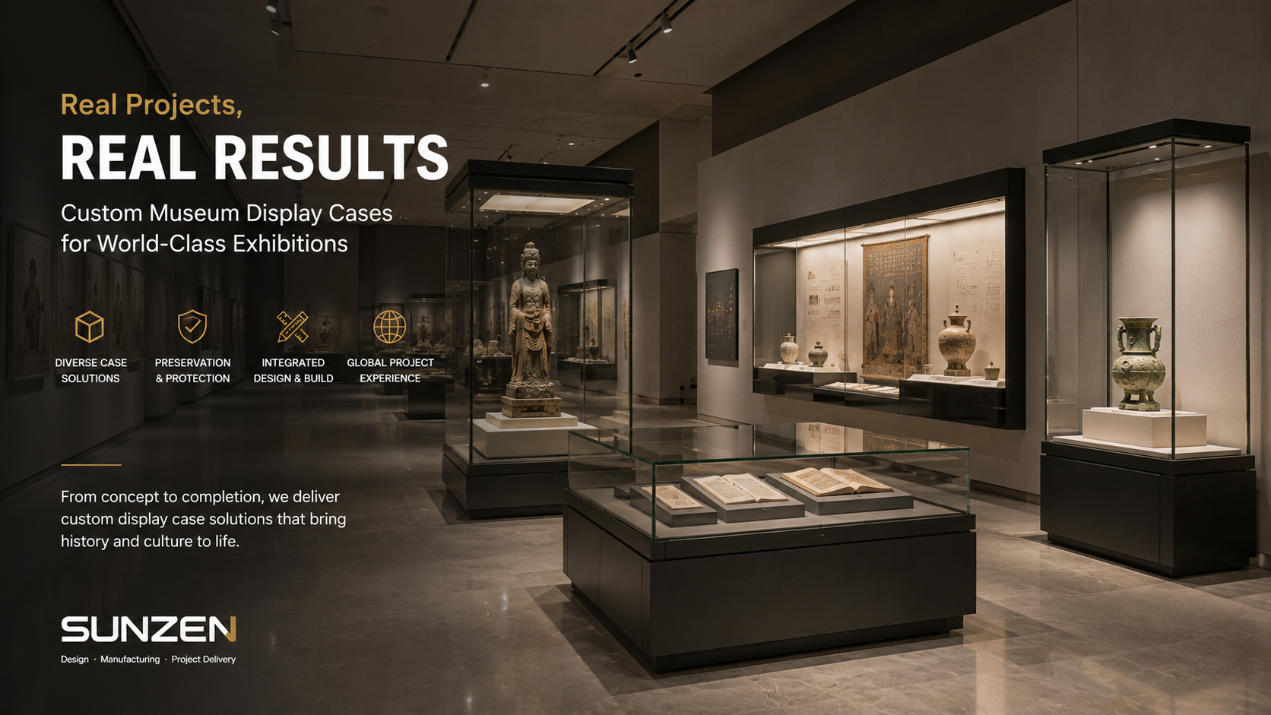
See Museum Display Cases Within Real Exhibition Environments
Manufacturer capability becomes easier to evaluate when individual display cases can be seen working within complete museum and gallery environments.
Explore our museum showcase projects to see freestanding vitrines, pedestal displays, wall cases and coordinated exhibition showcase systems in completed cultural projects.
Explore Related Museum Display Solutions
Museum Display Cases
Browse museum display case formats for artifacts, artworks, documents and cultural collections.
Custom Museum Display Case
Explore case-specific customization for dimensions, glass, materials, lighting, access and security.
Museum Display Case Factory
Explore fabrication, assembly, technical integration and factory inspection for museum display cases.
Custom Museum Showcase
Explore broader collection-oriented and exhibition-level museum showcase customization.
Museum Showcase Manufacturers
See broader manufacturing capability for coordinated showcase families and complete museum projects.
Museum Showcase Projects
See museum display systems installed within completed exhibition and gallery environments.
Museum Display Case Manufacturer FAQs
What do museum display case manufacturers provide?
Museum display case manufacturers develop and produce custom vitrines for museums, galleries and cultural exhibitions. Services can include technical development, glazing and material coordination, manufacturing, assembly, functional integration and quality control.
Can museum display cases be customized for specific collections?
Yes. Dimensions, geometry, glazing, interior presentation, access, lighting, security and other relevant requirements can be developed around specific objects, collections and exhibition environments.
What types of museum display cases can be manufactured?
Depending on the project, manufacturers can produce freestanding vitrines, pedestal cases, wall display cases, wall-mounted cases, tabletop vitrines and architecturally integrated exhibition displays.
Can museum display case manufacturers work from exhibition drawings?
Yes. Project information such as plans, elevations, sections, renderings, CAD drawings and technical specifications can be reviewed and developed into production-ready information according to the agreed project scope.
What should buyers compare between museum display case manufacturers?
Buyers should compare customization capability, engineering support, glazing and material coordination, manufacturing capability, functional-system integration, quality control and experience with professional museum projects.
What information should I provide when requesting a quotation?
Useful information includes display case types and quantities, dimensions, exhibition drawings, collection information, glazing and material requirements, access, lighting, project location and expected schedule.
Looking for a Museum Display Case Manufacturer?
Send SUNZEN your display case schedule, dimensions, exhibition drawings, collection information, material specifications or project requirements. Our team can review the scope and coordinate technical development, manufacturing, assembly and quality control for professional museum projects.

