
Sculpture Artist Museum · Paris, France
Musée Zadkine Paris
Sculpture Museum
Display Cases
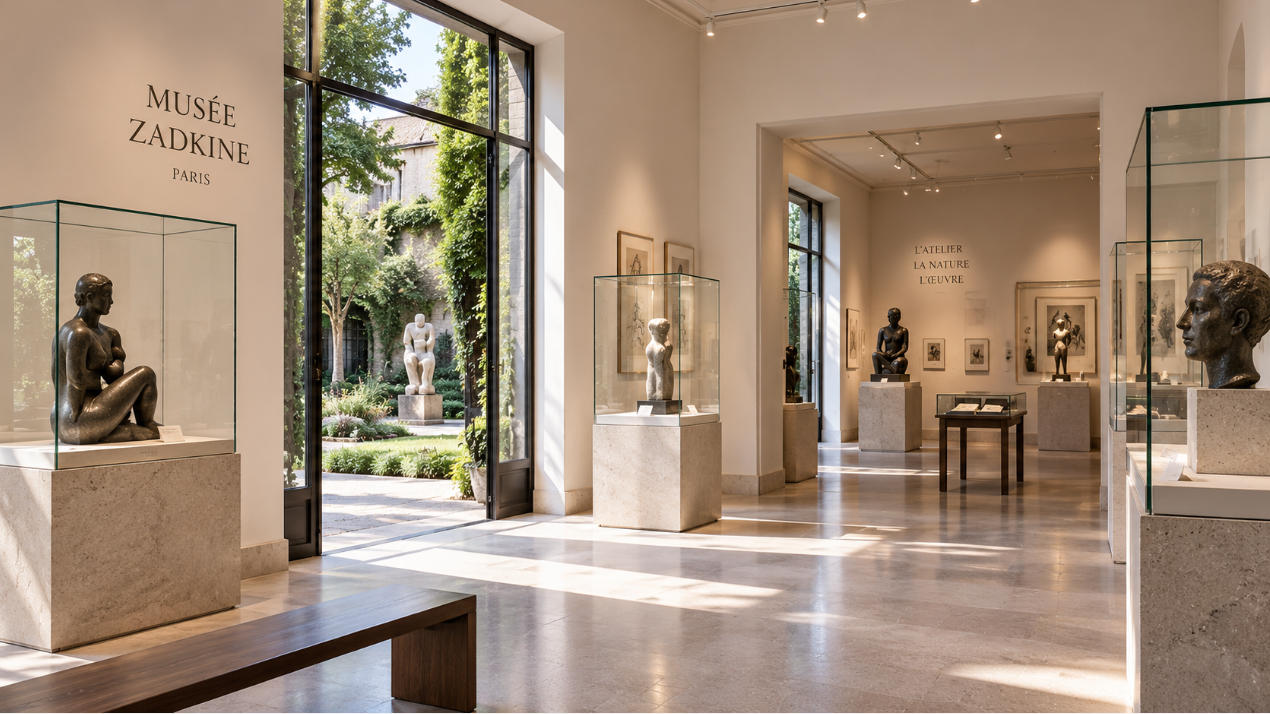
Musée Zadkine integrates sculpture museum display cases into an intimate artist museum where studio spaces, garden sculpture and naturally lit galleries create a quiet relationship between artwork and architecture. Ultra-clear glass, stone bases and restrained detailing keep protected objects visually connected to the wider sculptural environment.
Project
Musée Zadkine
Location
Paris, France
Museum Type
Artist’s Private Museum
Collection
Sculpture · Studio Objects · Art
Area
Approx. 700 m²
Character
French · Minimal · Artistic
An artist museum where sculpture, studio and garden become one continuous exhibition.
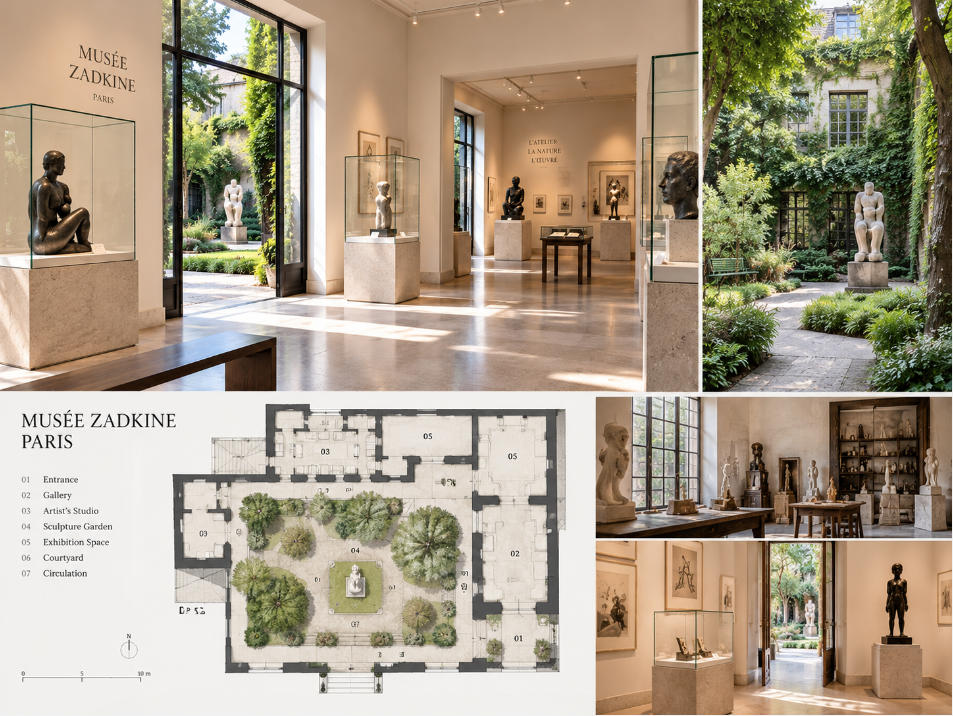
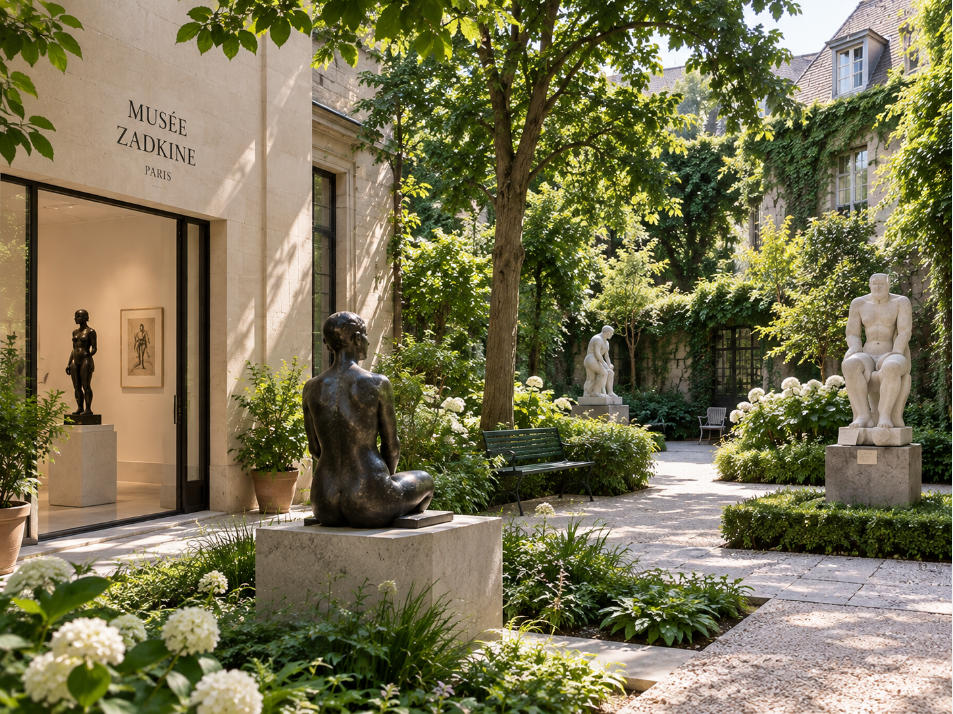
Musée Zadkine develops an approximately 700 m² museum experience through intimate gallery rooms, reconstructed studio spaces and a garden environment where sculpture can be viewed both indoors and outdoors.
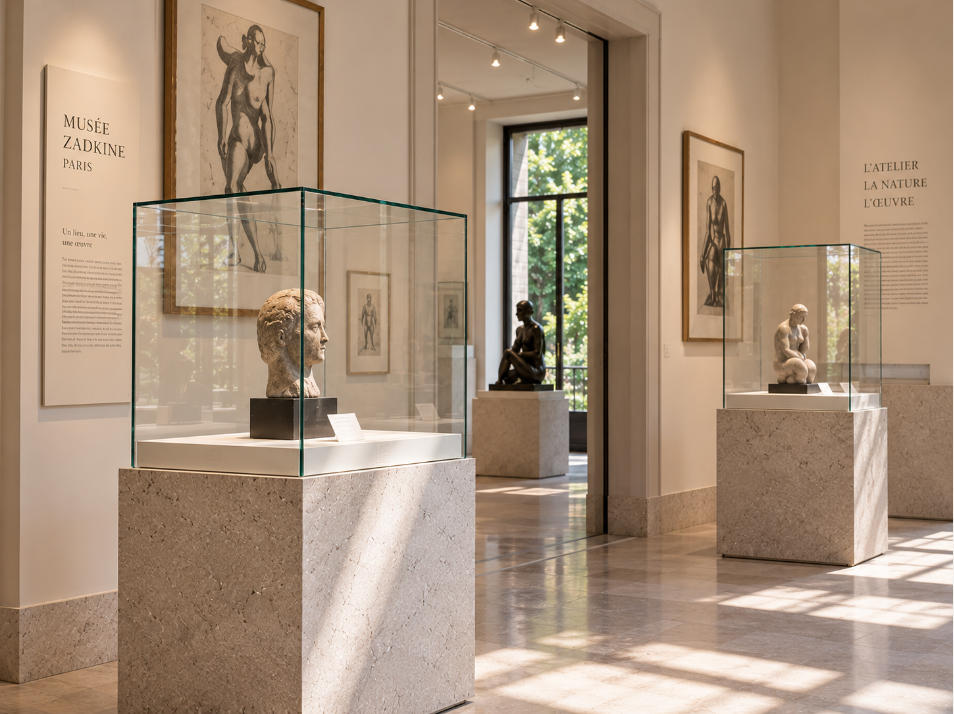
The sculpture museum display cases are deliberately restrained. Rather than introducing visually heavy cabinets, transparent glazing and pale stone bases provide protection only where necessary while preserving the calm relationship between artwork and architecture.
For projects where exhibition furniture needs to remain almost invisible, experienced showcase manufacturers must balance structural precision, glazing quality and access requirements with a very quiet visual language.
Design Direction
The display case acts as a transparent boundary rather than a visual object — allowing sculpture, natural light and the artist’s studio atmosphere to remain dominant.
02 / Space
Small galleries and garden views create a slow and contemplative visitor route.
The museum does not rely on large monumental rooms. Visitors move through a sequence of smaller spaces where sculpture, studio objects and architectural details remain physically close.
Natural daylight plays an important role in the atmosphere, changing the appearance of stone, bronze and plaster surfaces throughout the day.
The connection to the sculpture garden extends this experience beyond the interior, allowing visitors to compare enclosed objects with larger works presented openly in the landscape.
Because circulation and sightlines are so intimate, case placement needs to preserve views between galleries and avoid interrupting the visual relationship between sculpture and surrounding architecture.
03 / Display
Transparent enclosures protect smaller works without separating them from the sculptural environment.
Larger sculpture remains open wherever possible so visitors can experience form, volume and material directly. Smaller works, studio objects and more sensitive pieces receive transparent enclosure.
The vitrines use ultra-clear glass and restrained stone bases to maintain visual continuity across the gallery. Heavy frames are avoided so the enclosure does not become another dominant object in the room.
This approach is particularly effective in an artist museum, where the collection is understood not only as isolated artworks but also as part of a working environment and personal creative history.
The goal is therefore not to maximize case presence but to introduce protection selectively and with the minimum visual interruption.
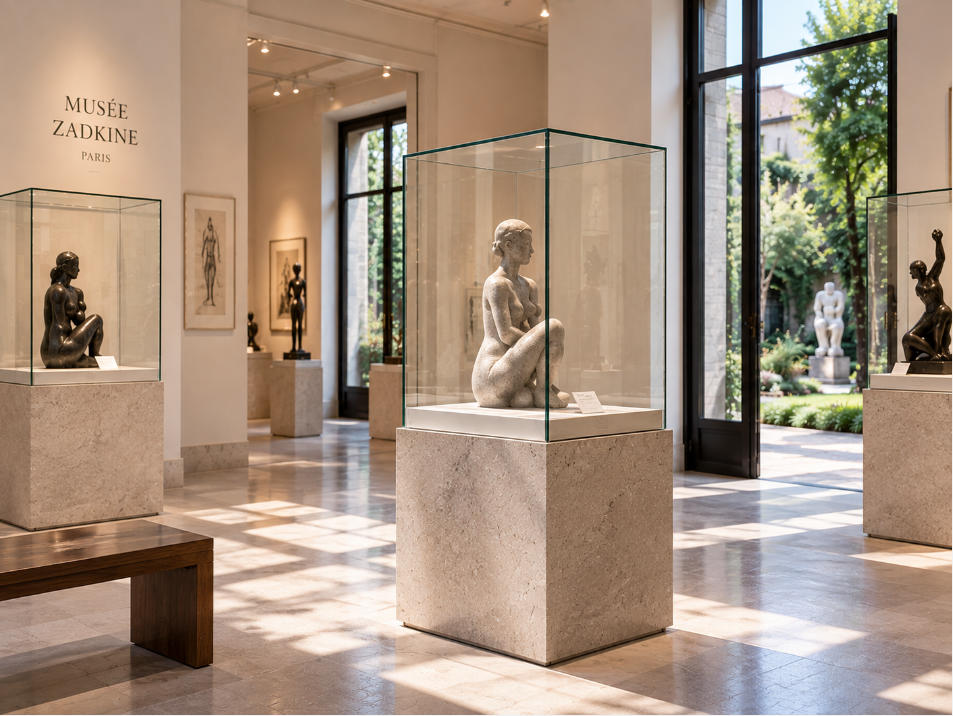
White surfaces, stone and ultra-clear glass keep the galleries visually quiet.
The material palette is intentionally limited so sculpture remains the strongest source of texture, color and visual weight.
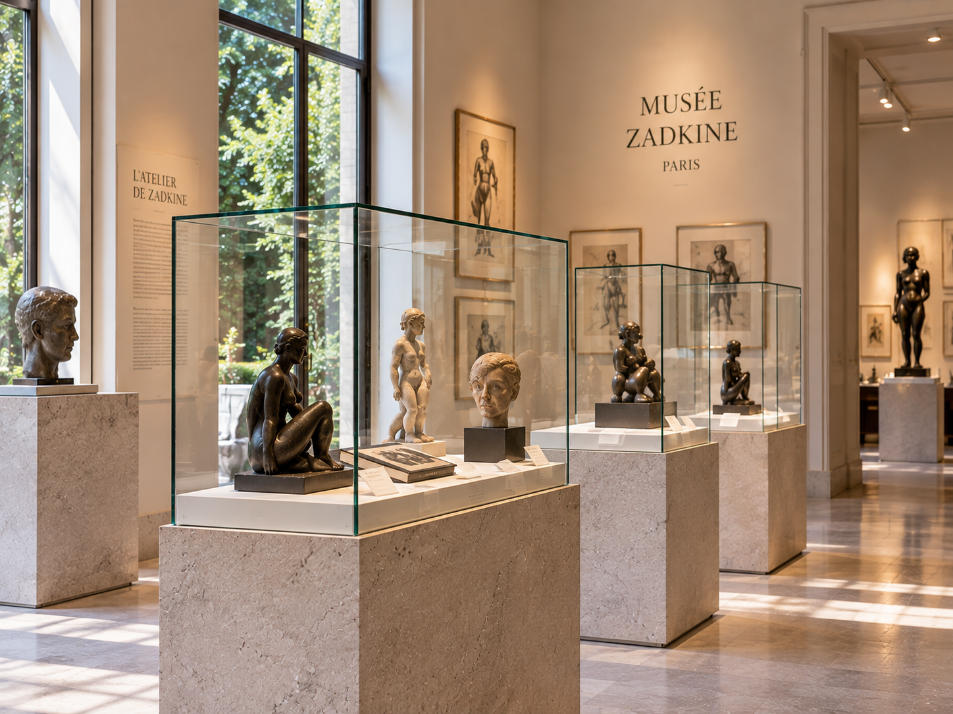
Sculpture · Artist Studio · French Minimal Gallery
04 / Sculpture Presentation
Open and enclosed presentation formats respond to the scale and sensitivity of each work.
Large Sculpture
Major sculptural works remain open so visitors can move around them and understand form, surface and volume from changing viewpoints.
Small Sculptures
Smaller works receive transparent protection while remaining visually open to the surrounding gallery and nearby larger pieces.
Studio Objects
Personal objects, sketches and working materials help reconstruct the artist’s creative environment and can be grouped within low-profile display cases.
Garden Connection
Views toward exterior sculpture reinforce the relationship between the intimate studio collection and works presented in natural light.
Minimal cases require precise structural detailing to remain visually light.
When frames are reduced and glazing becomes the dominant visible material, tolerances around joints, corners, access panels and base interfaces become more important.
Detailed display case engineering helps coordinate glazing thickness, structural support, opening systems and base construction before fabrication begins.
For Musée Zadkine, the aim is to keep these technical systems visually secondary so the finished enclosure feels simple even when the structure behind it is carefully resolved.
Production quality determines how quietly the display system sits within the gallery.
Small variations in glass alignment, stone joints or metal hardware become particularly visible in minimalist interiors because there are fewer decorative elements to distract from them.
A dedicated museum display case factory can coordinate glazing, base structures, access systems and finishing standards across different sculpture case formats.
Working with experienced museum showcase manufacturers also helps maintain consistent quality when multiple transparent cases need different dimensions but share the same restrained visual language.
Final positioning protects both artwork sightlines and the intimate scale of the museum.
In compact galleries, relatively small changes in case position can affect circulation, sculpture viewing angles and the relationship between interior rooms and the garden.
Accurate display case installation helps control final alignment, leveling and position so cases remain integrated with the exhibition rather than becoming visual obstacles.
The final arrangement preserves enough open space around sculpture for visitors to experience the work as three-dimensional objects rather than simply viewing them from one fixed position.
Related art museum projects explore different ways of presenting sculpture and transparent display systems.
Museo Carlo Bilotti Rome uses contemporary art museum display cases within an Italian private museum where sculpture, painting and natural daylight share a restrained gallery environment.
Le Stanze del Vetro Venice develops glass art museum display cases around sculptural glass collections, offering another interpretation of transparency, minimal structure and focused object presentation.
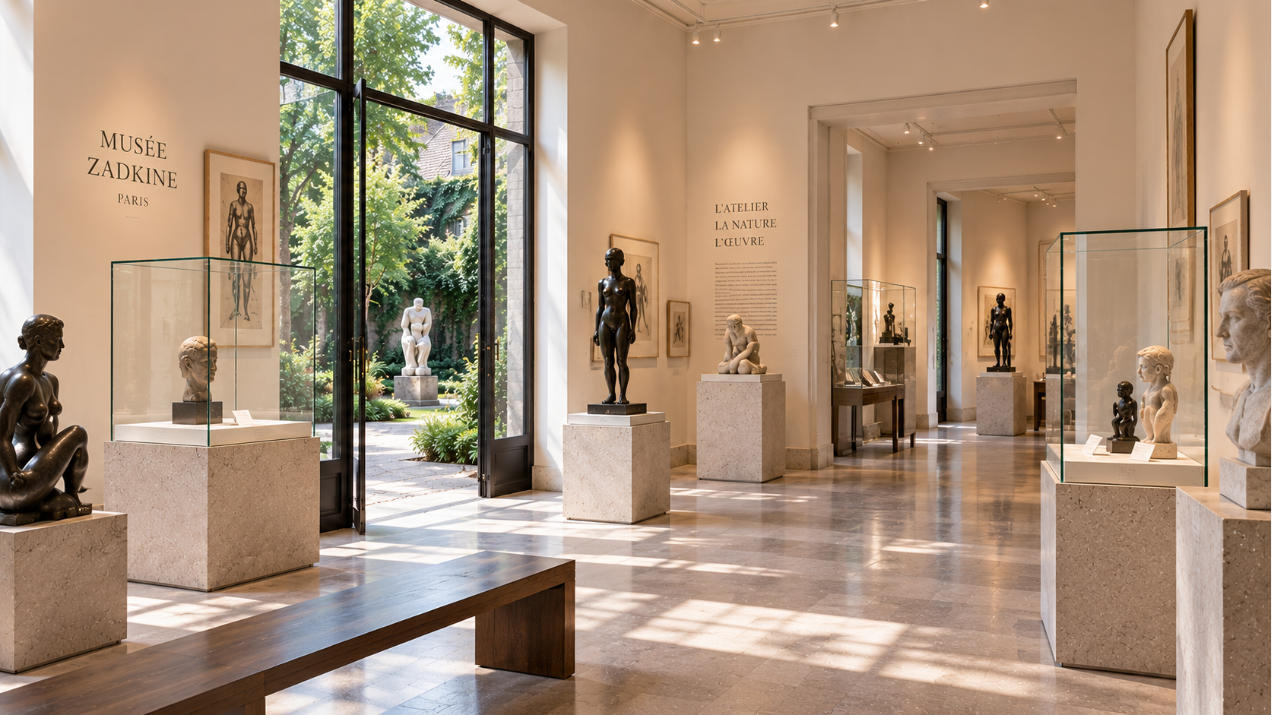
Sculpture museum display cases designed to remain secondary to art, light and space.
Musée Zadkine demonstrates how sculpture museum display cases can protect smaller artworks and studio objects without interrupting the quiet relationship between sculpture, architecture and natural light.
White walls provide visual neutrality, stone creates stable architectural bases and ultra-clear glass maintains transparency between enclosed works and the wider gallery.
The result is a restrained exhibition system where the display case performs its protective role without becoming the dominant visual feature of the museum.

