
Designer House Museum · Turin, Italy
Museo Casa Mollino Turin
Designer House Museum
Display Cases
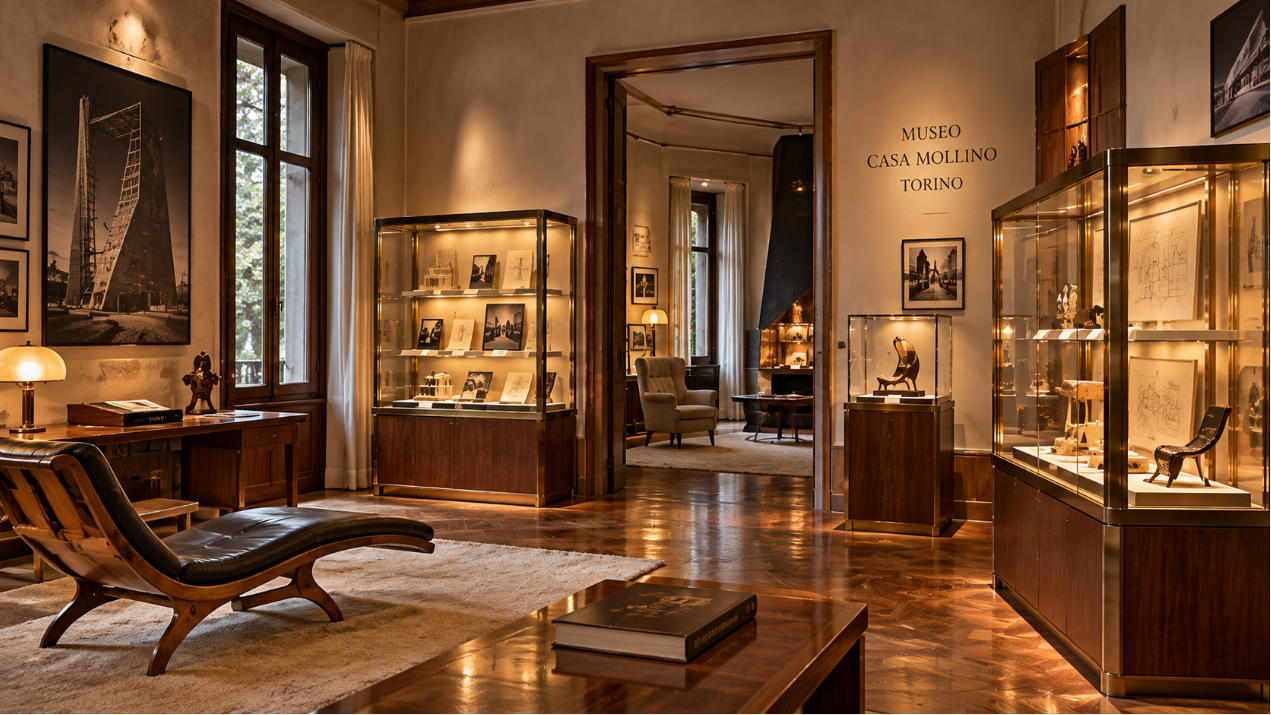
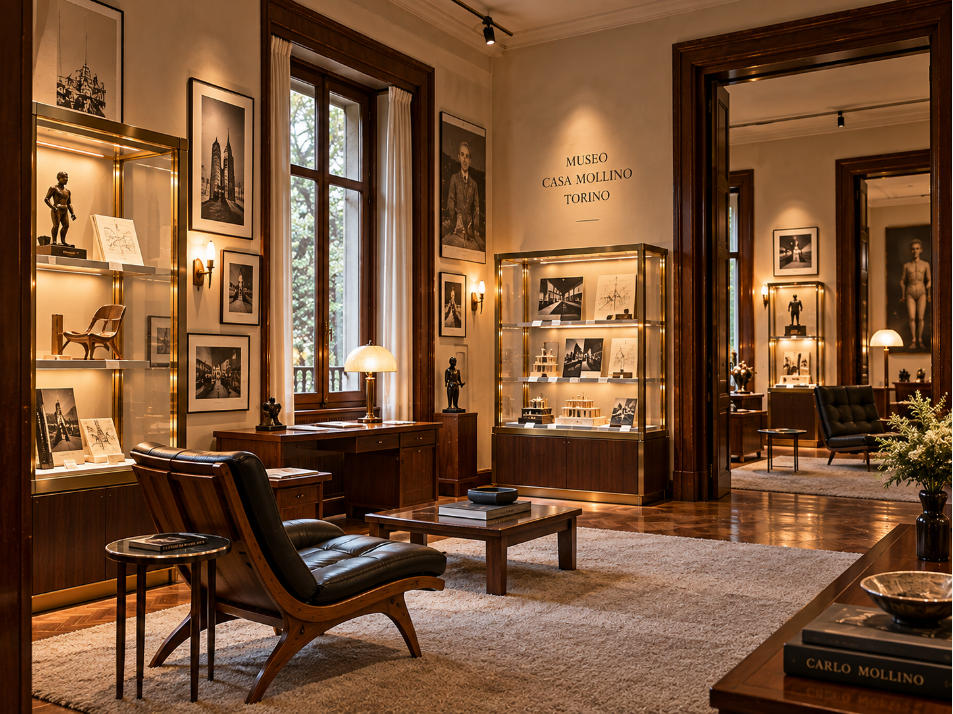
Museo Casa Mollino integrates designer house museum display cases into an intimate residential environment where architecture, furniture, decorative objects and personal collections form one continuous design narrative. Walnut, brass, transparent glass and warm ambient lighting allow the display furniture to belong naturally to the interior rather than appearing as separate museum equipment.
Project
Museo Casa Mollino
Location
Turin, Italy
Museum Type
Architect’s Private Museum
Collection
Architecture · Furniture · Design Objects
Area
Approx. 900 m²
Character
Italian · Mid-Century · Artistic
A private designer house where architecture, furniture and collection become one exhibition.
Museo Casa Mollino develops an approximately 900 m² museum experience through residential rooms rather than conventional institutional galleries. Furniture, architectural details and collectible objects remain closely connected to the atmosphere of the original interior.
The designer house museum display cases follow the same principle. Instead of introducing highly technical museum furniture, the cases use walnut, brass and glass to become part of the wider composition of the rooms.
A carefully developed custom showcase system therefore needs to respond not only to object protection and visibility, but also to furniture scale, material palette and the domestic character of the surrounding architecture.
Design Direction
The showcase is treated as another piece of designed furniture — combining museum protection with the warmth, proportion and material character of an Italian mid-century interior.
02 / Space
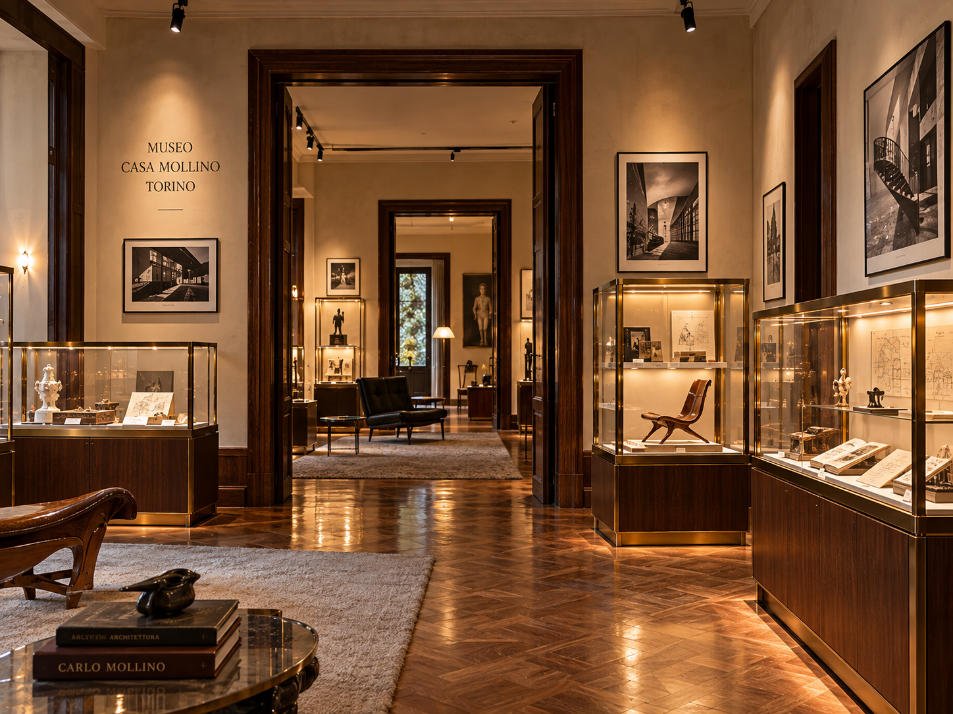
Residential rooms create a slower and more intimate way of viewing design.
The museum does not separate architecture, furniture and decorative objects into isolated departments. Instead, visitors move through connected residential spaces where every object contributes to the character of the room.
Furniture pieces often remain in open presentation, while smaller or more sensitive objects are introduced within glass cabinets and collection vitrines positioned alongside original interior elements.
Because these spaces operate at a domestic scale, showcase dimensions need to remain carefully controlled. Cabinets that are too tall, too deep or visually too technical would immediately disrupt the proportion of the room.
A coordinated display case design process helps define case height, glazing proportion, base depth and viewing distance so the enclosure feels integrated with surrounding furniture rather than added afterward.
03 / Display
Furniture-like museum cases preserve the residential identity of the collection.
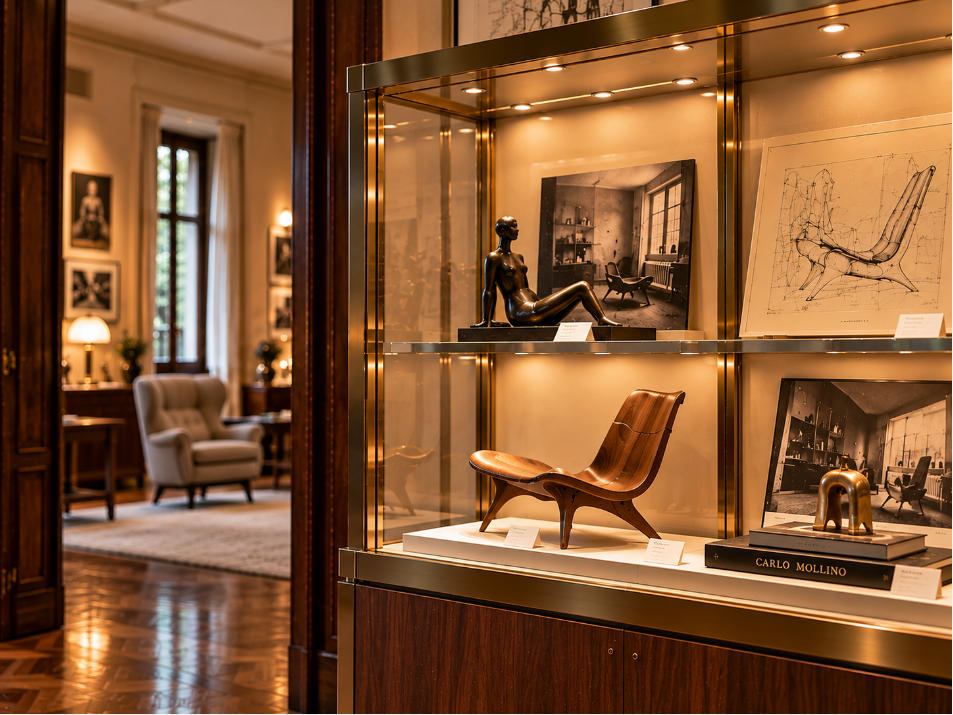
The display language combines the precision of museum glazing with the richer material character of Italian furniture design. Walnut cabinetry creates visual continuity with the residential interior, while brass introduces fine decorative lines around doors, frames and hardware.
A project-specific custom museum display case allows glazing dimensions, timber cabinetry, internal support systems and access details to be adapted around different collection objects without forcing every enclosure into one standardized format.
Transparent glass keeps smaller objects visible from multiple viewing positions, while solid timber bases and cabinets provide enough visual weight to relate the display case to nearby furniture.
The result sits between a museum vitrine and a designed cabinet — protective enough for cultural objects but warm enough to remain part of the domestic environment.
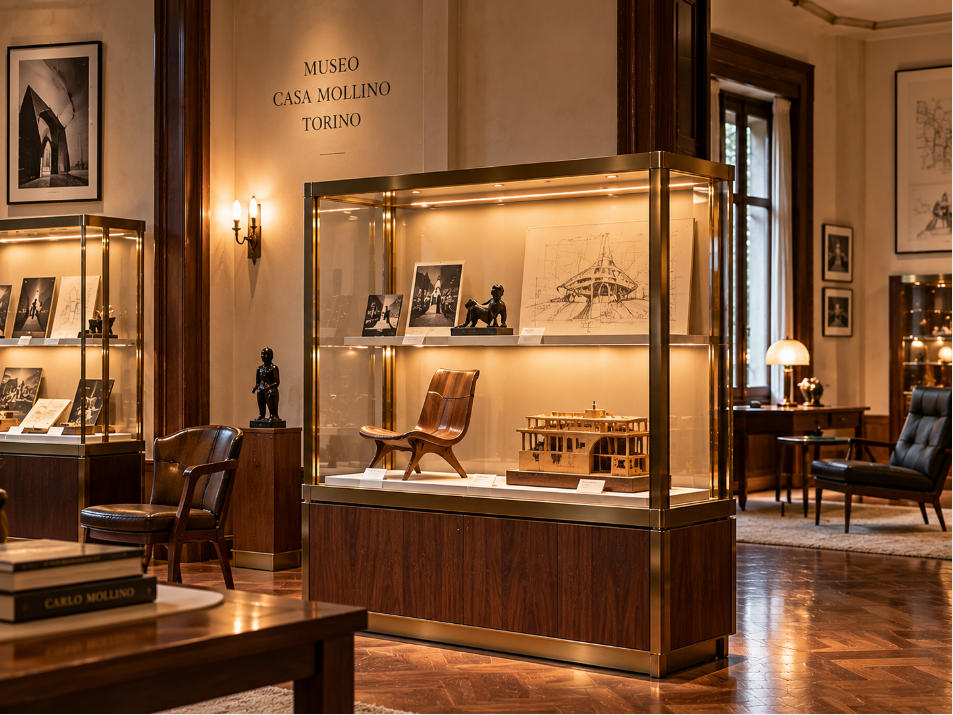
Walnut, brass and glass connect museum display with Italian furniture design.
Rather than using a neutral technical palette, the display system adopts materials already associated with the character of the residential interior.
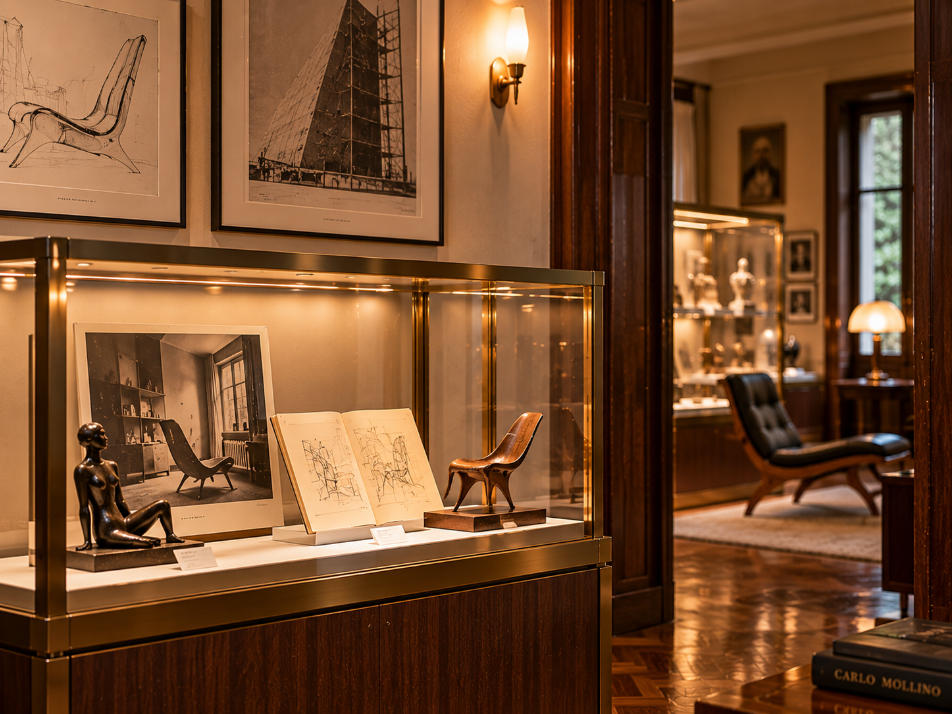
Architecture · Furniture · Italian Mid-Century Display
04 / Collection Presentation
Open furniture and enclosed collections work together within the residential interior.
Designer Furniture
Larger furniture pieces remain open so visitors can understand their scale, profile, materials and relationship with the surrounding architecture.
Personal Collections
Smaller objects are protected within transparent cabinets while remaining visually connected to nearby furniture, artworks and decorative elements.
Residential Composition
Cases are positioned as part of the room arrangement rather than as independent exhibition islands, preserving the private-house character of the museum.
Warm Ambient Light
Wall lights and warm yellow illumination reinforce the residential atmosphere and reveal the depth of walnut, brass and decorative surfaces.
Furniture-like display cases require technical detailing to remain visually refined.
A cabinet can appear simple from the outside while still requiring careful coordination of glass joints, access panels, hinges, lighting routes, internal supports and furniture-grade finishes.
Detailed display case technical drawings help resolve these relationships before fabrication, particularly where walnut panels, brass profiles and transparent glazing need to meet with very small visual tolerances.
This technical development is especially important in a residential-scale museum, where cases are experienced at close distance and construction details are easier for visitors to notice.
Museum-grade construction meets furniture-quality craftsmanship.
The challenge is not simply producing transparent enclosures. Each cabinet needs accurate glazing, reliable access and structural stability while also achieving the finish quality expected from bespoke residential furniture.
Experienced museum display case manufacturers can coordinate glass, walnut cabinetry, brass components, hardware and integrated lighting so different case formats retain the same architectural and material language.
This combination of technical precision and furniture craftsmanship allows the completed cases to function as protective museum equipment while visually remaining part of the interior.
Related museum projects explore different relationships between domestic interiors, furniture and collection display.
Museum Van Loon Amsterdam uses historic house museum display cases within a preserved residential environment, offering a close comparison for integrating exhibition furniture with architecture and private collections.
Design Museum Danmark develops Scandinavian museum display cases around furniture and design collections, combining natural materials, modular structures and a distinctly Nordic interpretation of object presentation.
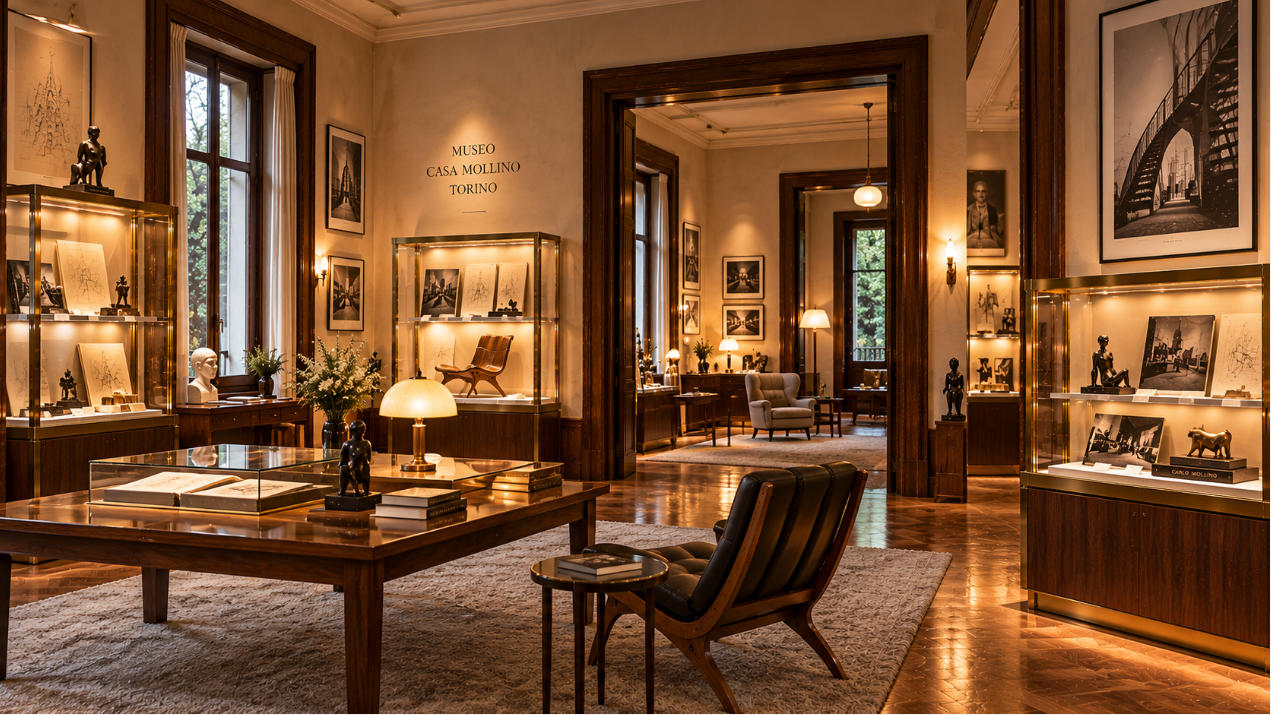
Designer house museum display cases developed as part of the interior rather than separate exhibition equipment.
Museo Casa Mollino demonstrates how designer house museum display cases can protect architecture and design collections while preserving the intimacy and material richness of a residential museum.
Walnut provides warmth, brass introduces precise decorative detail and transparent glass maintains visual continuity between enclosed collections, furniture and surrounding architecture.
Together with warm ambient lighting and carefully controlled proportions, the display system becomes part of the design language of the house itself.

