
Fashion Accessories Museum · Amsterdam, Netherlands
Museum of Bags and Purses Amsterdam
Fashion Accessories Museum
Display Cases
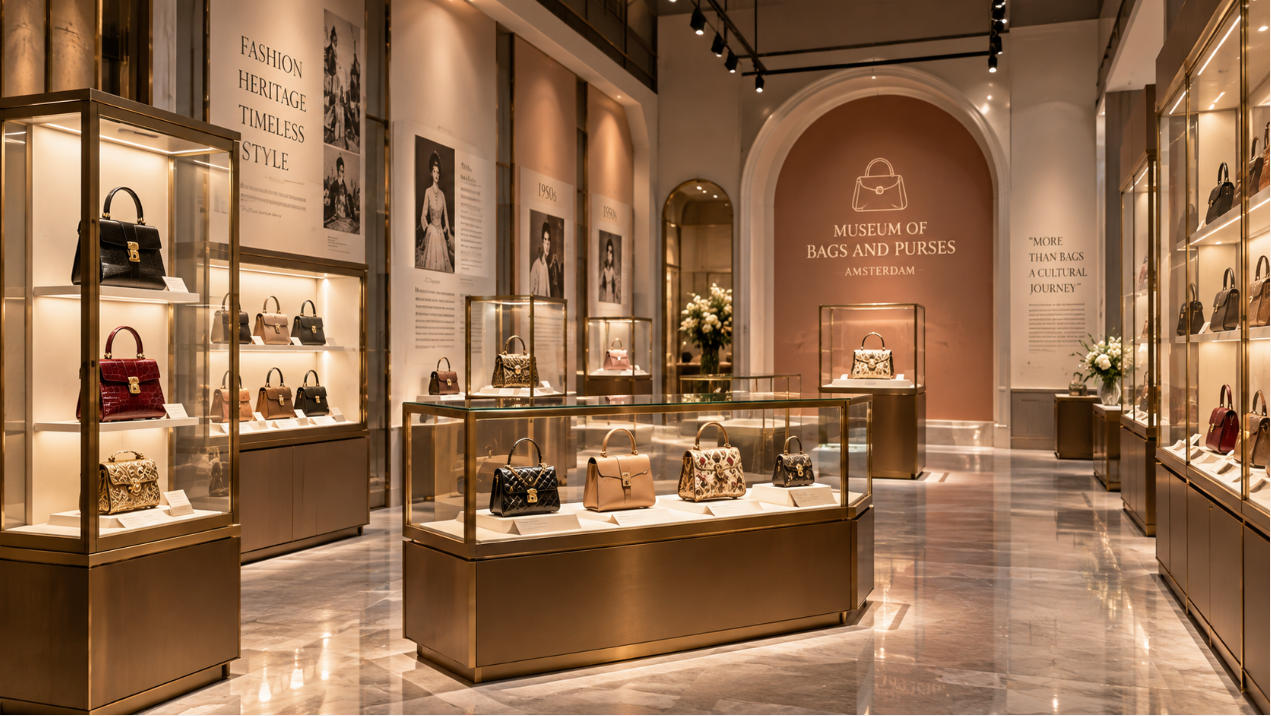
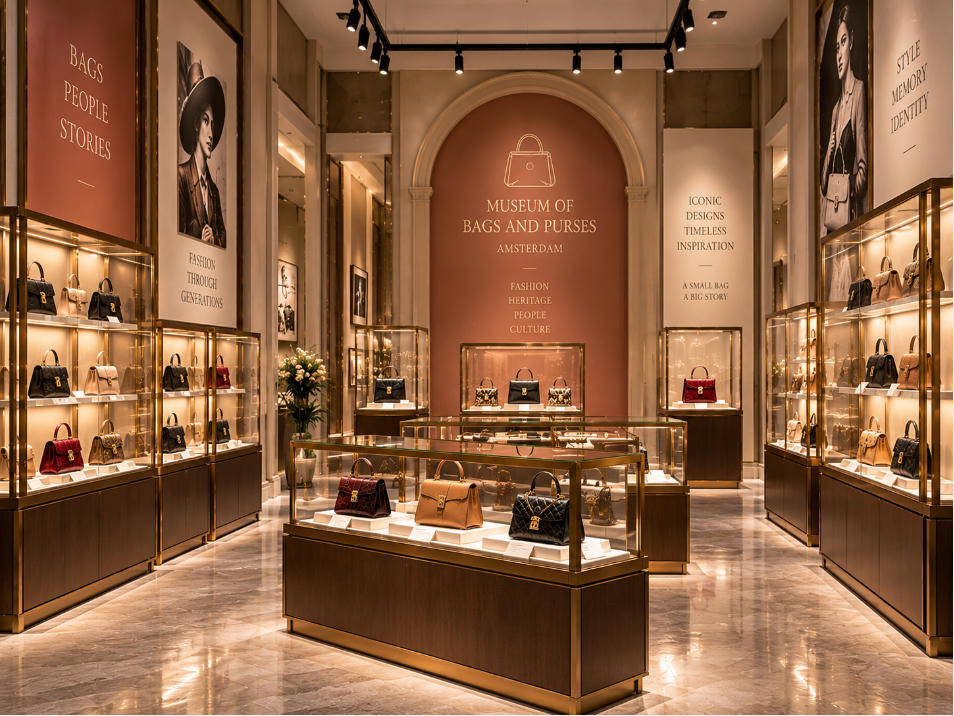
The Museum of Bags and Purses presents fashion accessories museum display cases within an intimate private museum environment shaped around handbags, fashion history and collectible accessories. Ultra-clear glass, refined metal details, warm wood finishes and focused lighting create a boutique-like presentation while preserving the curatorial character of the exhibition.
Project
Museum of Bags and Purses
Location
Amsterdam, Netherlands
Museum Type
Private Themed Museum
Collection
Bags · Purses · Fashion Accessories
Area
Approx. 1,500 m²
Character
Luxury · Fashion · Modern
A fashion-focused private museum where handbags are presented as cultural objects.
The Museum of Bags and Purses develops an approximately 1,500 m² exhibition experience around handbags, purses and fashion accessories. Instead of treating the collection as conventional retail merchandise, the museum places individual objects within historical, stylistic and design narratives.
The fashion accessories museum display cases support this approach through refined proportions, transparent glazing and carefully controlled lighting. Boutique-style presentation gives each bag visual presence, while the wider exhibition remains clearly organized around museum storytelling.
A well-developed custom showcase system therefore needs to balance the polished appearance associated with luxury fashion against the protection, accessibility and visual consistency expected in a museum environment.
Design Direction
Treat every handbag as a designed object — using transparency, controlled scale and focused light to reveal craftsmanship, silhouette and fashion history without turning the museum into a retail store.
02 / Space
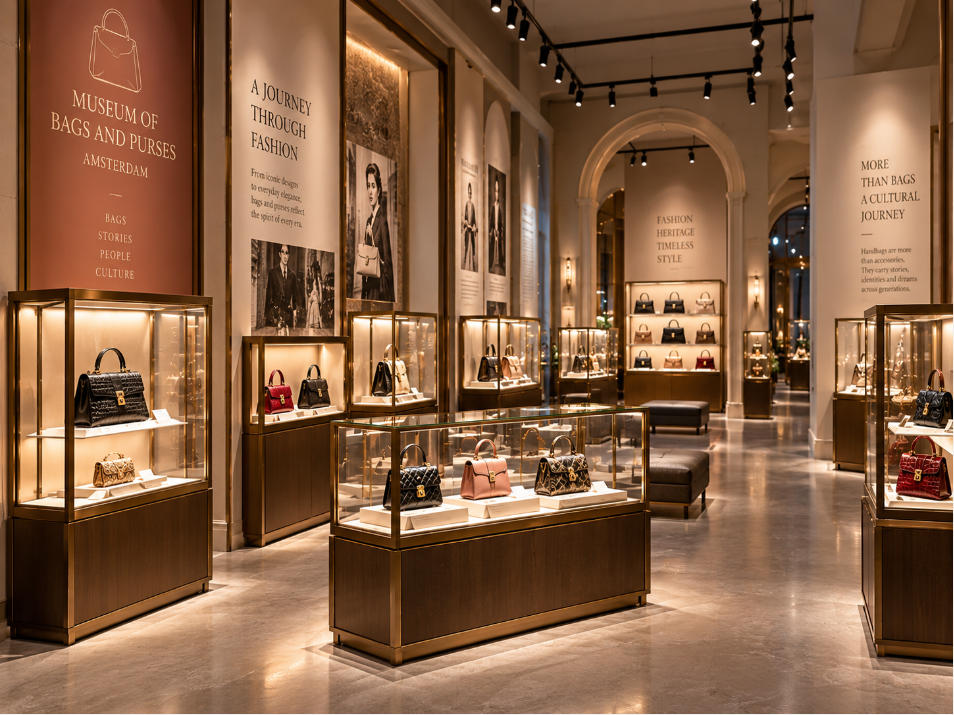
A sequence of handbag galleries creates an intimate fashion journey.
The exhibition develops through themed corridors and smaller gallery zones rather than one uninterrupted hall. This allows different periods, styles and fashion narratives to receive their own spatial identity.
Boutique-inspired showcase positions create clear visual focal points along the circulation route, while wall displays and smaller cabinets introduce denser collection moments between feature pieces.
The layout encourages visitors to move gradually through the history of bags and accessories, shifting between broad collection views and closer examination of individual craftsmanship.
A coordinated display case design process helps establish the correct case heights, shelf positions, lighting angles and viewing distances for objects whose proportions differ considerably from small decorative accessories to larger structured handbags.
03 / Display
Boutique-style showcases give individual bags stronger visual identity.
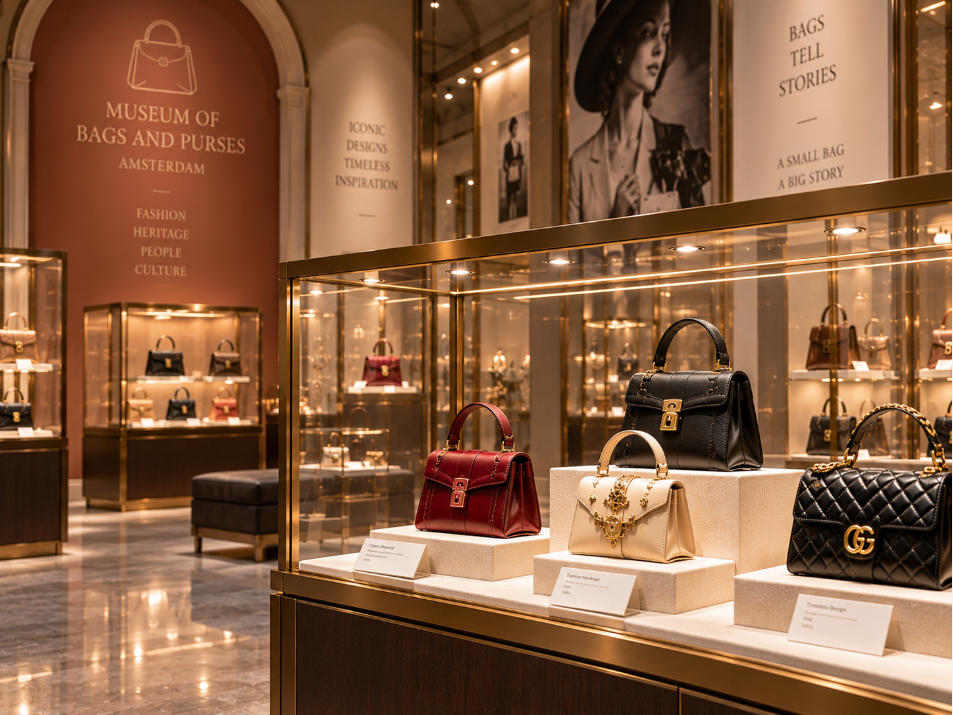
Handbags are three-dimensional fashion objects whose silhouette, surface texture, hardware and craftsmanship need to remain visible from more than one angle.
A project-specific custom museum showcase allows shelf spacing, glazing dimensions, base finishes and internal support positions to be adjusted around the scale and shape of different bags.
Ultra-clear glass reduces visual interference, while restrained metal structures keep the enclosure visually light. Warm wood finishes introduce a more tactile background and prevent the galleries from becoming overly technical.
Selected pieces receive greater space and stronger lighting, while larger historical groups are organized within wall-based showcases to communicate changes in style across time.
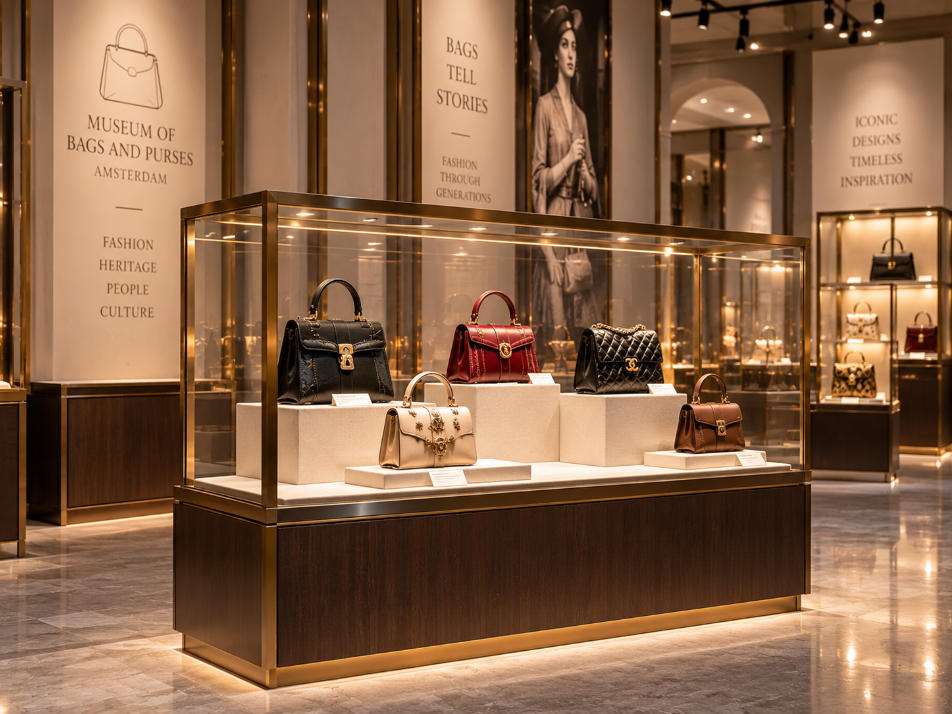
Ultra-clear glass, metal and wood create a contemporary luxury display language.
The material palette is deliberately refined rather than decorative, giving the cases enough character for a fashion collection without competing with the bags themselves.
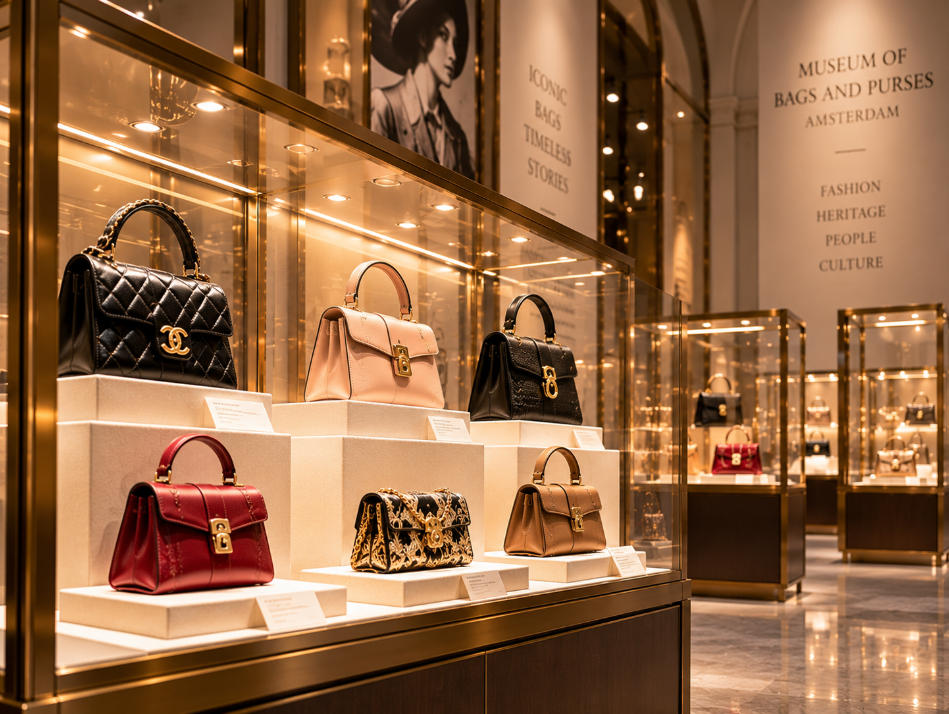
Handbags · Fashion History · Boutique Museum Display
04 / Collection Presentation
Different display formats reveal both individual craftsmanship and fashion history.
Feature Handbags
Important pieces receive individual presentation with greater visual space so silhouette, hardware and material craftsmanship can be appreciated clearly.
Historical Groups
Chronological collections are organized into controlled groups that allow visitors to compare changes in form, material and fashion over time.
Boutique Windows
Window-like showcases create stronger visual moments within the visitor route while maintaining the interpretive character of a museum presentation.
Focused Lighting
Directional lighting emphasizes leather texture, decorative hardware and sculptural form without overwhelming the wider gallery atmosphere.
Focused and warm white lighting gives fashion objects depth and hierarchy.
Handbags combine leather, textile, metal hardware, embroidery and decorative surfaces that respond differently to light. A single flat lighting condition would reduce much of this material distinction.
Focused illumination creates stronger visual emphasis around selected pieces, while softer warm white lighting maintains continuity across larger groups and wall displays.
This combination supports the museum’s light luxury character without creating the high-intensity commercial lighting associated with a conventional fashion boutique.
Clean glass lines and refined finishes depend on consistent production.
Fashion-oriented exhibition cases appear visually simple, but this simplicity places greater emphasis on alignment, material transitions and finish quality. Glass joints, metal profiles and wood panels all remain highly visible at close viewing distances.
Experienced museum showcase manufacturers can coordinate different case formats while preserving common glazing quality, structural details and finish standards throughout the exhibition.
Controlled showcase manufacturing helps ensure that freestanding cases, wall displays and boutique-style vitrines share a consistent material language even when their dimensions and functions vary.
Related private museums explore boutique-scale collection presentation in different cultural contexts.
Museo del Perfume Barcelona uses perfume museum display cases to present small luxury objects through brass, glass, warm wood and boutique-style lighting, offering a close parallel to the fashion-oriented presentation of collectible handbags.
Museum Van Loon Amsterdam develops historic house museum display cases within an intimate residential setting, showing another approach to integrating collection furniture with smaller-scale cultural interiors.
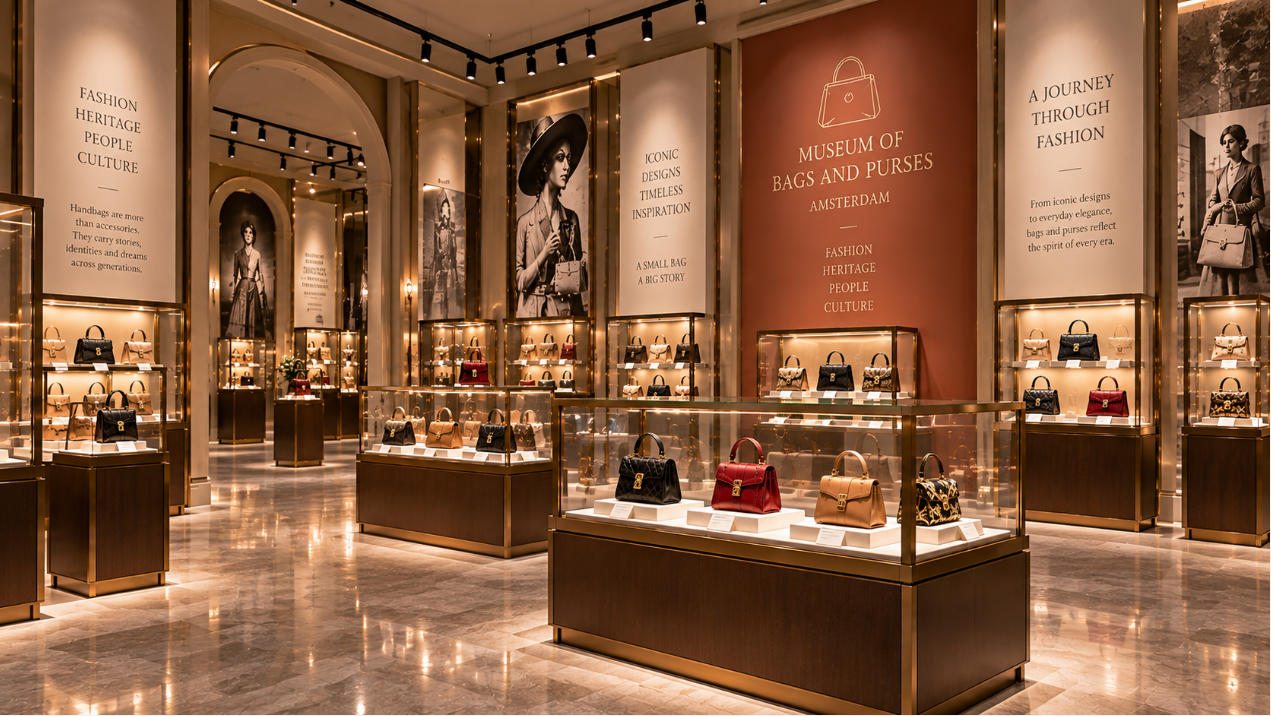
Fashion accessories museum display cases designed between museum interpretation and luxury presentation.
The Museum of Bags and Purses demonstrates how fashion accessories museum display cases can borrow the visual refinement of luxury retail without losing the historical and curatorial character of a museum exhibition.
Ultra-clear glass preserves visibility, precise metal structures introduce contemporary detail and warm wood finishes provide a softer background for leather, textile and decorative accessories.
Together with focused lighting and boutique-scale circulation, the display system transforms handbags from familiar fashion products into objects of design, craftsmanship and cultural history.

