
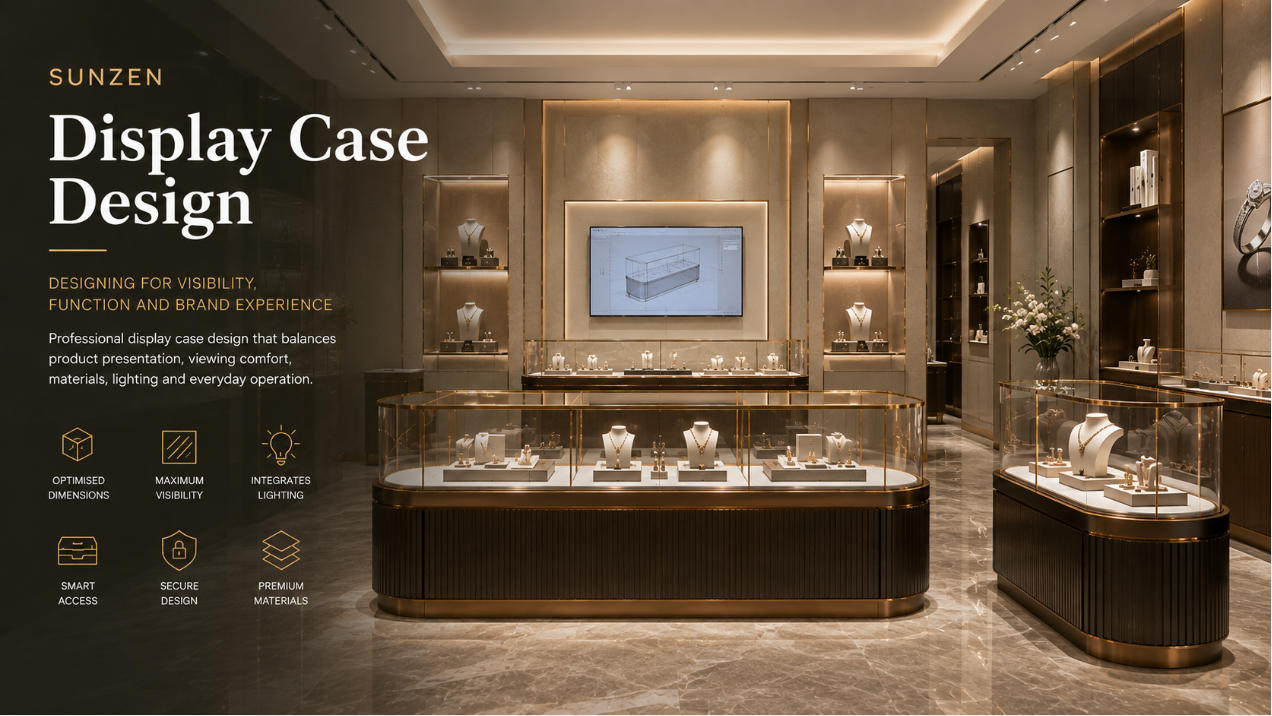
Display Case Design for Retail & Exhibition Environments
Professional display case design balances product visibility, viewing comfort, glass, lighting, materials, access and everyday operation within one coordinated display system.
A display case is more than an enclosure around merchandise or an exhibit. Its height influences how people view the contents, glass configuration affects visibility, lighting changes product perception, and doors, drawers and storage determine how effectively staff can operate the display.
SUNZEN develops display cases for jewelry, watches, perfume, museums and premium retail environments. For projects requiring a completely project-specific solution, explore our custom showcase design capability.
What Makes a Well-Designed Display Case?
Make the Display Easy to See
Display height, glass area, frame dimensions and product positioning should provide clear viewing without unnecessary visual obstruction.
Give Products the Right Visual Hierarchy
Interior volume, product spacing, lighting and background materials influence how individual items and collections are perceived.
Design for Everyday Use
Doors, drawers, locks, storage and staff access need to support replenishment, presentation and daily operation without compromising appearance.
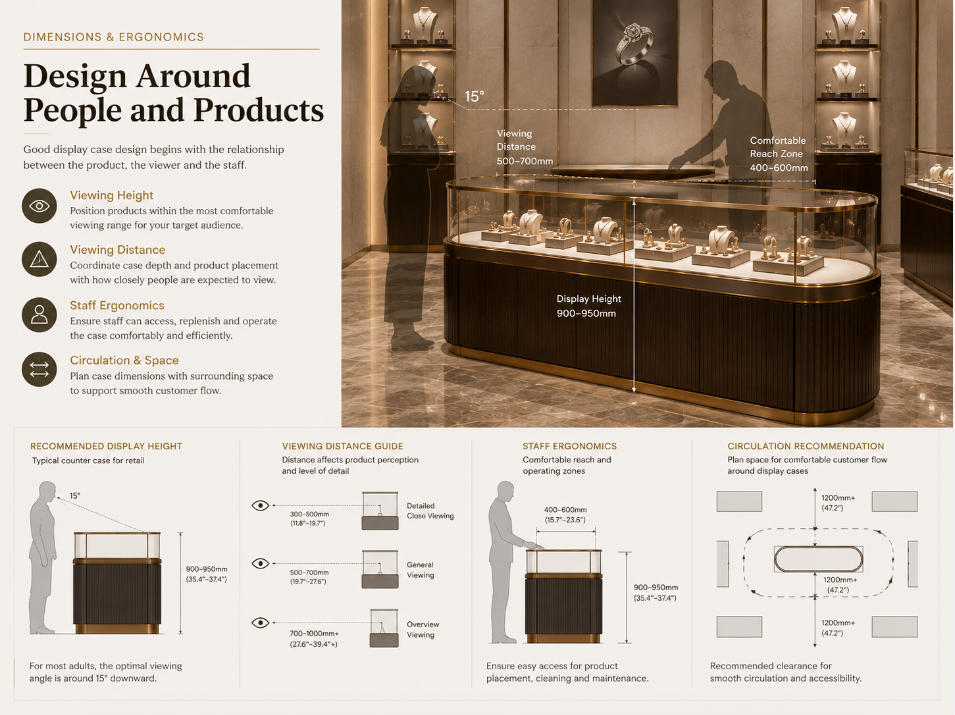
Design Display Case Dimensions Around the Viewer and Product
Good display cabinet design begins with the relationship between the displayed object, the viewer and the person operating the case. Overall dimensions should therefore respond to the actual application rather than a single universal standard.
Display Height: Position merchandise at a comfortable viewing level for the intended customer or visitor.
Viewing Distance: Coordinate case depth and product position with how closely people are expected to approach the display.
Glass Volume: Provide enough visual space around products without creating unnecessary enclosure.
Staff Reach: Ensure merchandise can be accessed, replenished and presented comfortably.
Circulation: Coordinate overall case dimensions with customer paths and surrounding fixtures.
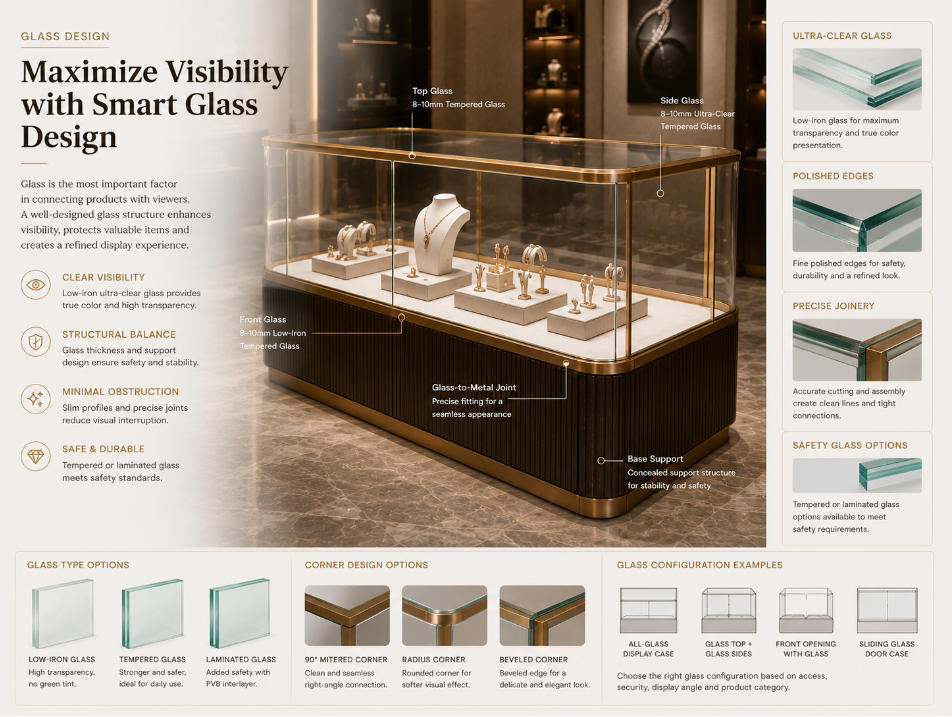
Use Glass to Maximize Visibility Without Losing Structure
Glass display case design requires a balance between transparency, structural support, access and the intended visual character of the display.
Large transparent areas can reduce visual barriers between the viewer and the product, while frames, joints and hardware need to remain coordinated with the overall proportions of the case.
Glass configuration also changes according to application. A horizontal jewelry counter, vertical watch vitrine, perfume cabinet and museum display case do not require identical glazing relationships because the viewing behavior and functional requirements are different.
Integrate Lighting into the Display Case from the Beginning
Display lighting should be considered as part of the case geometry rather than an accessory added after the cabinet has been designed. Light position, direction, intensity and color characteristics all influence how merchandise and interior materials are perceived.
Product Illumination
Position light around the viewing relationship so merchandise receives useful illumination without excessive glare or unwanted shadow.
Integrated Channels
Lighting channels should be coordinated with frames, shelves and other construction elements so they remain visually controlled.
Electrical Integration
Wiring, drivers, access and maintenance requirements need to be considered before the design moves into production.
These technical relationships are developed further during showcase engineering.
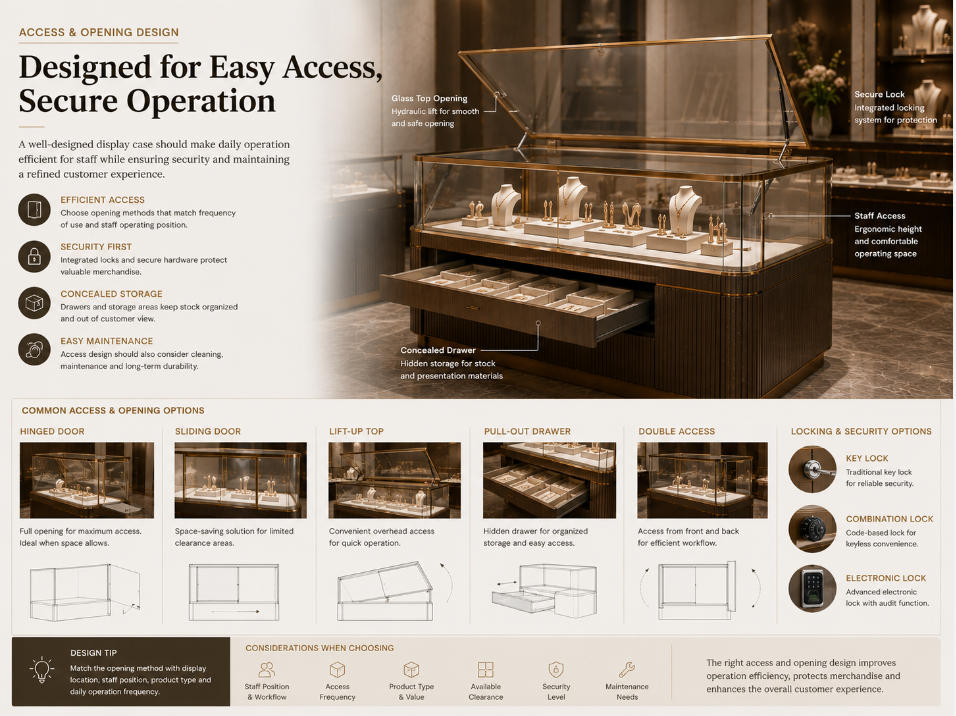
Choose the Opening System Around Daily Operation
Opening methods influence both the appearance and usability of a display case. The correct solution depends on case dimensions, merchandise, available clearance, staff position and frequency of access.
Hinged Doors: Suitable where sufficient opening clearance is available and direct access is required.
Sliding Doors: Useful where rear clearance is limited or a more compact operating zone is preferred.
Drawers: Can support merchandise presentation, stock organization and concealed storage.
Locks: Security hardware should be integrated without unnecessarily disrupting the customer-facing design.
Service Access: Staff should be able to replenish, clean and operate the case efficiently.
Coordinate Every Visible Material as One Display System
Transparent Display Surfaces
Glazing should support clear product viewing while coordinating with the structural and functional requirements of the case.
Structure and Visual Character
Metal frames, wood structures and decorative finishes establish much of the visible form and should relate to the surrounding interior.
Background for the Product
Fabric, microfiber, leather-effect surfaces, stone and other interior materials can influence contrast, texture and perceived product quality.
SUNZEN’s current custom showcase manufacturing process also coordinates glass, metal, cabinetry, stone, interior materials and lighting as one system before production.
Different Display Formats Require Different Design Priorities
Counter Display Cases
Horizontal cases prioritize close product viewing, comfortable customer interaction and convenient staff-side access.
Island Display Cases
Freestanding displays need to work from multiple viewing directions while maintaining circulation around the complete fixture.
Wall Display Cases
Wall systems combine vertical merchandising with efficient use of perimeter space and can integrate storage, lighting and architectural details.
Upright Display Cases
Vertical vitrines create stronger product visibility and can provide focused presentation for selected merchandise.
Pedestal Display Cases
Focused cases can isolate a statement product or object and create greater visual importance through controlled presentation.
Built-In Display Cases
Architecturally integrated cases require coordination with wall dimensions, niches, surrounding finishes and site conditions.
These formats are also part of SUNZEN’s current custom showcase manufacturing framework. :contentReference[oaicite:2]{index=2}
A Display Case Should Be Designed Around What It Displays
Jewelry Display Cases
Close viewing, controlled illumination, secure staff access and refined interior presentation are central to jewelry display design.
Explore our jewelry display cases.
Watch Display Cases
Timepiece presentation requires coordinated product supports, lighting, premium materials and display proportions suited to close inspection.
Explore our watch display cases.
Museum Display Cases
Cultural displays require a different balance between object visibility, enclosure, visitor viewing, access and exhibition-specific requirements.
Explore our museum display cases.
SUNZEN’s current product architecture also separates display cases by application because jewelry, watches, museums, perfume, cosmetics and optical retail require different display solutions. :contentReference[oaicite:3]{index=3}
Display Case Design vs. Custom Showcase Design
Understand How the Display Should Work
Display case design focuses on the functional and visual principles that determine dimensions, viewing relationships, glass, lighting, access, materials and product presentation.
Apply Those Principles to a Specific Project
Custom showcase design develops a project-specific display solution around the actual merchandise, floor plan, brand direction, dimensions and operational requirements.
Explore custom showcase design when your project requires a completely bespoke solution.
Move the Display Case from Design into Production
Display Requirements
Define merchandise, viewing conditions, dimensions, location and functional requirements.
Case Design
Develop form, proportion, display volume, glass relationships and visual direction.
3D Visualization
Review proportions, materials, product presentation and the relationship with the surrounding environment.
Engineering
Resolve dimensions, structures, glass, openings, hardware, lighting and construction relationships.
Manufacturing
Translate approved design and technical information into fabricated and assembled display components.
Inspection & Delivery
Review the finished display case before protective packing and preparation for the project site.
SUNZEN’s existing custom showcase workflow already connects concept development, 3D visualization, CAD engineering, material approval, manufacturing, quality control and delivery. :contentReference[oaicite:4]{index=4}
A Good Display Case Design Must Be Buildable
Visual design only becomes useful when its dimensions, materials and functional relationships can be translated accurately into a physical display case.
Design Intent
Define the intended appearance, product presentation, proportions and customer-facing experience.
Technical Resolution
Resolve construction, glass, hardware, lighting and assembly before individual components enter production.
Production Control
Coordinate fabrication, finishes, assembly and inspection against the approved design and technical information.
Continue to showcase engineering for technical development, then showcase manufacturing for factory production. For the complete manufacturer-level workflow, visit our custom showcase manufacturer guide.
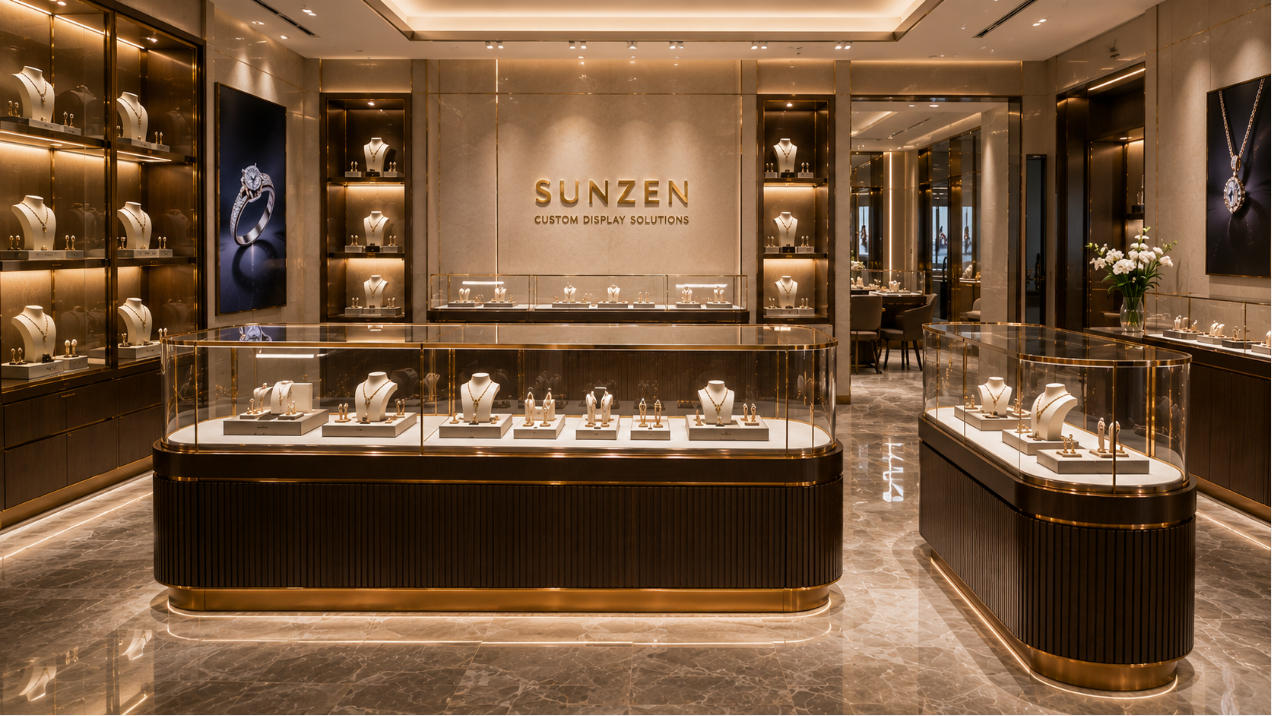
See Display Case Design in Real Projects
The finished display should maintain the viewing relationship, proportions, materials, lighting and operational functions established during the design and engineering process.
Explore SUNZEN’s custom display case projects to see finished applications across luxury retail, jewelry, watches, perfume, museums and branded commercial environments. SUNZEN’s current portfolio includes projects ranging from individual feature showcases to complete retail fit-outs. :contentReference[oaicite:5]{index=5}
For projects requiring multiple fixture formats within one environment, browse our complete range of custom display fixtures.
Display Case Design FAQs
What should be considered when designing a display case?
A display case should be designed around the displayed product or object, viewing height, viewing distance, glass configuration, lighting, materials, access, storage, security, staff operation and the surrounding environment.
How do you determine the right height for a display case?
Display height should respond to the type and size of the merchandise, expected viewing distance, customer or visitor position and how staff need to access the contents. Different display applications may therefore require different heights.
What type of glass is used in display case design?
Glass selection depends on the display application, visibility, safety and technical requirements. The glazing configuration should also be coordinated with frames, joints, doors and the overall structural design of the case.
How should lighting be integrated into a display case?
Lighting should be planned together with the case geometry so light position, direction and intensity support the merchandise while channels, wiring, drivers and maintenance access are coordinated with the construction.
Which opening system is best for a display case?
The best opening system depends on the case dimensions, merchandise, available clearance, staff position and frequency of access. Hinged doors, sliding doors and drawers each suit different operating conditions.
What is the difference between display case design and custom showcase design?
Display case design focuses on the visual and functional principles behind the display, including dimensions, viewing, glass, lighting and access. Custom showcase design applies those principles to a specific project, merchandise range, floor plan and brand direction.
Do jewelry and museum display cases require the same design?
No. Jewelry retail and museum exhibition environments involve different viewing behavior, access, product or object requirements and operational priorities, so the final display case specification should respond to the intended application.
Can SUNZEN design and manufacture the same display case?
Yes. SUNZEN connects display design with 3D development, technical engineering, custom manufacturing, quality control and project delivery support, allowing an approved display concept to progress toward physical production.
Need a Display Case Designed for Your Project?
Share your products or artifacts, dimensions, floor plan, reference images and functional requirements with SUNZEN. We can develop the display case from concept and 3D visualization through engineering, manufacturing and project delivery.

