
Retail Showcase Design for Branded Store Environments
Effective retail showcase design coordinates product presentation, customer movement, fixture layout, lighting and brand identity across the complete retail environment rather than treating each display case as an isolated object.
SUNZEN develops showcase systems for jewelry, watch, perfume, beauty, optical and other premium retail stores. Wall displays, island showcases, counters, feature cases and service furniture can be planned as one coordinated fixture family so the store maintains visual consistency while supporting different merchandising functions.
For individual display case design principles such as dimensions, glass, access and lighting, explore our display case design solutions. For fully project-specific bespoke development, visit custom showcase design.
Design the Showcase System Around How the Store Sells
Support Product Hierarchy
Different fixtures should help distinguish hero products, primary collections, supporting merchandise and promotional displays throughout the store.
Guide How Customers Move
Fixture positions, heights and orientations influence circulation, sightlines and how naturally customers discover different product zones.
Create One Visual Language
Materials, finishes, lighting and detailing can remain consistent across different fixture types while each showcase performs a different retail function.
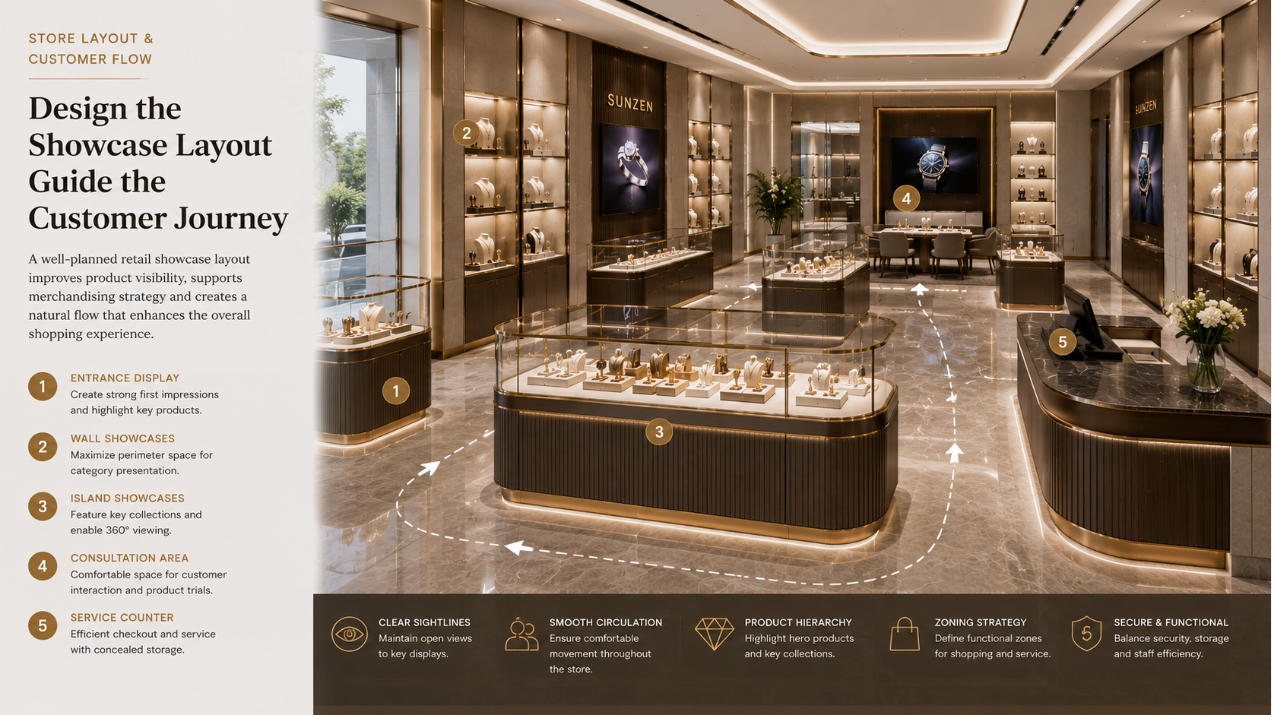
Place Retail Showcases Where They Support the Customer Journey
Good retail display case design begins with the store layout. Showcase positions should respond to entrances, circulation, product hierarchy, consultation areas and service requirements.
Entrance Displays: Establish strong first impressions and present key campaigns or signature products.
Central Islands: Create focal points while allowing circulation and viewing from multiple directions.
Wall Displays: Use perimeter space efficiently for category presentation, vertical merchandising and integrated storage.
Consultation Zones: Coordinate counters and presentation cases with customer seating and staff interaction.
Service Areas: Integrate checkout, storage and staff access without disrupting the customer-facing experience.
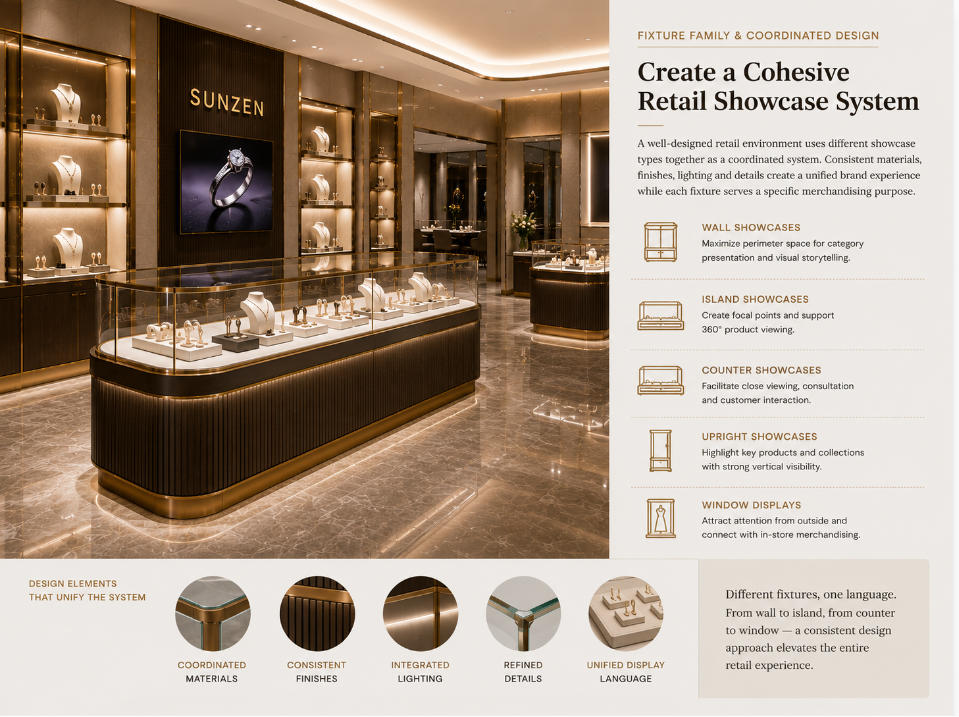
Create a Coordinated Family of Retail Showcases
A strong store showcase design system allows different fixture types to share one visual language while supporting different functions across the store.
Wall showcases, island displays, counter cases and feature vitrines can use the same metal finishes, wood tones, glass details, lighting language and base proportions, creating continuity from one retail zone to another.
Consistency does not mean every fixture should be identical. Dimensions, viewing height, storage, opening systems and product density should adapt to the merchandise and location while preserving the overall brand character.
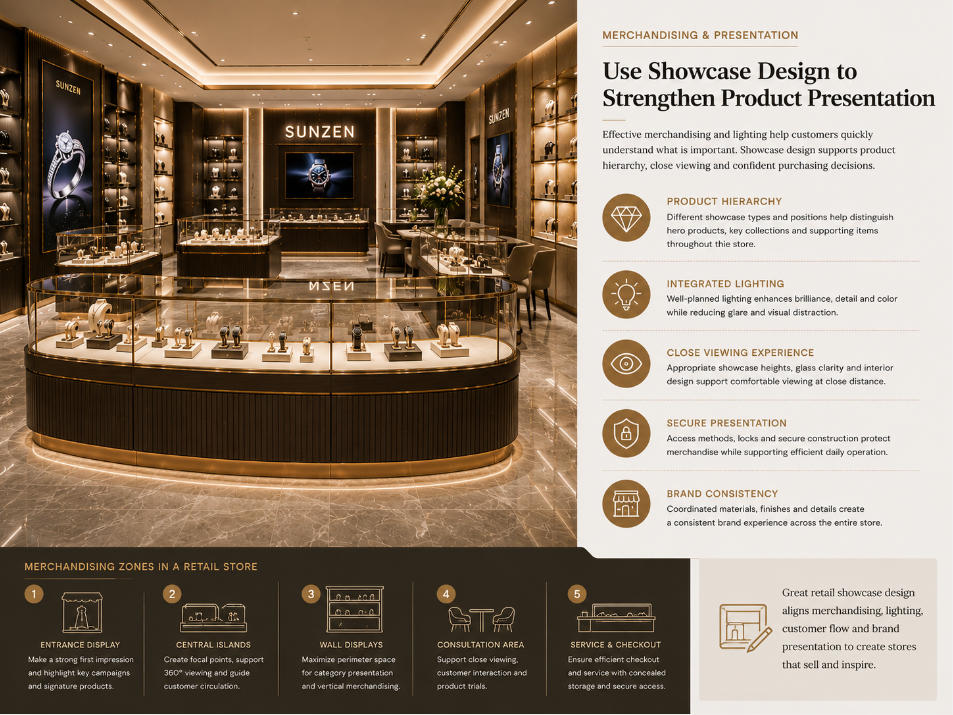
Use Different Fixture Types for Different Retail Functions
Wall Showcases
Integrated wall displays maximize perimeter space and can combine product presentation, lighting, brand graphics and concealed storage.
Island Showcases
Freestanding islands create central focal points, support multi-directional viewing and help guide customer circulation.
Counter Showcases
Counter cases support close product inspection, staff interaction, consultation and secure product presentation.
Feature Showcases
Special display cases can highlight hero products, launches, new collections and campaign merchandise.
Upright Showcases
Vertical showcases provide strong visibility and can create focused presentation for selected products or collections.
Window Displays
Storefront display fixtures should combine exterior visibility with a clear connection to the interior merchandising strategy.
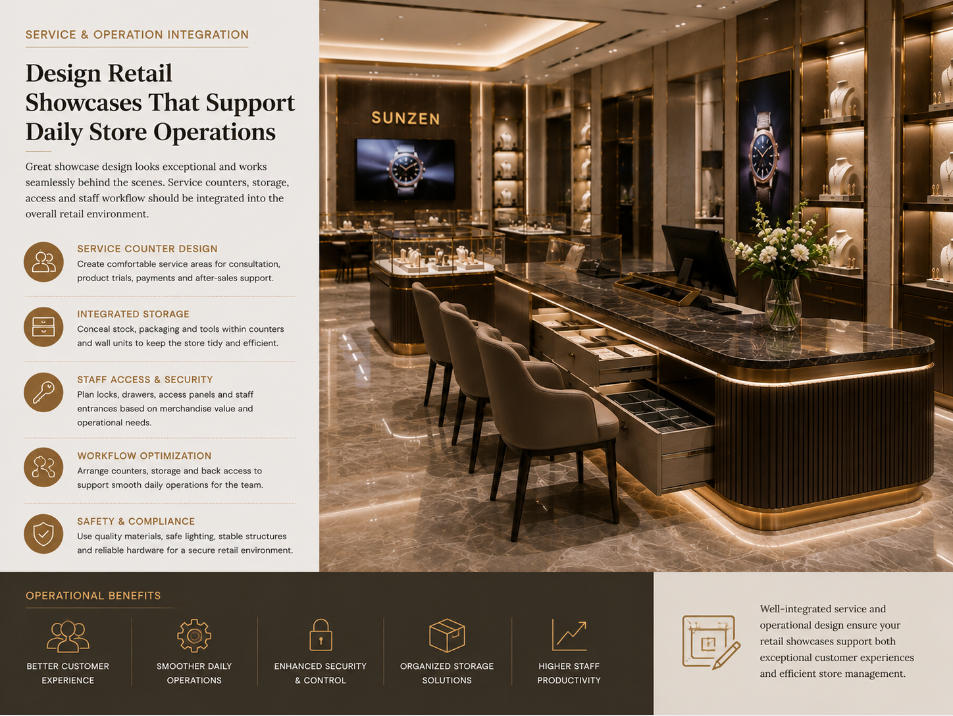
Use Showcase Design to Strengthen Product Presentation
A retail showcase should help customers understand what is important. Product spacing, fixture height, interior materials and lighting can create hierarchy between hero merchandise, primary collections and supporting products.
Integrated lighting should be planned around the product category and showcase geometry so it supports color, detail and visibility without creating excessive glare or visual distraction.
Once the fixture concept is approved, technical relationships involving structures, glass, hardware, electrical integration and lighting move into showcase engineering.
Retail Showcase Design Changes with the Product Category
Jewelry Retail Showcases
Jewelry requires close viewing, refined lighting, secure access, consultation zones and coordinated storage within a premium environment.
Explore our jewelry display cases.
Watch Retail Showcases
Watch presentation benefits from carefully controlled product supports, premium materials, integrated lighting and strong visibility at close viewing distance.
Explore our watch display cases.
Perfume & Beauty Displays
Higher product quantities, tester interaction, illuminated shelving and campaign graphics require a different merchandising balance from jewelry or watches.
Retail Showcase Design Should Support the Overall Store Concept
Plan the Complete Retail Environment
Store design determines circulation, zoning, customer journey, architecture and the overall relationship between different functional areas.
Explore our retail store design solutions.
Develop the Display System Within That Environment
Retail showcase design focuses on how wall systems, islands, counters and feature cases support merchandising, customer interaction and the visual identity of the store.
Customize the Showcase System Around the Brand and Merchandise
Dimensions & Proportions
Adapt fixture sizes, heights and depths to the floor plan, product categories and customer viewing relationships.
Materials & Finishes
Coordinate glass, metal, wood, stone, fabrics and decorative surfaces with the store’s wider interior design.
Lighting & Presentation
Develop integrated illumination and display surfaces around the product category and intended merchandising hierarchy.
Access & Security
Choose opening methods, drawers, locks and staff access based on merchandise value and everyday operating requirements.
Storage
Integrate concealed stock, presentation materials and operational storage without compromising the customer-facing design.
Brand Details
Use coordinated materials, forms and detailing to strengthen visual consistency across the complete retail fixture family.
For a completely project-specific bespoke solution, continue to our custom showcase design page.
How Retail Showcase Design Moves from Layout to Production
Retail Brief
Define product categories, brand direction, store plan, merchandising requirements and operating needs.
Showcase Layout
Position wall displays, islands, counters and feature cases around circulation and product hierarchy.
Fixture Family Design
Develop coordinated forms, proportions, materials, lighting and brand details across different showcase types.
3D Review
Evaluate fixture relationships, store appearance, product visibility and merchandising balance before technical development.
Engineering
Resolve dimensions, structures, glass, hardware, lighting, access and production-ready technical details.
Manufacturing & Delivery
Produce coordinated retail fixtures, complete quality inspection and prepare the project for delivery and installation.
Carry One Retail Design Language into Production
A coordinated retail fixture family is most effective when the approved proportions, materials, lighting and details remain consistent from design through manufacturing.
Define the Retail Display System
Establish the fixture family, product hierarchy, materials and relationship with the overall store environment.
Resolve Each Fixture Type
Translate wall units, islands, counters and feature cases into accurate production-ready technical solutions.
Maintain Consistency Across the Store
Coordinate fabrication, finishes, lighting and assembly so different fixture types maintain one visual language.
Continue to showcase manufacturing for production, or explore our custom showcase manufacturer resource for the complete design-to-delivery workflow.
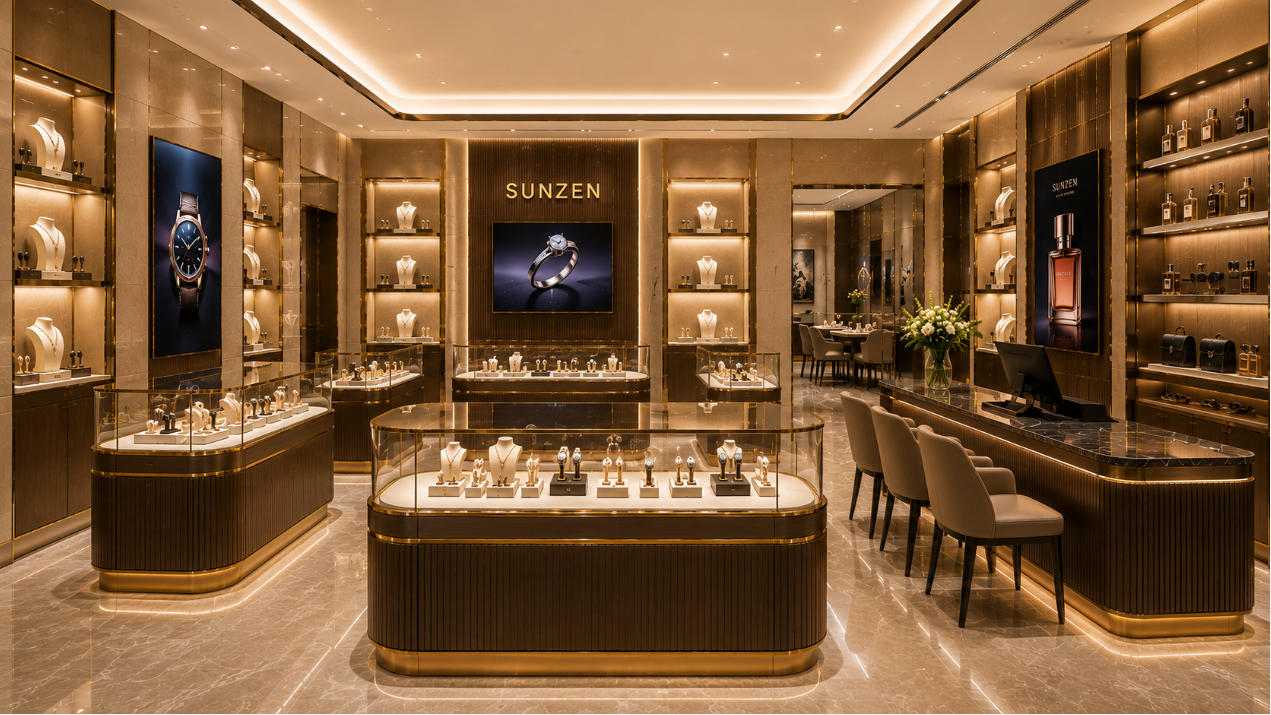
See How Coordinated Showcase Systems Work in Finished Stores
The strongest retail environments use different fixture types together as one system, maintaining consistent materials, lighting and detailing while adapting each display to its specific merchandising role.
Explore SUNZEN’s retail display projects for examples of jewelry, watch, perfume, luxury retail and other custom commercial environments.
For projects extending beyond production, our project delivery capability connects completed fixtures with packing, shipping and installation-stage coordination.
Retail Showcase Design FAQs
What is retail showcase design?
Retail showcase design is the coordinated development of display fixtures such as wall showcases, islands, counters and feature cases around merchandising, customer flow, brand identity and daily store operation.
How should retail showcases be positioned in a store?
Showcase positions should respond to entrances, customer circulation, product hierarchy, sightlines, consultation areas and service requirements so the fixture layout supports both merchandising and customer experience.
Should all retail showcases in one store look the same?
Not necessarily. Different fixture types can share materials, finishes, lighting language and design details while their dimensions, heights, storage and access systems are adapted to different product and functional requirements.
What types of showcases are used in retail stores?
Common retail showcase types include wall showcases, island showcases, counter display cases, upright vitrines, feature displays and storefront or window display fixtures.
How does merchandising affect retail showcase design?
Merchandising affects fixture position, product density, viewing height, interior presentation and lighting because different products and collections require different levels of visual emphasis and customer interaction.
What is the difference between retail showcase design and display case design?
Display case design focuses on individual case principles such as dimensions, glass, lighting and access. Retail showcase design focuses on how multiple fixture types work together across a complete store to support merchandising and brand presentation.
Can retail showcase designs be customized for different product categories?
Yes. Jewelry, watches, perfume, beauty, optical and other retail categories require different product densities, lighting, access, security and presentation methods, so fixture systems should be adapted to each application.
Can SUNZEN design and manufacture a complete retail showcase package?
Yes. SUNZEN connects retail showcase planning with custom showcase design, technical engineering, manufacturing, quality control and project delivery for coordinated retail fixture projects.
Planning a Retail Showcase System for Your Store?
Share your floor plan, product categories, brand direction and fixture requirements with SUNZEN. We can develop a coordinated showcase system from layout and design through engineering, manufacturing and project delivery.

