
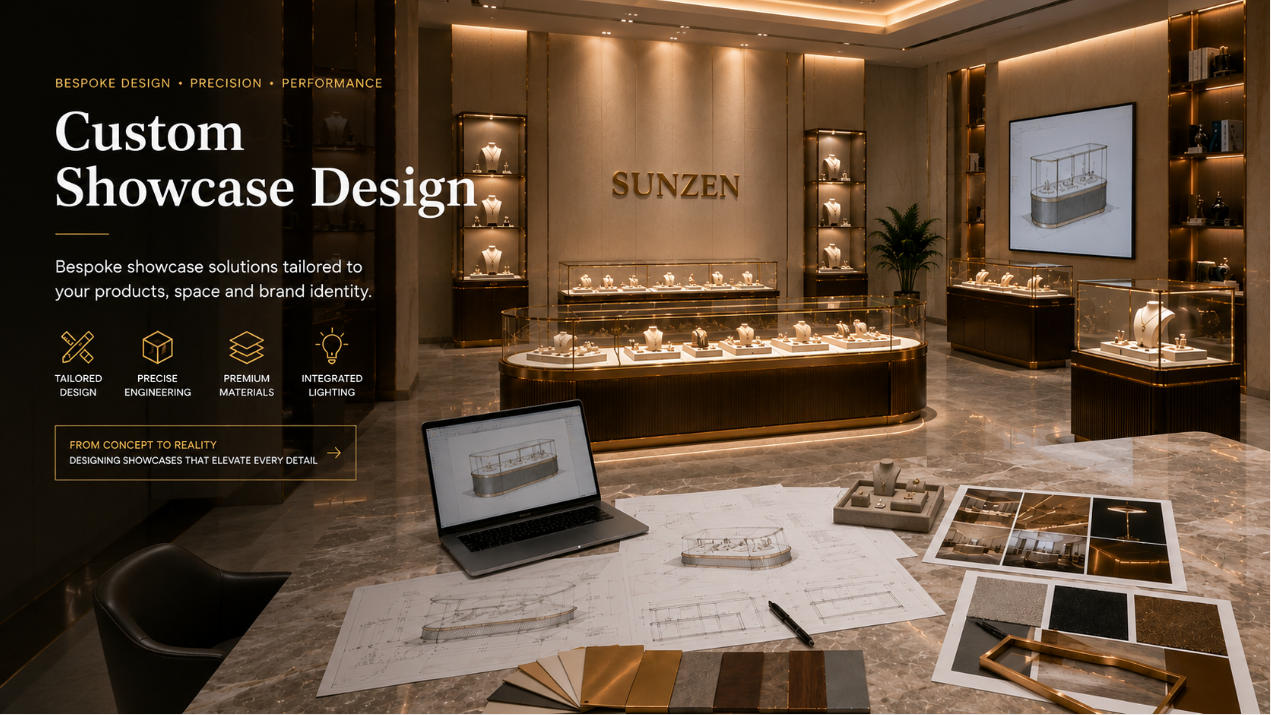
Custom Showcase Design for Retail & Exhibition Projects
Effective custom showcase design begins with what needs to be displayed, how people will view or interact with it and how the showcase needs to function within the surrounding retail or exhibition environment.
SUNZEN develops bespoke showcases for jewelry, watches, perfume, beauty products, museums and other premium display applications. Instead of adapting every project to predetermined cabinet sizes, the showcase can be developed around the actual product, space, merchandising requirements and intended visual identity.
Dimensions, proportions, glass, materials, lighting, access, storage and presentation details are considered together during design development. This project-specific approach forms part of our broader showcase design capability.
Why Design a Showcase Specifically for the Project?
Design Around What Is Displayed
Jewelry, watches, perfume, cultural objects and other products have different viewing distances, presentation heights, lighting requirements and access needs.
Fit the Actual Environment
Showcase dimensions and proportions should respond to circulation, surrounding architecture, sightlines and the relationship with adjacent fixtures.
Create a Distinctive Visual Language
Materials, finishes, forms and detailing can be coordinated with the wider retail or exhibition concept rather than selected from a fixed standard cabinet range.
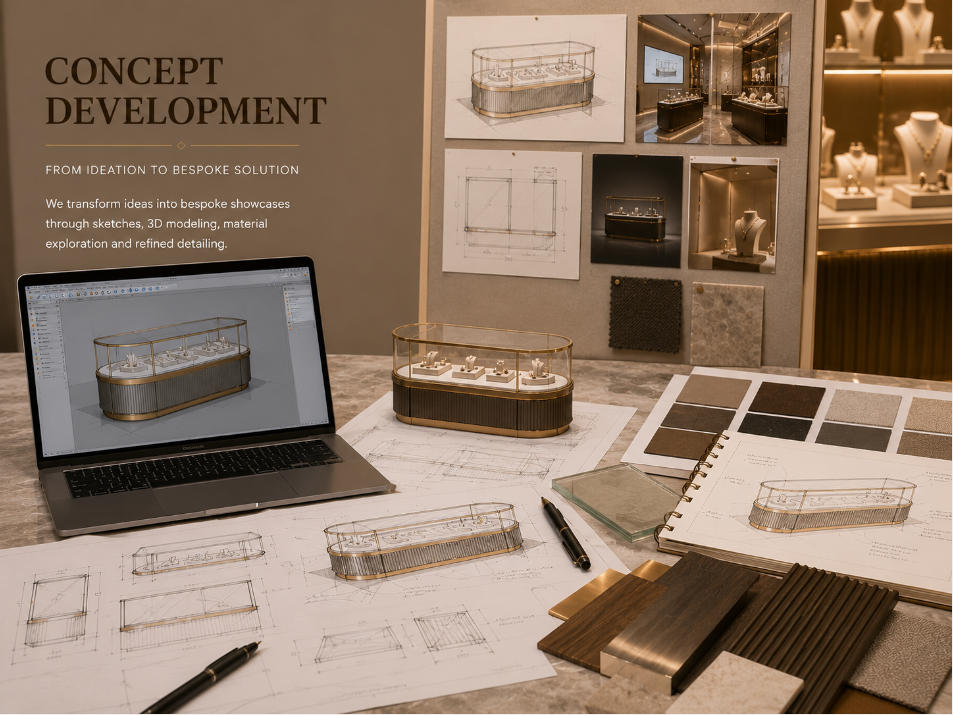
Start with the Display Requirement, Not a Predetermined Cabinet
A successful custom display case design starts by defining the relationship between the displayed product, the viewer, staff operation and the surrounding environment.
Display Object: Identify product dimensions, quantities, categories and presentation priorities.
Viewing Relationship: Determine viewing height, distance, sightlines and the amount of visual access required.
Location: Review the floor plan, architectural conditions, circulation and surrounding fixtures.
Operation: Define staff access, customer interaction, storage and everyday opening requirements.
Visual Direction: Establish proportions, forms, materials and finishes that support the intended retail or exhibition identity.
Develop the Showcase Around Viewing and Presentation
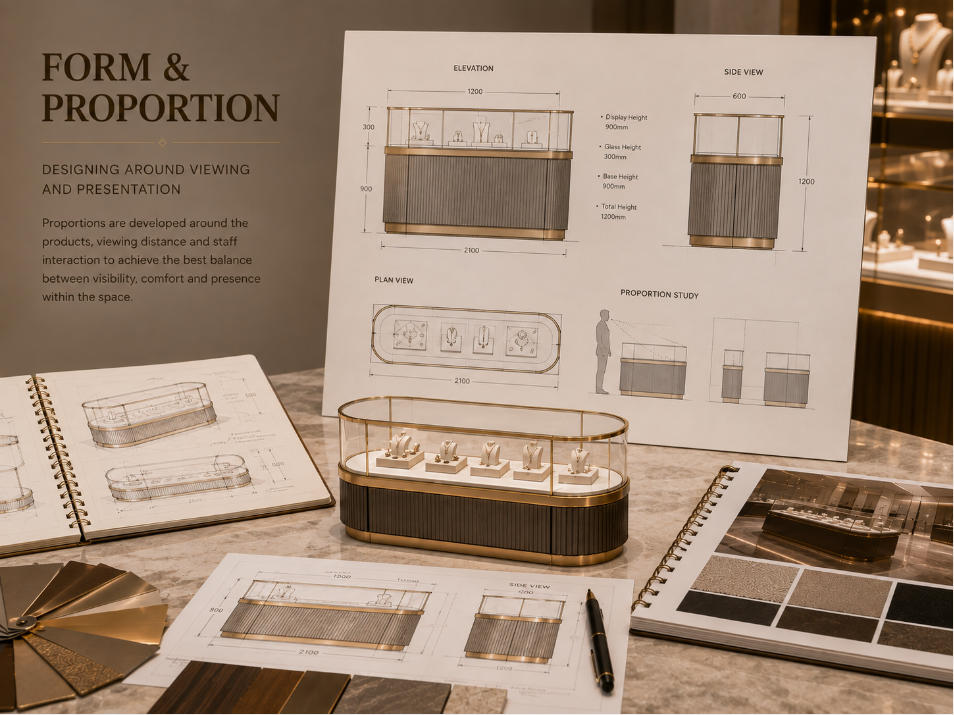
The visual success of a bespoke showcase design depends heavily on proportion. Overall height, glass volume, base height, frame thickness and display level influence both product visibility and how the showcase relates to the surrounding interior.
A jewelry counter may prioritize close viewing and comfortable staff interaction. A freestanding feature showcase may need stronger vertical presence, while a museum vitrine may require a very different relationship between the object, enclosure and visitor.
Rather than treating dimensions as isolated numbers, SUNZEN develops the display geometry around the actual application so the showcase supports both presentation and practical use.
What Can Be Customized in a Showcase Design?
Dimensions & Form
Length, depth, height, display level, glass volume, base proportions, curves and other geometric relationships can respond to the actual project.
Glass & Visibility
Glass configuration, joints, framing and transparent viewing areas can be developed according to the intended display experience.
Materials & Finishes
Metal, wood, stone, glass, decorative panels, lining materials and visible finishes can be coordinated into one project palette.
Display Lighting
Integrated lighting positions, channels and illumination direction can be planned around the products and showcase geometry.
Access & Opening
Doors, drawers, sliding systems and other opening methods can be selected around staff operation, display access and structural conditions.
Storage & Function
Concealed storage, drawers, service areas and operational details can be integrated without compromising the customer-facing design.
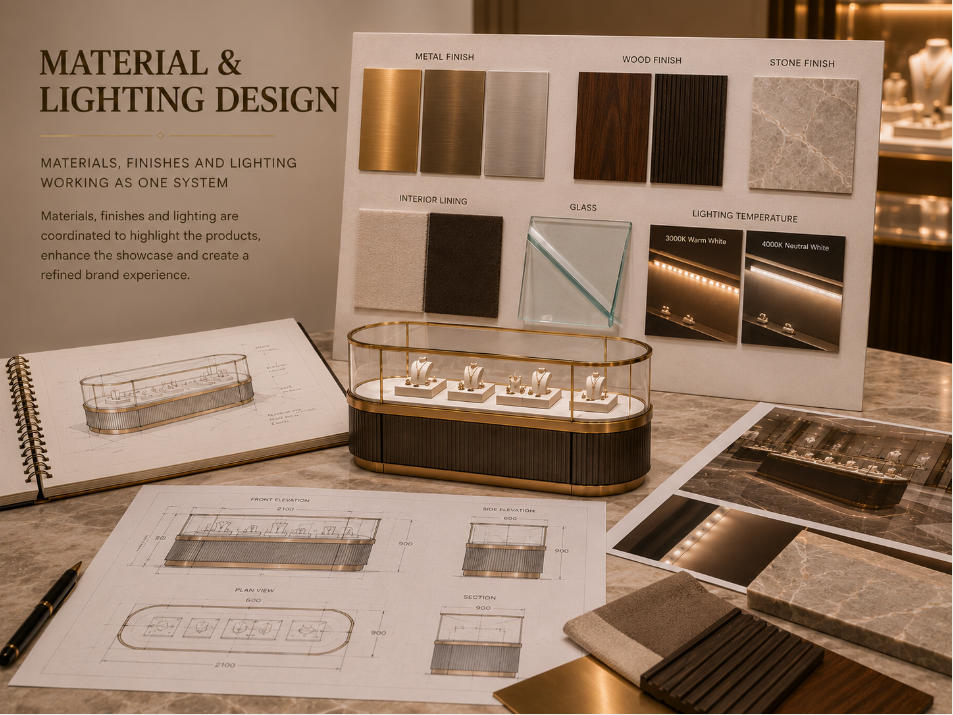
Design Materials, Glass and Lighting as One System
A showcase is experienced as one finished object, so visible materials should not be developed independently. Glass, metal, cabinetry, stone, lining and lighting need to work together visually and functionally.
Lighting is particularly important because its position changes how products, glass and materials are perceived. Channels, illumination direction and access for electrical components should therefore be considered during design rather than added after the form is finalized.
Once the visual concept is approved, these relationships move into showcase engineering, where dimensions, structures, glass, hardware and lighting are developed into production-ready technical information.
Review the Showcase Before Technical Engineering Begins
Project Brief
Define application, displayed products, dimensions, location, operational requirements and visual direction.
Concept Design
Establish the overall form, display proportions and relationship between transparent and solid elements.
3D Visualization
Review scale, materials, finishes, lighting and the showcase within the intended environment.
Design Refinement
Adjust proportions, access, presentation details and material relationships before approval.
Design Approval
Confirm the agreed visual direction and important functional requirements before detailed engineering.
Engineering Handoff
Move the approved design into technical development for construction, glass, hardware, lighting and manufacturing details.
Custom Showcase Design and Engineering Solve Different Problems
Define What the Showcase Should Be
Design establishes the display concept, proportions, visual language, material direction, presentation strategy and relationship with the surrounding environment.
Define How the Showcase Will Be Built
Engineering resolves structures, dimensions, glass relationships, openings, hardware, lighting integration, assembly and the technical information required for production.
Explore our showcase engineering process for the next stage of development.
One Design Process, Different Showcase Requirements
Jewelry & Watch Showcases
Close viewing, controlled product lighting, staff access, storage and refined detailing are central to premium jewelry and watch presentation.
Explore our jewelry display cases for different retail configurations.
Perfume & Beauty Displays
Illuminated shelving, bottle visibility, tester access, campaign presentation and brand graphics influence the form and display density.
Museum & Exhibition Showcases
Cultural display cases require a different balance of object visibility, enclosure, access, security and exhibition-specific technical requirements.
Design One Showcase or a Coordinated Display Family
Develop Around One Display Function
A single feature case, counter, pedestal or wall display can be developed around a specific product, location and presentation requirement.
Build Consistency Across Multiple Display Types
Wall showcases, islands, counters, upright cases and feature displays can share materials, proportions and visual details while performing different functions throughout the project.
Browse SUNZEN’s broader custom display fixtures for different showcase and retail applications.
Connect the Approved Showcase Concept to Manufacturing
Custom design becomes valuable when the intended appearance and function can be translated accurately into a physical showcase.
Define the Solution
Develop form, proportion, presentation, materials and important functional relationships around the project requirement.
Resolve the Construction
Translate the approved concept into dimensions, structures, glass, hardware, lighting and production-ready drawings.
Build the Approved Design
Coordinate materials, fabrication, finishing, lighting, assembly and inspection through the physical production process.
Continue to showcase manufacturing to understand how approved designs move into factory production, or review our custom showcase manufacturer resource for the complete design-to-delivery workflow.
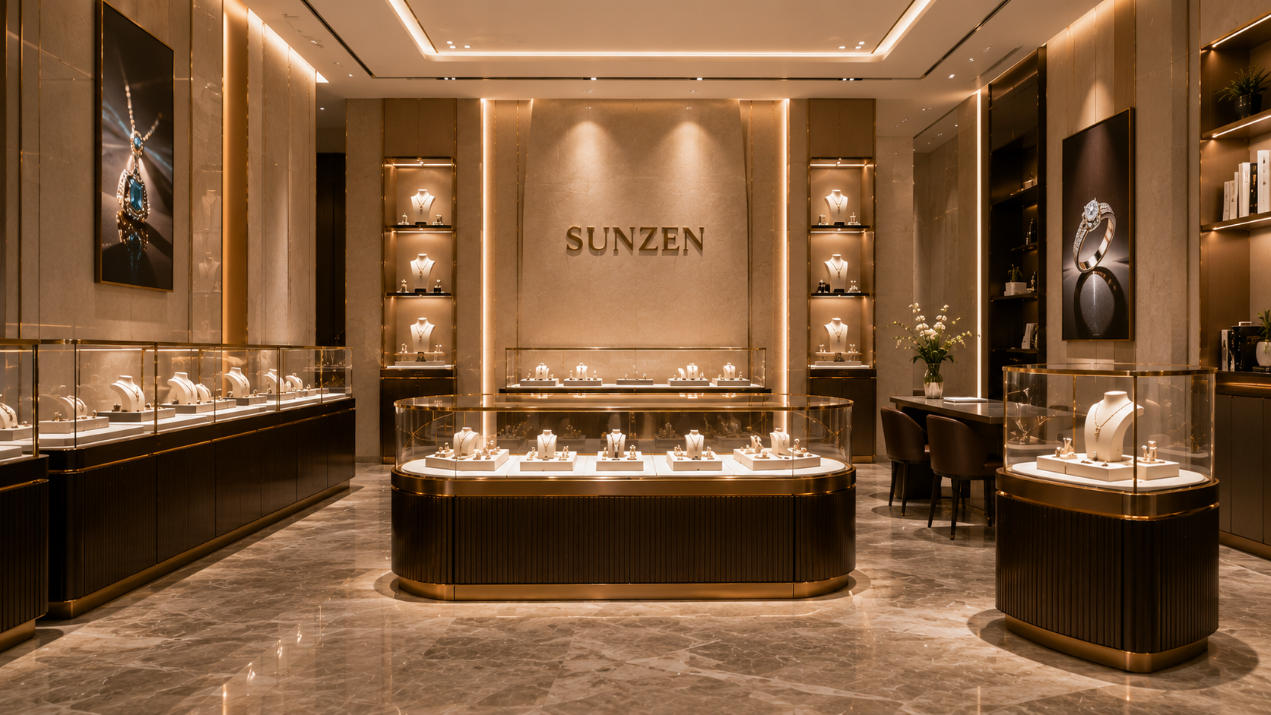
See How Custom Showcase Concepts Become Finished Projects
The strongest result comes from maintaining continuity between the original display requirement, approved design, technical engineering and finished physical showcase.
SUNZEN’s custom showcase projects demonstrate applications across luxury retail, jewelry, perfume, museum and branded commercial environments. Project scope can range from one bespoke display case to coordinated showcase families and complete store fixture packages.
For projects continuing beyond factory production, our project delivery capability connects completed fixtures with packing, shipping and installation-stage coordination.
Custom Showcase Design FAQs
What is custom showcase design?
Custom showcase design is the project-specific development of a display case around the products or objects being displayed, the surrounding environment, viewing requirements, operational needs and intended visual identity rather than using a predetermined standard cabinet.
What information is needed to design a custom showcase?
Useful information includes the displayed product or object, required dimensions, floor plan or installation location, display quantities, viewing requirements, staff or visitor access, storage needs, material preferences, lighting requirements and reference images.
What parts of a showcase can be customized?
Dimensions, proportions, glass configuration, metal and wood finishes, stone, interior materials, lighting, doors, drawers, opening systems, storage and other display details can be developed around the project requirements.
Why is 3D visualization useful in custom showcase design?
3D visualization helps review showcase proportions, materials, finishes, lighting and the relationship with the surrounding environment before the design moves into detailed technical engineering and manufacturing.
What is the difference between showcase design and showcase engineering?
Showcase design establishes the display concept, proportions, visual language, material direction and presentation strategy. Showcase engineering translates the approved concept into dimensions, structures, glass, hardware, lighting and production-ready technical information.
Can multiple showcase types share one design language?
Yes. Wall showcases, islands, counters, upright cases, pedestals and other display types can use coordinated proportions, materials, finishes and detailing while being adapted to different merchandising and functional requirements.
Can custom showcases be designed for different industries?
Yes. The same project-specific design process can be adapted for jewelry, watches, perfume, beauty, museums and other retail or exhibition applications, although the final display requirements differ by product and environment.
Can SUNZEN take an approved showcase design into manufacturing?
Yes. SUNZEN connects custom showcase design with technical engineering, material coordination, manufacturing, quality control and project delivery support so the approved concept can progress toward a finished physical display.
Need a Custom Showcase Designed for Your Project?
Share your product or artifact information, dimensions, floor plan, reference images and functional requirements with SUNZEN. We can develop a bespoke showcase concept and connect the approved design with engineering, manufacturing and project delivery.

