

Professional Display Case Installation for Custom Projects
Professional display case installation ensures that custom glass display cabinets are correctly positioned, assembled, leveled, connected and tested after arriving at the project site.
A finished display case can include precision glass panels, metal framing, cabinetry, doors, drawers, locks, shelves, lighting and electrical components. Although these systems are tested during manufacturing, transportation and site conditions may require final installation and adjustment before the fixture is ready for use.
SUNZEN connects display case installation with display case engineering, showcase manufacturing and project delivery, creating continuity from production to final on-site completion.
What Does Display Case Installation Include?
Accurate Case Positioning
Locate each display cabinet according to approved layouts, circulation requirements and architectural reference points.
Component Assembly
Reconnect cabinet modules, glass panels, metal sections, shelves and other transport-separated components.
Level & Align the Case
Adjust the base and component relationships to create stable positioning, straight lines and consistent visible gaps.
Lighting & Power Connection
Connect integrated lighting systems and test electrical operation when suitable project provisions are available.
Door, Drawer & Lock Adjustment
Fine-tune moving components after final leveling so access systems operate correctly.
Installation Inspection
Review glass alignment, lighting, hardware, finish condition and functional performance before handover.

Prepare the Display Cases and Installation Area
Successful custom display case installation begins by confirming that both the fixture and the installation area are ready.
Fixture Identification: Match each display case and packed component with the approved fixture schedule.
Installation Position: Confirm intended locations using the approved project layout.
Floor Conditions: Review the surfaces that will affect leveling and stability.
Electrical Provisions: Confirm suitable power locations for illuminated cases.
Protection: Maintain protection for glass, finishes and completed architectural surfaces during handling.
Install the Display Case in the Correct Physical Position
Display case positioning should follow approved technical dimensions rather than visual estimation alone.
Reference Dimensions
Use approved layout dimensions to establish the case location relative to walls, aisles and nearby fixtures.
Operating Clearance
Maintain appropriate clearance for doors, drawers, customer movement and staff-side operation.
Visual Relationships
Align the display case with architectural centerlines, adjacent cases and planned merchandising zones.
Transfer the Approved Technical Layout to the Project Site
Laser levels, measuring tools and technical drawings can help establish accurate positions for individual or grouped display cases.
This is especially important when several fixtures must form one continuous line, symmetrical layout or coordinated island arrangement.
Accurate positioning also reduces unnecessary relocation and adjustment after glass, electrical and other components have been connected.

Install Glass Panels, Doors and Shelves Carefully
Glass is a defining element of premium display cases and may require separate packing and on-site installation depending on fixture construction and transportation requirements.
Fixed Glass Panels
Position glazing within the designed frame or support structure and maintain clean visible joints.
Glass Doors
Install sliding or hinged glass doors with appropriate clearances and alignment.
Glass Shelves
Install display shelves at approved levels and confirm correct seating on shelf supports.
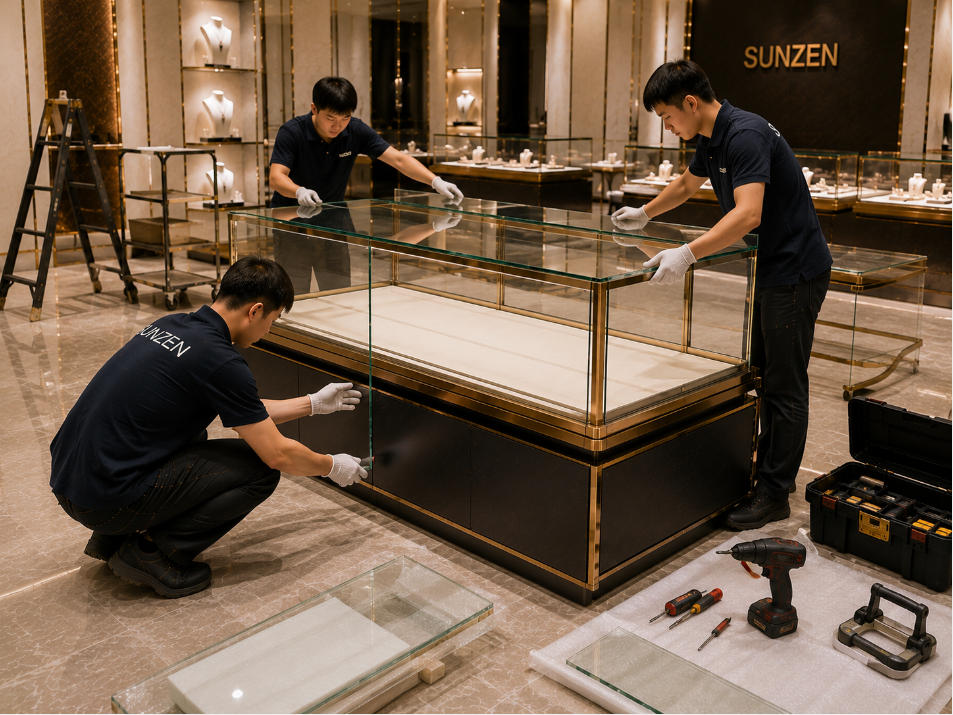
Maintain Precise Relationships Between Glass and Structure
The appearance of a glass display case depends heavily on the accuracy of glass-to-frame relationships.
Glass lines should remain consistent with surrounding metalwork, cabinet faces and neighboring glazing components.
These relationships are defined during display case technical drawing development and should remain consistent through manufacturing and final installation.
Reconnect Cases That Were Divided for Transportation
Large display cases may be manufactured and tested as complete fixtures but separated into transportable modules for shipping and site access.
Base Cabinets
Reconnect lower cabinetry while maintaining consistent front lines and structural alignment.
Upper Display Sections
Install glass tops, frames and display volumes after the base structure is correctly positioned.
Final Trim Components
Fit decorative trims, end panels and finishing pieces after the main case structure has been aligned.
Reassemble the Display Case According to Its Engineered Structure
On-site assembly should follow the same structural relationships reviewed during factory production.
Cabinet modules, metal frames, glass components and lighting systems should reconnect without changing the intended dimensions or proportions of the fixture.
For factory-stage production, explore our display case manufacturer capability.

Fine-Tune the Display Case After Final Positioning
Horizontal Level
Correct minor floor variation so upper glass and cabinet lines remain visually level.
Vertical Alignment
Check tall frames, glass edges and cabinet panels for consistent vertical relationships.
Fixture Stability
Confirm that the completed case is stable in its final operating position.
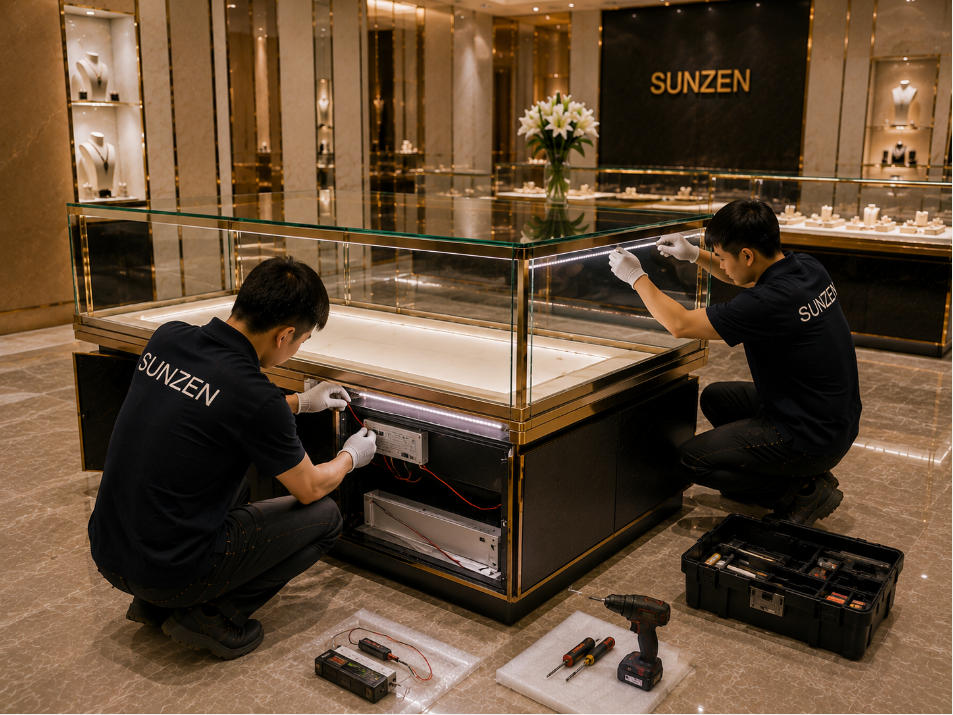
Connect Integrated Lighting After the Case Is Positioned
Many retail display cases contain integrated LED channels, wiring, drivers and concealed service areas.
Once the fixture reaches its intended location, electrical connections can be completed according to the approved installation conditions and available site provisions.
The lighting system should then be tested to confirm illumination across the full display volume.
Test and Adjust Doors, Drawers and Security Hardware
Sliding Glass Doors
Check tracks, movement, stops and final closing positions after the fixture is leveled.
Hinged Doors
Adjust hinges and visible gaps where required to maintain consistent alignment.
Drawers
Test extension, closing action and alignment with surrounding cabinet faces.
Locks
Confirm that security locks engage correctly after door and drawer adjustment.
Shelf Supports
Check shelf levels and support positions before merchandise is placed inside the case.
Lighting Controls
Verify the intended switching or control functions where applicable.
From Delivered Case to Finished Display Fixture
Site Check
Confirm access, floor conditions, fixture positions and relevant site provisions.
Unpacking
Identify the case and separately packed glass, hardware or lighting components.
Positioning
Move the display case into the correct location based on approved dimensions.
Assembly
Reconnect modular cabinets, glass, frames, shelves and finishing components.
Adjustment
Level the fixture and adjust doors, drawers, locks and lighting.
Final Testing
Inspect the completed display case before merchandising and handover.
Installation for Different Display Case Types
Jewelry Display Cases
Require precise glass alignment, integrated lighting, secure access and careful visual finishing.
Watch Display Cases
Demand accurate presentation heights, premium finishes and controlled product lighting.
Museum Display Cases
May involve larger glazing systems, specialized access and exhibition-specific installation conditions.
Counter Display Cases
Need leveling, staff-side access and accurate alignment across horizontal fixture runs.
Tall Display Cabinets
Require controlled vertical alignment and stability within the intended floor location.
Custom Display Cases
Project-specific fixtures can require installation sequences developed around unique construction and functional requirements.
Check the Display Case Before Project Handover
Final inspection confirms that the case performs as intended after transportation, positioning and installation.
Position: Confirm location against the approved layout.
Leveling: Check horizontal and vertical alignment.
Glass: Review glass joints, positioning and visible condition.
Hardware: Test doors, drawers, hinges, slides and locks.
Lighting: Confirm complete and consistent illumination.
Finish: Review visible surfaces and final presentation.

Plan Installation as Part of the Complete Display Case Process
Resolve the Technical Structure
Glass, hardware, lighting and construction relationships should be defined before fabrication begins.
Pre-Assemble and Test
The display case can be assembled in the factory to verify fit, operation and finish before shipping.
Complete the Case on Site
The delivered fixture is positioned, assembled, leveled, connected and adjusted within its final environment.

From Factory-Built Cabinet to Finished Display Environment
Installation completes the transition from manufactured fixture to fully operational display case.
Once positioned, leveled, illuminated and adjusted, each case can perform as part of the final retail, museum or exhibition environment.
Explore completed projects to see SUNZEN display cases within finished commercial and exhibition spaces.
Display Case Installation vs. Showcase Installation
Focused on the Technical Installation of the Case
Emphasizes display cabinet positioning, glass installation, leveling, electrical connection, door and lock adjustment and final technical testing.
Focused on Custom Showcase Installation as a Complete Service
Covers broader custom showcase installation requirements across retail and exhibition display environments.
Display Case Installation FAQs
What is display case installation?
Display case installation is the on-site process of positioning, assembling, leveling, connecting and adjusting display cabinets after they arrive at the project location.
What is included in display case installation?
Display case installation can include site preparation, positioning, modular assembly, glass installation, leveling, electrical connection, lighting testing, hardware adjustment and final inspection.
Can glass panels be installed on site?
Yes. Depending on transportation and fixture construction, glass panels, doors and shelves can be packed separately and installed after the display case reaches its final position.
Why does a display case need leveling after delivery?
Final leveling helps compensate for minor floor variation and supports correct glass alignment, stability and operation of doors and drawers.
Can display case lighting be connected during installation?
Yes. Integrated LED systems can be connected and tested when the required project power provisions and site conditions are available.
Are locks and drawers adjusted during installation?
Yes. Doors, drawers, hinges, slides and locks can be checked and adjusted after the display case has been positioned and leveled.
What is checked during the final installation inspection?
Final inspection can include position, leveling, glass alignment, hardware operation, locks, lighting and visible surface condition before handover.
What is the difference between display case installation and showcase installation?
Display case installation focuses more specifically on the technical installation of the cabinet and its glass, lighting and hardware systems, while showcase installation covers a broader custom showcase installation service for retail and exhibition projects.
Need Professional Display Case Installation?
Share your display case drawings, fixture schedule, site conditions and project requirements with SUNZEN. Our team can coordinate manufacturing, packing, delivery and installation-stage requirements for custom display case projects.

