
Contemporary Art Museum · Rome, Italy
Museo Carlo Bilotti Rome
Contemporary Art Museum
Display Cases
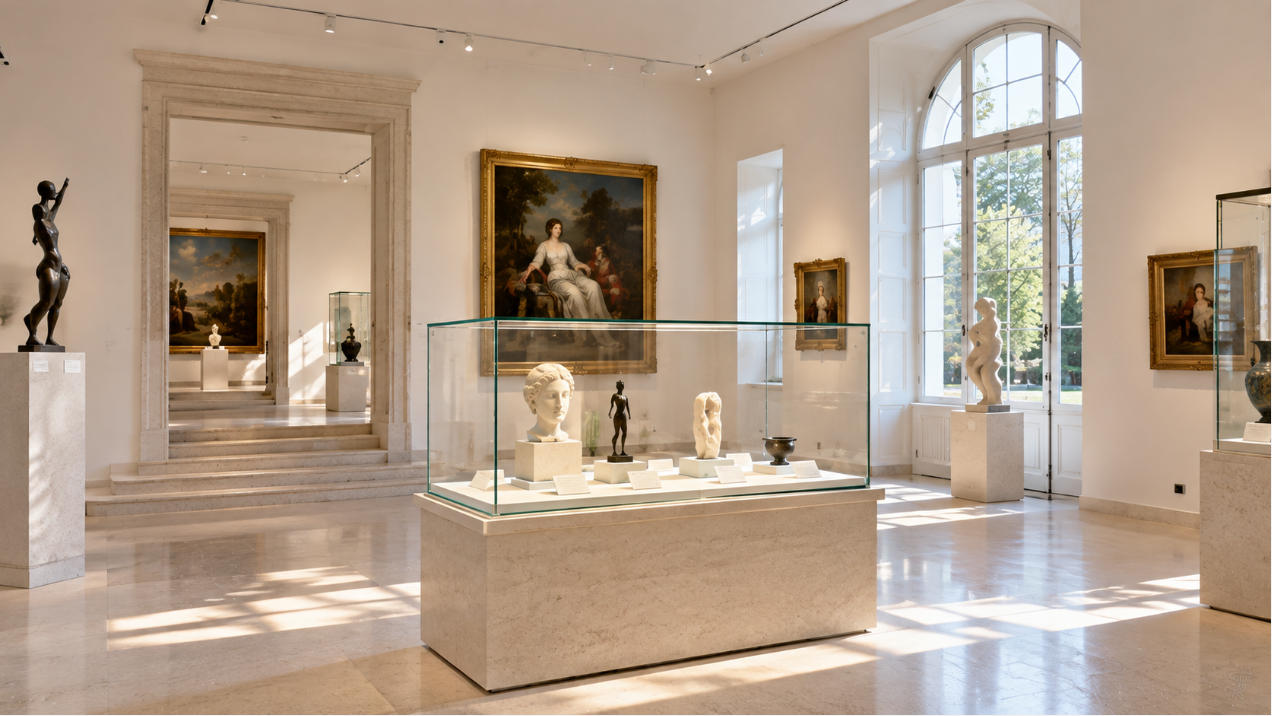
Museo Carlo Bilotti brings contemporary art museum display cases into an intimate Italian villa setting where paintings, sculpture and protected objects share a restrained architectural language. Ultra-clear glass, stone surfaces and focused art lighting keep the display system visually quiet so the collection remains the primary focus.
Project
Museo Carlo Bilotti
Location
Rome, Italy
Museum Type
Private Art Museum
Collection
Contemporary Art · Sculpture · Painting
Area
Approx. 1,200 m²
Character
Italian · Contemporary · Minimal
A private contemporary art museum where display architecture remains deliberately quiet.
Museo Carlo Bilotti develops an intimate museum experience inside a villa-style setting in Rome. Across approximately 1,200 m², paintings, sculpture and smaller collection objects are distributed through a sequence of compact galleries rather than a single monumental exhibition hall.
The contemporary art museum display cases respond to this scale with restrained proportions, transparent enclosures and minimal visual framing. Instead of introducing decorative cabinet forms, the cases work as quiet architectural elements between the visitor, the artwork and the surrounding gallery.
For international cultural projects, experienced showcase manufacturers must coordinate this visual restraint with the practical requirements of glazing, structural stability, access and final installation.
Design Direction
Protection becomes part of the architecture only where it is needed. Everywhere else, artwork, daylight and the original character of the villa remain visually dominant.
02 / Space
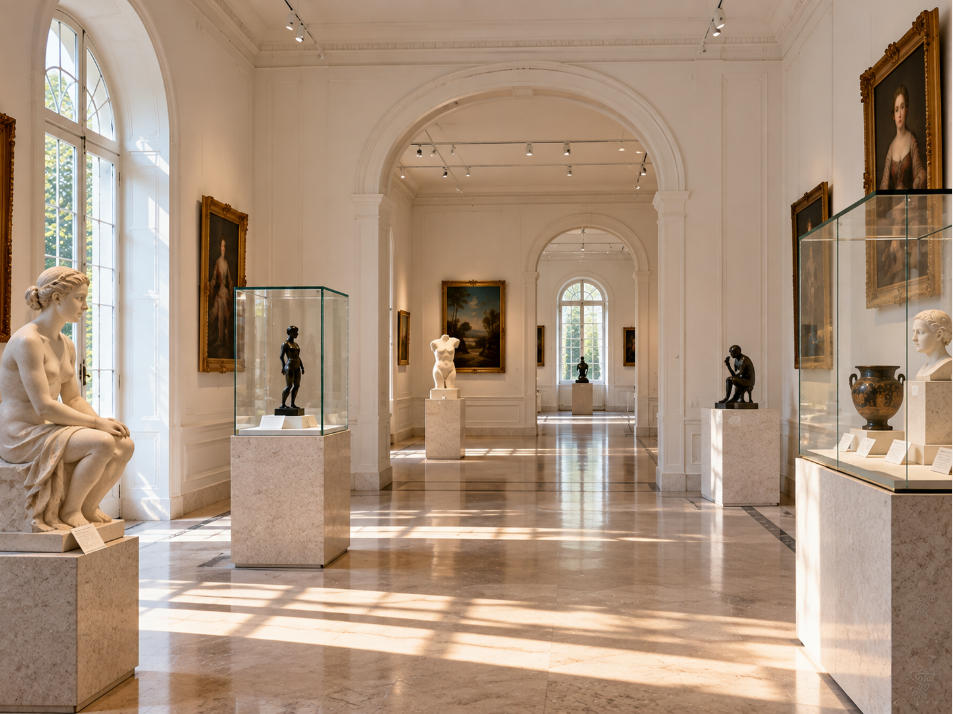
Villa-scale galleries create a more personal relationship between visitors and art.
The museum is organized through relatively compact exhibition rooms where paintings, sculpture and enclosed objects remain visually connected across adjoining spaces.
Natural daylight contributes to a softer gallery atmosphere and allows the architectural character of the villa to remain perceptible. Artificial art lighting is used selectively to reinforce individual works rather than flatten the entire exhibition into one uniform lighting condition.
This smaller spatial scale makes showcase placement especially important. Case height, object position and circulation clearance must be coordinated so transparent enclosures do not interrupt views toward paintings or freestanding sculpture.
03 / Display
Ultra-clear glazing keeps protected artworks connected to the surrounding gallery.
Transparency is central to the display language. Heavy frames or visually dominant cabinetry would introduce unnecessary structure into rooms intended to remain focused on contemporary artwork.
A project-specific custom museum display case can adapt glazing dimensions, stone bases, internal supports and access systems to individual artworks while maintaining a consistent architectural language across the exhibition.
Ultra-clear glass reduces visual tint around enclosed objects, while restrained stone bases provide physical stability without competing with the sculpture above them.
The result allows protected works to remain part of the wider gallery composition instead of appearing isolated inside conventional display furniture.
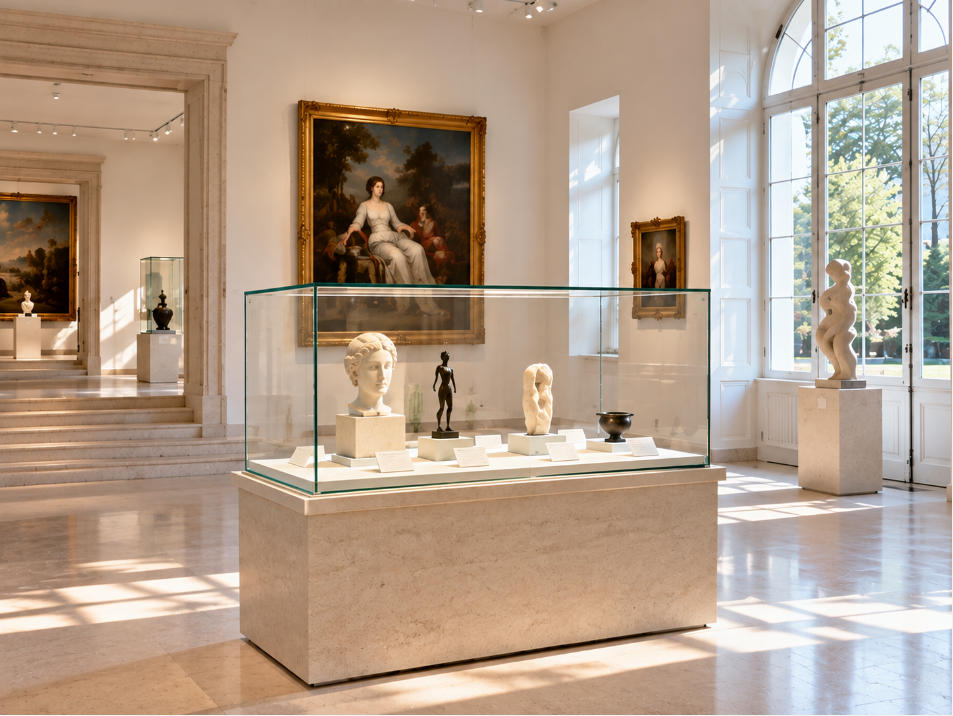
Stone, white surfaces and ultra-clear glass establish a restrained material palette.
The exhibition avoids decorative material complexity. Most of the visual texture and color comes from the artwork itself, while the display environment remains deliberately neutral.
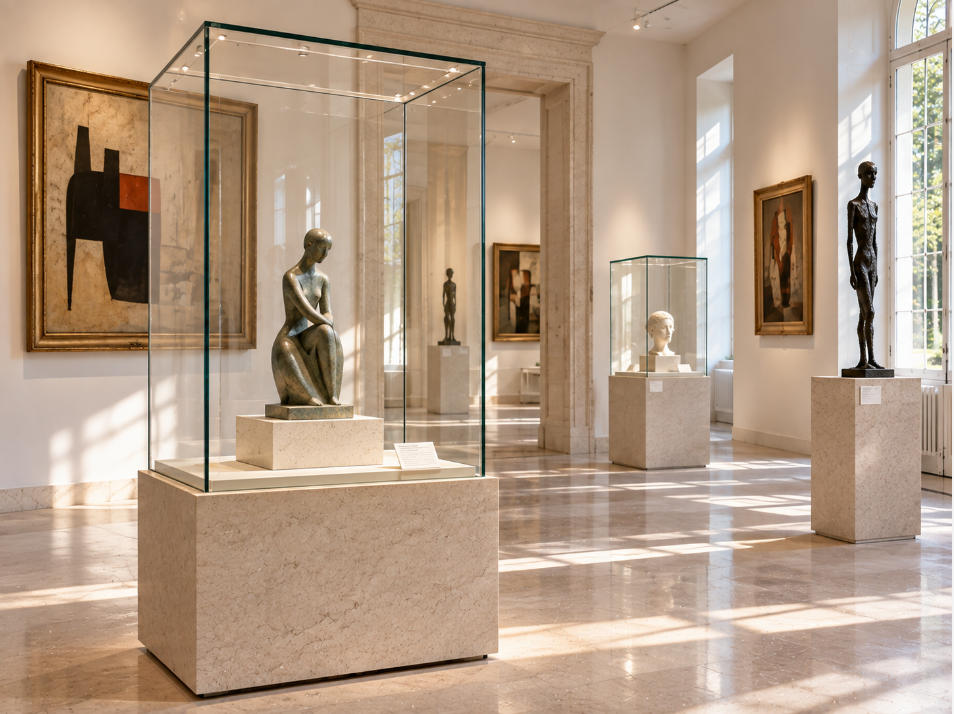
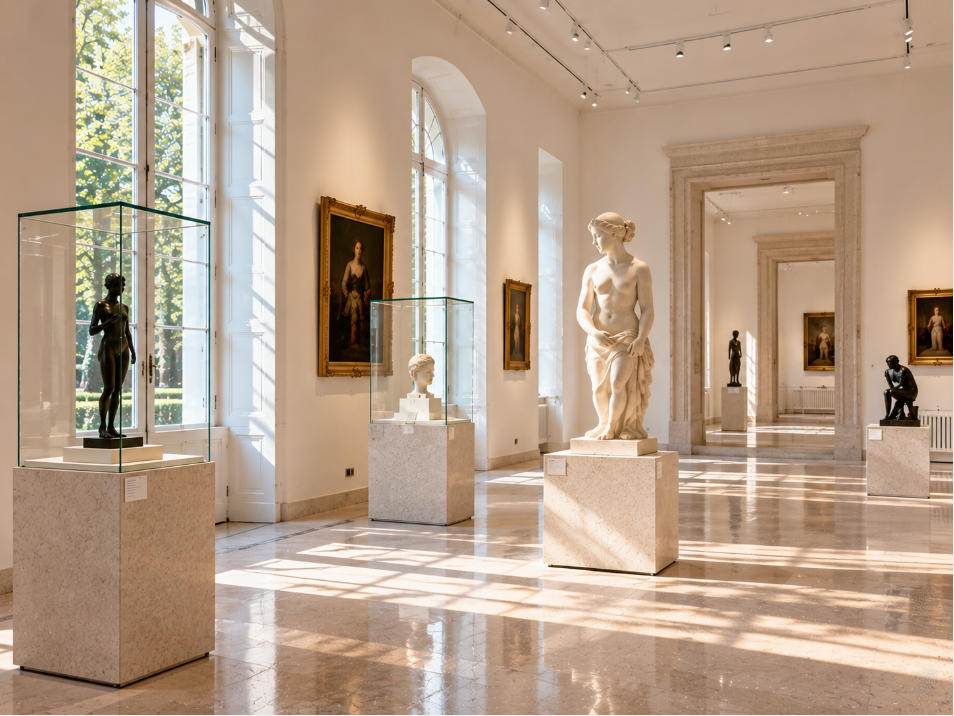

Contemporary Art · Sculpture · Minimal Gallery Display
04 / Art Presentation
Different levels of enclosure allow each artwork to retain its natural presence.
Freestanding Sculpture
Larger sculpture remains open wherever possible so visitors can understand its full volume, silhouette and relationship with the surrounding architecture.
Protected Objects
Smaller or more sensitive works receive transparent enclosure while remaining visually connected with paintings and sculpture elsewhere in the gallery.
Painting Galleries
White architectural surfaces establish neutral fields around paintings and prevent nearby display structures from competing with framed works.
Focused Art Lighting
Directional spotlights create local emphasis around selected works while softer natural illumination continues to define the wider gallery atmosphere.
Minimal display cases make technical precision more visible.
Reducing frames and decorative detailing places greater emphasis on glass alignment, structural tolerances, access gaps, base construction and the interfaces between transparent and solid materials.
Detailed display case engineering allows glazing, structural support, access methods and installation tolerances to be resolved before production, reducing the need for visually intrusive corrections later in the project.
For a museum such as Museo Carlo Bilotti, engineering is successful when visitors barely notice it. Technical systems remain integrated behind the visual simplicity of the finished enclosure.
Consistent fabrication supports the calm rhythm of the exhibition.
Although individual cases can vary according to artwork size and viewing position, their glazing quality, joint alignment, stone interfaces and finish standards need to remain consistent throughout the museum.
Specialist museum showcase manufacturers coordinate these requirements across different case dimensions while preserving the common visual language established during design development.
Controlled showcase manufacturing then translates the technical specification into repeatable glass, structural and finishing quality before the completed cases enter the gallery.
This relationship between precision and restraint is particularly important in minimalist museums, where small fabrication inconsistencies are easier to see.
Related museum projects explore different interpretations of transparent and restrained exhibition design.
Le Stanze del Vetro Venice develops glass art museum display cases around sculptural glass collections, using ultra-clear enclosures and a bright minimalist gallery environment to make transparency the dominant exhibition language.
Design Museum Danmark takes a different approach through Scandinavian museum display cases, combining natural materials, pale structures and modular exhibition elements within a distinctly Nordic design context.
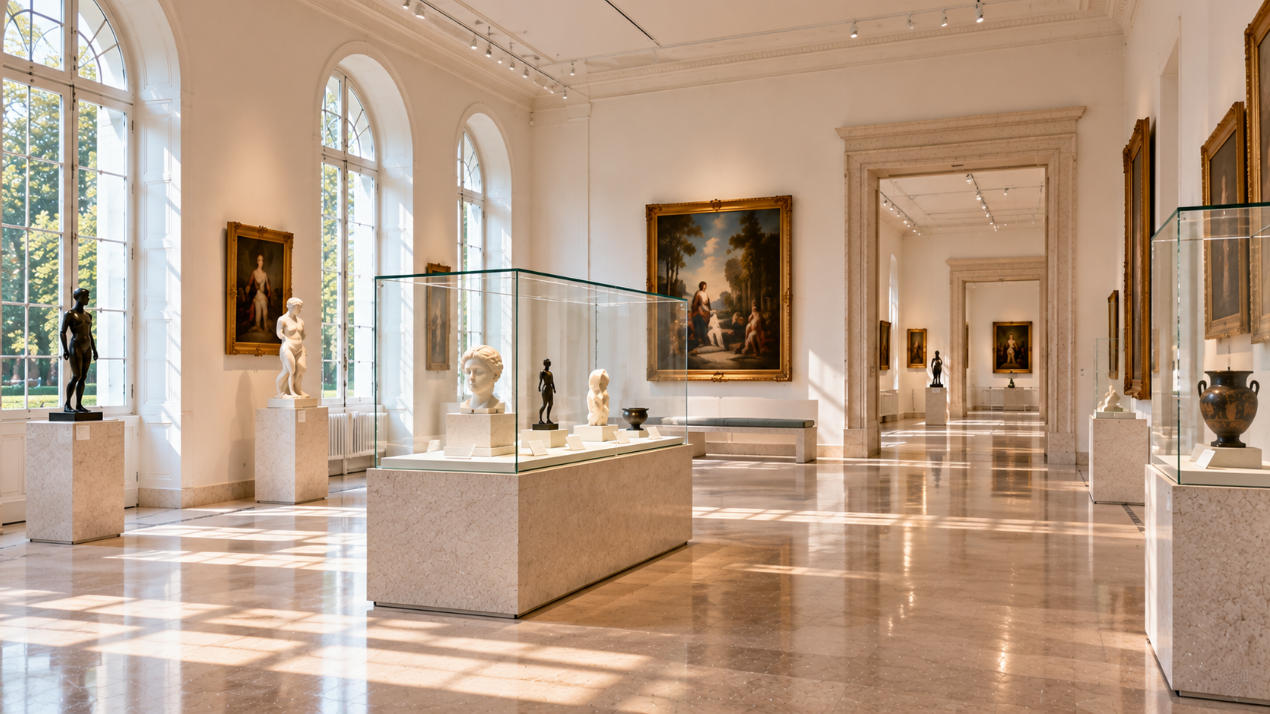
Contemporary art museum display cases developed as quiet architectural elements.
Museo Carlo Bilotti demonstrates how contemporary art museum display cases can protect selected artworks without allowing the exhibition environment to become dominated by casework.
Stone provides architectural stability, ultra-clear glass preserves visual openness and white gallery surfaces allow paintings and sculpture to remain visually dominant. Natural daylight and focused art lighting complete a display environment built around the collection rather than around the furniture.
The project reflects a wider approach to museum exhibition work in which protection, engineering, material selection and visitor circulation are resolved as one coordinated system.

