
Nature & Hunting Museum · Paris, France
Musée de la Chasse et de la Nature Paris
Natural History Museum
Display Cases
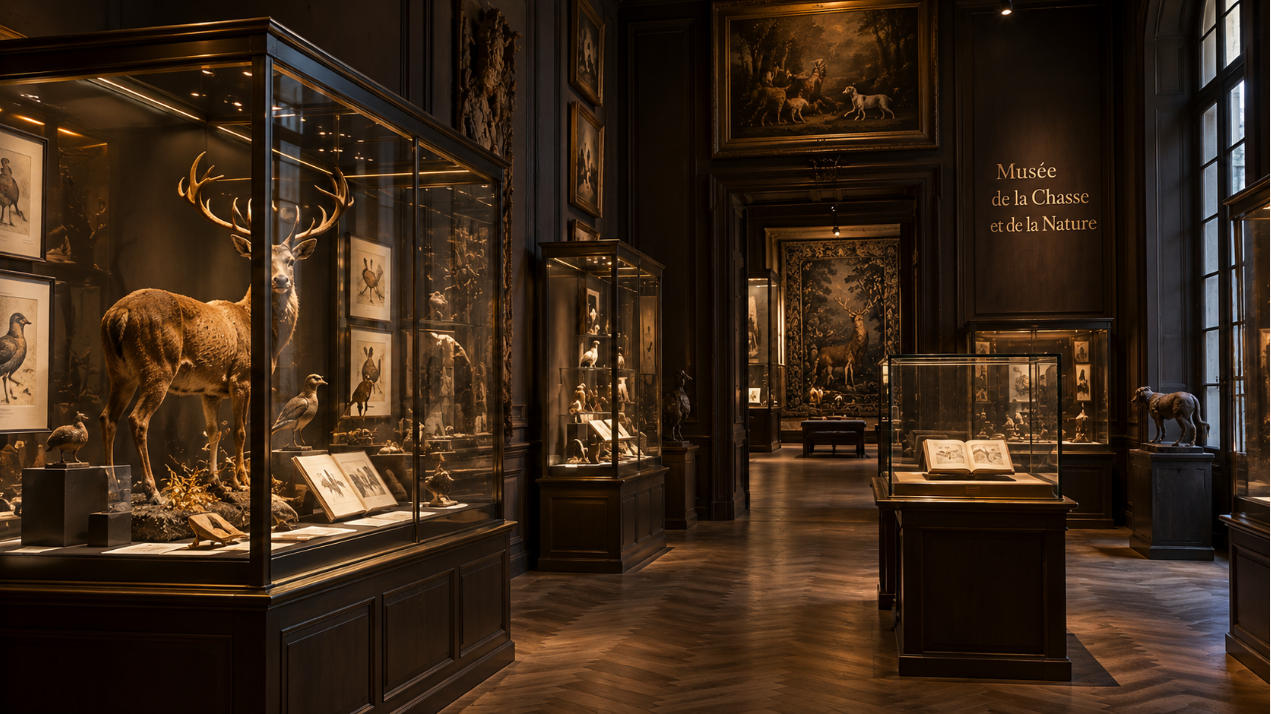
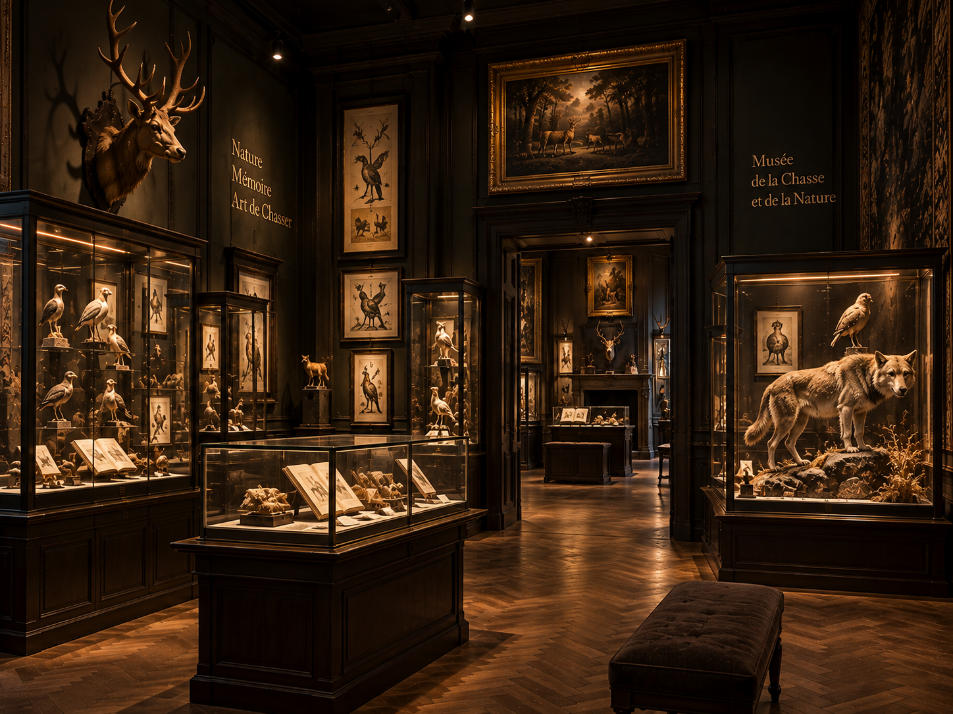
Musée de la Chasse et de la Nature integrates natural history museum display cases into a dark, immersive French interior where taxidermy, natural specimens, hunting objects and decorative art are presented as part of a continuous visual narrative. Dark wood, brass, black steel and warm focused lighting give the exhibition furniture an almost installation-like presence while preserving the atmosphere of the historic house.
Project
Musée de la Chasse et de la Nature
Location
Paris, France
Museum Type
Private Themed Museum
Collection
Nature · Taxidermy · Hunting Art
Area
Approx. 1,400 m²
Character
Dark · French · Vintage
A dark narrative museum where nature, art and historic interiors become one exhibition.
Musée de la Chasse et de la Nature develops an approximately 1,400 m² private museum experience through richly atmospheric rooms rather than neutral white-box galleries. Taxidermy, natural specimens, hunting objects and decorative art are integrated into a sequence of historic French interiors.
The natural history museum display cases respond to this environment with dark cabinetry, warm metallic details and carefully controlled illumination. The display furniture is not intended to disappear completely; instead, it contributes to the theatrical and immersive quality of the collection.
For this type of exhibition, a capable showcase factory must coordinate cabinet construction, glazing, metal details, lighting and access systems while preserving a consistent visual language across highly varied collection types.
Design Direction
The showcase becomes part of the storytelling — using shadow, warm metal, dark timber and selective transparency to create a museum environment that feels closer to a collector’s cabinet than a conventional neutral gallery.
02 / Space
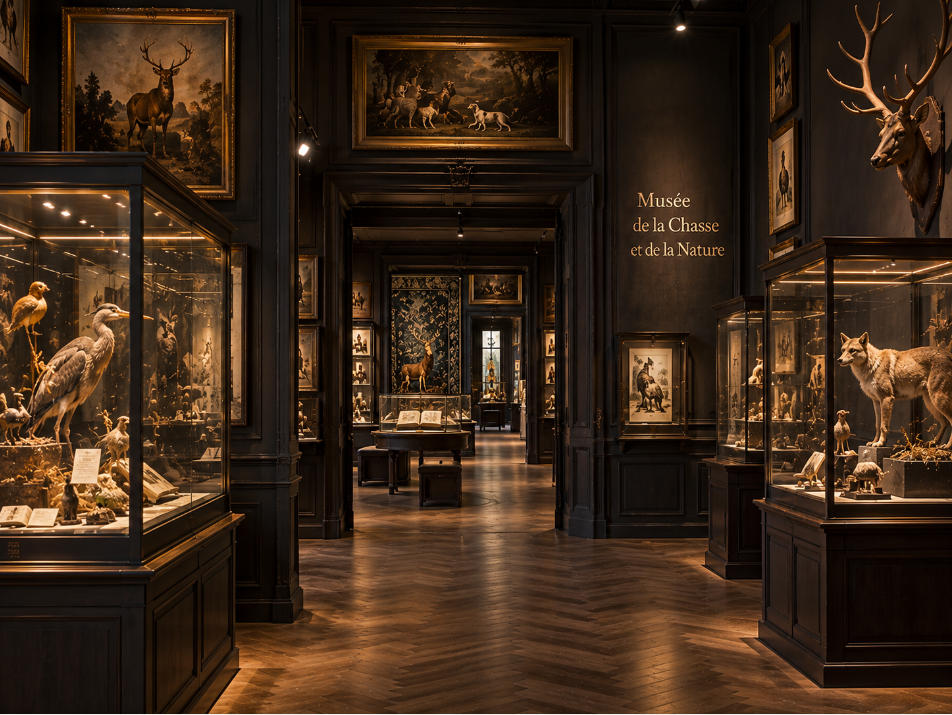
Historic rooms create a layered journey through nature, collecting and imagination.
The visitor route moves through a sequence of smaller rooms rather than one continuous gallery. Each space can develop its own atmosphere around particular animals, natural themes or historical objects.
The French house setting gives the exhibition a more intimate scale. Wall finishes, furniture, framed artworks and architectural details remain visible alongside taxidermy and collection cabinets.
This allows the museum to feel more like an evolving cabinet of curiosities than a conventional scientific display environment.
Because each room contains different sightlines, doorway relationships and lighting conditions, case dimensions and positions must be coordinated carefully before production.
03 / Display
Specimen cabinets combine protection with a stronger decorative presence.
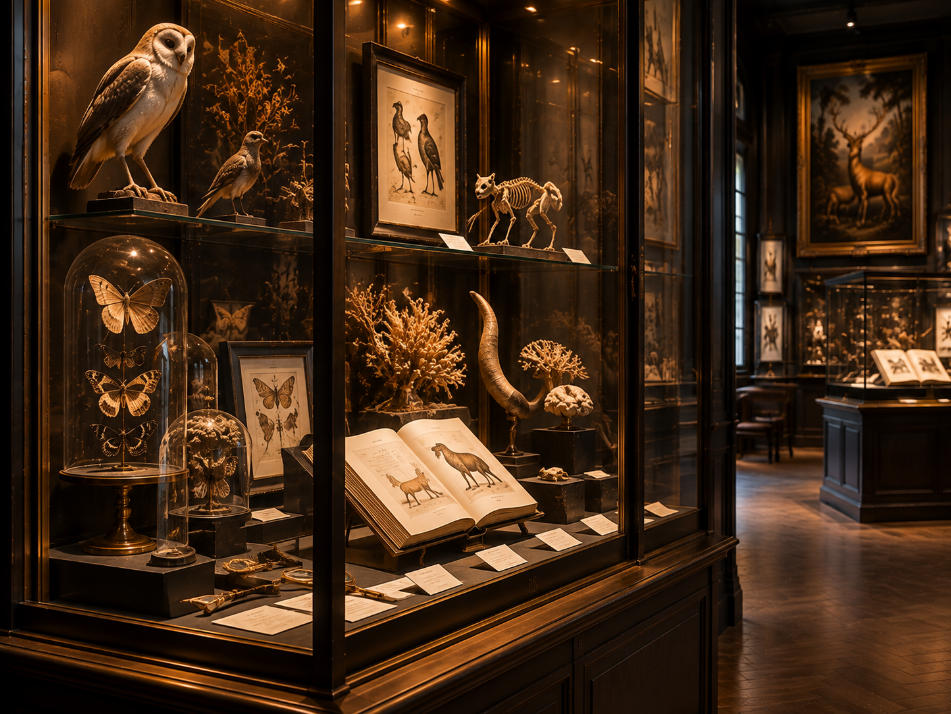
Natural history collections contain objects with very different scales and viewing requirements. Larger taxidermy specimens may remain open, while smaller specimens, hunting objects and sensitive natural materials benefit from enclosed presentation.
A project-specific custom museum display case allows glazing, cabinet depth, internal support positions and lighting to be adapted around each group of objects.
Dark wood surfaces create depth behind lighter specimens, while brass details introduce controlled visual highlights. Black steel provides structural definition without producing the bright technical appearance of a contemporary white museum.
The resulting cases function simultaneously as protective enclosures, furniture and part of the wider storytelling environment.
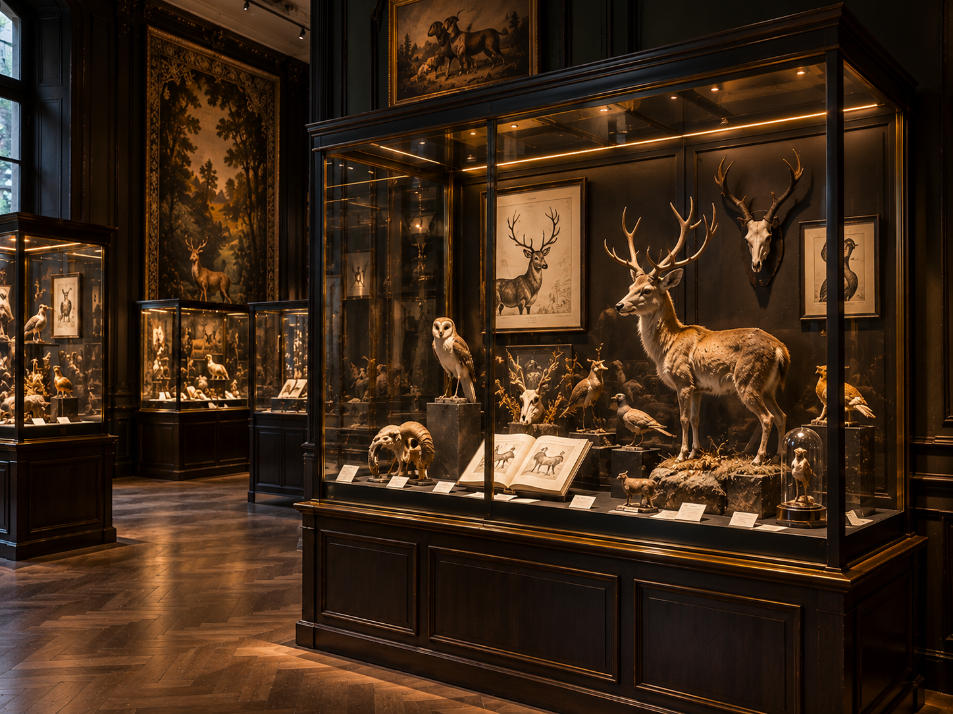
Dark wood, brass and black steel establish the museum’s distinctive visual identity.
Unlike minimalist museum cases designed to disappear, these materials allow selected display furniture to participate actively in the atmosphere of the exhibition.
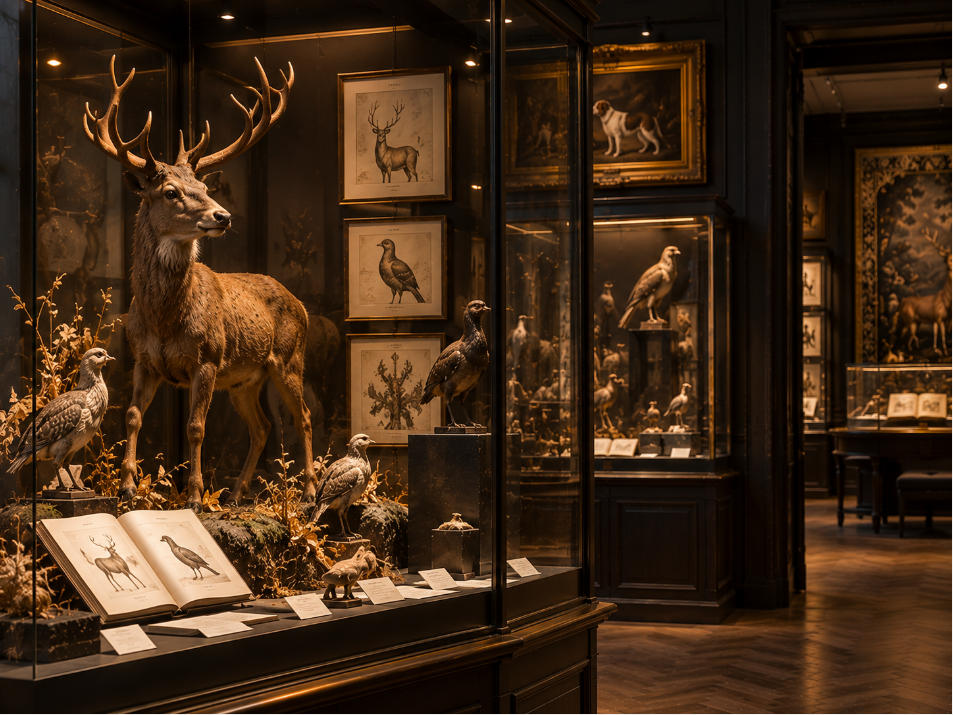
Nature · Taxidermy · French Vintage Display
04 / Collection Presentation
Open specimens and enclosed collections create different levels of immersion.
Taxidermy Specimens
Larger animal specimens can remain open where their full scale and sculptural form contribute directly to the atmosphere of the room.
Small Natural Objects
Smaller specimens and fragile natural materials receive transparent enclosure to support protection while remaining clearly visible.
Hunting Artifacts
Historic objects and decorative hunting pieces can be grouped inside furniture-like cabinets that connect naturally with the French interior.
Narrative Rooms
Different case formats allow each room to develop its own story while maintaining a consistent dark material and lighting language.
Dark ambient lighting creates depth while warm highlights guide attention toward individual objects.
The exhibition avoids uniform bright illumination. Instead, lower ambient levels establish a darker architectural background while selected specimens and objects receive warmer focused light.
This contrast gives vitrines additional depth and helps individual collection pieces emerge visually from the surrounding cabinetry.
Internal lighting must be coordinated carefully with glass surfaces, object positions and darker finishes so reflections remain controlled and important details stay visible.
Decorative cabinets still require precise technical coordination behind the visible finishes.
The furniture-like character of the cases does not reduce their technical requirements. Glass dimensions, access doors, shelves, specimen supports, internal lighting and metal hardware need to be coordinated before fabrication.
Detailed display case technical drawings help define these relationships while controlling how dark wood, brass, black steel and glazing meet at visible edges.
This is especially important in a museum where visitors experience cabinets at close distance and where the exhibition furniture itself contributes to the visual identity of each room.
A controlled production process keeps varied specimen cabinets within one consistent design language.
Different rooms may require freestanding specimen cabinets, taller vitrines, wall displays or furniture-like collection cases, yet all formats need consistent finishes and detailing.
A specialized museum showcase factory can coordinate cabinetry, metalwork, glazing, lighting and hardware across these different formats while preserving the common dark French aesthetic.
The production goal is not identical case geometry, but consistent material quality and craftsmanship across a highly varied exhibition system.
Final installation aligns cases with historic rooms, lighting and visitor storytelling.
In a historic-house environment, case positions must respond to existing walls, doorways, floors, furniture and architectural features rather than a completely standardized gallery grid.
Accurate display case installation helps control leveling, alignment, spacing and final position so the cases feel integrated with the architecture and narrative sequence.
The completed arrangement supports an immersive visitor route in which collection, furniture and historic interior are experienced together.
Related museum projects explore different ways of integrating collection displays with historic interiors.
Musée de la Vie Romantique Paris uses French art museum display cases within intimate salon galleries, combining classical materials, warm light and residential-scale exhibition furniture.
Museum Van Loon Amsterdam develops historic house museum display cases inside a preserved canal-house environment where architecture, furniture and collections remain closely connected.
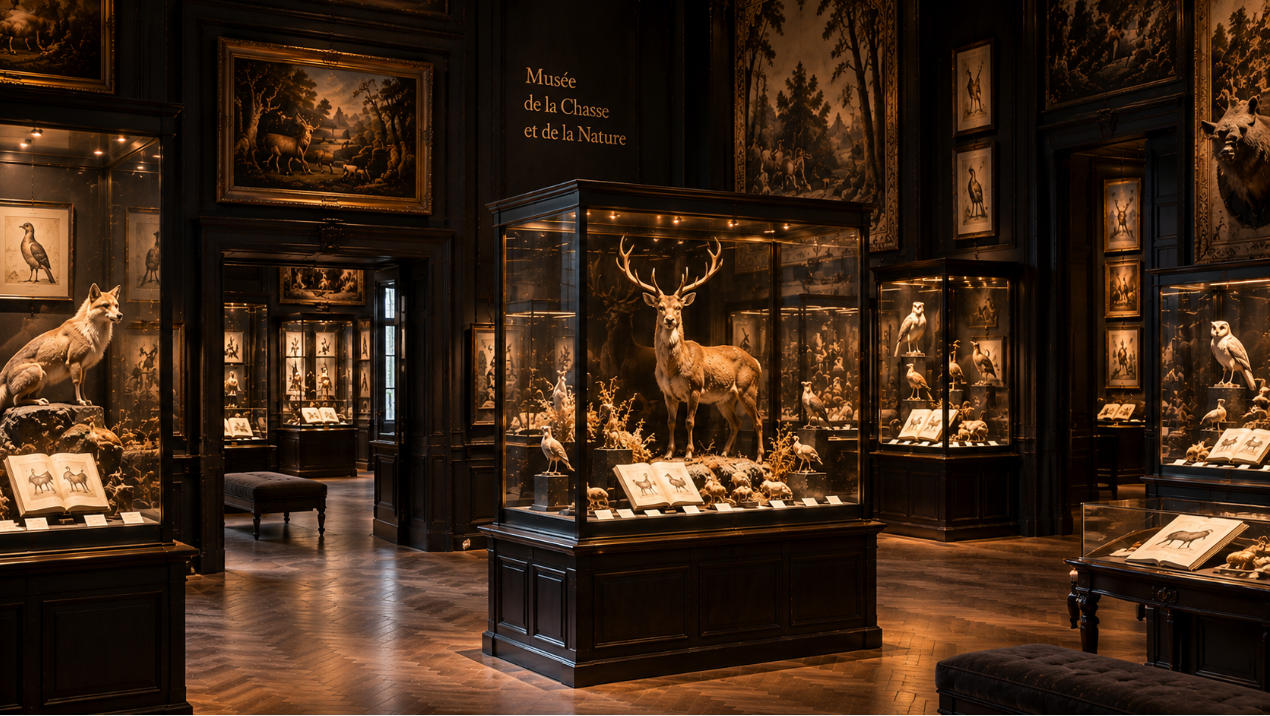
Natural history museum display cases developed as part of an immersive dark interior.
Musée de la Chasse et de la Nature demonstrates how natural history museum display cases can protect specimens and historic objects while contributing actively to the atmosphere and storytelling of a themed museum.
Dark wood establishes visual depth, brass introduces warm highlights and black steel provides understated structural definition. Together with controlled low-level lighting, these materials create cases that feel more like curated furniture and artistic installations than neutral technical vitrines.
The completed display system supports a museum experience where taxidermy, natural history, art and historic French interiors are understood as one continuous narrative.

