
Curiosity Museum · London, United Kingdom
The Viktor Wynd Museum London
Curiosity Museum
Display Cases
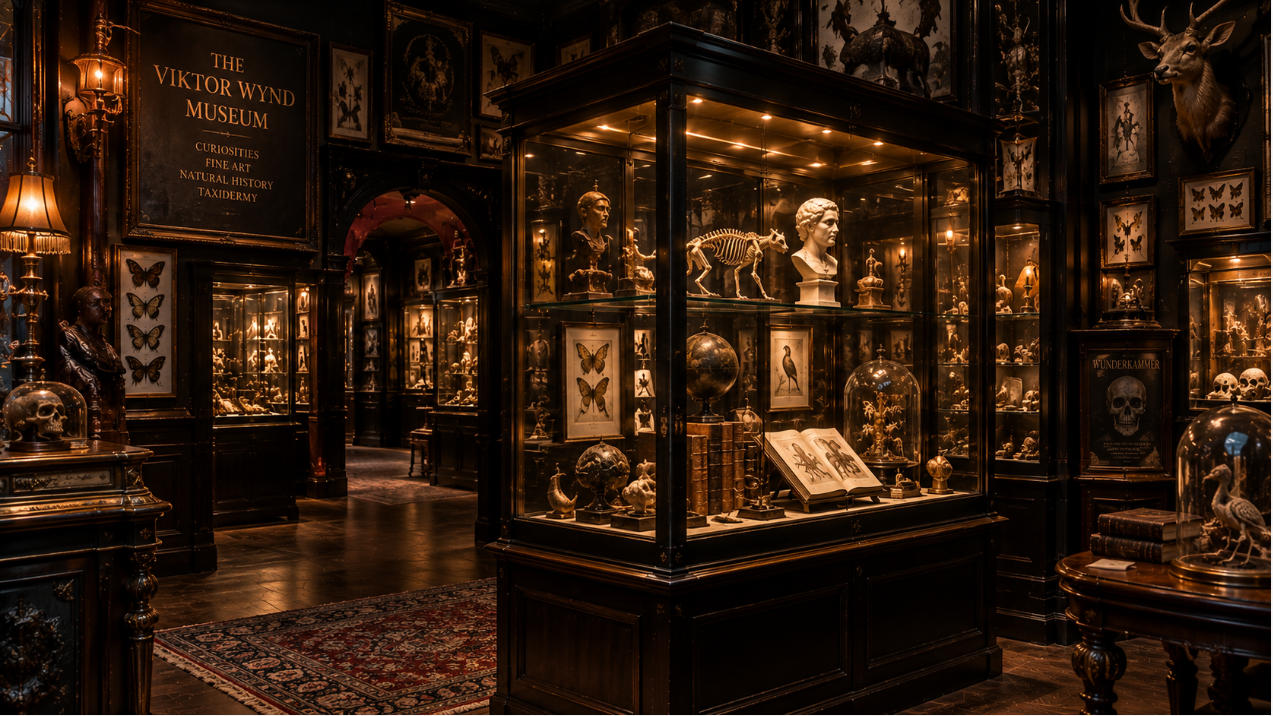
The Viktor Wynd Museum integrates curiosity museum display cases into a dense Victorian-inspired interior where unusual objects, antiques and personal collections are arranged as part of an immersive visual world. Black wood, brass, vintage glass and warm low-level lighting give the cases the character of historic collector cabinets rather than conventional neutral museum furniture.
Project
The Viktor Wynd Museum
Location
London, United Kingdom
Museum Type
Private Collection Museum
Collection
Curiosities · Antiques · Collectibles
Area
Approx. 600 m²
Character
Victorian · Dark · Collectible
A private curiosity museum where dense collections become part of the atmosphere.
The Viktor Wynd Museum develops an approximately 600 m² private collection experience through dark basement-style rooms, densely arranged objects and a visitor route that feels closer to exploration than conventional gallery circulation.
The curiosity museum display cases support this character through dark timber cabinetry, brass details, vintage glazing and warm localized illumination. Rather than creating visual distance from the collection, the cases reinforce the sense of entering a private Victorian cabinet of curiosities.
For an exhibition with such high object density, experienced showcase manufacturers need to coordinate glazing, shelving, cabinetry, lighting and access while preserving visual consistency across many different collection sizes.
Design Direction
The display cabinet becomes part of the collection itself — combining Victorian furniture character, warm light and layered objects to create an atmosphere of discovery rather than a conventional museum sequence.
02 / Space
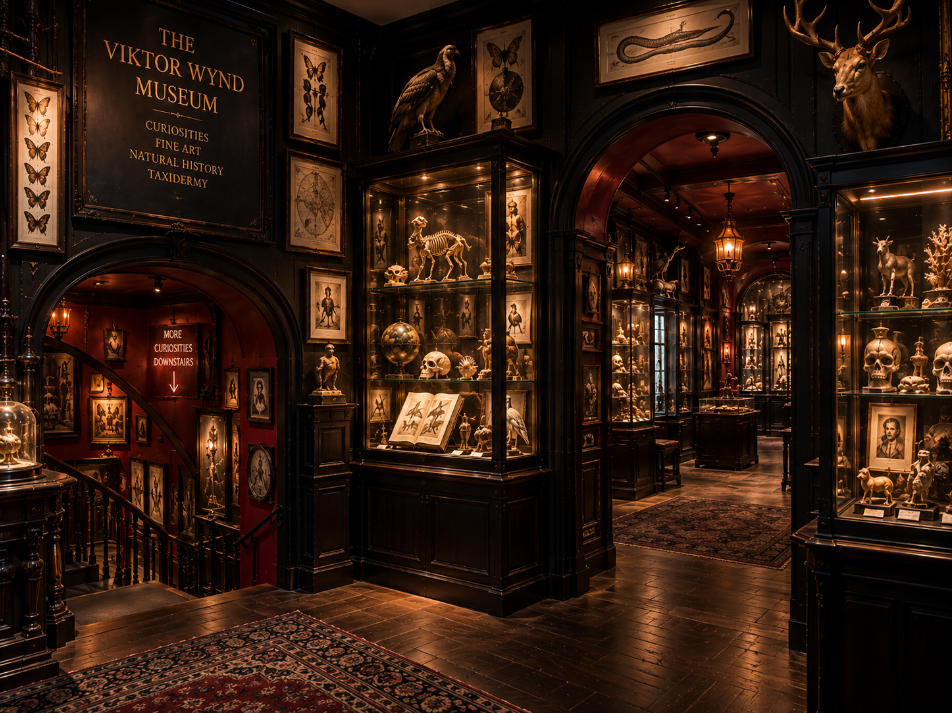
Basement rooms and maze-like circulation turn the museum into a sequence of discoveries.
The exhibition is intentionally compact and visually dense. Visitors move through connected rooms and narrower passages where collections appear in cabinets, on walls and within small architectural niches.
This creates a very different experience from open contemporary galleries. Sightlines are shorter, object density is higher and individual spaces can develop their own themes and moods.
The underground character also strengthens the sense of secrecy and discovery, allowing low ambient lighting and illuminated cabinets to define the visitor route.
A coordinated showcase design approach helps balance this density by controlling cabinet height, internal shelf spacing, display depth and visual access to smaller objects.
03 / Display
Victorian-style cabinets transform dense collections into layered visual compositions.
A curiosity museum may contain objects that have little similarity in size, material or historical function. Small artifacts, antiques, natural specimens, books and decorative objects can appear together within the same collection.
A project-specific custom museum showcase allows shelf heights, cabinet depths, background materials and lighting positions to respond to this variety without forcing every object into a standardized display format.
Black wood provides a deep visual background, brass introduces warmer highlights and vintage glass reinforces the historic character of the enclosure.
The result is a display system that organizes visual complexity without removing the sense of abundance that defines the museum.
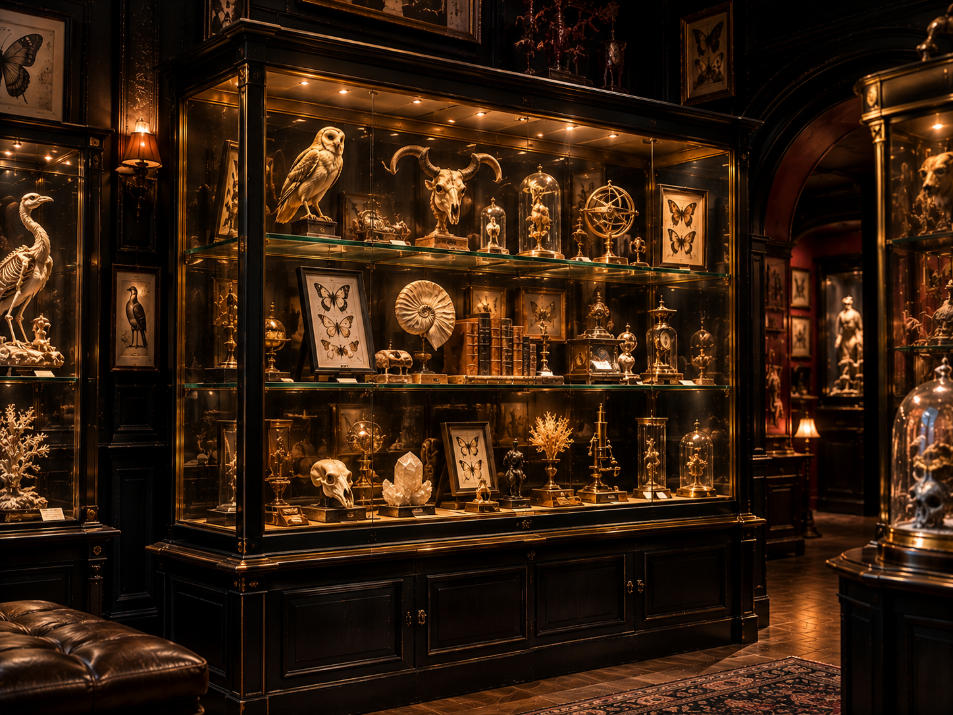
Black wood, brass and vintage glass reinforce the atmosphere of a private collector’s cabinet.
The material palette is deliberately richer and darker than a conventional modern museum so the showcases belong naturally to the Victorian-inspired interior.
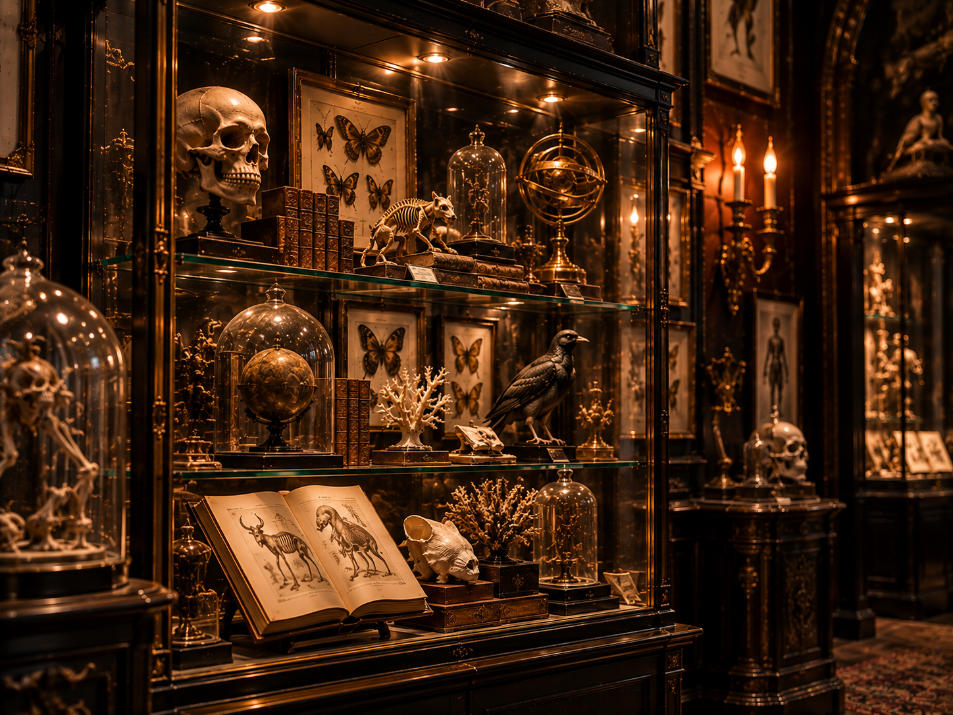
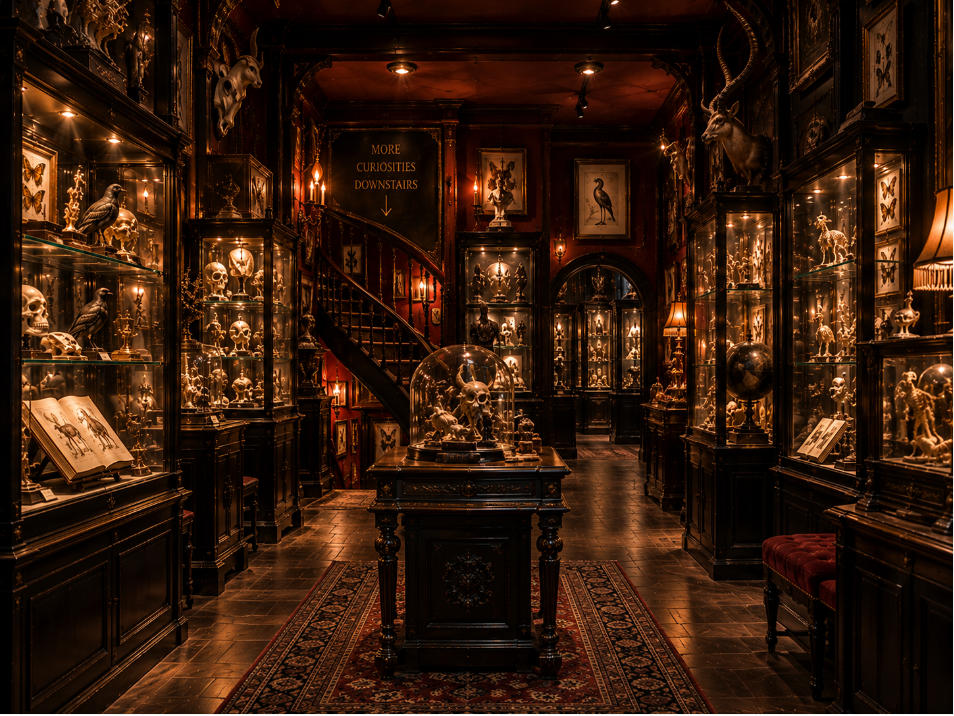
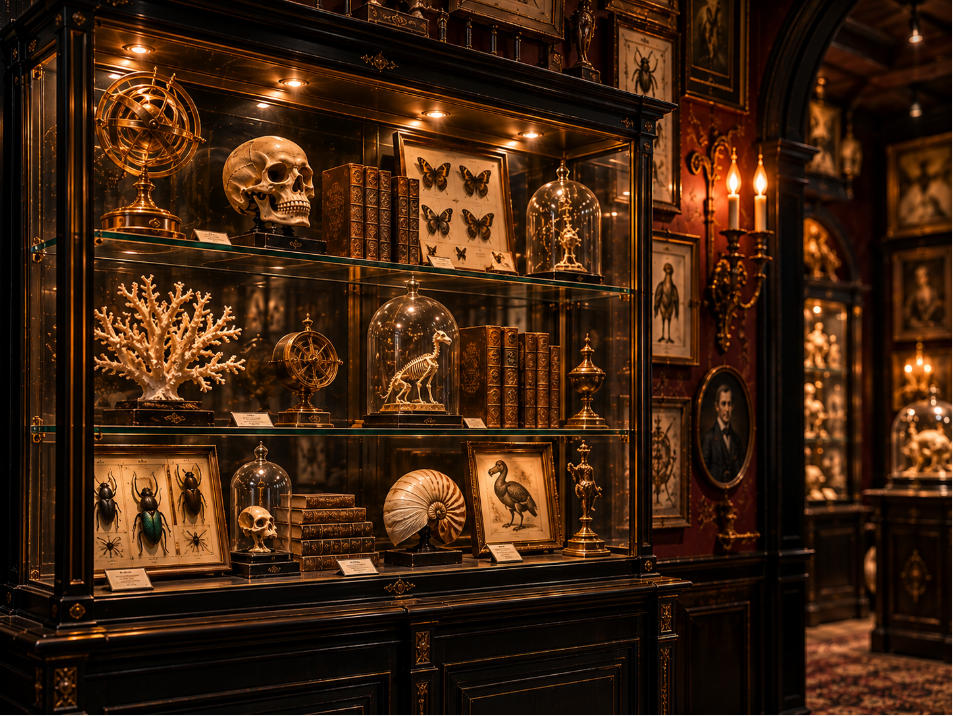
Curiosities · Antiques · Victorian Collection Display
04 / Collection Presentation
Dense object groupings create a layered experience of discovery.
Small Curiosities
Smaller collectible objects can be grouped in tiered cabinet arrangements that maintain visibility while preserving the sense of abundance.
Antique Objects
Furniture-like showcases give antique collections an architectural context that feels consistent with their historical character.
Mixed Collections
Objects from different categories can share the same enclosure when internal spacing and lighting establish a clear visual hierarchy.
Cabinet of Curiosities
The overall presentation intentionally preserves visual density so the exhibition feels exploratory rather than systematically categorized.
Warm localized lighting creates depth inside the dark collection environment.
The exhibition relies on low ambient illumination rather than uniform bright gallery lighting. Wall lights and warm cabinet lighting create pockets of visibility throughout the darker interior.
This lighting strategy draws visitors toward individual displays while allowing surrounding rooms to retain a stronger sense of mystery.
Internal illumination also becomes important for densely arranged cabinets, helping separate overlapping silhouettes and reveal material details that would otherwise disappear against dark backgrounds.
High-density collections require flexible internal organization.
Curiosity cabinets often need to accommodate objects with very different heights, proportions and display orientations within one enclosure.
Adjustable shelf levels, stepped platforms, internal supports and carefully positioned lighting can create multiple viewing layers without making the cabinet feel visually chaotic.
The external geometry can remain relatively traditional while the internal organization is developed specifically around the collection assigned to each case.
Furniture-quality fabrication gives Victorian-style cases their visual credibility.
Dark timber surfaces, brass hardware, glass doors and integrated lighting all require accurate alignment if the finished cabinet is to feel like carefully crafted exhibition furniture rather than a decorative reproduction.
A specialized museum display case factory can coordinate timber cabinetry, glazing, metal components, internal structures and lighting across different cabinet formats.
Controlled showcase manufacturing helps keep these materials and finish standards consistent even when individual cases vary significantly in size and internal configuration.
Related museums explore different interpretations of historic interiors and dense collection display.
Musée de la Chasse et de la Nature Paris uses natural history museum display cases to combine dark timber, warm metal, animal specimens and immersive French interiors within a richly layered themed museum.
Museum Van Loon Amsterdam develops historic house museum display cases inside a preserved residential environment where furniture, architecture and private collections remain closely connected.
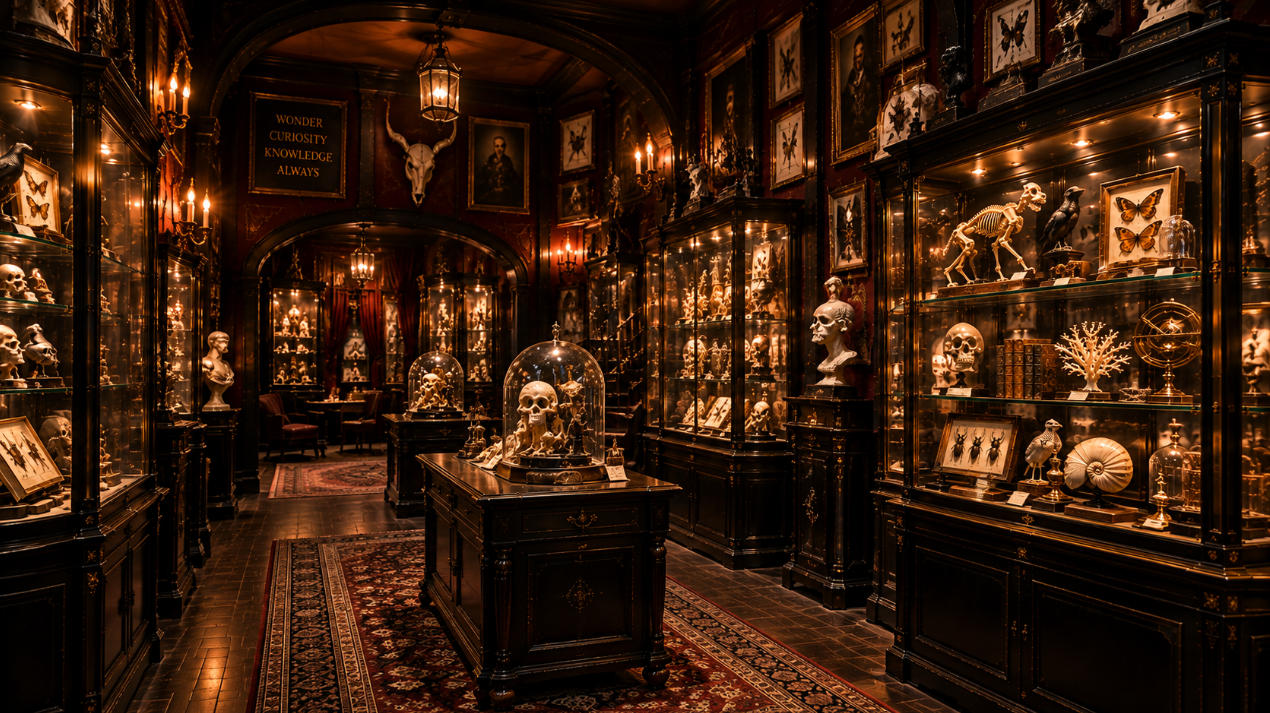
Curiosity museum display cases developed for dense collections and immersive Victorian interiors.
The Viktor Wynd Museum demonstrates how curiosity museum display cases can organize highly varied private collections without removing the visual richness and unpredictability that give a cabinet of curiosities its identity.
Black wood creates depth, brass introduces warmer highlights and vintage glass maintains the character of historic collection furniture. Combined with warm low-level lighting, these elements allow the cases to become part of the museum’s atmosphere rather than neutral containers.
The completed display system supports a maze-like visitor journey where curiosity, discovery and dense visual storytelling remain central to the museum experience.

