
Modern Art Museum · Milan, Italy
Museo del Novecento Milan
Modern Art Museum
Display Cases
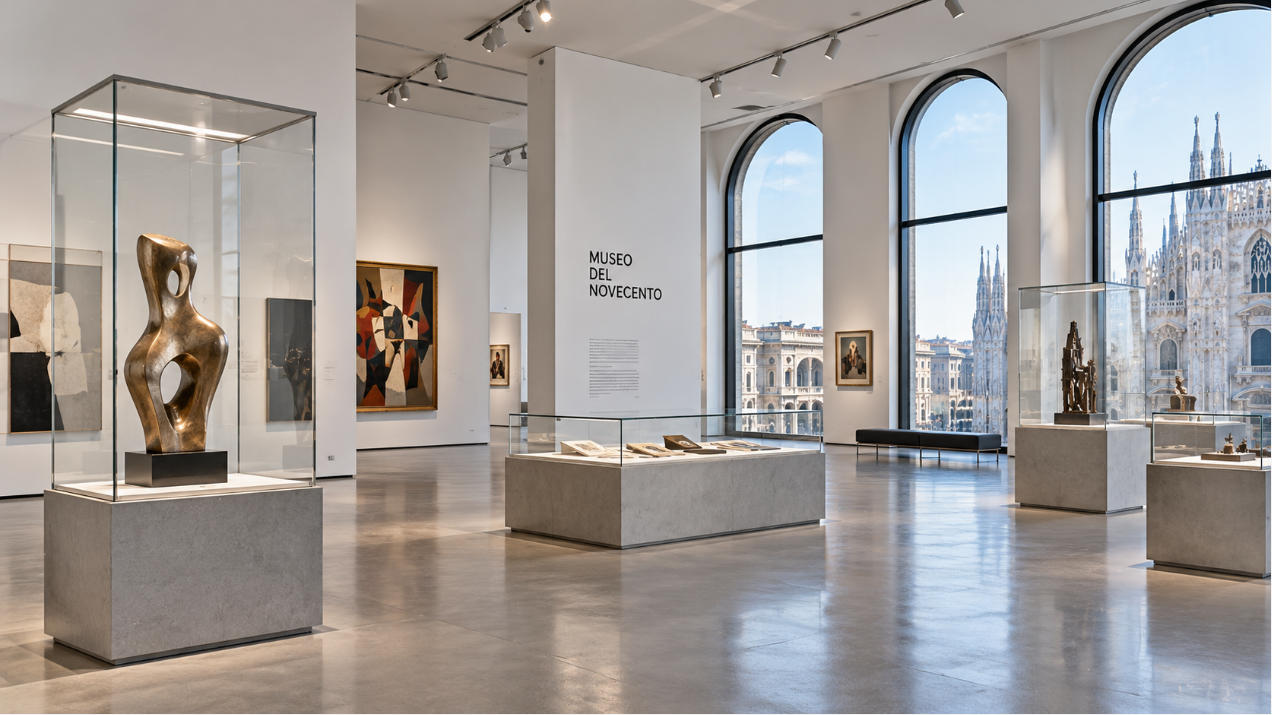
Museo del Novecento integrates modern art museum display cases into a refined Italian gallery environment defined by white-box exhibition rooms, flowing circulation and open views toward the surrounding city. White steel, ultra-clear glass and concrete allow the display system to remain visually restrained while supporting the architectural clarity of the museum.
Project
Museo del Novecento
Location
Milan, Italy
Museum Type
Modern Art Museum
Collection
Modern Art · Paintings · Art Objects
Area
Approx. 2,000 m²
Character
Italian · Minimal · Architectural
A modern Italian museum where art, architecture and city views remain visually connected.
Museo del Novecento develops an approximately 2,000 m² modern art experience through minimalist white-box galleries, flowing visitor circulation and open architectural viewpoints that connect the exhibition with the surrounding urban environment.
The modern art museum display cases follow the same restrained design logic. Transparent glazing, pale metal structures and architectural bases keep the enclosures visually quiet so artworks and spatial relationships remain dominant.
A carefully developed custom showcase system therefore needs to balance protection, access and presentation while remaining visually secondary to the wider museum architecture.
Design Direction
The display system is reduced to its essential architectural elements — transparent glass, precise white metal and quiet concrete surfaces that support modern art without adding unnecessary visual weight.
02 / Space
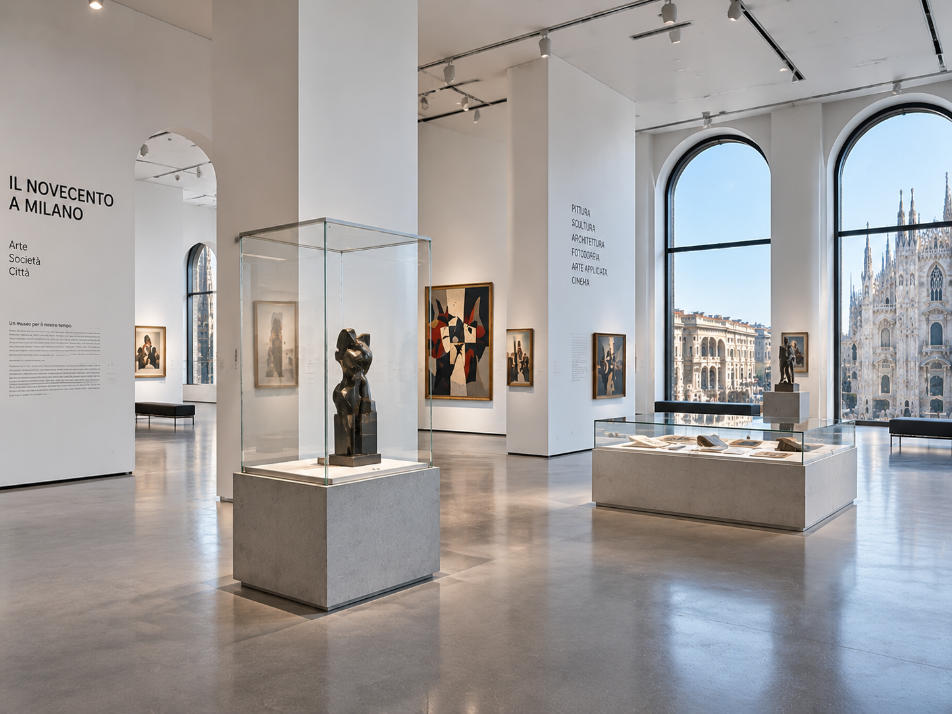
Flowing circulation connects white-box galleries with the wider architectural experience.
The exhibition sequence is designed around movement rather than a collection of isolated rooms. Visitors transition continuously between art displays, architectural openings and broader views across the museum.
Minimal white surfaces provide a neutral background for the collection, while open viewpoints prevent the galleries from feeling enclosed or visually static.
This spatial continuity places particular importance on maintaining clear sightlines between artworks, circulation paths and architectural features.
A coordinated showcase design process helps determine case height, transparency, placement and viewing distance so enclosed displays support the overall spatial rhythm rather than interrupting it.
03 / Display
Low-visibility display cases preserve the clarity of a modern white gallery.
Within a modern art museum, enclosed displays need to perform their protective role without appearing visually heavier than the works they contain.
A project-specific custom museum display case allows glazing dimensions, internal supports, access systems and case proportions to respond directly to individual artworks and exhibition layouts.
White steel structures visually merge with the surrounding gallery surfaces, while ultra-clear glass maintains transparency across changing viewing angles.
Concrete bases introduce enough architectural weight to stabilize the cases without shifting attention away from paintings, sculpture and modern art objects.
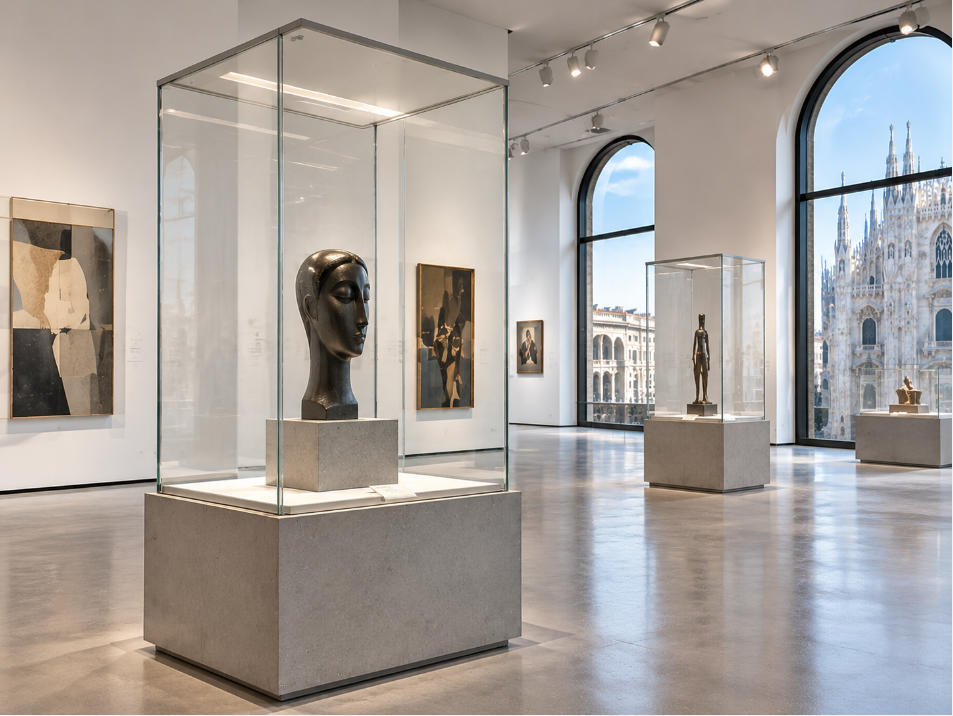
White steel, ultra-clear glass and concrete create a restrained architectural display language.
The palette deliberately mirrors the simplicity of the gallery itself, reducing contrast between the showcase and surrounding architecture.
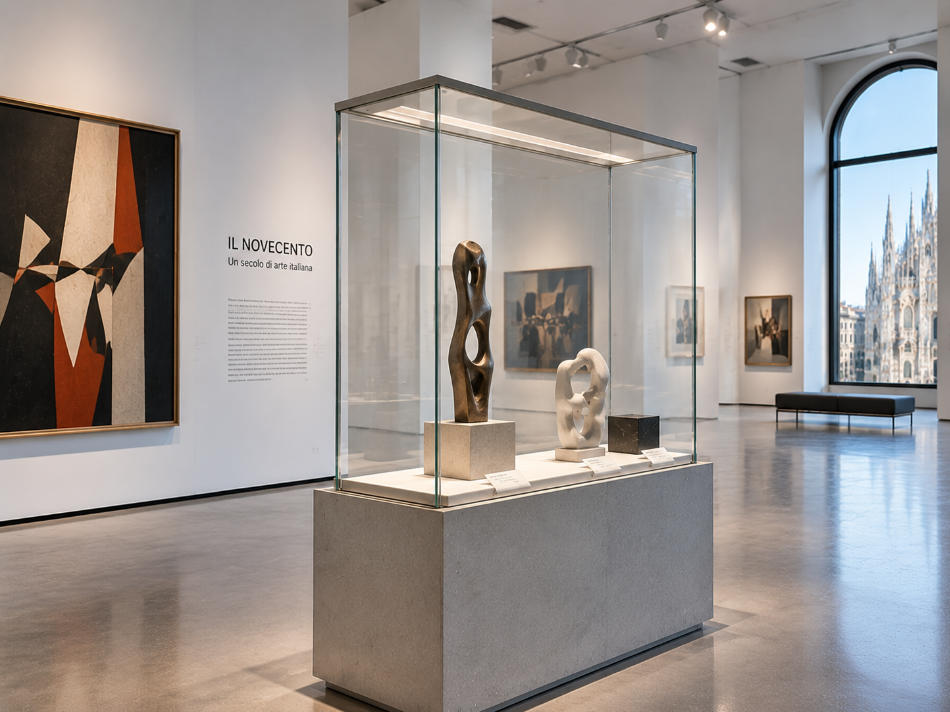
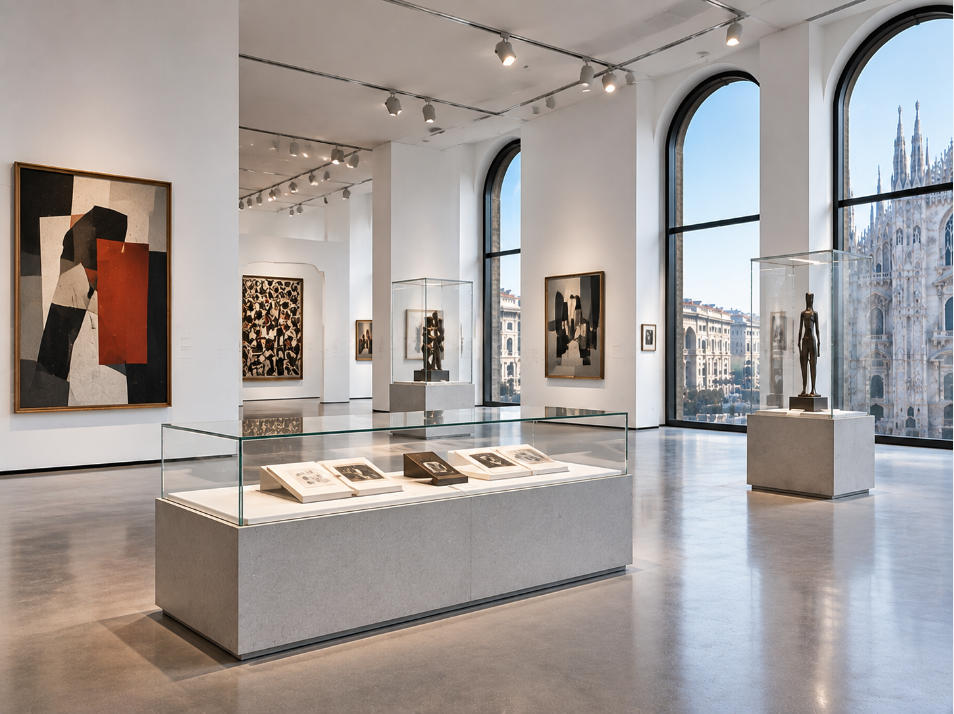
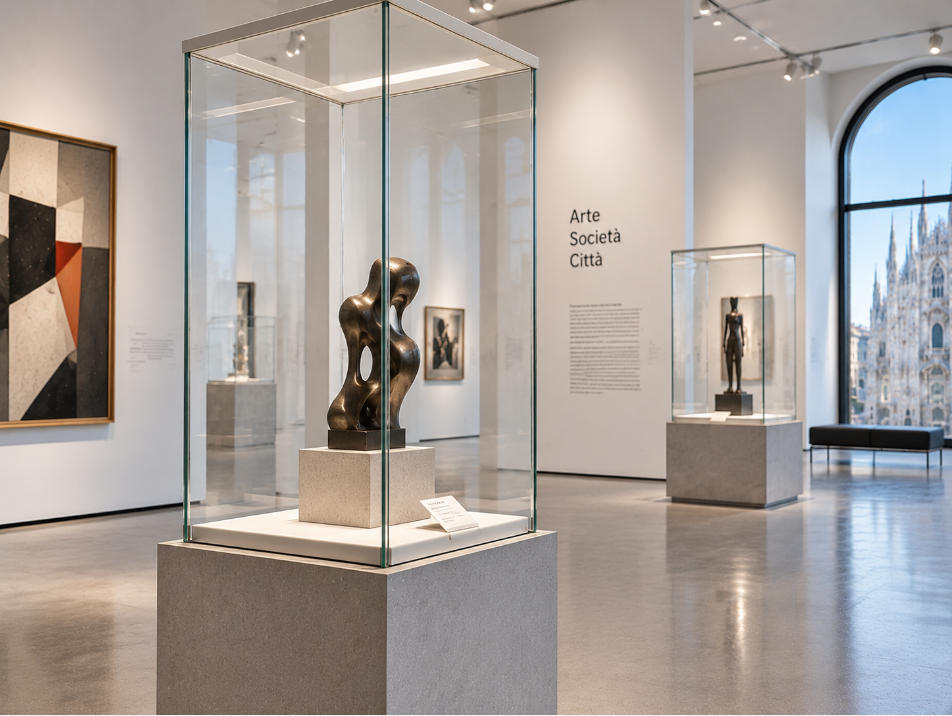
Modern Art · Italian Minimalism · Architectural Display
04 / Art Presentation
Open galleries and selective vitrines maintain a clear hierarchy between art and display furniture.
Modern Painting
Large paintings remain visually open against neutral white surfaces so visitors can experience scale, composition and color without surrounding visual clutter.
Art Objects
Smaller artworks and sensitive objects receive transparent protection while maintaining visual continuity with the surrounding galleries.
Architectural Views
Low-profile cases preserve long visual connections between interior exhibitions and broader architectural viewpoints throughout the museum.
Minimal Enclosures
Reduced framing and transparent glazing keep protective structures visually secondary to the artwork and exhibition space.
Track lighting and focused art spots create precise visual emphasis.
The museum uses directional lighting to build hierarchy across paintings, sculptures and enclosed objects rather than illuminating every surface equally.
Track-mounted fixtures allow exhibition arrangements to remain flexible, while focused art lighting provides stronger emphasis for individual works.
Around transparent cases, lighting angles need to be controlled carefully to reduce unnecessary reflections and preserve clear viewing through the glass.
The display system supports different artworks without introducing a competing visual language.
Modern art collections may require a combination of open wall presentation, pedestal display and transparent enclosure depending on the scale and sensitivity of individual works.
A broader range of museum display cases allows the exhibition strategy to adapt between low vitrines, freestanding cases and more integrated display formats while maintaining consistent material and glazing standards.
For Museo del Novecento, the strongest visual principle remains reduction: every protective structure should contribute function without becoming visually dominant.
Minimal construction requires precise fabrication because every joint remains visible.
White steel frames, large transparent panels and simple concrete bases leave little room for inconsistent alignment or unnecessary detailing.
Experienced museum showcase manufacturers can coordinate glazing, metal fabrication, bases, access systems and integrated components so different case formats share the same restrained architectural character.
The finished cases should appear visually simple because their technical details have been resolved accurately before installation.
Related modern museums explore different relationships between minimal architecture and art display.
Museo Can Framis Barcelona uses industrial art museum display cases within a converted industrial building where concrete structure, white gallery surfaces and contemporary painting remain closely connected.
Museo Carlo Bilotti Rome develops contemporary art museum display cases within a smaller Italian private museum combining sculpture, painting, natural daylight and restrained gallery architecture.
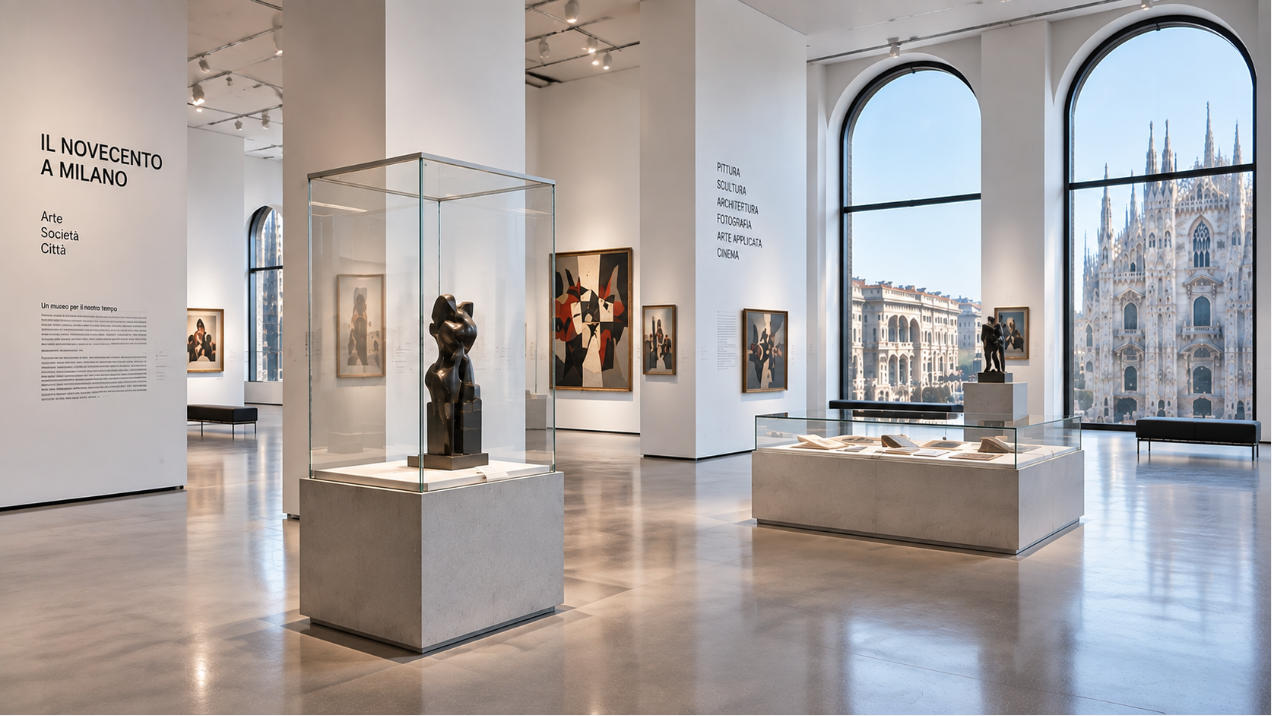
Modern art museum display cases designed to disappear into the architecture.
Museo del Novecento demonstrates how modern art museum display cases can provide protection and presentation while remaining visually secondary to modern art, gallery architecture and the wider visitor experience.
White steel reduces contrast, ultra-clear glass maintains transparency and concrete connects the cases to the architectural language of the museum.
Combined with fluid circulation and precise gallery lighting, the display system supports a restrained Italian museum environment where art remains the primary visual focus.

