
MULTI-STORE RETAIL · BRAND ROLLOUT SOLUTIONS
Multi Store Retail Display Solutions for Scalable Brand Rollouts
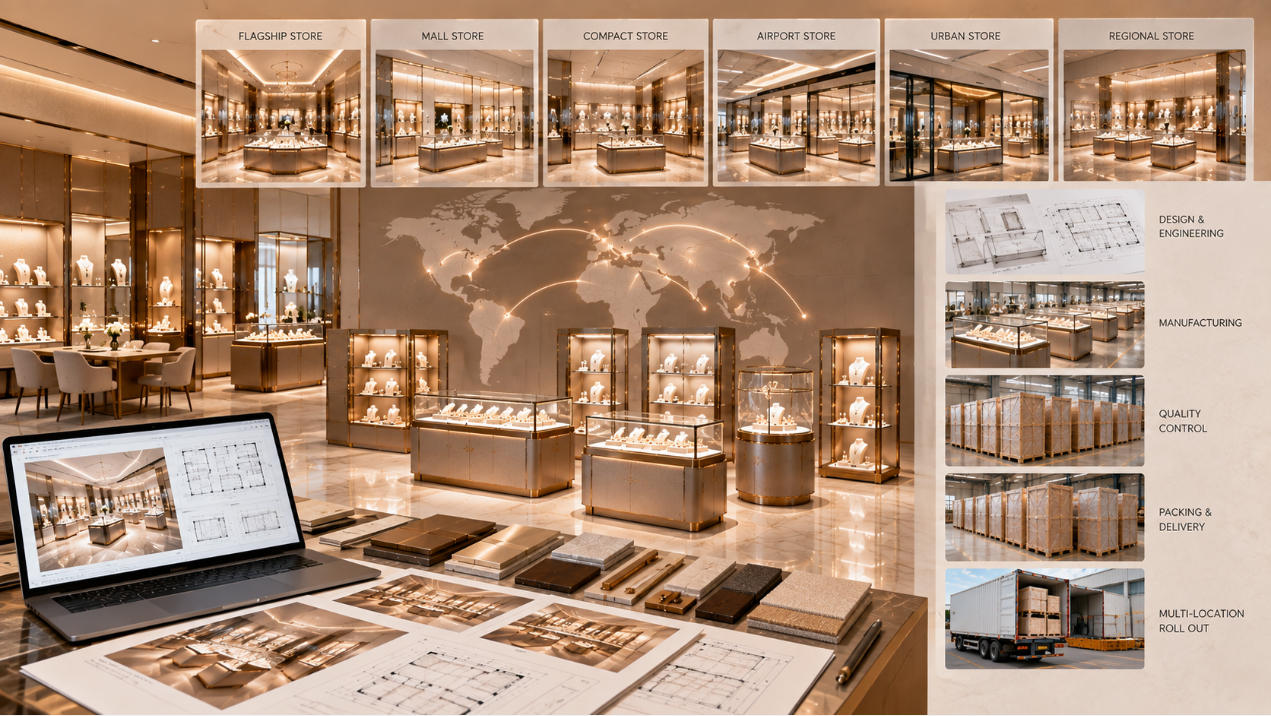
Expanding a retail brand across multiple locations creates a challenge that goes beyond producing more fixtures. The display system needs to remain recognizable from store to store while adapting to different footprints, product categories, commercial formats and rollout schedules.
SUNZEN develops multi store retail display solutions for brands that need a repeatable physical retail system rather than a collection of unrelated fixtures designed separately for every location.
From display cases and wall systems to islands, counters, retail store fixtures and supporting retail elements, the objective is to convert an approved store concept into a scalable system that can be configured, manufactured and deployed across a growing retail network.
FROM ONE STORE TO A REPEATABLE RETAIL SYSTEM
Multi-Store Retail Requires a Different Display Strategy
A single-store project can be optimized around one floor plan, one product mix and one opening date. A multi-store program has to answer a different question: which display decisions should remain consistent when the next ten, twenty or more locations are developed?
Materials, finishes, lighting, construction details and visual proportions may become brand standards. Dimensions, quantities, layouts and fixture combinations may need controlled flexibility.
The goal is not to make every store identical. It is to create a display system that allows different locations to remain visibly connected to the same retail brand.
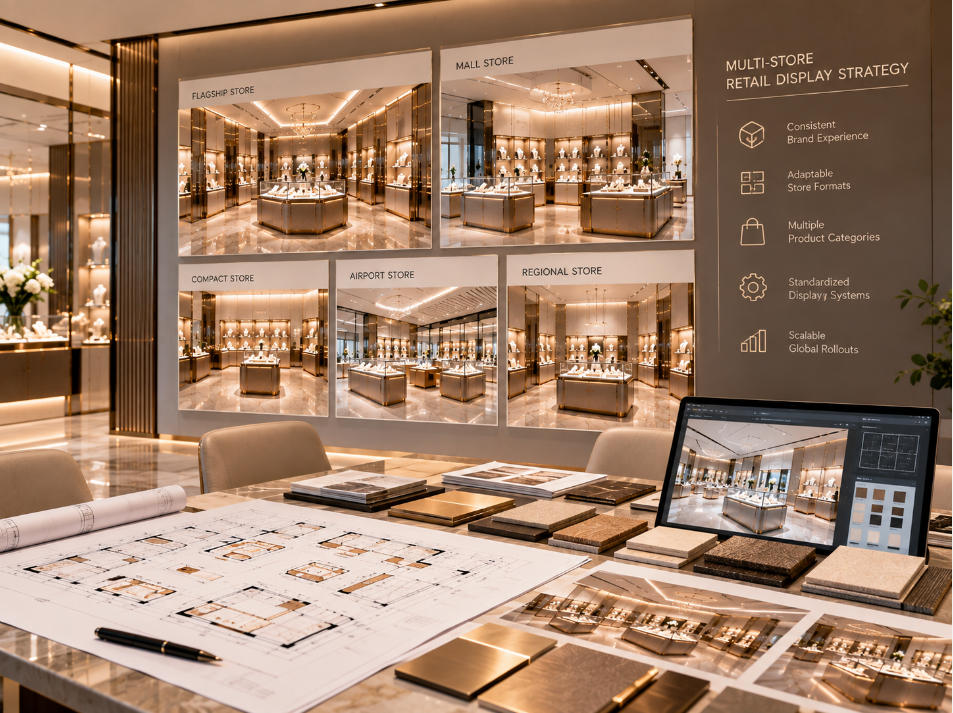
BUILD THE SYSTEM BEFORE REPEATING THE STORE
Turn the Retail Concept Into a Repeatable Display Architecture
A scalable display program works best when the original retail concept is translated into a controlled family of repeatable components rather than copied as one fixed store layout.
Display Cases
Define repeatable glass showcases, counters and enclosed product presentation units for merchandise that requires visibility, security and controlled access.
Wall Systems
Create wall-mounted or integrated display modules that can expand, contract or change configuration according to available wall dimensions.
Island Fixtures
Develop freestanding retail modules that can support product discovery, feature presentation and different circulation patterns.
Service & Storage
Coordinate consultation, service, storage and operational components with the visible customer-facing display language.
ONE BRAND · DIFFERENT LOCATIONS
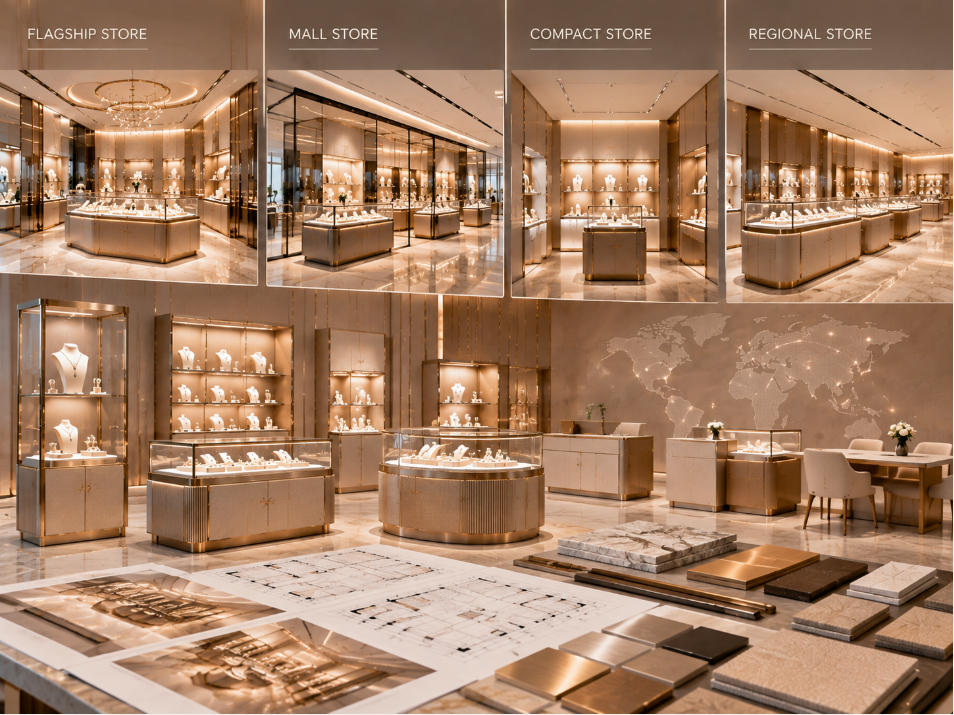
Multi Location Retail Display Solutions Need Controlled Flexibility
Multi location retail display solutions cannot assume that every store has the same floor area, frontage, wall dimensions or product assortment.
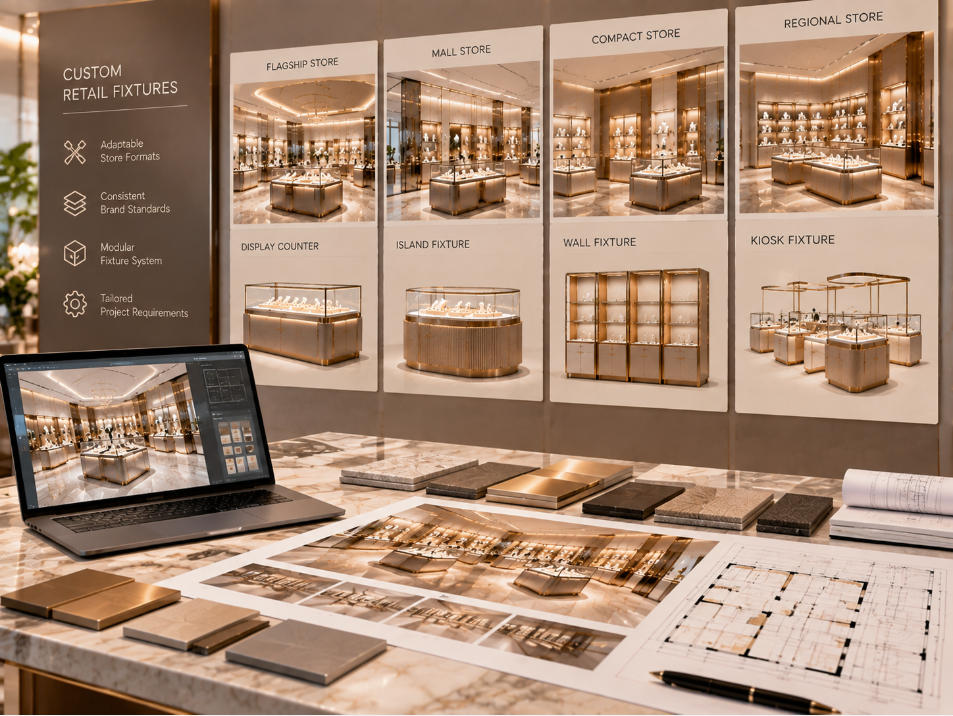
A flagship may require larger feature zones and a broader fixture family. A mall location may prioritize efficient circulation and modular displays. A compact store may use fewer fixtures while retaining the same materials, details and presentation language.
The scalable part of the system is therefore not one fixed layout. It is the relationship between standardized components and controlled store-specific adaptation.
STANDARDIZE THE ELEMENTS CUSTOMERS RECOGNIZE
Protect Brand Consistency Across the Retail Network
For a multi-store program, the most useful standards are the elements that create recognizable visual continuity through retail showcase design and repeatable manufacturing references.
Material Palette
Define approved glass, metals, cabinetry surfaces, stone, laminates and other visible materials that form the physical retail identity.
Finish References
Establish repeatable finish standards so later production batches have a clearer reference than photographs from earlier stores.
Lighting Language
Coordinate integrated lighting principles across showcases, shelving and product zones to maintain a recognizable presentation standard.
Construction Details
Control important profiles, junctions, hardware, access methods and visible details that influence both appearance and daily operation.
ADAPT THE SYSTEM TO THE PRODUCT CATEGORY
Retail Display Requirements Change With What the Brand Sells
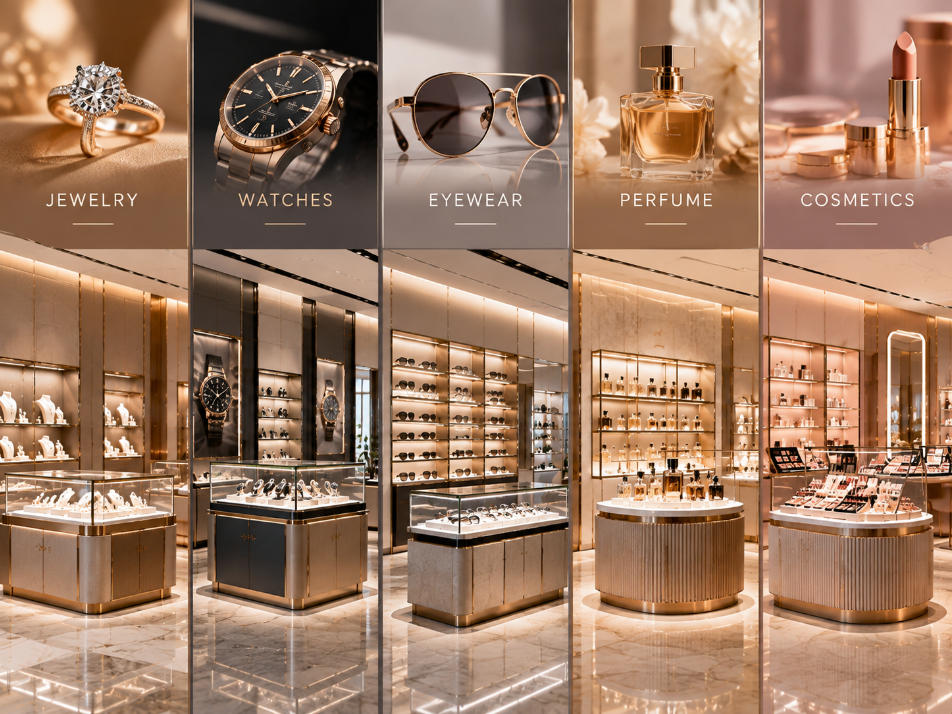
A multi-store display system also needs to respond to merchandise. Jewelry, watches, eyewear, perfume and cosmetics do not use fixtures in exactly the same way.
Jewelry and watches may place greater emphasis on enclosed presentation, lighting, security and controlled staff access. Eyewear may require higher product density and accessible wall or island presentation. Perfume and cosmetics can require testers, shelving, illuminated graphics and open product interaction.
SUNZEN develops the repeatable brand language around these operational differences rather than forcing unrelated product categories into one universal fixture format.
CUSTOMIZE WITHIN A CONTROLLED SYSTEM
Custom Retail Fixtures Can Support Store-Specific Requirements
Standardization should not eliminate customization. It should define where customization is necessary and how those variations remain connected with the wider retail system.
SUNZEN’s custom retail fixtures capability supports store-specific counters, wall units, islands, display furniture and other fixture requirements while maintaining the approved materials, finishes and design language of the wider rollout.
A special corner condition, unusual wall length or flagship feature can therefore become a controlled variation rather than forcing the entire store to become a separate design system.
CONTROL TWO LEVELS OF THE ROLLOUT
Separate Brand Standards From Location-Specific Decisions
Multi-store programs become easier to manage when teams know which decisions belong to the brand and which decisions belong to an individual location.
CREATE A REUSABLE FIXTURE LIBRARY
Give Repeatable Retail Fixtures Clear References
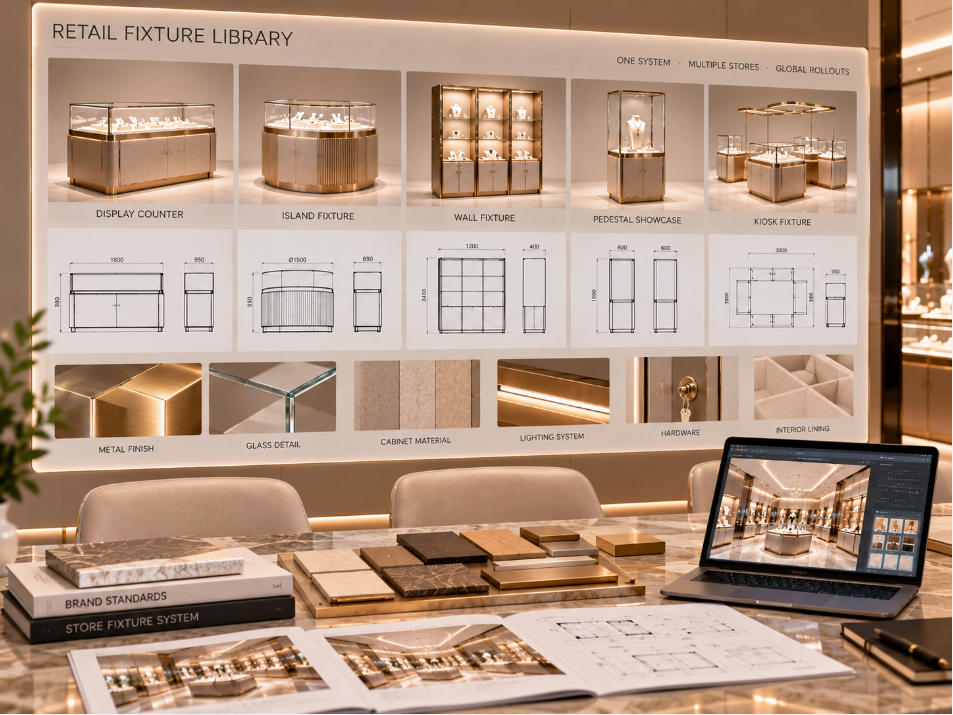
Once the retail display family is approved, repeatable components can be organized as a fixture library rather than treated as unnamed furniture from a previous store.
Each reference can connect a fixture with dimensions, material specifications, finishes, lighting, hardware, access requirements and approved variants.
New locations can then build store-specific schedules from the approved fixture library, making it easier to distinguish repeatable components from genuine site-specific customization.
FROM APPROVED DESIGN TO REPEATABLE PRODUCTION
Retail Fixture Manufacturing Becomes Part of the Rollout System
A multi-store program may continue through several opening phases, so the production reference established for the first stores needs to remain useful when later locations are released.
Working with a retail fixture manufacturer connects approved designs with engineering, material coordination, fabrication, assembly and quality control rather than treating each new store as an unrelated order.
The manufacturing objective is not simply producing more units. It is repeating approved standards while still managing controlled fixture variants and changing quantities.
WHEN THE SYSTEM INCLUDES ENCLOSED DISPLAY CASES
Coordinate Custom Display Cases With the Wider Fixture Program
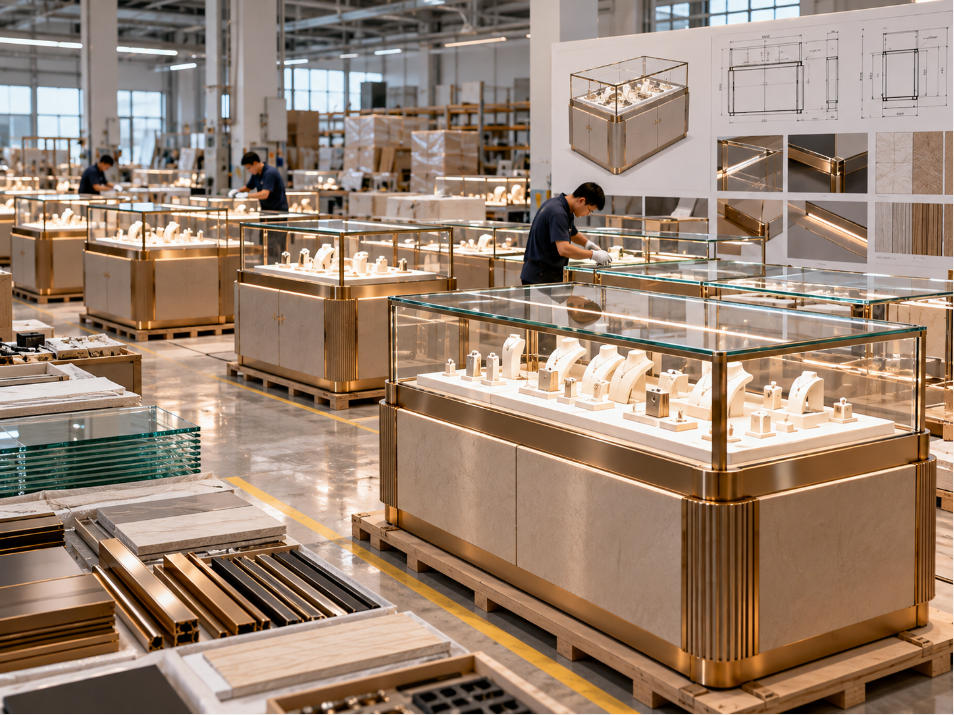
Many retail programs combine open fixtures with enclosed glass display cases. These cases may require different engineering, lighting, access, glass and security considerations while still sharing the wider store’s materials and visual language.
SUNZEN’s custom display case manufacturer capability supports these more specialized display units as part of the broader retail program.
This is why display case and showcase are important supporting concepts on this page, but they should not replace multi store retail display solutions as the page’s primary topic. The rollout can include display cases without being limited to display cases.
FACTORY CAPABILITY BEHIND REPEATABLE PRODUCTION
Coordinate Different Materials and Fixture Types Through Production
Multi-store retail fixtures can combine glass, metal, cabinetry, lighting, hardware, stone-look surfaces and other decorative components. Repeatability depends on coordinating these elements around approved drawings and specifications.
SUNZEN’s showcase factory capability supports the fabrication and assembly processes behind custom showcase and display case production.
For a multi-location program, factory capability becomes most valuable when it supports controlled repetition across different production batches rather than treating capacity alone as the objective.
SCALE IN PHASES
A Multi-Store Retail Program Does Not Need One Giant Production Batch
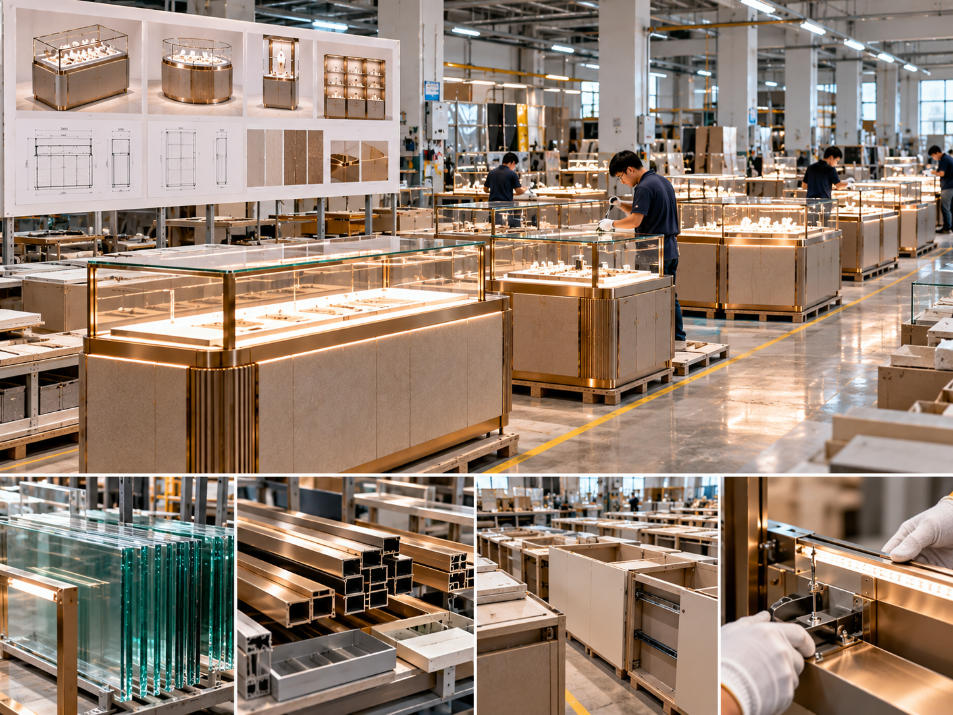
Retail expansion often happens in stages. A display system should support that reality rather than requiring every future location to be finalized at the same time.
Pilot
Confirm important fixture details, materials, finishes and operating requirements in an initial location or approved prototype package.
Standardize
Convert confirmed decisions into repeatable fixture references, specifications and controlled variants.
Deploy
Configure and manufacture store-specific quantities from the approved display system for scheduled locations.
Expand
Reuse the established system when additional stores, formats or markets enter the retail network.
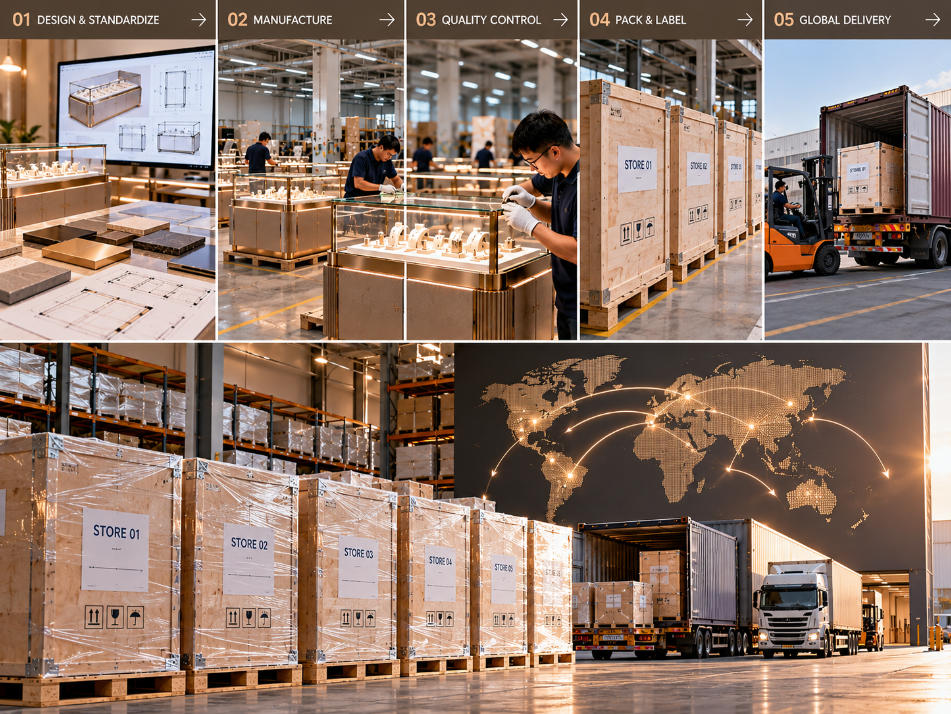
FROM DISPLAY SYSTEM TO MULTI-LOCATION DEPLOYMENT
Retail Display Rollout Connects Standards With Store-Level Execution
A display solution becomes a rollout system when approved components can be connected with individual store quantities, production phases and destinations.
For projects where deployment itself becomes the main procurement requirement, SUNZEN’s retail fixture rollout capability focuses more specifically on repeatable fixture standards and multi-location deployment.
This page remains the broader owner for the display solution itself: how the brand develops a repeatable physical display system that can support that rollout.
CONTROL CONSISTENCY ACROSS PRODUCTION
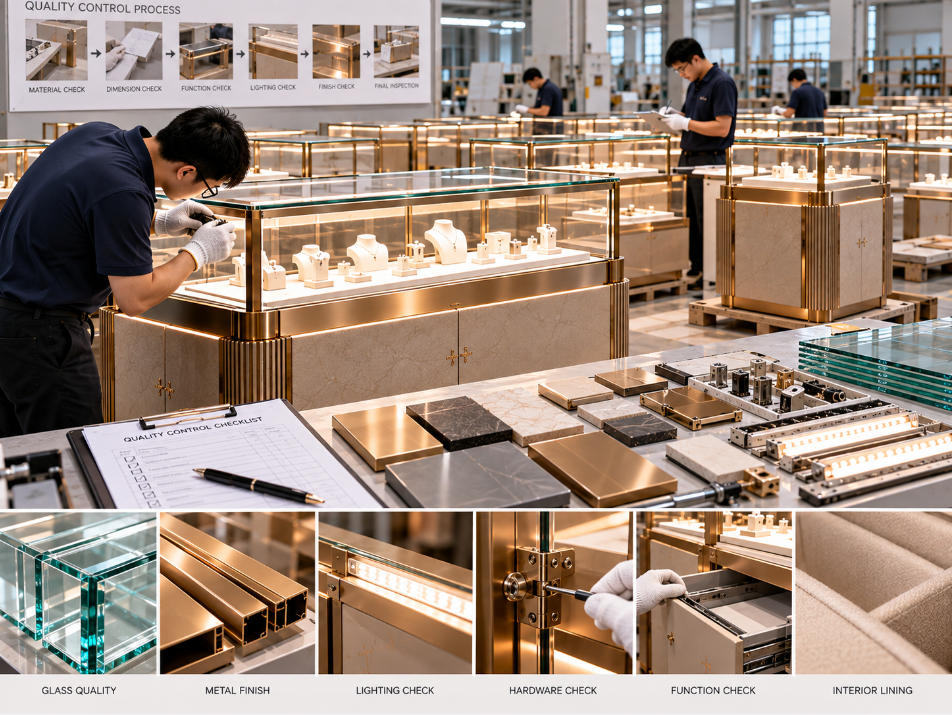
Quality Control Should Compare Fixtures With the Approved Standard
Quality control in a multi-store program has two dimensions. Each fixture needs to function correctly, and repeated fixtures also need to remain aligned with the approved visual and manufacturing references.
Glass alignment, cabinetry, metal finishes, lighting, hardware, doors, drawers and other functional elements can be reviewed during production and assembly.
Where the same fixture appears in several locations, consistency between production batches becomes part of the quality objective.
CONNECT EVERY FIXTURE WITH ITS DESTINATION
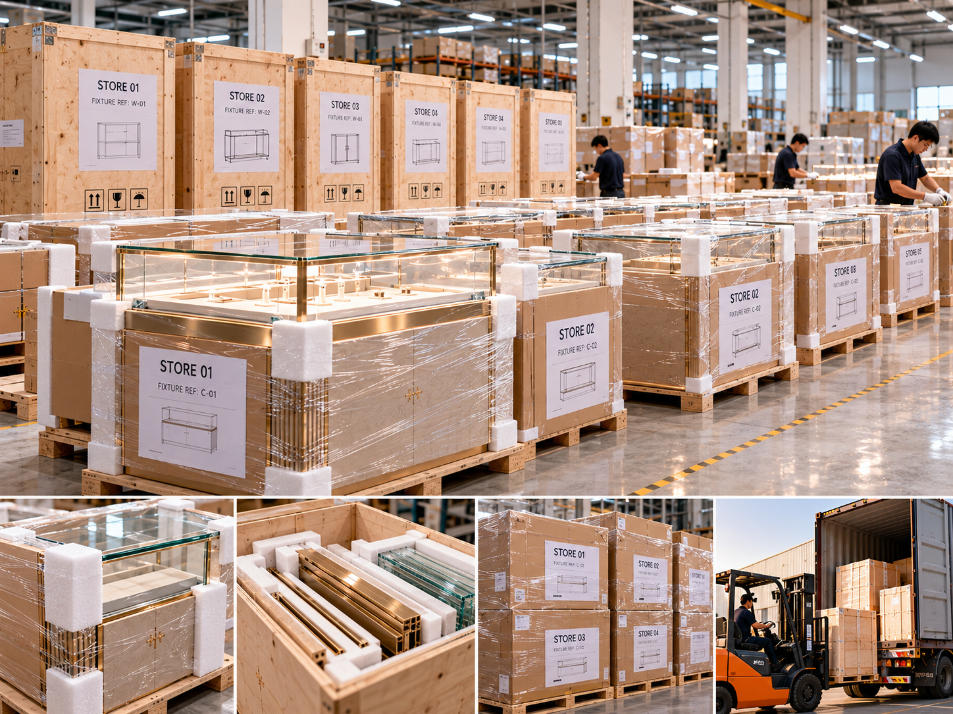
Store-Level Identification Helps Organize Multi-Location Projects
Repeated fixtures from different stores can look almost identical while having different dimensions, quantities or destinations.
Connecting packed units with fixture references, store codes or project phases helps maintain traceability between the approved schedule and the intended retail location.
This becomes increasingly useful as a program grows from several stores into a larger network with overlapping production and delivery schedules.
MULTI-STORE RETAIL DISPLAY WORKFLOW
From Brand Concept to Repeatable Retail Deployment
The process converts an approved retail concept into a controlled display system that can be adapted to individual stores without rebuilding the specification from the beginning.
Define
Identify the visual, material and functional elements that should remain consistent across the retail network.
Systemize
Convert approved display concepts into repeatable fixture families, specifications and controlled variants.
Configure
Apply the approved fixture library to individual store formats, layouts and merchandise requirements.
Manufacture
Produce store-specific quantities while maintaining the approved materials, finishes and construction references.
Deploy
Organize fixtures by location and rollout phase so each production batch remains connected with its intended destination.
PREPARE YOUR MULTI-STORE DISPLAY PROGRAM
What to Send SUNZEN for a Multi-Store Retail Project
You do not need every future store fully designed before discussing a scalable display system. The most useful starting information helps establish what should become repeatable and where flexibility will be required.
FAQ
Multi Store Retail Display Solutions FAQs
What are multi store retail display solutions?
Multi store retail display solutions are coordinated display and fixture systems developed for brands operating or expanding across multiple retail locations. The systems combine repeatable brand standards with controlled adaptations for different store formats, layouts and product categories.
Should every store use exactly the same retail fixtures?
Not necessarily. A scalable program normally standardizes important brand elements such as materials, finishes, lighting and fixture language while allowing quantities, dimensions and configurations to respond to individual store conditions.
What is the difference between multi store retail display solutions and retail fixture rollout?
Multi store retail display solutions focus on developing the repeatable physical display system and its rules. Retail fixture rollout focuses more specifically on applying approved fixture standards across multiple locations and deployment phases.
Can SUNZEN develop custom retail fixtures within a standardized rollout?
Yes. Store-specific fixtures can be developed for unusual dimensions, feature areas or local conditions while maintaining the approved materials, finishes and design language of the wider retail program.
Can one display system support different store formats?
Yes. A fixture family can be configured differently for flagship stores, mall locations, compact stores and other retail formats while retaining common brand standards.
Can the same multi-store program include display cases and open retail fixtures?
Yes. A retail program can combine enclosed glass display cases with open wall systems, islands, counters, shelving, storage and other branded fixtures depending on the merchandise and store concept.
Can stores be produced in different rollout phases?
Yes. An approved display system can support phased production so different stores or groups of stores can be released according to actual opening schedules rather than being manufactured in one batch.
What information should I send for a multi-store retail display project?
Useful information includes brand guidelines, store concepts, typical floor plans, fixture requirements, preferred materials, product categories, number of locations, target markets and expected rollout schedule.
BUILD ONCE · ADAPT · REPEAT · SCALE
Planning a Multi-Store Retail Brand Expansion?
Send SUNZEN your retail concept, typical store plans, fixture drawings or rollout requirements. We can help translate the concept into a repeatable display system, adapt it to different locations and coordinate custom manufacturing for phased expansion.

