
Custom Retail Fixtures Built Around Your Store, Brand & Products
Custom retail fixtures should do more than fit the dimensions of a store. They need to support how products are presented, how customers move, how staff sell and replenish merchandise, and how the brand should be recognized across the retail environment.
SUNZEN develops custom retail fixtures as coordinated store systems — from counters, showcases and wall displays to islands, shelving, storage and feature units — translating store requirements into practical fixture families that can move toward approval and manufacturing.
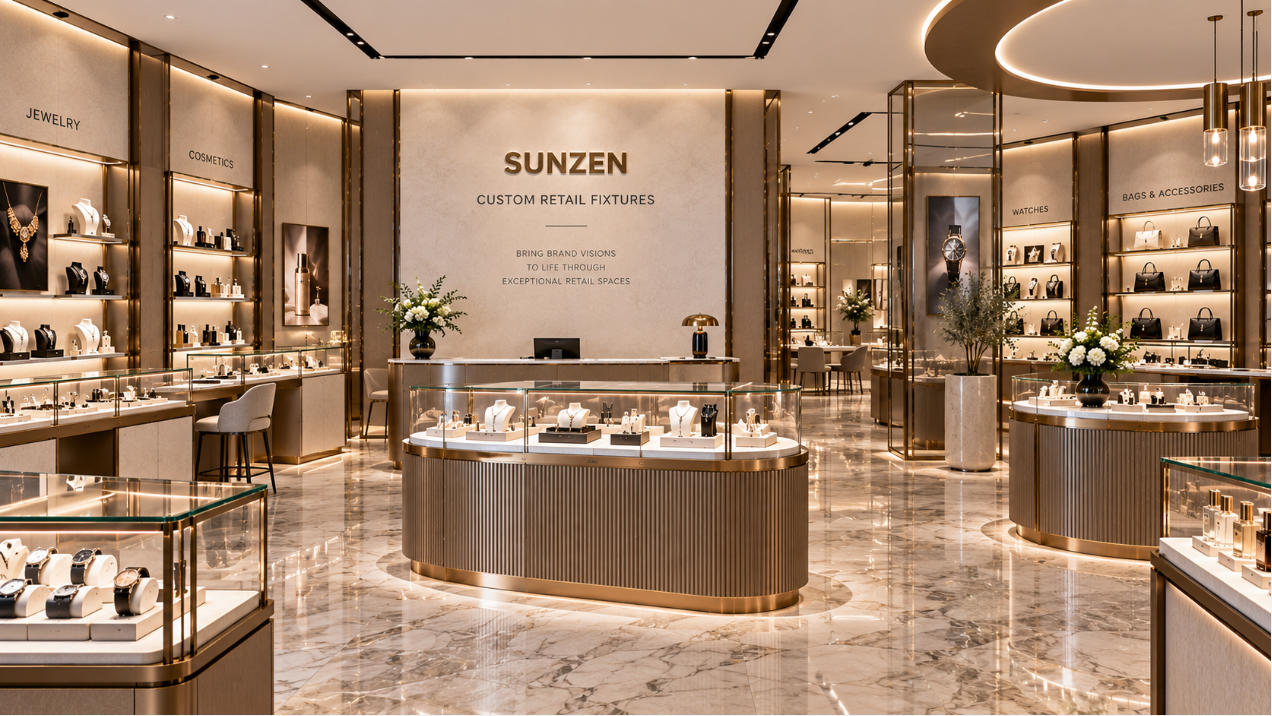
Custom Retail Fixtures Begin With How the Store Needs to Work
A custom fixture project should not begin by selecting unrelated counters, cabinets and shelves from a catalog. The more useful starting point is the store itself: what is being sold, where different products belong, how customers interact with them and what staff need behind each selling zone.
This changes the conversation from “Which fixture do we buy?” to “Which fixture families does this store actually need?”
What Are You Displaying?
Product size, value, quantity and merchandising density influence fixture proportions, display surfaces, glazing and access.
How Do Customers Shop?
Browsing, assisted selling, consultation and product trial create different requirements for counters, islands and display access.
How Does the Team Operate?
Storage, access, replenishment, security and service positions should be considered as part of the fixture rather than added later.
What Must Remain Recognizable?
Materials, proportions, detailing and repeated visual elements can turn individual fixtures into a recognizable retail system.
Turn the Store Brief Into a Fixture Brief
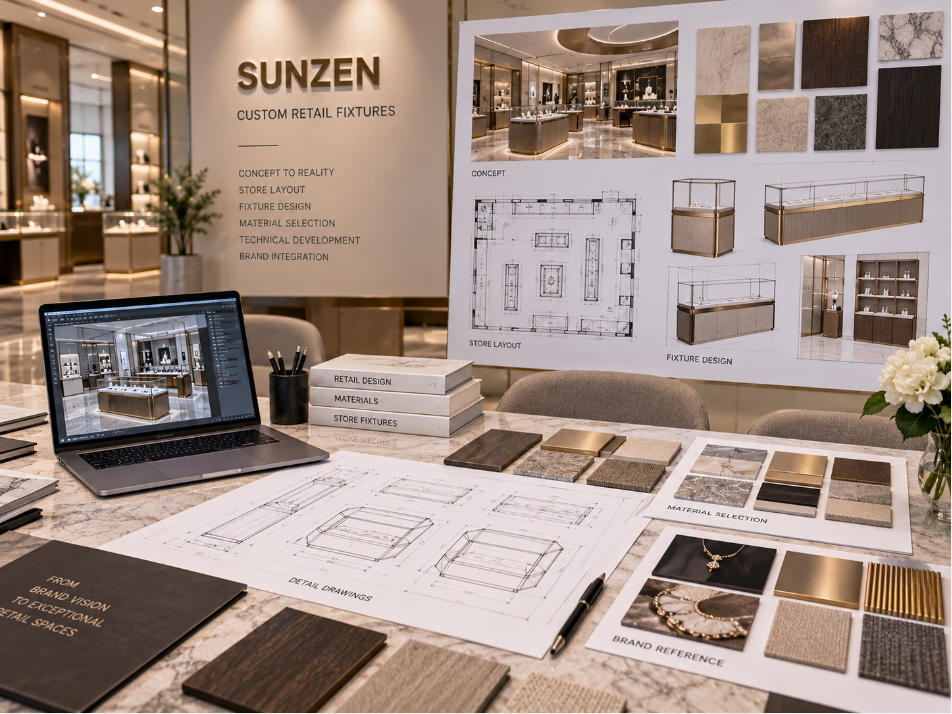
Store layouts and visual concepts describe the retail environment, but custom store fixtures need another level of definition before they can become physical products.
Each fixture should have a clear role: what it displays, where it sits, who uses it, how products are accessed, what needs to be stored and which visual characteristics must connect it with the rest of the store.
When a project is still at the wider concept stage, SUNZEN’s retail display design capabilities can support the transition from retail environment planning into individual fixture requirements.
One Store Can Need Several Custom Fixture Types — Without Looking Like Several Different Projects
Counters, showcases, wall displays and islands perform different jobs. They do not need to be identical, but they should share enough design logic to belong to the same store.
Sales Counters
Customer-facing fixtures combining presentation, staff access, working surfaces and concealed storage.
Display Cases & Showcases
Glazed fixtures developed around product visibility, lighting, security, access and presentation height.
Wall Displays
Vertical merchandising systems combining shelving, illuminated presentation, branded surfaces and storage.
Island Fixtures
Freestanding units that create merchandising zones while supporting circulation through the store.
Feature Displays
Focal fixtures for hero products, launches, seasonal collections or high-value merchandise.
Consultation Fixtures
Tables and counters designed around assisted selling, customer seating and closer product interaction.
Shelving Systems
Open merchandising structures adapted to product dimensions, assortment density and visual presentation.
Integrated Storage
Drawers, cabinets and concealed storage planned around daily staff operation rather than treated as an afterthought.
For projects requiring a broader range of fixture formats, explore SUNZEN custom display fixtures.
Custom Retail Fixtures Are More Than Custom Dimensions
Changing the width or height of a standard cabinet is only one level of customization. For a branded retail project, the more important decisions often involve how the fixture looks, performs and connects with the rest of the store.
Dimensions & Proportions
Adapt fixture width, height, depth, sightlines and presentation levels to the store layout and merchandise.
Material & Finish Language
Coordinate metal finishes, wood, stone, glass, laminates, upholstery and interior display surfaces.
Product Display
Define display height, product density, supports, shelving, risers and focal presentation according to merchandise.
Integrated Lighting
Coordinate fixture lighting with product visibility, fixture construction and the wider store lighting environment.
Access & Storage
Plan doors, drawers, staff access, stock storage and replenishment around daily store operation.
Product Protection
Add locks, controlled access and appropriate glazing where merchandise value or store operation requires them.
Create Consistency Without Making Every Fixture Identical
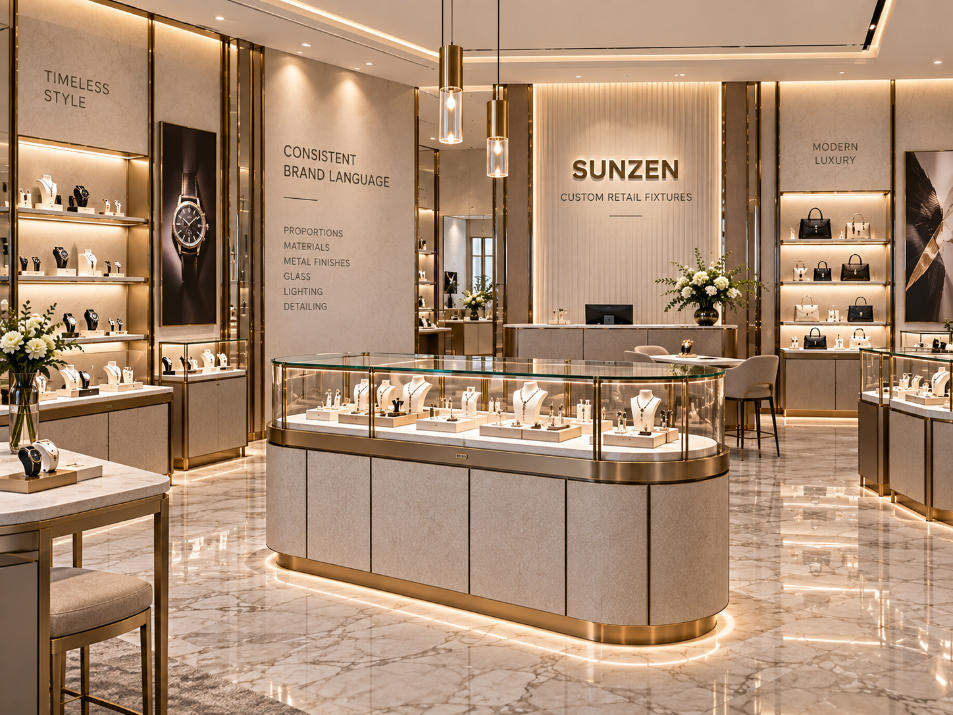
A strong fixture family usually repeats selected design rules rather than copying one cabinet shape throughout the store.
A wall display may be tall and architectural while an island needs to remain low and accessible. A showcase may use glass and secure access while an open shelf does not. Their functions differ, but shared proportions, materials, edge details, lighting language and finish references can make them feel intentionally related.
This is especially important for retail brands that need a recognizable environment without forcing every store zone into the same fixture format.
The Product Should Influence the Fixture — Not Be Added Afterward
Custom retail display fixtures work best when the merchandise is part of the design input. Different products create different requirements for visibility, density, access, lighting and security.
High-Value Products
Premium merchandise may require controlled access, clearer sightlines, refined presentation surfaces and focused lighting.
High-SKU Categories
Categories with many products may prioritize adjustable merchandising, repeated presentation modules and efficient replenishment.
Assisted-Selling Products
Products that require staff consultation may need counters, seating relationships, secure storage and easy staff-side access.
Use Glass Display Cases Where Visibility and Controlled Access Need to Work Together
Not every custom retail fixture needs to be enclosed. Open shelving, tables and wall systems can be more appropriate for accessible merchandise.
Glass display cases become important when the store needs high product visibility together with controlled access, focused lighting, dust protection or security.
Buyers developing this part of the fixture family can explore SUNZEN retail glass display cases for more specific glazing and retail-display considerations.
Standardize the Right Details Inside a Custom Fixture System
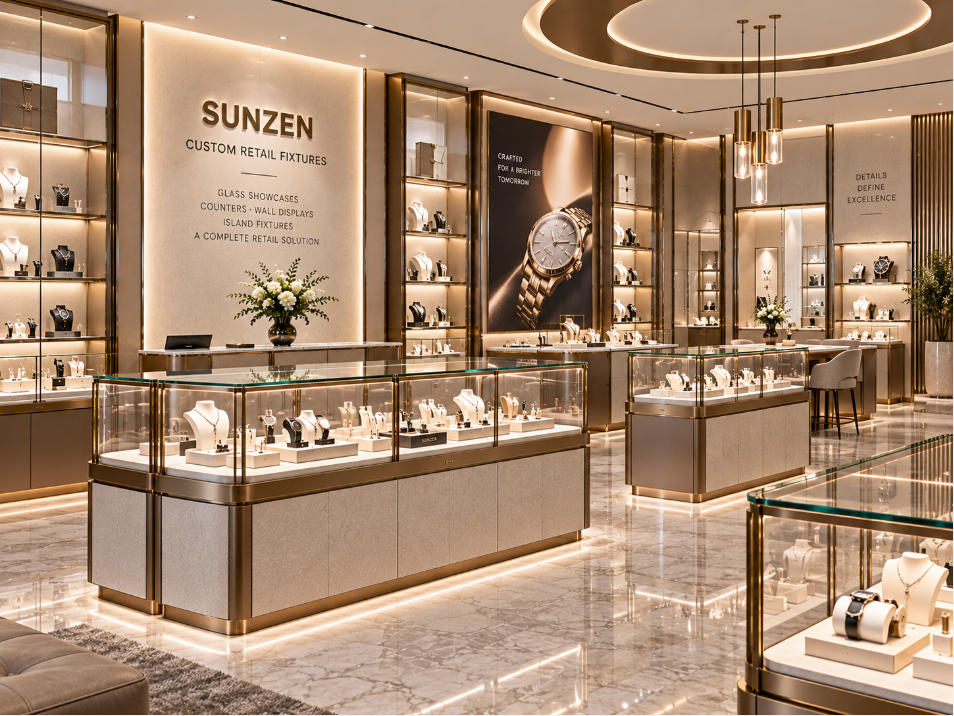
Fully custom retail fixtures can still contain repeatable rules. Standardizing selected components and design references can make the fixture family easier to approve, manufacture and maintain without turning it into a generic catalog system.
Shared Fixture Standards
- Core material and finish references
- Metal profiles and edge details
- Lighting specifications
- Hardware families
- Repeated construction details
- Brand-defining visual elements
Store & Merchandising Variables
- Fixture width and quantity
- Store-specific wall lengths
- Product assortment
- Island combinations
- Storage requirements
- Selected feature fixtures
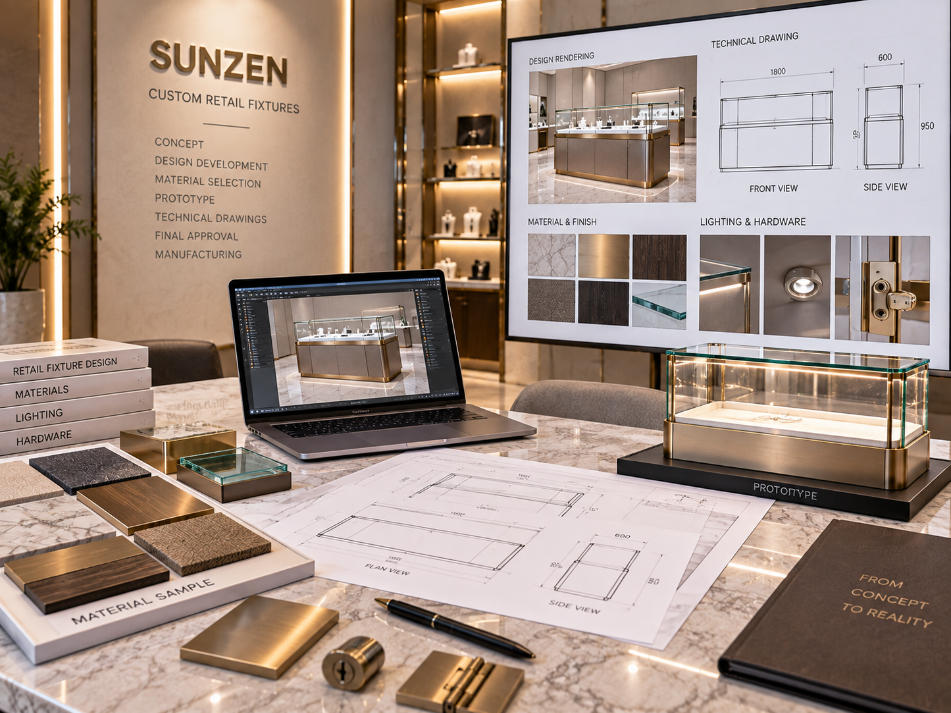
Turn the Custom Concept Into an Approved Fixture Standard
A rendering can communicate appearance, but manufacturing requires decisions that go deeper than appearance alone.
Before release, the fixture should be sufficiently defined in dimensions, materials, finishes, glass, lighting, hardware, access and internal construction.
For important or repeatable fixture families, samples, material approvals or prototypes can help resolve details before wider production.
A Good Custom Fixture Brief Creates a Cleaner Manufacturing Handoff
Once the fixture family has been defined and approved, the project changes phase. The main question is no longer what the fixtures should be; it becomes how consistently the approved requirements can be manufactured.
Move From Fixture Definition to Production Responsibility
For buyers evaluating production capability, engineering coordination and repeatability, continue to SUNZEN’s retail fixture manufacturer page.
Translate Approved Details Into Controlled Production
Projects that need a closer view of how approved display structures move through fabrication and assembly can explore SUNZEN showcase manufacturing capabilities.
A Practical Path From Store Requirement to Approved Fixture Family
Understand
Review the store, merchandise, customer journey, staff operation and brand requirements.
Define
Identify the required fixture families and define the role of each counter, showcase, wall unit or island.
Coordinate
Align dimensions, materials, finishes, lighting, access, storage and repeated brand details.
Approve
Confirm the fixture standard through drawings, samples, technical details and prototypes where required.
Custom Retail Fixtures Can Begin From Different Levels of Project Definition
Retail Brands & Chains
Develop a recognizable fixture family that can support brand standards while adapting to different store formats.
Design Firms
Translate design intent, materials and architectural details into fixture requirements suitable for technical development.
Contractors
Define custom fixture scope against store drawings, specifications and project requirements before production.
Boutique Owners
Develop a coordinated set of fixtures around the products, selling style, available floor area and desired store image.
What Should You Send SUNZEN?
You do not need every technical detail finalized before starting. The useful starting information depends on how far the project has already developed.
Store Information
Floor plans, dimensions, elevations, photographs or the intended store format.
Design References
Renderings, mood boards, material references, brand standards or existing fixture examples.
Product Information
Product categories, dimensions, quantities, merchandising density and presentation requirements.
Fixture Requirements
Known fixture types, approximate dimensions, functions, storage, access and security requirements.
Material Direction
Preferred glass, metal, wood, stone, colors, finishes and other visible material references.
Project Context
Store quantity, target schedule, project location and whether the fixtures may be repeated in future locations.
Custom Retail Fixtures FAQ
What are custom retail fixtures?
Custom retail fixtures are store fixtures developed around a specific retail environment, product range, brand identity and operating requirement rather than selected only from standard catalog sizes. They can include counters, showcases, wall displays, islands, shelving, feature displays and integrated storage.
What can be customized on retail fixtures?
Customization can include dimensions, proportions, materials, finishes, glass, lighting, shelving, display surfaces, storage, staff access, locks, hardware and brand-related detailing. The appropriate level of customization depends on the store, merchandise and project requirements.
Can different fixture types share the same store design language?
Yes. Counters, wall displays, showcases and islands can perform different functions while sharing selected proportions, materials, metal finishes, lighting details and construction references so they appear as one coordinated fixture family.
Do all custom store fixtures need to be completely unique?
No. A custom fixture system can combine project-specific forms with repeatable materials, hardware, lighting specifications and construction details. Standardizing selected elements can improve consistency while allowing fixture sizes and configurations to change where the store requires it.
Can SUNZEN work from retail design drawings or renderings?
SUNZEN can review available store layouts, elevations, renderings, fixture concepts, material references and product information as inputs for fixture development. Additional dimensions, specifications or technical details may need to be clarified before manufacturing release.
What information is useful when requesting custom retail fixtures?
Useful information includes store drawings, fixture requirements, product categories, dimensions, material and finish references, lighting requirements, storage and access needs, quantities, project locations and the intended schedule. Projects can begin with different levels of detail depending on their development stage.
Start With Your Store, Products and Fixture Requirements
Send SUNZEN your store layout, design references, product categories, fixture requirements and material direction. We can review how counters, showcases, wall displays, islands and other custom retail fixtures can be developed as one coordinated system.

