
Retail Fixture Manufacturer for Custom Brand & Multi-Store Programs
SUNZEN works with retail brands, chain operators, store development teams and procurement teams that need more than individual display units. We develop and manufacture custom retail fixtures as coordinated store programs — helping approved designs, materials, finishes and fixture families remain consistent as a brand moves from one store to multiple locations.
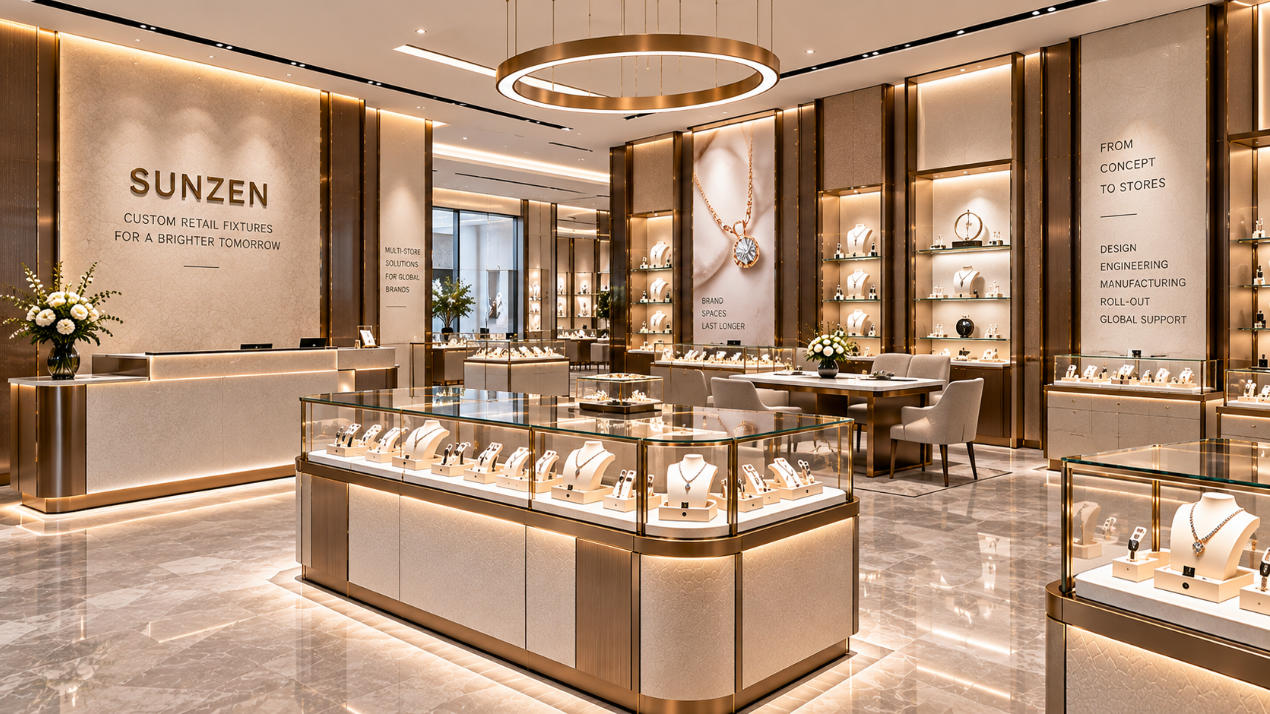
A Retail Fixture Manufacturer Should Understand the Store Behind the Fixtures
A branded retail environment is rarely built from one fixture type. Counters, display tables, wall systems, shelving, cabinets, islands, storage units and showcases may all perform different jobs while still needing to look and operate as one store.
That changes the role of the manufacturer. The objective is not simply to manufacture each item correctly. It is to preserve the relationships between the fixtures so the complete retail environment remains recognizable when the same concept is adapted to another location.
One Visual Identity
Materials, colors, metal finishes, glass, lighting and detailing should communicate the same brand language across different fixture types.
Different Functions, Related Design
A counter does not need to look identical to a wall unit, but both should clearly belong to the same retail system.
Designed Beyond One Location
The manufacturing system should support future store sizes, quantities and rollout phases without rebuilding the fixture language from the beginning.
Turn a Brand Concept Into a Custom Retail Fixture Family
Custom retail fixtures are most useful when customization is applied to a coordinated system rather than to unrelated individual pieces.
SUNZEN can begin with a store concept, reference images, approved drawings or an existing fixture standard. The objective is to identify the design elements that should remain recognizable throughout the store and translate them into practical fixture types.
Projects that require a broader range of made-to-order retail products can also draw from our custom display fixtures, while glass-intensive areas can be developed through custom glass display cases where visibility, lighting and secure presentation become more important.
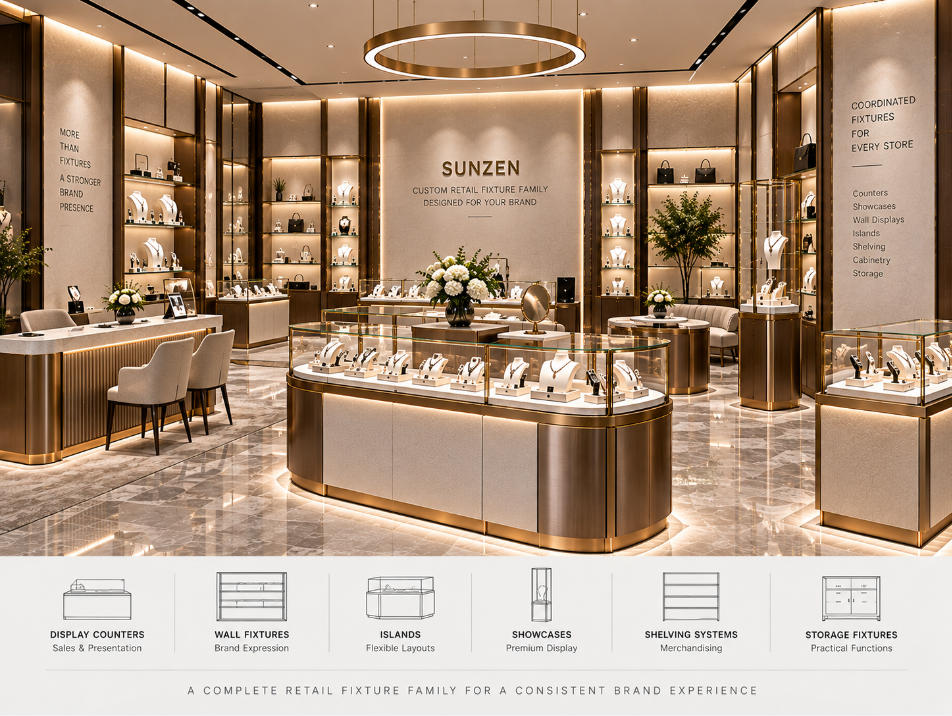
One Retail Program Can Include Many Fixture Types
A retail fixture manufacturer needs to manage different product structures without allowing the store to become visually fragmented. The exact fixture mix depends on the merchandise, store format and selling environment.
Display Counters
Customer-facing counters can combine merchandise presentation, staff access, storage and transaction-related functions.
Wall Fixtures
Perimeter systems can combine shelving, cabinetry, lighting, product presentation and branded architectural elements.
Islands & Tables
Freestanding fixtures create merchandising zones and help organize customer movement through the selling floor.
Display Cases & Showcases
Glass display cases and showcases can be integrated where products require clearer visibility, controlled access, premium lighting or greater security.
Shelving Systems
Adjustable or fixed shelving can support changing product assortments while remaining aligned with the wider fixture language.
Storage Fixtures
Concealed drawers, cabinets and back-of-house functions can be integrated into customer-facing fixtures where required.
Feature Displays
Signature fixtures can create focal points for launches, premium collections and high-priority merchandise.
Branded Elements
Signage zones, graphics, material details and architectural accents can connect individual fixtures to the broader retail identity.
The First Store Should Create a Standard — Not Become an Exception
For a brand planning more than one location, the first successful fixture should become useful information for the next store. Dimensions, finishes, materials, hardware, lighting and construction details can be converted into approved references rather than being interpreted again with every new order.
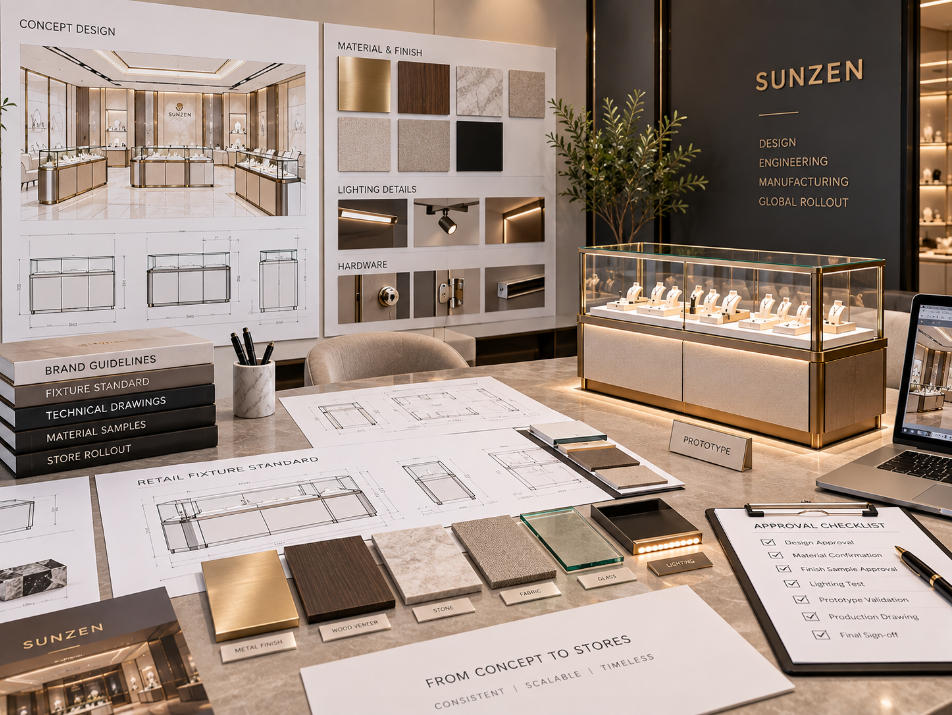
What Becomes Part of the Approved Fixture Standard?
The exact control documents depend on the project, but the goal is consistent: turn approved design decisions into references that can be used again.
- Approved dimensions and construction details
- Material and finish references
- Glass, metal and hardware specifications
- Lighting and electrical requirements
- Approved samples or prototype references
- Fixture identification and revision information
Keep the Brand Consistent While the Fixture Mix Changes
Multi-store consistency does not mean forcing the same fixture quantity and layout into every location. Store footprints, entrances, columns, product mixes and customer flows can vary.
A stronger retail fixture program separates the elements that define the brand from the elements that can change with the site.
Protect the Brand Standard
Core finishes, construction language, hardware families, lighting character, display proportions and signature details can remain controlled across the store network.
Change the Fixture Combination
Quantities, module lengths, wall runs, island combinations and selected functions can adapt to the footprint and merchandising requirements of each location.
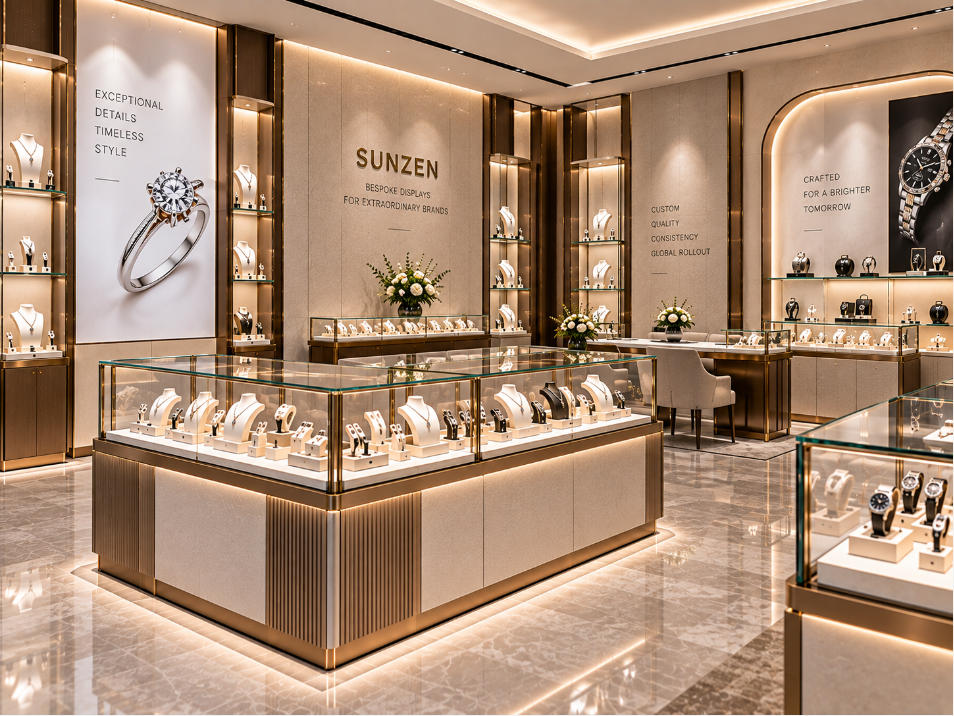
Display Cases and Showcases Are Part of the Retail Fixture System
Some retail categories need more glass-intensive fixtures. Jewelry, watches, cosmetics, collectibles and premium products may require illuminated counters, secure cabinets, tower showcases or other enclosed presentation formats.
In a complete store program, these display cases should not feel like unrelated cabinets placed inside the interior. Their metal finishes, bases, lighting, proportions and surrounding materials should connect naturally with the rest of the retail fixture family.
Buyers evaluating specialist glass showcase manufacturers can review SUNZEN’s glass-focused manufacturing capability, while retail glass display cases covers the glass display case application in more detail.
Retail Fixture Manufacturing Becomes More Valuable as the Brand Expands
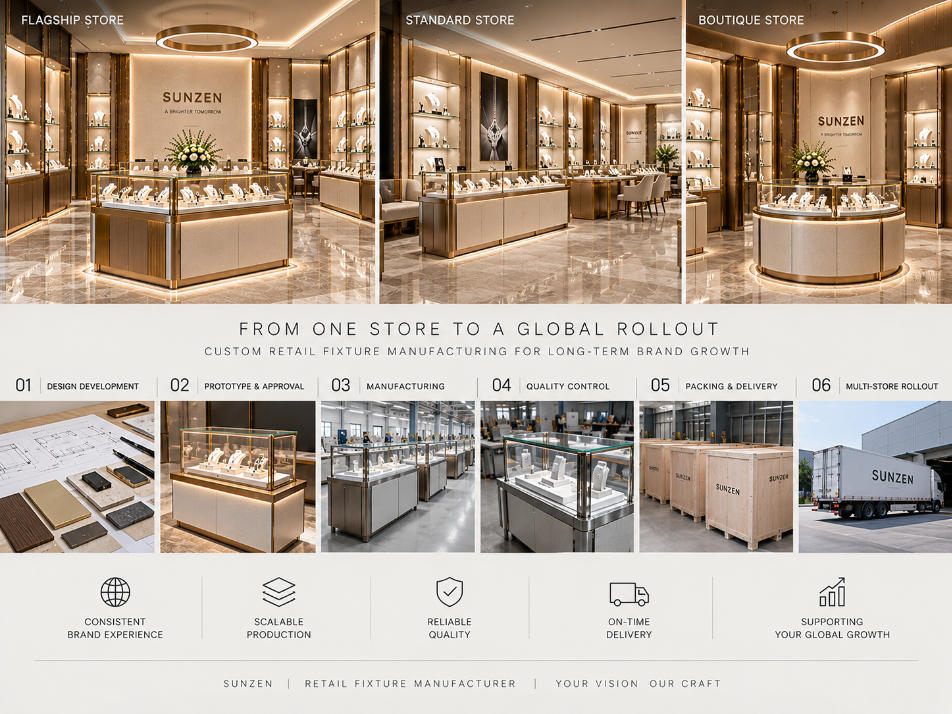
A single store proves the concept. A multi-store program tests whether the fixture standard can survive changes in quantity, production timing, location and store format.
Approve the Reference
Confirm the fixture design, materials, finishes, functions and construction details that define the approved standard.
Build the Store Package
Select the required fixture types and quantities for the footprint and merchandise plan of each location.
Produce by Rollout Phase
Manufacture fixture batches against controlled references while coordinating quantities and project timing.
Repeat When the Brand Grows
Use established standards for future locations, replacement units, additional quantities and updated store packages.
A Scalable Retail Program Needs More Than a Custom Design
Customization defines what belongs to the brand. Manufacturing defines whether those decisions can be reproduced. Factory execution determines whether the approved result remains stable as quantities and locations increase.
Define What Belongs to Your Brand
Dimensions, fixture types, materials, finishes, lighting and display functions can be developed around the retail concept rather than selected from a fixed catalogue.
Explore custom display fixtures for the wider made-to-order fixture scope.
Turn Approved Standards Into Repeatable Fixtures
Controlled production connects drawings, samples, materials, finishes and assembly requirements so the fixture family can be reproduced across different batches.
Review our showcase manufacturing capability for a closer look at production execution.
Connect the Program to Production
Factory involvement becomes important when a brand moves from one approved fixture into repeated quantities, multiple fixture types and future orders.
SUNZEN also serves buyers searching for a direct showcase factory relationship for custom showcase production.
The Fixture Program Continues After the First Production Run
Retail brands change. New stores open, existing stores are refurbished, collections evolve and individual fixtures may need replacement or additional quantities.
A useful retail fixture manufacturing relationship therefore extends beyond the first shipment. Approved specifications, revision records and production references can help future orders remain connected to the original program.
Where a brand needs a fixture system that can be recombined between store formats, our modular glass display cases provide another approach to long-term retail flexibility.
What Should a Brand Ask a Retail Store Fixture Manufacturer?
The right questions are not limited to whether a manufacturer can make a particular counter or cabinet. For a growing retail program, the more important question is whether the manufacturer can preserve the approved system as the project changes and expands.
Can You Work From Our Existing Brand Design?
Confirm whether the manufacturer can begin from approved concepts, drawings and material standards rather than forcing the project into a standard catalogue.
Can You Manage Different Fixture Types?
A complete store may combine wood, metal, glass, lighting, storage and different construction methods across the same fixture family.
How Do You Establish the Approved Standard?
Ask how drawings, samples, finishes, hardware and prototypes are documented before repeat production begins.
How Are Store Variations Managed?
Different locations may require changes without allowing the core fixture language to drift from the brand standard.
Can You Support Repeat Production?
Future stores and replenishment orders should be based on controlled references rather than a new interpretation of the original design.
How Are Revisions Controlled?
When a fixture evolves, updated details should be identified clearly so future batches follow the correct version.
What to Send a Retail Fixture Manufacturer
You do not need every production detail finalized before the first conversation. Start with the information that explains the brand, fixture scope and rollout requirement.
Layout & Store Formats
Share floor plans, store dimensions, location types or representative layouts for the formats you plan to develop.
Drawings & Brand References
Send concepts, renders, CAD files, material boards, existing fixture standards or reference images according to the stage of your project.
Quantities & Rollout Plan
Indicate expected fixture quantities, number of stores, target markets, rollout phases and required delivery timing where available.
Retail Fixture Manufacturer FAQ
What does a retail fixture manufacturer produce?
A retail fixture manufacturer can produce counters, display tables, wall fixtures, shelving, cabinets, islands, storage units, display cases, showcases and other custom store fixtures. For branded retail programs, these products can be developed as a coordinated fixture family rather than unrelated individual units.
What is a custom retail fixture manufacturer?
A custom retail fixture manufacturer develops fixtures around a specific brand, store concept, product category or project requirement instead of supplying only standard catalogue products. Customization may include dimensions, materials, finishes, glass, lighting, hardware, storage and branded details.
Can a retail store fixture manufacturer work from our existing design?
Yes. A retail store fixture manufacturer can work from approved concepts, renders, drawings, material references or existing fixture standards. The manufacturing scope can then focus on technical development, samples, production details and repeatable execution.
Are display cases and showcases considered retail fixtures?
Yes. Display cases and showcases are important types of retail fixtures, particularly for products that require glass presentation, lighting, controlled access or security. A complete retail fixture program may combine showcases with counters, wall systems, shelving, tables and storage fixtures.
Can SUNZEN support retail fixture manufacturing for multiple stores?
SUNZEN can develop retail fixture programs around approved drawings, materials, finishes and fixture standards for repeat production. The fixture combination can then be adapted to different store formats while maintaining the established brand language.
What information should I send for a custom retail fixture project?
Useful starting information includes store plans, fixture lists, concepts or drawings, material and finish references, quantities, target locations, rollout phases and required dates. If some details are still open, they can be identified during the initial project review.
Discuss Your Custom Retail Fixture & Store Rollout Requirements
Send SUNZEN your store plans, fixture schedule, design references, materials, quantities and rollout expectations. We can review how the fixture family should be developed for the first location and how the approved standard can support future stores and repeat production.

