
Modular Jewelry Display Cases Designed Around How Your Store Sells
Build a jewelry store from coordinated display modules instead of treating every showcase as an isolated fixture. SUNZEN develops modular jewelry display cases and showcases around merchandise, customer interaction and store zones — allowing counters, islands, wall displays and feature units to work together as one premium retail system.
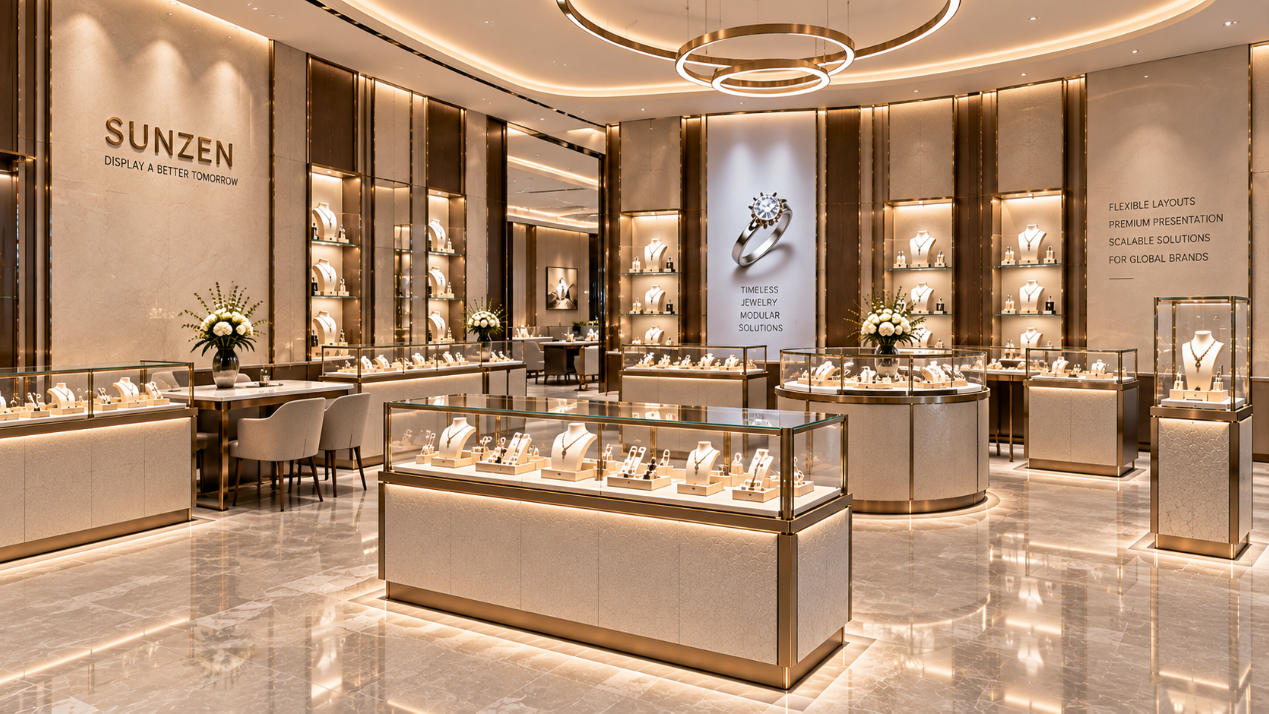
The Right Module Depends on What You Are Selling
A jewelry store does not present every product in the same way. Engagement rings may need a focused consultation environment, necklaces benefit from vertical presentation, high-value signature pieces need visual separation, while high-volume collections often require efficient tray-based selling.
That is why a useful modular jewelry display system should not begin with a catalogue of identical cabinets. It should begin with the merchandise and the way customers interact with it.
Close-Range Comparison
Counter-height modules support side-by-side product comparison, tray presentation and staff-assisted selling where customers need to examine details closely.
Vertical Presentation
Taller presentation zones give necklaces and statement pieces enough visual height while helping key products remain visible from deeper inside the store.
Coordinated Selling Runs
Repeating counter modules can organize larger collections without losing the visual consistency of the overall jewelry environment.
Focused Display Moments
Pedestal and tower modules can isolate important pieces from surrounding merchandise and create stronger focal points within the customer journey.
Design the Display Around the Customer Conversation
Jewelry retail is highly interactive. Customers stop, compare, ask questions, try pieces on and often move between several collections before making a decision.
The position and format of a display case therefore affect more than product visibility. They influence where customers pause, where staff stand, how merchandise is accessed and whether a conversation can continue comfortably.
A broader jewelry store design plan can establish circulation and customer zones, while the modular display system gives each zone the fixture format required for its selling role.
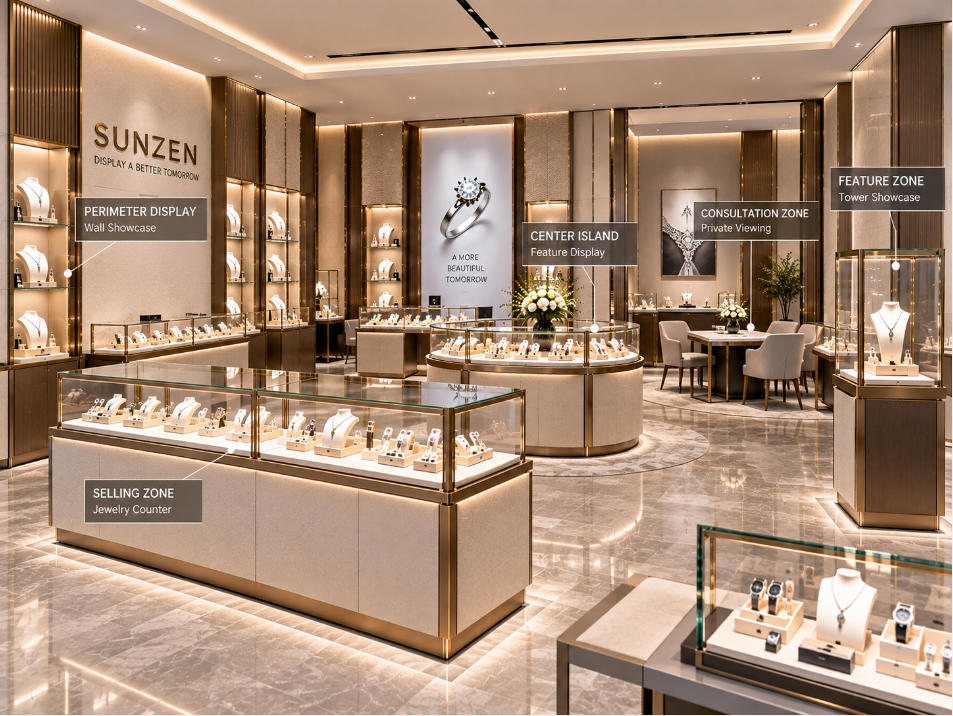
Give Each Jewelry Store Zone the Right Display Role
A modular system becomes useful when different fixture types can perform different jobs while still sharing one visual language.
Create the First Product Story
Use lower or more open modules to introduce signature collections without creating a visual barrier at the entrance.
Build the Core Browsing Route
Counters and islands organize major collections while defining circulation and creating natural points for staff interaction.
Turn Walls Into Selling Space
Integrated wall modules expand display capacity while keeping the central floor available for circulation and consultation.
Give Important Pieces More Space
Towers and pedestal modules create visual pauses for new collections, signature jewelry and high-value pieces.
Support Longer Purchase Decisions
Consultation-oriented modules can combine presentation, seating, staff access and secure temporary product handling.
Keep Operations Behind the Presentation
Storage, drawers, packaging and staff functions can be integrated into selected modules without interrupting the premium customer-facing environment.
One Jewelry Store Can Need Several Display Case Formats
Modular does not mean repeating one cabinet everywhere. A stronger system combines different formats according to the merchandise, floor plan and desired customer experience.
Selling Counters
A jewelry counter showcase works well for staff-assisted selling, product comparison and frequently accessed collections.
Display Tables
A jewelry display table can create a more open merchandising moment for curated collections and central floor presentation.
Wall Modules
A jewelry wall showcase makes productive use of the perimeter while creating vertical layers of illuminated merchandise.
Feature Towers
A jewelry tower showcase provides a freestanding focal point for selected pieces that deserve more visual separation.
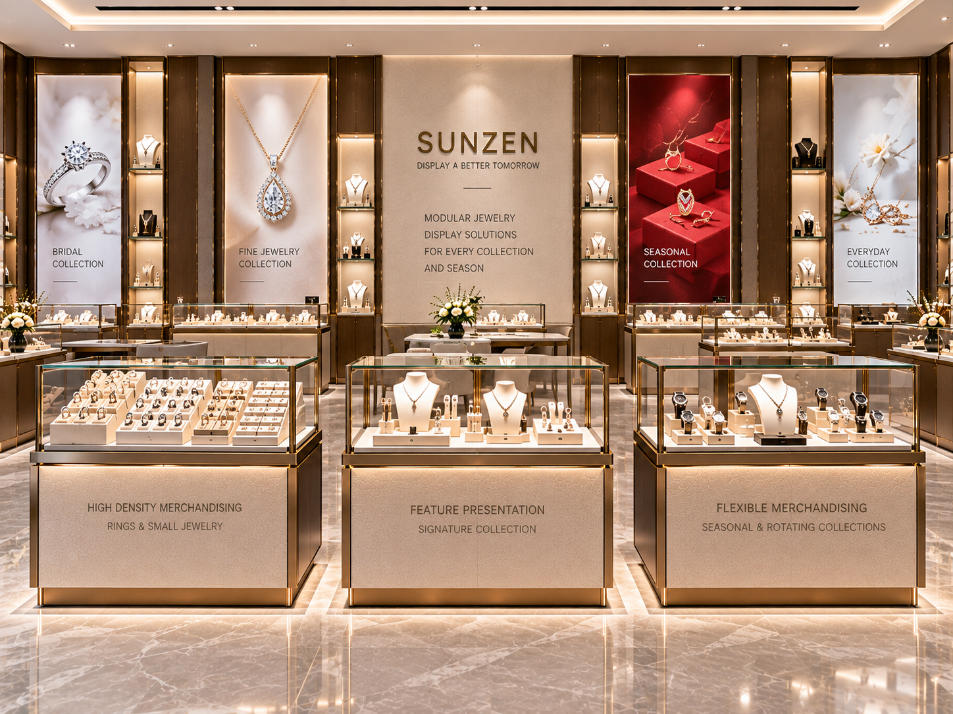
Let the Store Change Without Rebuilding Every Display Zone
Jewelry assortments do not remain static. New launches, bridal campaigns, seasonal collections and changes in product mix can all shift the amount and type of display space needed.
A modular jewelry display system can make those changes easier to manage when the fixture family includes complementary counters, islands, feature units and perimeter displays.
The objective is not constant rearrangement. It is to avoid making every merchandising change dependent on a completely new fixture concept.
Flexibility Cannot Come at the Expense of Jewelry Presentation
Modular jewelry showcases still have to perform as premium jewelry fixtures. The system needs to protect merchandise, support staff operation and present fine details clearly.
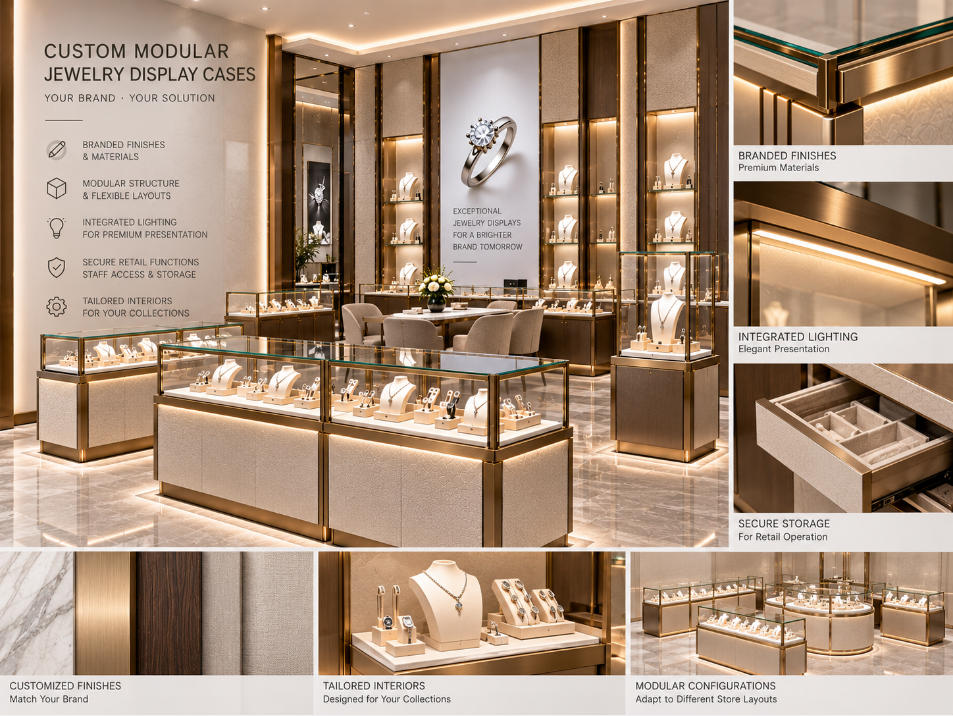
Product Visibility
Clear glazing and carefully controlled sight lines help customers evaluate fine jewelry without unnecessary visual obstruction.
Jewelry Lighting
Integrated lighting should illuminate the merchandise consistently across different module types without allowing one fixture to feel disconnected from the rest of the store.
Secure Access
Locking systems and staff access need to protect high-value merchandise while supporting efficient assisted selling.
Display Interiors
Trays, risers, necklace forms and presentation surfaces can be coordinated with different jewelry categories and the overall brand palette.
Concealed Storage
Selected modules can incorporate drawers and secure storage so frequently used stock remains accessible to staff.
Premium Finishes
Metal, stone, wood, lacquer, fabric and other finishes should remain visually coordinated even when module functions differ.
Keep the Modular Logic — Customize the Jewelry Experience
The strongest modular jewelry display cases do not have to look generic. Dimensions, materials, finishes, lighting, interior presentation and selected functional details can be developed around the retail concept.
If your priority is a jewelry-specific bespoke fixture rather than the broader modular system, explore our custom jewelry display case solution.
The difference is the starting point: a custom jewelry display case begins with an individual bespoke requirement, while this modular jewelry system begins with how multiple coordinated fixture types can support the complete store.
Keep the Display Language While the Store Footprint Changes
One of the most useful roles of a modular jewelry fixture family is the ability to select different combinations without abandoning the established retail language.
Prioritize Selling Capacity
Use a smaller number of multi-purpose counters, perimeter displays and focused feature modules to preserve circulation in limited floor space.
Build Distinct Product Zones
Combine counters, islands, wall showcases and consultation areas to give major jewelry categories clearer identities within the same store.
Expand the Complete Fixture Family
Add more feature displays, dedicated collection zones and consultation modules while retaining the established design relationships.
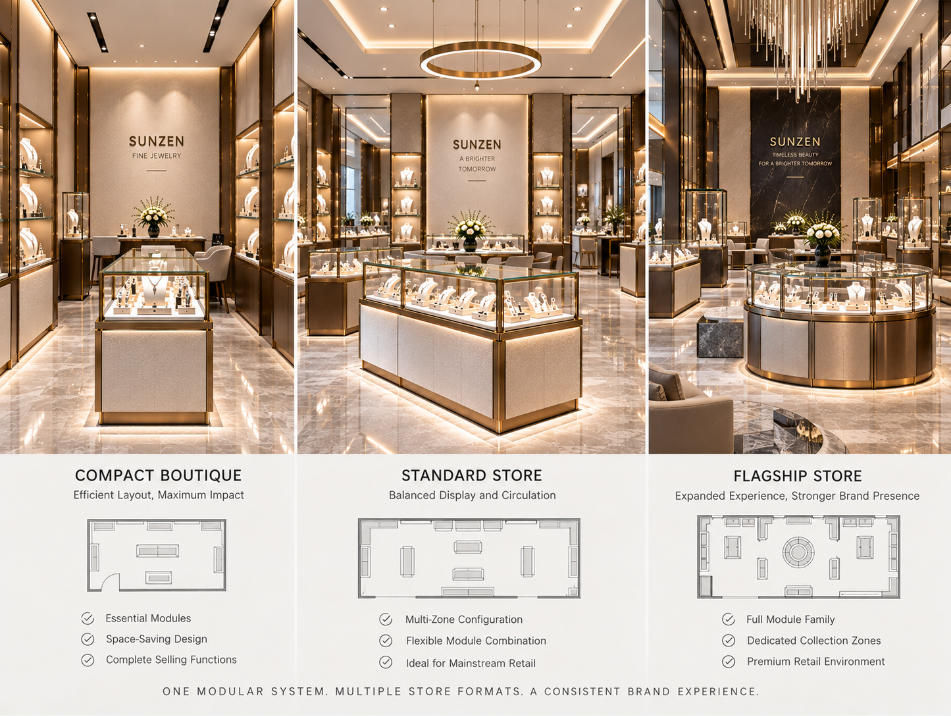
A Useful System for Jewelry Brands With Multiple Locations
A compact boutique may need more perimeter display. A flagship may need larger islands, dedicated collection zones and additional consultation areas. The fixture mix can change while the underlying visual language remains familiar.
For brands planning repeat locations, that makes the modular system more than a layout tool. It can become part of how the retail identity is carried from one store format to another.
Projects that require production continuity across multiple fixture types and locations can also be supported through our modular display case manufacturers capability.
Start With Four Questions Before Choosing the Cases
What Are You Selling?
Define the jewelry categories, collection sizes and hero products that need their own presentation conditions.
How Is It Sold?
Identify where staff-assisted selling, consultation, browsing and quick product access happen.
Where Does It Belong?
Match each collection with entrance, island, perimeter, feature or consultation zones according to its role.
What May Change Later?
Consider future collections, store sizes and additional locations before fixing every display decision permanently.
Need Modular Display Cases Beyond Jewelry?
This page focuses specifically on how modular display cases support jewelry merchandising, assisted selling and jewelry store zoning.
For the broader product system, including modular principles and applications beyond jewelry retail, explore modular glass display cases.
Modular Jewelry Display Cases FAQ
What are modular jewelry display cases?
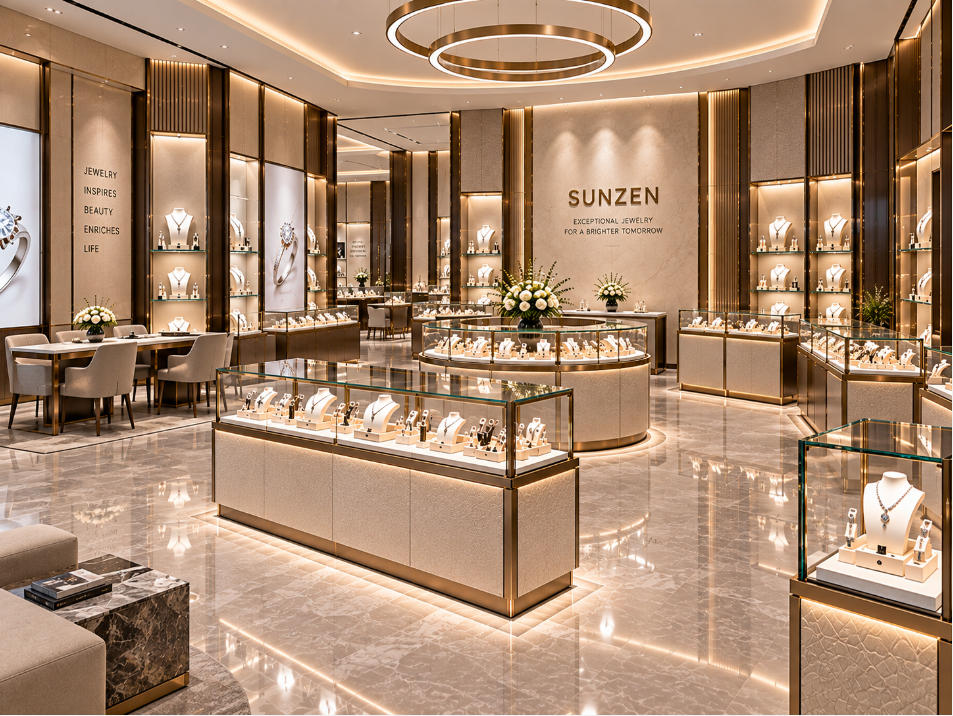
Modular jewelry display cases are coordinated fixture units that can be combined into different jewelry store layouts. A system may include selling counters, islands, wall showcases, towers, pedestals and consultation-related modules that share a consistent design language.
What is the difference between modular jewelry display cases and modular jewelry showcases?
The terms often describe the same general retail fixture category. Display case emphasizes the physical enclosed display unit, while showcase is also widely used in the jewelry retail industry. SUNZEN uses both terms where appropriate while developing them as one coordinated jewelry display system.
Which modules are useful in a jewelry store?
The appropriate mix depends on the merchandise and floor plan. Common modules include assisted-selling counters, central islands, wall showcases, towers, pedestals, consultation units and storage-integrated fixtures.
Can modular jewelry showcases be customized?
Yes. Dimensions, finishes, glass, lighting, interior presentation, storage and selected hardware can be developed around the brand while maintaining coordinated relationships across the module family.
Are modular jewelry display cases suitable for different store sizes?
Yes. A compact boutique, standard jewelry store and larger flagship can use different combinations and quantities from the same fixture family while maintaining a related visual identity.
Can a modular jewelry display system support multi-store expansion?
Yes. When the fixture family is properly developed and documented, different combinations can be selected for future locations according to floor area, merchandise mix and store format while preserving the established retail language.
Build the Right Module Mix for Your Jewelry Store
Send SUNZEN your floor plan, jewelry categories, preferred showcase types, brand references and future store requirements. We can help develop a modular jewelry display case system around how your customers browse, how your staff sell and how your retail concept may grow.

