
Modular Display Case Manufacturers for Custom Retail & Multi-Store Programs
SUNZEN manufactures modular display cases and showcases for brands, retailers and project teams that need more than individual cabinets. We translate an approved display concept into an engineered fixture system that can be prototyped, manufactured, repeated and adapted across different modules, production batches and store locations.
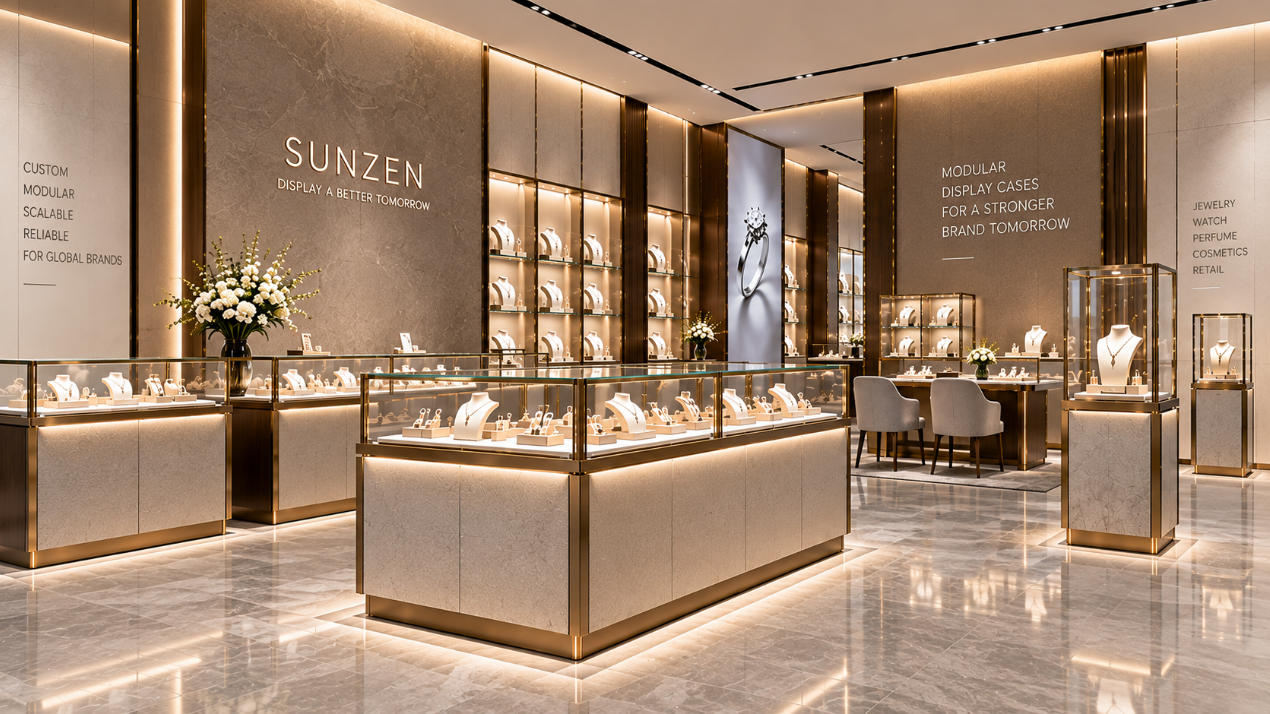
What Should a Modular Display Case Manufacturer Actually Deliver?
Manufacturing a modular system is different from producing a group of unrelated display cabinets.
A counter may be manufactured today, a wall showcase in the next production batch and additional island units months later. They still need to belong to the same system.
That requires the manufacturer to control the relationships between dimensions, glass, metal structures, lighting, hardware, finishes and assembly details — not simply reproduce the appearance of one approved showcase.
For buyers evaluating modular display case manufacturers, the more useful question is not only “Can you manufacture this cabinet?” but “Can you maintain the system when the project expands?”
Four Capabilities Behind a Reliable Modular Showcase Program
System Engineering
The manufacturer needs to understand which dimensions, structures and technical details form the common platform across the complete modular family.
Interface Control
Connections between glass, frames, bases, lighting, panels and adjacent modules need controlled relationships so that separately produced components remain compatible.
Prototype Validation
The first prototype should verify more than appearance. Access, assembly, tolerances, illumination and production details need to be confirmed before repetition.
Repeatability
Approved specifications need to remain controlled when additional modules are manufactured in another quantity, batch or store program.
The Manufacturer Has to Understand the System Behind the Showcase
A modular showcase family may contain counters, islands, towers, wall displays, consultation units and storage modules. Their functions and dimensions can differ significantly.
The manufacturing challenge is identifying the technical relationships that should remain consistent across those different formats.
Through display case design, those relationships can be translated into dimensions, material specifications, structural details and production references before they reach the manufacturing floor.
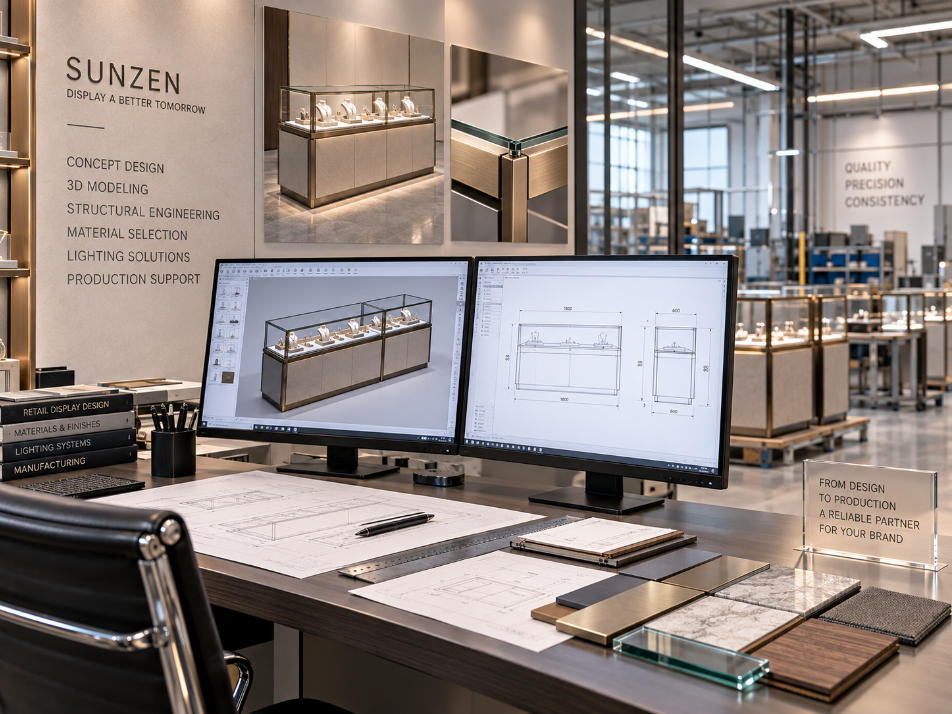
A Modular Manufacturer Needs a Controlled Production Language
Not every module needs to have the same size or function. What matters is that the specifications intended to repeat are clearly defined and consistently manufactured.
Dimensional References
Base heights, glass lines, frame relationships, panel alignment and connection points need defined references where modules interact visually or physically.
Glass Specifications
Glass type, thickness, edge treatment, drilling and hardware relationships need to remain consistent with the approved engineering specification.
Metal Components
Profiles, brackets, structural parts and visible metal details require controlled fabrication and finish references.
Lighting Standards
LED position, installation details and illumination principles need to remain coordinated across different showcase formats.
Finish References
Metal colors, stone, wood, engineered panels and interior materials require approved samples or references for repeat production.
Hardware & Access
Locks, hinges, slides, doors, drawers and service access need repeatable specifications appropriate to daily operation.
The Real Test Comes After the First Showcase Is Approved
A prototype can look excellent and still fail to become a reliable modular program. The critical test is whether its approved decisions can be transferred to other fixture types and reproduced later.
Reference Module
A selected module establishes key proportions, material relationships, lighting, access and construction details.
Module Family
Approved principles are translated into counters, islands, wall showcases, towers or other required fixture formats.
Production Batch
Manufacturing references help maintain consistency when multiple module types enter production together.
Future Rollout
The established system provides a reference for later quantities, replacement units and additional store programs.
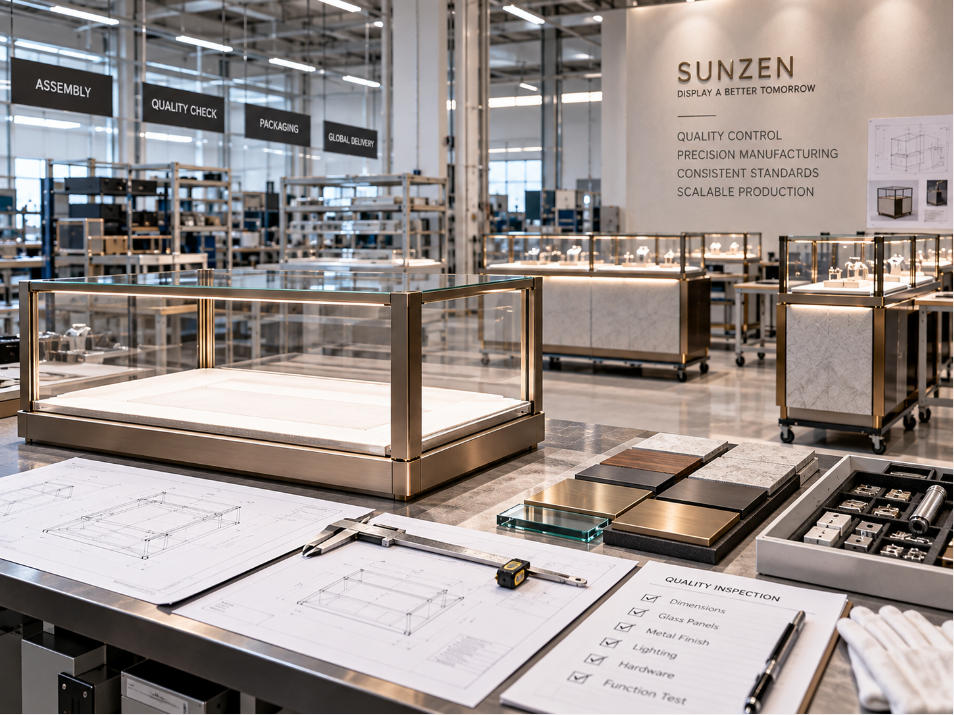
Where Modular Display Programs Lose Consistency
Small variations become visible quickly when multiple showcases are installed together.
- Glass lines no longer align between adjacent modules
- Metal finishes shift between production batches
- Lighting appears different across showcase types
- Hardware changes create different staff operation
- Replacement units no longer match earlier production
- New module types gradually drift from the original design
This is why showcase manufacturing for a modular program needs controlled references across engineering, materials, fabrication, assembly and inspection.
Custom Requirements Still Need a Repeatable Manufacturing System
Modular does not necessarily mean standard catalog production. A brand may require its own proportions, finishes, materials, lighting, security and merchandising details while still expecting those decisions to be reproduced consistently.
Define What Is Unique to the Brand
Brand-specific design decisions can be developed through custom glass display cases and translated into the modular family.
Where the project specifically combines customization with a repeatable module strategy, custom modular display cases can provide a framework for balancing brand-specific design with reusable fixture standards.
Define What Must Be Reproduced
Once the design is approved, production specifications need to preserve the intended dimensions, finishes, glass, lighting, hardware and visual relationships through subsequent modules and batches.
Connect Engineering, Prototype and Production Under One Program
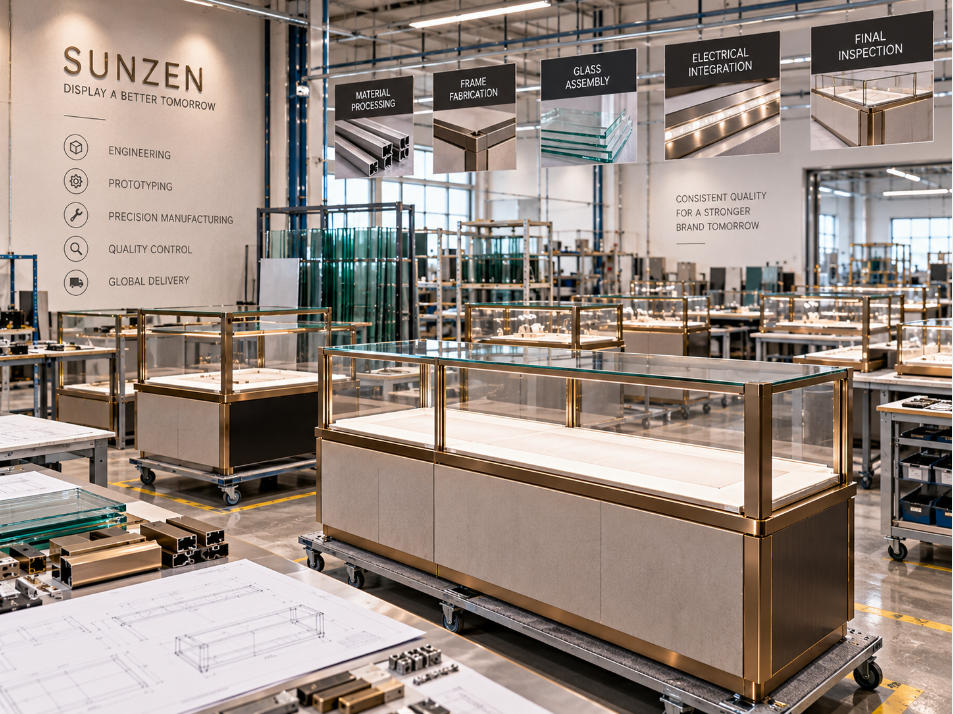
Production Starts With Controlled Information
SUNZEN coordinates the modular program from approved drawings and specifications through prototype evaluation and production.
The objective is to create enough manufacturing control that different module types can remain visually and technically related even when quantities and production timing change.
- Approved drawings and dimensional references
- Material and finish samples
- Prototype verification
- Production inspection references
- Repeat-order specification control
Questions to Ask Modular Display Case Manufacturers
Before selecting a manufacturing partner, buyers can use a few practical questions to determine whether the supplier is prepared for a modular program rather than only one-off cabinet production.
Can You Engineer a Fixture Family?
Ask how common dimensions, interfaces and visual relationships are controlled when different module types are developed.
Can You Prototype Before Rollout?
Confirm how the supplier validates structure, finishes, lighting, access and operational details before larger quantities begin.
How Do You Control Repeat Production?
Ask how approved materials, finishes, drawings and technical specifications are referenced for later batches.
Can You Support Different Store Formats?
A useful modular partner should understand how the same fixture family may need different combinations for compact, standard and flagship locations.
How Are Changes Managed?
Ask how revised dimensions, materials or hardware are documented so that one change does not create unintended differences elsewhere in the system.
Can You Support Future Orders?
If expansion is expected, determine how production information is retained and referenced when additional modules are needed.
Modular Manufacturing for Multi-Store Jewelry Environments
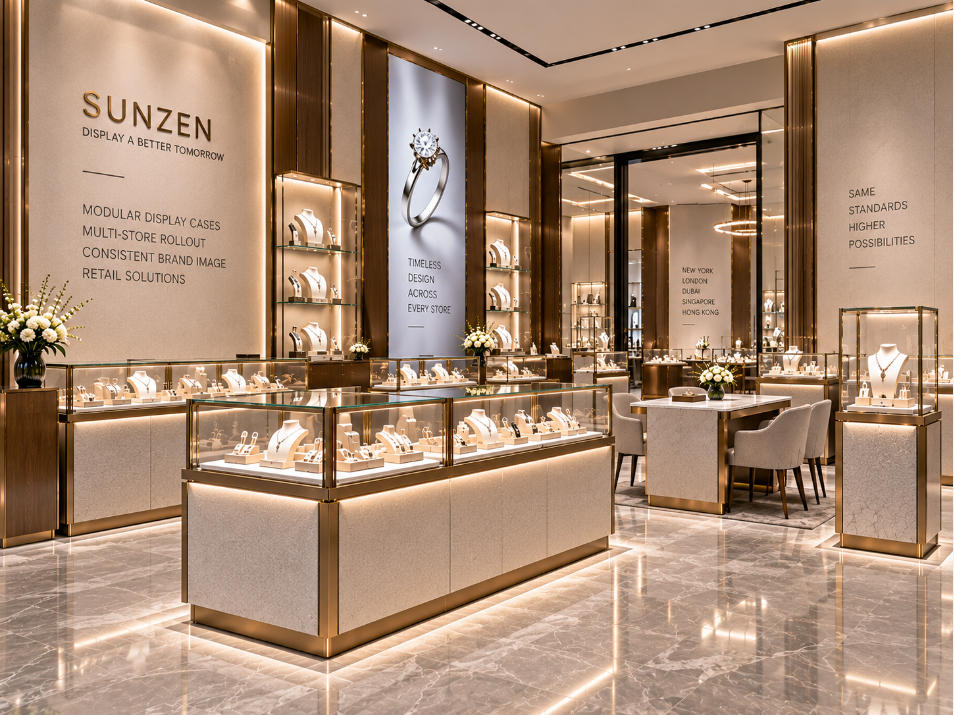
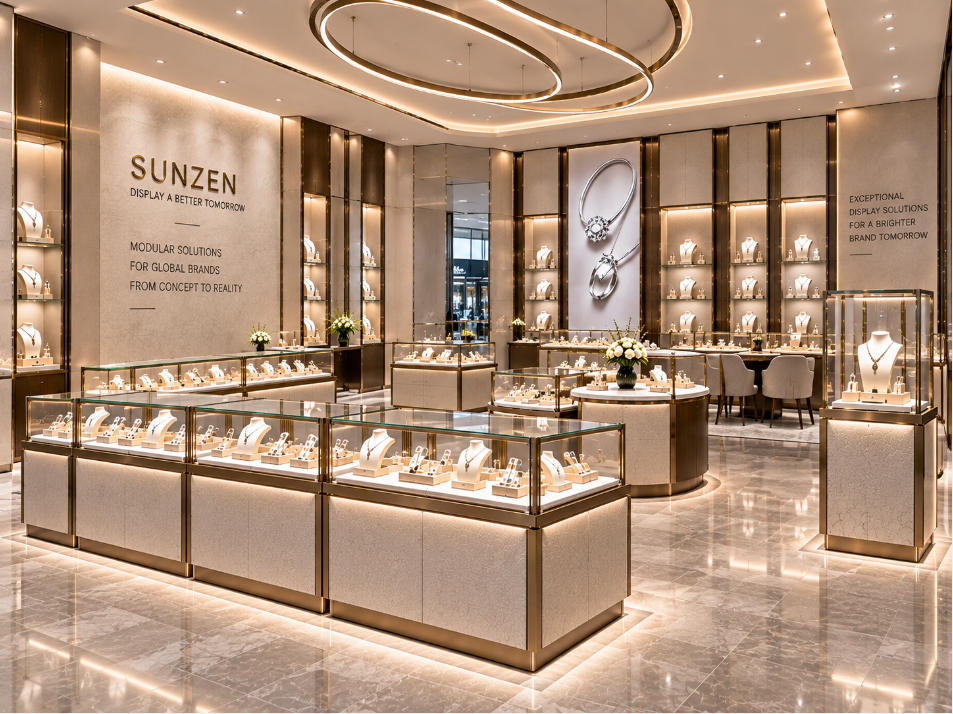
Jewelry brands often need several showcase formats within the same store: selling counters, islands, wall displays, towers, consultation units and secure storage.
When those formats are repeated across multiple locations, consistency becomes a manufacturing issue as much as a design issue.
For jewelry programs, SUNZEN can connect the modular system with its experience as a jewelry store fixture manufacturer to coordinate different fixture types within a broader branded retail environment.
What to Send a Modular Display Case Manufacturer
A useful RFQ does not need to contain every final technical detail. It should give the manufacturer enough information to understand the system, quantities and expected level of repetition.
Fixture Schedule
List the expected module types, approximate dimensions and quantities for the first project.
Design References
Provide drawings, renderings, brand standards, material references or existing fixture examples where available.
Rollout Expectations
Explain whether the first order is a single project, prototype store or the beginning of a larger multi-location program.
Looking for the Modular System Rather Than the Manufacturer?
This page focuses on manufacturer capability: engineering, prototype control, production consistency and repeatability.
If your priority is understanding the display system itself, available configurations and how modular showcases can be combined, explore our modular glass display cases.
Modular Display Case Manufacturer FAQ
What should I look for in a modular display case manufacturer?
Look for capabilities beyond individual cabinet production, including system engineering, prototype validation, controlled material and finish references, manufacturing consistency and the ability to support repeat orders or additional module types.
What is the difference between a modular display case manufacturer and a standard display case supplier?
A modular display case manufacturer needs to control the technical and visual relationships between multiple compatible fixture types. A standard supplier may focus primarily on producing individual cabinets or fixed catalog models.
Can modular showcase manufacturers produce custom designs?
Yes. A modular showcase system can use custom dimensions, finishes, glass, lighting, hardware and brand-specific details while maintaining selected repeatable standards across the fixture family.
Why is prototyping important for modular display cases?
A prototype allows dimensions, construction, finishes, glass, lighting, access and operational details to be evaluated before the approved specifications are transferred to additional modules or larger production quantities.
Can a modular display case manufacturer support multi-store rollouts?
Yes, provided the fixture family is engineered and documented for repeat production. Approved drawings, material references, finish standards and production specifications can support different module combinations across future store locations.
What information should I send for a modular display case manufacturing quote?
Useful information includes fixture types, approximate dimensions, quantities, drawings or renderings, material and finish requirements, lighting and security needs, project location and whether future repeat orders or multi-store rollout are expected.
Discuss Your Modular Display Case Manufacturing Program
Send SUNZEN your fixture schedule, drawings, brand references, quantities and rollout requirements. We can review the project from a manufacturer perspective and help define the engineering, prototype and production requirements for a repeatable modular showcase program.

