
Custom Modular Display Cases Built Around Your Brand
Create a display system that is custom where your brand needs distinction and modular where your business needs consistency. SUNZEN develops custom modular display cases and showcases that can become a repeatable fixture family for different products, store formats and future locations.
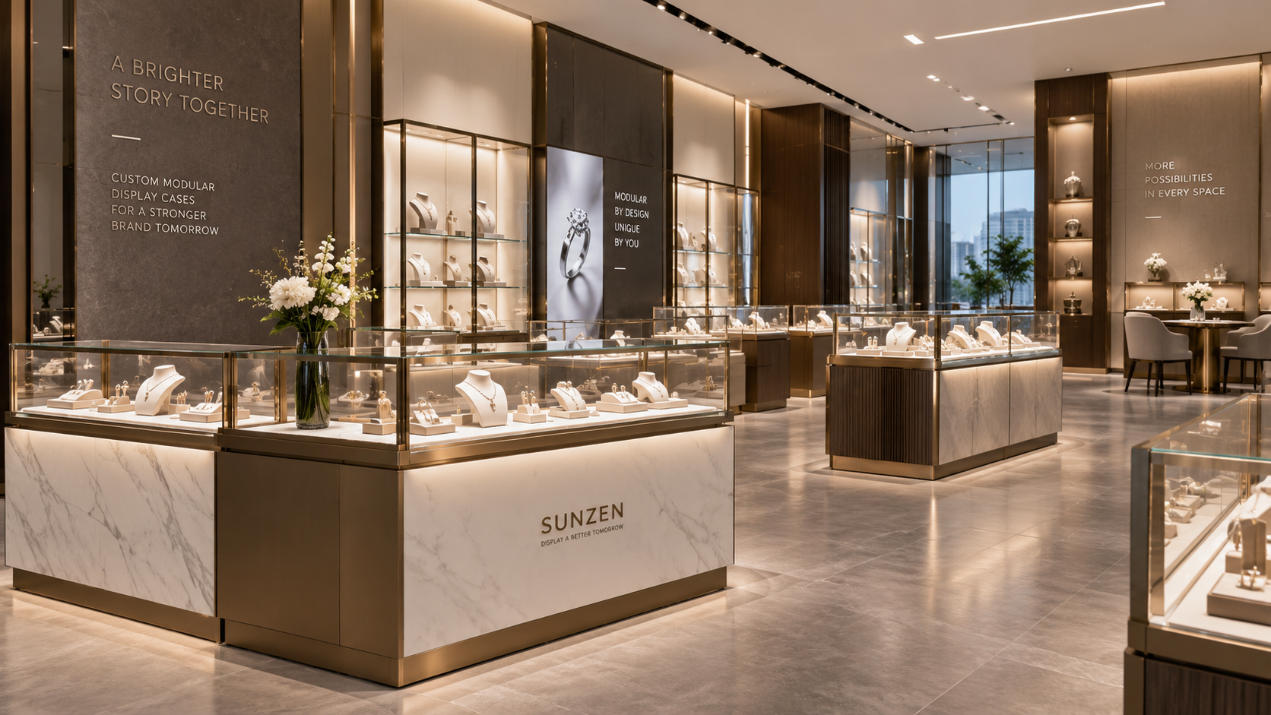
Custom Does Not Have to Mean Starting From Zero Every Time
A fully bespoke showcase gives a brand control over appearance, materials and merchandising details. But when every cabinet is developed independently, expanding the concept into another store can require another round of design, engineering and production decisions.
A purely standardized modular system solves a different problem. It makes repetition easier, but standard components may not express the proportions, materials, product presentation or customer experience required by a premium brand.
Custom modular display cases sit between these two approaches. The objective is not to make every showcase identical. It is to establish a controlled design system in which selected elements remain consistent while other elements can change according to the brand, merchandise and space.
Decide What Should Stay Standard — and What Should Stay Custom
The foundation of a useful custom modular system is deciding which specifications should become repeatable standards and which should remain adjustable. That distinction turns a collection of individual showcases into a scalable display program.
Create the Rules of the System
Core dimensions, structural interfaces, glass specifications, lighting principles, hardware positions and selected construction details can become shared standards across the fixture family.
These repeatable rules help different modules work together and provide a controlled reference for future production.
Preserve the Identity of the Brand
Exterior finishes, metal colors, stone or wood surfaces, interior presentation, display heights, merchandising accessories and selected proportions can be developed around the individual brand and product collection.
The result is a modular framework without the appearance of generic catalog fixtures.
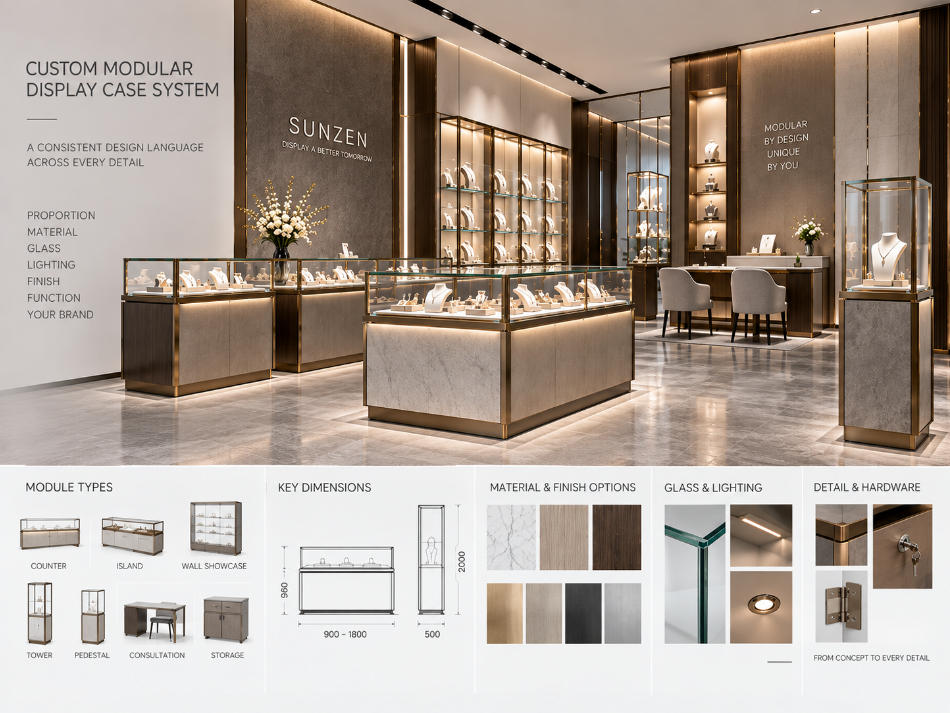
Turn a Custom Showcase Concept Into a Design Language
The first display case should not be treated as an isolated object if the concept may later expand into a complete store or multiple locations.
During display case design, SUNZEN can identify the visual and technical details that should be carried across the family: frame proportions, base heights, glass relationships, lighting positions, access logic and material transitions.
Once those relationships are defined, new showcase types can be developed from the same visual language without simply duplicating the original cabinet.
Build a Display Family Instead of a Single Showcase
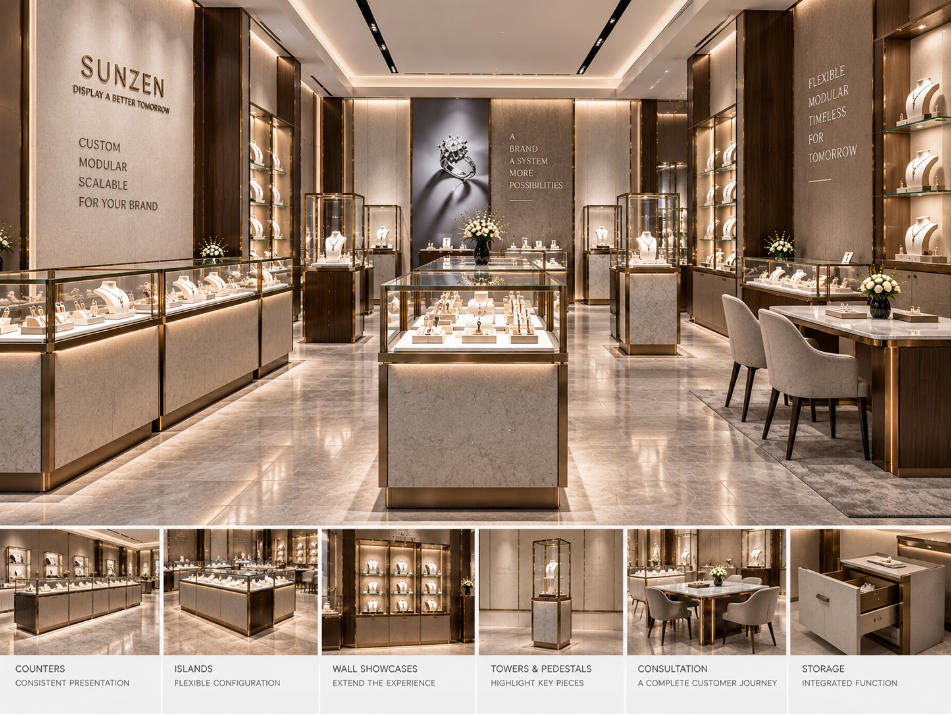
A custom modular project becomes more useful when the design is developed as a library of compatible fixture types. Each module has a specific role, but together they create one branded retail environment.
Selling Counters
Customer-facing glass counters can establish the main proportions, materials and display height used throughout the system.
Island Modules
Freestanding islands create central merchandising zones and can combine different lengths or functions while maintaining the same design language.
Wall Showcases
Vertical display modules extend the system onto perimeter walls and provide a different product presentation without breaking visual continuity.
Tower & Pedestal Units
Smaller freestanding formats can highlight hero products, collections or important transition points within the store.
Consultation Modules
Consultation and service areas can use the same material and detailing language while supporting longer customer interactions.
Storage & Service Units
Drawers, concealed storage and operational modules can be integrated into the same family instead of being treated as unrelated back-of-house furniture.
Use the Same Display Language Across Different Store Footprints
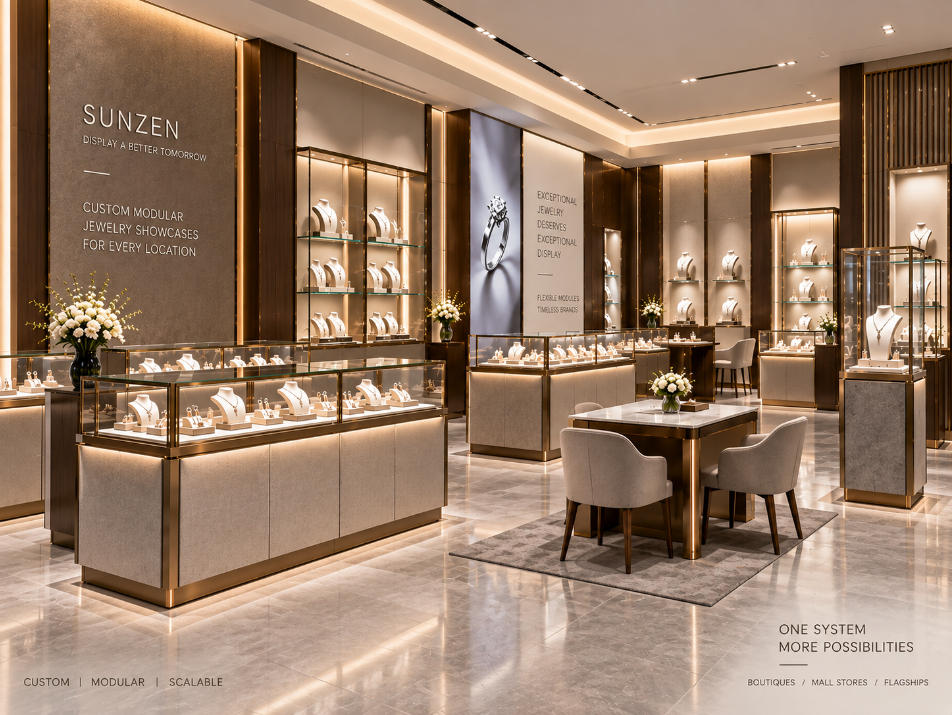
The value of modularity becomes clearer when a brand operates more than one store format. The goal is not to force every location into the same floor plan. Instead, approved modules can be combined differently while preserving recognizable design standards.
Start With the Core Modules
Smaller locations can use a focused combination of selling counters, wall showcases and essential service units while retaining the brand’s primary materials and proportions.
Expand the Fixture Family
Additional islands, towers and consultation modules can be introduced as floor area and merchandise assortment increase.
Use the Full Display System
Larger stores can use a broader combination of the same module family while allowing selected statement pieces or project-specific features to remain fully bespoke.
For brands planning the display system together with the complete interior, the modular fixture family can also be coordinated with retail store design to align showcases with circulation, consultation areas and the overall customer journey.
A Strong Fit for Jewelry Brands With Repeating Store Formats
Jewelry retail places unusually high demands on both visual consistency and fixture functionality. Product presentation, viewing height, lighting, security, staff access and storage need to work together without making every store feel identical.
A custom modular showcase family allows jewelry brands to establish recognizable fixture standards while selecting different combinations for boutiques, mall locations, flagships and future stores.
Where jewelry presentation is the primary requirement, SUNZEN can also develop the system around a custom jewelry showcase concept so the modular framework reflects the merchandise rather than forcing the merchandise into a generic fixture.
Turn the Approved Prototype Into a Repeatable Production Reference
The first approved module has a larger role than simply proving that one showcase can be manufactured. It can establish the reference standard for the rest of the fixture family.
Define
Establish the brand language, module types, key dimensions, merchandise requirements and the variables that need to remain customizable.
Prototype
Validate proportions, glass, finishes, lighting, hardware, access and construction details on the selected reference module.
Standardize
Convert approved decisions into controlled specifications that can be applied across related showcase types and future production.
Repeat
Use the approved system as the basis for additional modules, replacement units, new configurations and future store programs.
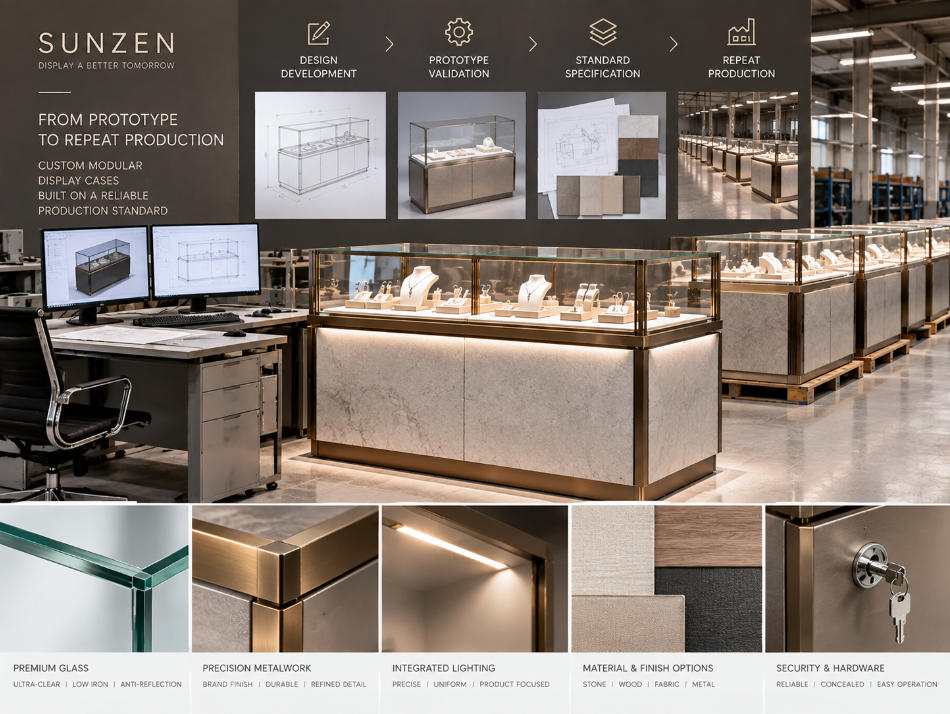
Custom Modular Design Changes What Manufacturing Has to Control
Repeat production is not simply a matter of making another cabinet that looks similar. Modules developed at different times still need to follow the approved dimensional, material and visual standards of the system.
This makes manufacturing control important at the design stage. Glass dimensions, metal fabrication, surface finishes, lighting positions, hardware and assembly relationships need specifications that can be reproduced rather than interpreted again for every order.
SUNZEN’s showcase manufacturing capability allows the approved custom design to move into prototype and repeat production within the same project framework.
When Does a Custom Modular Display System Make Sense?
Custom modular is most useful when the project requires more than a one-off cabinet but does not benefit from forcing every future fixture into one fixed standard configuration.
You Are Developing a New Retail Concept
The first store needs a distinctive fixture identity, but the concept may later need to expand into additional locations.
You Operate Different Store Sizes
Flagship, standard and compact stores need different layouts while still looking recognizably part of the same brand.
Your Merchandise Changes
Product categories, collection sizes or merchandising priorities may change, making a flexible family of modules more useful than one fixed layout.
You Expect Repeat Orders
Future stores, replacements or expansion units need to remain compatible with the approved design instead of restarting development each time.
What We Need to Develop Your Custom Modular System
You do not need a completed technical specification before contacting SUNZEN. A useful starting package simply needs to explain the brand, space, merchandise and expected future use of the system.
Your Space
Floor plans, approximate store sizes, ceiling conditions and any known circulation or installation constraints.
Your Brand
Store references, brand guidelines, preferred materials, finishes, colors and examples of the visual direction.
Your Merchandise
Product categories, typical product sizes, merchandising quantities, viewing requirements and security considerations.
Your Operations
Staff access, storage, locking, drawers, consultation needs and other daily operational requirements.
Your Module Priorities
The counters, islands, wall units, towers or other fixture types you expect to use most frequently.
Your Rollout Plan
Initial quantity, expected future stores, different store formats and whether repeat production is part of the program.
Start With the Business Requirement, Not the Label
Some projects need extensive brand-specific customization. Others need a flexible modular display system with fewer bespoke variables.
If your priority is understanding the broader modular product system, configurations and flexible display concept, explore SUNZEN modular glass display cases.
If your project needs a modular system developed specifically around your brand, merchandise and future store program, custom modular development is the more relevant starting point.
Custom Modular Display Cases FAQ
What is a custom modular display case?
A custom modular display case combines brand-specific design requirements with repeatable structural or dimensional rules. This allows different showcase types to share a coordinated design system while still being customized for merchandise, space and brand identity.
What can be customized in a modular display system?
Depending on the project, customization can include dimensions, module types, glass, metal finishes, stone or wood surfaces, interior materials, lighting, locks, storage, display accessories and brand-specific visual details.
Do all modular showcases have to be the same size?
No. A custom modular system can contain different showcase sizes and functions. The important requirement is that the modules follow compatible design, dimensional or production rules where consistency is needed.
Can custom modular display cases be used across different store sizes?
Yes. A brand can establish an approved family of modules and use different combinations for compact stores, standard boutiques and larger flagship locations while maintaining a consistent fixture identity.
Are custom modular showcases suitable for jewelry brands?
Yes. Jewelry brands can use modular counters, islands, wall showcases, towers, consultation displays and storage units while coordinating lighting, security, materials and presentation around the jewelry collection.
Can an approved custom module be reproduced for future stores?
Yes. One purpose of developing a controlled modular system is to turn approved design and prototype decisions into repeatable specifications that can support additional modules, future orders and multi-store programs.
Develop a Modular Display Family Around Your Brand
Share your store plans, brand direction, merchandise categories and expected rollout requirements. SUNZEN can help turn them into a custom modular showcase system designed for the first project and structured for what comes next.

