
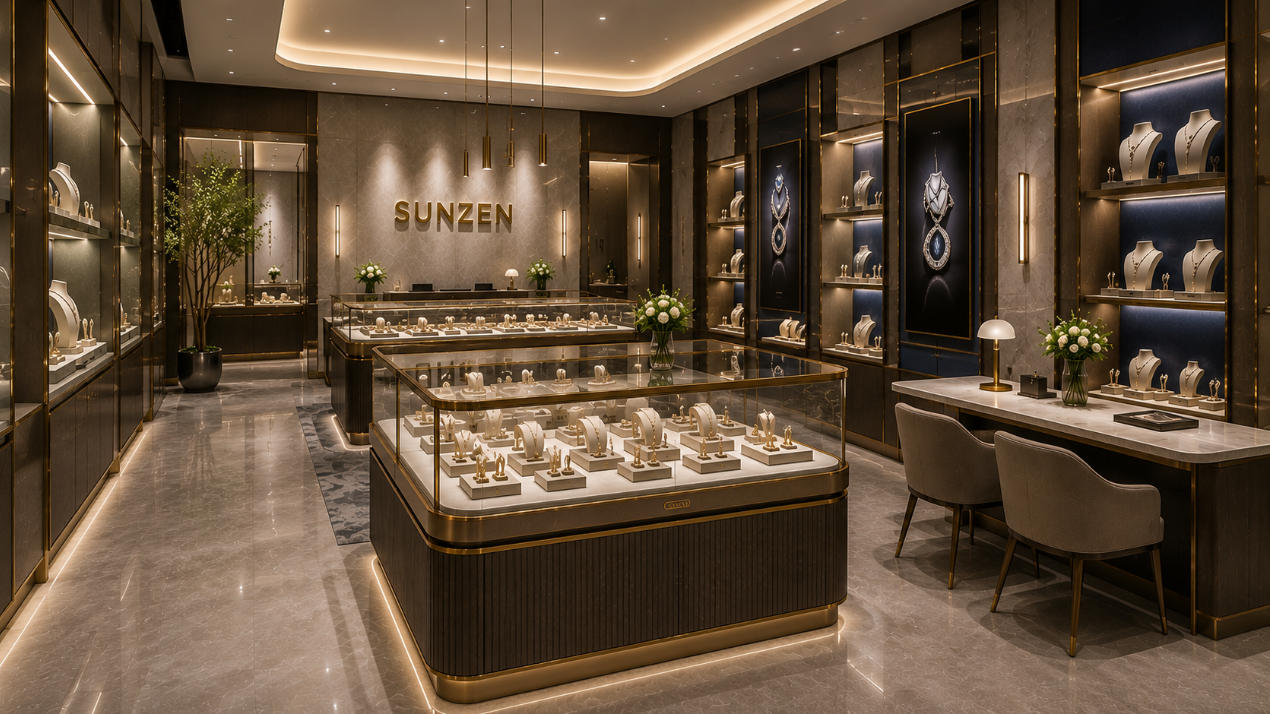
Custom Jewelry Showcases Designed Around Your Store
SUNZEN develops custom jewelry showcases around the actual store layout, jewelry collection, brand direction and daily retail operation. Instead of adapting your boutique to standard cabinet sizes, showcase dimensions, proportions, materials, glass, lighting, storage and access systems can be developed specifically for the project.
From individual display cases to coordinated showcase families for a complete jewelry store, the customization process connects visual design with technical engineering and manufacturing requirements.
This allows each showcase to support jewelry presentation while remaining practical for staff access, security, merchandising and long-term commercial use.
What Is a Custom Jewelry Showcase?
A custom jewelry showcase is developed for a specific retail environment rather than selected from a fixed catalogue of standard dimensions and finishes.
The showcase can respond to available floor space, viewing height, jewelry categories, merchandising density, staff operation and the visual language of the boutique.
Customization can extend from overall dimensions and display configuration to glass, metal finishes, cabinetry, interior materials, integrated lighting, drawers, locks and opening systems.
For buyers comparing different product formats before customization, explore our jewelry display cases.
Why Choose a Custom Jewelry Showcase?
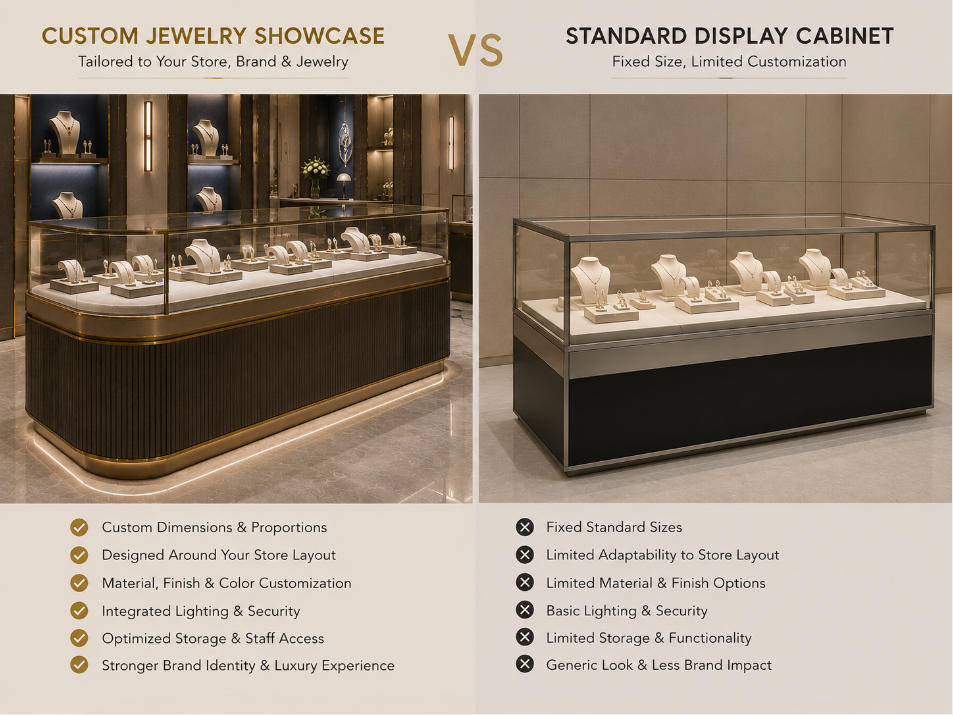
Standard display cabinets require the retail environment to adapt to predetermined sizes, materials and functions. Bespoke development reverses that relationship—the showcase is designed around the store.
This becomes especially important in luxury jewelry retail, where showcase proportions, product spacing, glass clarity, lighting, finishes and customer viewing distance all influence the presentation of high-value merchandise.
Custom development also allows practical requirements such as staff-side access, concealed storage, locks, drawers and electrical routing to be integrated before manufacturing begins.
What Can Be Customized in a Jewelry Showcase?
Dimensions & Proportions
Customize width, depth, height, viewing level and overall geometry around the store plan and merchandising requirements.
Glass
Coordinate glass tops, display enclosures, shelves, doors and glazing details around visibility, access and safety requirements.
Metal Finishes
Develop stainless steel, aluminum and decorative metal elements in finishes that coordinate with the boutique interior.
Cabinetry
Customize cabinet structures, veneer, lacquer, decorative panels, drawers and concealed storage around staff operation.
Interior Materials
Select velvet, microfiber, leather-effect fabrics and other jewelry-facing surfaces according to the collection and visual direction.
Jewelry Lighting
Integrate display lighting around showcase geometry, jewelry position, viewing angles and the required presentation effect.
Storage
Add drawers, cabinets and staff-accessible storage according to stock, packaging and daily merchandising requirements.
Locks & Access
Coordinate doors, hinges, slides, locks and staff-side access systems with security and operational requirements.
Brand Details
Coordinate approved brand applications, material language and decorative details with the overall jewelry store identity.
Customize the Showcase Around the Jewelry Store Layout
The right showcase configuration depends on where the fixture is positioned and how customers interact with it.
Wall displays can maximize perimeter merchandising, while island showcases create central browsing zones. Counter showcases support close customer interaction, upright cases provide vertical feature displays, and pedestal showcases can isolate important statement pieces.
Rather than treating each fixture independently, a complete jewelry store can use different showcase families with coordinated dimensions, materials, lighting and detailing.
For projects requiring the display system to be developed together with the wider retail environment, explore our jewelry display solutions.
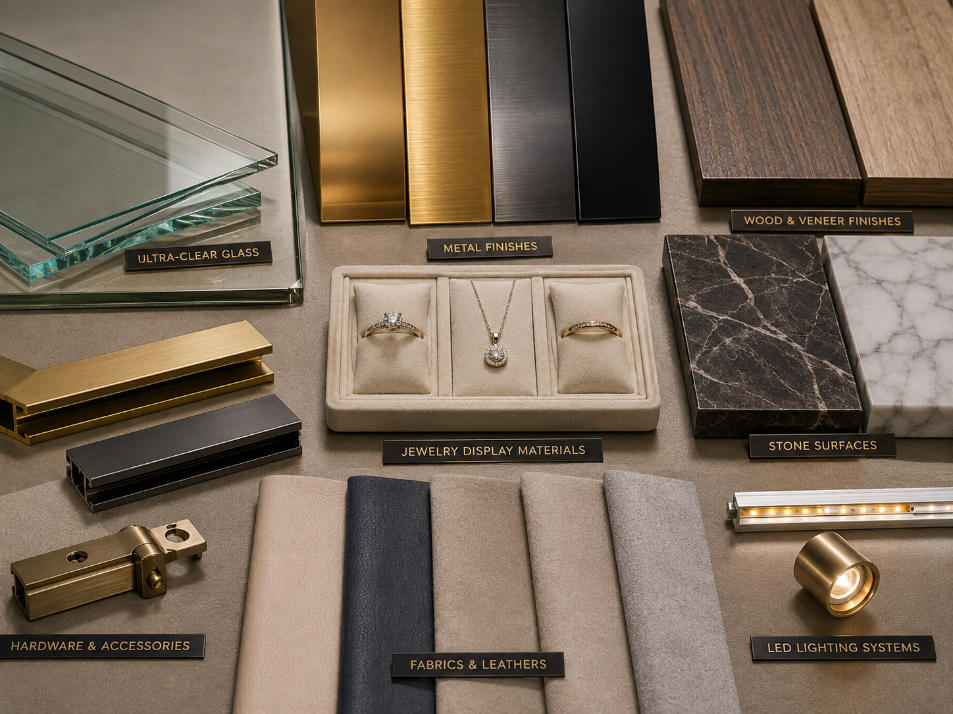
Materials Define How a Custom Jewelry Showcase Feels
Luxury presentation depends on how different materials work together rather than on one decorative finish alone.
Glass determines transparency and visual access. Metal details establish precision and edge definition. Cabinetry provides structure and storage, while stone-effect surfaces, veneer, lacquer and interior fabrics influence the overall visual character.
Material selections should therefore be reviewed as one coordinated palette before production rather than selected independently during fabrication.
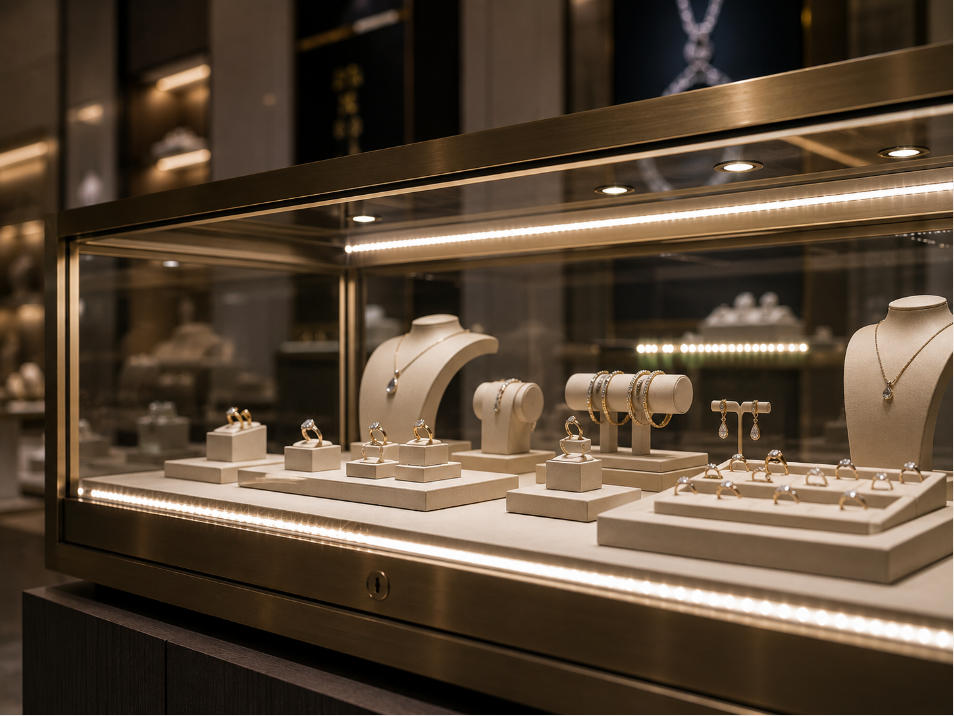
Integrate Lighting into the Showcase Design
Lighting is part of the architecture of a jewelry showcase, not simply an accessory added after the cabinet has been built.
Light position, viewing angle, display height, interior color and showcase geometry all influence how jewelry is perceived through the glass.
Integrated lighting can therefore be coordinated during design development together with wiring routes, drivers, access points and other electrical requirements.
This helps maintain a clean display environment while supporting consistent illumination across multiple showcase types.
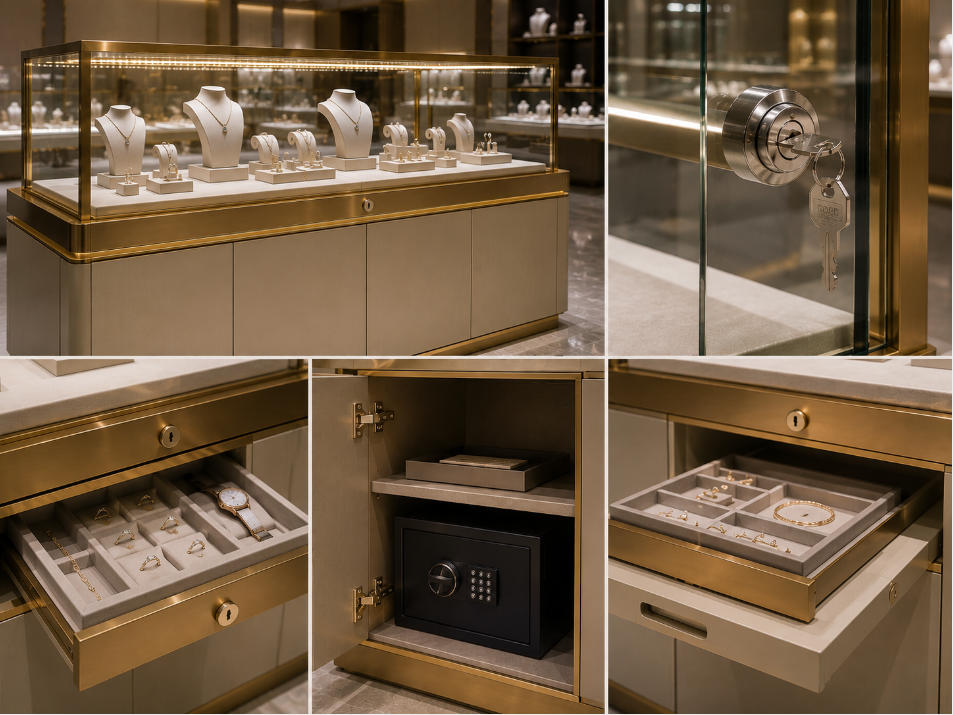
Design Security, Storage & Staff Access Together
A jewelry showcase needs to perform differently for customers and staff. Customers require clear, uninterrupted viewing, while staff need practical access to merchandise, storage and operating components.
Doors, drawers, locks, hinges, slides and concealed storage can be developed around the way the store actually operates.
Planning these elements during technical development helps maintain clean customer-facing surfaces without sacrificing practical back-of-counter functionality.
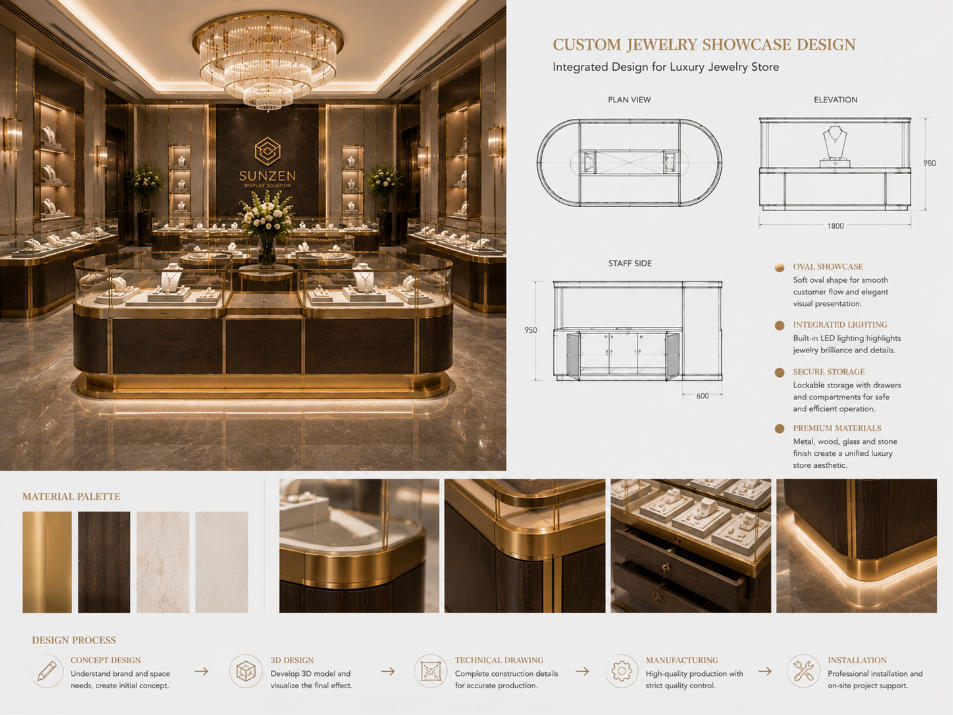
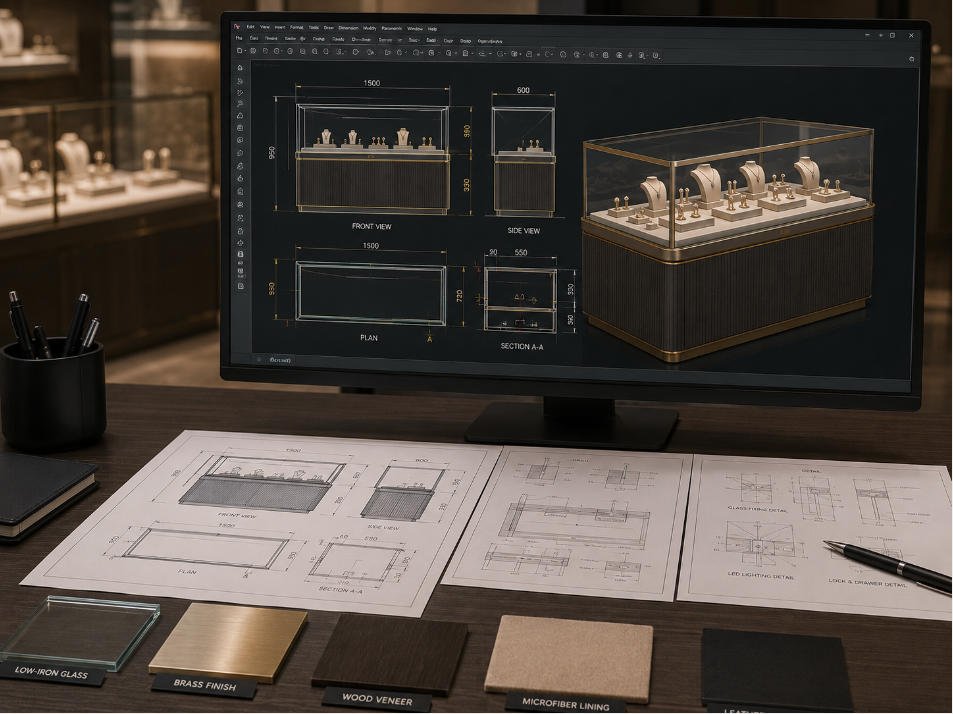
From Custom Showcase Concept to Production-Ready Drawings
A visual concept needs to become clear technical information before bespoke manufacturing begins.
Technical development can define overall dimensions, structures, glass relationships, doors, drawers, lighting positions, electrical routing, hardware, storage and assembly requirements.
Resolving these relationships before fabrication helps reduce interpretation during manufacturing and improves consistency when multiple showcase types are being produced for the same jewelry store.
How Does the Custom Jewelry Showcase Process Work?
Project Requirements
Review store plans, fixture locations, jewelry categories, merchandising needs and brand direction.
Showcase Design
Develop dimensions, proportions, display configuration, materials and visual relationships.
3D Visualization
Review the showcase or complete store environment before detailed technical development.
Technical Engineering
Resolve structures, glass, hardware, lighting, storage, access and production details.
Material Approval
Confirm glass, metal finishes, cabinetry, decorative surfaces and interior display materials.
Manufacturing & QC
Fabricate, finish, assemble and inspect the approved custom jewelry showcase before project delivery.
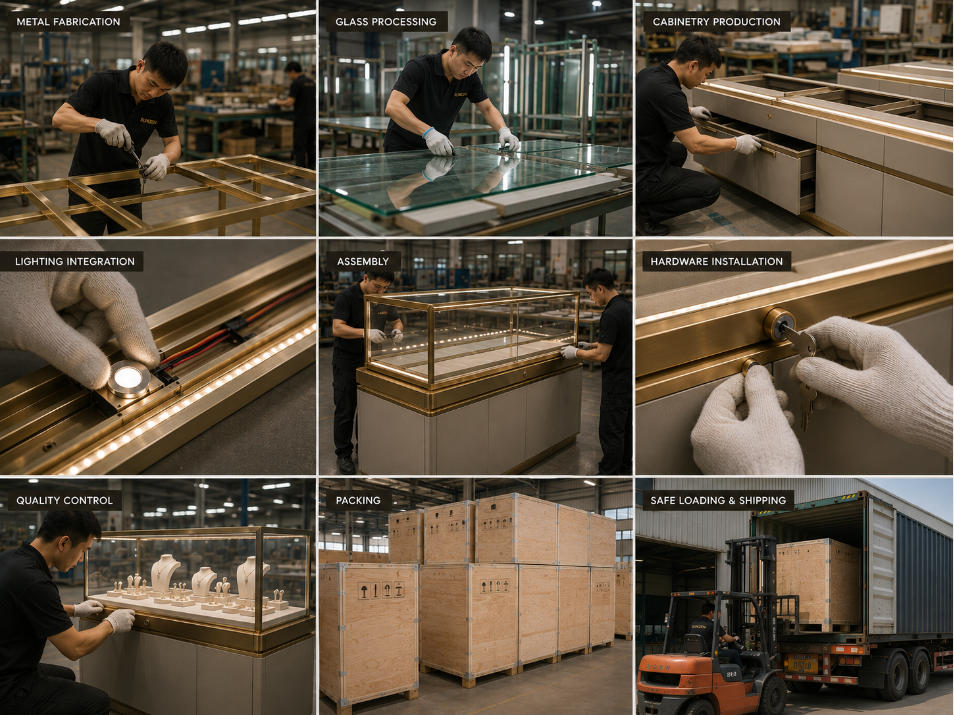
Turn the Approved Custom Design into a Finished Showcase
Custom jewelry showcases combine multiple manufacturing disciplines within one finished retail fixture.
Metal components, cabinetry, glass, decorative finishes, lighting, hardware and interior display materials need to align with the approved design and technical information.
For buyers who want to understand the production process in greater detail, explore our custom jewelry showcase factory.
Custom Jewelry Showcase vs. Standard Display Case
Standard Display Case
Uses predetermined dimensions, configurations, materials and functional details. Best suited to projects where speed and standardization are more important than store-specific integration.
Custom Jewelry Showcase
Developed around the actual retail environment, merchandise, brand direction, dimensions, lighting, storage, security and customer experience.
What Information Should You Send for a Custom Jewelry Showcase?
Dimensions or Floor Plan
Provide target showcase dimensions or a store plan showing the intended fixture locations.
Reference Design
Share drawings, renderings, reference images or brand guidelines that communicate the desired visual direction.
Jewelry & Function
Explain the jewelry categories, display quantity, staff access, storage, lighting and security requirements.
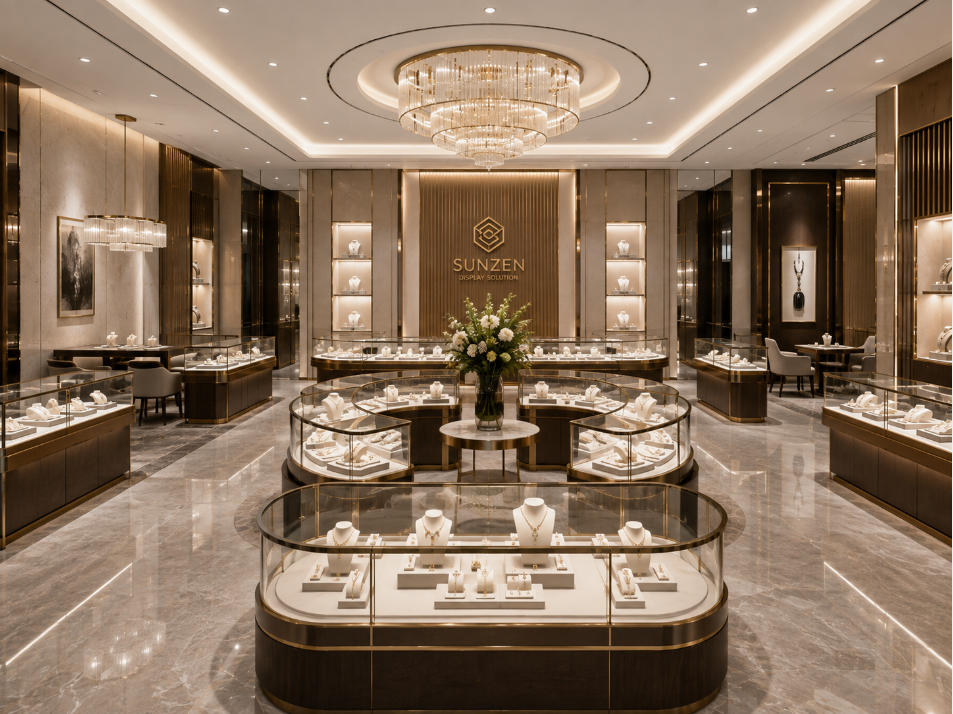
From Individual Custom Showcases to a Complete Jewelry Store
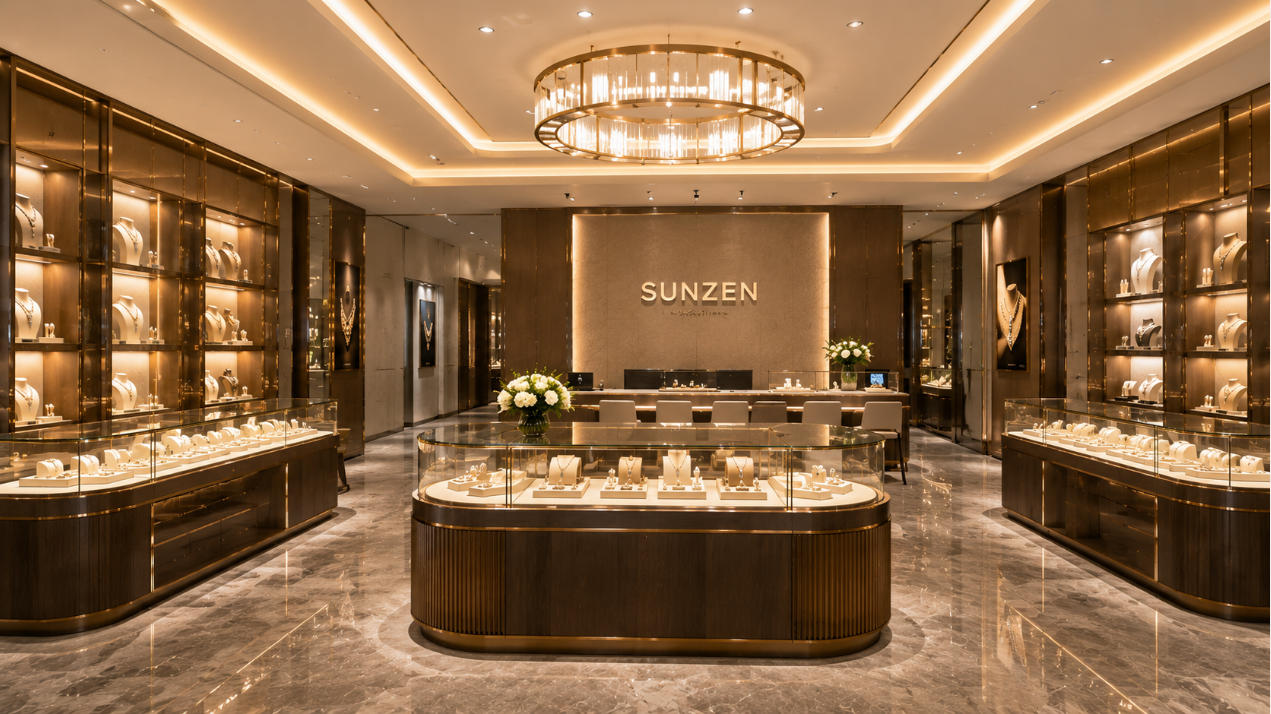
The value of bespoke development becomes most visible when different showcase types work together within one finished jewelry environment.
Wall displays, islands, counters, upright showcases and feature cases can perform different merchandising functions while sharing coordinated materials, lighting, proportions and detailing.
Explore our jewelry showcase projects to see custom display systems within completed retail environments.
Explore More Jewelry Showcase Capabilities
Jewelry Display Cases
Browse jewelry showcase formats, product configurations and display case types.
Jewelry Showcase Manufacturers
Learn what buyers should evaluate when selecting a custom jewelry showcase manufacturing partner.
Custom Jewelry Showcase Factory
See how custom jewelry showcases move through fabrication, finishing, assembly and quality control.
Custom Jewelry Showcase FAQs
What is a custom jewelry showcase?
A custom jewelry showcase is a display fixture developed around a specific store layout, jewelry collection, brand direction and operational requirements rather than a fixed standard cabinet configuration.
What can be customized in a jewelry showcase?
Custom jewelry showcases can be developed with project-specific dimensions, glass, metal finishes, cabinetry, interior materials, lighting, storage, locks, doors, drawers and display configurations.
Can jewelry showcase dimensions be customized to my store layout?
Yes. Width, depth, height, viewing level and overall showcase geometry can be developed around the available retail space, fixture location and merchandising requirements.
Can lighting be integrated into a custom jewelry showcase?
Yes. Lighting can be coordinated with showcase geometry, jewelry position, viewing angles and electrical routing during design and technical development.
Can locks, drawers and storage be customized?
Yes. Locks, doors, drawers, slides, concealed cabinets and staff-accessible storage can be developed around security requirements and daily store operation.
Can SUNZEN develop custom showcases from a store floor plan?
Yes. A store floor plan can be used to develop showcase dimensions, fixture positions, configurations and coordinated display systems for the retail environment.
Can multiple jewelry showcase types be customized for one store?
Yes. Wall showcases, island displays, counters, upright cabinets and other fixture types can be developed with coordinated materials, finishes, lighting and proportions for one complete jewelry store.
What information should I provide for a custom jewelry showcase project?
Useful information includes showcase dimensions or a store floor plan, reference designs, jewelry categories, preferred materials, lighting requirements, storage needs, security requirements and project quantities.
Develop a Jewelry Showcase Around Your Store
Send SUNZEN your store plan, target dimensions, reference images and display requirements. We can develop custom jewelry showcases around your merchandise, brand direction and retail environment from design and technical development through manufacturing.

