
Custom Display Case Manufacturer Turning Bespoke Designs Into Finished Cases
SUNZEN works with designers, architects, retail brands and project teams that need a custom display case manufacturer capable of turning unique concepts, drawings and specifications into physical display cases. We coordinate technical development, materials, glass, metalwork, cabinetry, lighting, hardware and factory production while protecting the design intent that makes each project distinctive.
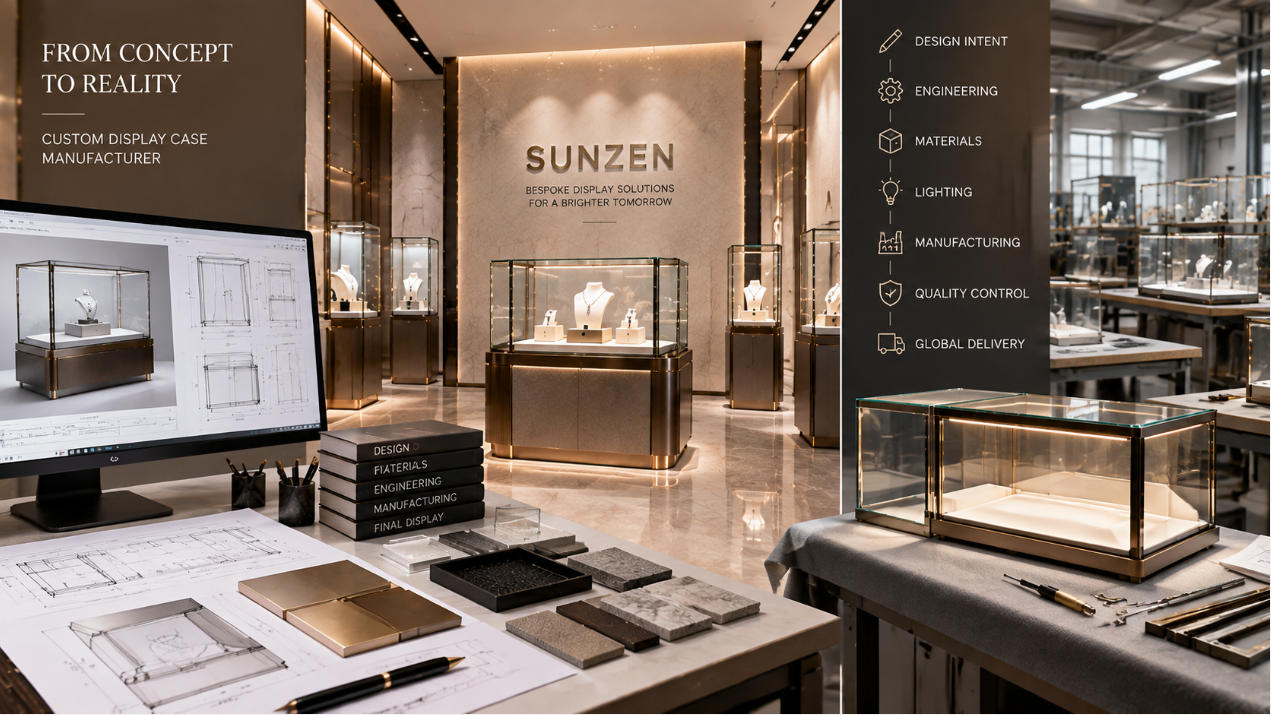
Custom Manufacturing Starts With Understanding What Must Not Be Lost
A custom display case is often specified because a standard cabinet cannot achieve the required proportion, material expression, display function or relationship with the surrounding interior.
That means the manufacturer’s first responsibility is not to simplify every unusual detail into a standard product. It is to understand which elements define the design and determine how they can be manufactured reliably.
Proportion & Geometry
Overall dimensions, sightlines, curves, reveals and relationships between glass and solid surfaces may be central to the original concept.
Finish & Material Character
Metal tone, cabinetry finish, stone, textile, glass and interior surfaces contribute to how the finished display case belongs within the project.
Lighting Intent
Integrated lighting should support the displayed product while remaining visually controlled within the case architecture.
Signature Design Details
Edge profiles, joints, handles, shadow gaps and other small details often determine whether the manufactured case still feels like the approved design.
Bring a Sketch, Rendering, Drawing or Production Specification
Not every custom display case project reaches the manufacturer with the same level of technical information. A design firm may provide detailed drawings, while another project may begin with a rendering, material palette and key dimensions.
SUNZEN can review the available information and identify what still needs to be resolved before the case becomes ready for fabrication.
When a project requires additional development before manufacturing, our display case design capability can support the transition from an early concept toward a technically resolved display case.
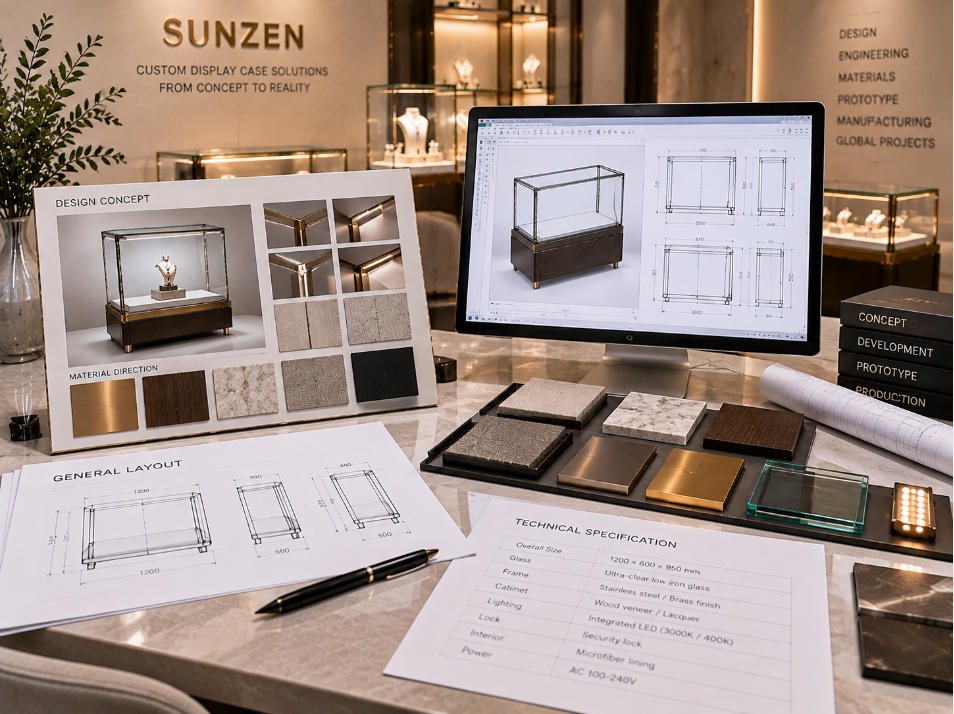
A Bespoke Design Must Become Buildable Without Becoming Generic
Custom display case manufacturing involves a series of decisions between visual intent and physical construction. The goal is not to redesign the project unnecessarily, but to resolve the details that allow the approved appearance and functions to be manufactured.
What Defines the Appearance?
Identify the proportions, finishes, visible joints, lighting effects and signature details that should remain faithful to the approved design.
What Defines the Structure?
Determine how glass, frames, cabinetry, shelves, doors and internal supports need to work together as a stable physical display case.
What Defines the Operation?
Resolve access, locks, drawers, storage, lighting, wiring and maintenance around how the case will actually be used.
The Details That Matter Most Are Often Where Materials Meet
A bespoke display case may combine several fabrication disciplines within a relatively small object. Problems often appear at the interfaces between those components rather than within one material alone.
Glass + Metal
Glass dimensions, frame profiles, supports, channels and visible edges need to align accurately while preserving clear product visibility.
Metal + Cabinetry
Decorative trims, structural frames, cabinet panels and reveals should meet cleanly without creating unintended gaps or inconsistent lines.
Lighting + Structure
Light sources, wiring, heat management and service access need to be integrated without allowing technical components to dominate the presentation.
Doors + Hardware
Hinges, sliding systems, locks and handles need sufficient space and support while remaining compatible with the visual design.
Interior + Merchandise
Linings, shelves, risers and product supports should be coordinated with the merchandise dimensions and intended presentation.
Case + Architecture
Built-in or project-specific cases may also need to coordinate with walls, flooring, electrical points and surrounding architectural finishes.
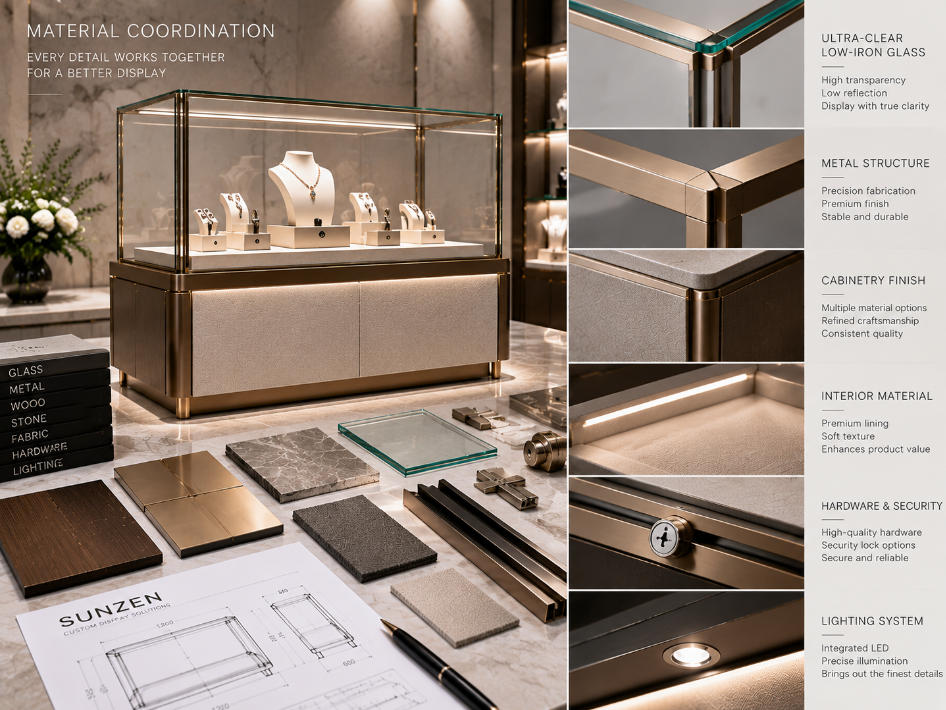
Treat Glass as Part of the Design — Not Just an Enclosure
Many bespoke display cases rely heavily on glass because the product needs maximum visibility with minimal visual obstruction. The glazing therefore influences both appearance and construction.
Glass thickness, dimensions, edge treatment, joints, doors, shelves and supporting structures need to be coordinated with the surrounding metalwork and cabinetry.
Projects focused specifically on glass configuration, dimensions, finishes and functional customization can explore our custom glass display cases. Buyers comparing specialist production partners can also review our glass showcase manufacturers capability.
Use Physical Samples to Resolve Finish, Texture and Light
Drawings can define dimensions, but they cannot fully communicate every visual quality of a bespoke display case. Physical samples are particularly useful where the finished appearance depends on color, texture, reflectivity or the interaction between materials.
Metal Finish
Review color, sheen, brushing direction and surface character before the finish is repeated across visible components.
Cabinet Surface
Compare paint, veneer, laminate or other decorative surfaces against the intended interior palette.
Interior Material
Evaluate fabrics, leather-like materials and display surfaces in relation to the products that will be presented.
Lighting Effect
Review light color, brightness, diffusion and integration where illumination is critical to the display experience.
Validate the Difficult Parts Before Repeating the Case
Not every project requires a complete prototype, but unusual construction, new materials, complex openings or repeat quantities can make physical validation valuable.
Depending on the project, validation may involve a material sample, detail mock-up, partial assembly or a complete first article. The purpose is the same: resolve uncertainty before the approved solution is repeated.
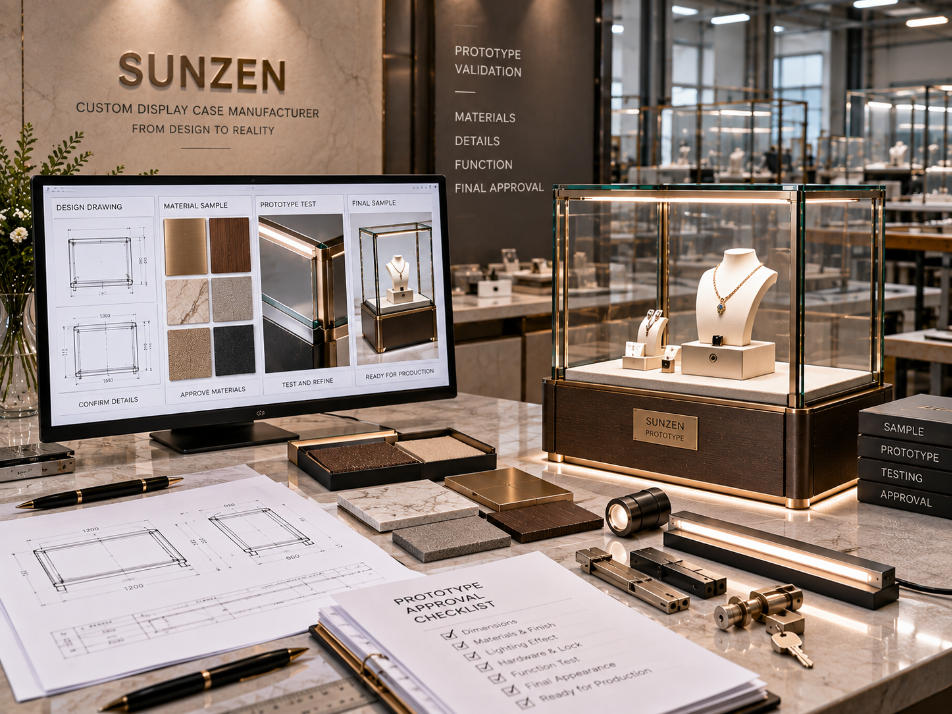
Freeze the Important Decisions Before Custom Display Case Manufacturing
Bespoke manufacturing becomes easier to control when the project reaches a clear approval point. Instead of allowing drawings, finishes and hardware selections to change independently during production, the key information can be coordinated into one manufacturing reference.
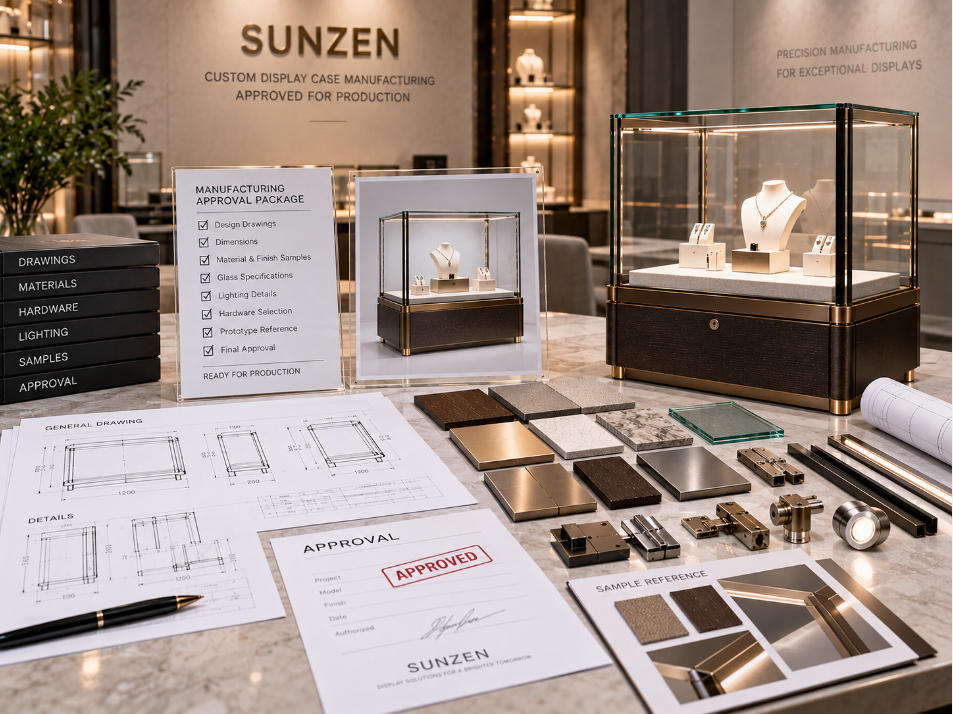
What Should Be Confirmed?
- Overall dimensions and visible proportions
- Glass configuration and openings
- Metal and cabinetry finishes
- Interior display materials
- Lighting and electrical integration
- Locks, hinges, slides and other hardware
- Approved samples and special details
Custom Display Case Manufacturer and Custom Showcase Manufacturer Often Describe the Same Project Need
In custom retail and exhibition projects, the terms display case and showcase are often used for closely related enclosed or partially glazed display fixtures. Project teams may use either expression depending on the market, application and established terminology.
SUNZEN therefore treats the terminology as secondary to the actual manufacturing requirement. The important questions are what the case needs to display, how it should look, how it will operate and how the approved design should be manufactured.
The broader custom scope can also include custom display fixtures when a project requires more than enclosed display cases alone.
Once the Design Is Frozen, Manufacturing Becomes a Control Problem
At this stage, the question changes. The project is no longer asking what the display case should look like. The factory needs to reproduce the approved dimensions, materials, details and functions through multiple fabrication processes and final assembly.
Release
Confirm the approved drawings, material references and production information used by the factory.
Fabricate
Produce glass, metal, cabinetry and other components according to the resolved custom specification.
Integrate
Bring lighting, hardware, interior materials and fabricated components together during assembly.
Verify
Compare the completed display case with the approved visual, dimensional and functional requirements.
For a deeper production-focused view, explore showcase manufacturing. Buyers specifically evaluating direct factory capability can also review SUNZEN as a showcase factory.
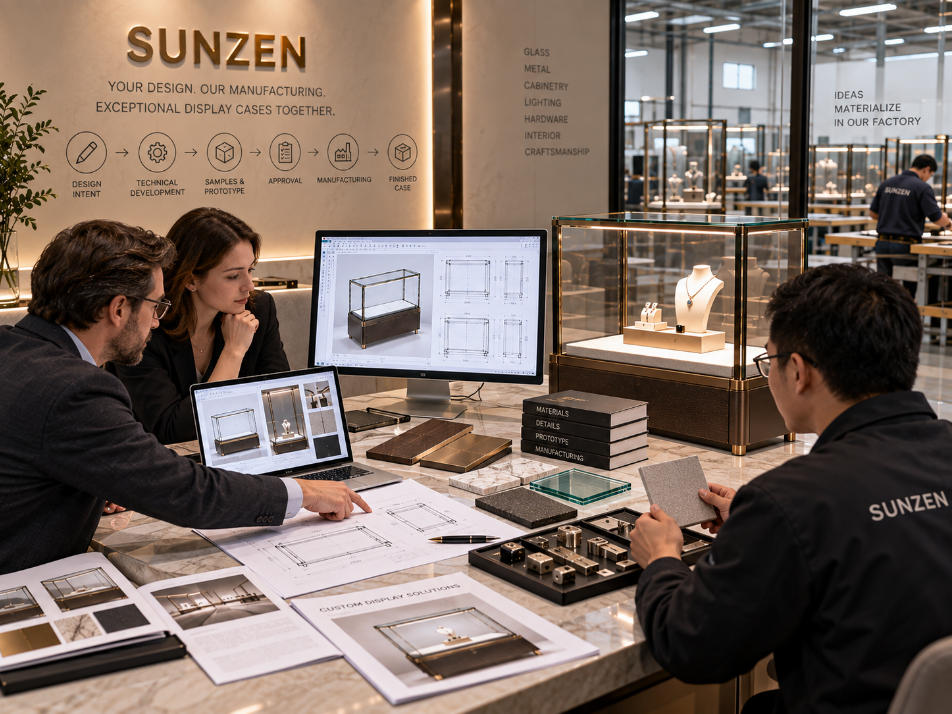
Your Team Owns the Design Intent — Manufacturing Should Help Protect It
Design companies and architects do not necessarily need a manufacturer to replace their creative role. They need a production partner that can understand the approved concept, identify manufacturing questions early and communicate clearly when a technical decision may affect the visible result.
This creates a more useful relationship between designer and manufacturer: the designer controls the intended experience, while manufacturing resolves how the physical display case can achieve it.
Custom Manufacturing Changes With What the Display Case Needs to Do
The same design-to-manufacturing principle can apply across different industries, but the priorities inside the case can change significantly.
Presentation + Security
Premium visibility, controlled lighting, staff access, locks, drawers and refined interior materials become particularly important.
For category-specific manufacturing, explore jewelry display case manufacturers.
Object + Exhibition Requirements
Exhibit dimensions, viewing conditions, access, glazing, interior surfaces and project-specific conservation requirements can change the manufacturing priorities.
Cultural projects can continue to museum display case manufacturers.
Display Case + Fixture Program
When the scope expands beyond individual display cases into counters, wall systems, tables, storage and other fixtures, the project becomes a broader retail manufacturing program.
See our retail fixture manufacturer solution for multi-fixture and multi-store requirements.
Ask Whether the Manufacturer Can Protect the Difficult Parts of Your Design
Can They Read the Design Intent?
The manufacturer should understand which visible relationships and details are fundamental rather than treating the project as a standard cabinet with different finishes.
Can They Identify Manufacturing Risks?
Difficult interfaces, unusual geometry and material relationships should be discussed before fabrication rather than discovered during final assembly.
Can They Work With Physical Samples?
Material and finish approvals help reduce subjective interpretation where drawings alone are insufficient.
Can They Validate New Details?
Mock-ups, prototypes or first articles can be useful where a custom construction detail has not yet been physically proven.
Can They Control Revisions?
Manufacturing should follow the correct approved drawing, material and detail revision rather than mixing information from different project stages.
Can They Inspect the Finished Case?
Final review should consider appearance, dimensions, alignment, lighting, openings, hardware and other functions against the approved project information.
Custom Display Case Manufacturer FAQ
What does a custom display case manufacturer do?
A custom display case manufacturer turns project-specific requirements, concepts, drawings and specifications into physical display cases. The work can involve technical development, glass, metalwork, cabinetry, lighting, hardware, interior materials, fabrication, assembly and factory inspection.
What is the difference between a custom display case manufacturer and a custom showcase manufacturer?
In many retail and exhibition projects, display case and showcase describe closely related display fixtures. The preferred term varies by market and application. A custom manufacturer should focus on the actual dimensions, materials, presentation, access and functional requirements rather than the terminology alone.
Can SUNZEN manufacture display cases from our designer’s drawings?
Yes. Projects can begin from supplied concepts, renderings, CAD drawings, specifications or approved design information. The available documents are reviewed to identify technical details, materials, hardware, lighting and other information that must be resolved before manufacturing.
Can a custom display case manufacturer help without changing our design concept?
Manufacturing development can focus on resolving structure, material interfaces, glass, hardware, lighting and assembly while protecting the approved design intent. If a technical change may affect the visible result, it should be reviewed before production.
Do custom display cases require a prototype?
Not every project requires a complete prototype. Material samples, detail mock-ups, partial assemblies or a first article may be used when the project includes unusual construction, new materials, complex functions or repeat quantities that benefit from physical validation.
What information should I send to a custom display case manufacturer?
Useful information includes concepts or renderings, dimensions, CAD drawings, material and finish references, displayed products, lighting requirements, access and security needs, quantities, installation conditions and the project schedule. The exact information required depends on the stage of the design.
Send Us Your Custom Display Case Concept, Drawings or Specifications
Share your renderings, CAD drawings, dimensions, material references, display requirements and project quantities. SUNZEN can review what is already resolved, identify the manufacturing details that still need development and prepare the project for custom production.

