
Commercial Display Case Manufacturer for Custom Retail & Interior Projects
SUNZEN manufactures non-refrigerated commercial display cases for retail stores, branded interiors, showrooms, exhibitions and other commercial environments. We work with contractors, project companies, procurement teams, designers and brands to translate project drawings, specifications and case schedules into controlled manufacturing, identified packing and project-ready delivery.
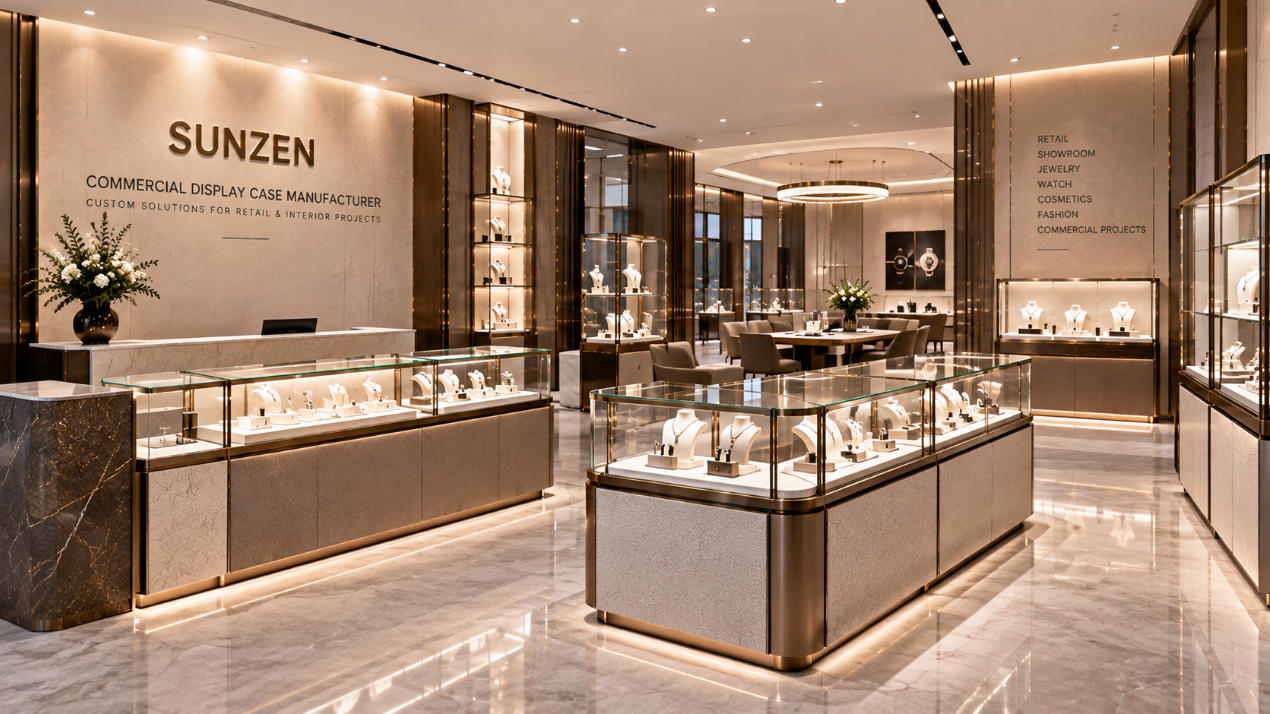
Commercial Display Cases Are Usually Part of a Larger Project Package
A commercial project rarely asks a manufacturer to produce one isolated cabinet without context. The display cases may belong to a store, showroom, branded interior or exhibition where different case types must coordinate with drawings, finishes, electrical requirements, merchandise and the construction schedule.
For contractors and project teams, this changes the manufacturing question. The priority is not only whether each display case can be built, but whether the complete case package can be interpreted, approved, produced, identified and delivered in a controlled way.
What Cases Are Included?
Identify freestanding, counter, wall, tower, built-in and other display case types within the commercial project.
What Must Each Case Meet?
Dimensions, glass, finishes, lighting, hardware, access, storage and other requirements need clear project references.
How Many of Each Type?
Quantities and repeated case types affect production planning, material control, identification and packing.
Where Does Each Case Belong?
Project identification should continue through packing so completed cases can be connected to the correct store, zone or installation location.
Drawings, Specifications and Case Schedules Create the Manufacturing Brief
Commercial display case manufacturing can begin from different project documentation. Some contractors provide detailed construction drawings and fixture schedules. Other projects begin with design drawings, elevations, renders, finish schedules and technical specifications that still require manufacturing clarification.
SUNZEN reviews the available information against the actual display case scope so missing dimensions, conflicting details or unresolved manufacturing requirements can be identified before production release.
Where an individual bespoke case requires deeper design-to-production development, our custom display case manufacturer solution focuses specifically on protecting design intent during custom manufacturing.
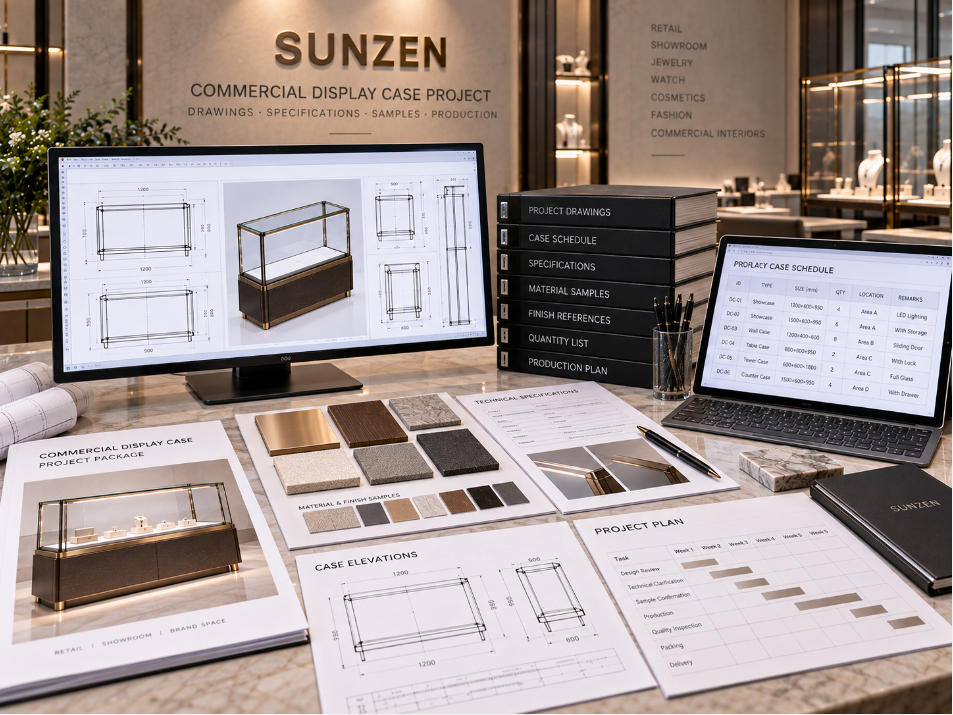
Control the Project by Display Case Type — Not by Memory
When a project contains several display case formats, a clear case schedule helps connect design information with production quantities and final locations.
Case ID
Give each case type or individual unit a clear project reference that can follow it through manufacturing and packing.
Drawing Reference
Connect each case to the correct drawing and revision so production does not rely on mixed project information.
Quantity
Confirm how many units of each approved type are required within the current project phase.
Finish Reference
Link visible metal, cabinetry, interior and decorative finishes to the approved project references.
Functional Requirement
Record relevant lighting, access, security, storage and operational requirements by case type.
Project Location
Connect completed cases with the correct store, room, zone or installation position where project logistics require it.
Commercial Does Not Mean Standardized
Many commercial projects require display cases that respond to the architecture, merchandise, brand identity and operational needs of a specific space. Dimensions, glass configuration, finishes, lighting, access and storage can therefore vary significantly between projects.
Custom commercial display cases can be developed around those project-specific requirements while still being managed through a controlled manufacturing package.
Project-Specific Dimensions
Cases can respond to floor plans, wall conditions, merchandise dimensions and surrounding architectural elements.
Custom Material Combinations
Glass, metal, cabinetry, stone-look surfaces, fabrics and other finishes can be coordinated with the interior specification.
Project-Specific Functions
Lighting, locks, doors, drawers, shelves and staff access can be selected around how each case will operate commercially.
Projects where glass itself is the main customization focus can continue to custom glass display cases for more detailed glass, structure and configuration options.
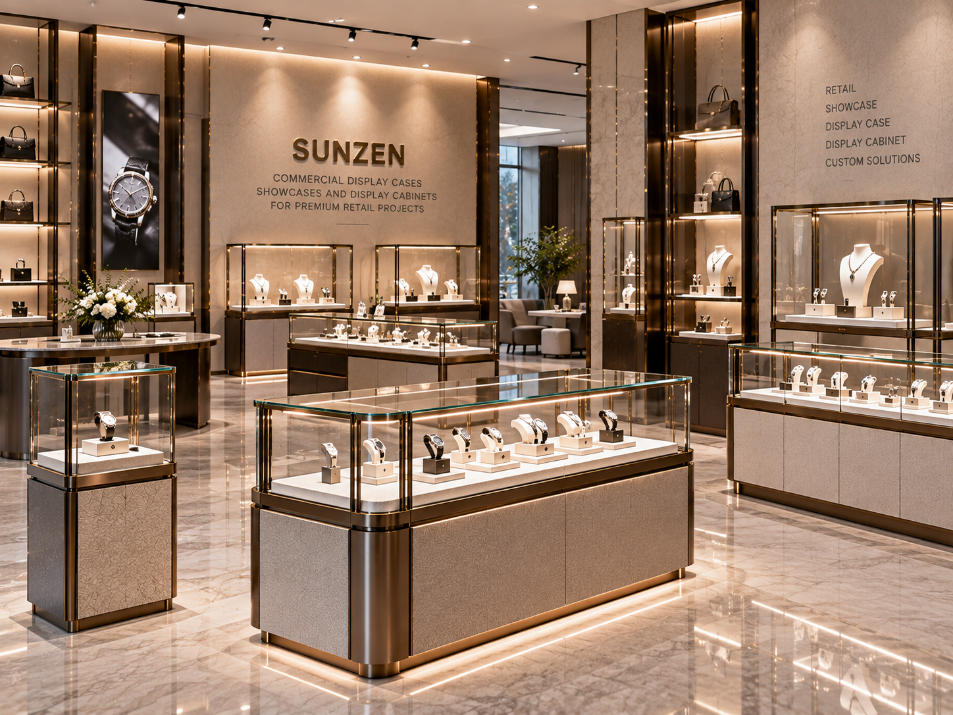
Different Project Terms Can Describe Closely Related Commercial Fixtures
Commercial project documents may refer to a glazed fixture as a display case, showcase or display cabinet. Terminology varies by market, designer and application, and the same project may even use more than one expression.
SUNZEN therefore treats the project specification as more important than the label. Glass configuration, structure, lighting, access, security, materials and final use determine what actually needs to be manufactured.
Buyers specifically comparing glass showcase manufacturers can review our glass-focused manufacturing capability in greater detail.
Technical Clarifications Should Close Gaps Before They Reach Production
Project drawings can contain information from architects, designers, contractors, electrical consultants and other parties. Before commercial display case manufacturing begins, the information that directly affects the case should be coordinated into a usable production reference.
Identify Conflicts and Missing Information
Dimensions, material descriptions, door directions, lighting positions, hardware, electrical access and surrounding site conditions may need clarification before release.
Create a Controlled Manufacturing Reference
Approved drawings, finish references, samples and case schedules should tell production which information is current and which revision must be followed.
Different Decisions May Need Different Approvals
Commercial projects often involve more than one stakeholder. The person approving appearance may not be the same person confirming technical access, quantities or delivery.
A simple approval structure helps reduce uncertainty by identifying which decisions are still open and which are already released for production.
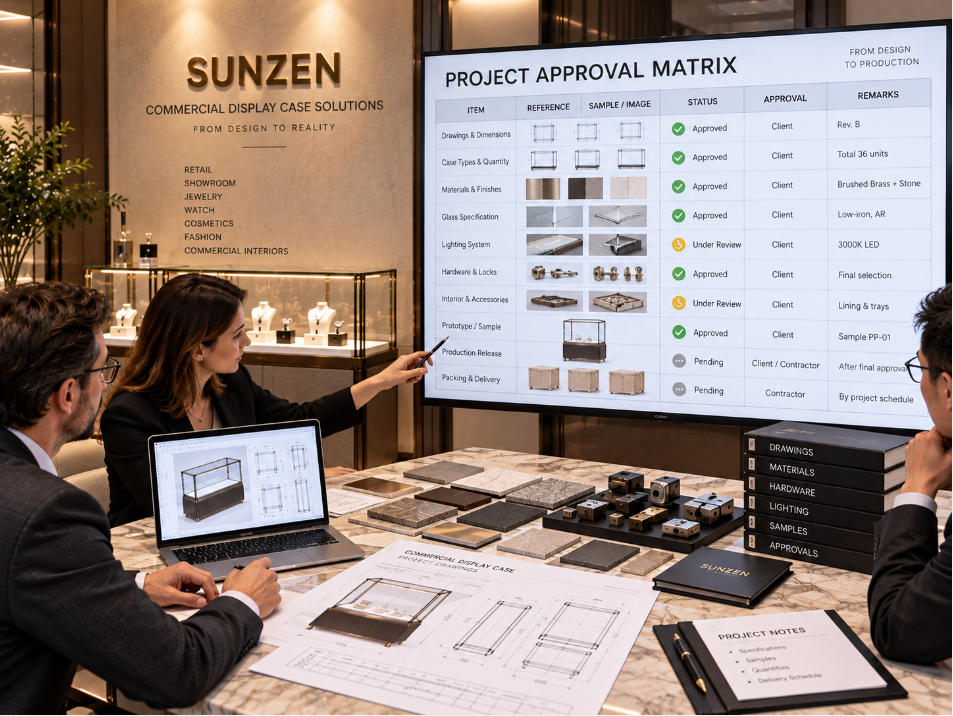
Manufacturing Should Begin From the Approved Project Version
Once the required project information is confirmed, the case package can move from clarification into production. This release point helps separate active manufacturing information from earlier concepts and superseded revisions.
Confirm Scope
Freeze the case types, quantities and current project phase included in the production release.
Confirm References
Identify the approved drawings, samples, materials, finishes and functional requirements for each case type.
Release Production
Manufacture against the controlled project information rather than unresolved design-stage documents.
Track the Package
Maintain case identification through inspection and packing so completed units remain connected to the project schedule.
For a closer look at the production processes behind custom showcases, see our showcase manufacturing capability. Buyers evaluating direct production can also review SUNZEN as a showcase factory.
One Approved Reference Can Control Multiple Commercial Display Cases
A project may require several identical or closely related display cases. Once a case type has been approved, repeated units should follow the same controlled references rather than being interpreted independently.
Dimensional Consistency
Repeated cases should maintain the approved dimensions, alignments and visible proportions.
Finish Consistency
Metal, cabinetry and interior finishes should remain connected to the approved samples and project references.
Functional Consistency
Lighting, locks, doors, drawers and hardware should follow the approved case specification across repeated units.
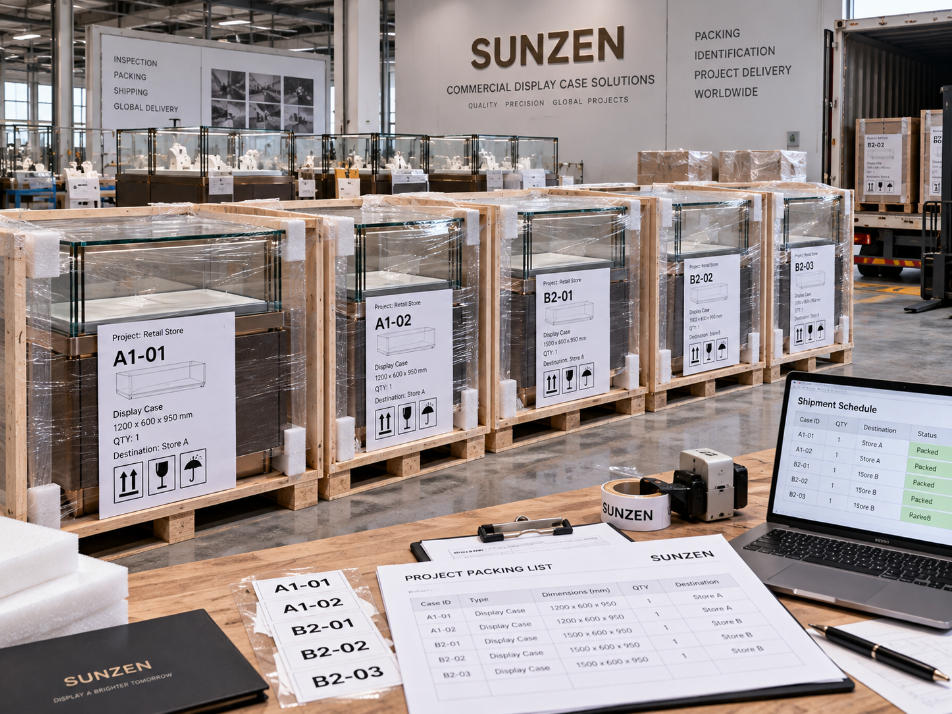
The Case ID Should Still Mean Something After the Factory Door
Commercial project delivery becomes harder when completed display cases arrive as unidentified crates. Packing information can help connect each unit to its case reference, quantity, project zone or destination.
This is particularly useful where several display case types are shipped together or where contractors need to coordinate unpacking and installation in a planned sequence.
Project teams whose priority is broader sourcing, quotation and supply coordination can also explore SUNZEN as a retail fixture supplier.
The Project Control Logic Stays Consistent While the Case Requirements Change
Merchandise-Led Display Cases
Retail projects may prioritize product visibility, integrated lighting, secure staff access, storage and coordinated branded finishes.
Jewelry-specific projects can continue to jewelry display case manufacturers.
Exhibition-Led Display Cases
Museum projects can introduce additional requirements around objects, glazing, access, interior materials, security and exhibition specifications.
Cultural institutions and exhibition contractors can continue to museum display case manufacturers.
Beyond Display Cases
When the package expands into wall fixtures, open shelving, tables, counters and other store furniture, the project becomes a wider retail fixture manufacturing program.
See our retail fixture manufacturer solution for broader fixture programs.
What to Send a Commercial Display Case Manufacturer
The clearer the project package, the easier it is to identify open questions before quotation or manufacturing. Useful information depends on the project stage, but the following items provide a strong starting point.
Drawings
Plans, elevations, sections, case drawings and relevant architectural details.
Case Schedule
Case IDs, types, quantities, locations and current drawing references.
Specifications
Glass, materials, finishes, lighting, hardware, security and functional requirements.
Samples
Approved finish samples, material boards or other physical references where appearance must be matched.
Quantities
Required quantities by case type, project phase or destination.
Project Program
Required approval dates, production milestones, shipping windows and destination information.
Commercial Display Case Manufacturer FAQ
What does a commercial display case manufacturer produce?
A commercial display case manufacturer produces display cases, showcases and display cabinets for professional retail, showroom, exhibition and other commercial environments. Projects may include freestanding cases, counters, wall cases, towers, built-in cases and other custom configurations.
Does commercial display case mean refrigerated display case?
Not on this SUNZEN page. SUNZEN focuses on non-refrigerated custom display cases and showcases for retail stores, branded interiors, museums, exhibitions and other commercial presentation projects.
Can SUNZEN manufacture custom commercial display cases from contractor drawings?
Yes. Projects can begin from contractor, architect or designer drawings, fixture schedules, specifications and finish references. The available information is reviewed to identify technical clarifications and approvals required before production release.
What is the difference between a commercial display case and a commercial showcase?
The terms display case, showcase and display cabinet are often used for closely related commercial display fixtures. The preferred terminology varies by project and market. Manufacturing should follow the actual glass, structure, materials, lighting, access and functional specification rather than the label alone.
Can a commercial display case manufacturer produce multiple case types for one project?
Yes. A commercial project can include several display case types with different dimensions, functions and quantities. Case IDs, drawing references, specifications and approved finishes can be used to control the package through manufacturing and packing.
What should contractors send for a commercial display case quotation?
Useful information includes plans, elevations, case drawings, fixture or case schedules, specifications, material and finish references, quantities, project locations and required dates. The exact information depends on the project stage and scope.
Discuss Your Commercial Display Case Manufacturing Requirements
Send SUNZEN your case drawings, project schedule, specifications, finish references, quantities and required dates. We can review the package, identify open manufacturing questions and coordinate the information required before production release.

