
Retail Store Fixtures for Custom Store & Brand Environments
A retail store rarely depends on one display fixture. Customers move through entrance displays, wall merchandising, freestanding fixtures, counters, product presentation zones and service areas — each with a different commercial purpose.
SUNZEN develops retail store fixtures as a coordinated system rather than a collection of unrelated units. Fixture type, display format, materials, storage, lighting and customer interaction can be planned around the role each area plays within the store.
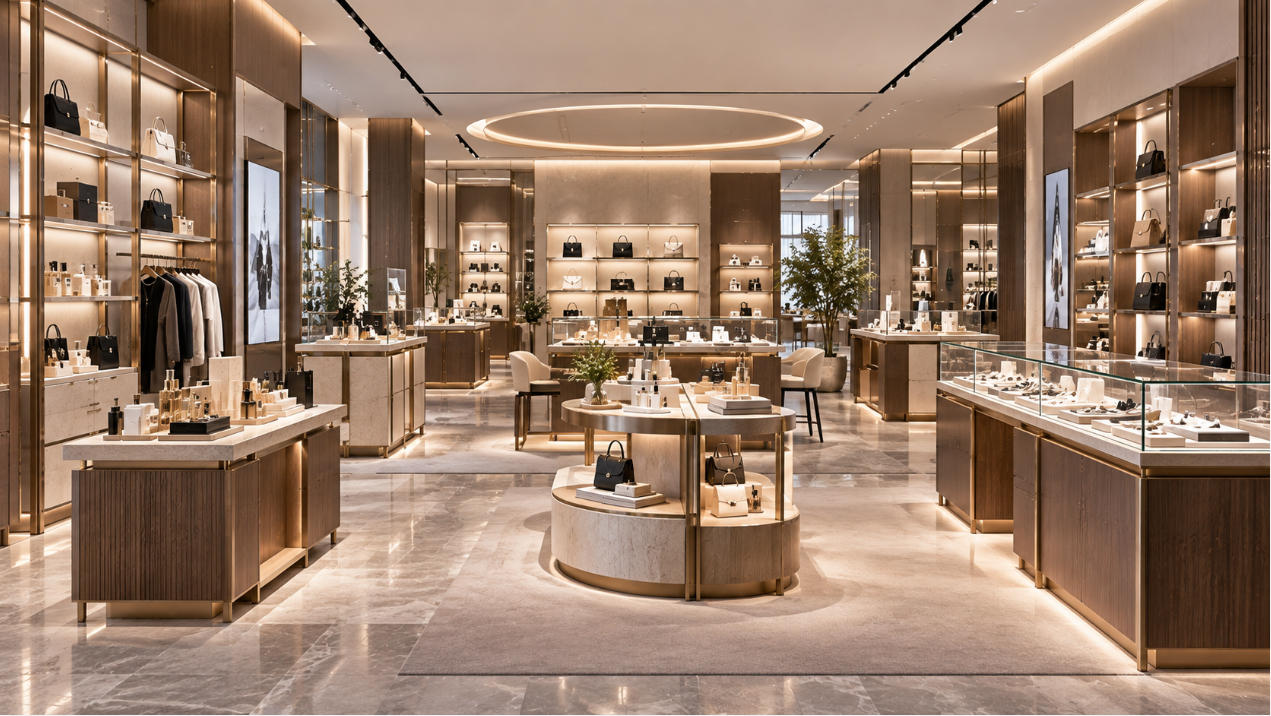
Choose Retail Store Fixtures by What Each Area Needs to Do
Fixture selection becomes clearer when the store is divided by selling function rather than by furniture name.
Some areas need visibility. Others need product capacity, assisted selling, secure presentation, customer interaction or concealed storage. The fixture should respond to that role.
Capture Attention
Feature fixtures and focal displays introduce key products, campaigns or brand stories.
Make Products Easy to Explore
Wall fixtures, shelving and freestanding displays create accessible merchandising capacity.
Control Product Presentation
Display cases and premium counters support products that benefit from controlled presentation and lighting.
Support Customer Interaction
Consultation counters, service units and storage fixtures support the operational side of the retail environment.
One Store Can Require Several Different Fixture Behaviors
A fixture that works well beside the entrance may be inefficient on a perimeter wall. A high-capacity wall display may not be suitable for a premium consultation area.
Instead of repeating the same fixture throughout the store, the retail environment can be divided into zones and each zone matched with an appropriate display format.
This approach helps create variety without losing consistency: different fixture types can still share materials, proportions, lighting details and brand finishes.
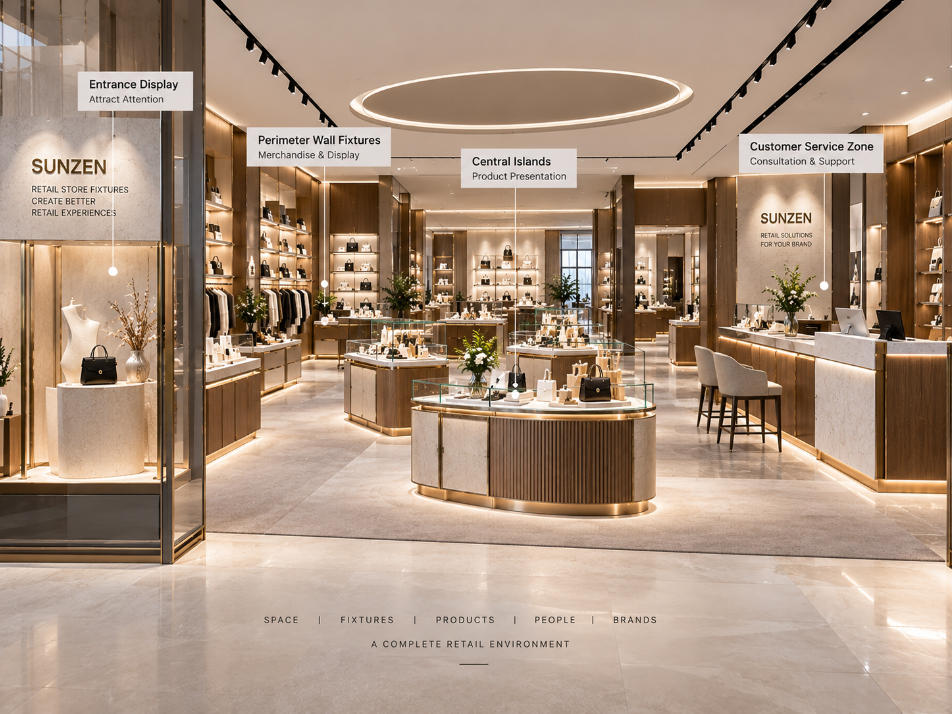
What Types of Retail Store Fixtures Can Work Together?
A complete retail fixture family can combine several formats, each performing a different merchandising or operational role while following the same visual language.
Wall Display Fixtures
Perimeter systems use vertical store surfaces for shelving, product presentation, graphics and integrated storage.
Freestanding Displays
Flexible floor fixtures create merchandising points away from the perimeter and can help organize customer circulation.
Display Counters
Customer-facing counters can combine presentation, assisted selling, storage and staff-side functions.
Glass Display Cases
Enclosed display formats support clear visibility, integrated lighting and controlled access for selected products.
Shelving Systems
Open merchandising fixtures provide accessible product capacity and can adapt to different packaging formats.
Service & Storage Fixtures
Back counters, cabinets and concealed storage support daily store operation without dominating the selling space.
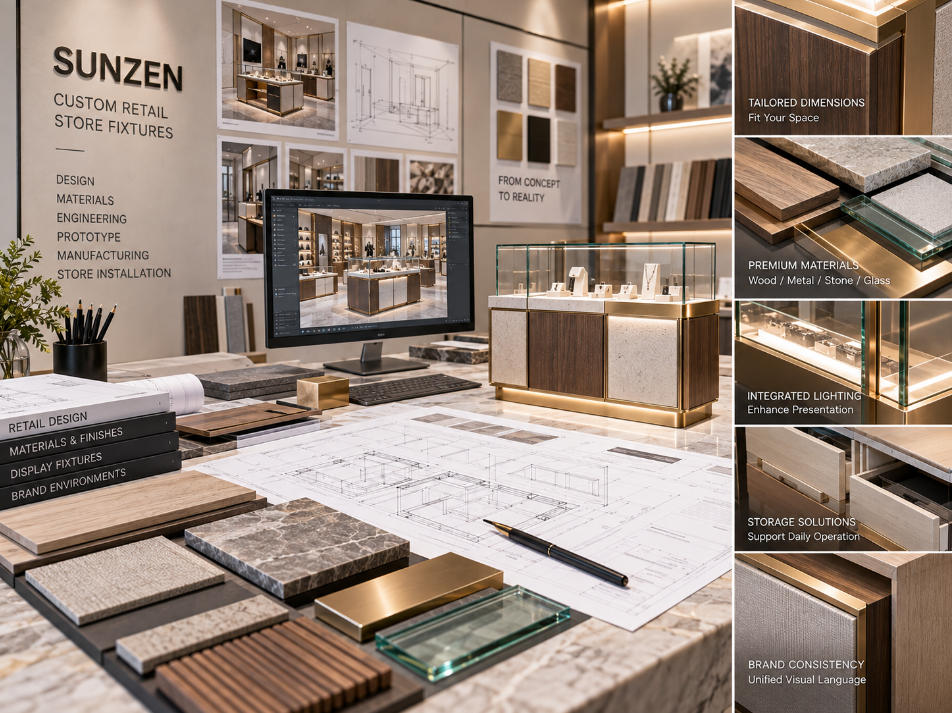
Custom Retail Store Fixtures Should Respond to More Than Store Dimensions
Customization is not simply changing the length or color of a standard cabinet.
The useful decisions are connected to how products are sold: display density, product dimensions, viewing height, customer access, staff access, storage capacity, lighting and the visual hierarchy of the store.
SUNZEN’s custom display fixtures can therefore be developed around both the commercial function of the fixture and the visual language of the brand.
Different Merchandise Creates Different Fixture Requirements
Retail store fixtures should not treat every product category in the same way. Size, value, packaging, browsing behavior and presentation expectations all influence the appropriate display format.
Small Premium Products
Smaller products may benefit from controlled presentation, closer viewing distances and more focused integrated lighting.
Packaged Merchandise
Shelf spacing, product capacity, replenishment and easy customer access become more important.
Fashion & Accessories
Open displays, hanging systems, shelving and feature presentation can work together across the store.
High-Value Merchandise
Visibility, controlled access, secure storage and presentation quality can influence the fixture structure.
Campaign Products
Flexible focal fixtures can support changing launches, promotions and seasonal merchandising.
Assisted-Sale Products
Counters and consultation fixtures need to consider both customer presentation and staff-side operation.
Decide How Customers Should Interact With the Product
One of the most important retail fixture decisions is whether merchandise should be openly accessible, visually protected behind glass or presented through a combination of both.
Encourage Browsing
Shelving, tables and open wall systems allow customers to approach, touch and compare products with minimal barriers.
These fixtures work particularly well where accessibility, merchandising capacity and frequent product updates matter.
Control Presentation
Glass display cases create a defined presentation environment where products can be viewed clearly while access remains controlled.
For stores that depend heavily on transparent display, explore SUNZEN’s retail glass display cases.
Build a Visual Hierarchy Across the Store
When every fixture has the same visual weight, the store can become difficult to read. Customers need focal points, supporting displays and quieter functional areas.
Fixture height, scale, lighting, material contrast and placement can create this hierarchy.
A feature display can attract attention while surrounding wall and floor fixtures provide supporting merchandising capacity without competing with it.
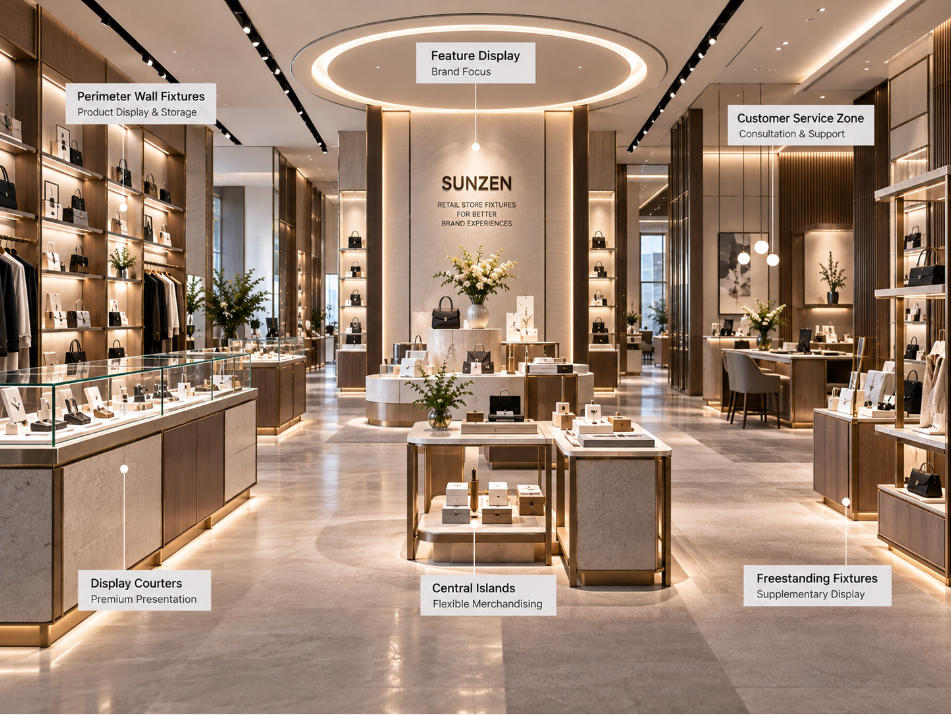
Create Variety Without Losing Brand Consistency
A wall fixture, freestanding display and service counter do not need to look identical. They do, however, need enough shared design language to feel like parts of the same retail environment.
Proportion
Repeated dimensional relationships can visually connect different fixture families.
Material Palette
A controlled family of wood, metal, stone, glass and surface finishes can establish brand continuity.
Detail Language
Edge profiles, handles, reveals, trims and bases can repeat across different fixture types.
Lighting Character
Consistent lighting temperature and integration can help unify open and enclosed displays.
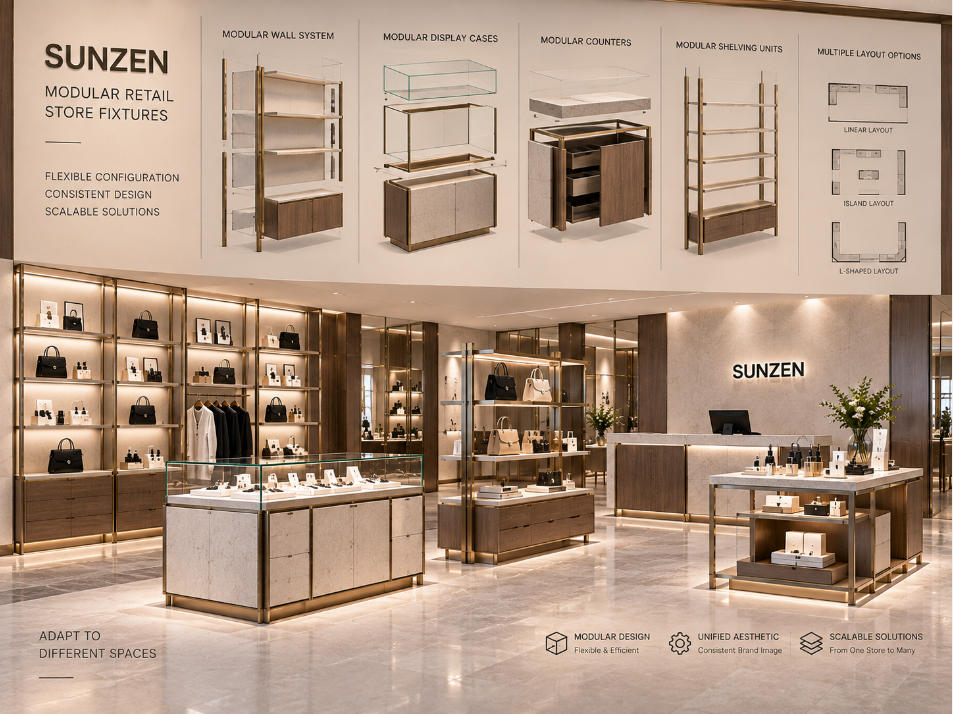
Some Retail Fixture Systems Benefit From Modular Thinking
Permanent built-in fixtures are useful where the architectural relationship is fixed. Other areas may need to respond to changing products, campaigns or store footprints.
A modular approach can introduce repeatable dimensions, interchangeable components or related fixture families without making every store completely identical.
For projects where reconfiguration and repeatable components are central requirements, see our modular glass display cases.
Good Retail Store Fixtures Also Work Behind the Display Surface
Product presentation is only one part of fixture performance. Daily retail operation happens behind and underneath what customers see.
Replenishment
Frequently sold merchandise may need stock positioned close to the selling area.
Staff Access
Doors and drawers should support routine operation without interrupting the customer-facing presentation.
Equipment
Selected counters may need space for cables, devices or other operational equipment.
Packaging
Storage can be planned around bags, boxes and other materials used during customer service.
Secure Storage
Some merchandise categories may require controlled staff-side storage integrated into the fixture.
Maintenance Access
Lighting and service components should remain accessible where future maintenance is required.
The Goal Is Not More Fixture Types — It Is the Right Fixture Mix
A store does not become more effective simply by adding more furniture. Each fixture should earn its place through a clear merchandising or operational role.
Map Store Zones
Identify entrance, perimeter, central selling, consultation and service areas.
Define Product Behavior
Understand how each merchandise category should be viewed, accessed and replenished.
Select Fixture Types
Match wall, floor, counter, shelving and enclosed formats to those commercial requirements.
Unify the Family
Coordinate proportions, materials, finishes, details and lighting into one store-wide fixture language.
A Coordinated Fixture Family Still Needs Manufacturing Discipline
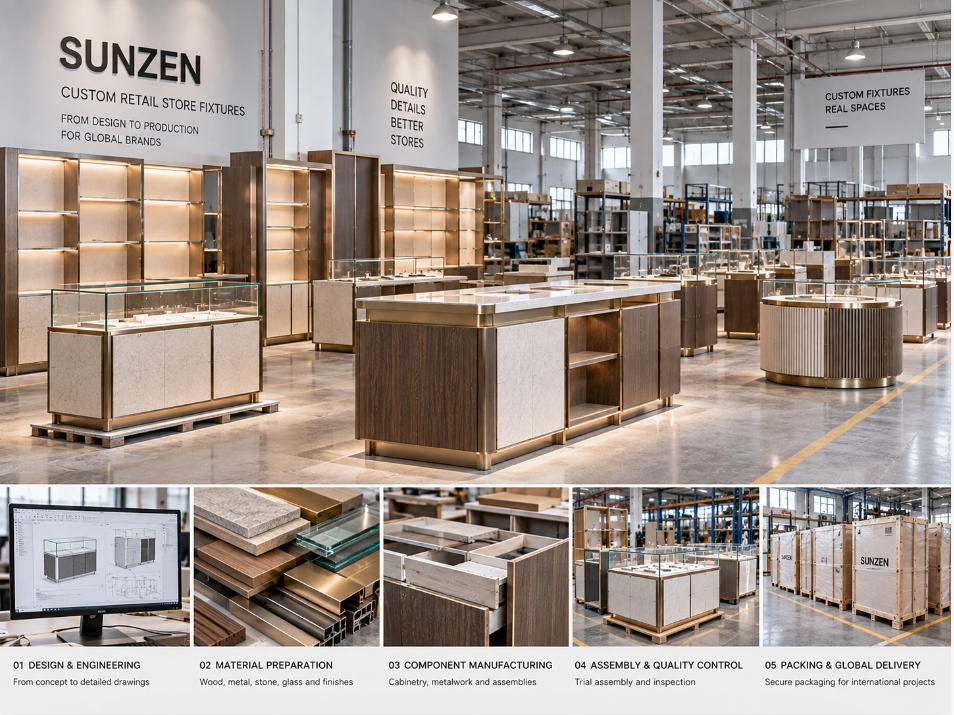
Once fixture types and design relationships are defined, they need to be converted into physical products with controlled dimensions, materials, finishes and functional details.
Working with a retail fixture manufacturer connects the store-wide fixture concept with engineering, prototyping and repeatable production.
SUNZEN’s broader showcase factory capabilities support projects where custom cabinetry, metalwork, glass and display components need to come together within the finished retail fixture.
Who Uses a Retail Store Fixture System?
Retail Brands
Build a recognizable family of fixtures around products, store identity and customer experience.
Boutique Owners
Determine which fixture types are actually needed within a limited store footprint.
Retail Designers
Translate spatial concepts into distinct fixture families with consistent material and detail language.
Procurement Teams
Organize different fixture categories into a clearer sourcing and specification structure.
When the primary requirement shifts from defining the fixture mix to consolidating sourcing, quantities and delivery, SUNZEN’s retail fixture supplier capabilities address the procurement side of the project.
What Information Helps Define Your Retail Store Fixtures?
Store Plan
Floor plans help identify perimeter, central, entrance, consultation and service zones.
Product Categories
Tell us what products each area needs to display and how customers interact with them.
Fixture References
Drawings, renderings or reference images can communicate the intended fixture language.
Material Direction
Share preferred wood, metal, stone, glass, surface finishes and other brand materials.
Functional Requirements
Include storage, lighting, locks, access, shelving and operational requirements where known.
Quantities
Store count, fixture quantities and project schedule help define the commercial scope.
Retail Store Fixtures FAQ
What are retail store fixtures?
Retail store fixtures are physical display, merchandising, storage and service elements used throughout a commercial store. They can include wall displays, shelving, freestanding units, counters, glass display cases, cabinets and customer service fixtures.
What types of retail store fixtures does a store need?
The appropriate fixture mix depends on the store layout, merchandise and selling process. A store may combine perimeter wall fixtures, freestanding displays, counters, shelving, enclosed display cases and storage or service fixtures across different zones.
What are custom retail store fixtures?
Custom retail store fixtures are developed around a specific store, product category or brand rather than relying only on standard fixture sizes. Dimensions, materials, finishes, display capacity, storage, lighting and other functions can be coordinated around the project requirements.
Should retail fixtures be open or enclosed?
That depends on how customers should interact with the merchandise. Open fixtures encourage direct browsing and easy access, while enclosed glass display cases provide more controlled presentation and access. Many stores use both formats in different zones.
How can different store fixtures look consistent?
Different fixture types can share a common design language through coordinated proportions, materials, finishes, edge details, metal trims, lighting and other repeated visual elements without making every fixture identical.
What should I provide for a custom retail store fixture project?
Useful information includes the store plan, product categories, fixture drawings or reference images, material and finish direction, functional requirements, quantities, store locations and project schedule.
Build the Right Fixture Mix Around Your Store and Products
Send SUNZEN your store plan, product categories, fixture references and functional requirements. We can review how wall fixtures, freestanding displays, counters, shelving, glass cases and storage elements can work together as a coordinated retail fixture system.

