
Jewelry Store Fixtures Designed Around How Jewelry Is Sold
Jewelry store fixtures do more than hold products. They shape how customers approach a collection, how closely they view each piece, where staff present jewelry and how the selling conversation moves from discovery to consultation.
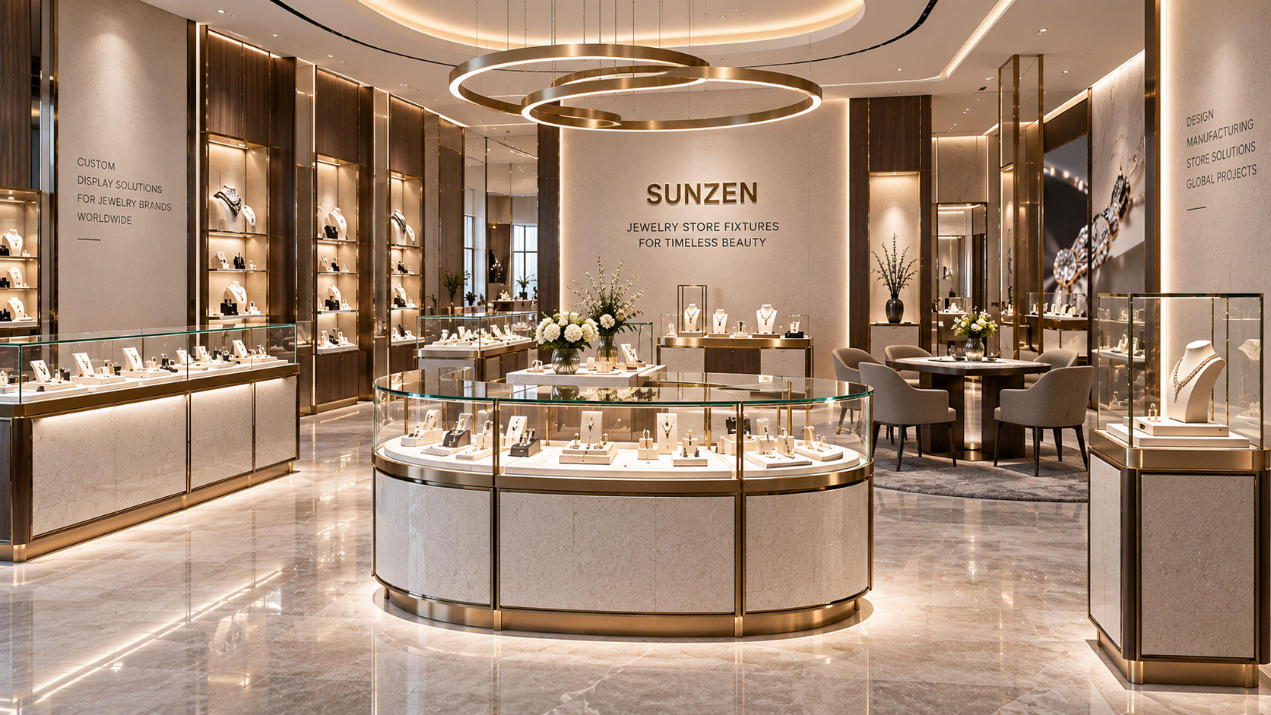
SUNZEN develops jewelry store fixtures around the relationship between merchandise, customer interaction and store space. Display counters, wall showcases, islands, pedestal displays and supporting cabinetry can perform different roles while remaining part of one coordinated jewelry retail environment.
The Right Fixture Depends on What Jewelry Is Being Presented
A ring collection, long necklace, watch assortment and statement piece do not create the same display problem. Product scale, viewing distance, quantity and selling interaction can all change the most appropriate fixture.
Rings & Small Jewelry
Small pieces benefit from close viewing, controlled spacing and lighting that reveals fine details without visually overwhelming the merchandise.
Necklaces & Pendants
Taller presentation zones can give necklaces and pendants the vertical space needed to communicate proportion and design.
Watches & Collections
Repeated display positions help customers compare models while maintaining a structured premium presentation.
Hero Pieces
Important pieces can be given more visual space through pedestal, tower or feature showcase formats.
Jewelry Fixtures Need to Support the Transition From Viewing to Trying On
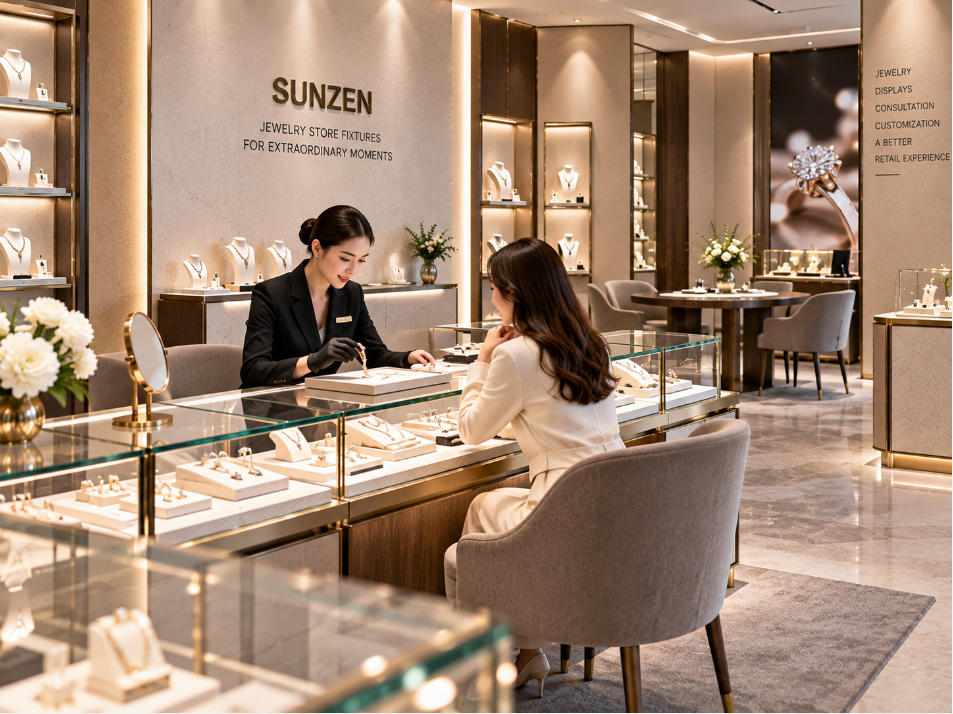
Jewelry retail is rarely a purely self-service experience. A customer may first notice a piece through glass, ask to view it more closely, compare alternatives and then try the jewelry at the counter.
The fixture therefore needs to support both presentation and human interaction. Counter depth, glass height, staff access and customer position all influence that experience.
This is why jewelry fixtures should be planned around the selling sequence rather than treated simply as display furniture.
Different Jewelry Store Fixtures Can Perform Different Selling Roles
A complete jewelry store normally benefits from several display formats rather than one repeated cabinet. Each fixture can solve a different merchandising or customer-interaction requirement.
Jewelry Display Counters
Horizontal glass presentation creates close viewing while supporting assisted selling and staff access.
Explore the jewelry counter showcase format for counter-based presentation.
Wall Showcases
Vertical displays use perimeter space for collections, brand stories and higher-level visual merchandising.
See our jewelry wall showcase category.
Island Showcases
Freestanding islands create central merchandising zones and can organize circulation through larger jewelry stores.
Explore jewelry island showcase options.
Pedestal Displays
Focused presentation gives selected jewelry more visual separation and can create feature moments within the store.
Upright Showcases
Vertical freestanding displays combine product visibility with a relatively compact floor footprint.
Consultation Fixtures
Tables and supporting cabinetry create a more comfortable environment for comparison, fitting and longer sales conversations.
Match Jewelry Fixtures to Different Store Zones
The entrance, perimeter, central selling floor and consultation area should not necessarily use the same fixture format. Their commercial roles are different.
Entrance & Window
Use selected products and stronger visual composition to communicate the character of the collection quickly.
Perimeter Display
Wall fixtures can organize larger collections without consuming the central selling floor.
Central Selling Zone
Counters and islands bring merchandise closer to customers and support assisted product discovery.
Private Consultation
Lower-density presentation and comfortable seating can support higher-value or more considered purchases.
Sightlines and Display Height Directly Affect Jewelry Presentation
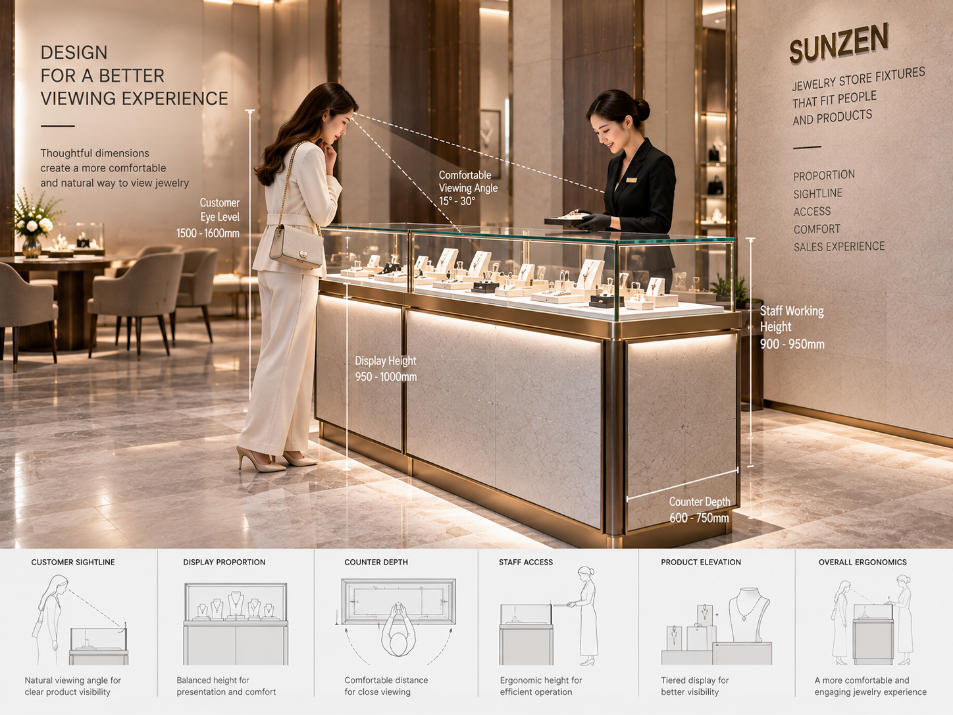
Jewelry is small, detailed and frequently viewed at close range. That makes viewing geometry more important than it is for many larger retail products.
Glass height, counter depth, product elevation and customer position influence how easily a piece can be seen.
The goal is not simply maximum glass area. The relationship between the customer, jewelry and fixture needs to feel comfortable and deliberate.
Decide Which Jewelry Needs Space and Which Needs Selection
Premium presentation does not always mean displaying fewer products everywhere. Different parts of the store can use different levels of merchandising density.
Low-Density Presentation
Signature jewelry can receive more surrounding space, creating stronger visual emphasis and perceived importance.
Balanced Presentation
Core collections can show enough choice for comparison while preserving clear product separation.
Higher-Capacity Presentation
Selected commercial zones can present a broader assortment where customer choice is more important than individual product isolation.
Customize the Fixture Around the Jewelry — Not Only the Store Style
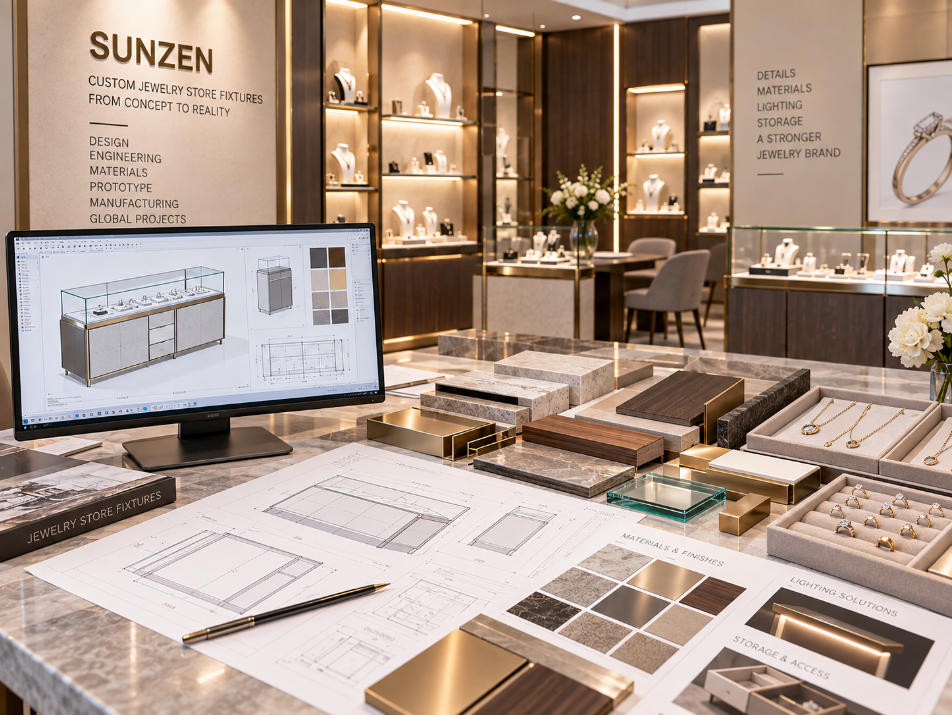
Materials and finishes establish visual identity, but useful customization goes deeper. Jewelry dimensions, tray layouts, viewing height, staff access, storage and lighting should also influence the fixture.
A ring counter may need a different interior arrangement from a necklace display. A bridal consultation area may require a different customer interaction from a high-capacity collection counter.
Projects requiring purpose-developed cases can explore SUNZEN’s custom jewelry display case solutions.
Jewelry Fixture Lighting Should Be Planned Around the Merchandise
Integrated lighting affects how customers perceive brilliance, surface detail, color and contrast. Its position therefore matters as much as the appearance of the light fixture itself.
Light Direction
Position light so the jewelry receives useful illumination rather than creating distracting reflections on surrounding surfaces.
Product Distance
The relationship between light source and merchandise changes illumination intensity and visual emphasis.
Store Consistency
Fixture lighting should work with the wider ambient and architectural lighting rather than behave as an isolated system.
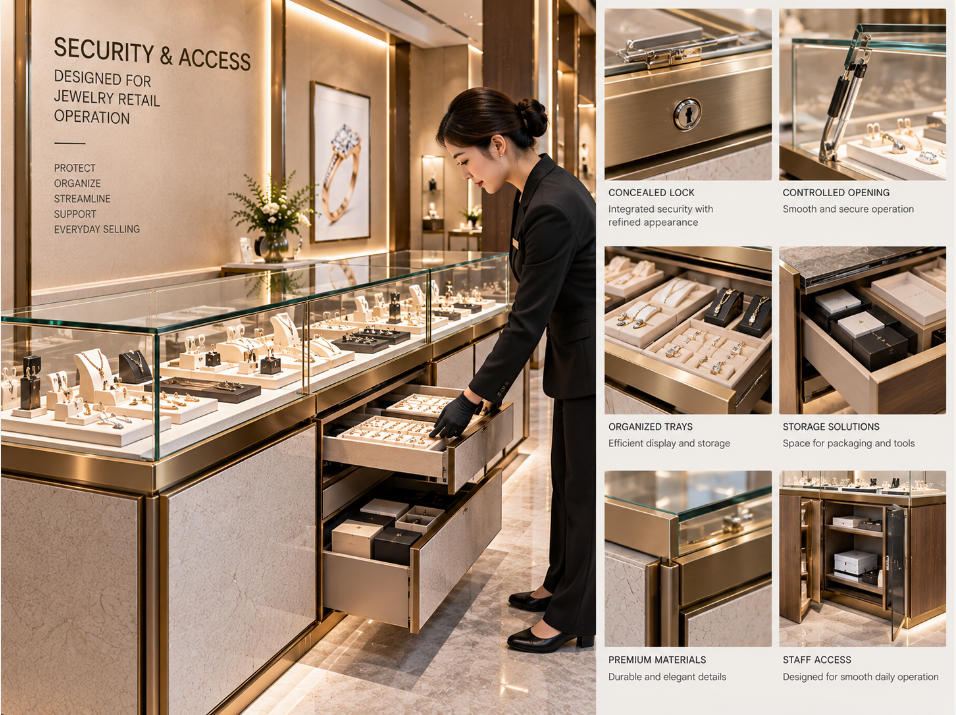
Security Should Work With the Selling Process
Jewelry display security is most useful when it protects merchandise without making everyday staff operation unnecessarily difficult.
Opening direction, lock position, drawer arrangement and staff circulation should be considered together.
- Controlled showcase access
- Concealed or integrated locking
- Staff-side opening strategy
- Organized tray handling
- Secure supporting storage
- Clear staff circulation
The Best Jewelry Fixtures Support Both Presentation and Daily Operation
Customers primarily experience the upper presentation area. Staff work with everything underneath and behind it.
Integrating the two can make the fixture more useful without allowing operational requirements to dominate its appearance.
Jewelry Trays
Storage can correspond with the trays and presentation formats used inside the display area.
Packaging
Boxes, bags and supporting sales materials can remain close to the selling position.
Staff Tools
Frequently used tools can have designated positions rather than occupying customer-facing display space.
Reserve Stock
Appropriate supporting storage can reduce unnecessary movement during customer service.
Create a Recognizable Jewelry Fixture Language Across the Store
Jewelry counters, wall showcases and feature displays can have different forms while still belonging to the same brand environment.
Instead of making every fixture identical, consistency can come from a smaller set of repeated design signals.
Glass Language
Consistent glass proportions and detailing can connect different showcase types.
Metal Finish
Repeated metal tones can create a recognizable detail language throughout the boutique.
Interior Palette
Coordinated display surfaces and jewelry presentation materials help collections feel visually connected.
Proportion
Related bases, frames, reveals and vertical dimensions can unify otherwise different fixtures.
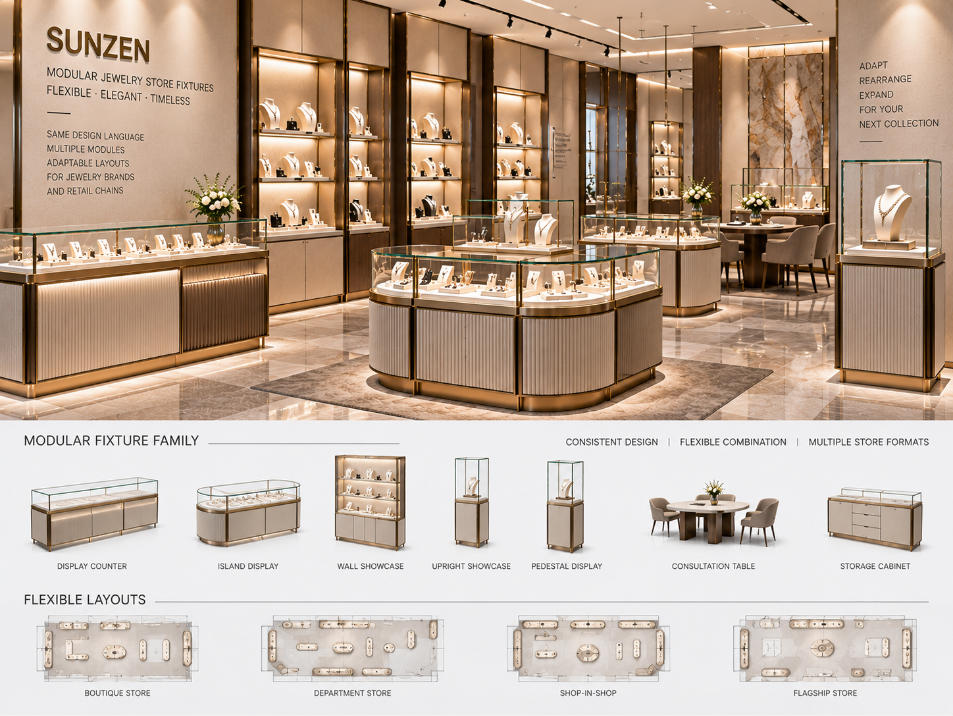
Modular Jewelry Fixtures Can Add Flexibility Without Losing the Premium Look
Jewelry brands with changing collections or multiple store formats may benefit from repeatable fixture dimensions and adaptable display components.
The goal is not to make the store look temporary. Modular thinking can remain visually refined while allowing selected components to be reused or configured differently.
For this type of project, explore modular jewelry display cases.
Once the Jewelry Fixture System Is Defined, the Manufacturing Questions Change
This page focuses on deciding what jewelry store fixtures are needed and how they should function together.
Once that fixture system is established, the next questions concern engineering, material execution, prototype approval, production consistency and manufacturing control.
Develop the Case Around the Requirement
When individual showcases require project-specific dimensions, materials, access or presentation details, explore custom jewelry showcase solutions.
Evaluate Manufacturing Capability
For projects moving from fixture concept into supplier evaluation and production capability, see SUNZEN’s jewelry display case manufacturers capabilities.
Understand the Production Environment
For production-focused requirements involving fabrication, assembly and quality control, explore the jewelry display case factory.
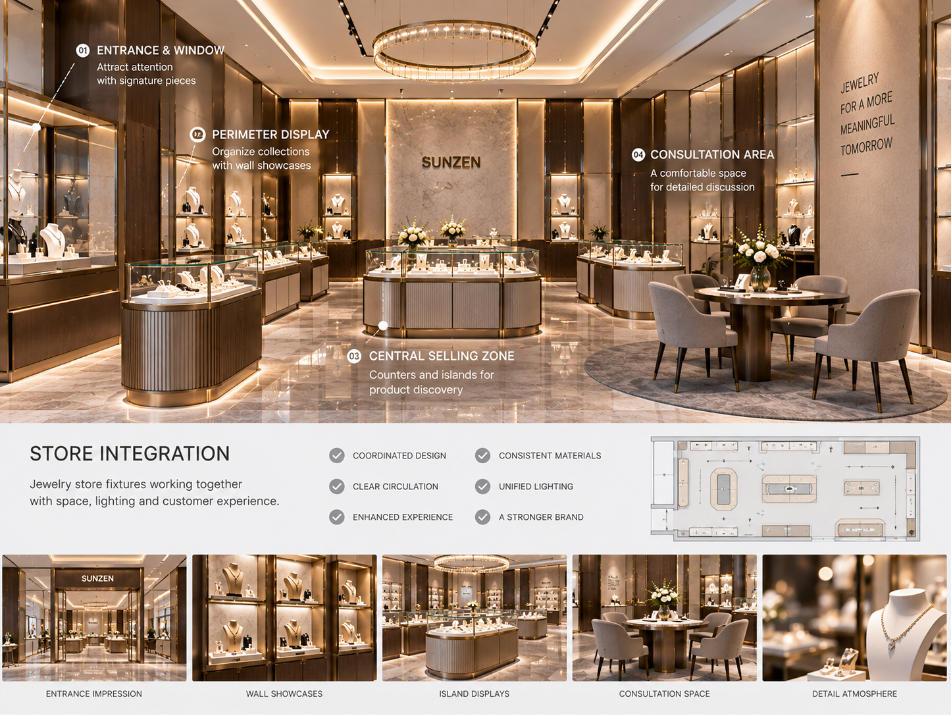
A Strong Fixture System Still Needs to Work With the Interior Around It
Jewelry fixtures influence circulation, sightlines and customer interaction, but they are only one part of the complete retail environment.
Their position should coordinate with entrances, consultation areas, architectural lighting, wall composition and the overall sequence through the store.
When the requirement extends beyond the fixture family into the complete retail environment, explore jewelry store design.
A Practical Way to Build the Jewelry Store Fixture Mix
Define Jewelry Categories
Identify what is being displayed and the presentation characteristics of each collection.
Define Selling Interaction
Determine whether customers browse, compare, request staff assistance or sit for consultation.
Match Fixture Formats
Select counters, wall displays, islands, pedestals or other formats according to those requirements.
Unify the Fixture Family
Coordinate glass, materials, lighting, details and proportions across the complete store.
What Information Helps Define Your Jewelry Store Fixtures?
Jewelry Categories
Tell us whether the store presents rings, necklaces, bracelets, watches or mixed collections.
Store Layout
Floor plans help establish perimeter, central, feature and consultation display zones.
Display Capacity
Approximate product quantities help determine the required balance between presentation space and assortment.
Selling Method
Explain how staff normally present jewelry and how customers interact with the products.
Brand Materials
Share preferred metal, stone, wood, glass, fabric and other visual references.
Operational Requirements
Include lighting, locks, storage, access, tray systems and other functional requirements where known.
Jewelry Store Fixtures FAQ
What are jewelry store fixtures?
Jewelry store fixtures are display, presentation, storage and customer-service elements used throughout a jewelry retail environment. They can include jewelry counters, wall showcases, island displays, pedestal showcases, upright displays, consultation fixtures and supporting cabinetry.
What fixtures does a jewelry store need?
The appropriate fixture mix depends on the jewelry categories, store layout and selling process. A jewelry store may combine counters for assisted selling, wall showcases for collections, islands for central merchandising, feature displays for important pieces and consultation fixtures for customer interaction.
What are custom jewelry store fixtures?
Custom jewelry store fixtures are developed around a specific store, jewelry assortment and brand environment. Dimensions, glass configuration, materials, lighting, access, locks, storage and interior presentation can be coordinated around project requirements.
How should jewelry display fixtures be selected for different products?
Fixture selection should consider jewelry size, viewing distance, display density and selling interaction. Small jewelry may benefit from close horizontal presentation, necklaces may require more vertical space and signature pieces may benefit from lower-density feature displays.
Why are lighting and sightlines important in jewelry fixtures?
Jewelry is detailed and usually viewed at close range. Fixture height, glass geometry, product elevation and integrated lighting influence how clearly customers can see individual pieces and how the merchandise is visually emphasized.
What should I provide for a custom jewelry fixture project?
Useful information includes the store layout, jewelry categories, fixture drawings or reference images, display quantities, selling method, material direction, lighting and security requirements, quantities and project schedule.
Plan Jewelry Fixtures Around the Products and the Selling Experience
Send SUNZEN your jewelry categories, store plan, fixture references and operational requirements. We can review how counters, wall showcases, islands, feature displays and consultation fixtures can work together as a coordinated jewelry store fixture system.

