
Jewelry Store Fixture Program: Build Once, Adapt and Scale Across Your Brand
A jewelry store fixture program turns individual fixture designs into a controlled retail system that can support new stores, renovations, replacement requirements and future brand expansion.
Instead of restarting fixture development whenever a new project appears, the program establishes reusable fixture families, approved materials, construction standards, controlled variants and manufacturing references.
SUNZEN helps jewelry brands connect design development with repeatable manufacturing so the fixture system can continue evolving without losing the retail identity already established.
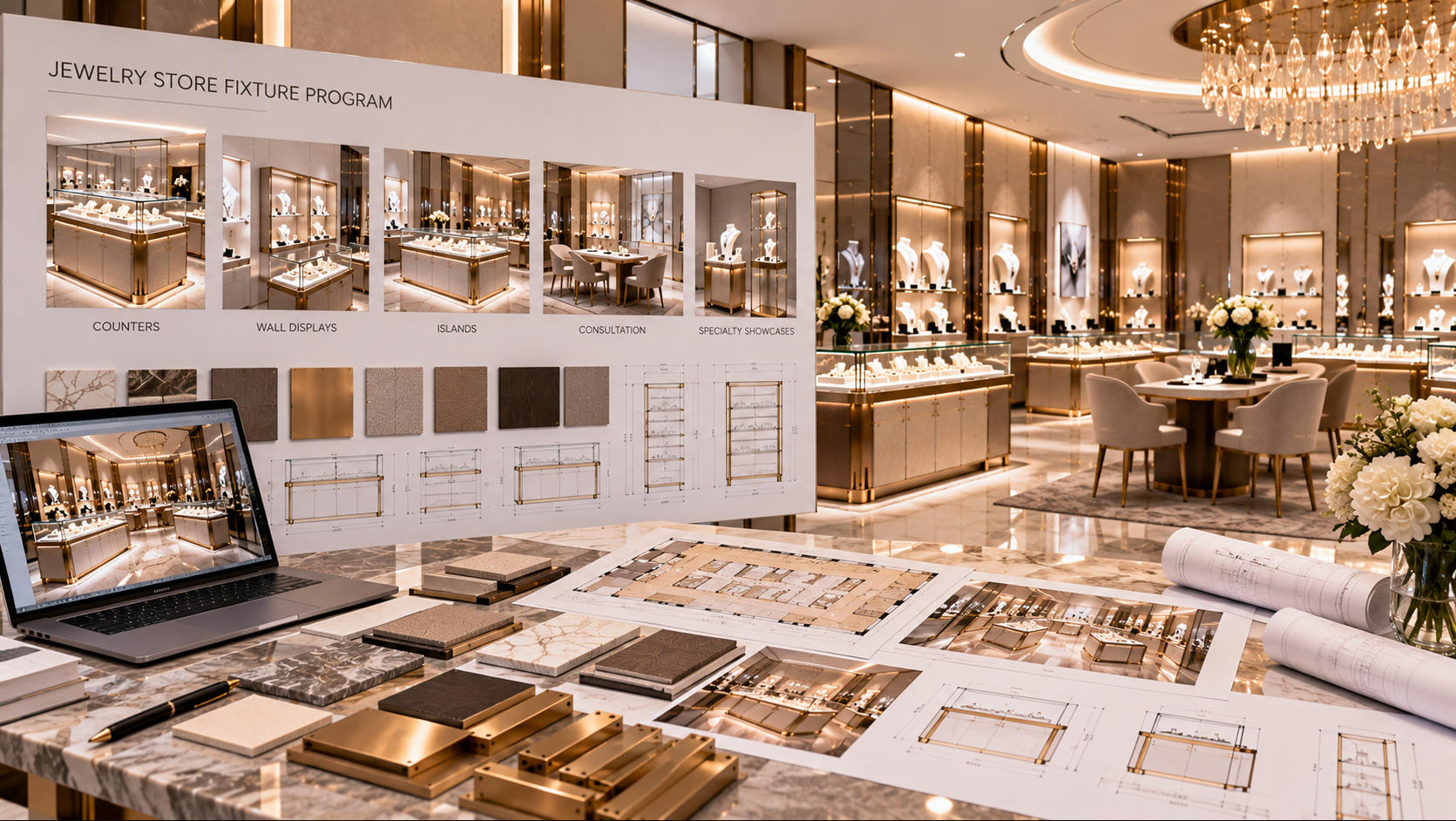
Stop Solving the Same Fixture Decisions Store by Store
A single jewelry store project asks what fixtures are required now. A fixture program asks which decisions should become reusable standards for the stores that come next.
That distinction matters when a jewelry brand expects continued expansion, refurbishment or recurring fixture requirements.
Fixture Families
Establish the core counters, wall displays, islands, vitrines and supporting furniture that form the retail system.
Brand Standards
Record the proportions, materials, finishes, glass, lighting and visible details that should remain recognizable.
Approved Variants
Create controlled alternatives for dimensions, configurations and fixture combinations instead of uncontrolled redesign.
Production References
Preserve approved drawings and manufacturing information so future requirements can start from established references.
The program can be developed around an existing jewelry store fixtures concept or created as part of a new retail identity.
Build a Fixture Library Instead of a Folder of Unrelated Drawings
A useful program organizes fixtures according to their role, reference and permitted variation so future project teams can understand what already exists before creating something new.
Selling Counters
Standard counter modules can share common glass, lighting, customer-facing proportions and staff-side access principles.
Wall Displays
Wall modules can establish repeatable vertical proportions while allowing controlled changes in width and merchandising capacity.
Islands & Features
Freestanding and signature fixtures can provide flexible merchandising elements for larger or higher-priority locations.
Specialty Showcases
High jewelry, bridal, watch or feature vitrines can retain specialist presentation and security requirements within the wider system.
Consultation
Tables, seating interfaces and supporting furniture can extend the same material and design language beyond display cases.
Supporting Fixtures
Storage, POS and other operational components can be coordinated with the customer-facing fixture system.
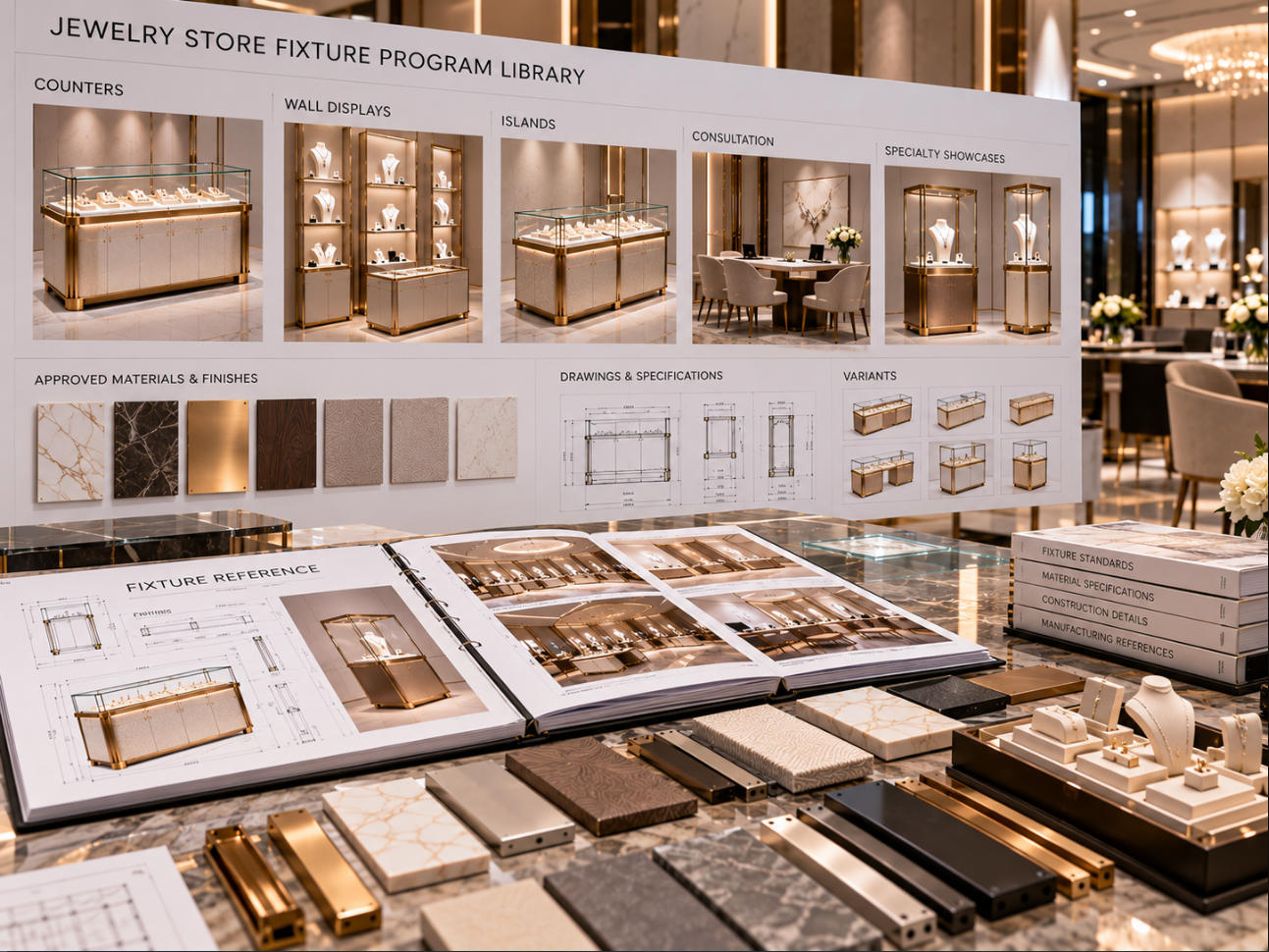
Give Every Approved Fixture a Clear Identity
As a fixture collection grows, visual similarity alone is not enough to identify what should be manufactured.
Each approved fixture can be connected to a reference that identifies its dimensions, construction, material palette, finish, lighting, hardware and revision status.
When a new requirement appears, the first question becomes: Can an approved fixture already solve it?
Only when the existing library cannot meet the requirement does the project move into custom retail fixtures development.
Decide What Can Change Before the Next Store Requests It
A fixture program should not eliminate customization. It should define where customization is useful and where it begins to weaken repeatability.
Signature Details
Protect the forms, proportions and visible elements that customers associate with the jewelry brand.
Material Palette
Maintain approved glass, metal finishes, cabinet surfaces, fabrics and presentation materials.
Module Dimensions
Allow selected dimensional variants where different store conditions make them operationally necessary.
Fixture Mix
Select different combinations of approved fixtures according to store format, floor area and merchandising strategy.
Specialist presentation units can also be developed through custom jewelry showcase engineering when a collection requires glass, lighting, security or access details beyond the standard fixture family.
Manage the Fixture System Through Its Full Retail Lifecycle
The value of a jewelry store fixture program increases when the original development remains usable after the first store is complete.
Establish
Define the core fixture families, design language, materials and functional standards.
Approve
Finalize drawings, samples, finishes, lighting, hardware and construction references.
Document
Organize approved fixtures and variants into a controlled reference system.
Manufacture
Use controlled information to produce fixtures for the current project or production release.
Reuse
Select existing fixture references when new stores, refurbishments or replacement requirements appear.
Evolve
Add approved variants and new fixture families without abandoning the standards already established.
Connect the Fixture Program Directly to Manufacturing References
A design library has limited value if later production cannot reproduce the approved construction and finish standards.
A jewelry store fixture manufacturer can connect fixture references with production drawings, material specifications, approved finishes and assembly requirements.
This becomes especially important when fixtures are ordered again months later or when new variants need to remain visually compatible with earlier production.
The goal is not to freeze the fixture program permanently. It is to give future manufacturing a controlled baseline from which changes can be evaluated.
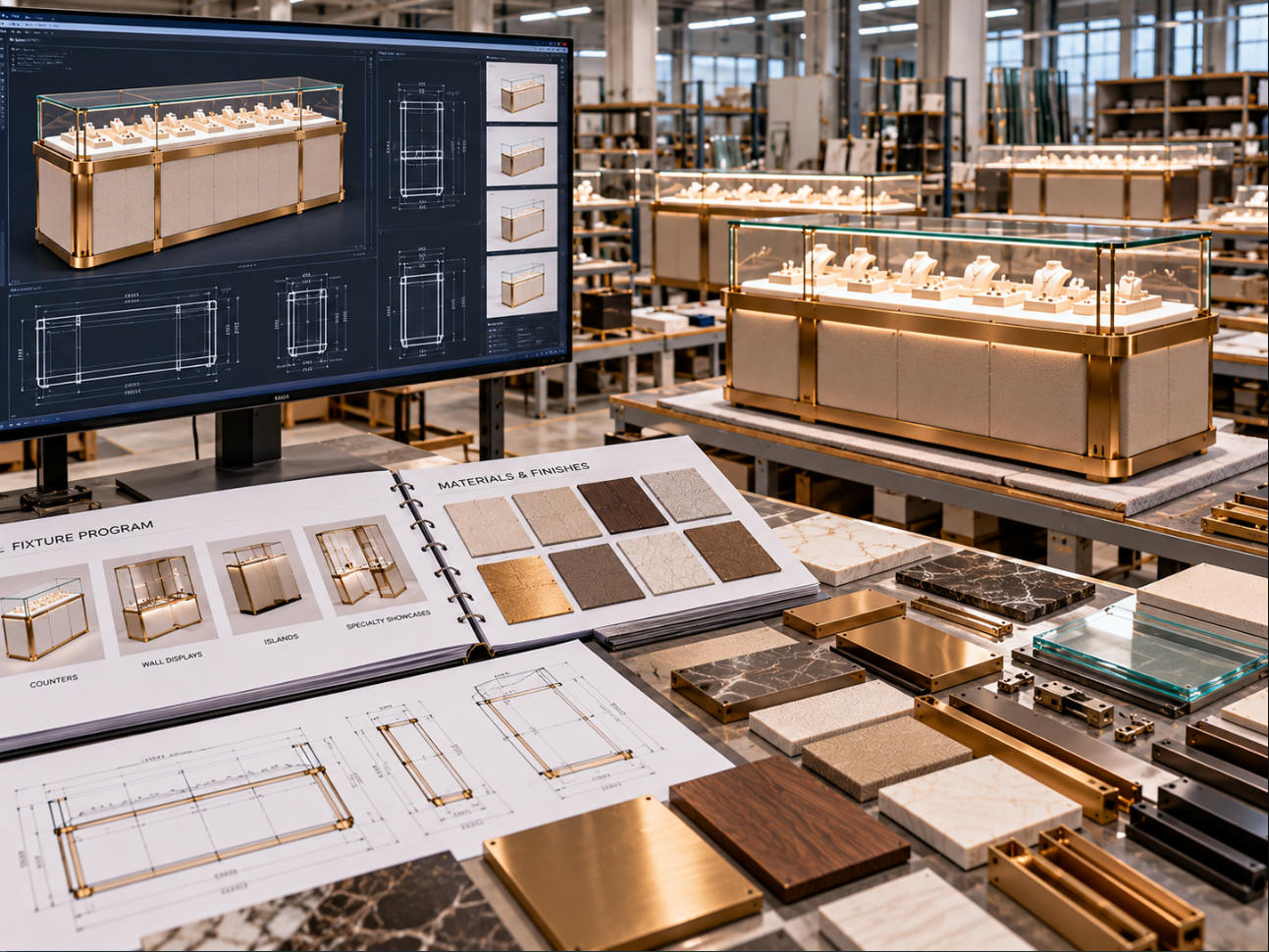
Keep Jewelry-Specific Showcase Engineering Inside the Program
Jewelry fixtures are not only cabinetry. Glass showcases introduce specialist requirements that should remain connected to the wider fixture program.
Glass
Control clarity, joints, framing and construction according to the presentation standard.
Lighting
Preserve lighting position, integration and jewelry presentation intent across approved showcase families.
Security & Access
Standardize locks, opening methods, drawers and staff-side operating details where appropriate.
For brands requiring specialist glass display development, jewelry showcase manufacturers can support the engineering and manufacturing requirements behind these fixture families.
SUNZEN’s jewelry showcase factory capability connects glass, metalwork, cabinetry, lighting, hardware, finishing and final assembly within the production process.
Prevent Fixture Variants From Becoming Fixture Chaos
A program can lose its value if every store request creates another uncontrolled version. The fixture library therefore needs simple rules for adding, revising and retiring references.
New Reference
Create a new reference only when an existing approved fixture cannot satisfy the requirement.
Existing Fixture
Record meaningful approved changes rather than allowing production information to change informally.
Proven Standard
Keep using approved fixtures where they already meet the commercial and physical requirements.
Outdated Reference
Clearly separate superseded versions so obsolete details are not accidentally returned to production.
Use the Program as the Starting Point for Every New Store
When a new location begins, the fixture program provides the available building blocks. The project team then selects and adapts those blocks according to the actual store.
This creates an important distinction: the fixture program is the long-term system, while a retail fixture rollout is the process of deploying approved fixture systems across specific locations and opening phases.
Separating these roles helps brands preserve long-term fixture knowledge instead of allowing it to disappear inside individual store projects.
Turn Fixture Development Into a Reusable Brand Asset
A mature jewelry store fixture program gives future teams a clearer starting point: what is approved, what can change, what has already been manufactured and what still requires development.
That structure can support new locations, renovations, replacement fixtures and future store formats without requiring every project to rebuild the same knowledge.
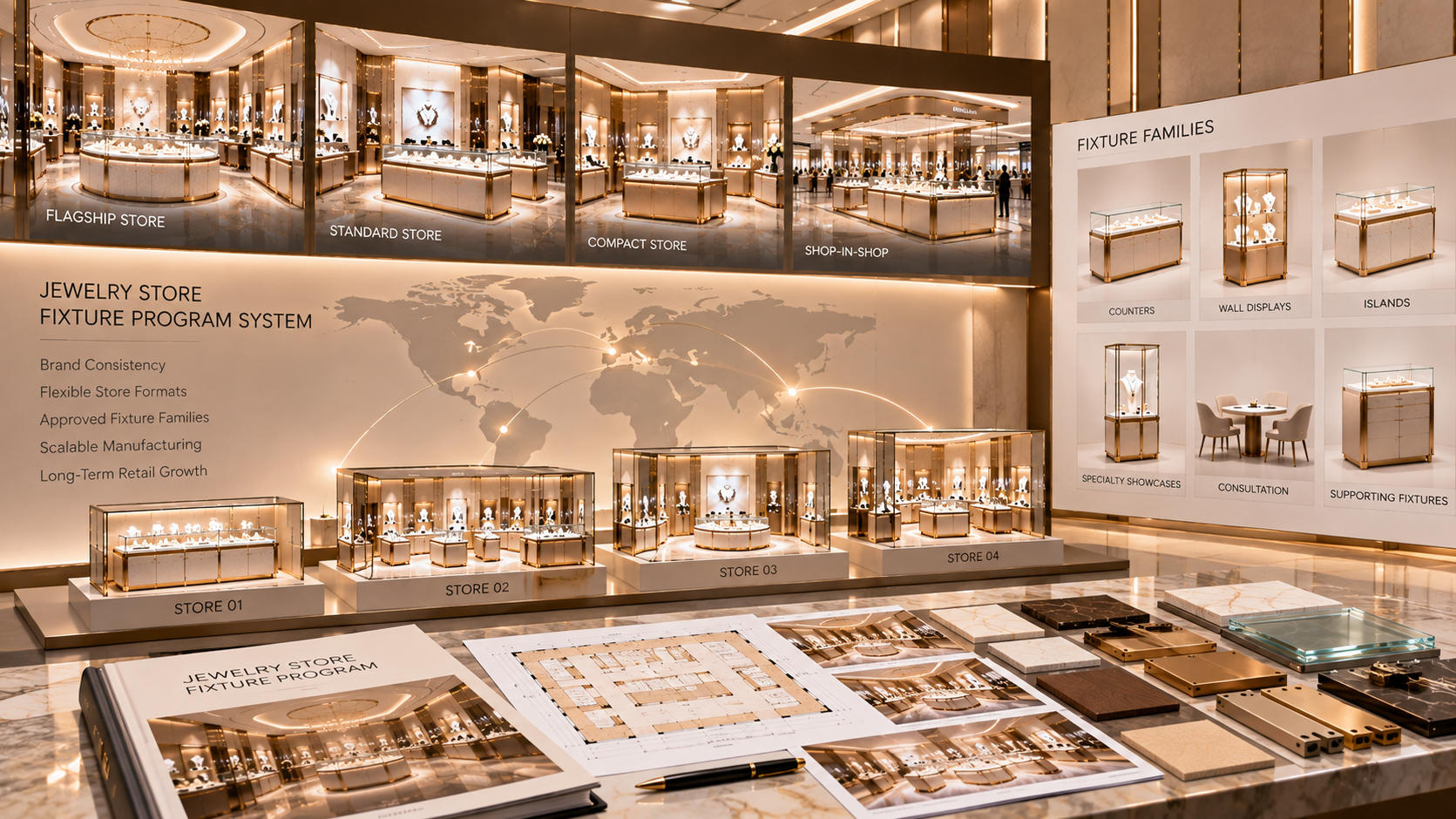
Jewelry Store Fixture Program FAQs
Key questions for jewelry brands building a reusable fixture system for long-term retail development.
What is a jewelry store fixture program?
A jewelry store fixture program is a controlled system of approved fixture families, design standards, materials, construction references and permitted variants that can be reused across future jewelry retail projects.
How is a fixture program different from a single jewelry store fixture project?
A single project focuses on the fixtures required for one store. A fixture program identifies which designs, specifications and manufacturing references should become reusable standards for future stores, renovations and replacement requirements.
What can be included in a jewelry fixture library?
A fixture library can include selling counters, wall displays, islands, feature showcases, consultation furniture, storage and other approved fixture families together with their drawings, dimensions, materials, finishes and revisions.
Can fixtures still be customized within a standardized program?
Yes. A fixture program can define controlled variants for dimensions, configurations and fixture combinations while protecting the materials, design language and customer-facing details that should remain consistent.
Why connect the fixture program with manufacturing?
Manufacturing references help future production reproduce approved construction, materials, finishes, lighting and hardware instead of relying only on the appearance of an earlier fixture.
Can a fixture program support new store rollouts?
Yes. The program provides approved fixture building blocks that can be selected and adapted for individual stores, while the rollout process coordinates their use across specific locations and opening phases.
What information is useful when starting a jewelry store fixture program?
Useful inputs include existing store concepts, fixture drawings, material standards, approved samples, product categories, store formats, recurring fixture requirements and future expansion plans.
Ready to Turn Your Jewelry Fixtures Into a Long-Term Retail Program?
Share your existing fixture drawings, store concepts, material standards, product categories and future retail plans with SUNZEN.
We can help organize the fixture families, controlled variants and manufacturing references required to make future development more repeatable.

