
How Do I Choose a Display Case Manufacturer for a Commercial Retail Project?
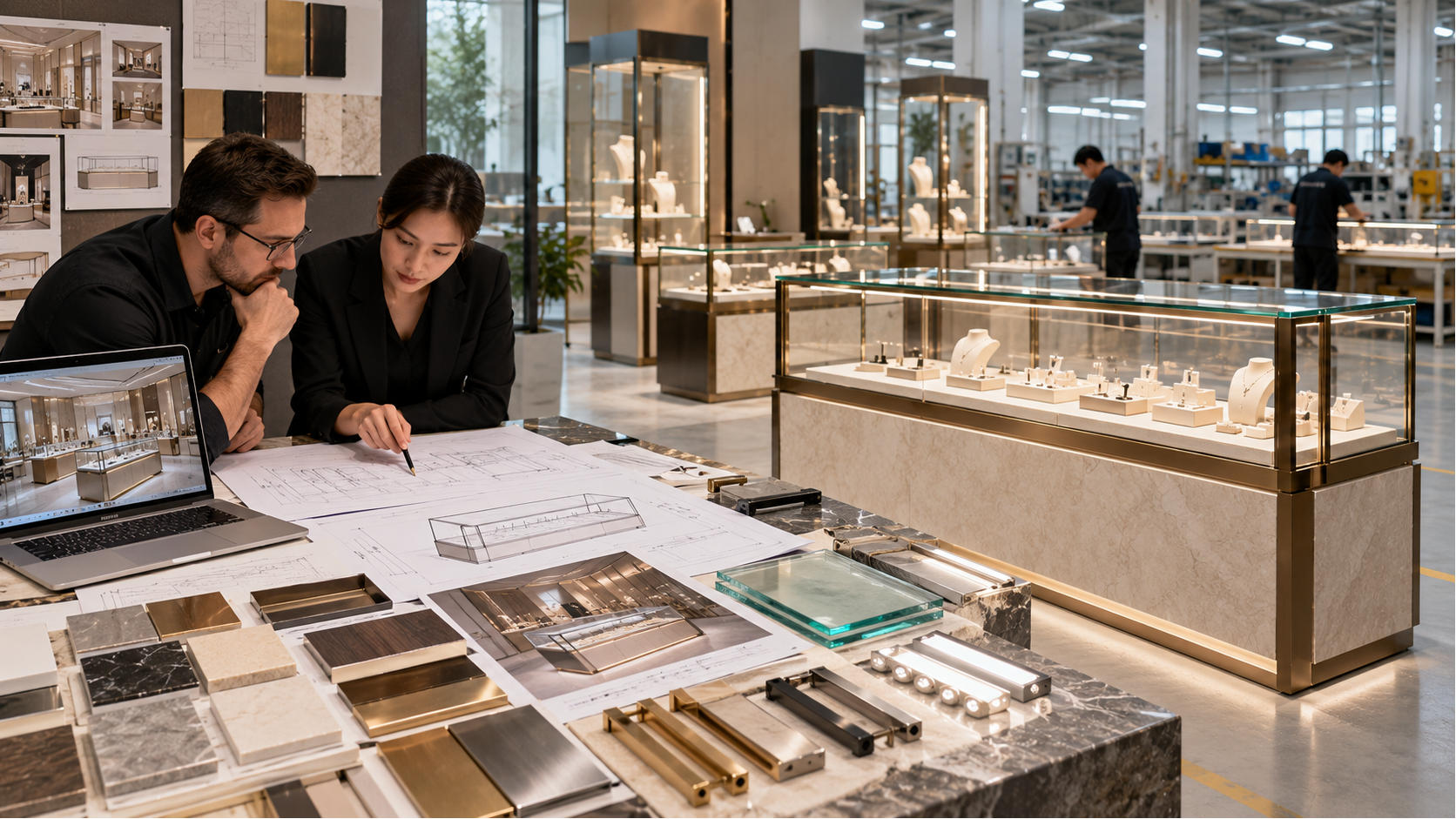
Choosing a display case manufacturer for a commercial retail project requires more than comparing prices or reviewing finished showcase photos.
A capable manufacturer should understand the design intent, convert drawings into buildable fixtures, coordinate glass, metal, cabinetry, lighting and hardware, control production quality, and deliver the finished display cases according to the project schedule.
For retail brands, contractors and design companies, the most practical approach is to compare manufacturers across six areas: design support, engineering, manufacturing, quality control, project delivery and long-term support.
What Should You Look for in a Display Case Manufacturer?
Start by checking whether the manufacturer can manage the complete path from design development to finished delivery.
Commercial display cases interact with store layouts, architectural finishes, lighting, electrical systems, security requirements and merchandising. The manufacturer therefore needs to function as a project partner rather than simply a cabinet supplier.
01. Design Understanding
The manufacturer should understand floor plans, elevations, reference images, brand guidelines and fixture concepts, then identify practical requirements before production.
02. Engineering
Check whether the team can resolve structure, dimensions, glass, hardware, lighting, wiring and installation details through accurate shop drawings.
03. Manufacturing
Evaluate how cabinetry, metalwork, glass, finishes, hardware and lighting are coordinated into one finished fixture.
04. Quality Control
Inspection should cover dimensions, finish consistency, glass alignment, doors, drawers, locks, lighting and overall assembly.
05. Project Delivery
Commercial projects also require schedule control, protective packaging, fixture identification and coordination with shipping or installation.
06. Repeatability
For brands and chains, the manufacturer should be able to reproduce approved materials, dimensions and finishes for future stores or replacement fixtures.
Can the Manufacturer Turn Your Design into a Buildable Display Case?
One of the clearest differences between display case manufacturers appears before production starts. The design must be translated into practical construction details before it reaches the factory floor.
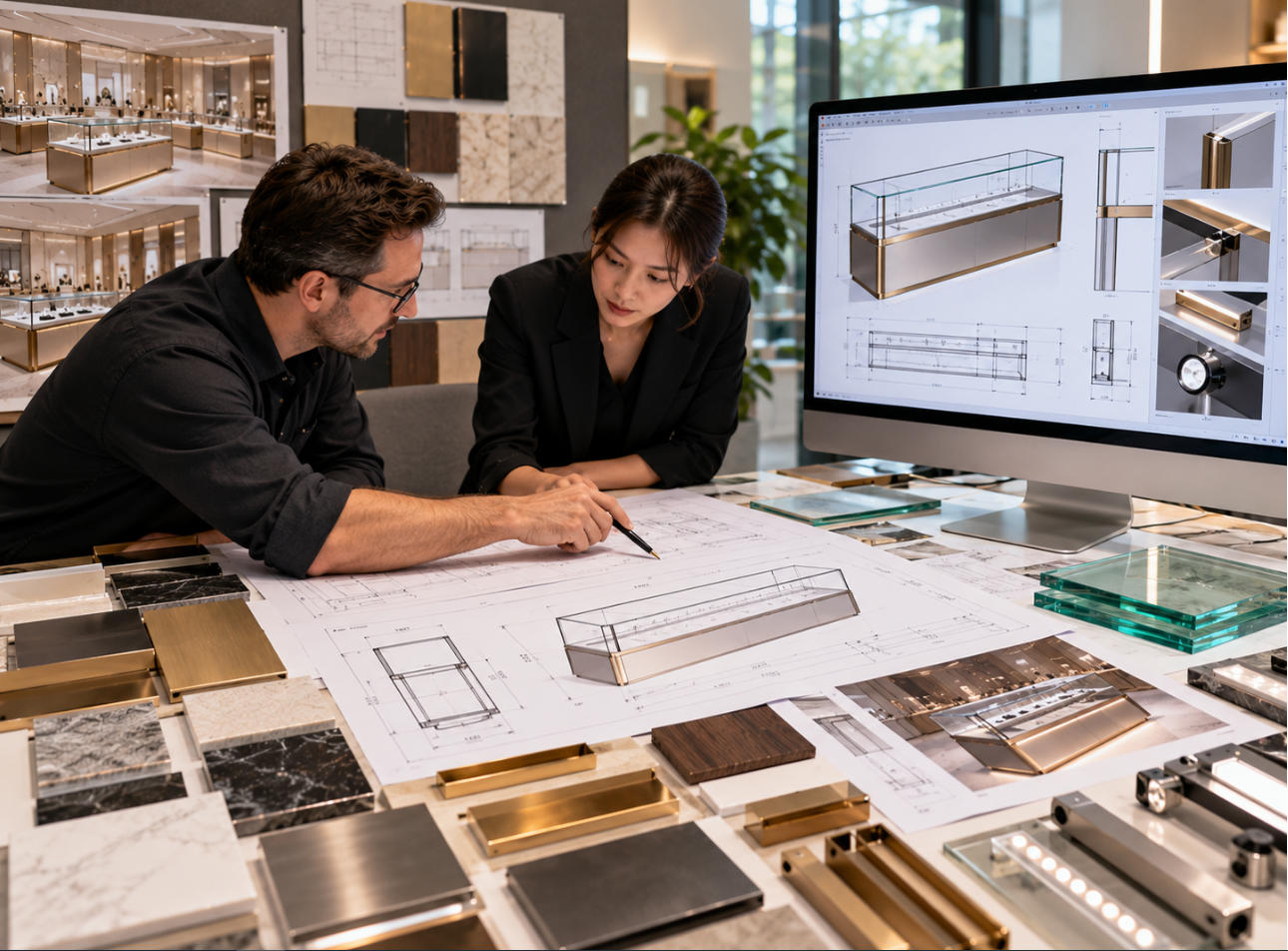
Design Review Before Manufacturing
Drawings, materials, glass, hardware and lighting should be reviewed as one coordinated fixture rather than as separate components.
From Design Intent to Production Details
A capable manufacturer should review dimensions, structural details, glass construction, door systems, hardware, lighting, electrical routing and installation interfaces before production begins.
Professional display case design should connect the visual concept with manufacturing reality. For projects supplied by architects or interior designers, the factory may also need to develop shop drawings and resolve technical details that are not fully defined in the original concept.
When comparing a custom display case manufacturer, ask how the company moves from design information to approved production drawings, material specifications and manufacturing instructions.
How Do You Evaluate the Manufacturer’s Factory Capability?
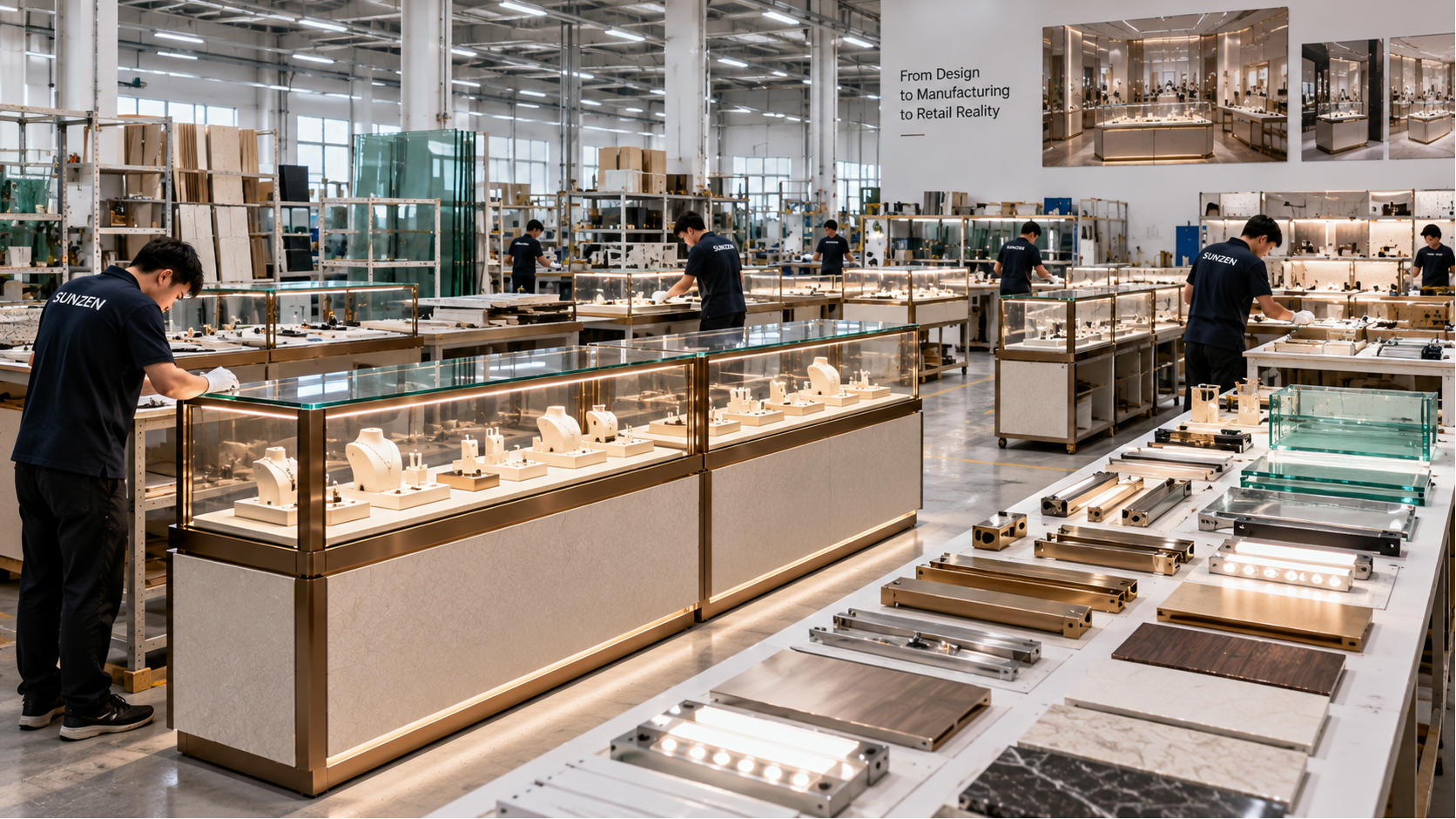
Finished project photographs show what a company has delivered, but factory capability shows whether it can reliably reproduce that quality for your project.
When evaluating a commercial display case manufacturer, look beyond the showroom and examine how different production processes are coordinated.
Production Capability
Review cabinetry production, metal fabrication, glass coordination, finishing, electrical integration, assembly and packaging capability.
Capacity & Scheduling
Confirm whether the factory can handle your quantities while maintaining the required quality and delivery schedule.
Material Coordination
Complex retail fixtures often combine several trades. Consistency at the interfaces between materials is as important as the quality of each material itself.
Project Experience
A capable retail fixture manufacturer should be able to demonstrate experience with commercial environments similar in complexity to your project.
How Should You Compare Different Display Case Manufacturers?
Do not compare quotations only by the final price. Two manufacturers may quote visually similar display cases using substantially different glass, hardware, metal construction, lighting, finishes or packaging.
The comparison should therefore be based on the same drawings and the same specification requirements.
| Evaluation Area | What to Compare | Why It Matters |
|---|---|---|
| Design & Engineering | Drawing review, shop drawings and technical development | Reduces production and installation conflicts |
| Glass | Glass type, thickness, safety treatment and edge quality | Affects appearance, safety and cost |
| Metal & Cabinetry | Construction, finish specification and material quality | Affects durability and visual consistency |
| Lighting | LED specification, color consistency, wiring and maintenance access | Affects product presentation and long-term operation |
| Quality Control | Inspection procedures and approval records | Reduces defects reaching the project site |
| Packaging & Delivery | Protection, labeling, shipping preparation and schedule | Reduces transport and rollout risks |
Glass specification is particularly important for premium projects. If the design requires special transparency, structure or dimensions, compare the proposed specification against the requirements of the project rather than accepting “clear glass” as a complete description.
Projects with unusual configurations may require custom glass display cases engineered around the fixture structure.
Why Is the Lowest Quote Not Always the Lowest Project Cost?
Look Beyond the Quotation Total
A lower quotation may result from differences in material grades, glass, hardware, metal thickness, surface finishes, lighting components, internal construction, packaging or service scope.
Compare Like for Like
Ask every manufacturer to clarify what is included and excluded so that quotations can be compared against the same technical and commercial requirements.
These differences can affect durability, installation, maintenance and replacement costs after the store opens.
This is also where the distinction between a manufacturer and a display case supplier becomes important: buyers should understand who is responsible for engineering, manufacturing, quality control and project coordination rather than relying only on the company name used in a quotation.
What Should Be Approved Before Mass Production?
Before mass production begins, the buyer and manufacturer should confirm the key technical and visual specifications that will become the reference for production and final inspection.
Freeze the Specification Before Production
Approved drawings, materials and finishes give both sides a clear production standard and reduce changes once manufacturing has started.
Technical Approval
- Final dimensions and shop drawings
- Glass specifications
- Door and access systems
- Hardware and locks
- Lighting and electrical details
Visual Approval
- Metal finish samples
- Cabinetry finishes
- Stone and decorative materials
- Interior lining materials
- Brand-specific details
For larger, technically complex or repeat projects, a prototype or first article can provide an additional reference before batch production begins.

Review the Actual Production Standard
Material samples, glass, hardware, lighting components and approved shop drawings should be reviewed together so that the finished display case can be checked against the same agreed specification.
What Quality Control Should Happen Before Shipment?
Correcting a display case in the factory is usually easier than correcting it after delivery. Pre-shipment quality control should therefore confirm both appearance and functionality.
Dimensions
Verify critical dimensions against approved drawings, especially where fixtures connect with walls, floors or other store elements.
Finish & Glass
Inspect surface consistency, glass condition, joints, visible gaps, alignment and overall workmanship.
Function
Test doors, drawers, locks, hinges, slides, lighting, switches and other operational components before packing.
What Changes When You Are Sourcing Display Cases for Multiple Stores?
A multi-location project requires more than producing one successful fixture. The manufacturer must reproduce approved dimensions, materials, finishes and lighting consistently across different production batches and potentially different store layouts.
For multi store retail display solutions, evaluate whether the manufacturer can maintain approved samples, control fixture specifications, organize batch production, identify fixtures by store or installation zone, and coordinate phased deliveries with opening schedules.
Manufacturers supporting a structured retail fixture rollout should also be able to manage repeat orders and store-specific variations without losing control of the approved brand standard.
Display Case Manufacturer Evaluation Checklist
Before selecting a manufacturer, confirm whether the supplier can demonstrate the following:
Technical Capability
- Relevant commercial retail project experience
- Ability to understand architectural and fixture drawings
- Shop drawing and engineering capability
- Glass, metal, cabinetry and lighting coordination
- Clear material and finish specifications
Project Capability
- Documented quality control procedures
- Production capacity suitable for the project
- Protective packaging for finished fixtures
- Project scheduling and communication procedures
- Support for repeat orders and future store rollouts
The strongest choice is usually the manufacturer whose technical capability, production system and project management match the complexity of your project—not simply the company offering the lowest initial quotation.
Working With SUNZEN on a Commercial Display Project
SUNZEN supports retail brands, design companies and project teams with custom display case and retail fixture development.
Depending on the project scope, the workflow can include design review, shop drawing development, material and finish coordination, manufacturing, assembly, quality inspection, protective packaging and shipment preparation.
For an initial manufacturing review, provide available drawings or floor plans, fixture quantities, reference designs, preferred materials, destination market and target project schedule.
Planning a Commercial Retail Display Project?
Share your drawings, quantities and project requirements with SUNZEN for a project-specific review.
Discuss Your Display Case ProjectFrequently Asked Questions
What should I look for when choosing a display case manufacturer?
Evaluate the manufacturer’s design understanding, engineering capability, production processes, material coordination, quality control, production capacity, packaging and project delivery support. The right combination depends on the complexity, quantity and schedule of your commercial retail project.
How should I compare different display case manufacturers?
Provide manufacturers with the same drawings and project requirements, then compare the proposed materials, engineering scope, construction, glass, hardware, lighting, quality control, packaging, lead time and service scope rather than comparing total price alone.
Should I choose the display case manufacturer with the lowest price?
Not necessarily. A lower quotation may use different glass, hardware, metal construction, finishes, lighting components or packaging. Compare quotations on a like-for-like specification and consider the potential impact on durability, installation and long-term operation.
Can a display case manufacturer work from architectural or concept drawings?
A manufacturer with design development and engineering capability can use architectural drawings, elevations, floor plans and concept information to develop detailed shop drawings and manufacturing specifications, subject to the information available for the project.
How can I evaluate a display case factory before ordering?
Review relevant project experience, production processes, cabinetry and metalwork capability, glass coordination, lighting integration, assembly, quality control, packaging and production capacity. Factory visits, production videos, samples and inspection documentation can provide additional evidence.
What should be approved before display case mass production?
Final shop drawings, critical dimensions, glass, metal and cabinetry finishes, hardware, locks, lighting, electrical details and other project-specific specifications should be confirmed before mass production begins.
What quality checks should be completed before shipment?
Pre-shipment inspection should verify dimensions, finishes, glass condition and alignment, doors, drawers, locks, hardware, lighting, electrical functions and overall assembly against the approved project requirements.
What should I check when choosing a manufacturer for a multi-store retail project?
In addition to general manufacturing capability, check whether the manufacturer can maintain approved specifications across production batches, manage store-specific fixture lists, control finish consistency, label packages by location and coordinate phased deliveries with store opening schedules.

