
CUSTOM MUSEUM DISPLAY CASE SUPPLIER · EXHIBITION PROJECT PROCUREMENT
Custom Museum Display Case Supplier for Museums & Exhibitions
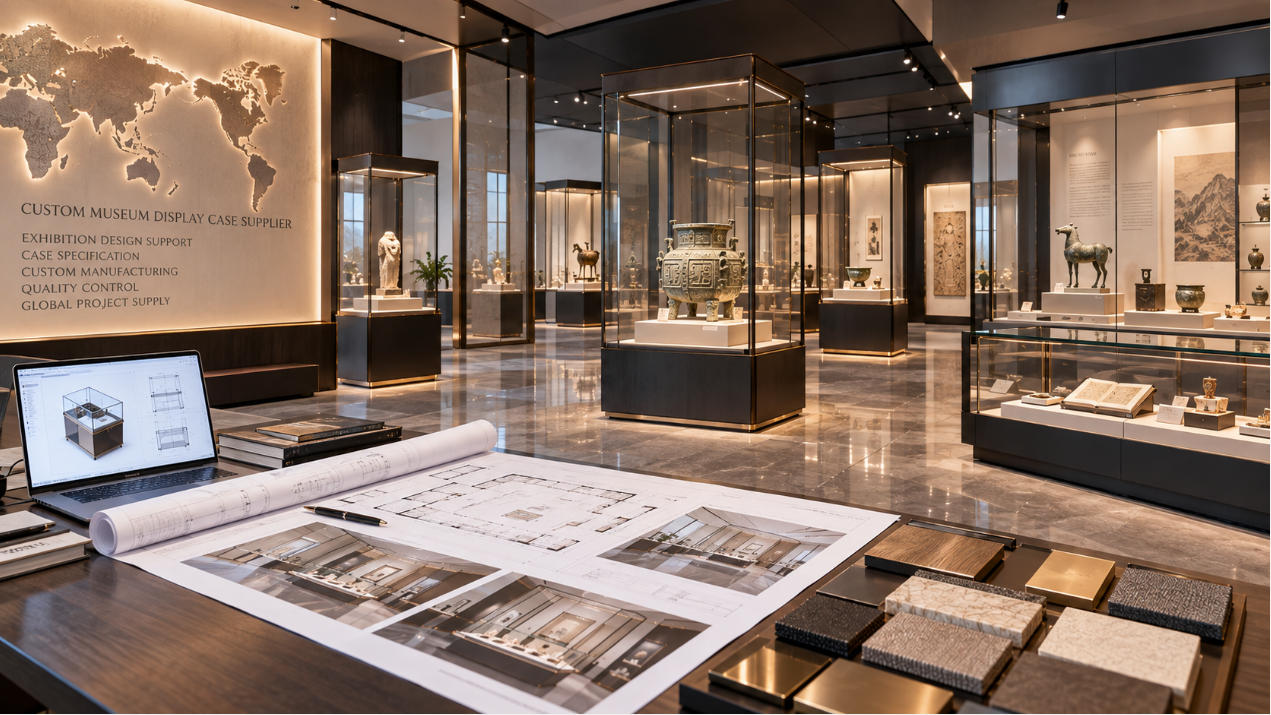
Source museum display cases around the objects, conservation requirements and exhibition plan rather than selecting vitrines from a generic catalog. SUNZEN supports museums, exhibition designers, architects and contractors with custom case types, technical specification coordination, manufacturing, inspection, packing and project supply.
As a custom museum display case supplier, SUNZEN helps project teams coordinate different vitrines within one exhibition while keeping requirements for glazing, sealing, materials, lighting, access, security and internal presentation clearly defined.
Send us your exhibition layout, display case schedule, object information, drawings or technical specifications. We can review the case package and help move approved requirements toward custom manufacturing and delivery.
START WITH THE COLLECTION
A Museum Display Case Supplier Should Start With What Must Be Protected
Museum vitrines should not be sourced only by dimensions or appearance. The objects being displayed influence enclosure size, internal materials, glazing, access, lighting, support methods and the level of environmental control required.
A robust supplier review therefore begins with the collection and exhibition brief before individual case specifications are finalized.
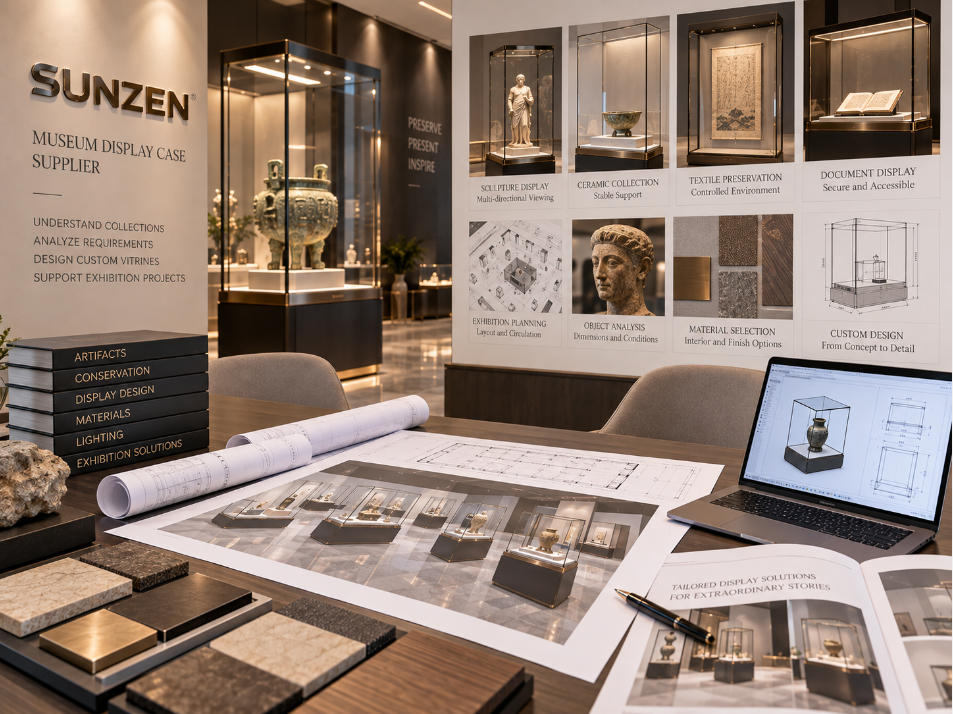
Different objects may create different priorities. A sculpture may require clear multi-directional viewing, a textile may need a large controlled display volume, and small historic objects may require closer viewing with carefully planned internal supports.
TURN CONSERVATION NEEDS INTO CASE REQUIREMENTS
Define What Each Museum Display Case Needs to Control
Not every museum case needs the same technical specification. The useful question is not whether a project can purchase a generic “museum-grade” vitrine, but which performance requirements actually apply to each group of objects and exhibition conditions.
Viewing
Define viewing directions, glass area, sightlines and the visual relationship between visitors and objects.
Protection
Identify requirements for enclosure, security, controlled access and physical separation from visitors.
Environment
Determine whether sealing, dust control or additional environmental strategies need to be incorporated into the case specification.
Operation
Plan how museum staff will install, inspect, maintain and remove objects throughout the exhibition lifecycle.
BUILD THE RIGHT VITRINE MIX
One Exhibition Can Require Several Museum Display Case Types
A museum exhibition rarely depends on one universal vitrine. Object scale, gallery architecture, visitor circulation and curatorial presentation can require several display case configurations within the same project.
The supplier role is to organize those different cases as one coordinated procurement package while preserving the requirements assigned to each case reference.
Freestanding Cases
Support multi-directional viewing and flexible placement within open exhibition galleries.
Wall Cases
Integrate object presentation with gallery walls, perimeter architecture and vertical display compositions.
Table & Low Cases
Provide closer viewing for documents, small artifacts, coins, jewelry and horizontally presented collections.
Pedestal & Feature Vitrines
Create focused presentation for individual artifacts and important collection highlights.
CUSTOMIZE AROUND THE OBJECT
Custom Museum Display Cases Should Begin With Project-Specific Requirements
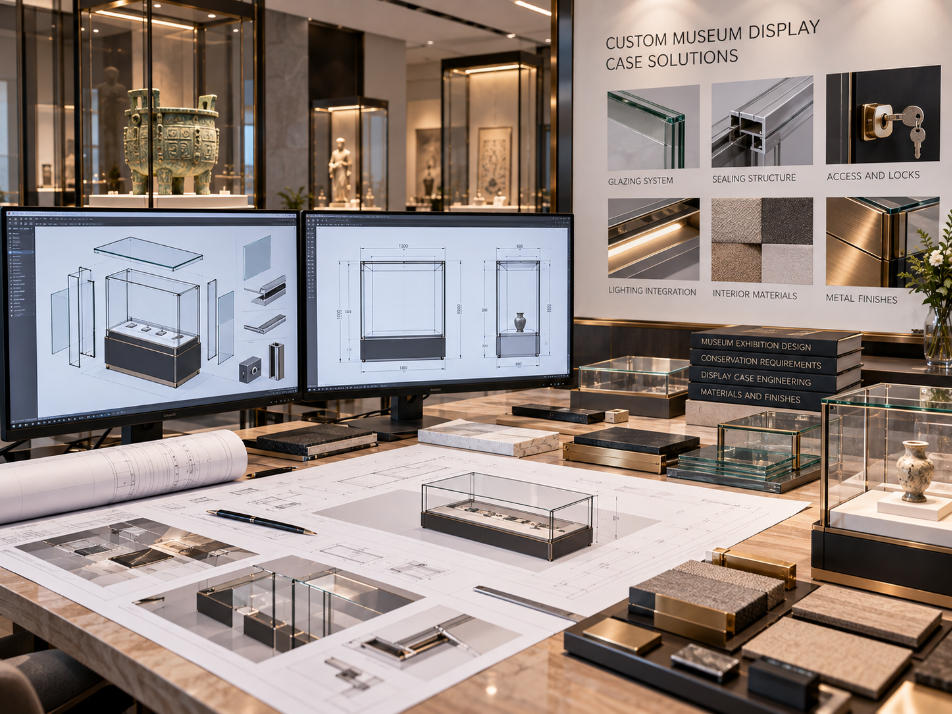
A custom museum display case supplier needs to coordinate the enclosure as a complete system. Dimensions matter, but so do glazing configuration, structure, interior surfaces, access, lighting, security and the relationship between the vitrine and exhibition architecture.
For projects that require case-specific development, SUNZEN’s custom museum display case solutions focus on adapting individual display cases to object, exhibition and technical requirements.
This supplier page addresses the broader procurement task: how those individually specified cases can be organized, reviewed and supplied together as one controlled exhibition package.
COORDINATE CUSTOMIZATION ACROSS THE EXHIBITION
Move From Individual Cases to a Coordinated Museum Showcase System
Some projects require more than customization of individual vitrines. Exhibition designers may need several case families to share glazing language, structural details, interior finishes, lighting character and architectural relationships across an entire gallery.
For this broader project-level customization, explore SUNZEN’s custom museum showcase capability.
Keeping individual case customization and exhibition-wide showcase coordination distinct helps the supplier organize specifications without forcing every vitrine into one standard configuration.
Adapt dimensions, access and presentation to specific artifacts.
Coordinate glazing, finishes and structural expression across related cases.
Allow different case specifications where collection requirements demand them.
SPECIFY THE VIEWING ENVELOPE
Coordinate Glass, Structure and Sightlines Before Production
Glass is one of the most visible components of a museum display case, but glazing decisions cannot be separated from structure, panel size, access and viewing direction.
The case specification should identify how visitors are expected to view the object and where structural elements can be positioned without unnecessarily interrupting the exhibition experience.
Determine whether the object needs frontal, two-sided or multi-directional visibility.
Coordinate panel dimensions and joints with the intended viewing experience.
Balance visual transparency with the structural requirements of the enclosure.
Ensure opening systems work with the glazing and structure rather than being added afterward.
DEFINE ENVIRONMENTAL REQUIREMENTS CASE BY CASE
Do Not Give Every Museum Vitrine the Same Conservation Specification
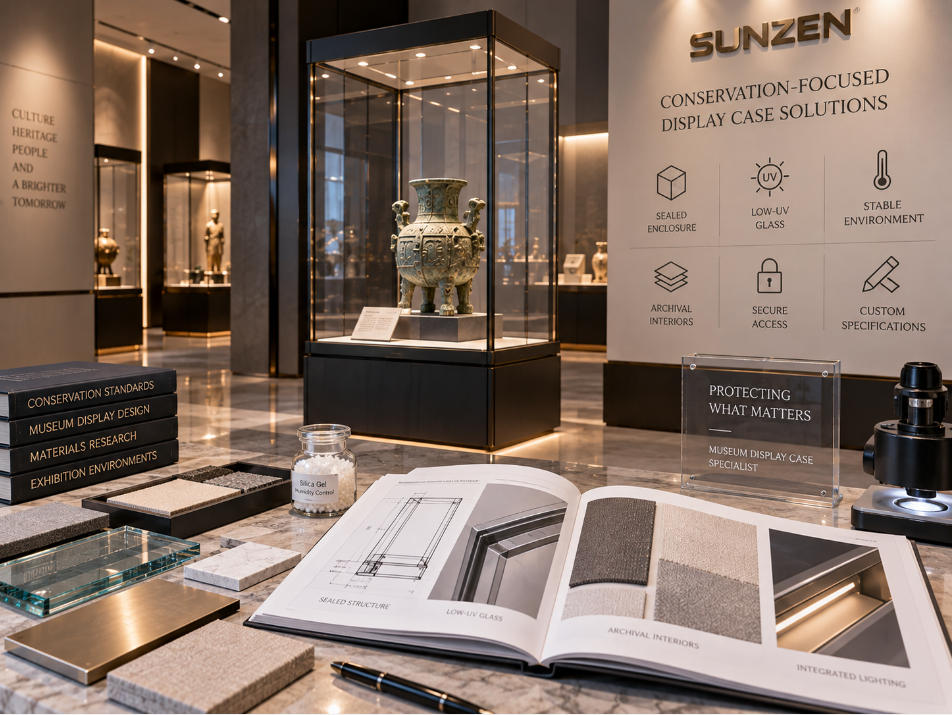
Environmental requirements should be established according to the collection, exhibition duration and conservation brief. Some projects may primarily need protection from dust and visitor contact, while others may require a more tightly controlled enclosure strategy.
For procurement, the important step is to record these differences clearly. A requirement that applies to one sensitive-object case should not automatically be assumed for every vitrine in the exhibition.
This approach helps the museum team create a more precise case schedule and gives the supplier a clearer technical baseline for quotation and development.
CONTROL WHAT ENTERS THE DISPLAY VOLUME
Coordinate Interior Materials With the Conservation Brief
The materials visible inside a museum case are part of the exhibition design, but they also occupy the same enclosed space as the objects. Interior decks, panels, fabrics, supports and finishing systems should therefore be identified early enough for project review.
A supplier package should clearly distinguish decorative exterior materials from materials used within the display volume so that project teams can review them according to their own conservation requirements.
Coordinate dimensions, finish and object-support requirements.
Define visible surfaces that form the background of the displayed collection.
Record specified textile or lining requirements as part of the approved material schedule.
Coordinate mounts and support interfaces with the exhibition and conservation teams where required.
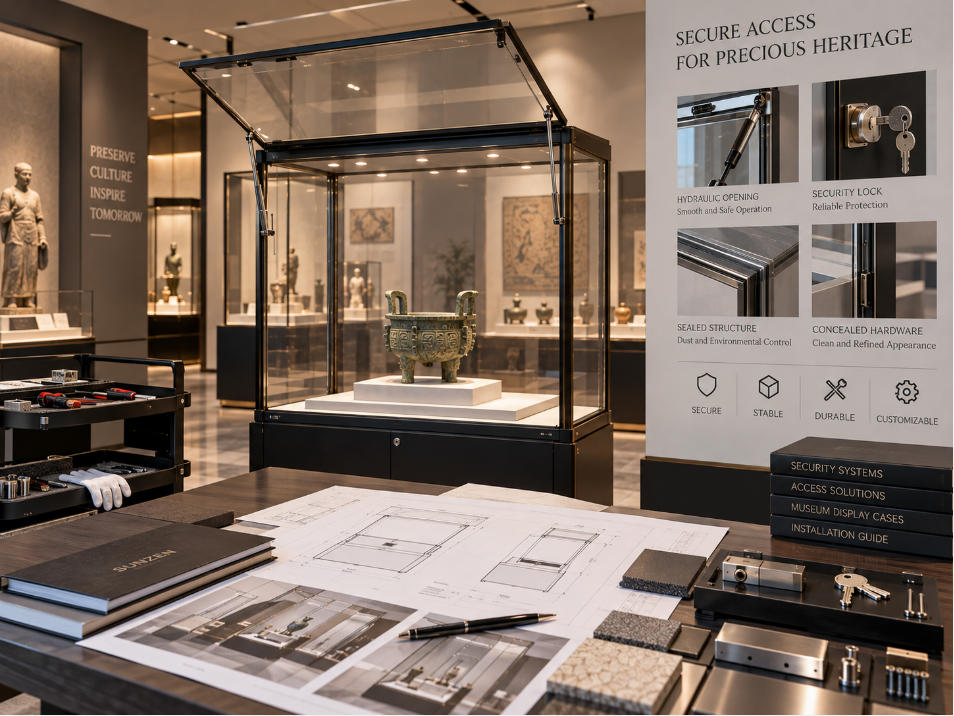
DESIGN ACCESS AROUND COLLECTION HANDLING
Plan How Objects Enter the Case Before Choosing the Opening System
Museum access is not simply a door-hardware decision. The opening needs to support the safe installation and removal of objects while respecting gallery space, glass geometry, locks and the internal display arrangement.
Large artifacts may require a different opening strategy from small objects that can be installed through a controlled staff-side access point.
Defining this early reduces the risk of approving a visually suitable vitrine that becomes difficult to operate during exhibition installation.
MAKE THE CASE SCHEDULE THE PROCUREMENT BASELINE
Give Every Museum Display Case a Clear Identity
Complex exhibitions can contain many vitrines that look similar while carrying different technical requirements. A clear case schedule gives each unit an identifiable reference and connects that reference to its location, dimensions, type and approved specification.
This becomes one of the most important tools in museum display case sourcing because the same reference can follow the case through technical review, quotation, manufacturing, inspection, packing and delivery.
Case Reference
Assign a unique identifier that follows each vitrine through the project.
Gallery Location
Connect the case with its exhibition zone, room or drawing reference.
Case Specification
Record dimensions, configuration and case-specific technical requirements.
Quantity
Identify repeated cases without losing control of approved variations.
SUPPLIER MEANS PROJECT COORDINATION
A Museum Display Case Supplier Should Make a Complex Case Package Easier to Procure
The supplier role becomes most valuable when an exhibition contains different case types, specifications and quantities. Instead of treating every vitrine as an unrelated purchase, the project can be organized around one coordinated schedule and revision baseline.
That means tracking what is being supplied, which requirements apply to each case, which drawings have been approved and which changes have occurred before production.
This is the main distinction between this page and the related Manufacturer and Factory pages: the supplier question is about controlling the museum’s complete purchasing package.
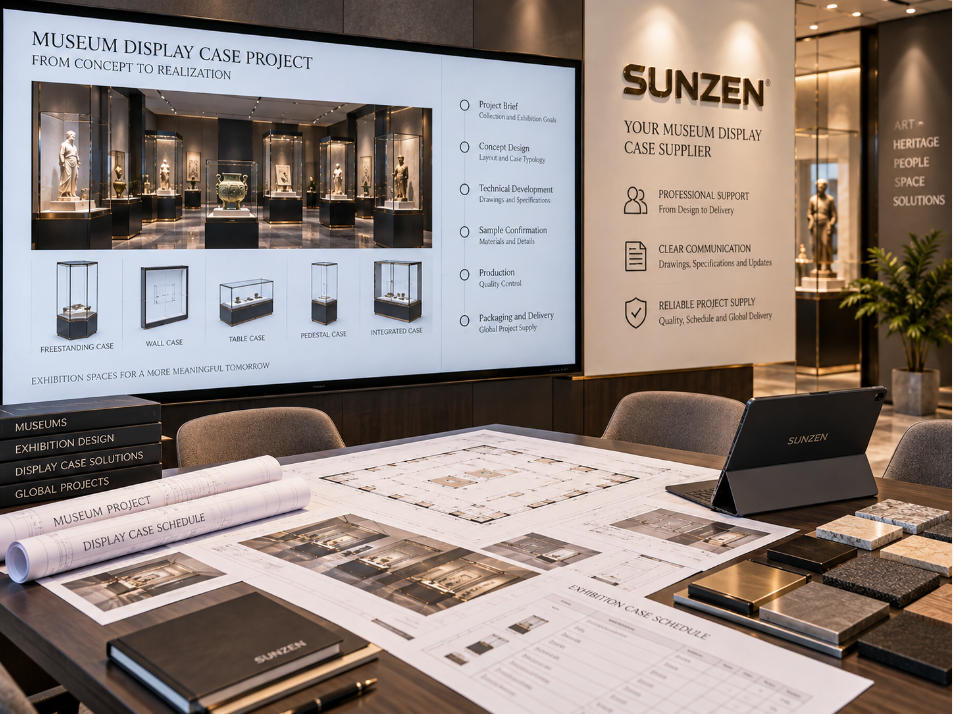
CONNECT PROCUREMENT WITH MANUFACTURING
Approved Museum Vitrine Specifications Need the Right Manufacturing Capability
Supplier coordination defines what needs to be purchased and which requirements belong to each case. Manufacturing begins once those approved requirements must be translated into engineering, fabrication, assembly and finished vitrines.
For project teams evaluating this manufacturing capability in greater depth, SUNZEN’s museum showcase manufacturers resource focuses on the manufacturer selection and project-production side of museum showcases.
This separation protects the intent of both pages: the Supplier page controls the procurement package, while the Manufacturers page demonstrates the capability required to turn approved museum showcase requirements into finished cases.
Coordinates case types, specifications, quantities, approvals and project supply.
Translate approved showcase requirements into engineering and manufacturing.
Executes glazing, structures, interiors, assembly and production quality control.
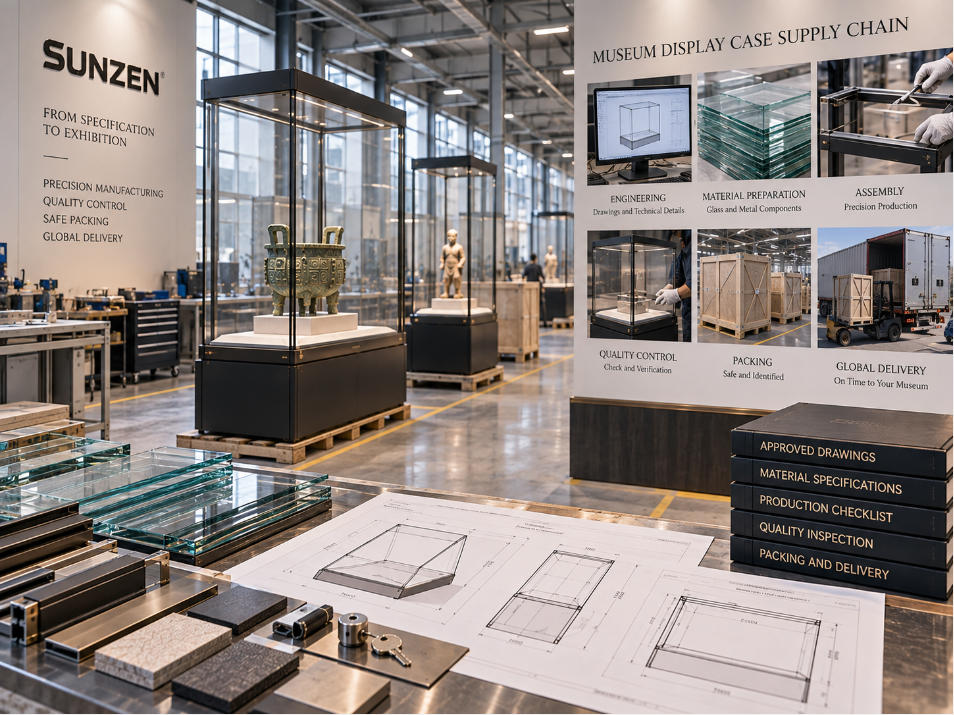
VERIFY HOW THE CASE WILL BE PRODUCED
Factory Capability Is Evidence Behind the Supplier Promise
Custom museum vitrines bring glazing, metal structures, interior surfaces, access hardware, lighting and other components together in one finished enclosure. Procurement teams therefore benefit from understanding how approved case information reaches fabrication and assembly.
For buyers who need a closer view of this production stage, SUNZEN’s museum showcase factory resource focuses on factory execution and production capability.
On this Supplier page, factory capability remains supporting evidence rather than the central search intent. The primary responsibility is keeping the museum’s approved procurement requirements connected with that production route.
INSPECT AGAINST THE APPROVED CASE
Quality Control Should Follow the Specification, Not a Generic Checklist
A museum display case should be reviewed against the requirements approved for that specific case reference. A generic visual inspection cannot confirm whether the correct access, materials, dimensions or project-specific details have been supplied.
The case schedule and approved drawings should therefore remain part of the inspection baseline before packing.
Check critical case dimensions against approved project information.
Verify the intended opening, locks and operating components.
Compare visible and specified components with the approved schedule.
Keep the finished vitrine connected with its project reference before packing.
KEEP CASE IDENTITY THROUGH DELIVERY
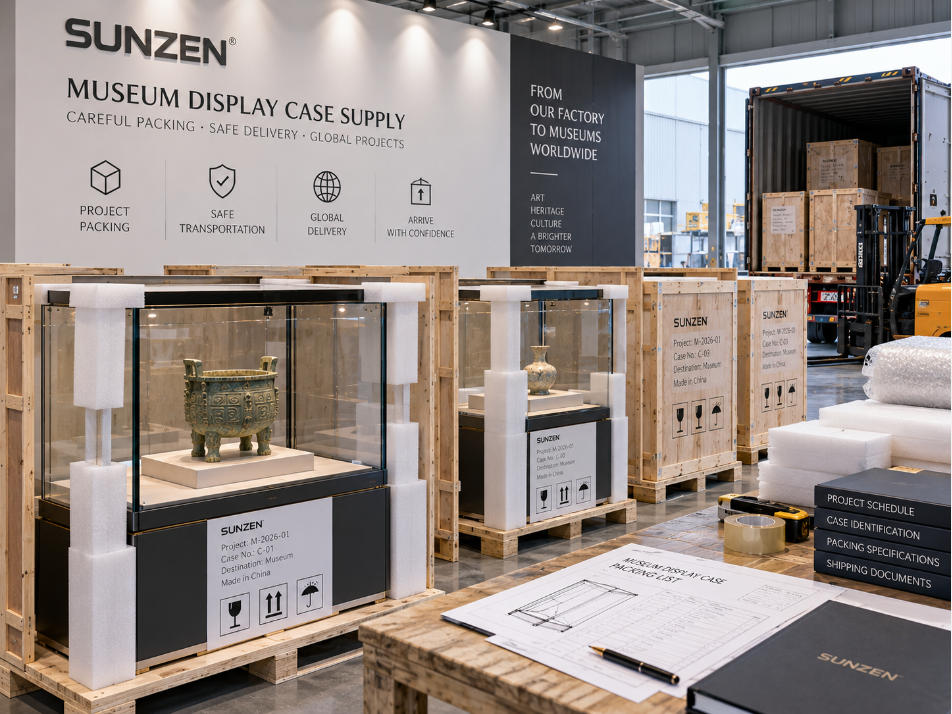
Packing Is Part of Museum Display Case Procurement
A museum project can involve multiple crates containing cases that are visually similar but intended for different galleries or exhibition zones. Clear identification becomes especially important once the vitrines leave the factory.
Case references, packing identification and project information should remain coordinated so the receiving team can understand which case belongs where without relying only on visual recognition.
This makes delivery preparation part of the supplier workflow rather than an unrelated logistics step.
MUSEUM DISPLAY CASE SOURCING WORKFLOW
From Collection Requirements to Coordinated Vitrine Supply
A strong procurement process keeps the object, exhibition brief and case specification connected as the project moves toward production and delivery.
Define
Review objects, exhibition conditions, case types and conservation requirements.
Schedule
Assign case references, locations, quantities and technical requirements.
Approve
Coordinate drawings, materials, access, glazing and project-specific details before production.
Supply
Connect approved vitrines with manufacturing, inspection, packing and project delivery.
PREPARE THE PROCUREMENT BRIEF
What to Send Your Custom Museum Display Case Supplier
You do not need to finalize every engineering detail before contacting SUNZEN. The most useful starting information is the material that explains what is being displayed, where each case belongs and which project requirements are already known.
Gallery plans, elevations, case positions and exhibition zones.
Known case references, types, dimensions and quantities.
Artifact dimensions, display orientation and relevant conservation requirements.
Known glazing, materials, access, security, lighting or enclosure requirements.
Destination, target schedule, project stage and procurement requirements.
FAQ
Museum Display Case Supplier FAQs
What should I look for in a museum display case supplier?
Look for a supplier that can review exhibition and collection requirements, coordinate multiple case types and specifications, maintain clear case references and revisions, and connect the approved package with custom manufacturing, inspection, packing and project delivery.
Can SUNZEN supply custom museum display cases for different artifacts?
Yes. Museum display cases can be developed around different object dimensions, viewing requirements, gallery conditions, glazing configurations, interiors, access, lighting, security and project-specific conservation requirements, subject to technical review.
What types of museum display cases can be included in one project?
A project can combine freestanding vitrines, wall cases, table cases, pedestal cases and other custom configurations. The appropriate combination depends on the collection, exhibition design, visitor circulation and technical requirements.
What is the difference between a museum display case supplier and museum showcase manufacturers?
A museum display case supplier focuses on organizing the procurement package, including case types, specifications, quantities, revisions, approvals and delivery requirements. Museum showcase manufacturers are evaluated more directly for the engineering and manufacturing capability needed to produce the approved cases.
Are museum display case and museum showcase the same thing?
The terms overlap substantially in museum projects. Display case and showcase can both describe enclosed vitrines used for artifacts and collections, while vitrine is also common terminology. For procurement, the technical and conservation requirements of the enclosure are more important than the wording alone.
What information should I send for a museum display case quotation?
Send the exhibition layout, case schedule, known dimensions and quantities, object information, drawings, reference images, technical or conservation requirements, project destination and target schedule. SUNZEN can review the available information and identify what still needs clarification before development or quotation.
SOURCE YOUR MUSEUM DISPLAY CASE PACKAGE
Looking for a Custom Museum Display Case Supplier?
Send SUNZEN your exhibition layout, case schedule, object information or technical specifications. We can help organize the vitrine package, coordinate custom requirements and connect approved museum display cases with manufacturing and project delivery.

