
CUSTOM GLASS DISPLAY CASE SUPPLIER · COMMERCIAL PROJECT SOURCING
Custom Glass Display Case Supplier for Retail & Exhibition Projects
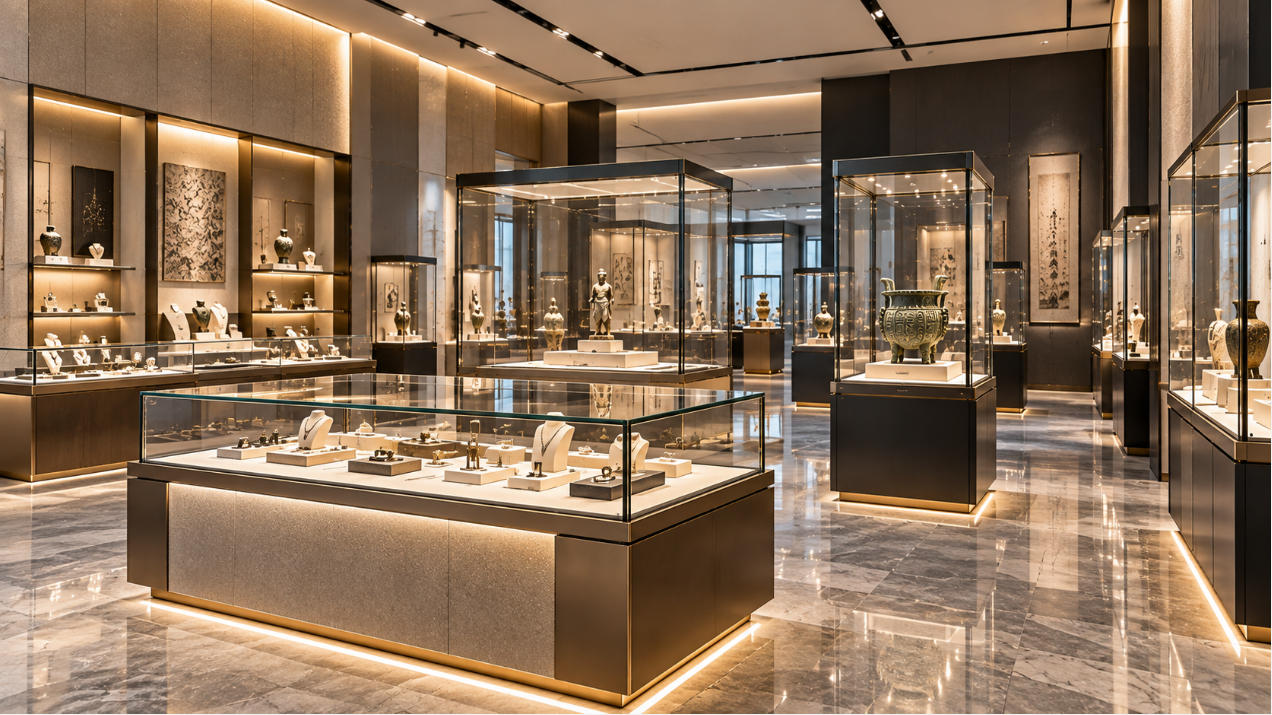
Source glass display cases around visibility, product presentation, structure and daily operation rather than choosing from a fixed cabinet catalog. SUNZEN supports commercial projects with custom glass configurations, dimensions, supporting structures, lighting, access, security, finishes and coordinated project supply.
As a custom glass display case supplier, SUNZEN works with retailers, brands, exhibition teams, designers and contractors that need different glass case types coordinated within one project.
Send us your drawings, case schedule, floor plan or reference images. We can help define the glass display case package, clarify specifications and move approved requirements toward manufacturing and delivery.
START WITH WHAT THE GLASS NEEDS TO DO
A Glass Display Case Is a Viewing System, Not Just a Cabinet With Glass
Glass defines how customers or visitors see the displayed object, but its role changes from project to project. Some cases need maximum transparency, some require shelving, some depend on large uninterrupted viewing panels, and others combine glass with substantial cabinetry, storage or architectural finishes.
The supplier should therefore begin with the intended viewing experience, displayed products and operating requirements before fixing the glass configuration.
This creates a clearer basis for choosing panel arrangement, structure, access, lighting and supporting materials.
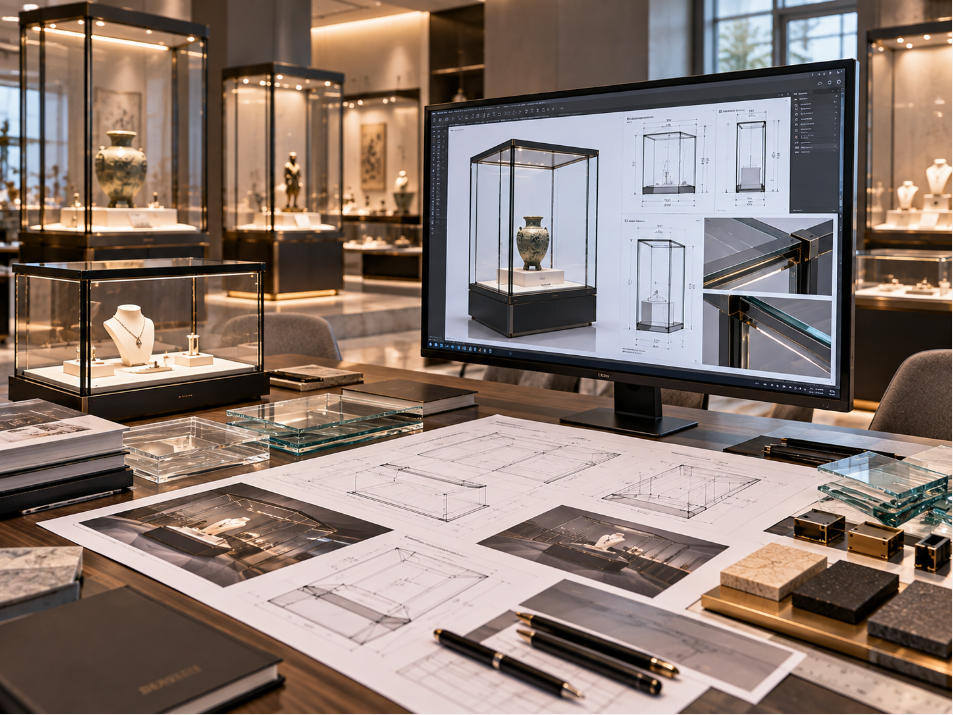
DEFINE THE GLASS CONFIGURATION
Match the Glass Enclosure to the Viewing Requirement
There is no single glass configuration that works for every commercial display. The correct arrangement depends on how the product should be viewed, where the case sits in the space and how staff need to access it.
Full-Vision Glass
Maximize transparency around products that benefit from viewing from several directions.
Glass-Top Counters
Combine close product viewing with a substantial lower cabinet for structure, storage and finishes.
Tall Glass Cabinets
Use vertical display volume for collections, shelving and products that require multiple presentation levels.
Wall-Integrated Cases
Coordinate glass display areas with architectural walls, niches, cabinetry and perimeter presentation.
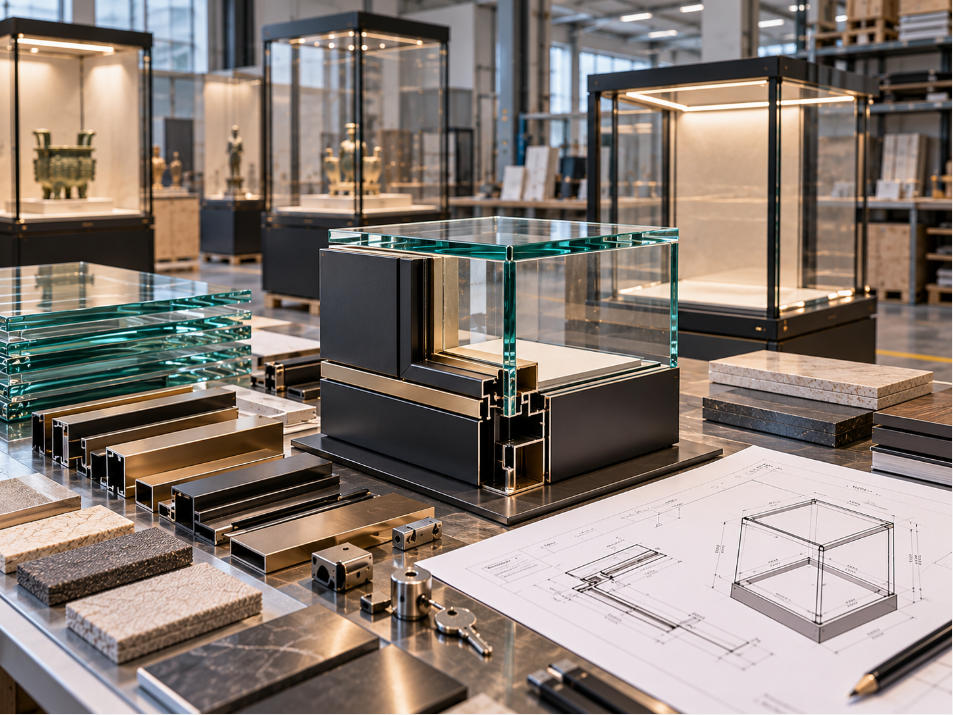
BALANCE TRANSPARENCY WITH STRUCTURE
More Glass Does Not Automatically Mean Better Visibility
A highly transparent display case still needs sufficient structure to support glazing, doors, shelves, lighting and operating hardware. The challenge is to position those structural elements without unnecessarily interrupting the visual presentation.
Custom development allows glass dimensions, frames, bases, joints and supporting cabinetry to be coordinated as one system rather than designed independently.
The objective is not simply to minimize every frame. It is to create the level of transparency appropriate for the product while maintaining a practical and manufacturable enclosure.
CUSTOMIZE THE GLASS CASE AROUND THE PROJECT
Custom Glass Display Cases Need More Than Custom Dimensions
The term custom glass display case supplier should describe more than the ability to change width, depth and height. Commercial projects often need the complete enclosure to respond to the displayed product, store architecture, operating workflow and brand presentation.
For projects where the enclosure itself needs to be developed around specific dimensions, viewing directions, panel arrangements, access and materials, SUNZEN’s custom glass display cases focus specifically on this customization stage.
Glass can then be coordinated with metal, wood, stone-look surfaces, lighting, locks, drawers, doors, shelves and other components so the finished case works as a complete commercial display fixture rather than an isolated glass cabinet.
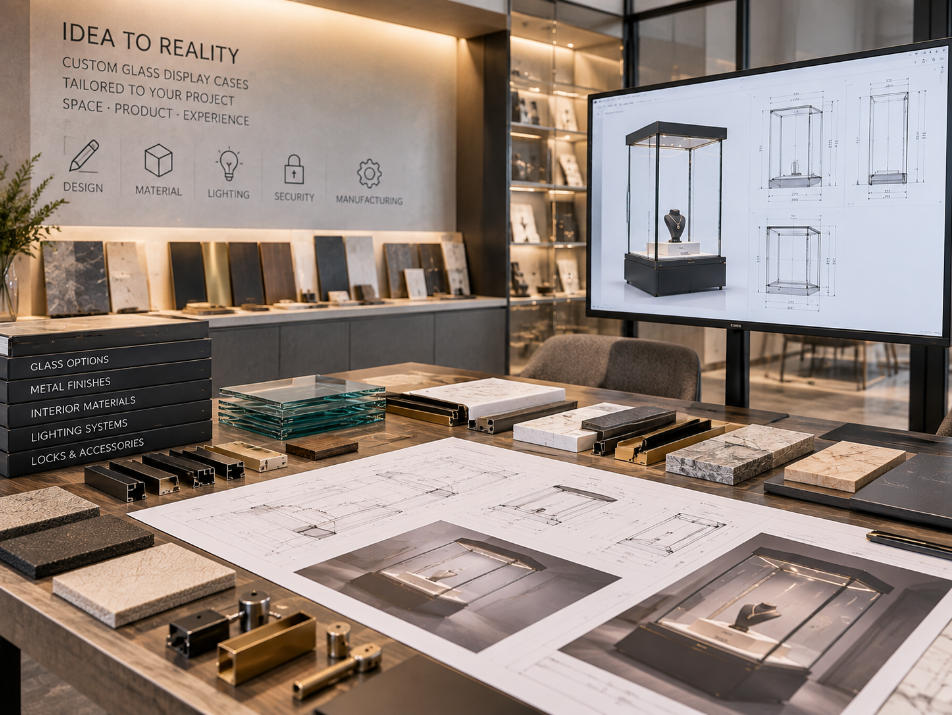
SPECIFY GLASS FOR THE VIEWING EXPERIENCE
The Glass Specification Should Follow the Display Requirement
Glass selection should be based on the visual objective, case dimensions, lighting environment and project specification rather than treated as a generic material choice. The appropriate solution can change when transparency, reflections, panel size or the surrounding environment becomes more demanding.
Clarity & Color
Where visual neutrality is important, low iron glass display cases can support clearer viewing with reduced green tint compared with conventional clear glass, depending on the selected glass specification and thickness.
Reflection Control
For projects where reflections can interfere with product or artifact viewing, anti reflective glass display cases provide a more specialized route for evaluating reflection-control requirements.
CONTROL THE DETAILS AROUND THE GLASS
Small Interfaces Can Define the Quality of the Finished Case
Large glass surfaces attract attention, but many quality differences become visible at the interfaces between glass and the rest of the display case. Edges, joints, frames, door alignment and hardware can strongly influence the finished appearance.
These details should be included in the approved specification rather than left as assumptions during production.
Coordinate exposed edges and visible finishing according to the case design.
Define how adjacent glass panels meet and how visible the connection should be.
Control the transition between glass, metal structures and cabinetry.
Review operating panels in relation to surrounding fixed glazing and hardware.
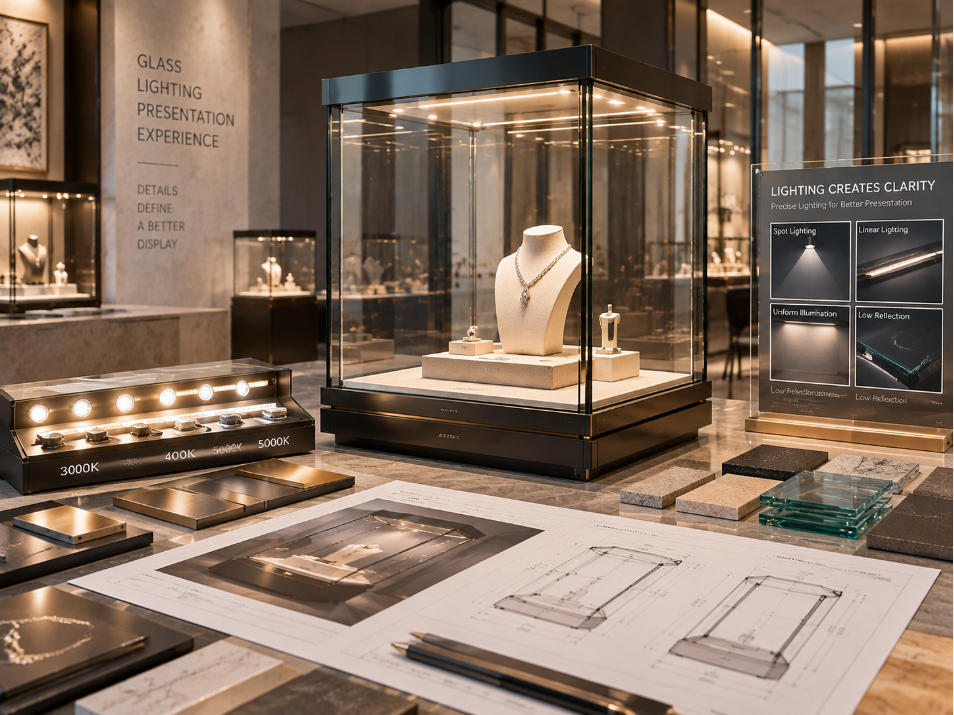
DESIGN LIGHTING WITH THE GLASS
Control Illumination Without Making Reflections the Main Feature
Lighting and glazing interact directly. The position of light sources, reflective products, surrounding store lighting and visitor viewing angles can all affect what is seen through the glass.
Integrated lighting should therefore be coordinated with the display volume and glazing geometry rather than added after the enclosure has already been designed.
The goal is to illuminate the merchandise clearly while keeping the glass visually quiet enough to support the presentation.
PLAN DAILY ACCESS
Choose the Opening Around How the Case Will Actually Be Used
Glass display cases need practical access for merchandising, cleaning and daily operation. The appropriate solution depends on case dimensions, staff position, available clearance and the size of the displayed products.
Sliding, hinged, lift-up or other access configurations should therefore be evaluated as part of the enclosure rather than selected as isolated hardware.
Determine where staff will stand when opening and merchandising the case.
Check surrounding walls, counters, circulation and adjacent fixtures.
Provide an opening large enough for practical product placement and removal.
Coordinate locks and controlled access with the selected opening system.
GLASS CASES FOR COMMERCIAL ENVIRONMENTS
Retail Projects Put Different Demands on Glass Display Cases
In retail environments, a glass display case must support both product presentation and everyday commercial operation. The enclosure may need to coordinate customer viewing, staff access, lighting, storage, security and the surrounding store fixture system.
For buyers specifically planning glass cases for stores and branded retail environments, SUNZEN’s retail glass display cases focus on these application-specific requirements.
The current Supplier page remains broader: it addresses how buyers source and coordinate custom glass display cases across commercial and exhibition projects rather than owning one specific application.
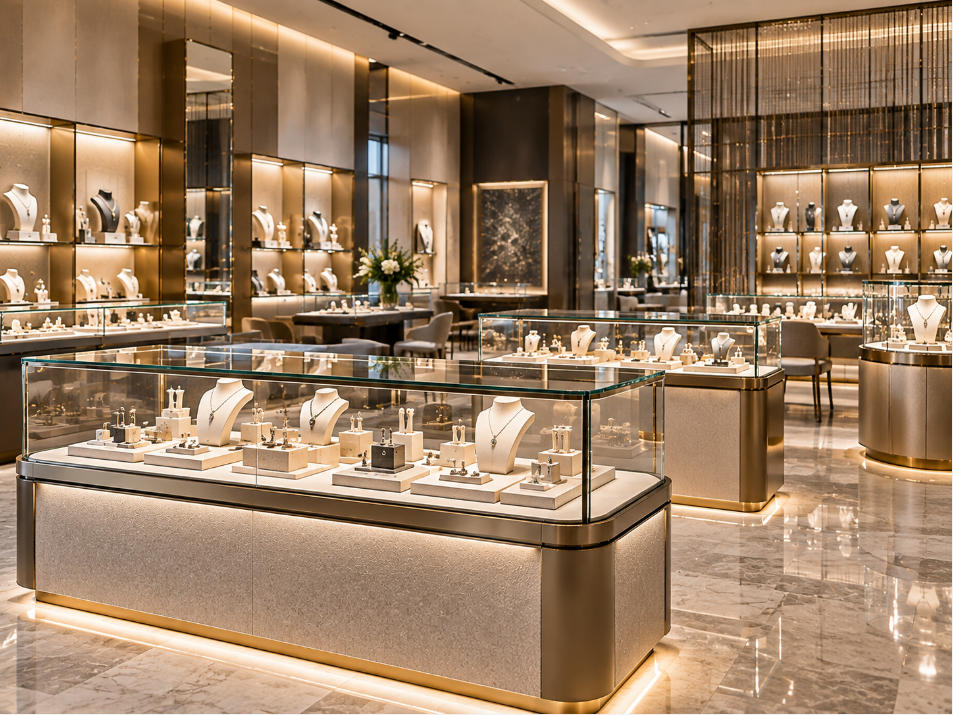
ONE MATERIAL · DIFFERENT DISPLAY REQUIREMENTS
Glass Display Case Supply Changes With the Application
The same glass-led design principle can serve very different commercial environments. What changes is the relationship between visibility, security, product scale, access, storage and the surrounding architecture.
Jewelry & Watches
Prioritize close viewing, controlled access, integrated lighting and premium material coordination.
Luxury Retail
Use glass as part of a wider branded fixture language combining display, architecture and customer experience.
Museums & Exhibitions
Coordinate visibility with object presentation, controlled access and project-specific exhibition requirements.
Commercial Displays
Adapt case size, shelving, lighting and storage to different products and operating environments.
TURN DIFFERENT CASES INTO ONE SUPPLY PACKAGE
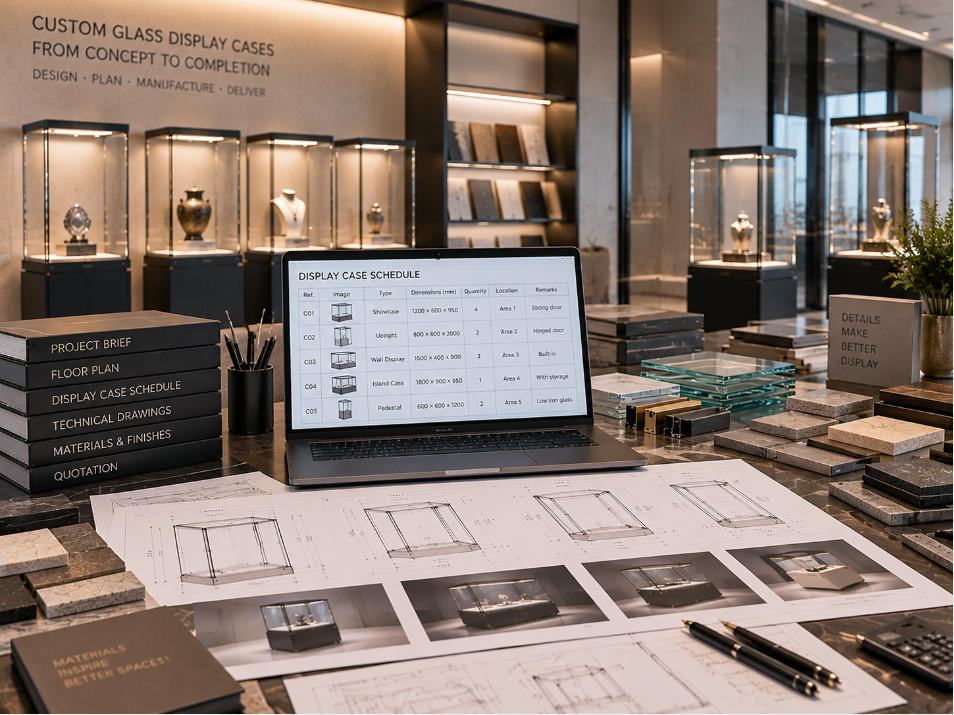
Build a Glass Display Case Schedule Before Production
Commercial projects often contain several glass display case configurations. A tall cabinet may use shelving, a counter may require staff-side access, and a freestanding case may need visibility from all directions.
A case schedule gives each unit a reference, quantity, dimensions, location and specification so those differences remain clear throughout quotation, technical development and production.
This is where the Supplier role becomes distinct from simply purchasing individual cabinets: different glass cases are managed as one controlled procurement package.
STANDARDIZE WHAT SHOULD REPEAT
Custom Does Not Mean Every Glass Case Should Be Different
When several cases belong to the same commercial environment, unnecessary variation can increase specification complexity and make the finished space less consistent.
A supplier can help identify which details should repeat across the project while preserving the variations required by different products or locations.
Keep related panel proportions and visual details consistent where appropriate.
Coordinate frames, trims and hardware across different case families.
Maintain a coherent presentation across related display areas.
Reduce unnecessary variation in locks, hinges and operating components.
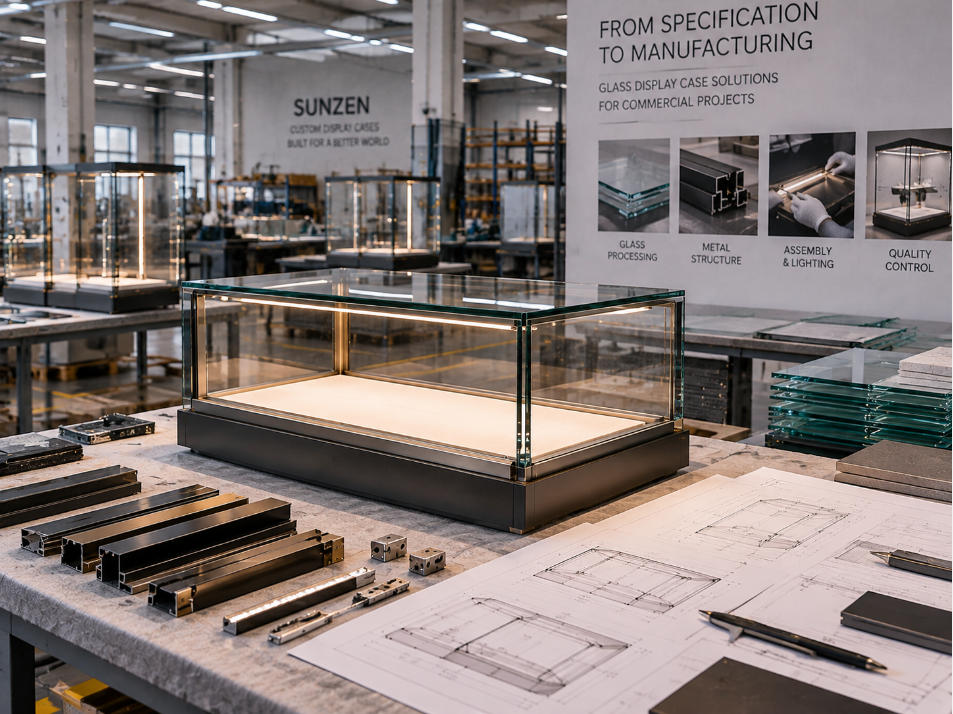
CONNECT SUPPLY WITH MANUFACTURING CAPABILITY
Approved Glass Specifications Need a Manufacturer That Can Execute Them
Once glass configuration, dimensions, structure, access, lighting and finishes are approved, the project moves from procurement definition into manufacturing execution. This is where the requirements controlled by the supplier need to be translated accurately into the physical display case.
For buyers evaluating the production partner behind this process, SUNZEN’s glass showcase manufacturers capability focuses on turning approved glass display concepts into manufacturable cases through coordinated glazing, metalwork, cabinetry, hardware, lighting and assembly.
The two search intents remain distinct. A glass display case supplier helps the buyer organize what needs to be sourced across the project, while the manufacturer is evaluated for the technical and production capability required to make those approved cases.
FOLLOW THE APPROVED CASE INTO PRODUCTION
Factory Capability Should Support the Supplier Promise
A custom glass case combines glazing with structural components, cabinetry, lighting, access hardware and finishing. The production environment therefore needs to coordinate more than one material or process.
For procurement teams that want to examine the production side separately from supplier coordination, SUNZEN’s showcase factory content focuses on factory capability and production execution.
On this page, factory capability serves as evidence behind the supply route. The primary task remains controlling what the project needs, which specification belongs to each case and how approved requirements continue into production.
Prepare glazing according to approved dimensions and panel configurations.
Coordinate frames, bases and cabinetry with the glass enclosure.
Bring glass, doors, hardware, lighting and supporting components together as one case.
Keep approved drawings and project references connected with the unit being produced.
INSPECT WHAT THE CUSTOMER WILL ACTUALLY SEE
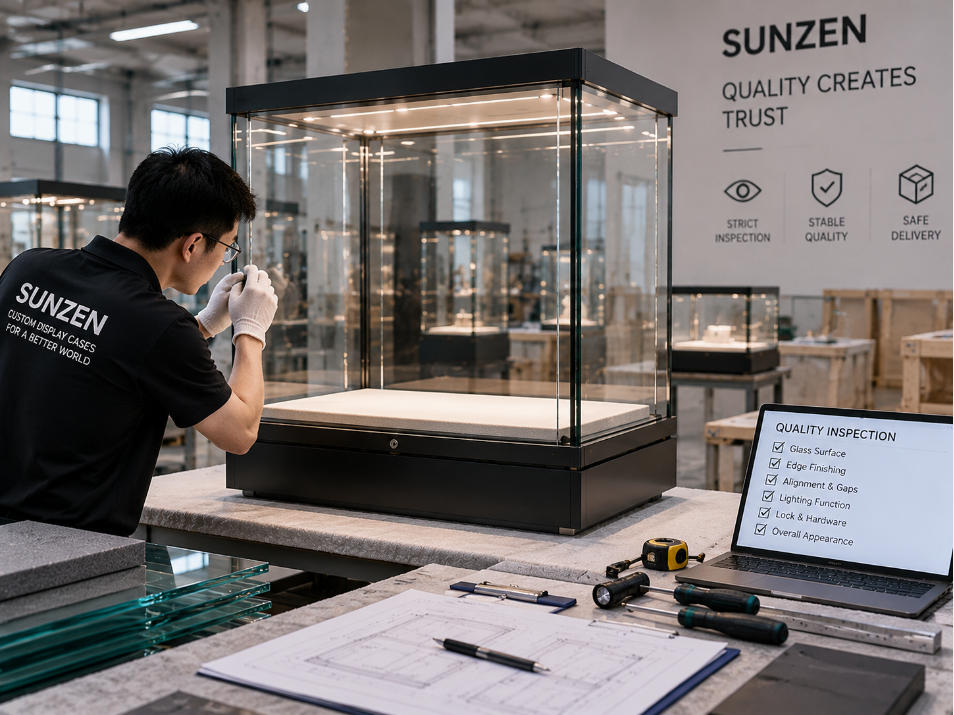
Glass Makes Alignment and Finishing Easy to Notice
Because glass is transparent and reflective, inconsistencies around joints, frames, doors, shelves and lighting can become visually prominent. Quality control should therefore examine the complete assembled case rather than treating glass as an isolated component.
The approved drawing and case reference provide the inspection baseline for dimensions, configuration, access and project-specific details.
This helps ensure the delivered case corresponds to what the buyer approved rather than simply confirming that a cabinet has been completed.
PROTECT THE CASE AFTER PRODUCTION
Glass Display Case Supply Does Not End at Final Inspection
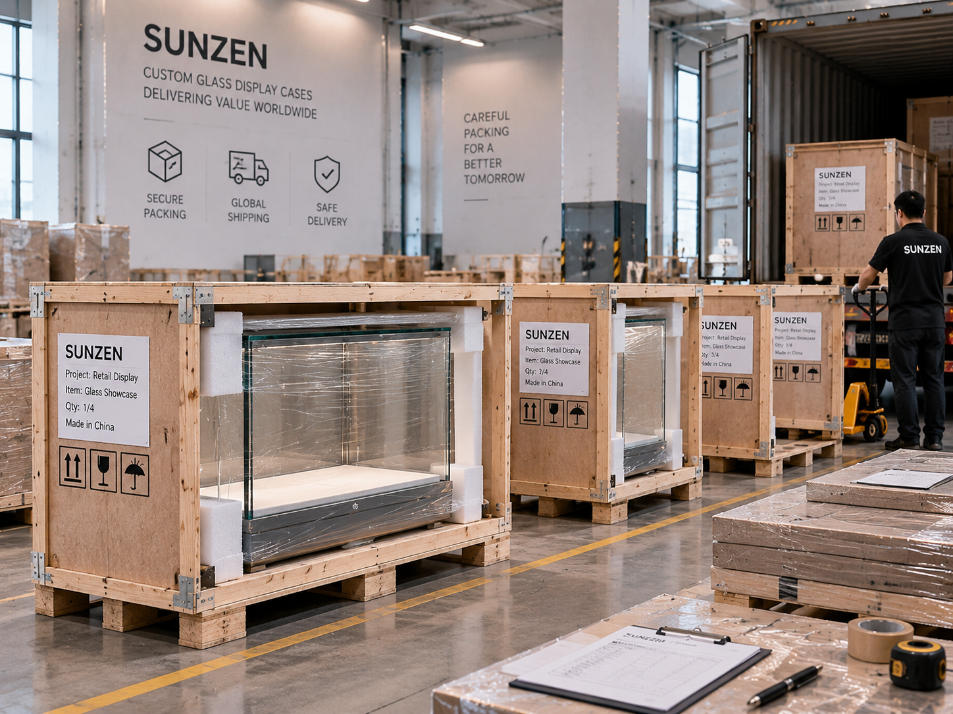
Completed glass cases still need to move from production to the project site. Protective packing should account for glazing, finished surfaces, protruding hardware and the way individual cases will be handled during transport.
Project references and case identification should remain visible in the packing system so receiving teams can match each package with the correct location or fixture schedule.
This keeps logistics connected with procurement instead of treating delivery as an unrelated final step.
GLASS DISPLAY CASE SOURCING WORKFLOW
From Viewing Requirement to Coordinated Glass Case Supply
A clear sourcing process keeps the intended visual presentation connected with technical requirements as each case moves toward production and delivery.
Define
Identify products, viewing directions, case types and operating requirements.
Specify
Coordinate glazing, structure, lighting, access, security, materials and finishes.
Approve
Confirm case references, drawings, dimensions and project-specific requirements before production.
Supply
Connect approved cases with manufacturing, inspection, protective packing and project delivery.
PREPARE YOUR PROJECT
What to Send Your Custom Glass Display Case Supplier
You do not need to complete every production detail before contacting SUNZEN. Start with the information that explains what you need to display, how the cases fit the space and which specifications are already known.
Show display locations, surrounding architecture and circulation.
Provide elevations, dimensions or case concepts where available.
Explain what will be presented and the required viewing direction.
List known case types, references, quantities and dimensions.
Share materials, finishes, lighting, access, destination and target schedule.
FAQ
Glass Display Case Supplier FAQs
What should I look for in a glass display case supplier?
Look for a supplier that can coordinate the complete case rather than glass alone, including glazing configuration, structure, dimensions, lighting, access, security, supporting materials, finishes, manufacturing, inspection, packing and project delivery.
Can SUNZEN supply custom glass display cases?
Yes. SUNZEN can develop custom glass display cases around project dimensions, viewing requirements, glass configuration, structure, materials, lighting, access, security, storage and finishes, subject to technical review.
What is the difference between a glass display case and a glass showcase?
The terms overlap substantially in commercial display projects. Glass display case is commonly used for enclosed cabinets and vitrines, while glass showcase is also used for retail and exhibition displays. The project specification and application are more important than the wording alone.
Can one project include different types of glass display cases?
Yes. A commercial project can combine glass-top counters, full-vision cases, tall cabinets, wall-integrated displays and other custom configurations. A case schedule helps coordinate the specifications and quantities of these different units.
When should low iron or anti-reflective glass be considered?
These glass options can be evaluated when the project places greater emphasis on color neutrality, visual clarity or reflection control. The appropriate specification depends on the display environment, lighting, case design and project requirements.
Can lighting and locks be integrated into custom glass display cases?
Yes. Lighting, locks and access hardware can be coordinated with the glass enclosure and supporting structure according to the display application, operating requirements and approved case design.
What information should I send for a glass display case quotation?
Send available floor plans, drawings, dimensions, case quantities, product information, reference images, glass and material requirements, lighting or security needs, destination and project schedule. SUNZEN can review the available information before technical development and quotation.
SOURCE YOUR CUSTOM GLASS DISPLAY CASE PACKAGE
Looking for a Custom Glass Display Case Supplier?
Send SUNZEN your drawings, floor plan, case schedule or reference images. We can help define the glass display case package, coordinate custom specifications and connect approved cases with manufacturing and project supply.

