
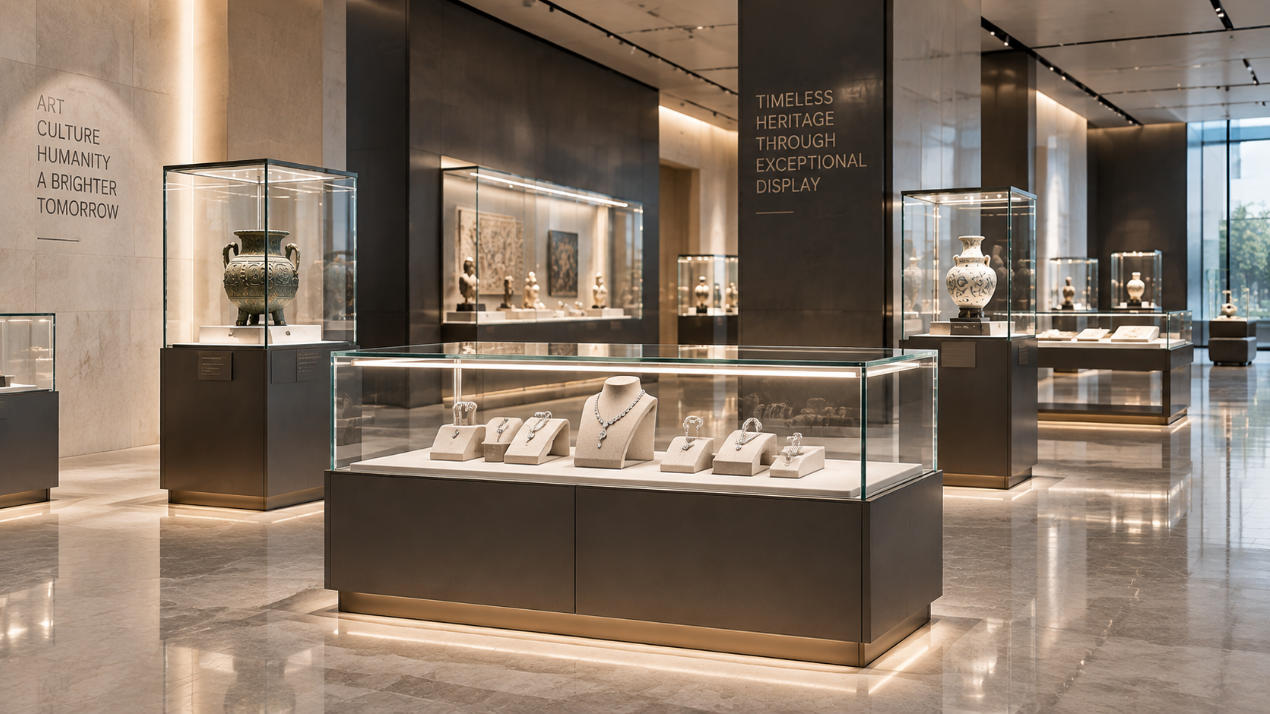
Low Iron Glass Display Cases for Premium Visibility & Exhibition
SUNZEN develops low iron glass display cases for jewelry brands, museums, galleries and luxury retail environments where visual clarity is an important part of the display experience.
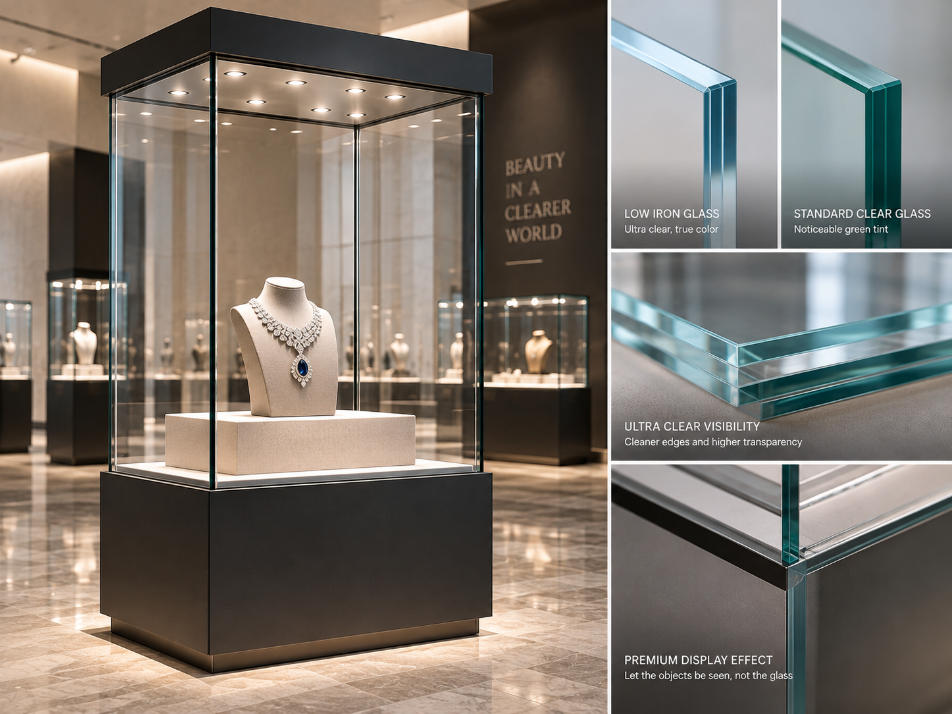
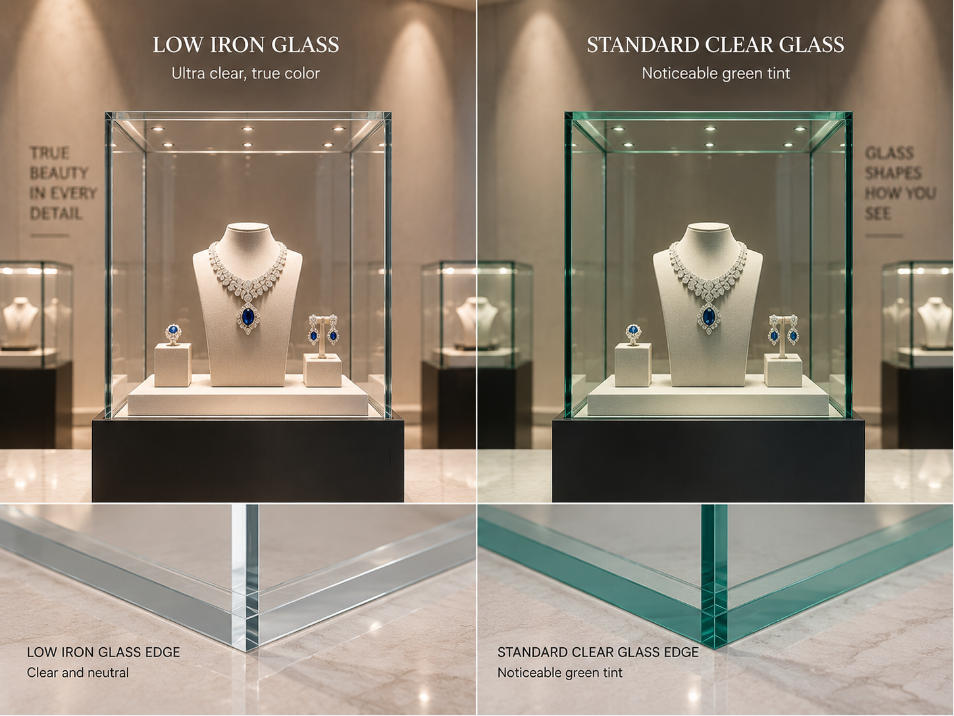
Compared with conventional clear glass, low iron glass contains less iron and therefore has a more neutral appearance with less noticeable green coloration, particularly around exposed glass edges and thicker panels.
By combining ultra-clear glazing with coordinated structures, lighting, security, access and interior finishes, the complete display case can provide a cleaner visual connection between the viewer and the displayed object.
What Are Low Iron Glass Display Cases?
Low iron glass display cases are showcases that use low-iron, extra-clear glazing instead of conventional clear float glass to improve transparency and reduce the green tint commonly visible in standard glass.
The difference becomes particularly relevant in premium showcases with large glazing areas, exposed polished edges, glass-to-glass joints or carefully controlled lighting.
For jewelry, watches, museum artifacts and other visually sensitive objects, more neutral glazing helps the display case interfere less with the colors, textures and materials being presented.
When a project also requires case dimensions, structures and systems to be developed specifically around the application, custom glass display cases can combine low iron glazing with project-specific engineering.
Why Does Glass Clarity Matter in Premium Display Cases?
Glass should protect the displayed object without becoming the dominant visual element. In high-end retail and museum environments, even subtle coloration or heavy-looking glass edges can affect the perceived quality of the presentation.
Low iron glass reduces the characteristic green appearance associated with conventional clear glass. This creates a more neutral visual barrier and can make glass edges, corners and large transparent surfaces appear cleaner.
The benefit becomes especially noticeable where white interiors, pale stone, jewelry, precious metals, artworks or objects with subtle colors are viewed through multiple layers of glazing.
Benefits of Low Iron Glass for Display Cases
Higher Visual Clarity
Ultra-clear glazing creates a more transparent visual connection between customers or visitors and the displayed objects.
Reduced Green Tint
Lower iron content reduces the green coloration that can become visible through standard glass, especially along polished edges.
More Neutral Color
Neutral glazing helps jewelry, artifacts, luxury products and interior materials appear closer to their intended visual character.
Cleaner Glass Edges
Exposed edges and glass-to-glass corners can appear lighter and more refined in minimalist showcase designs.
Premium Presentation
Greater transparency supports the visually light, refined appearance expected in luxury retail and cultural exhibition environments.
Lighting Compatibility
Low iron glazing can be coordinated with carefully designed display lighting to support clear and controlled product presentation.
Low Iron Glass vs. Standard Clear Glass
Standard Clear Glass
Conventional clear float glass is suitable for many general display applications but typically shows more green coloration, particularly at thicker edges or when several glass surfaces overlap visually.
Low Iron Glass
Low iron glass provides a more neutral and transparent appearance, making it particularly suitable for premium retail showcases, jewelry presentation and museum display environments where glazing clarity is a design priority.
Low Iron Glass Display Cases for Jewelry Stores
Jewelry presentation depends heavily on color, brilliance, reflections and the relationship between the product and display lighting.
Low iron glass can help reduce unwanted glass coloration around diamonds, gemstones, precious metals and light-colored display interiors, creating a cleaner presentation for high-value merchandise.
It can be applied across counters, islands, wall showcases, pedestal cases, window displays and other commercial jewelry showcase configurations.
For jewelry brands and chain stores, the glazing specification can also become part of a standardized fixture system so that showcase transparency and visual quality remain consistent across different locations.
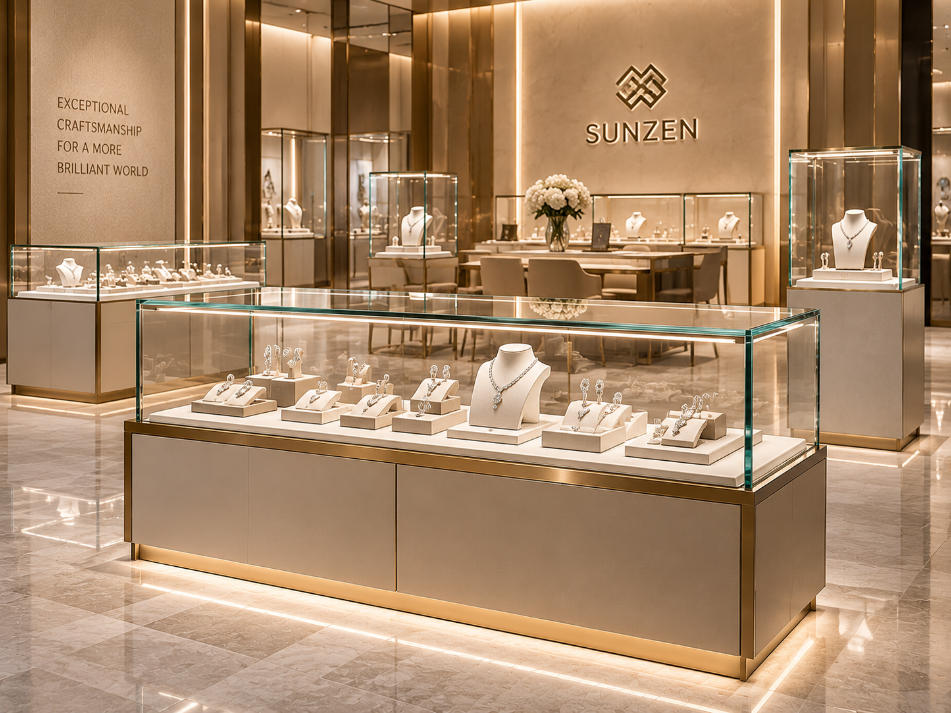
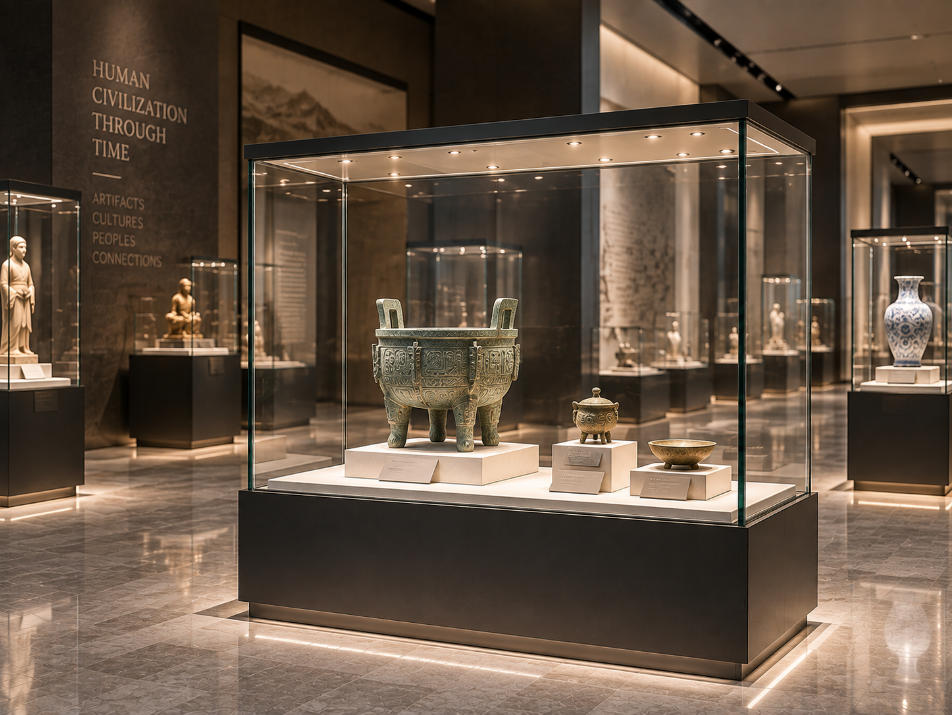
Low Iron Glass for Museum Display Cases
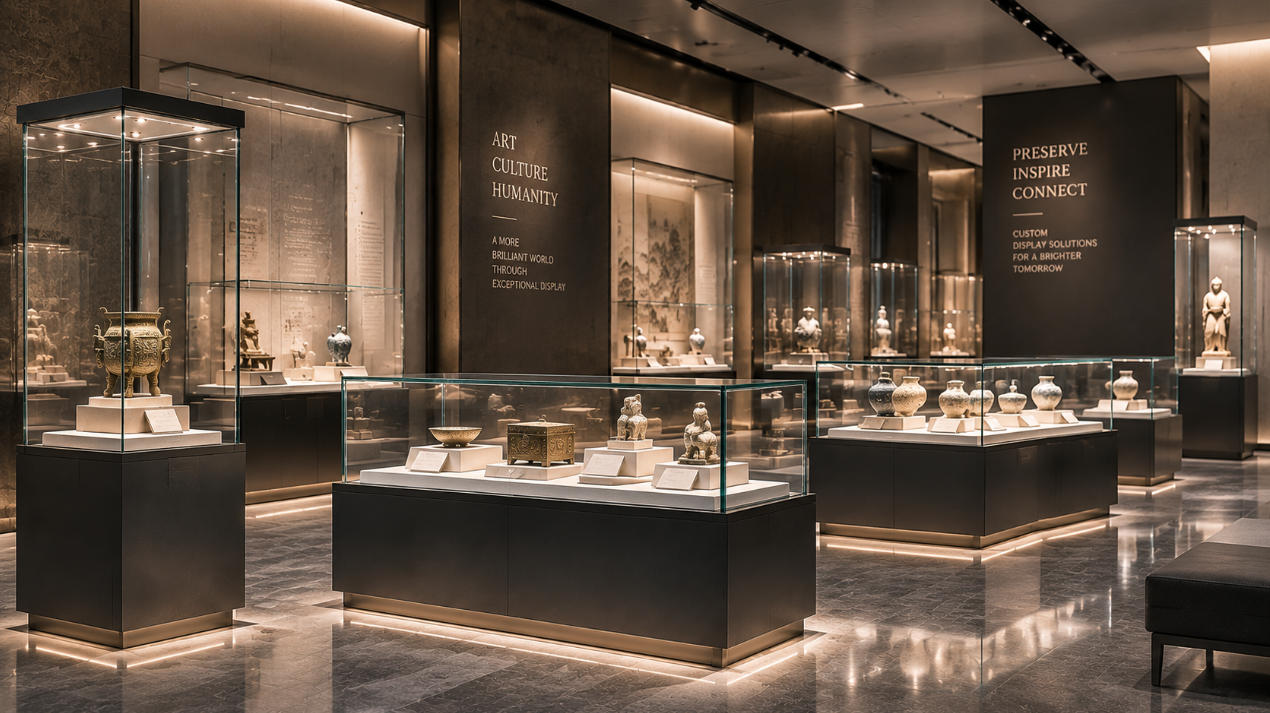
In museums and galleries, the glazing should allow visitors to study artifacts while remaining visually unobtrusive within the exhibition.
Low iron glass is particularly relevant for large vitrines, pedestal cases and multi-sided showcases where visitors view objects through substantial glass surfaces.
The glazing can be coordinated with case structures, lighting, interior materials, access, sealing and security according to the requirements of the collection and exhibition.
For projects where the museum application itself is the primary requirement, our museum glass display cases solution covers the wider relationship between glazing, artifact protection and exhibition design.
Where Are Low Iron Glass Display Cases Used?
Jewelry Stores
Premium counters, islands and wall showcases where diamonds, gemstones and precious metals require clean visual presentation.
Watch Boutiques
Precision display environments where product finishing, dial details and premium materials need to remain clearly visible.
Luxury Retail Stores
High-end brand environments where minimal structures and transparent glazing support a refined architectural identity.
Museums
Artifact vitrines where transparent presentation needs to work together with conservation, access and security requirements.
Art Galleries
Clean exhibition enclosures for artworks, sculptures, collectibles and limited-edition objects.
Premium Exhibitions
Custom exhibition cases where transparent architecture and close visual inspection are important parts of the visitor experience.
Low Iron Glass Is Only One Part of Display Case Performance
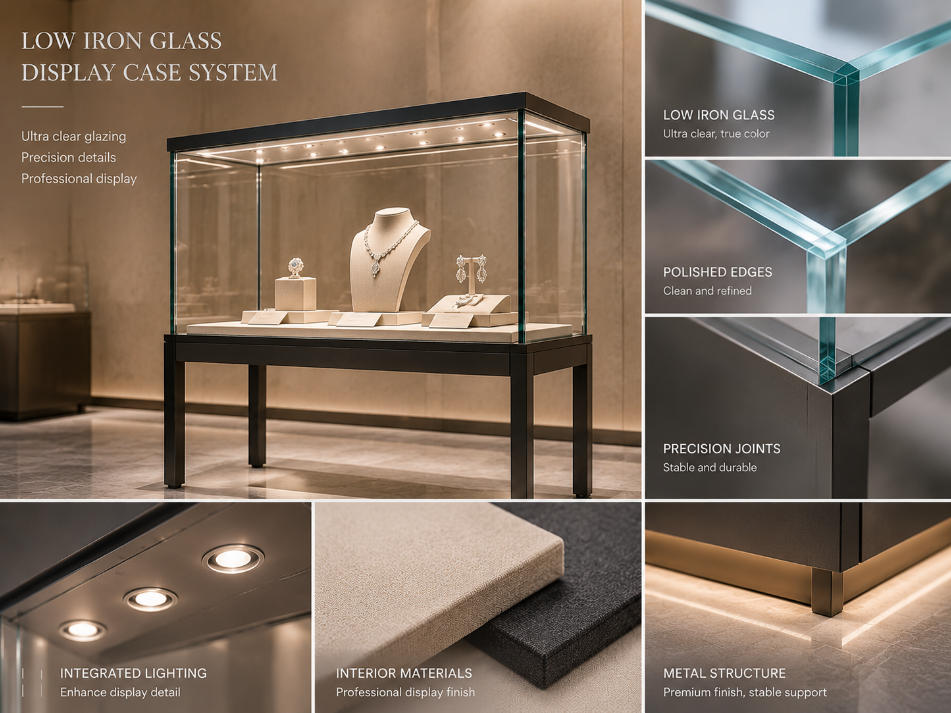
Choosing ultra-clear glass is important, but the final visual result depends on how the glazing is integrated into the complete showcase.
Glass thickness, polished edges, joints, adhesives or structural interfaces, frame dimensions, lighting angles and interior finishes all influence how transparent the finished display appears.
For demanding applications, low iron glass can also be considered alongside laminated configurations, specialized coatings or other project-specific glazing requirements.
The objective is not simply to specify a premium glass material, but to engineer a display case where the entire glazing system supports visibility, structural performance and the intended design language.
Coordinate Ultra-Clear Glass with Display Lighting
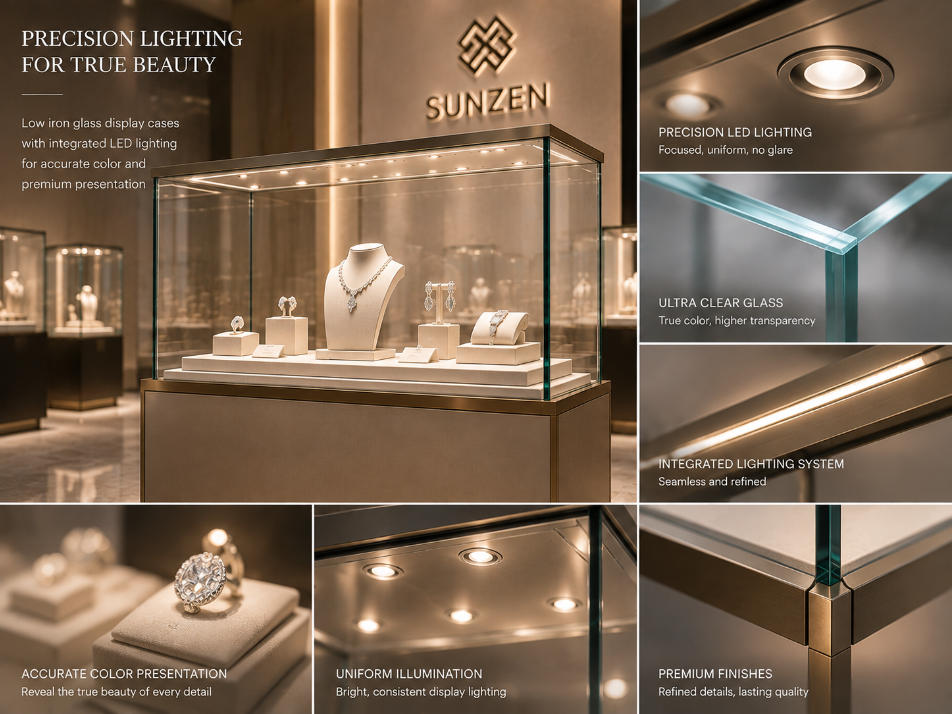
Premium glazing performs best when it is considered together with the lighting system rather than treated as an isolated material specification.
Light direction, brightness, reflections, interior surface colors and product position all affect what the viewer ultimately sees through the glass.
In jewelry and luxury retail applications, integrated lighting can emphasize product brilliance and texture, while the neutral appearance of low iron glass helps minimize unwanted coloration between the light source and the merchandise.
For museum projects, lighting can instead be developed around artifact presentation and the specific requirements of the exhibition.
Engineer Low Iron Glass into the Complete Showcase Structure
Large transparent surfaces require careful coordination between glazing and the supporting showcase structure.
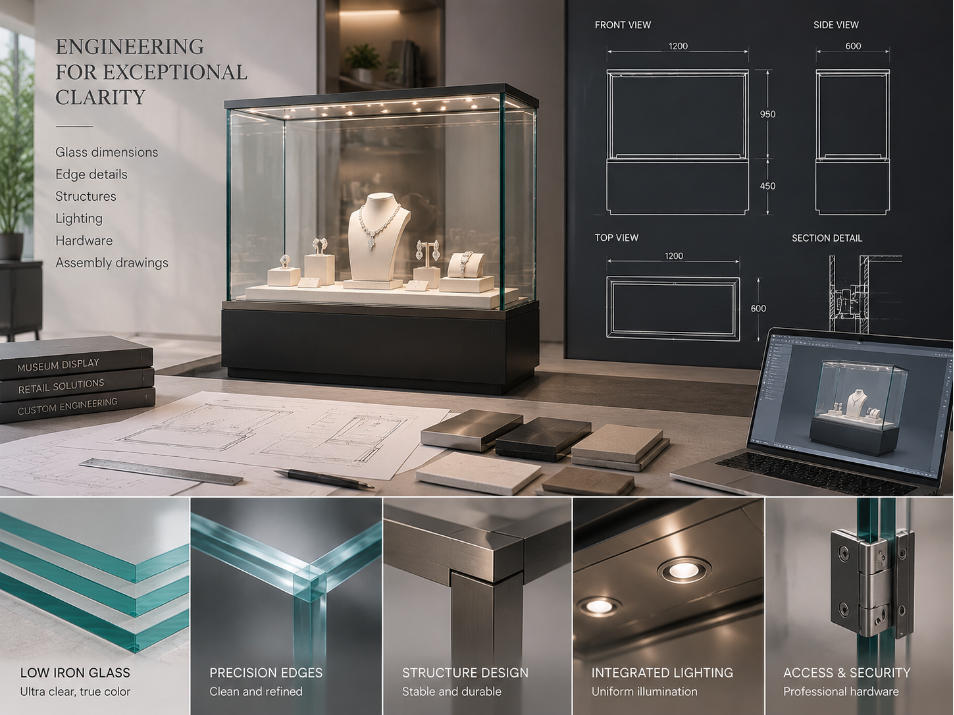
Technical development can define glass dimensions, thickness, edge treatment, joints, supporting profiles, access openings, hardware interfaces, lighting locations and assembly tolerances.
This becomes particularly important in minimalist cases where narrow structural elements and large uninterrupted glass surfaces leave little room for dimensional variation.
The objective of showcase engineering is to translate the visual intention of an ultra-clear display case into a structure that can be manufactured, assembled and operated reliably.
How Are Low Iron Glass Display Cases Developed?
Project Requirements
Review application, display objects, case dimensions, store or exhibition drawings and visual requirements.
Glass Specification
Determine glazing type, dimensions, thickness, edge treatment and other project-specific glass requirements.
Case Development
Coordinate glazing with structure, lighting, access, security, interiors and the surrounding architecture.
Technical Engineering
Develop production drawings covering glass interfaces, structures, hardware, lighting and assembly details.
Material Approval
Confirm glass, metal finishes, interior surfaces, lighting components and other project materials.
Production & QC
Manufacture, assemble and inspect the complete display case according to the approved specification.
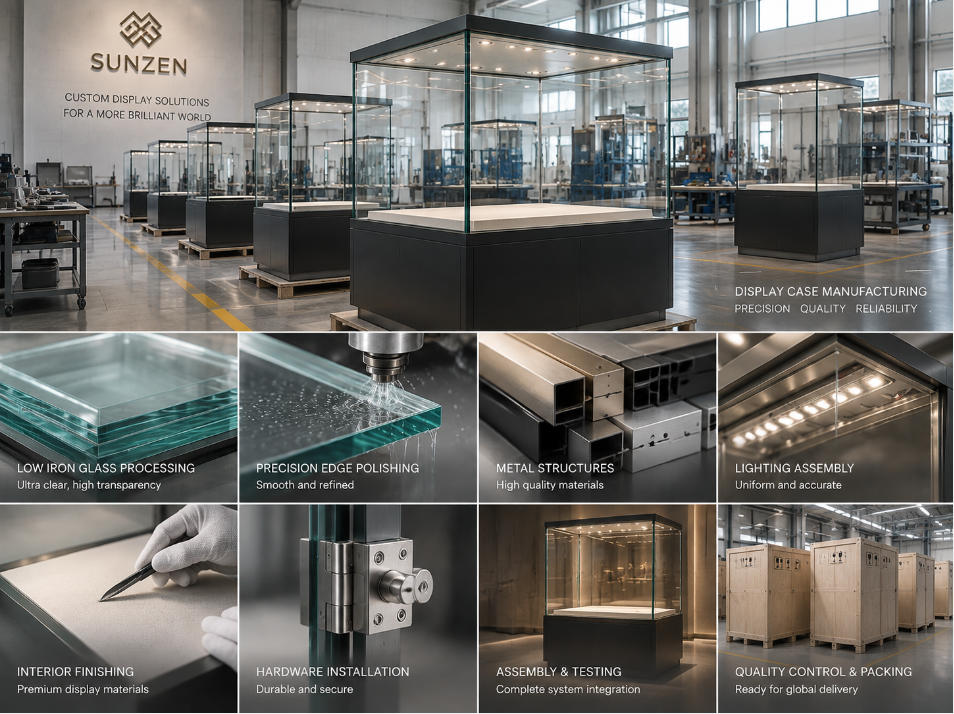
From Ultra-Clear Glass Panels to Complete Display Cases
The quality of a low iron glass showcase depends not only on the glass specification but also on fabrication accuracy and final assembly.
Glass dimensions, polished edges and joints need to coordinate precisely with metal structures, cabinetry, doors, locks, lighting and interior display surfaces.
Consistent manufacturing becomes especially important for jewelry chains, luxury brands and multi-case museum projects where several showcases need to share the same visual and technical standards.
For buyers evaluating production capability at supplier level, glass showcase manufacturers covers the broader manufacturing and project-supply intent without duplicating the technical focus of this page.
What Should You Provide for a Low Iron Glass Display Case Project?
Case Requirements
Provide target dimensions, quantities, case types and information about the products or artifacts being displayed.
Design Information
Share store drawings, exhibition layouts, elevations, reference images or existing design concepts where available.
Technical Specifications
Provide required glazing, lighting, locks, access systems, interior materials, finishes and other project standards.
Use Low Iron Glass as Part of a Coordinated Display Environment
A premium display project usually contains more than one showcase type. Counters, islands, wall displays, freestanding vitrines and pedestal cases may perform different functions while sharing the same glazing language.
Using coordinated low iron glass specifications across the project can help maintain visual consistency between different case formats and reduce variation in the way products or artifacts appear through the glazing.
This is particularly valuable for luxury stores, jewelry chains, museums and galleries where display cases form a significant part of the overall interior architecture.
Explore Related Display Case Solutions
Custom Glass Display Cases
Develop glass display cases around project-specific dimensions, structures, materials, lighting, security and commercial requirements.
Museum Glass Display Cases
Explore glass display solutions developed around artifact visibility, collection protection and professional museum exhibitions.
Glass Showcase Manufacturers
Review supplier capabilities for custom glass showcase engineering, manufacturing, assembly and project production.
Low Iron Glass Display Cases FAQs
What are low iron glass display cases?
Low iron glass display cases use extra-clear glazing with reduced iron content to create a more neutral and transparent appearance than conventional clear glass. They are commonly specified for premium jewelry, luxury retail, museum and exhibition applications.
What is the difference between low iron glass and standard clear glass?
Standard clear glass normally has a more noticeable green coloration, particularly around thicker or exposed edges. Low iron glass reduces this coloration and provides a more neutral visual appearance.
Is low iron glass suitable for jewelry display cases?
Yes. Low iron glass is well suited to jewelry display cases where clear presentation of diamonds, gemstones, precious metals and premium interior materials is important.
Can low iron glass be used for museum display cases?
Yes. Low iron glass can be used in museum vitrines where high transparency and neutral artifact viewing are required, with the complete glazing system coordinated around the exhibition and conservation brief.
Can low iron glass display cases include integrated lighting?
Yes. Integrated lighting can be coordinated with the glass, case geometry, product or artifact position and interior materials to create a controlled display environment.
Can low iron glass display cases be customized?
Yes. Case dimensions, glass specifications, structures, lighting, access systems, locks, storage and interior finishes can be developed around the requirements of the project.
Where are low iron glass display cases commonly used?
Typical applications include jewelry stores, watch boutiques, luxury retail stores, museums, art galleries and premium commercial exhibitions.
What information is needed to develop a custom low iron glass display case?
Useful project information includes case dimensions, quantities, application, store or exhibition drawings, glazing requirements, lighting, access, security, materials, finishes and project schedule.
Develop Ultra-Clear Display Cases for Your Next Project
Send SUNZEN your store or exhibition drawings, case dimensions, quantities and glazing requirements. We can coordinate low iron glass with showcase structures, lighting, security, access and interior finishes to develop a complete display system for jewelry, luxury retail, museum and exhibition projects.

