
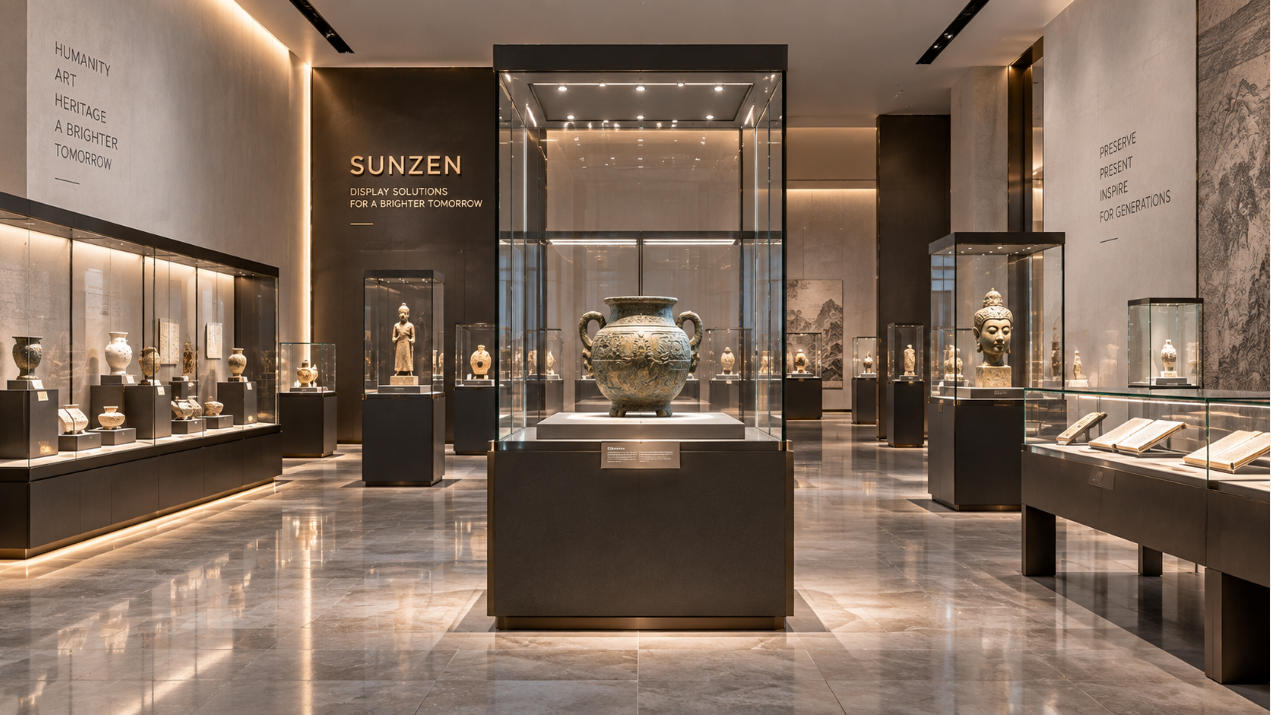
Museum Glass Display Cases for Museums & Cultural Exhibitions
SUNZEN develops museum glass display cases for museums, galleries, cultural institutions and professional exhibition projects where artifact visibility, collection protection and architectural integration need to work together.
From freestanding vitrines and pedestal cases to wall showcases, table cases and large integrated exhibition enclosures, each display configuration can be developed around the collection, exhibition layout, viewing requirements and project-specific conservation objectives.
Glazing, enclosure structure, interior materials, lighting, access, sealing and security can be coordinated during technical development so the finished display case becomes an integrated part of the exhibition rather than simply a transparent cabinet.
What Are Museum Glass Display Cases?
Museum glass display cases are specialized exhibition enclosures designed to present artifacts clearly while creating a protective physical boundary between collections and the surrounding visitor environment.
Unlike general commercial glass cabinets, museum cases may need to address optical clarity, reflections, enclosure sealing, interior material compatibility, lighting, security, artifact access and environmental requirements according to the collection and exhibition brief.
Where the enclosure needs to be developed around specific artifacts, dimensions or conservation requirements, a custom museum display case provides a more project-specific approach.
Designed Around Museum Exhibition & Conservation Requirements
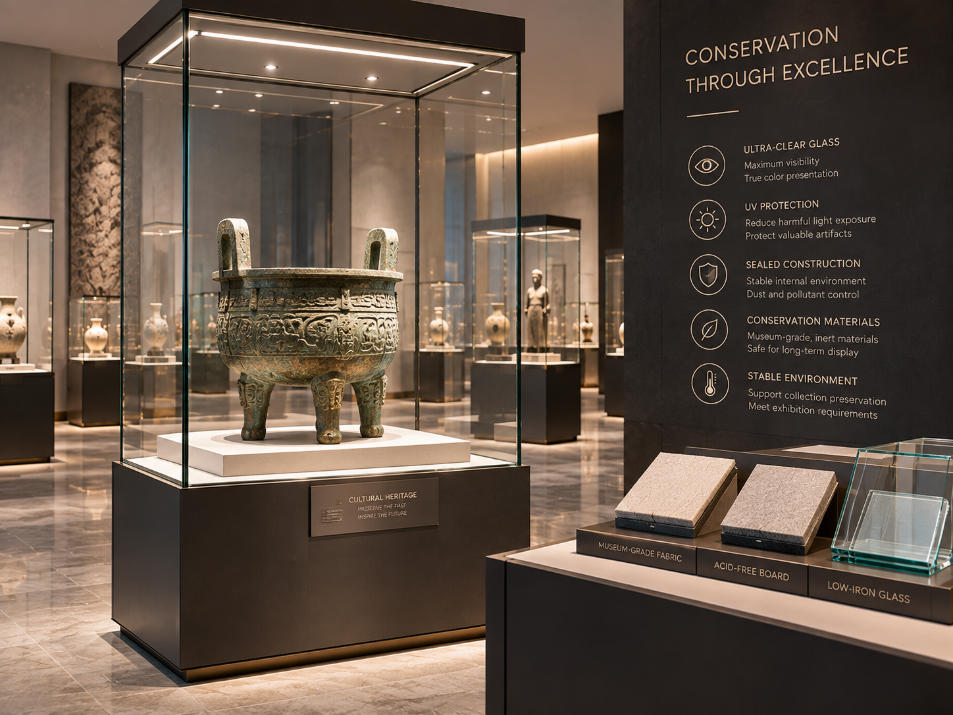
Museum display environments need to balance visibility with protection. Visitors should be able to experience the collection clearly while artifacts remain separated from unnecessary physical contact and environmental exposure.
Different collections can require different display conditions. Archaeological objects, manuscripts, textiles, artworks, jewelry, historical objects and other cultural materials may vary significantly in sensitivity, scale and presentation requirements.
For this reason, glazing, enclosure construction, interior materials, lighting, sealing, security and access should be considered as parts of one coordinated museum display system.
Systems That Can Be Integrated into Museum Glass Display Cases
Ultra-Clear Glass
Low-iron glazing supports clearer viewing and greater visual neutrality for artifacts displayed behind large glass surfaces.
Anti-Reflective Glazing
Anti-reflective glazing can reduce distracting reflections where gallery lighting and surrounding architecture affect visitor viewing.
UV Management
Glazing and lighting specifications can be coordinated where the exhibition brief requires greater control of unnecessary ultraviolet exposure.
Sealed Construction
Doors, panel joints and structural interfaces can be developed for improved enclosure performance where sealing is required.
Conservation Materials
Interior substrates, fabrics, coatings and display surfaces can be selected according to project and collection requirements.
Integrated Lighting
Lighting can be coordinated with glazing, artifact position, viewing direction, case geometry and maintenance requirements.
Security Systems
Locks and concealed hardware can be integrated according to artifact value, exhibition operation and security requirements.
Artifact Supports
Plinths, decks and object supports can be developed around the dimensions, orientation and presentation of individual artifacts.
Controlled Access
Hinged, sliding, lifting and other access configurations can be developed around installation and maintenance procedures.
Glass Selected for Visibility, Protection & Exhibition Conditions
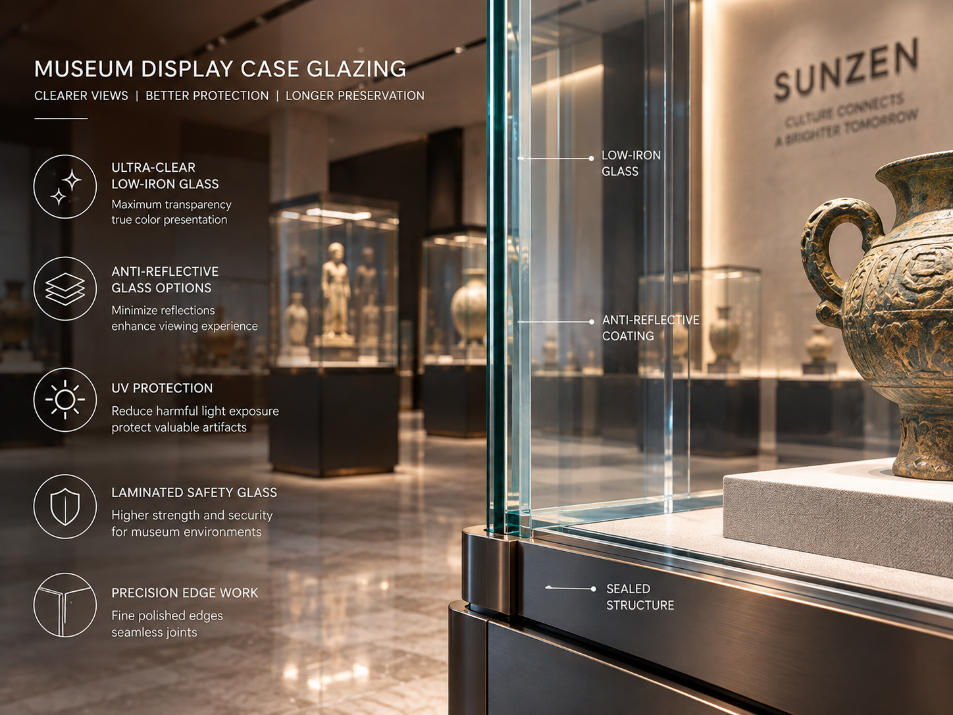
Glass is a defining component of a museum showcase because it directly affects both artifact visibility and enclosure performance.
Low-iron glass can improve visual neutrality, while anti-reflective glazing can help reduce reflections created by exhibition lighting and the surrounding gallery. Laminated or other project-specified glazing can also be considered where additional safety or security performance is required.
Glass thickness, panel dimensions, edge treatment, joints and supporting structures need to be coordinated during engineering so that minimal visual obstruction does not compromise structural performance.
Museum Glass Display Cases for Different Exhibition Layouts
Freestanding Museum Cases
Independent vitrines support multi-sided viewing and flexible placement within open museum and gallery spaces.
Pedestal Display Cases
Focused glass enclosures provide individual presentation for important artifacts and small curated groups.
Table Display Cases
Horizontal or angled viewing can support documents, manuscripts, coins, jewelry and smaller archaeological collections.
Wall Display Cases
Integrated wall vitrines combine vertical presentation with lighting, interior surfaces and surrounding exhibition architecture.
Upright Museum Cases
Taller internal volumes can accommodate sculptures, garments, decorative objects and vertically presented collections.
Large Integrated Cases
Architectural-scale display cases can accommodate extensive collections and large artifacts while becoming part of the gallery design.
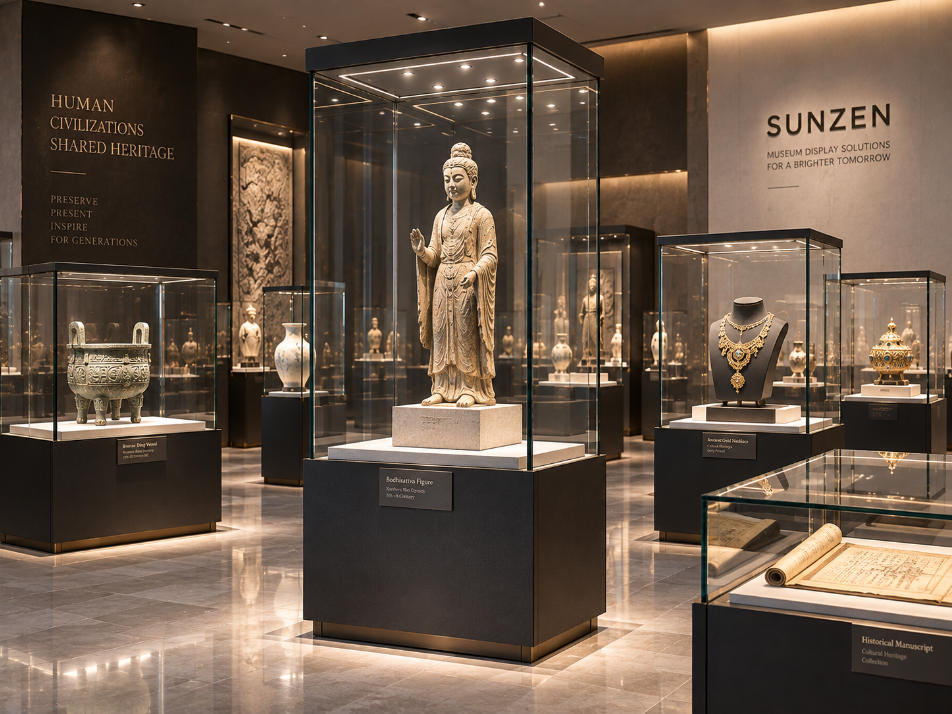
Develop the Display Case Around the Artifact
Museum collections vary significantly in size, weight, material, value, sensitivity and the way visitors are expected to experience them.
A small archaeological artifact may benefit from close viewing from several directions, while a manuscript may require shallow horizontal presentation. Sculptures can require greater internal height, and textiles may need dedicated supports and carefully coordinated illumination.
Case dimensions, viewing height, glazing area, interior surfaces, artifact mounts and lighting should therefore respond to the collection rather than forcing different artifacts into a standardized cabinet.
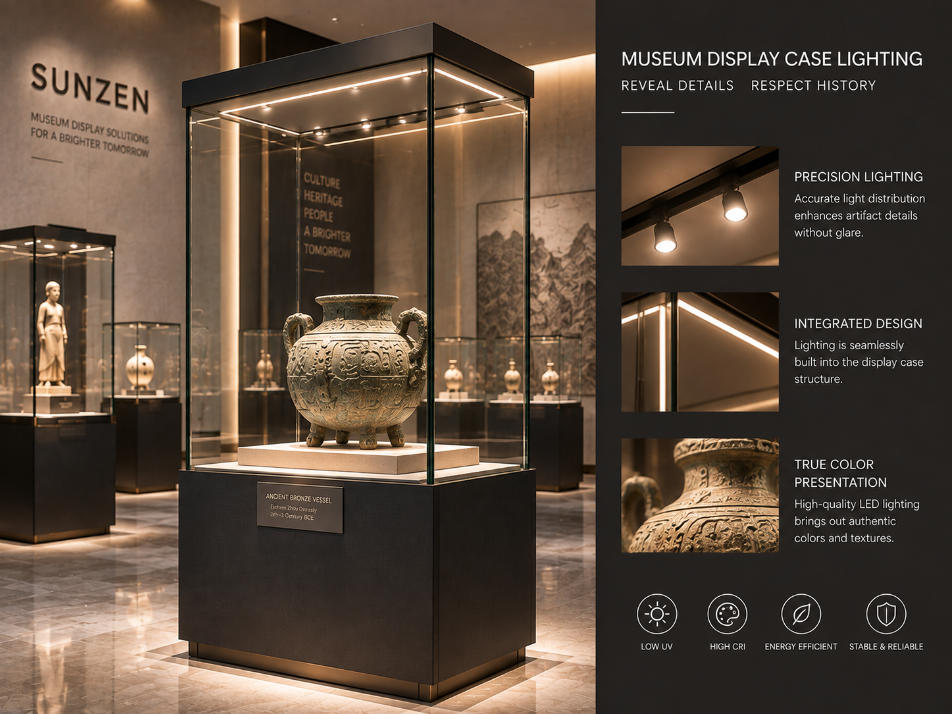
Integrate Lighting without Distracting from the Collection
Museum display lighting should support interpretation of the artifact while remaining visually subordinate to the collection itself.
Light position, viewing angle, reflections, case geometry and interior finishes influence how an object appears through the glazing.
When lighting is integrated into the showcase, electrical routing, drivers, heat considerations and maintenance access can be coordinated during technical development.
This allows the lighting system to become part of the display architecture while maintaining a clean museum presentation.
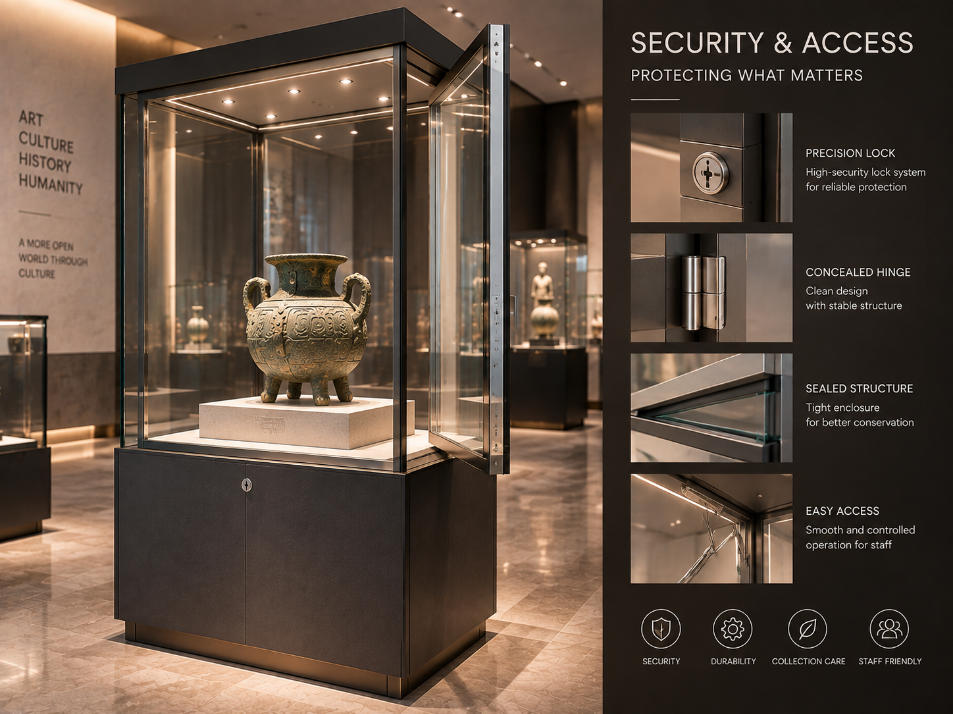
Protect Collections while Maintaining Practical Museum Access
Museum cases need to restrict unauthorized access while allowing trained staff to install, inspect and maintain displayed objects.
Locks, hinges, sliding mechanisms, lifting systems and concealed hardware can be coordinated according to case configuration, artifact value and museum operating requirements.
Access openings should also be considered during engineering so artifacts can be installed and removed safely without unnecessary handling or interference with surrounding exhibition elements.
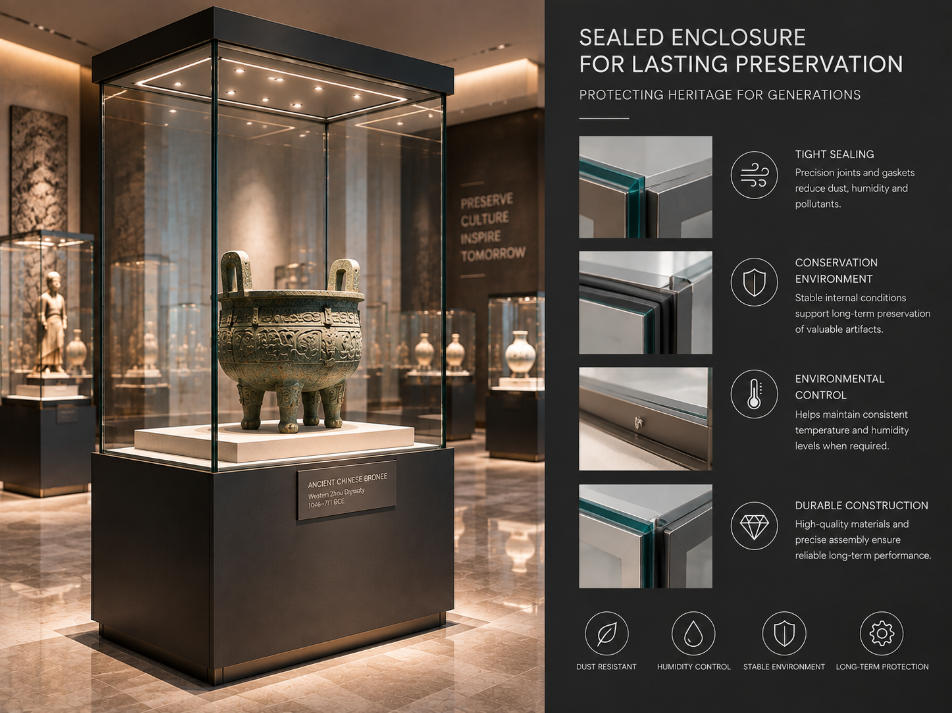
Coordinate Sealing with Museum Environmental Requirements
Some collections require a more controlled enclosure than a conventional glass cabinet can provide.
Where specified by the museum or conservation team, case joints, access panels, interior materials and structural interfaces can be developed around project-specific sealing and environmental objectives.
The appropriate approach depends on the artifact, exhibition duration, gallery conditions and conservation brief. These requirements should therefore be established before the case structure and access system are finalized.
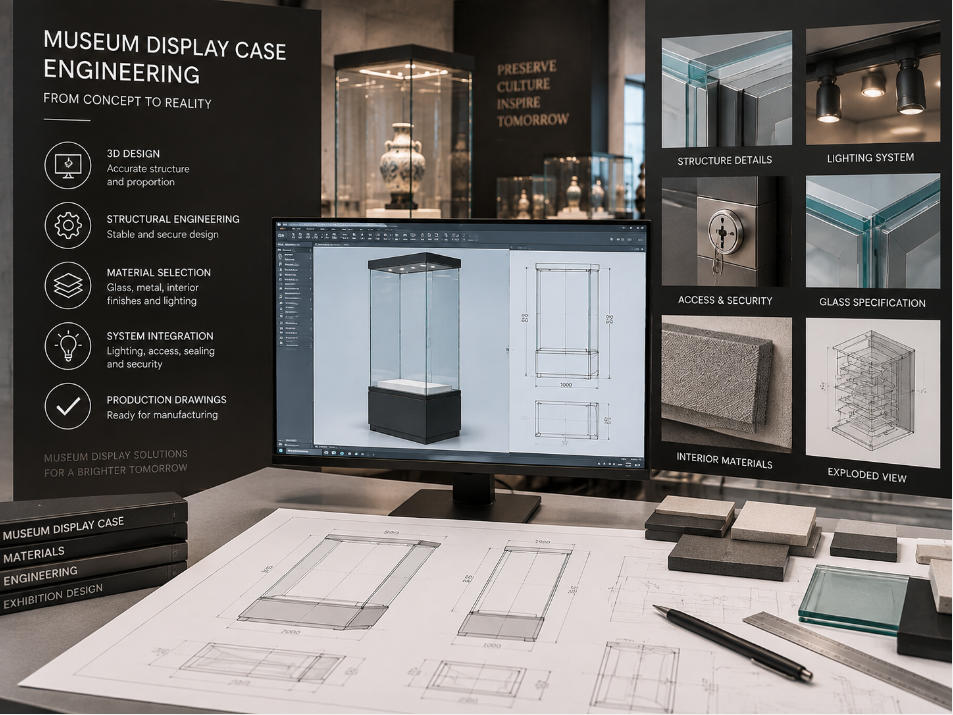
Turn Exhibition Concepts into Production-Ready Museum Cases
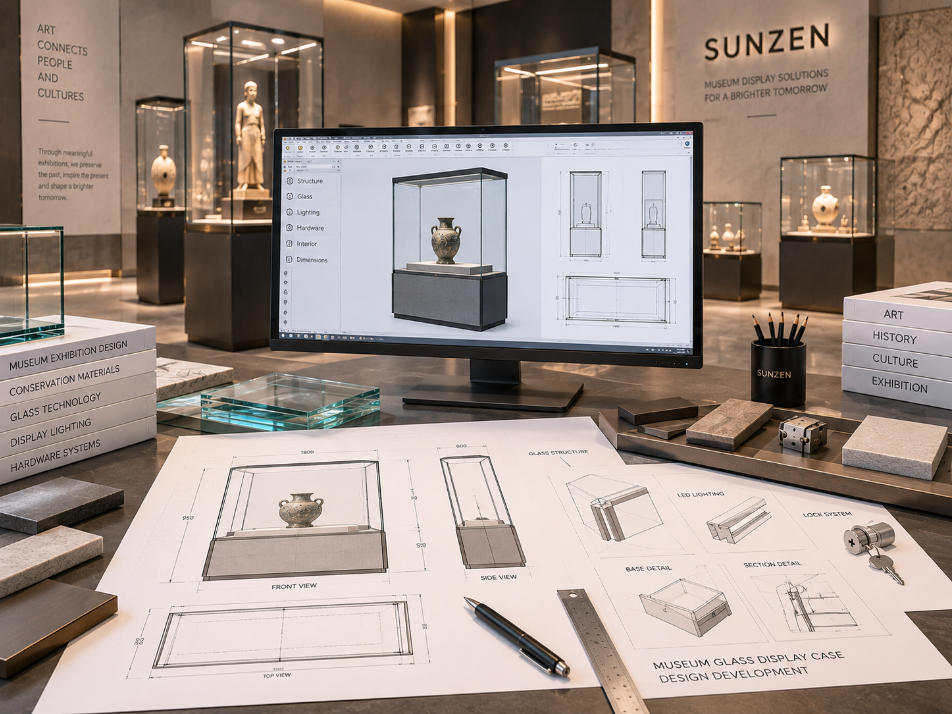
A museum showcase concept needs to be translated into coordinated technical information before manufacturing begins.
Engineering can define case dimensions, glass thicknesses, supporting structures, joints, access mechanisms, lighting positions, electrical routing, interior surfaces, plinths, locks and assembly requirements.
This is particularly important when multiple case types need to share consistent architectural details while responding to different artifact and conservation requirements.
SUNZEN’s showcase engineering capability helps connect exhibition design requirements with manufacturable structures and systems.
How Does a Museum Glass Display Case Project Work?
Exhibition Requirements
Review gallery plans, artifacts, case locations, visitor viewing requirements and conservation objectives.
Case Development
Develop case types, dimensions, glazing configurations and relationships with the surrounding exhibition environment.
System Coordination
Coordinate glass, structures, interior materials, lighting, security, sealing and artifact presentation.
Technical Engineering
Resolve structures, access mechanisms, hardware, electrical systems, interfaces and production details.
Material Approval
Confirm glazing, metal finishes, interior materials, lighting components, hardware and project-specific samples.
Manufacturing & QC
Fabricate, assemble and inspect approved museum cases before packing and project delivery.
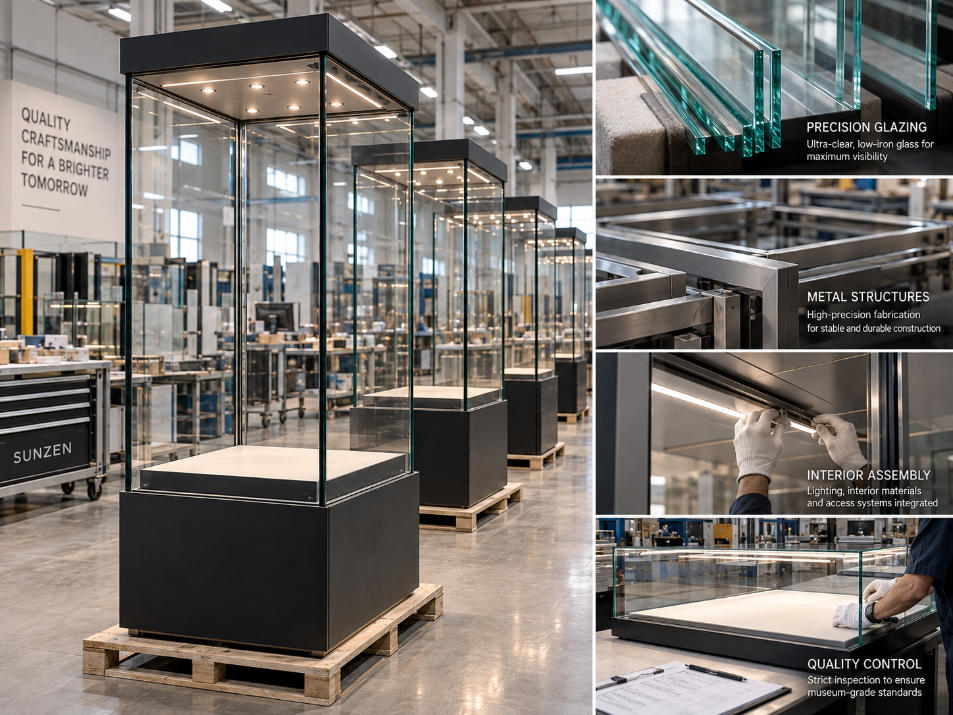
Manufacturing Museum Glass Display Cases as Complete Systems
Museum display cases combine several manufacturing disciplines within one finished enclosure. Precision glass, metal structures, cabinetry, interior surfaces, lighting, access hardware and security components need to align with approved technical drawings.
Dimensional accuracy becomes especially important where large glass panels, narrow joints, concealed mechanisms and integrated architectural components need to meet cleanly during assembly.
For buyers evaluating production capability, the museum display case factory page provides a closer look at manufacturing, assembly and quality-control requirements for museum projects.
Museum Glass Display Case vs. Commercial Glass Display Case
Commercial Glass Display Case
Usually prioritizes merchandising, product visibility, customer interaction, staff access and storage within a commercial retail environment.
Museum Glass Display Case
Developed around artifact presentation, collection protection, specialized glazing, controlled access, compatible interior materials and project-specific conservation requirements.
What Information Should You Provide for Museum Glass Display Cases?
Exhibition Plans
Provide gallery layouts, elevations, intended case locations and available dimensions within the exhibition space.
Artifact Information
Share object dimensions, weights, materials, display orientation and known conservation or security considerations.
Technical Requirements
Provide glazing, lighting, access, sealing, security, interior material and environmental requirements where available.
Integrate Museum Glass Display Cases into the Complete Exhibition
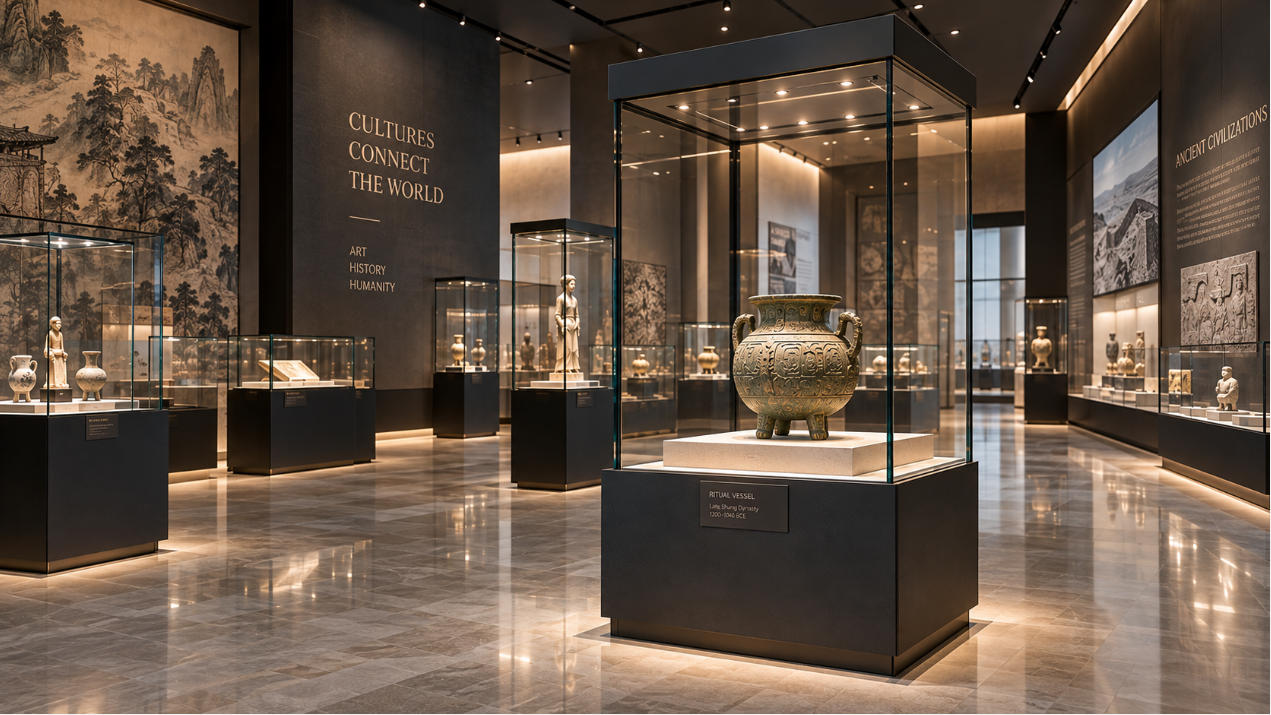
Museum display cases achieve their strongest result when they function as part of the exhibition architecture rather than as unrelated cabinets positioned around the gallery.
Freestanding vitrines, wall cases, pedestal displays, table cases and integrated enclosures can perform different curatorial functions while sharing coordinated glazing, finishes, lighting and architectural details.
For institutions and project teams evaluating potential suppliers, the museum display case manufacturers page explains the broader engineering, production and project-delivery capabilities behind custom museum showcases.
Explore Related Museum Display Solutions
Custom Museum Display Case
Develop museum cases around specific artifacts, dimensions, glazing, lighting, access and conservation requirements.
Museum Display Case Manufacturers
Review engineering, manufacturing and project capabilities for professional museum showcase programs.
Museum Display Case Factory
Explore glass processing, metal fabrication, assembly, system integration and quality control for museum cases.
Museum Glass Display Cases FAQs
What are museum glass display cases?
Museum glass display cases are specialized exhibition enclosures designed to present artifacts clearly while supporting collection protection, glazing, lighting, security, controlled access and project-specific conservation requirements.
What types of glass are used for museum display cases?
Museum display cases may use low-iron ultra-clear glass, anti-reflective glazing, laminated glass or other project-specified glazing depending on visibility, safety, security and exhibition requirements.
Can museum glass display cases be customized for specific artifacts?
Yes. Dimensions, viewing height, glass configuration, interior surfaces, lighting, artifact supports, access systems and security can be developed around specific objects and exhibition conditions.
Can museum display cases use anti-reflective glass?
Yes. Anti-reflective glazing can be considered where reflections from gallery lighting or the surrounding exhibition environment interfere with clear viewing of the collection.
Can lighting be integrated into museum glass display cases?
Yes. Lighting can be coordinated with case geometry, artifact position, viewing direction, electrical routing and maintenance access during technical development.
Can museum glass display cases be designed as sealed enclosures?
Yes. Where specified by the museum or conservation team, case joints, doors and structural interfaces can be developed around project-specific enclosure and sealing requirements.
What museum glass display case configurations are available?
Museum display configurations can include freestanding vitrines, pedestal cases, table cases, wall showcases, upright cases and large integrated architectural display cases.
What information should I provide for a museum glass display case project?
Useful information includes exhibition plans, artifact dimensions and weights, conservation requirements, glazing specifications, lighting, access, security, interior materials, quantities and project schedule.
Develop Museum Glass Display Cases Around Your Collection
Send SUNZEN your exhibition drawings, artifact information, target dimensions and technical requirements. We can develop museum glass display cases around the collection and exhibition environment from case development and engineering through manufacturing, assembly and quality control.

