
Anti Reflective Glass Display Cases for Clearer Viewing
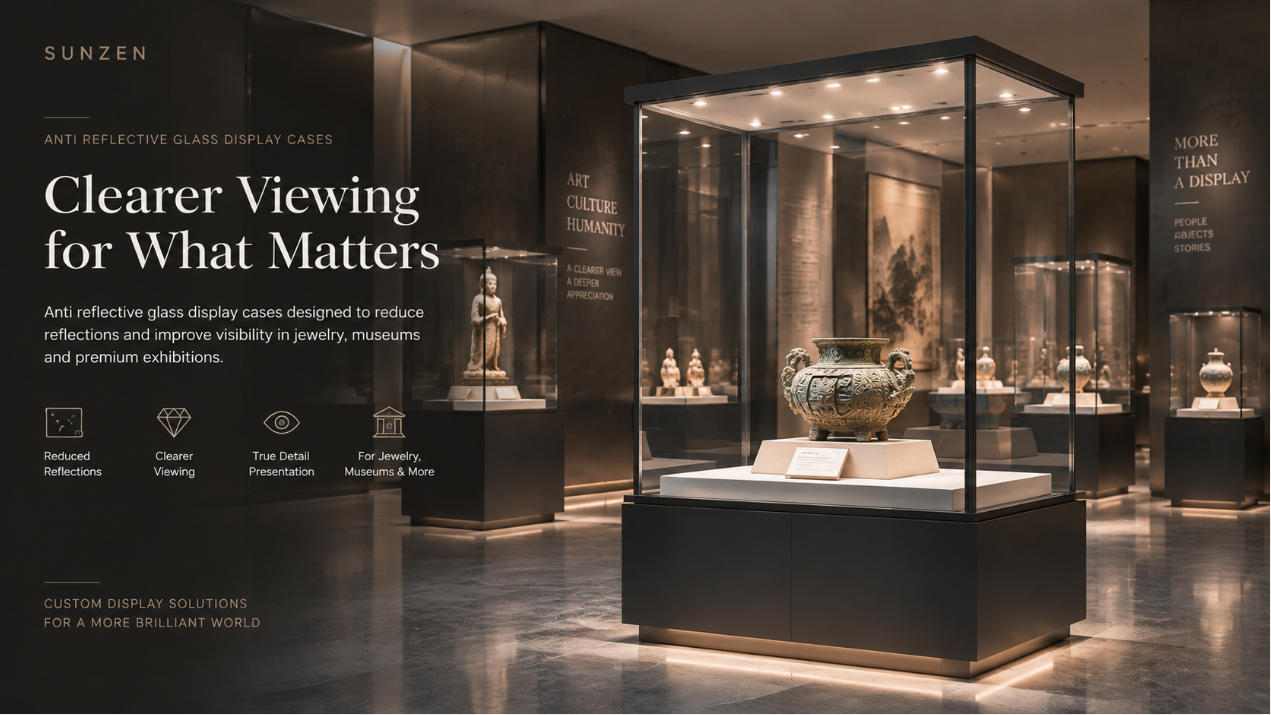
SUNZEN develops anti reflective glass display cases for jewelry stores, museums, galleries and premium retail environments where reflections from lighting, windows and surrounding architecture can interfere with the viewing experience.
By reducing distracting surface reflections, anti-reflective glazing can create a clearer visual connection between the viewer and the displayed jewelry, artifact or luxury product.
The glazing can be coordinated with showcase structures, lighting, interior finishes, access, security and project-specific display requirements to create a complete transparent display system rather than treating the glass as an isolated component.
What Are Anti Reflective Glass Display Cases?
Anti reflective glass display cases use specialized glazing designed to reduce visible reflections from the glass surface, helping displayed objects remain easier to see under challenging exhibition and retail lighting conditions.
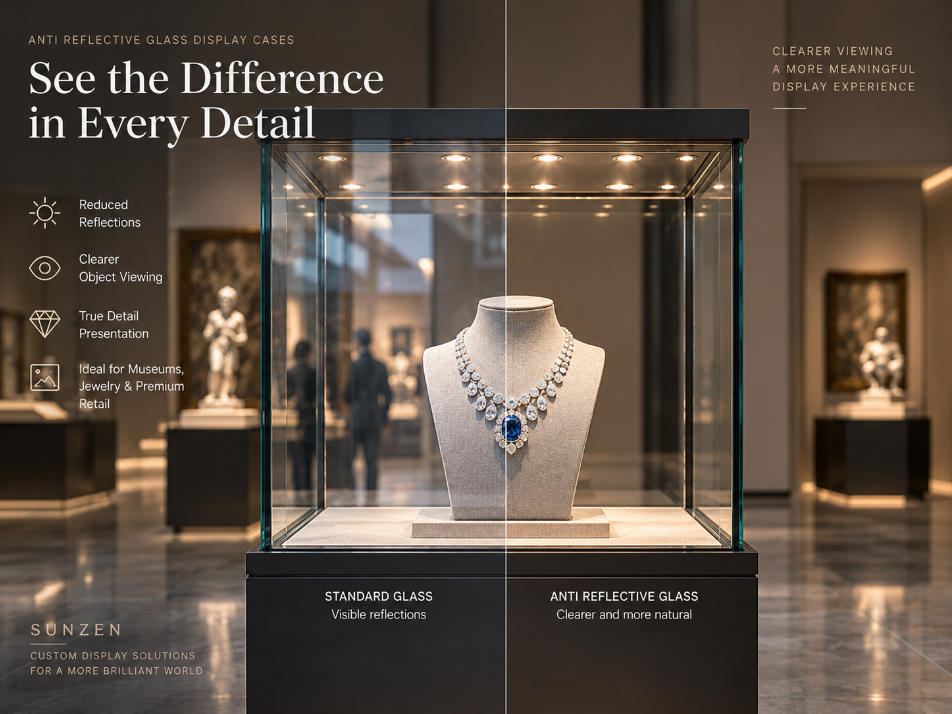
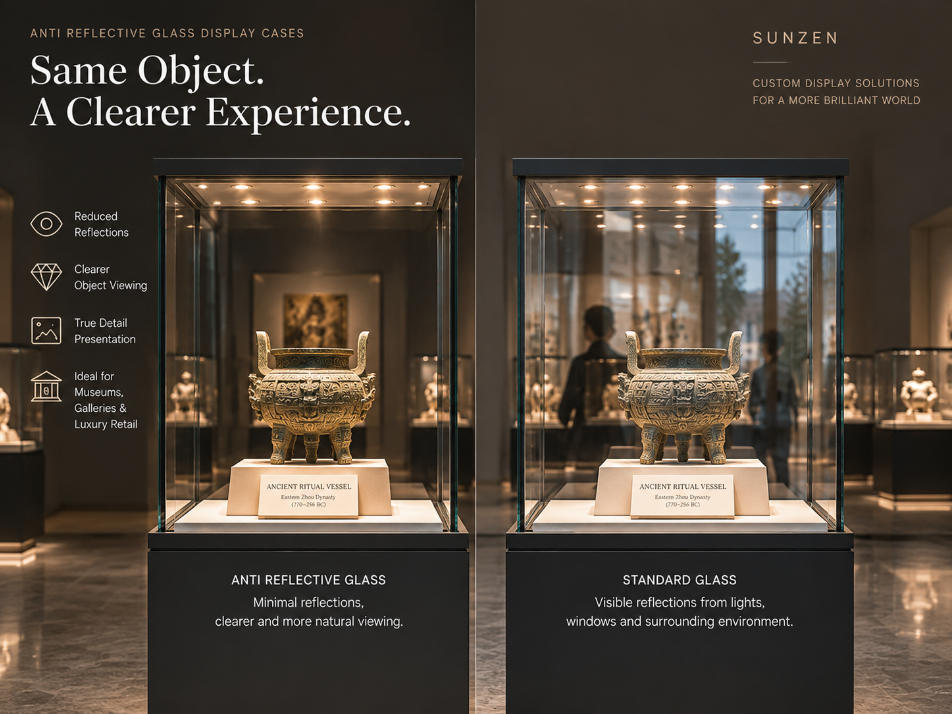
Standard glass can reflect ceiling lights, illuminated signage, windows, visitors and surrounding architecture. In a premium display environment, these reflections may compete visually with the object inside the showcase.
Anti-reflective glazing is particularly useful where close viewing, high visual clarity or carefully controlled presentation is an important part of the project.
For projects that also require custom dimensions, structures and display systems, custom glass display cases can integrate specialized glazing into a project-specific showcase design.
Why Use Anti Reflective Glass in Display Cases?
The purpose of a transparent showcase is to create physical separation without unnecessarily interrupting the visual relationship between the viewer and the object.
However, reflections from spotlights, ceiling fixtures, windows and bright architectural surfaces can make standard glazing visually prominent. Depending on the viewing angle, the viewer may see the surrounding environment reflected across the glass instead of seeing the displayed object clearly.
Anti-reflective glazing can help reduce these distractions and make the glass visually less dominant, which is particularly valuable for jewelry, artworks, historical artifacts and other objects that depend on close visual inspection.
Benefits of Anti Reflective Glass Display Cases
Reduced Reflections
Specialized glazing can reduce distracting reflections from lighting, windows and surrounding interior surfaces.
Clearer Object Viewing
With fewer reflections competing with the display, visitors and customers can focus more directly on the object inside the case.
Improved Close Viewing
Reflection control is particularly useful where jewelry, artifacts or detailed objects are intended to be examined at close distance.
Cleaner Exhibition Design
Less visually dominant glazing supports minimalist showcases and exhibition environments where the object should remain the primary focus.
Better Lighting Coordination
Anti-reflective glass can help reduce the visual interference created when display lighting and surrounding illumination interact with glazing.
Premium Presentation
Improved transparency and reduced visual distraction support the refined presentation expected in luxury retail and museum projects.
Anti Reflective Glass vs. Standard Display Glass
Standard Display Glass
Standard glazing provides a transparent protective enclosure, but reflections from lights, windows, visitors and surrounding architecture can remain clearly visible on the glass surface.
Anti Reflective Glass
Anti-reflective glazing is designed to reduce visible surface reflections so the displayed object can remain more visually prominent under suitable viewing and lighting conditions.
Anti Reflective Glass vs. Low Iron Glass
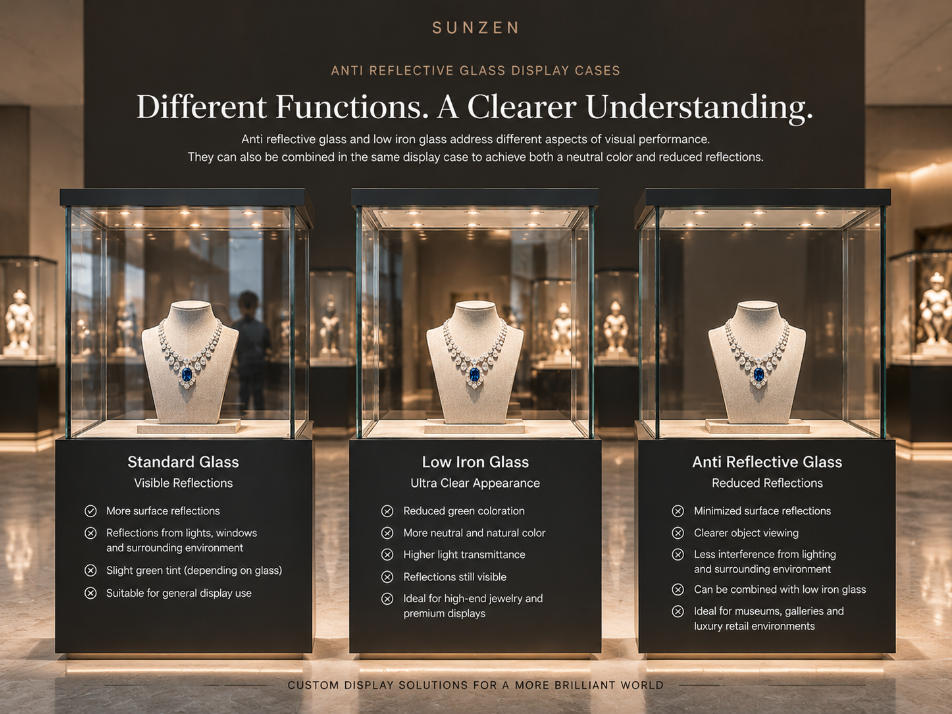
Anti-reflective glass and low iron glass address different aspects of display visibility, so the terms should not be treated as interchangeable.
Low iron glass focuses primarily on creating a more neutral transparent appearance by reducing the green coloration commonly associated with conventional clear glass.
Anti-reflective glazing focuses on reducing reflections from the glass surfaces that can interfere with viewing.
For projects where color neutrality and ultra-clear glass appearance are the primary requirements, explore our low iron glass display cases.
Depending on the project and selected glazing specification, transparency, color neutrality and reflection control should be evaluated together during technical development.
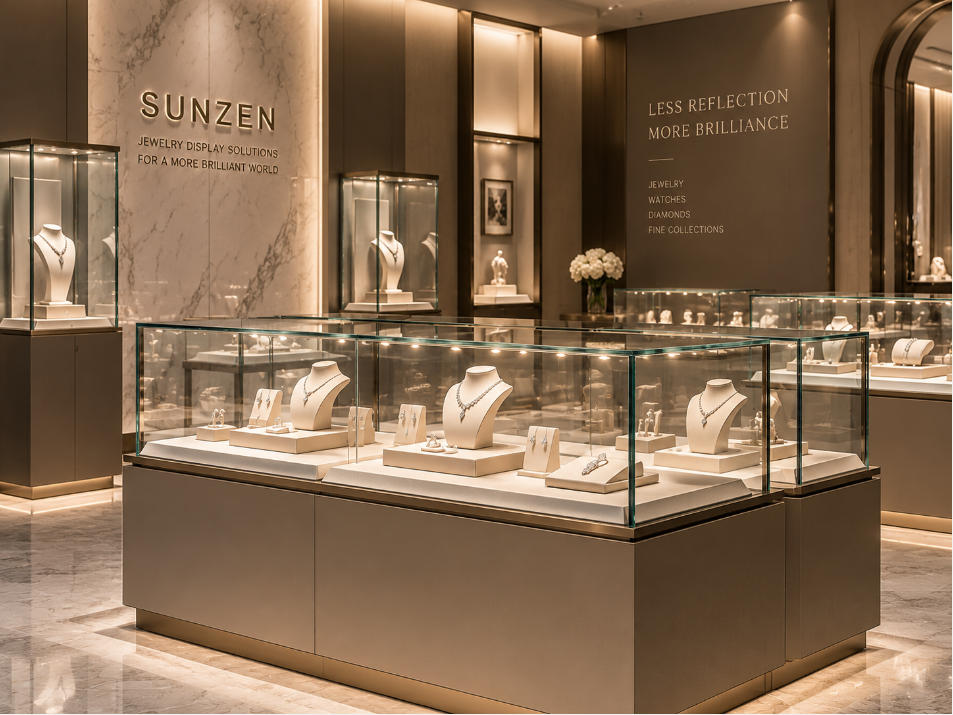
Anti Reflective Glass Display Cases for Jewelry Stores
Jewelry stores often combine showcase lighting, ceiling lighting, illuminated walls and reflective interior materials within the same environment.
These multiple light sources can create unwanted reflections across glass counters and showcases, particularly when customers view jewelry from changing angles.
Anti-reflective glazing can help create a clearer view of diamonds, gemstones, watches and precious metals while allowing integrated lighting to remain focused on the merchandise.
It can be incorporated into counters, islands, pedestal cases, wall showcases and other premium jewelry display configurations.
Anti Reflective Glass for Museum Display Cases
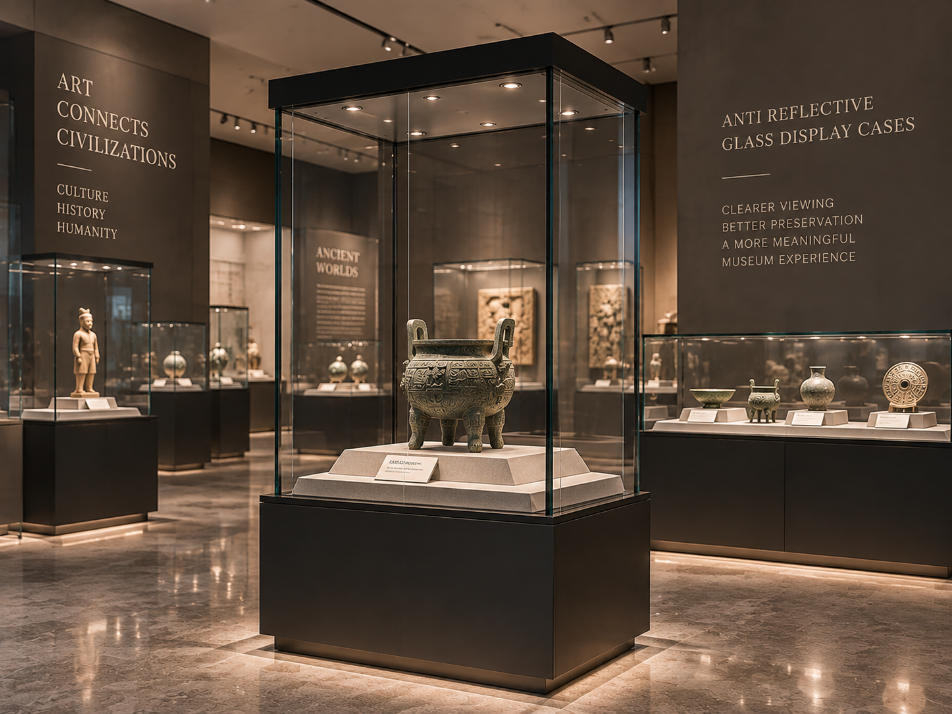
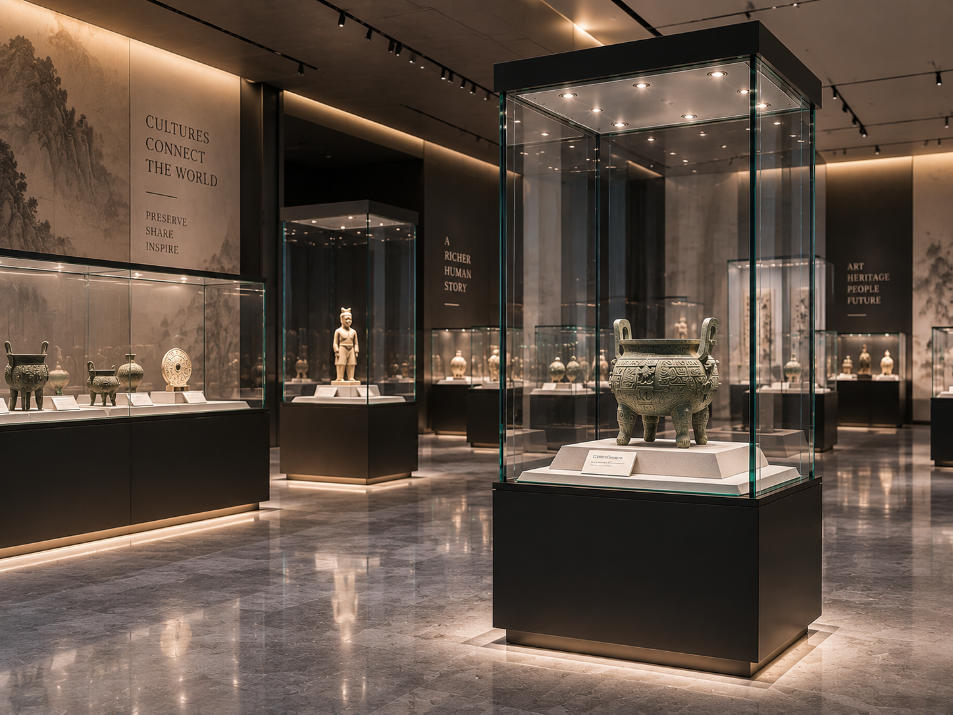
Museums frequently use controlled gallery lighting to guide visitor attention, but the same lighting can create reflections across large glass vitrines.
For important artifacts, artworks and detailed historical objects, reducing reflections can improve the visitor’s ability to observe form, texture and surface detail through the protective enclosure.
The glazing specification should be considered together with exhibition lighting, visitor viewing angles, artifact placement, case geometry and surrounding architecture.
Our museum glass display cases solution covers the wider relationship between glazing, artifact protection, lighting, security and museum exhibition requirements.
Where Are Anti Reflective Glass Display Cases Used?
Jewelry Stores
Counters and showcases where lighting reflections can interfere with close viewing of diamonds, gemstones and precious metals.
Watch Boutiques
Precision product displays where customers need to clearly observe dial details, finishing and materials through the glazing.
Luxury Retail
Premium brand environments where transparent showcases need to integrate cleanly with architectural lighting and interior finishes.
Museums
Professional vitrines where artifacts need to remain protected while visitors maintain a clear visual connection with the collection.
Art Galleries
Transparent enclosures for sculptures, artworks and collectible objects where reflections may distract from the intended presentation.
Premium Exhibitions
High-end commercial and cultural exhibitions where clear viewing and visually unobtrusive glazing are part of the design objective.
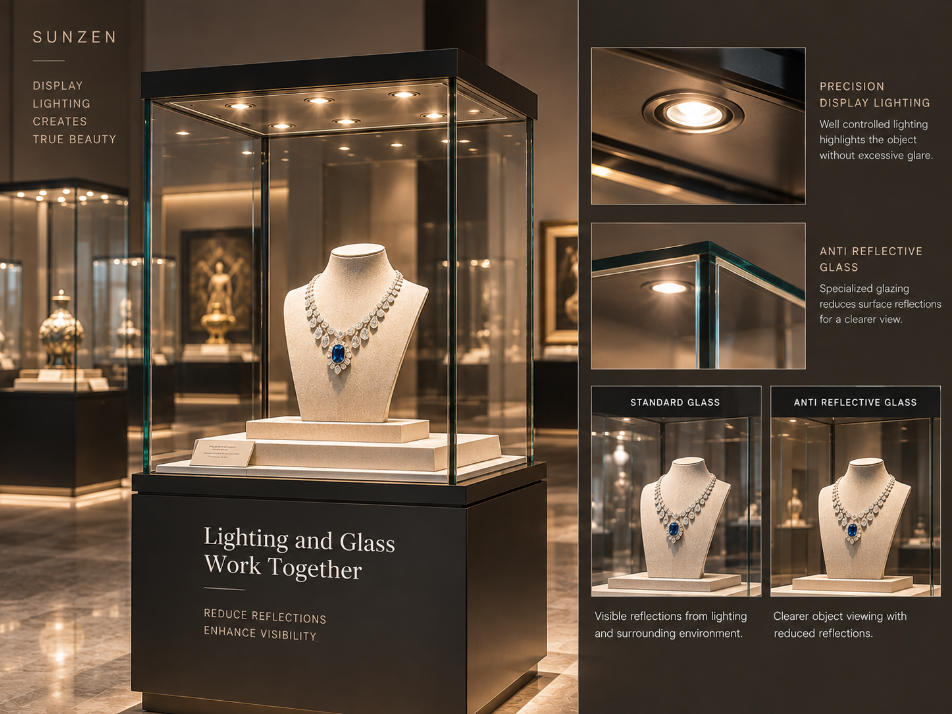
Coordinate Anti Reflective Glass with Display Lighting
Reflection control should not depend on the glazing specification alone. The position and direction of lighting can have a major influence on what the viewer sees across the glass surface.
Display lighting, ceiling fixtures, illuminated walls and nearby windows should therefore be considered together with likely viewing positions during showcase development.
In jewelry environments, this coordination can help maintain product brilliance while reducing distracting reflections. In museums, it can support clearer artifact viewing within the intended exhibition lighting scheme.
Considering glass and lighting as one system creates a more controlled result than selecting each component independently.
Anti Reflective Glass Is Part of the Complete Showcase System
High-performance glazing alone does not determine the final quality of a display case.
Glass dimensions, edges, joints, frames, adhesives or structural interfaces, doors, hardware, interior finishes and lighting all influence how transparent and refined the finished showcase appears.
Large uninterrupted glass surfaces can make small alignment issues more visible, while poorly positioned lighting can still create visual distractions even when specialized glazing is used.
For this reason, anti-reflective glass should be coordinated with the complete showcase structure from the early design and engineering stages.
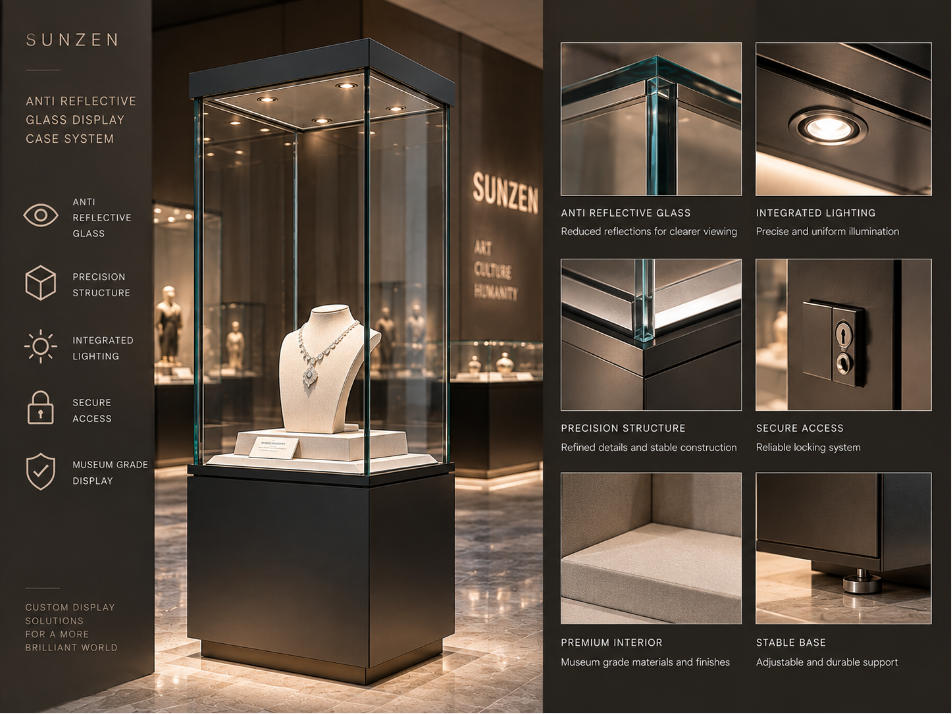
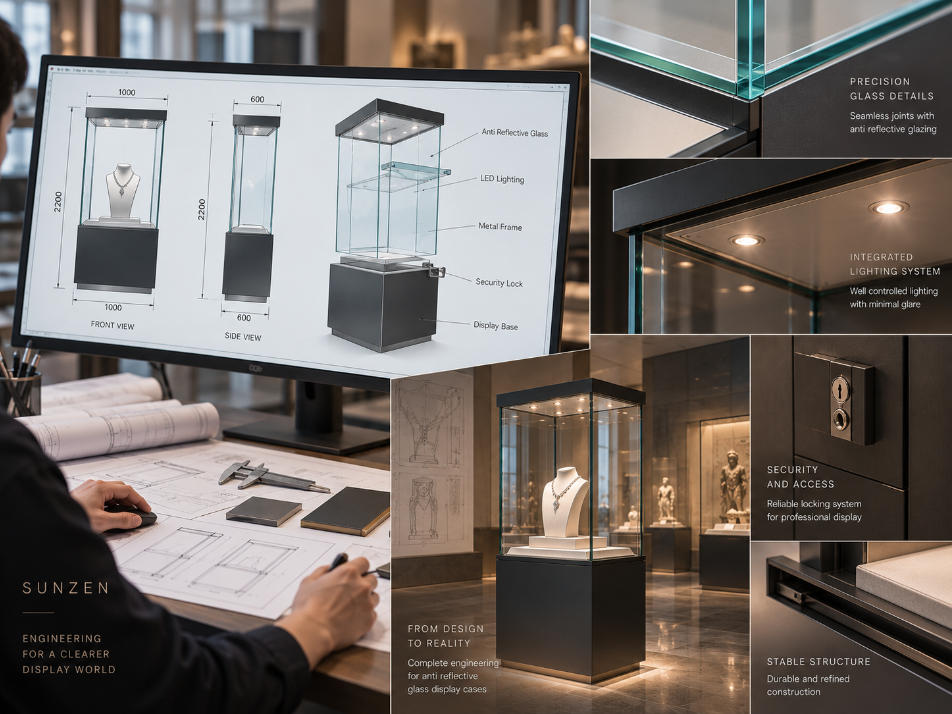
Engineer Glass, Viewing Angles & Showcase Structure Together
The effectiveness of a transparent display system depends on the relationship between the glass, the displayed object, the viewer and the surrounding environment.
Technical development can coordinate glazing dimensions, panel thickness, edge details, supporting structures, access openings, lighting positions, hardware and assembly tolerances.
For projects using large glass surfaces or minimalist structures, these details become particularly important because the showcase is designed to visually disappear around the displayed object.
SUNZEN’s showcase engineering capability connects the glazing specification with the structural and operational requirements of the complete display case.
How Are Anti Reflective Glass Display Cases Developed?
Application Review
Review the displayed objects, case locations, store or exhibition environment and expected viewing conditions.
Glazing Requirements
Define transparency, reflection-control requirements, glass dimensions and other project-specific glazing specifications.
Lighting Coordination
Consider display lighting, ambient lighting, windows and likely viewing angles around the showcase.
Technical Engineering
Develop structures, glass interfaces, access systems, hardware, lighting and production details.
Material Approval
Confirm glazing, metal finishes, interior materials, lighting components, hardware and project samples.
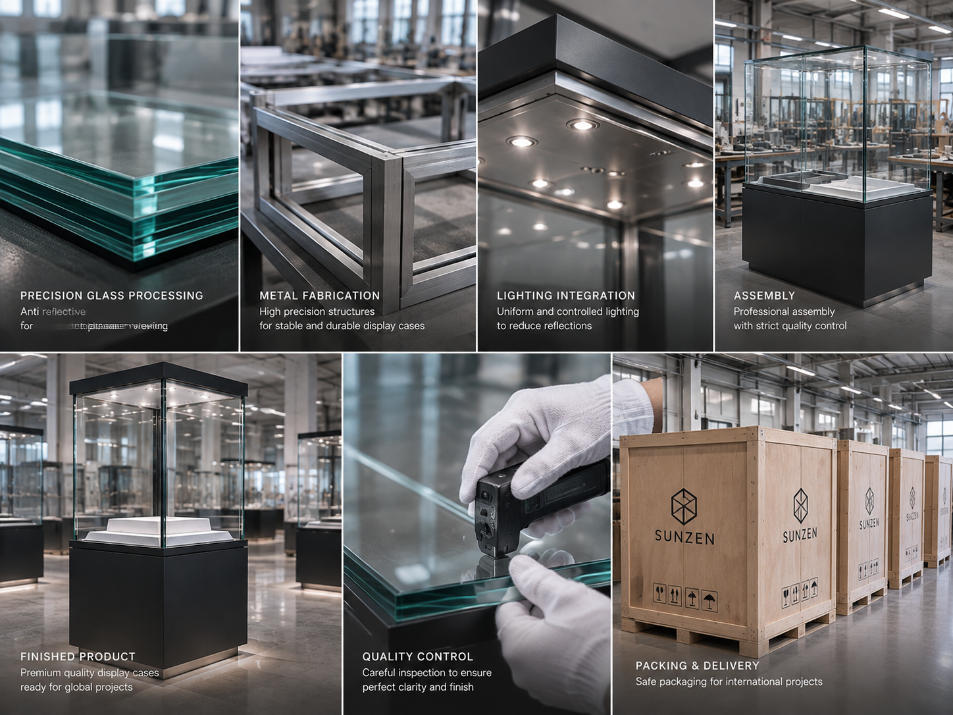
Production & QC
Manufacture, assemble and inspect the complete display cases according to approved project specifications.
Manufacturing Display Cases with Specialized Glazing
Specialized glazing needs to be integrated accurately with the other components of the showcase during production and assembly.
Glass panels, polished edges, joints, metal structures, cabinetry, doors, lighting and security hardware all need to align with the approved technical drawings.
Careful handling is also important throughout processing, assembly, inspection and packing to protect finished glass surfaces and maintain the intended presentation quality.
For procurement teams evaluating production capability, glass showcase manufacturers covers the wider supplier and manufacturing intent behind custom glass showcase projects.
What Should You Provide for an Anti Reflective Glass Display Case Project?
Display Requirements
Provide the case types, target dimensions, quantities and information about the products, artworks or artifacts being displayed.
Environment & Lighting
Share store or exhibition layouts, lighting plans, window locations, viewing directions and reference images where available.
Technical Specifications
Provide glazing requirements, structures, access, security, lighting, materials, finishes and relevant project standards.
Use Anti Reflective Glass as Part of the Complete Display Environment
The visual performance of a display case depends on more than the glass itself. Showcase position, lighting, surrounding architecture, interior materials and visitor viewing direction all influence the final experience.
Coordinating anti-reflective glazing across counters, islands, wall showcases, freestanding vitrines and pedestal cases can help create a more consistent visual language throughout a premium retail or cultural exhibition project.
This approach is particularly valuable for jewelry stores, museums, galleries and luxury environments where transparent showcases form an important part of the interior architecture while the displayed objects need to remain visually dominant.
Explore Related Display Case Solutions
Low Iron Glass Display Cases
Explore ultra-clear glazing for applications where reduced green coloration and more neutral product or artifact viewing are priorities.
Museum Glass Display Cases
Explore professional museum vitrines developed around artifact visibility, protection, lighting, security and exhibition requirements.
Custom Glass Display Cases
Develop glass showcases around project-specific dimensions, glazing, structures, lighting, security and interior requirements.
Anti Reflective Glass Display Cases FAQs
What are anti reflective glass display cases?
Anti reflective glass display cases use specialized glazing designed to reduce visible surface reflections so jewelry, artifacts and other displayed objects can be viewed with fewer visual distractions.
What is the difference between anti reflective glass and standard glass?
Standard glass can show noticeable reflections from lighting, windows and surrounding architecture. Anti reflective glazing is designed to reduce these reflections and improve viewing clarity.
Is anti reflective glass the same as low iron glass?
No. Low iron glass primarily reduces the green coloration associated with conventional clear glass, while anti reflective glazing focuses on reducing surface reflections. The appropriate specification depends on the project requirements.
Is anti reflective glass suitable for jewelry display cases?
Yes. Anti reflective glass can help reduce reflections from store and showcase lighting so jewelry and watches remain easier to view through the glazing.
Can anti reflective glass be used for museum display cases?
Yes. It can be used in museum vitrines where reflections may interfere with viewing artifacts, artworks and detailed cultural objects through protective glazing.
Can lighting be integrated with anti reflective glass display cases?
Yes. Lighting and glazing should be coordinated together because light position, viewing angle and surrounding illumination all influence reflections and object visibility.
Can anti reflective glass display cases be customized?
Yes. Case dimensions, glazing, structures, lighting, access, locks, storage and interior finishes can be developed around the requirements of the retail, museum or exhibition project.
What information should I provide for an anti reflective glass display case project?
Useful information includes case dimensions, quantities, displayed objects, store or exhibition drawings, lighting conditions, glazing requirements, access, security, materials, finishes and project schedule.
Develop Clearer Display Cases for Your Next Project
Send SUNZEN your store or exhibition drawings, case dimensions, quantities, lighting conditions and glazing requirements. We can coordinate anti-reflective glass with showcase structures, lighting, access, security and interior finishes for jewelry, museum, luxury retail and professional exhibition projects.

