
Luxury Retail Fixtures Built Around Brand, Product and Customer Experience
Luxury retail fixtures are where brand identity becomes something customers can physically see, touch and move through.
The challenge is not simply to make store furniture look expensive. A successful luxury fixture system must create the right relationship between the product, the surrounding architecture and the way customers experience the brand.
SUNZEN develops custom luxury retail fixtures for premium retail projects, coordinating display furniture, showcases, counters, wall systems, millwork, materials and integrated lighting as one retail environment.
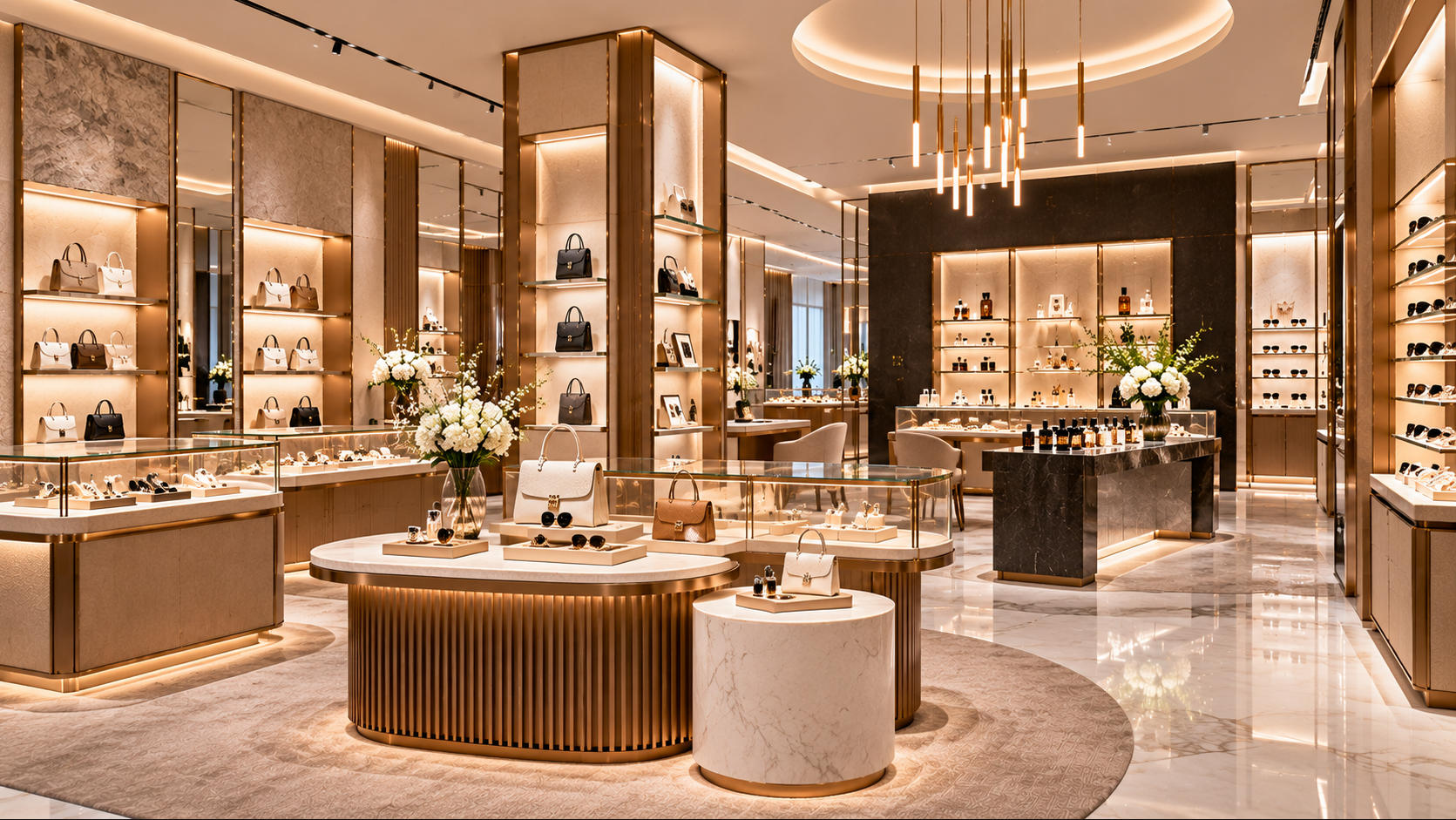
Premium Materials Alone Do Not Create Luxury Retail
Marble, metal, glass and premium fabrics can contribute to a high-end environment, but materials alone cannot create a coherent luxury store.
The stronger distinction comes from how proportions, materials, lighting, negative space and fixture hierarchy work together around the merchandise and the brand.
Recognizable Character
Fixture forms, finishes and details should reinforce a recognizable brand language without relying on logos alone.
Merchandise Comes First
Fixture dimensions and display methods should respond to what is being sold rather than treating every product category alike.
Controlled Visual Rhythm
Display density, open space and fixture scale can create a calmer and more intentional retail environment.
Precision at Close Range
Material transitions, joints, hardware and integrated lighting become part of how customers perceive quality.
Translate Brand Identity Without Turning the Store Into a Logo
Luxury store fixtures can express brand identity through form, proportion and material language before a customer reads a single brand name.
A restrained fashion brand may require architectural forms and large areas of negative space. A jewelry or watch brand may place greater emphasis on controlled display volumes. Perfume and beauty retail can require stronger product accessibility and repeated merchandising modules.
The objective is to identify which visual principles should remain consistent and then translate them into buildable fixture details.
Read the Brand
Review design references, materials, architectural language and the intended customer experience.
Read the Product
Understand merchandise dimensions, value, access requirements and presentation priorities.
Define Fixture Families
Determine which counters, displays, wall systems and feature elements the retail concept requires.
Build Material Rules
Establish how glass, metal, millwork, stone and softer finishes should relate to one another.
Engineer the Details
Convert the visual language into practical structures, joints, access systems and lighting integration.
Control Production
Carry approved references through manufacturing so different fixture types remain visually connected.
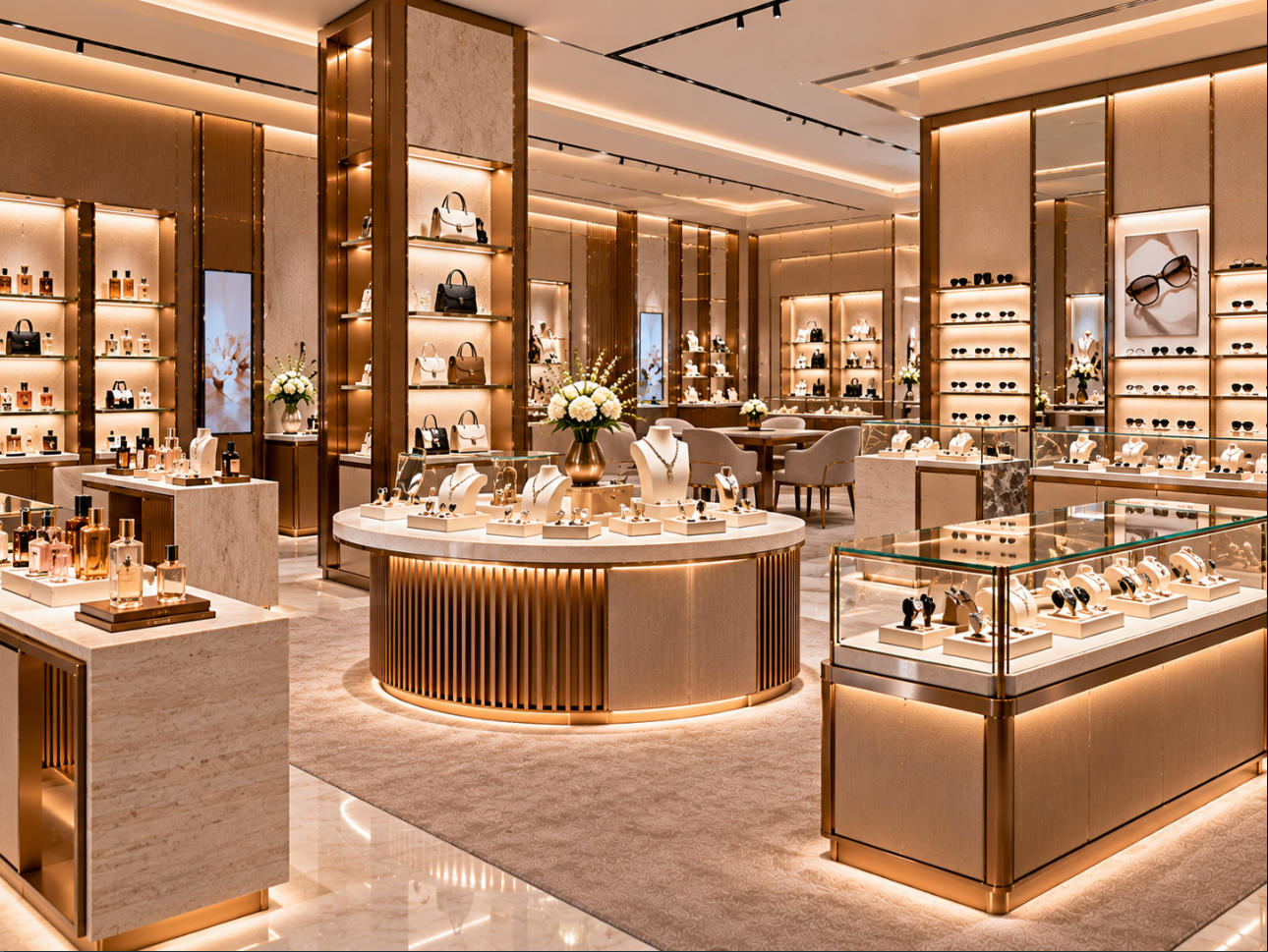
Luxury Fixtures Should Respond to What the Brand Actually Sells
A watch, necklace, perfume bottle and fashion accessory do not need the same display geometry.
Product scale, viewing distance, customer access, security, lighting and merchandising frequency can all change the appropriate fixture solution.
Developing custom retail fixtures allows the fixture system to respond to those product differences while maintaining a consistent brand language.
Adapt the Fixture Architecture to Different Premium Products
Controlled Presentation
Clear viewing, precise lighting, secure access and focused product presentation become important parts of the fixture structure.
Accessible Merchandising
Displays can combine repeated product presentation, testers, shelving and integrated illumination within a refined branded environment.
Organized Selection
Wall and freestanding systems can present broader product ranges while maintaining visual order and easy customer comparison.
Flexible Display Scale
Shelving, tables, pedestals and wall systems can respond to larger products and frequently changing visual merchandising.
Build a Hierarchy Across the Retail Floor
High end retail fixtures are most effective when they perform different visual roles instead of all becoming statement pieces.
Some fixtures should attract attention. Others should organize merchandise quietly. Supporting elements can provide storage or service functions without becoming visually dominant.
Create Focal Moments
Use selected feature displays to introduce important products, collections or brand expressions.
Carry the Merchandise
Counters, wall systems and display furniture can form the repeatable visual foundation of the retail space.
Hide Operational Functions
Storage, service access and technical components can be incorporated without competing with customer-facing displays.
Build a Material Language Instead of a Material List
Custom luxury retail fixtures can combine glass, metal, wood, stone, fabrics and specialist finishes, but the relationship between those materials matters more than the number of premium materials used.
A disciplined material palette helps the store feel intentional. Primary materials can establish the architecture, secondary finishes can provide contrast, and selected accents can identify feature displays without making every fixture visually complex.
Transparency
Use glass where visibility and visual lightness support the product presentation.
Definition
Refined metal detailing can define edges, frames and transitions while reinforcing the fixture language.
Architectural Volume
Cabinetry and millwork can form substantial display, storage and architectural elements within the store.
Controlled Contrast
Stone, fabric and other feature materials can add texture when used selectively within the broader system.
Use Retail Millwork to Connect Display Furniture With the Store Interior
Luxury retail projects often include elements that sit between freestanding furniture and interior architecture.
Wall displays, integrated cabinetry, product niches, storage walls and architectural feature structures may need to align with floors, ceilings, columns and surrounding finishes.
A retail millwork manufacturer can help translate these integrated elements into manufacturable assemblies that coordinate with the broader fixture package.
Engineer the Details Behind the Refined Surface
Minimal-looking luxury retail display fixtures can contain considerable technical complexity behind their finished surfaces.
Concealed fixings, flush doors, integrated lighting, curved panels, glass interfaces and mixed-material joints all need practical construction solutions.
Working with a retail fixture manufacturer connects drawings, materials, engineering and production within the same fixture development process.
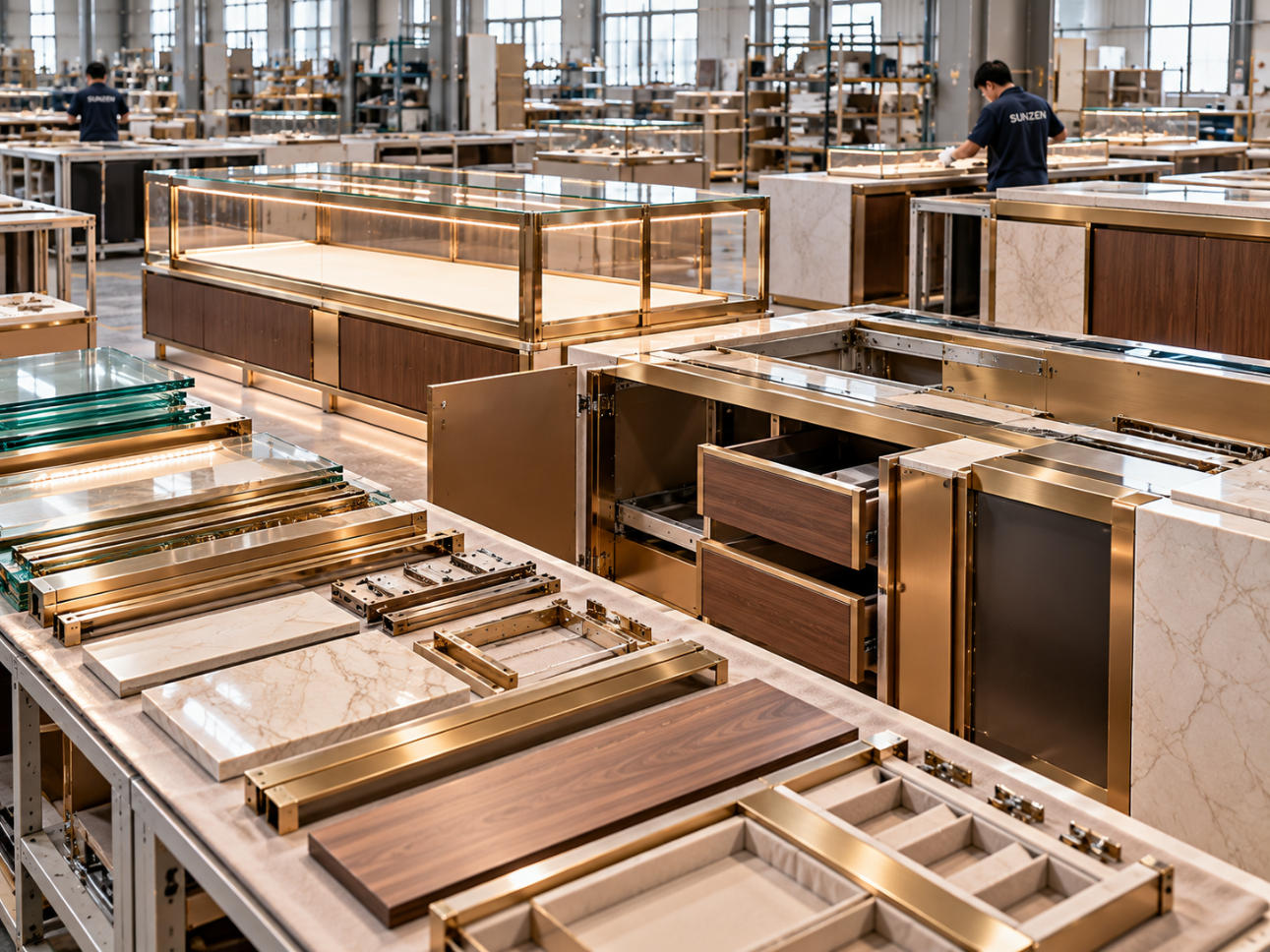
Manufacturing Precision Becomes Part of the Luxury Experience
Premium retail fixtures are often deliberately simple, which makes inconsistent details more visible rather than less visible.
Alignment, surface quality, finish consistency and material transitions should therefore be checked against approved project references before the fixture reaches the retail site.
Verify Geometry
Check critical fixture dimensions and relationships before final assembly.
Compare Visible Surfaces
Review metal, cabinetry and decorative finishes against approved samples or project references.
Inspect Material Transitions
Check where glass, metal, millwork and other visible materials meet.
Test Moving Components
Review specified doors, drawers, hardware and integrated lighting before project delivery.
Coordinate Specialized Display Elements With the Complete Fixture Package
Luxury retail environments can combine cabinetry, metal structures, glass showcases and architectural display elements within one project.
Where specialized glass display units are required, SUNZEN’s showcase factory capability can support their production alongside the broader fixture system.
The objective is not to make every fixture identical, but to keep different fixture families connected through approved materials, details and manufacturing references.
The Finished Store Should Feel Designed as a Whole
Customers do not experience a luxury store as separate counters, shelves, cabinets and wall units. They experience one environment.
Luxury retail fixtures work best when different elements support a common hierarchy: signature displays attract attention, core fixtures organize merchandise and supporting millwork quietly carries the operational requirements of the store.
SUNZEN can develop custom display fixtures as part of this wider system, allowing different display formats to respond to the merchandise while remaining visually connected.
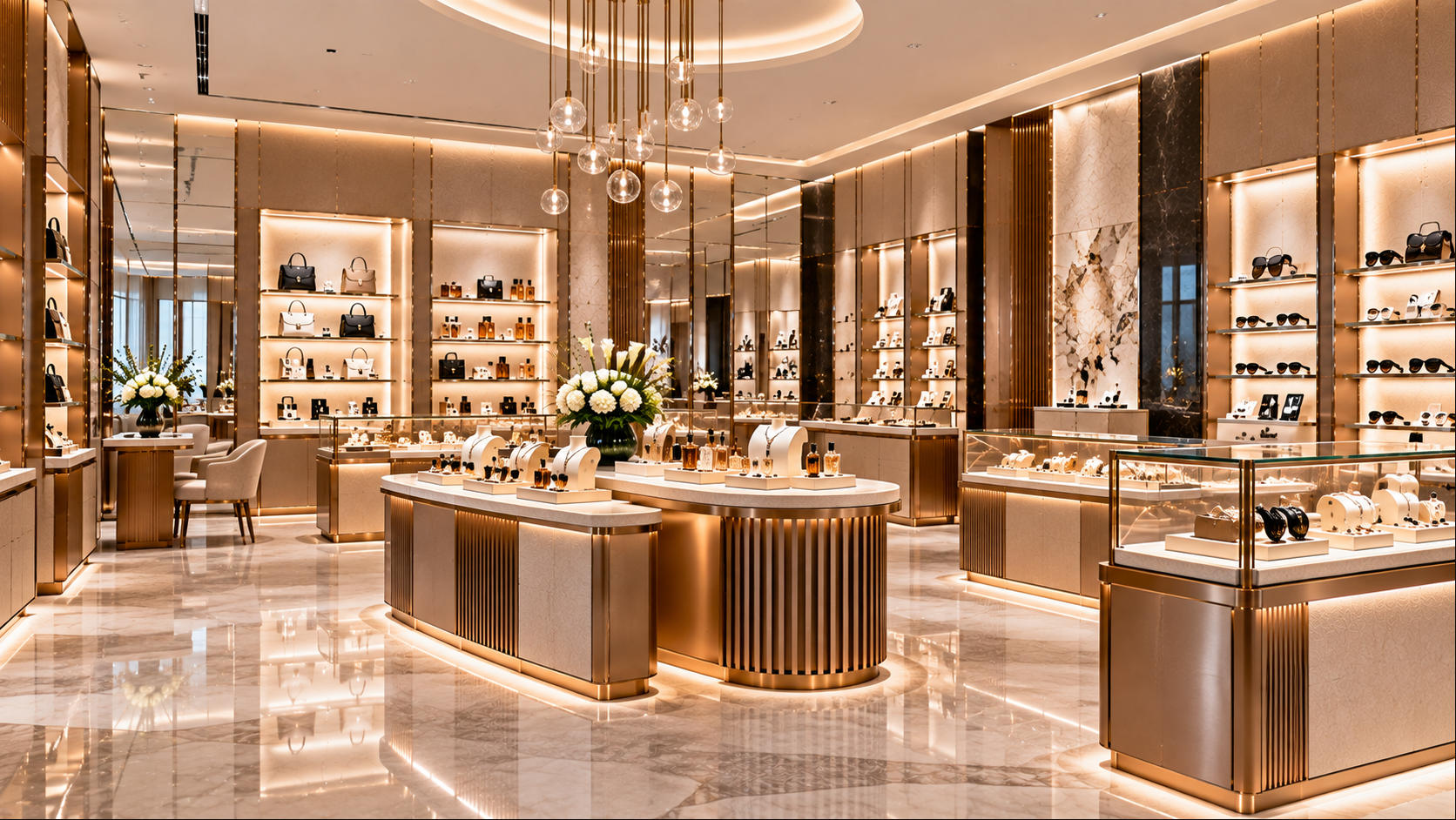
Luxury Retail Fixtures FAQs
Key questions about developing custom fixture systems for premium retail brands and luxury store environments.
What are luxury retail fixtures?
Luxury retail fixtures are custom or project-specific display, selling and storage elements developed for premium retail environments. They can include counters, showcases, wall displays, shelving, tables, pedestals, cabinetry and integrated millwork.
What makes high end retail fixtures different from standard store fixtures?
High end retail fixtures typically place greater emphasis on brand-specific design, refined proportions, premium material integration, precise detailing, controlled lighting and consistency across the complete retail environment.
Can luxury retail fixtures be fully customized?
Yes. Custom luxury retail fixtures can be developed around brand standards, store drawings, merchandise categories, dimensions, materials, lighting, storage, customer interaction and other project requirements.
Which products can luxury retail display fixtures be designed for?
Luxury retail display fixtures can be developed for jewelry, watches, perfume, beauty products, eyewear, fashion accessories and other premium merchandise. Fixture design should respond to the product scale, access, security and presentation requirements.
Which materials are commonly used in luxury store fixtures?
Depending on the retail concept, fixtures can combine glass, finished metal, wood or wood veneer, stone or stone-effect surfaces, fabrics and specialist decorative finishes. Material selection should support the brand and merchandise rather than simply add decoration.
Can retail millwork be manufactured with the fixture package?
Yes. Depending on project scope, integrated wall displays, cabinetry, storage and other millwork elements can be coordinated with freestanding fixtures using common materials and project references.
What information should I provide for a custom luxury retail fixture project?
Useful information includes store drawings, fixture plans, brand references, merchandise categories, dimensions, material and finish requirements, lighting requirements, functional details, quantities and the project schedule.
Developing Custom Fixtures for a Luxury Retail Project?
Send SUNZEN your store drawings, fixture plans, brand references, merchandise categories and material direction.
We can help translate the retail concept into a coordinated custom fixture package covering display furniture, showcases, millwork, materials, lighting and manufacturing details.

