
Luxury Brand Retail Fixtures That Translate Brand Identity Into Physical Retail
Luxury brand retail fixtures should make a store recognizable before the customer focuses on the logo.
Proportion, geometry, materials, finishes, lighting and detailing can all carry the visual language of a brand into the physical retail environment.
SUNZEN develops custom luxury brand retail fixtures by translating design concepts and brand standards into buildable counters, displays, showcases, wall systems and integrated retail elements.
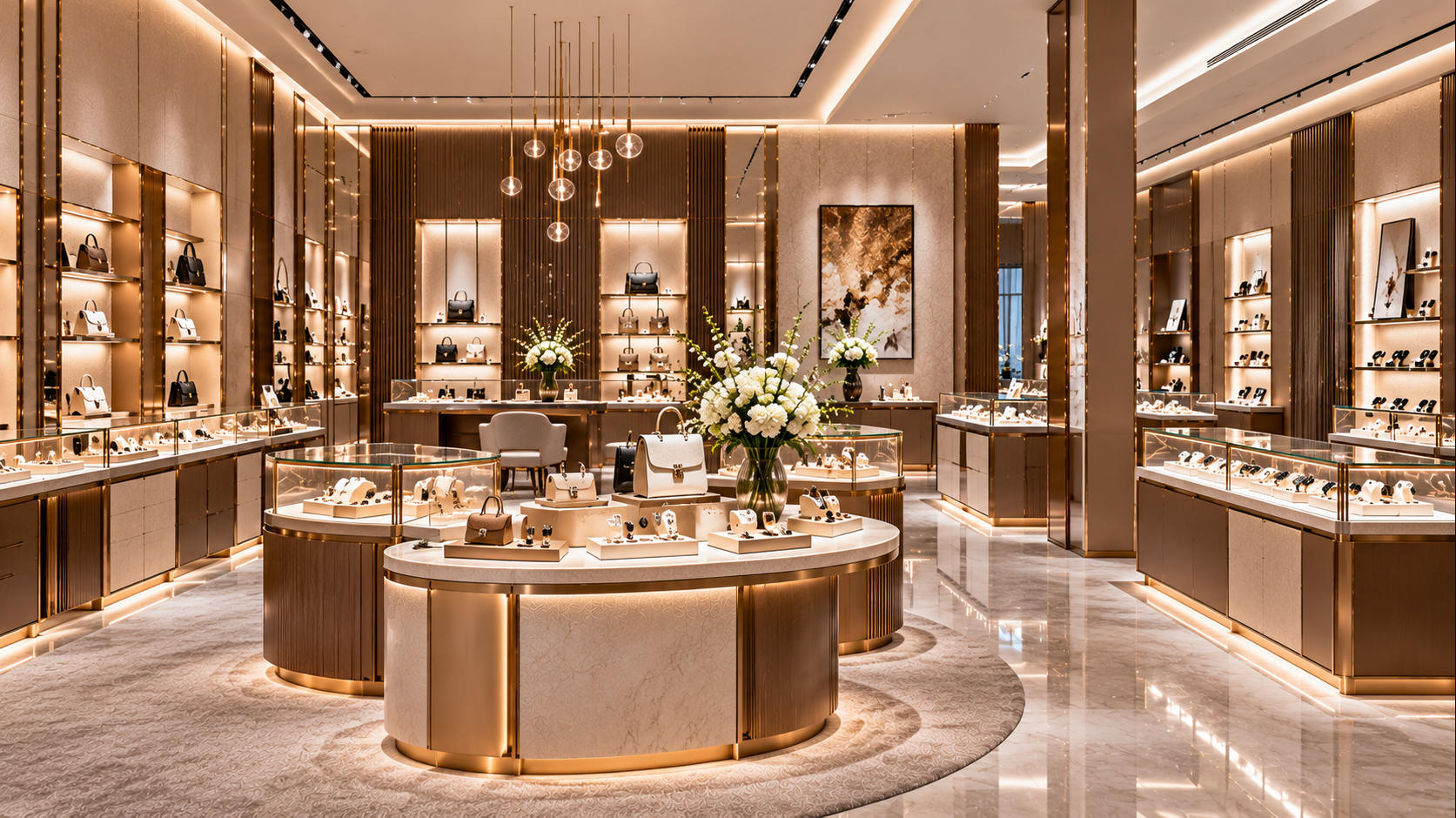
What Should Remain Recognizable When the Logo Is Removed?
A strong luxury retail environment does not depend on repeated branding graphics to establish identity.
The character of the brand can also be communicated through fixture proportions, repeated geometry, material combinations, finish tone, lighting behavior and the amount of visual restraint within the store.
These recurring characteristics become the starting point for a branded fixture language.
Recognizable Geometry
Curves, sharp architectural lines, floating volumes or substantial forms can become recurring elements across different fixtures.
Consistent Visual Weight
Base heights, frame widths, display volumes and negative space can establish a recognizable fixture rhythm.
Signature Combinations
Selected relationships between glass, metal, millwork, stone and softer finishes can reinforce the brand character.
Repeated Design Cues
Edge treatments, handles, lighting details and material transitions can provide subtle continuity throughout the store.
Convert Visual Identity Into Information a Factory Can Build
Brand guidelines describe how a brand should look and feel. Manufacturing drawings must explain how that appearance is physically constructed.
The development process therefore needs to translate creative direction into measurable fixture standards without losing the original design intent.
Brand References
Review store concepts, visual references, architectural details and established brand standards.
Fixture Language
Identify the forms, proportions and material relationships that should carry across the fixture family.
Material Standards
Establish finish references and the intended relationship between visible materials.
Engineering
Develop structures, joints, doors, storage, lighting and other functional requirements behind the design.
Validation
Review critical details, samples or representative assemblies before wider production where required.
Production References
Carry approved drawings, dimensions and finishes into manufacturing and quality control.
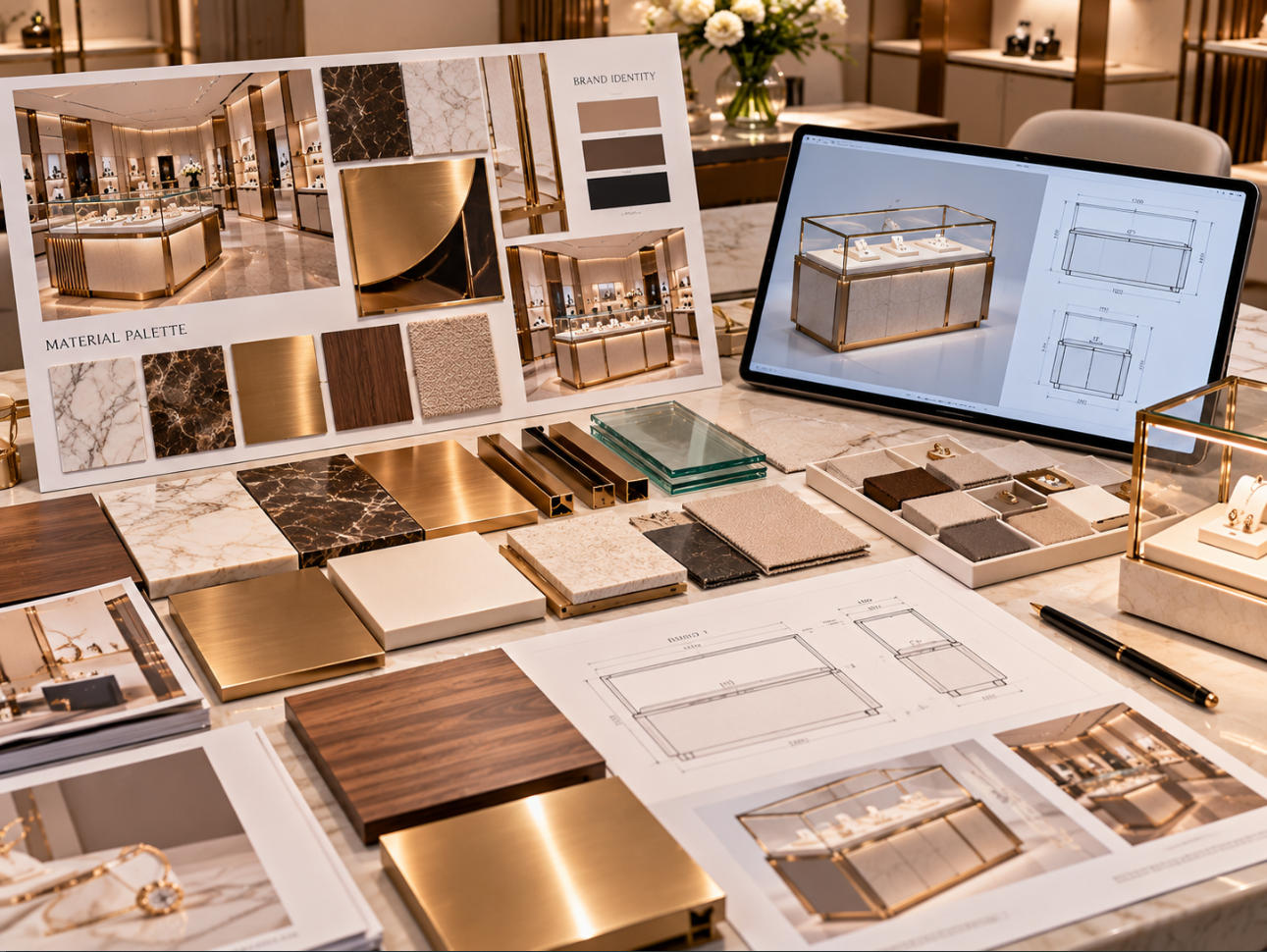
Define the Rules Before Designing Every Individual Fixture
A luxury brand may require many fixture types, but they should not look as though they were designed independently.
Instead of solving every counter, wall display and showcase from zero, the project can establish a controlled design vocabulary first.
This can include recurring frame profiles, material combinations, lighting details, edge treatments and construction principles that can then be adapted to different fixture functions.
SUNZEN develops custom retail fixtures around project-specific brand requirements rather than forcing the brand into a predetermined standard product.
Let Different Fixtures Perform Different Jobs Without Losing the Brand
Luxury brand store fixtures do not need to repeat one design at every point in the retail environment.
A hero display can be expressive. A wall system can remain quiet. A sales counter may prioritize customer interaction, while storage-driven millwork can be visually restrained.
What connects them is not identical shape, but a shared set of design rules.
Brand-Defining Fixtures
Selected statement elements can carry stronger forms or material details to create memorable retail moments.
Everyday Display Fixtures
Counters, shelving and wall displays can use a simplified version of the same visual language for everyday merchandising.
Quiet Functional Elements
Storage and operational fixtures can remain visually secondary while retaining consistent finishes and detailing.
Custom Means Preserving What Is Specific to the Brand
Custom luxury brand retail fixtures should not simply replace standard dimensions with different dimensions.
The greater value of customization is the ability to preserve brand-specific proportions, forms, materials and functional requirements while engineering them for reliable physical production.
Project-Specific Scale
Adapt fixture dimensions to the merchandise, store architecture and intended customer interaction.
Brand-Specific Geometry
Develop curved, linear, sculptural or architectural forms where they are part of the retail identity.
Controlled Finish Palette
Coordinate visible materials and finish references around the approved brand direction.
Hide Operational Complexity
Integrate storage, access, hardware, lighting and technical functions without weakening the customer-facing design.
Control the Details That Make Brand Materials Recognizable
Descriptions such as gold, bronze, beige or walnut are too broad to protect a luxury brand’s intended material character.
Tone, gloss level, grain direction, texture, edge treatment and the way neighboring materials meet can all change the final appearance.
Approved physical samples and clearly defined references help turn subjective design language into production information that can be checked.
Control Tone
Compare visible finishes against approved references rather than relying only on generic finish descriptions.
Control Surface Character
Brushed, polished, matte and textured surfaces can create very different interpretations of the same color.
Control Grain and Pattern
Wood, stone and directional metal finishes should follow intentional orientation rules where visible.
Control Material Junctions
The point where two premium materials meet can influence perceived quality as much as the materials themselves.
Resolve Critical Brand Details Before Full Production
Drawings can define dimensions, but some luxury details are easier to judge physically.
Material relationships, metal tone, edge proportions, lighting integration, hardware feel and other visible details may require sample review or representative validation depending on project complexity.
Resolving important details earlier reduces the risk of repeating an unsuitable detail across multiple finished fixtures.
Manufacturing Must Reproduce the Approved Design Language
Once a brand fixture standard is approved, production needs to preserve it across different components and fixture types.
Working with a retail fixture manufacturer helps connect design drawings, material references, engineering and manufacturing within one coordinated production process.
The manufacturing objective is not simply to complete each fixture individually. It is to make the completed fixtures look as though they belong to the same brand.
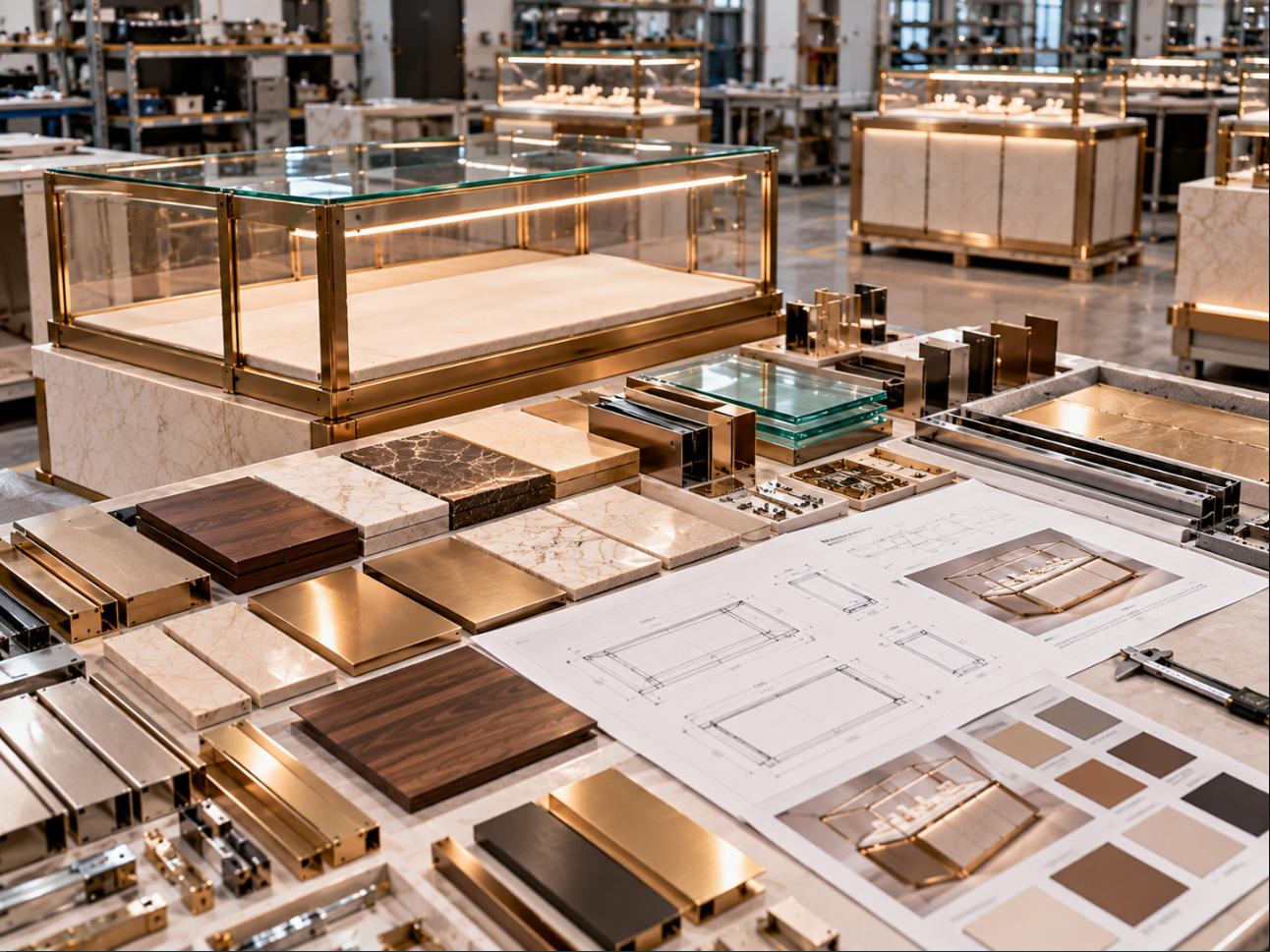
Inspect More Than Whether the Fixture Functions
A functional fixture can still be wrong for a luxury brand if its visible details drift away from the approved standard.
Quality control should therefore consider dimensional accuracy and operation together with the visual details that define the brand.
Check Proportion
Verify critical dimensions, alignments and visible relationships against project drawings.
Check Against References
Compare important visible finishes with approved samples or project references.
Check Repeated Features
Review joints, edges, hardware and other recurring details that contribute to the brand language.
Check Daily Operation
Test specified doors, drawers, lighting and other functional components before delivery.
Carry the Same Brand Language Into Glass Showcases
Luxury retail projects may combine open display furniture with enclosed showcases for higher-value or presentation-sensitive merchandise.
SUNZEN’s showcase factory capability can support specialized glass display elements while coordinating their metalwork, cabinetry, finishes and lighting with the broader retail fixture package.
This allows the showcase to perform a different display function without looking disconnected from the rest of the brand environment.
The Customer Should Experience the Brand, Not the Production Process
Customers do not see separate drawings, suppliers, materials and manufacturing stages. They see the finished retail environment.
Counters, showcases, wall displays, feature units and millwork can all serve different purposes while sharing enough visual DNA to feel intentional together.
For projects requiring a broader premium fixture system, SUNZEN’s luxury retail fixtures approach can coordinate multiple fixture categories across the complete retail environment.
Luxury Brand Retail Fixtures FAQs
Key questions about translating luxury brand standards into custom retail fixtures and manufacturable store elements.
What are luxury brand retail fixtures?
Luxury brand retail fixtures are custom display, selling, storage and architectural retail elements developed around a specific brand’s visual identity and store requirements. They can include counters, showcases, wall displays, shelving, feature units and integrated millwork.
How are luxury brand store fixtures different from standard retail fixtures?
Luxury brand store fixtures are developed around brand-specific proportions, materials, finishes, details and functional requirements rather than relying only on standard fixture formats. The objective is to translate the brand’s retail identity into physical fixtures.
Can SUNZEN manufacture fixtures from an existing luxury brand design?
SUNZEN can work from project drawings, design references, material specifications and brand requirements to develop manufacturable fixture details and produce project-specific retail fixtures.
Can custom luxury brand retail fixtures use brand-specific materials and finishes?
Yes. Depending on project requirements, custom fixtures can incorporate specified glass, metal, millwork, stone, fabrics and decorative finishes. Approved samples or references can be used to help control important visible finishes.
How can different fixture types remain consistent with the same brand?
Different fixtures can share controlled design rules such as proportions, frame profiles, material combinations, finish references, edge details and lighting principles without being identical in shape or function.
Can glass showcases be coordinated with the wider branded fixture package?
Yes. Enclosed showcases can use coordinated metalwork, cabinetry, finishes and lighting so they perform their specialized display function while remaining part of the same brand environment.
What information should a luxury brand provide for fixture development?
Useful project information includes store drawings, fixture drawings, brand guidelines, design references, material and finish specifications, functional requirements, quantities and project schedule information.
Ready to Translate Your Brand Design Into Retail Fixtures?
Share your store drawings, fixture concepts, brand guidelines, material references and functional requirements with SUNZEN.
We can help convert the design language into custom, manufacturable fixture details while maintaining the visual standards that make the retail environment recognizable to your brand.

