
Jewelry Store Fixtures for Shop in Shop: Build a Complete Brand Experience Within a Shared Retail Space
Jewelry store fixtures for shop in shop projects have to create a recognizable branded environment without relying on the walls, storefront and architectural separation of a conventional boutique.
Inside a department store, shopping mall or multi-brand retail environment, counters, islands, wall displays and vertical showcases may need to define the space themselves while preserving open sightlines to surrounding customer traffic.
SUNZEN develops coordinated shop-in-shop fixture packages around the available footprint, host-site conditions, jewelry presentation requirements and brand identity.
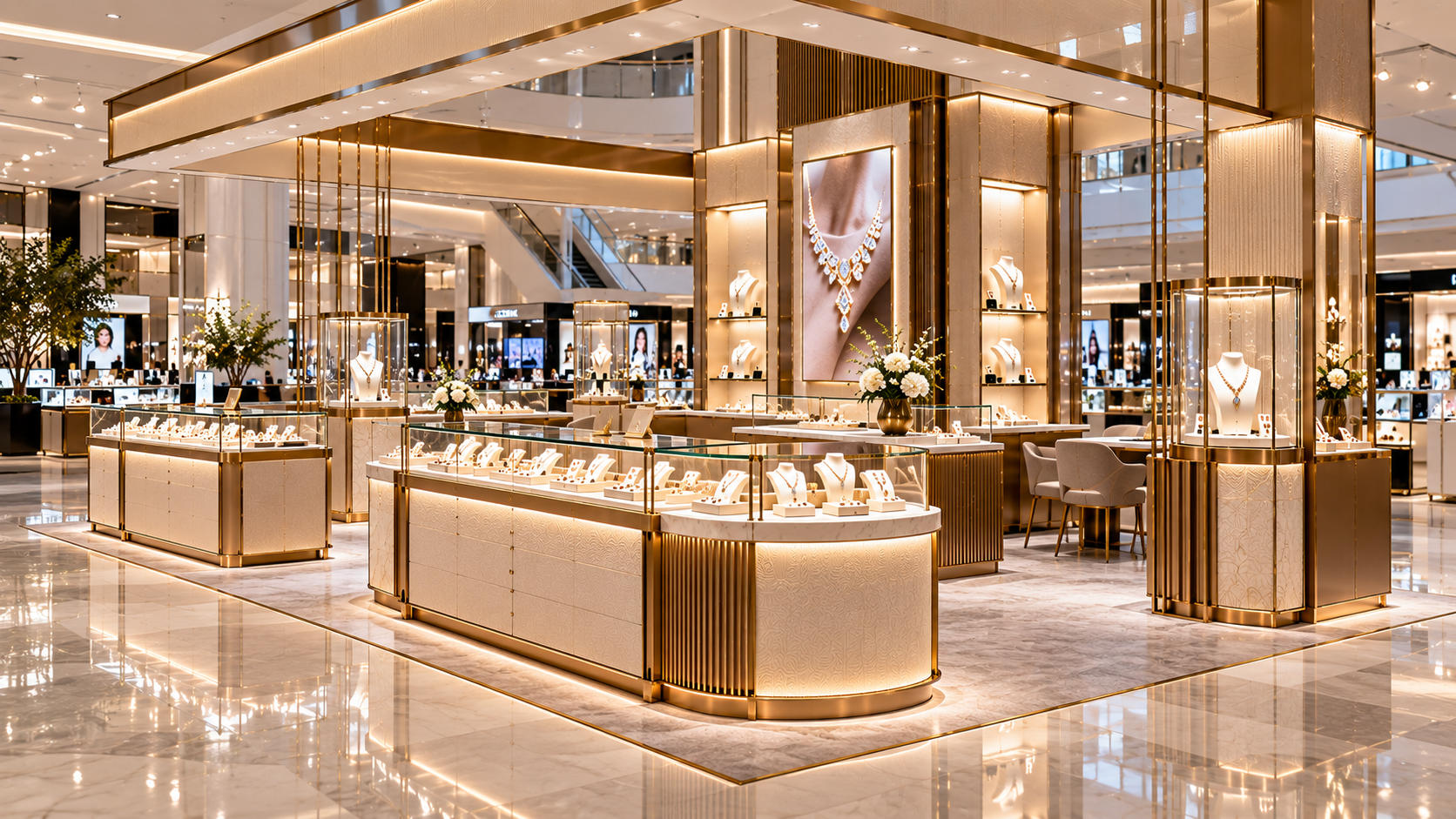
Start With the Space You Are Allowed to Occupy
A shop-in-shop does not begin with an empty architectural shell. It begins with a defined retail zone inside someone else’s commercial environment.
Floor area, circulation routes, neighboring brands, ceiling conditions, service points, fire and access requirements can all influence what the fixture package can become.
Work Inside Fixed Boundaries
Configure counters and display elements around the allocated floor area without compromising essential selling functions.
Keep Customer Routes Open
Position fixtures so customers can approach the jewelry zone naturally from the surrounding retail floor.
Respect Sightline Limits
Balance brand visibility with height restrictions and the need to preserve visibility across the host environment.
Coordinate Site Connections
Resolve lighting, power, floor interfaces and other installation conditions before production.
Let the Fixtures Define the Brand Boundary
One of the defining challenges of jewelry shop-in-shop design is creating a clear sense of place inside an open retail floor.
Instead of relying entirely on architectural walls, the arrangement and height of the fixtures can establish a visual boundary while keeping the space approachable.
Attraction Fixtures
Lower counters and feature displays can present jewelry toward passing traffic and identify the edge of the branded zone.
Assisted Selling
Counters can guide customers into spaces where staff can present and compare products more comfortably.
Vertical Recognition
Taller display or branded architectural elements can create recognition without enclosing the entire space.
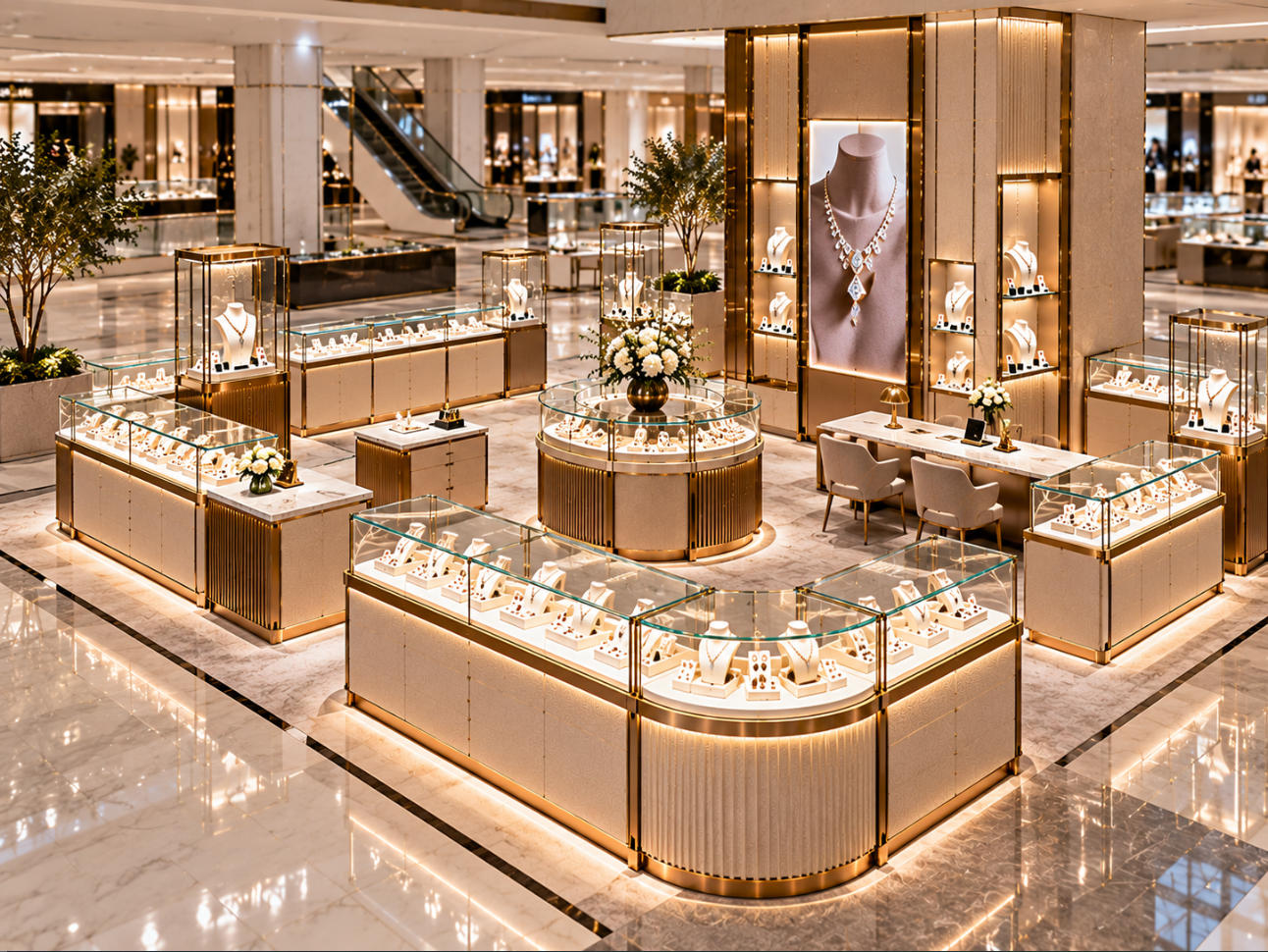
Design for Customers Approaching From More Than One Direction
A traditional boutique usually has a clear entrance. A shop-in-shop may be visible from two, three or even four sides.
That changes how the fixtures should work. Rear surfaces that would normally face a wall may become customer-facing elevations. Corner conditions become important display opportunities. Brand recognition may need to work from several approach routes.
Developing custom retail display fixtures allows the fixture dimensions, presentation faces and configurations to respond directly to these open retail conditions.
The result should feel intentional from every important customer viewpoint rather than appearing like conventional store fixtures placed in the middle of a department store.
Give Each Fixture a Clear Role Inside a Limited Footprint
Shop-in-shop environments reward fixtures that perform more than one function without making the space visually crowded.
Jewelry Counters
Define selected edges of the retail zone while providing secure display and staff-side operation.
Feature Islands
Create focal displays that can be viewed from multiple directions without blocking circulation.
Tower Showcases
Introduce height, brand recognition and focused presentation within a relatively small floor area.
Consultation Fixtures
Support customer interaction, product comparison and assisted selling without requiring a separate room.
Balance Accessibility With the Requirements of Valuable Products
Shop-in-shop jewelry fixtures often sit directly beside public circulation, making display visibility and controlled staff access particularly important.
Glass geometry, locks, drawers, staff-side access and enclosed storage should be considered together with the customer-facing design.
Specialist jewelry showcase manufacturers can engineer these display-specific details while coordinating the showcase with the wider shop-in-shop fixture package.
Clear Presentation
Use glass and lighting to keep jewelry visible from the primary customer approach directions.
Staff-Side Operation
Position access points so sales staff can retrieve products efficiently without disrupting customer circulation.
Integrated Storage
Use the lower fixture volume efficiently for operational storage where the design and security requirements allow.
Resolve the Host-Site Conditions Before the Fixtures Reach Production
Small dimensional conflicts can become major installation problems when fixtures have to fit within a tightly controlled shop-in-shop footprint.
Floor dimensions, column positions, power locations, maximum fixture heights and installation access should therefore be translated into the fixture drawings before manufacturing begins.
Read the Site
Review the allocated footprint, site dimensions, circulation and host-retailer constraints.
Zone the Fixtures
Determine where attraction, selling, feature display and consultation functions should sit.
Adapt the Design
Develop fixture dimensions and configurations around the actual site rather than forcing standard units into the space.
Engineer Interfaces
Resolve glass, lighting, power, hardware, floor contact and assembly details.
Manufacture
Produce the approved fixture package against controlled drawings, materials and finish references.
Prepare for Site
Organize the fixture modules and project information around transportation and final installation requirements.
Keep Different Fixture Types Visually and Technically Connected
A shop-in-shop may use counters, curved corner units, islands, vertical showcases and service fixtures within only a few meters of one another.
Differences in glass alignment, metal finish, lighting color, cabinetry or detailing therefore become easy to notice.
Working with a jewelry store fixture manufacturer helps coordinate these fixture families as one manufacturing package instead of sourcing each display type independently.
Controlled material samples, finish references, construction drawings and production information can help maintain consistency across the complete shop-in-shop installation.
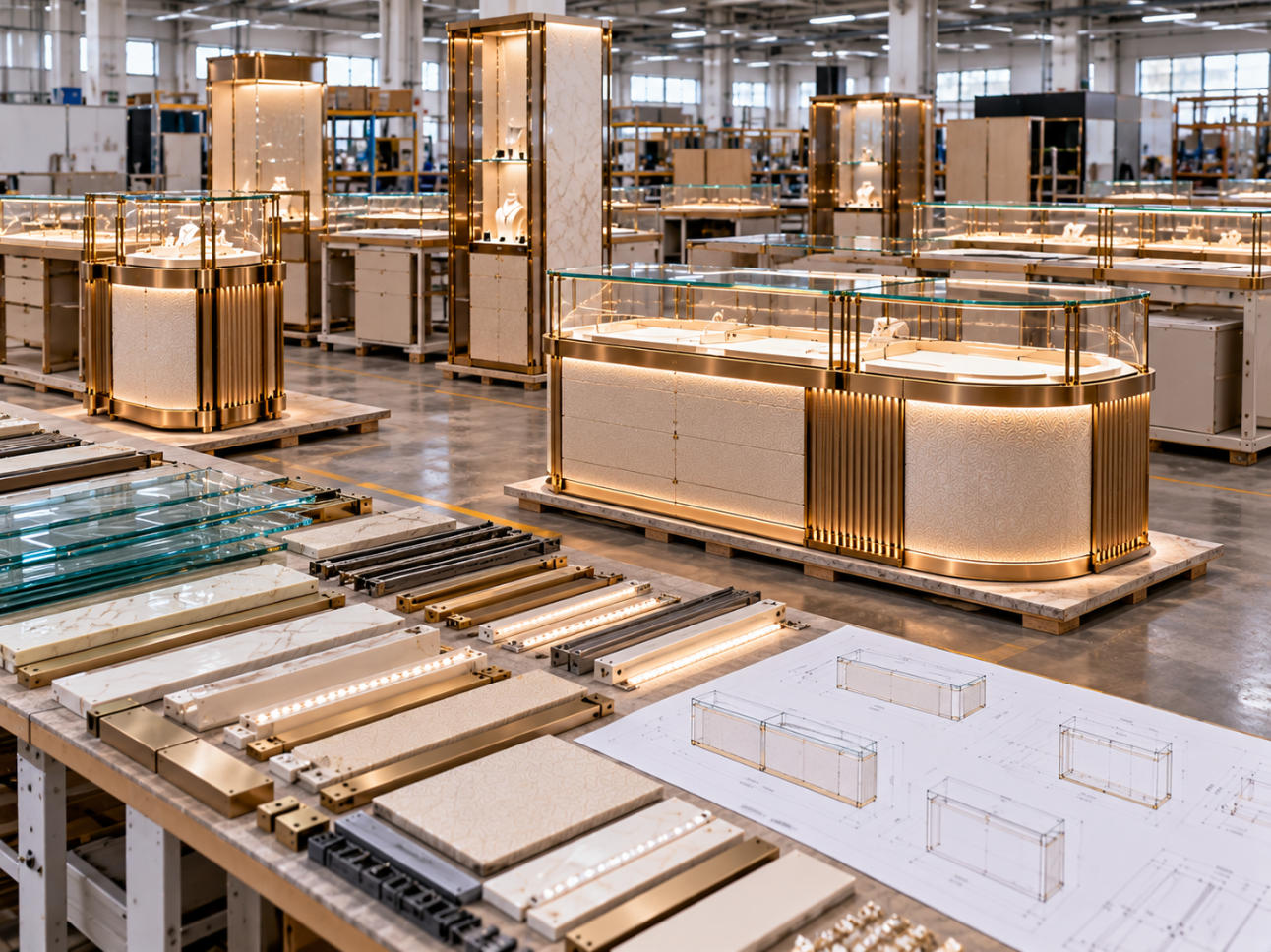
Coordinate the Display-Specific Details Before Final Assembly
Jewelry showcases bring together transparent glass, finished metal, cabinetry, lighting, hardware and secure access within a relatively compact structure.
SUNZEN’s jewelry showcase factory capability supports the production of these specialized display elements alongside the broader shop-in-shop fixture package.
For projects requiring several custom display types, coordinated showcase manufacturing helps translate approved drawings, materials and construction details into finished fixtures prepared for the project site.
A Shop-in-Shop Fixture Must Fit the Site and the Installation Process
Shop-in-shop projects may need to be installed inside an operating department store or shopping environment, where access routes and working hours can be restricted.
Large fixtures may therefore need to be divided into practical modules that can be transported, moved through the building and assembled within the allocated space.
Plan Assembly
Divide larger fixture structures where necessary without weakening the finished visual appearance.
Organize Components
Coordinate related modules and project information so the correct components reach the correct installation zone.
Resolve Interfaces
Prepare fixture connections, lighting and other agreed interfaces for efficient final site assembly.
Make the Shop-in-Shop Feel Like a Destination, Not an Overflow Display
A successful jewelry shop-in-shop should be visibly connected to the host environment while still giving customers a clear sense that they have entered a distinct brand space.
Coordinated fixture heights, materials, lighting and display hierarchy can create that identity without requiring a conventional enclosed storefront.
The result is a compact retail environment that uses every fixture to support brand recognition, jewelry presentation and customer interaction.
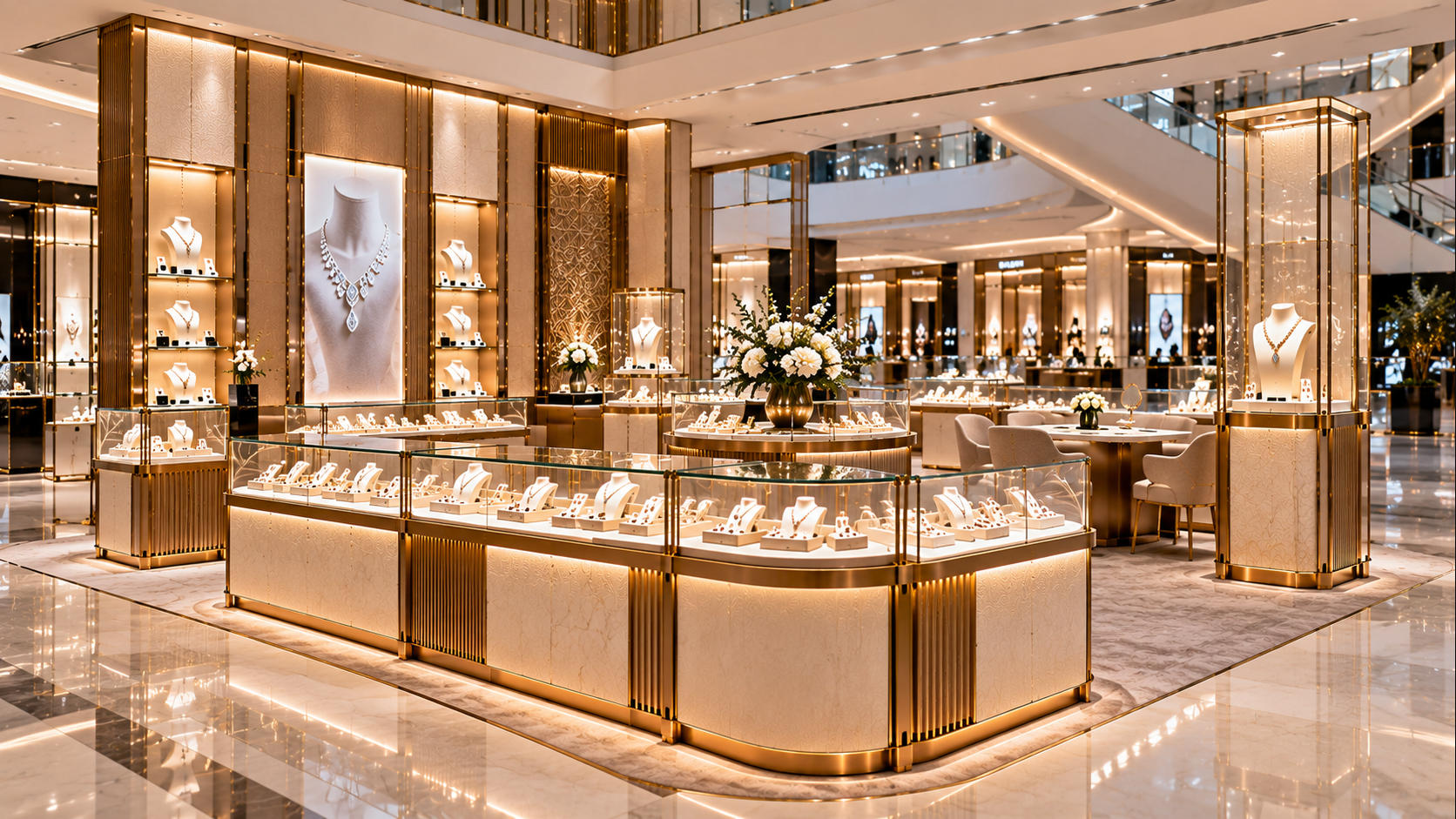
Jewelry Store Fixtures for Shop in Shop FAQs
Key questions about developing custom jewelry fixtures for shop-in-shop spaces inside department stores, malls and other shared retail environments.
What are jewelry store fixtures for shop in shop?
Jewelry store fixtures for shop in shop are counters, showcases, islands, vertical displays and supporting retail fixtures developed to create a branded jewelry selling environment within a larger department store, mall or multi-brand retail space.
How is a jewelry shop in shop different from a conventional jewelry store?
A shop in shop normally operates within a defined area of a larger retail environment and may have fewer architectural walls or storefront boundaries. The fixtures therefore play a larger role in defining the brand space, circulation and customer-facing perimeter.
Can shop in shop jewelry fixtures be customized to a fixed floor area?
Yes. Fixture dimensions, configurations and quantities can be developed around the allocated footprint, circulation routes, columns, height restrictions and other host-site conditions.
Which fixture types can be used in a jewelry shop in shop?
Depending on the project, the fixture package can include jewelry counters, island showcases, tower displays, corner units, consultation fixtures, storage and branded architectural display elements.
How can a shop in shop remain visible from different directions?
Fixture heights, customer-facing elevations, corner conditions, lighting and vertical brand elements can be coordinated around the primary approach directions within the host retail environment.
Can shop in shop fixtures be designed for modular installation?
Yes. Larger fixture structures can be divided into practical modules where required for transportation, building access and final assembly while maintaining the intended finished appearance.
What information is useful before developing shop in shop fixtures?
Useful inputs include the allocated floor plan, verified site dimensions, host-retailer requirements, height restrictions, power locations, brand standards, jewelry categories, display requirements, material direction and installation conditions.
Ready to Develop Jewelry Fixtures for Your Shop-in-Shop?
Share your allocated floor plan, site dimensions, host-retailer requirements, brand standards and jewelry display needs with SUNZEN.
We can help translate the available footprint into a coordinated custom fixture package designed for visibility, jewelry presentation, practical manufacturing and site installation.

