
Jewelry Fixtures for Shopping Mall Stores: Turn Mall Traffic Into a Branded Retail Experience
Jewelry fixtures for shopping mall stores have to work in two environments at once: inside the jewelry store and within the larger mall surrounding it.
The storefront must attract customers from a busy circulation corridor, while the interior fixture system needs to transform that attention into product discovery, assisted selling and a recognizable brand experience.
SUNZEN develops custom fixture packages around mall storefront visibility, store geometry, jewelry categories, customer movement and the practical conditions of commercial mall projects.
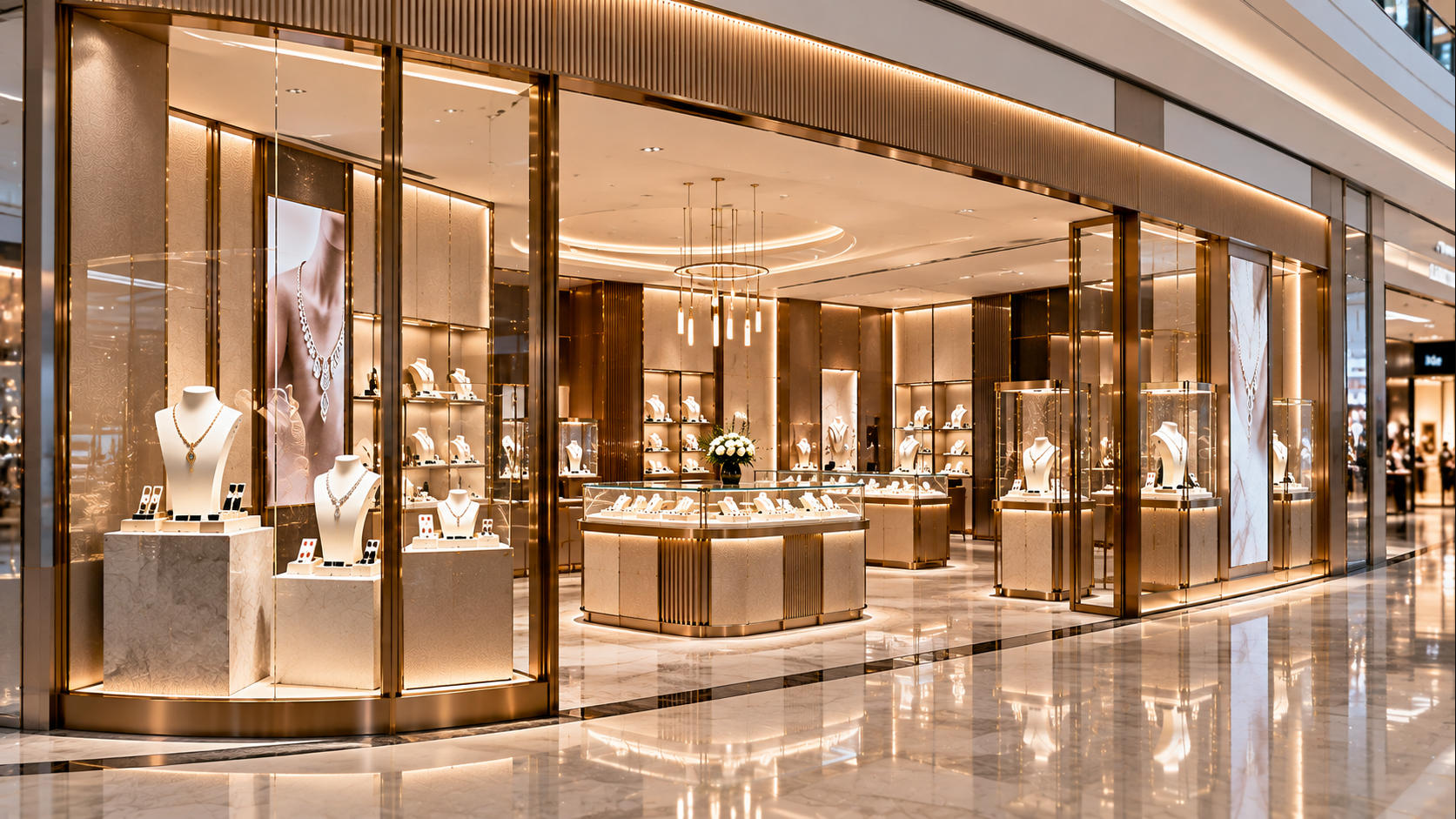
A Mall Jewelry Store Begins Before the Customer Enters
Customers walking through a shopping mall may see a jewelry store for only a few seconds before deciding whether to approach it.
That makes the relationship between storefront displays, interior showcases, lighting and sightlines especially important.
Capture Corridor Attention
Use visible jewelry displays and strong presentation points where they can be recognized from mall circulation.
Show What Is Inside
Preserve selected sightlines so customers can understand the store environment before crossing the entrance.
Keep the Entrance Approachable
Avoid creating a wall of fixtures that visually separates passing customers from the retail experience.
Make the Brand Recognizable
Coordinate fixture forms, materials and lighting so the store remains distinctive among neighboring mall retailers.
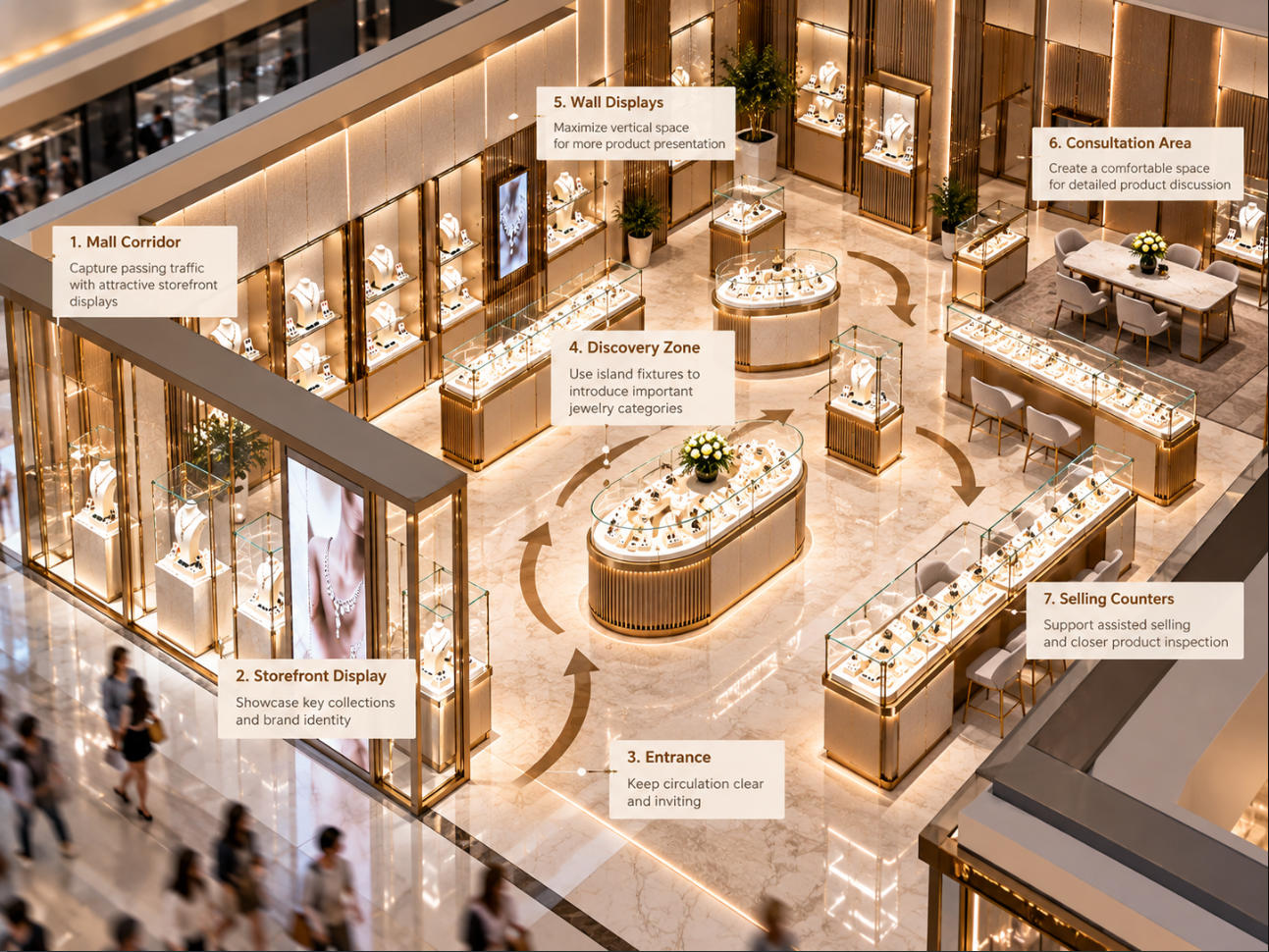
Use Fixture Placement to Pull Attention Deeper Into the Store
The strongest display does not always belong directly at the entrance.
A sequence of visible display points can create depth: an entrance feature attracts attention, a central island introduces an important collection, and wall or consultation fixtures encourage customers to continue exploring.
Mall Corridor
Establish the first visual connection with passing customers.
Storefront
Present enough jewelry and brand identity to communicate what makes the store worth entering.
Threshold
Keep entry circulation clear while introducing the first selling or feature fixture.
Discovery Zone
Use islands and counters to introduce important jewelry categories.
Assisted Selling
Transition customers toward counters designed for closer product presentation.
Consultation
Create calmer spaces for comparison, discussion and higher-value purchases.
Do Not Let the Fixtures Become Obstacles to Mall Traffic
Mall stores often need to generate strong product density within a relatively controlled footprint, but filling every available area with showcases can weaken circulation and make the entrance feel restrictive.
Fixture dimensions and positions should therefore respond to customer routes as well as merchandise capacity.
Custom retail display fixtures allow counters, islands and other display elements to respond to the actual floor plan instead of forcing standardized dimensions into the store.
This can be particularly useful around narrow entrances, structural columns, irregular corners and other conditions commonly encountered in commercial retail spaces.
Build the Mall Store Around Different Selling Zones
Jewelry fixtures can perform different jobs depending on their position in the store.
Attraction Displays
Use selected showcases near the storefront to communicate important collections to mall traffic.
Island Displays
Introduce focal merchandise while maintaining movement around the central selling area.
Wall Displays
Use vertical surfaces to increase presentation capacity without consuming additional central floor area.
Consultation Fixtures
Create a calmer environment for customers who have moved from browsing into assisted selling.
Adapt the Fixture Package to the Actual Retail Unit
“Shopping mall store” does not describe one standard floor plan.
A corner unit, narrow-front store, deep rectangular store and premium flagship unit can require very different fixture arrangements even when they belong to the same jewelry brand.
Create Visual Depth
Use fixture positioning and lighting to draw the eye deeper into stores with limited frontage.
Work With Two Directions
Coordinate presentation around multiple customer approach routes and larger storefront exposure.
Build Stronger Hierarchy
Use a broader mix of statement displays, islands, selling counters and consultation areas without making every fixture compete visually.
The Mall Environment Is Busy. The Showcase Interior Should Not Be.
Once customers approach the jewelry, the visual environment changes from mall-scale attraction to close-range product inspection.
Glass clarity, internal lighting, lining materials and display density should help isolate the jewelry from the visual activity surrounding the store.
Experienced jewelry showcase manufacturers can coordinate these presentation requirements with glass construction, access, hardware and the broader fixture design.
Coordinate Different Fixture Families as One Store Package
A mall jewelry store can combine storefront displays, islands, wall fixtures, selling counters, storage and consultation furniture within a relatively compact environment.
Working with a jewelry store fixture manufacturer helps connect these different fixture types through common drawings, materials, finishes and construction standards.
That coordination becomes especially important when metal details, cabinetry finishes and lighting lines remain visible across several adjacent fixtures.
Confirm Dimensions
Translate the approved retail layout into production dimensions and fixture construction information.
Control Visible Finishes
Coordinate metal, cabinetry, glass and interior finish references across the complete store.
Prepare for Site
Consider transportation, mall access and final assembly while the fixtures are still being engineered.
Resolve Problems Before the Store Reaches Its Opening Window
Mall projects can have restricted access hours and tightly controlled opening schedules, leaving less room for major fixture corrections on site.
Where appropriate, checking related fixture assemblies, finishes, lighting and interfaces before shipment can reduce uncertainty during final installation.
SUNZEN’s jewelry showcase factory capability connects specialized jewelry display production with the wider fixture package.
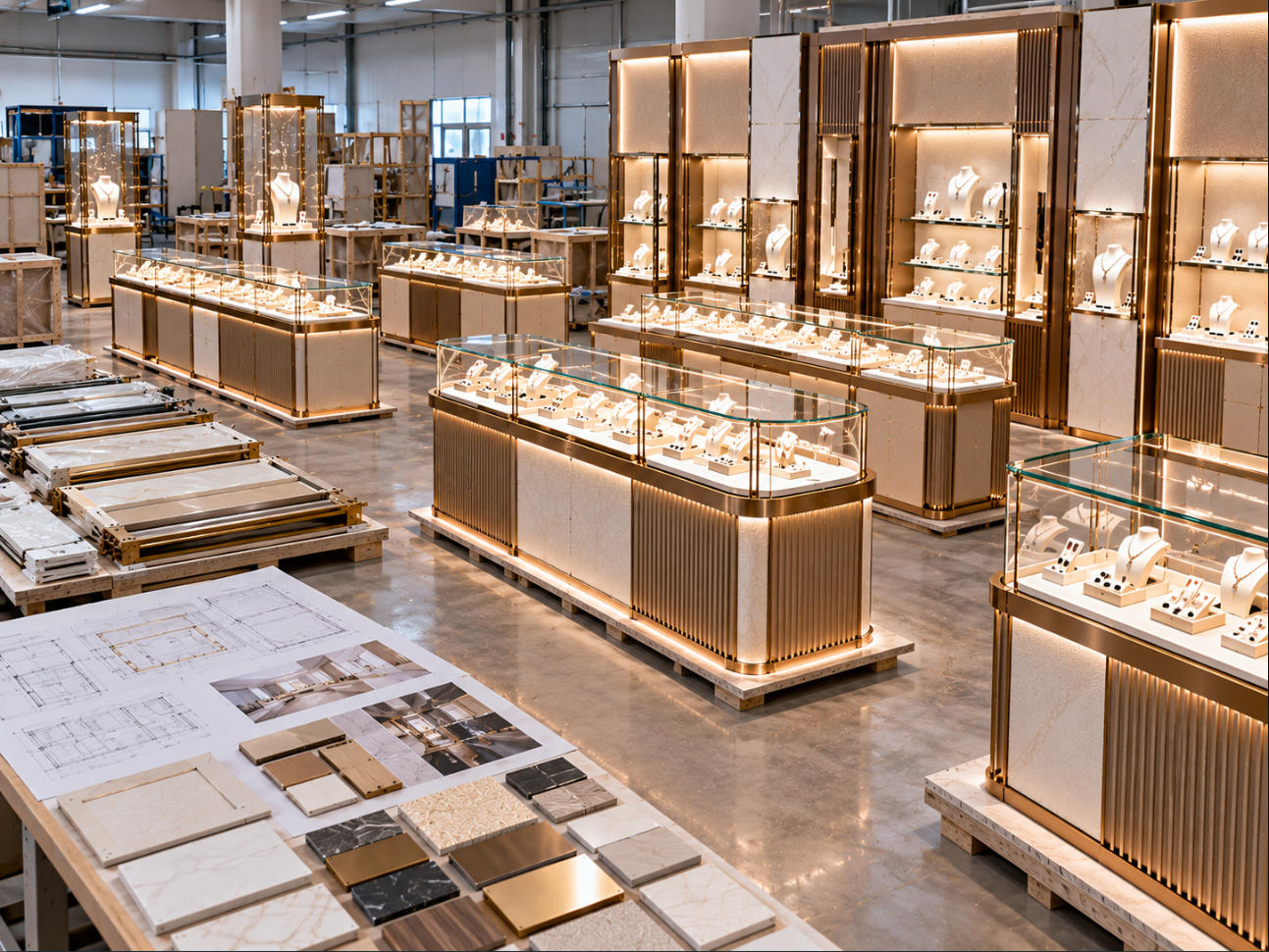
Design the Fixture Package for Mall Access and Installation
The finished fixture is only useful if it can reach the store, move through the building and be assembled within the permitted project conditions.
Freight elevators, service corridors, door dimensions, floor protection requirements and permitted working hours can all affect how larger fixtures should be divided and packed.
Planning retail fixture installation alongside manufacturing helps connect fixture construction with final project delivery rather than treating installation as an unrelated last step.
Check Access
Review the practical route from unloading point to the retail unit.
Plan Modules
Divide larger fixtures where necessary for transport and building access.
Organize Packing
Identify related fixture modules and protect finished surfaces for transportation.
Sequence Delivery
Coordinate delivery around the project schedule and agreed site conditions.
Assemble
Reconnect fixture modules and related components within the retail unit.
Final Check
Review alignment, lighting, visible finishes and agreed functional details before opening.
Make the Finished Store Visible, Approachable and Worth Entering
A successful mall jewelry store does not isolate itself from the shopping environment. It uses that environment to create the first stage of the customer journey.
From the mall corridor, customers should recognize the store and see a reason to approach. At the entrance, they should understand how to move inside. At the showcase, the visual noise of the mall should give way to focused jewelry presentation.
That transition is where a coordinated fixture system becomes more valuable than a collection of individual display cases.
Jewelry Fixtures for Shopping Mall Stores FAQs
Key questions about planning and manufacturing custom jewelry fixtures for shopping mall retail environments.
What types of jewelry fixtures are suitable for shopping mall stores?
A mall jewelry store can use storefront showcases, selling counters, island displays, wall showcases, vertical displays, consultation fixtures and supporting storage. The appropriate mix depends on the floor plan, storefront exposure, jewelry categories and selling method.
How should jewelry fixtures respond to shopping mall traffic?
Fixture placement can preserve storefront sightlines, keep the entrance approachable and create visible display points that encourage customers to move from the mall corridor into the store.
Can mall jewelry store fixtures be customized to an irregular floor plan?
Yes. Custom fixture dimensions and configurations can respond to narrow storefronts, structural columns, corners, circulation requirements and other site-specific conditions.
How can jewelry showcases stand out in a busy mall environment?
Storefront visibility, controlled lighting, clear glass, focused jewelry presentation and a consistent fixture material language can help separate the jewelry experience visually from the surrounding mall environment.
Should mall access conditions be considered before fixture manufacturing?
Yes. Freight elevators, service corridors, doors and other building access conditions can affect fixture dimensions, modular construction, packing and final assembly requirements.
Can SUNZEN manufacture a complete fixture package for a mall jewelry store?
SUNZEN can develop coordinated custom fixture packages including different showcase, counter, wall display, island and supporting fixture types based on the approved project requirements.
What information is useful when starting a shopping mall jewelry fixture project?
Useful information includes the mall store floor plan, storefront dimensions, site measurements, jewelry categories, fixture requirements, brand standards, material direction, mall access conditions and target opening schedule.
Planning Fixtures for a New Shopping Mall Jewelry Store?
Send SUNZEN your floor plan, storefront dimensions, jewelry categories, fixture requirements, brand references and target opening schedule.
We can help develop a coordinated custom fixture package around customer visibility, retail operation, manufacturing and the practical requirements of the mall site.

