
Minimalist Jewelry Display Cases · Toronto
Mejuri Toronto
Minimalist Jewelry
Display Cases
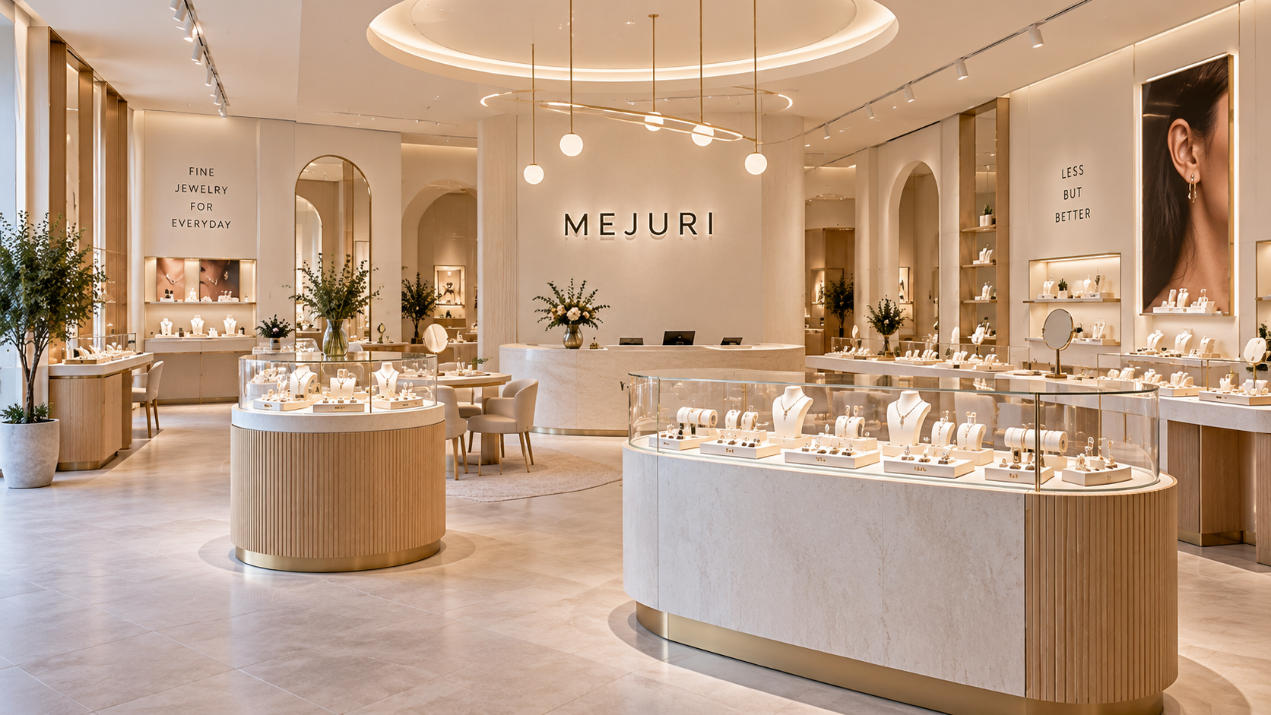
The Mejuri Toronto concept store presents minimalist jewelry display cases within a young, open and digitally connected retail environment. White stone, white metal and acrylic create a clean visual framework for everyday jewelry, while open try-on areas, social interaction spaces and integrated lighting support a more accessible way of discovering and wearing jewelry.
Project
Mejuri
Location
Toronto, Canada
Category
Everyday Jewelry · Accessible Luxury
Area
Approx. 240 m²
Character
Minimal · Young · Scandinavian
Minimalist jewelry displays for a new generation of everyday retail.
The approximately 240 m² Mejuri Toronto concept store is organized around a more open relationship between jewelry, customers and the digital retail journey. Rather than creating a highly formal luxury environment, the space encourages discovery, direct interaction and relaxed product exploration.
The minimalist jewelry display cases use white stone, white metal and acrylic to create a light visual language that reflects the character of contemporary everyday jewelry. Soft illumination and integrated LED details keep the merchandise visible without turning the store into a conventional high-luxury showroom.
For concept stores where product presentation, interactive areas and retail identity need to be developed together, a custom jewelry showcase approach allows different display formats to respond to merchandise, customer behavior and the wider store experience.
Design Direction
Less visual weight, more interaction — a jewelry environment where clean surfaces, accessible displays and open circulation make the product easier to discover, try and share.
02 / Space
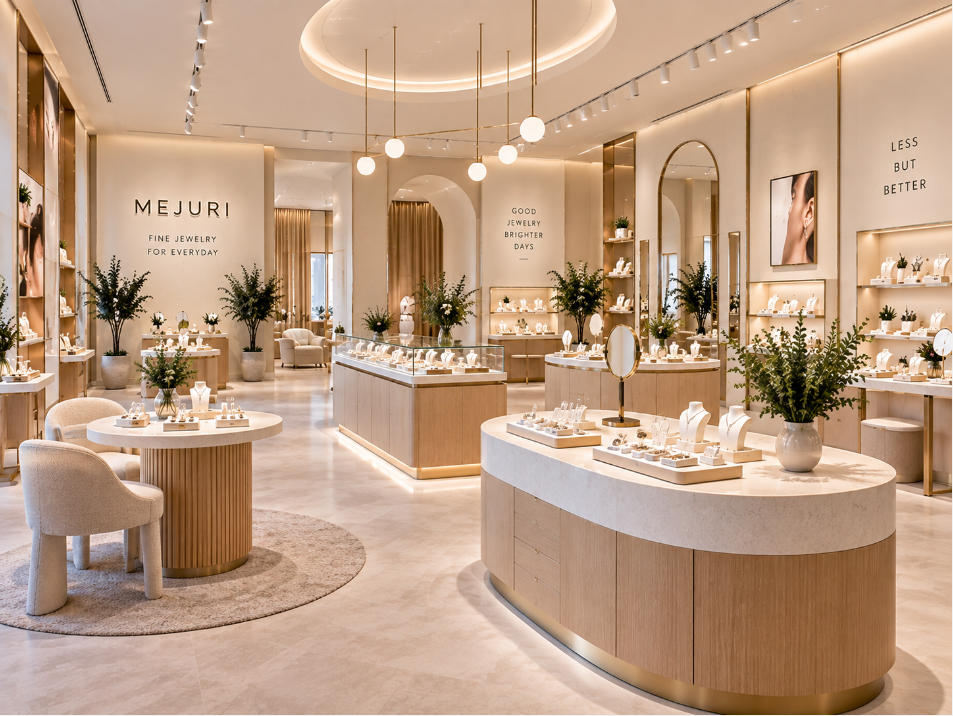
An open layout designed around interaction, discovery and movement.
The concept store uses a youthful circulation strategy rather than dividing the interior into rigid product zones. Customers can move between displays, social spaces and try-on areas with fewer visual barriers.
Central presentation positions function as accessible points of discovery. A jewelry island showcase supports this type of open circulation by allowing products to be approached from several directions while keeping sightlines across the store clear.
The layout also supports the relationship between online discovery and physical retail. Customers can move naturally from digital inspiration toward direct viewing, comparison and try-on without entering a highly formal sales sequence.
This more fluid journey makes the physical store part of a wider omnichannel experience rather than an isolated point of purchase.
03 / Display
Lightweight display structures for accessible everyday jewelry.
The display language is deliberately clean. White metal minimizes visual weight, pale stone provides a stable architectural base and acrylic introduces transparency without making every presentation dependent on traditional enclosed vitrines.
For open product discovery and styling areas, a jewelry display table creates an approachable presentation surface suited to everyday jewelry, layered collections and direct customer interaction.
Soft lighting supports the same strategy. Rather than relying on dramatic contrast, integrated LED strips and diffused illumination create even visibility across jewelry, display surfaces and customer interaction areas.
The result is a series of minimalist jewelry display cases and open presentation elements that feel closer to contemporary fashion retail while maintaining the precision required for jewelry presentation.
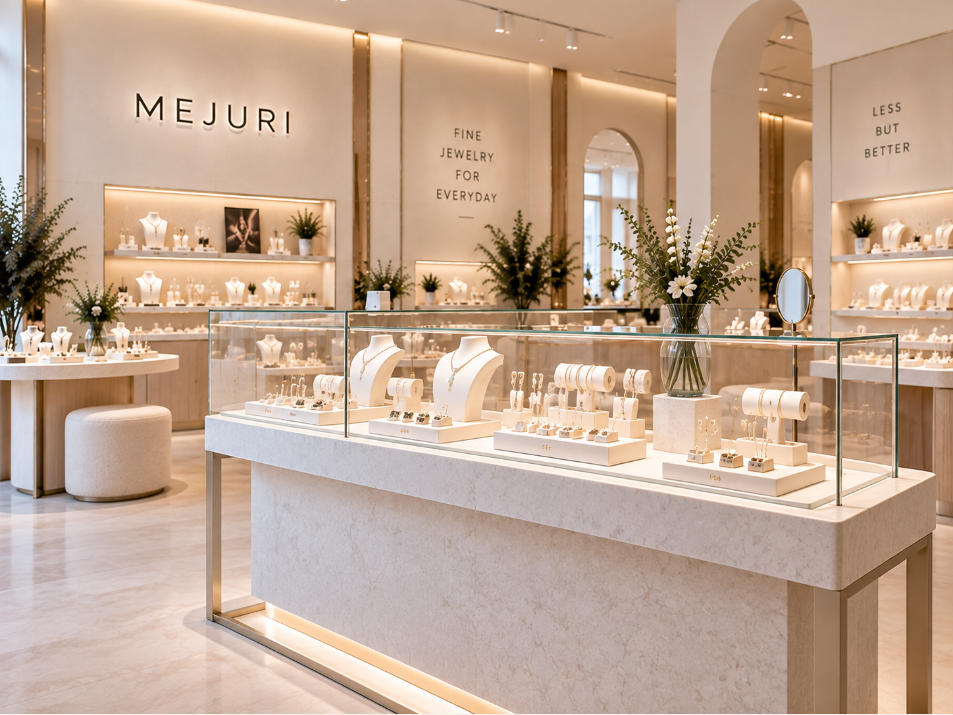
A light material palette built around clarity and everyday interaction.
White stone, white metal and acrylic reduce visual complexity and create a neutral environment where delicate jewelry, customer movement and digital retail elements remain visually connected.
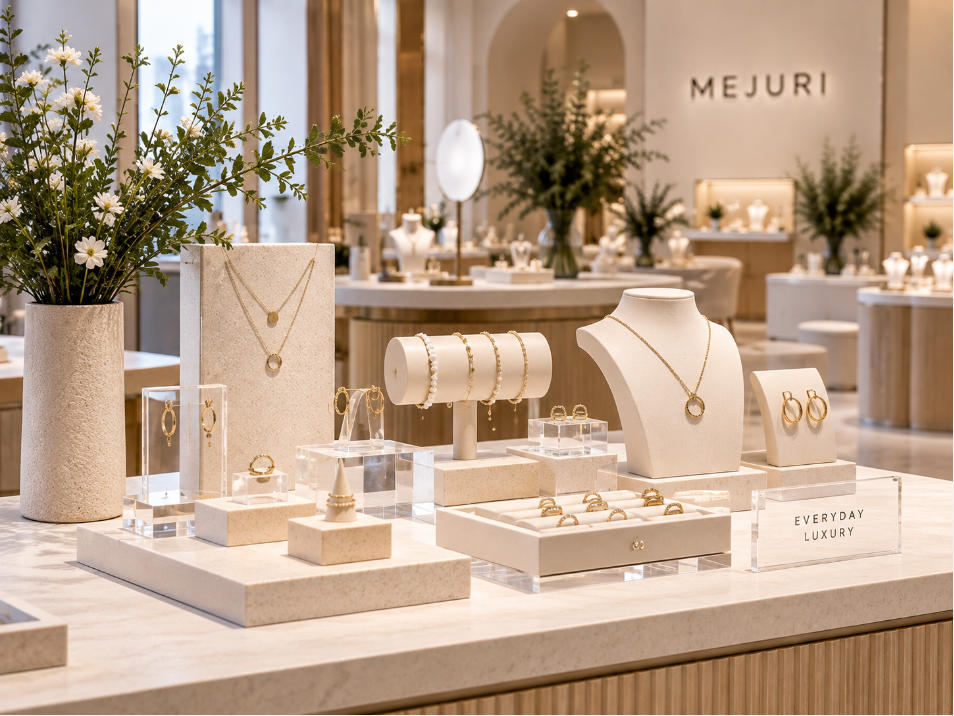
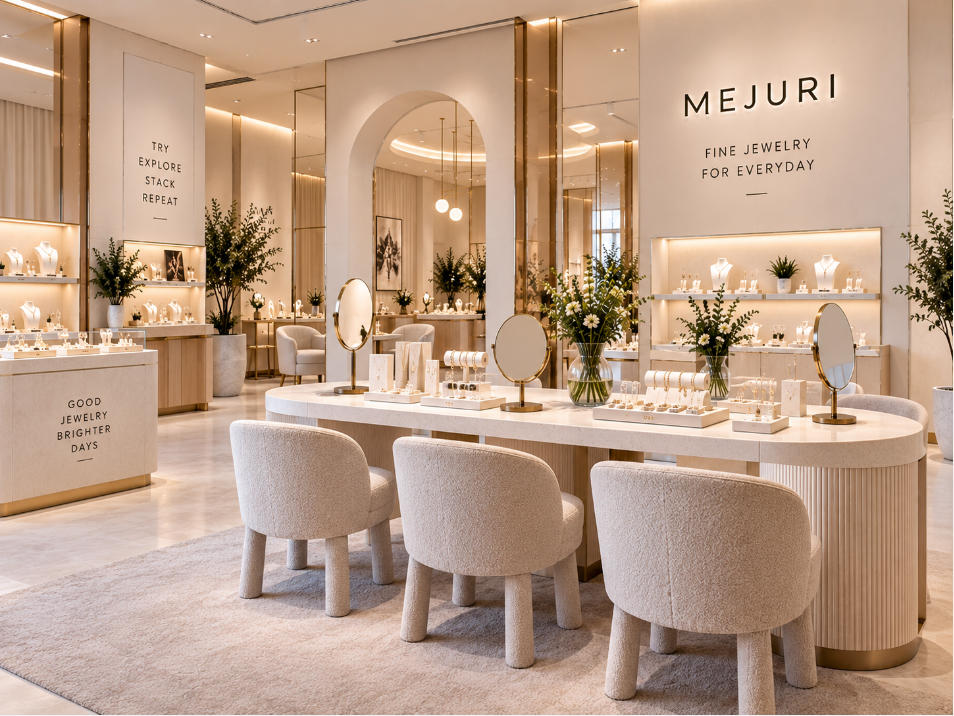
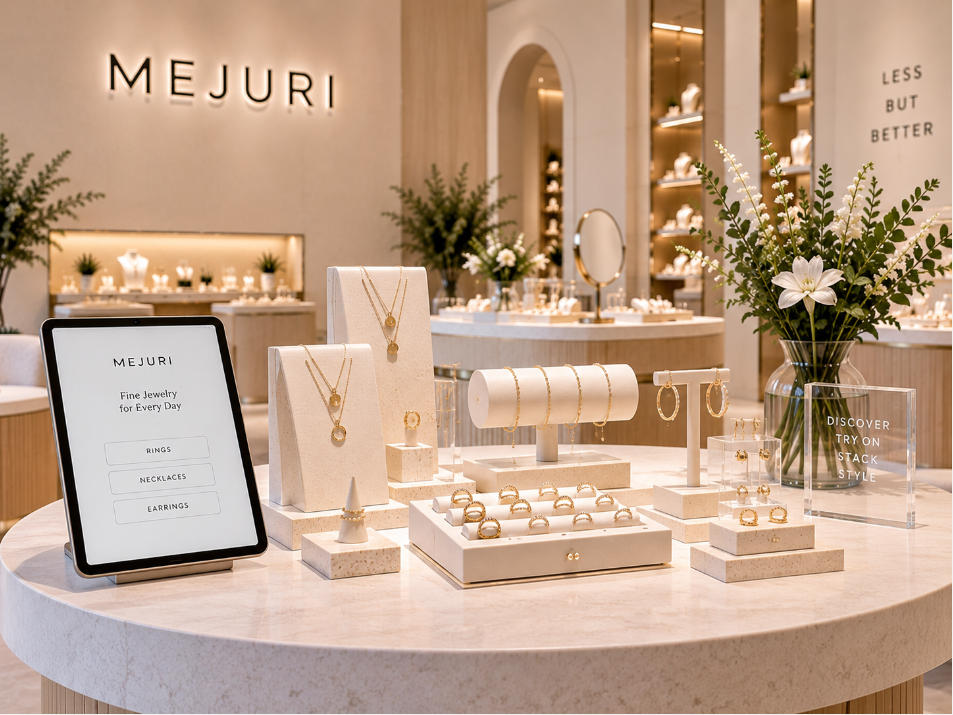
Everyday Jewelry · Open Try-On · Interactive Display
04 / Retail Experience
A jewelry store designed for participation rather than distance.
Open Try-On
Accessible presentation areas reduce the distance between product and customer, encouraging jewelry to be explored, combined and tried as part of a casual retail journey.
Social Interaction
Photo-friendly areas and clean visual backgrounds support a retail experience designed to continue beyond the physical store through social content and digital sharing.
Everyday Jewelry
Smaller-scale presentation systems support delicate necklaces, earrings, rings and layered pieces without giving everyday jewelry the formality of traditional high jewelry merchandising.
Omnichannel Retail
Digital and physical touchpoints operate as part of one customer journey, allowing online product discovery and in-store interaction to reinforce each other.
Precision becomes more visible when the retail language becomes more minimal.
Minimal jewelry fixtures often appear simple, but reducing decorative elements makes proportion, alignment, material transitions and lighting integration increasingly important.
Professional showcase design helps coordinate display height, customer access, product visibility, lighting positions and material relationships before the fixtures move into production.
Across a concept store containing enclosed displays, open tables and interactive presentation points, experienced jewelry showcase manufacturers can coordinate stone components, metalwork, acrylic structures, lighting and finish standards as one consistent display system.
The Mejuri concept demonstrates how accurate technical development can support a retail environment that appears visually light and effortless while still meeting the practical requirements of everyday jewelry presentation.
Related projects exploring different interpretations of contemporary jewelry retail.
For another Toronto project with a more elevated fine-jewelry character, explore the Birks Toronto luxury glass jewelry display cases project, where ultra-clear glazing, light wood and stone support bridal and high jewelry presentation within a larger flagship environment.
For a more gallery-oriented interpretation of minimal jewelry retail, explore the Spinelli Kilcollin Los Angeles minimalist jewelry showcase project, where dark metal, stone textures and sculptural display elements create a more artistic designer-jewelry environment.
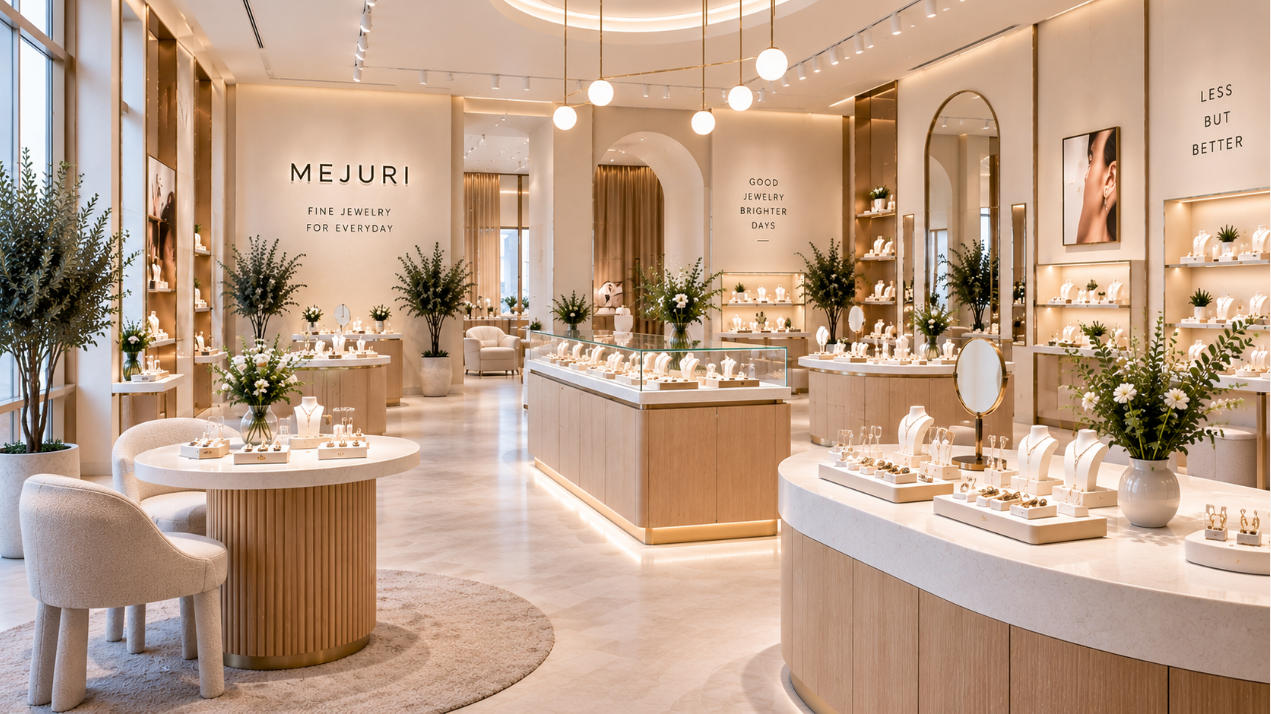
Minimalist jewelry display cases developed for a more open retail experience.
The Mejuri Toronto project demonstrates how minimalist jewelry display cases can support a younger and more interactive relationship between jewelry and customers.
White stone establishes the architectural base, white metal keeps the display structures visually light and acrylic supports flexible product presentation, while soft LED illumination creates clear but understated jewelry visibility.
Instead of treating every product as an object viewed from a distance, the project combines open display, try-on areas and digital interaction to create a jewelry environment focused on participation and everyday use.

