
Luxury Boutique Display Cases Designed Around the Product Inside
A luxury display case should create distance from the customer only when that distance adds value.
For jewelry, watches, collectible accessories and other premium merchandise, enclosure can improve security, visual focus and presentation control. But the glass, frame, lighting and hardware should remain secondary to the product inside.
SUNZEN develops custom luxury boutique display cases around merchandise scale, viewing angle, customer interaction, staff access, lighting and the material language of the surrounding boutique.
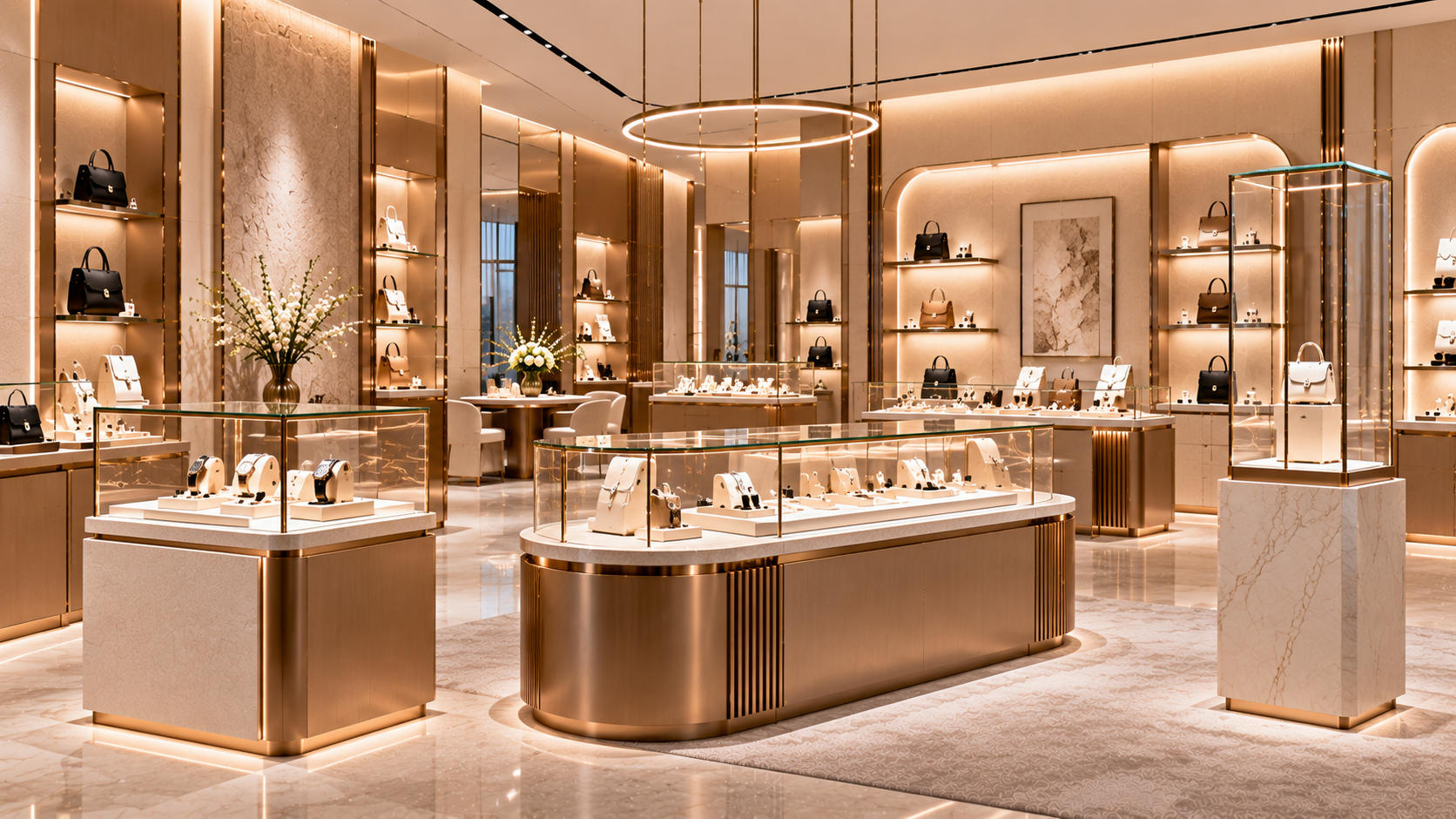
Not Every Product in a Luxury Boutique Belongs Behind Glass
Enclosed display should solve a merchandising, protection or presentation requirement—not simply make a fixture look more premium.
A handbag may benefit from open interaction, while a fine watch or jewelry collection may require controlled access. Small collectible objects can gain visual importance when isolated inside a focused glass volume.
The first design decision is therefore not the shape of the display case. It is deciding why the merchandise should be enclosed.
Protect Premium Merchandise
Controlled access can support merchandise that requires greater supervision or security.
Isolate Important Products
A defined glass volume can separate selected merchandise from surrounding visual activity.
Control the Display Interior
Lighting, lining and product supports can be coordinated inside a controlled presentation space.
Support Assisted Selling
Staff-controlled access can turn the display case into part of a more deliberate product presentation process.
Start With How the Product Should Be Seen
Luxury store display cases are viewing instruments before they are pieces of furniture.
Display height, glass area, product elevation and viewing distance should respond to the merchandise. A watch requires a different viewing relationship from a necklace, sculpture, handbag or small collectible object.
Designing outward from the product helps determine the appropriate glass volume and supporting cabinet instead of starting with an arbitrary case shape.
Product Scale
Define the dimensions and number of products that need to be presented.
Viewing Direction
Decide whether customers should view the merchandise from the front, above or multiple directions.
Product Height
Position merchandise within a comfortable and visually appropriate viewing zone.
Glass Volume
Create enough enclosure for the product without allowing the case structure to become visually dominant.
Lighting
Direct light toward the merchandise while controlling visible hardware and unnecessary glare.
Access
Define how staff should reach, remove and return merchandise during daily selling.
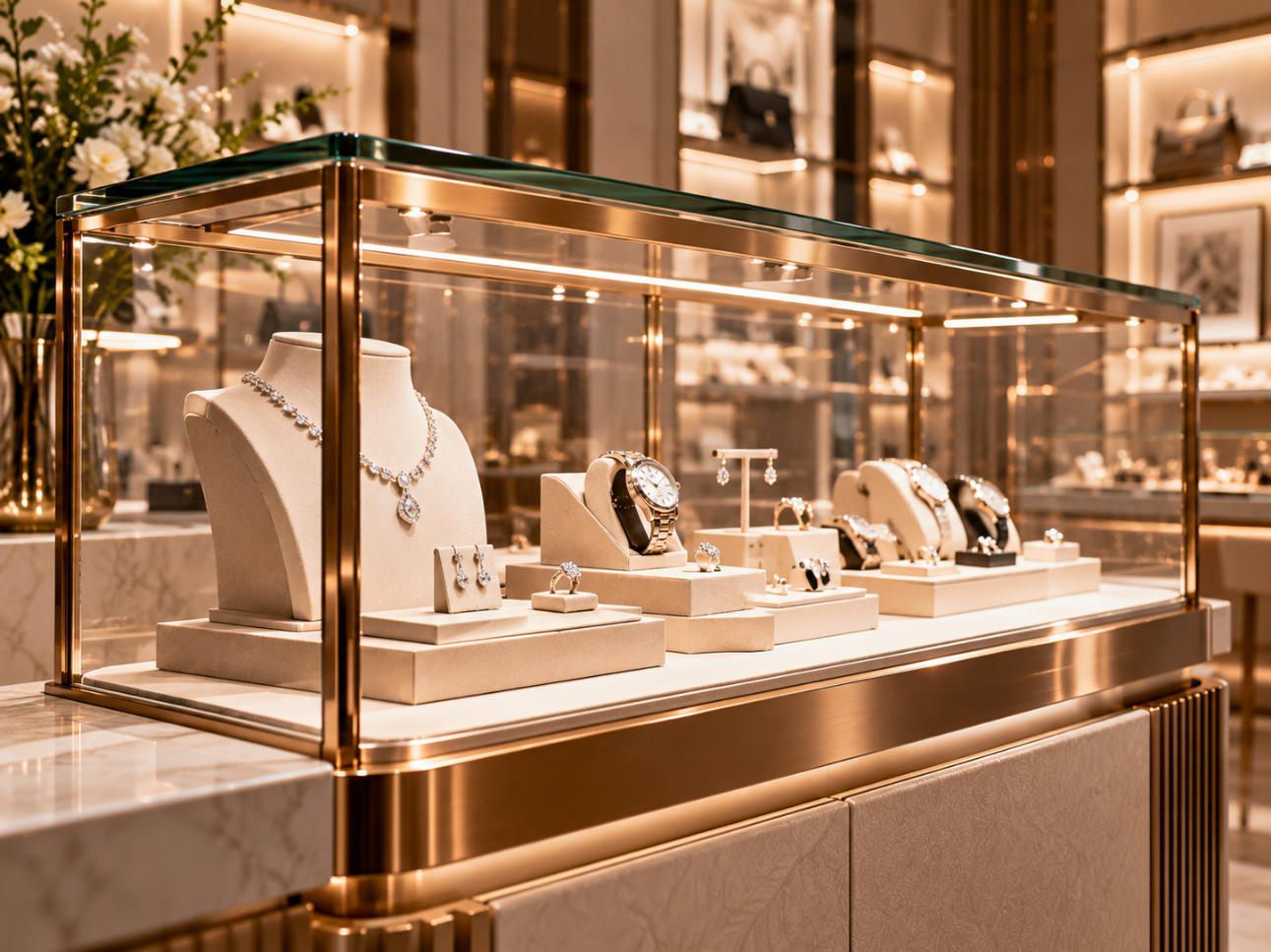
Reduce the Visual Distance Between Customer and Product
The customer is looking through the case rather than at it. Glass selection, edge detailing, joints and lighting therefore influence how directly the merchandise can be perceived.
Clear viewing areas and restrained structural details can help reduce visual interference, particularly when the products inside are small and highly detailed.
SUNZEN’s custom display cases can be developed around different product categories, viewing requirements and retail environments.
Integrated Lighting Should Reveal Detail Without Becoming the Main Feature
Boutique display showcases often present small products at close viewing distances, making lighting quality particularly important.
Lighting positions can be coordinated with product placement, glass geometry and display height so illumination reaches the merchandise without unnecessary visual clutter.
Put Light Where the Product Is
Fixture lighting should respond to the actual merchandise zone rather than illuminate the enclosure indiscriminately.
Conceal Technical Elements
Wiring, channels and lighting hardware can be incorporated into the case structure where practical.
Coordinate With Store Lighting
Internal display lighting should work with the surrounding boutique rather than creating an isolated over-lit box.
Give the Merchandise the Right Background
Customers see the product together with the lining, risers, trays and surrounding interior surfaces.
Neutral fabrics can create softness around jewelry. Darker surfaces can produce contrast for selected products. Stone, wood or other refined finishes can connect the case interior with the wider boutique material palette.
The interior should support the merchandise rather than become another decorative object competing for attention.
Choose the Case Format From Its Merchandising Function
Custom boutique display cases can take different forms while sharing a consistent material and detailing language.
Assisted Selling Cases
Horizontal viewing and staff access can support close customer interaction with jewelry, watches and other small premium products.
Focused Hero Displays
A smaller freestanding case can isolate one product or a tightly edited collection as a visual focal point.
Vertical Presentation
Integrated wall cases can use perimeter space while presenting merchandise at controlled viewing heights.
Multi-Directional Viewing
Upright or tower formats can create visibility from more than one direction where the boutique layout supports it.
The Front Should Feel Effortless Even When the Back Is Highly Functional
Premium display cases must balance two very different perspectives.
From the customer side, the case should appear clean and visually controlled. From the staff side, merchandise must remain practical to access during presentation, return and daily operation.
Door type, drawer arrangement, locks, hardware and storage can therefore be developed around the intended selling process instead of being treated as secondary details.
Choose Practical Access
Sliding, hinged, lift-up or other specified opening systems can be evaluated according to case geometry and operational requirements.
Control Merchandise Access
Locks and staff-side access can be integrated where the merchandise and retail operation require them.
Keep Support Items Nearby
Lower cabinetry can provide practical storage while maintaining a refined customer-facing appearance.
Custom Engineering Begins Where the Standard Box Stops Working
Product dimensions, boutique architecture and brand details can require more than a standard rectangular glass enclosure.
Curved forms, unusual proportions, minimal frames, integrated storage, specialized opening systems and project-specific lighting all require the visual concept to be translated into practical construction.
Detailed display case design can establish the relationship between glass, structure, cabinetry and functional requirements before production.
Display Case Manufacturing Leaves Little Room to Hide Misalignment
Transparent glass exposes the relationship between panels, frames, doors, lighting and cabinetry. Small dimensional inconsistencies can therefore remain visible in the finished case.
Production needs to coordinate glass dimensions, metal components, cabinet construction, opening systems, lighting and finish references as one assembly.
SUNZEN’s showcase manufacturing capability connects these materials and components through a coordinated production process.
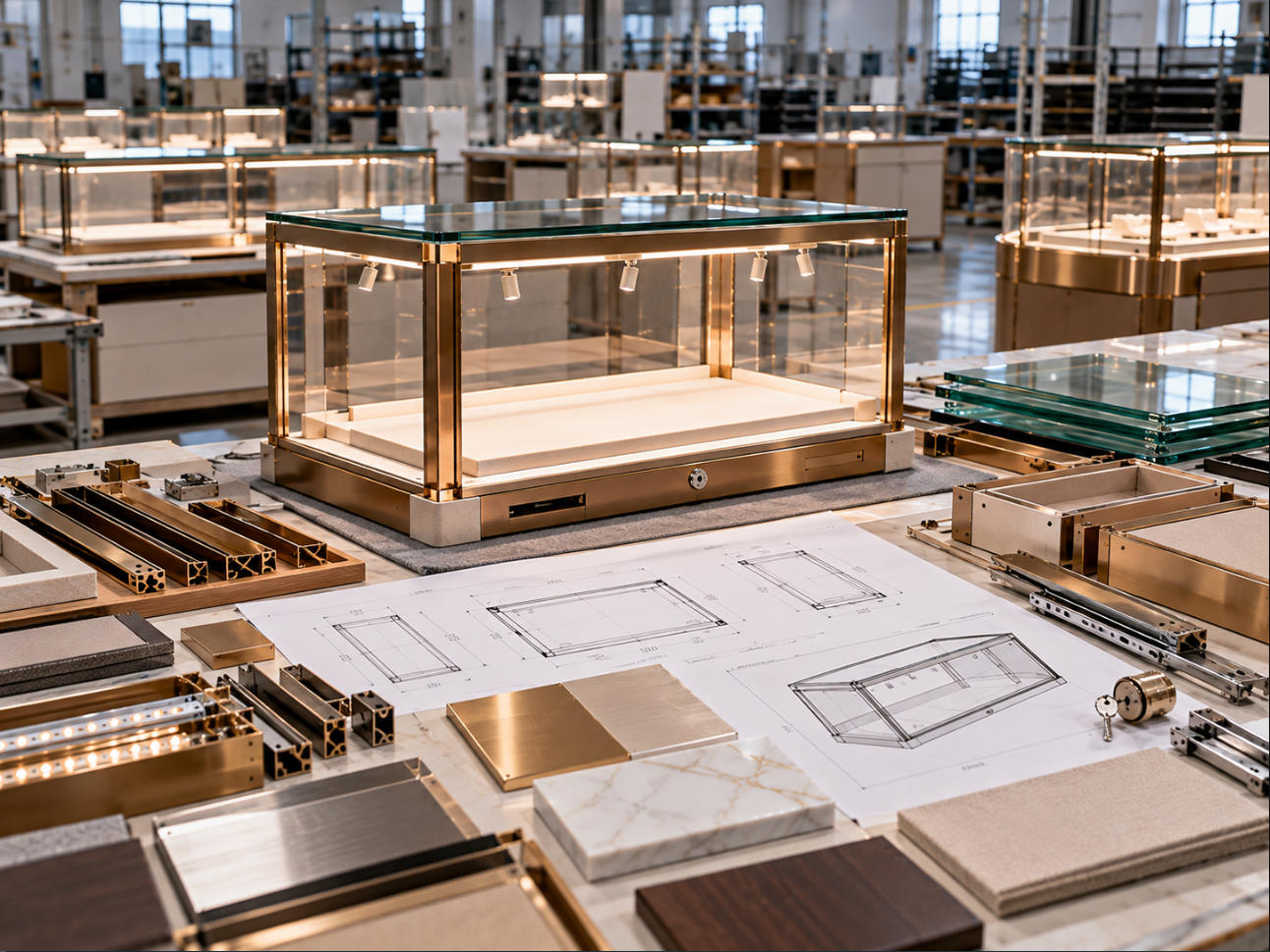
Quality Control Should Consider What the Customer Will Actually See
A display case can be dimensionally correct and still present the product poorly.
Final checks can consider glass alignment, visible joints, doors, locks, lighting, interior finishes and the overall relationship between the enclosure and the merchandise zone.
Check Alignment
Review glass interfaces, visible edges and the relationship between panels and surrounding structures.
Test Daily Access
Verify doors, drawers, locks and specified moving components before project delivery.
Review the Product Zone
Check whether integrated illumination reaches the intended display area appropriately.
Inspect Visible Details
Compare important metal, cabinetry and interior finishes against approved project references.
Coordinate Specialized Display Cases With the Wider Retail Project
Luxury boutique showcases rarely exist as isolated objects.
Their metal finishes, cabinetry, lighting and proportions often need to coordinate with wall fixtures, open displays, service counters and other retail elements.
For projects combining enclosed showcases with a broader fixture package, a luxury retail fixture manufacturer can help coordinate different fixture categories around the same project standards.
For highly customized requirements, SUNZEN also works as a custom display case manufacturer for project-specific showcase development and production.
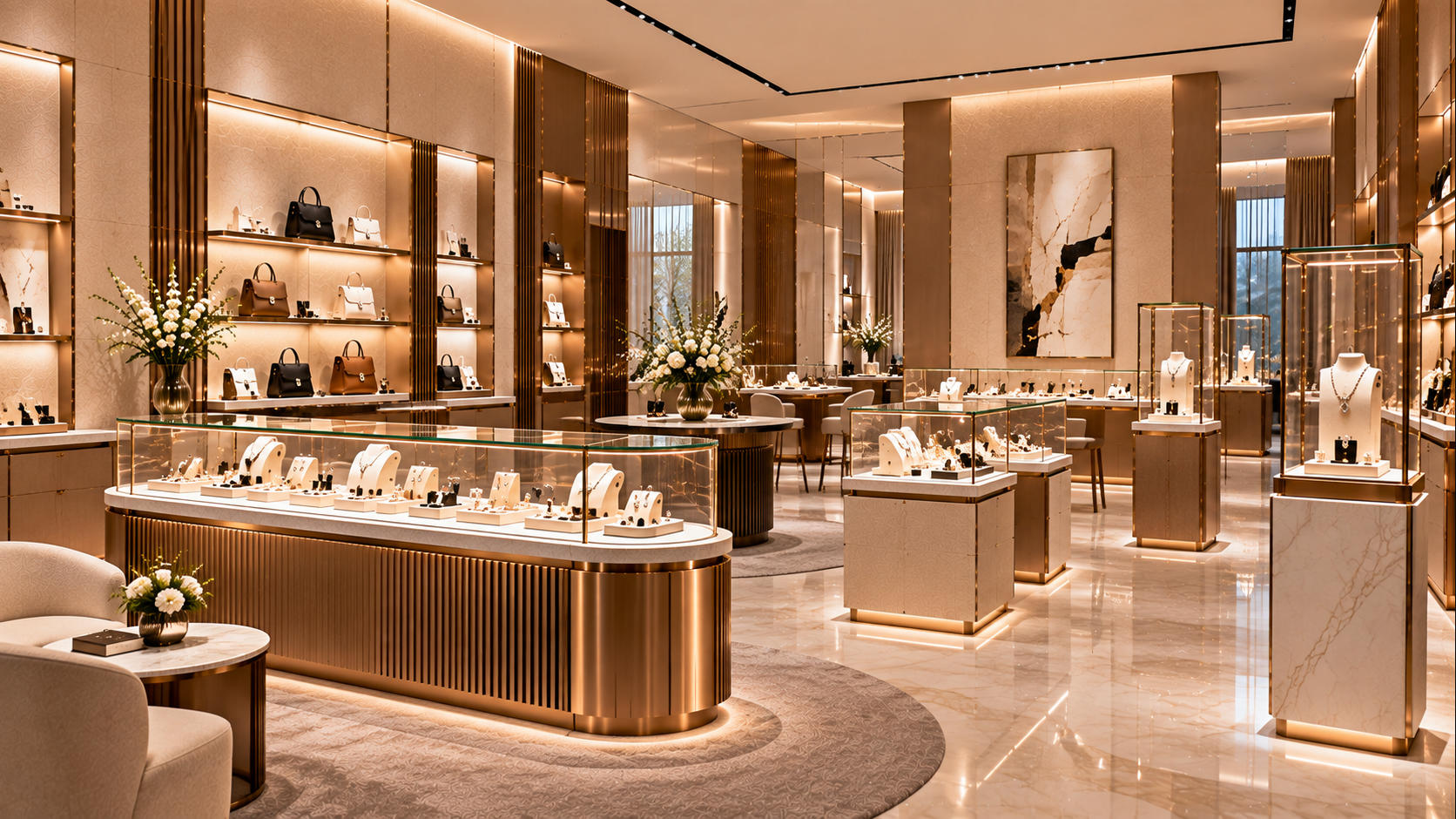
Let the Cases Create Focus Without Turning the Boutique Into a Glass Room
The strongest boutique display strategy usually combines enclosure and openness.
Selected luxury boutique display cases can protect and elevate priority merchandise, while open fixtures maintain accessibility and prevent the retail environment from feeling visually heavy.
For the surrounding open furniture, wall systems and other retail elements, SUNZEN’s custom retail display fixtures can be coordinated with the enclosed display case package.
Luxury Boutique Display Cases FAQs
Key questions about custom glass display cases and showcases for premium boutique retail environments.
What are luxury boutique display cases?
Luxury boutique display cases are enclosed retail displays developed for premium merchandise such as jewelry, watches, collectible accessories and other products that benefit from controlled presentation or access. They can include counter, pedestal, wall, tower and freestanding formats.
What is the difference between boutique fixtures and boutique display cases?
Boutique fixtures is a broader category that can include open shelving, tables, counters, cabinetry and other retail furniture. Boutique display cases specifically refer to enclosed or glass-based displays used where focused presentation, protection or controlled access is required.
Can luxury boutique display cases be fully customized?
Yes. Dimensions, glass configuration, metalwork, cabinetry, lighting, interior lining, access systems, locks, storage and finishes can be developed around project requirements.
Which display case types work well in luxury boutiques?
Depending on the merchandise and store layout, luxury boutiques can use counter display cases, pedestal showcases, wall cases, upright or tower showcases and other custom freestanding formats.
Can lighting be integrated into boutique display cases?
Yes. Integrated lighting can be coordinated with the display volume, product position and case structure according to project requirements.
Can display cases include secure staff access and storage?
Yes. Depending on the design, display cases can incorporate locks, staff-side opening systems, drawers and lower storage cabinetry.
What information should I provide for a custom boutique display case project?
Useful information includes store drawings, display case dimensions or concepts, merchandise type and size, viewing requirements, material and finish references, lighting requirements, access and security needs, quantities and project schedule.
Developing Custom Display Cases for a Luxury Boutique?
Send SUNZEN your store drawings, display case concepts, merchandise dimensions, material references and functional requirements.
We can help develop a coordinated boutique display case package covering glass configuration, structure, lighting, access, security, cabinetry and premium finishes.

